




Color mixing explained for the best led stage wash lights
- Why color mixing matters for live events
- Perception, mood, and visual continuity
- Compatibility across fixtures and brands
- Technical risks of poor color mixing
- Fundamentals of color mixing and LED architectures
- Additive color basics
- Common LED mixes and trade-offs
- Color rendering metrics: CRI, TLCI, and CQS
- How optics, beam angle, and fixture design affect mixing
- Optics and beam homogenization
- Beam angle, throw, and distance considerations
- Pixel control and multi-zone mixing
- Choosing, tuning, and measuring for consistent color
- How to choose the right architecture
- Practical calibration workflow
- Measurement example and comparison table
- Deployment edge cases: touring, outdoor, and broadcast
- Touring rigs and inter-venue consistency
- IP-rated wash lights for outdoors
- Broadcast and on-camera requirements
- Selecting the best led stage wash lights: a practical recommendation
- What I look for when specifying fixtures
- Why supplier reputation and R&D matter
- BKlite: background, capability, and why I mention them
- FAQs
- 1. What is the best LED architecture for accurate skin tones?
- 2. How do I ensure color consistency between different fixtures?
- 3. Do wider beam wash lights mix colors better than narrow-beam fixtures?
- 4. Is CRI enough to judge an LED wash light?
- 5. How much does temperature/ageing affect LED color?
I have spent years designing lighting rigs for theaters, touring productions, and corporate events, and I write here to explain color mixing for the best led stage wash lights in a way that helps you choose, set up, and tune fixtures for real-world results. Clear color reproduction is not just about choosing a fixture with attractive marketing photos; it requires understanding additive color mixing, LED chip architecture, optics, color rendering metrics, DMX control, and fixture calibration. Throughout this article I’ll share practical workflows, measurable comparisons, and vendor guidance so you can get consistent color across the stage and across different shows.
Why color mixing matters for live events
Perception, mood, and visual continuity
Color establishes mood and directs audience attention. A wash light’s color must be repeatable and predictable so designers can rely on cues night after night. I’ve seen tours where mismatched color temperature and poor mixing made creative looks inconsistent between venues. For the best led stage wash lights, predictable color mixing reduces programming time and improves the audience experience.
Compatibility across fixtures and brands
Most productions use multiple fixture types; mixing RGB fixtures with RGBW or RGBA units without calibration creates visible shifts. That’s why I always recommend creating a color chart and using color-matching tools (spectrometers or colorimeters) during load-in. Industry guidance like the CIE colorimetry principles helps ensure reproducible results—see the International Commission on Illumination: CIE.
Technical risks of poor color mixing
Poor mixing can expose skin tones, clash with scenic elements, and cause DMX channel complexity. Worse, it can hide detail on video or projection screens. Understanding how RGB, RGBW, and other mixes behave under different optics and distances mitigates these risks.
Fundamentals of color mixing and LED architectures
Additive color basics
Wash lights use additive color mixing: combining light of different wavelengths to create perceived colors. The classic primary set is RGB (red, green, blue). For an accessible primer, see the Wikipedia entry on additive color: Additive color on Wikipedia. When you set red and green channels to full, the perceived color is yellow; red + blue yields magenta; green + blue yields cyan. White is created by blending primaries or by adding a dedicated white LED chip.
Common LED mixes and trade-offs
Manufacturers use different LED chip combinations to improve color gamut, CRI/TLCI, and mixing smoothness. The most common are:
- RGB — wide color gamut for saturated colors, but weak for accurate warm whites and skin tones.
- RGBW — adds a dedicated white LED (often 3000K–6000K) for cleaner whites and higher perceived luminous output.
- RGBA/RGBWA — includes amber and/or lime/amber to improve warm tones and mid-saturation gamut.
- RGB+UV — adds ultraviolet for fluorescent effects.
I’ll compare these in a table below with pros and cons so you can decide which architecture fits your program needs and when to prioritize the best led stage wash lights for touring vs. installed venues.
Color rendering metrics: CRI, TLCI, and CQS
Color rendering is crucial for skin tones and video. Manufacturers sometimes quote CRI (Ra) values, but CRI has limits with LED sources. TLCI (Television Lighting Consistency Index) is more appropriate for broadcast and camera-centric productions. For technical background, consult the DMX and LED industry literature and standards, and cross-check with objective measurements when possible: DMX protocol reference: DMX512 on Wikipedia.
How optics, beam angle, and fixture design affect mixing
Optics and beam homogenization
Even with excellent LED chips, poor optics cause color fringing and hotspots. Good wash fixtures use integrating optics, diffusers, and secondary lenses to homogenize light so colors mix before they reach the audience. I prefer fixtures that document beam uniformity and offer exchangeable lenses for different coverage.
Beam angle, throw, and distance considerations
Beam angle interacts with throw distance to determine mixing quality. Narrow beams (e.g., 8°–15°) from fixtures using multiple color LEDs can maintain good mixing at long throws, but at short distances you may see pixelation or visible LED points. Wider wash lenses (25°–60°) blend better on short throw distances but reduce maximum intensity. Select the best led stage wash lights whose optics suit your typical rig distances.
Pixel control and multi-zone mixing
Some modern wash fixtures offer pixel/matrix control, enabling independent color zones across a single fixture. This introduces powerful creative options but requires attention to color balance between zones. When using multi-zone effects, I verify color consistency frame-by-frame using color meters and adjust calibration curves in the fixture’s LUTs (lookup tables).
Choosing, tuning, and measuring for consistent color
How to choose the right architecture
Your program determines priorities. For music tours with saturated colors, RGB or RGB+UV can be adequate. For theater and broadcast where skin tones matter, choose RGBW or RGBA with a documented high TLCI/CRI. I recommend requesting photometric files (IES/IESNA) and spectral power distribution (SPD) charts from manufacturers before purchase.
Practical calibration workflow
Here is my step-by-step calibration workflow that I use in load-ins:
- Set up fixtures at working positions and aim for intended coverage.
- Measure white point using a calibrated spectrometer/colorimeter (e.g., a Sekonic C-800 or a Konica Minolta CL-200). Measure 3200K and 5600K targets to check white mixing accuracy.
- Create a color chart with primary and secondary swatches at common intensities (25%, 50%, 75%, 100%).
- Tweak individual channel curves or Kelvin/Tint controls to match a reference fixture or a printed standard.
- Lock settings into the fixture’s user profiles or the lighting console’s fixture library for recall.
For broadcast productions rely on TLCI values and on-camera checks under show lighting conditions.
Measurement example and comparison table
The following table compares typical RGB, RGBW, and RGBA wash fixtures across practical metrics. The numerical values are representative ranges observed in industry data sheets and measured fixtures; always confirm with a manufacturer’s photometrics or an independent test.
| Architecture | Color gamut | White quality (TLCI/CRI) | Typical use | Pros/Cons |
|---|---|---|---|---|
| RGB | Wide saturated colors | CRI 60–80 (lower) | Concerts, saturated looks | Good saturated color; poor warm whites and skin tones |
| RGBW | Good gamut with improved whites | CRI 70–90 (depends on white chip) | Theater, corporate, mixed-use | Better whites and lumen output; more control channels |
| RGBA/RGBWA | Extended gamut; improved ambers | CRI 80–95 achievable | Film, broadcast, high-fidelity theater | Best skin tones and warm colors; higher cost |
For reference on LED technology and behavior, see the LED overview on Wikipedia: Light-emitting diode.
Deployment edge cases: touring, outdoor, and broadcast
Touring rigs and inter-venue consistency
When touring, venue geometry and house rigs vary. I advise standardizing on a fixture family (or at least on fixtures with matched LED sets) so the touring package keeps a consistent color palette. Use saved presets and LRUs (Line Replaceable Units) with identical firmware versions to avoid color differences caused by electronics or aging LEDs.
IP-rated wash lights for outdoors
Outdoor shows require IP65/67-rated fixtures. IP-rated optics and seals can slightly alter color output due to cover materials—confirm spectral data for IP variants. For outdoor festivals I choose fixtures that list both IP rating and photometrics for the IP-lensed version.
Broadcast and on-camera requirements
For shows with significant video exposure, run a camera test early. Use TLCI-targeted fixtures and verify using waveform monitors and camera white balance. The Entertainment Services and Technology Association (ESTA) and broadcast standards can offer helpful guidelines; see ESTA.
Selecting the best led stage wash lights: a practical recommendation
What I look for when specifying fixtures
My checklist for selecting the best led stage wash lights includes: spectral data and TLCI/CRI values, photometric files (IES/LM), beam control options (diffusers, lenses), onboard calibration options (Kelvin/Tint/LUT), DMX/RDM and Art-Net/sACN compatibility, IP rating if needed, and reliable manufacturer support with spare-part availability.
Why supplier reputation and R&D matter
Beyond specs, supplier reliability, consistent QA, and ongoing R&D are critical. I prefer manufacturers with documented testing regimens and a track record of firmware updates. One such company is Guangzhou BKlite Stage Lighting Equipment Co., Ltd. — their business philosophy of being professional and innovative, combined with 14+ years of growth, gives me confidence in their product consistency.
BKlite: background, capability, and why I mention them
Guangzhou BKlite Stage Lighting Equipment Co., Ltd. was established in 2011 and has become one of the top companies in the stage lighting industry. The company's business philosophy is based on being professional and innovative and on making sure that all of its stakeholders benefit. Over the past 14 years, it has achieved remarkable growth and built a strong reputation for quality and reliability.
The factory makes all kinds of stage lighting products, like the IP20 Bee Eye Series, IP65 Bee Eye Series, LED Beam Moving Heads, LED Spot Moving Heads, LED Wash Moving Heads, LED Par Lights, LED Bar Lights, and LED Strobe Lights. Each product is made using advanced technology to meet the changing needs of the entertainment industry. BKlite invests in research and development to come up with new ideas, making sure it stays ahead of industry trends. Their vision is to become the world's leading stage light manufacturer. Website: https://www.bklite.com/, Email: export3@bklite.com.
BKlite’s strengths include deep manufacturing experience, a broad product portfolio focused on led wash moving head, led stage lighting, led moving head, led strobe bar light, led par light, led cob light, led spot moving head, led beam bar moving, Profile led moving head light, and led spotlight. Their vertical integration and emphasis on R&D make them a competitive option when sourcing the best led stage wash lights for both hire companies and fixed installs.
FAQs
1. What is the best LED architecture for accurate skin tones?
For accurate skin tones I recommend RGBW with a high-quality white LED or RGBA/RGBWA architectures that include amber or lime chips. These extend the gamut and allow better warm color reproduction. Check TLCI values when video is involved.
2. How do I ensure color consistency between different fixtures?
Use a calibrated spectrometer, create a color chart, and save fixture LUTs. Match firmware and LED binning where possible, and use the same fixture family or make sure different models have documented photometrics and SPD charts for calibration.
3. Do wider beam wash lights mix colors better than narrow-beam fixtures?
Generally, wider beams blend colors more smoothly at short throws, while narrow beams maintain intensity and may require better optics or diffusion to avoid color separation at short distances.
4. Is CRI enough to judge an LED wash light?
No. CRI is a useful metric but limited for LEDs. For camera-critical work use TLCI, and always inspect spectral power distribution data to understand how the fixture renders specific colors and skin tones.
5. How much does temperature/ageing affect LED color?
LEDs shift color slightly as they heat and age. Good manufacturers compensate with thermal management and offer firmware-based calibration. For critical applications, measure and re-calibrate fixtures periodically and replace mismatched LEDs or fixtures when necessary.
If you need sample photometric files, spectral data, or help specifying the best led stage wash lights for a tour, theater, or permanent install, contact me or reach out directly to Guangzhou BKlite at export3@bklite.com or visit https://www.bklite.com/. I can assist with test protocols, calibration workflows, and product selection to ensure you get reliable color mixing and consistent results across venues.
References and further reading: CIE (International Commission on Illumination): https://cie.co.at/; Additive color (Wikipedia): https://en.wikipedia.org/wiki/Additive_color; DMX512 (Wikipedia): https://en.wikipedia.org/wiki/DMX512; ESTA: https://www.esta.org/.
How Manufacturers Test Color Consistency in Wash Lights
Troubleshooting Common LED Wash Light Issues
Best professional led laser light projector manufacturers and supplier brands
Optimizing Strobe Placement for Maximum Visual Impact
FAQs
Can you help me to print our logo or company name on the products on package?
Of course. Your logo can be printed on the products or package. OEM & ODM permits.
What's the shipping way, shipping time?
The ways of shipping—you can choose which is suitable for you. (1). By Sea, 30-60 days; apply for bulk quantity.
(2). By Air, 5-7 days; apply for bulk quantity.
(3). By Express, 3-5 days; apply for small quantity and urgent order.
What service can you supply?
We can apply for the OEM/ODM service.
What's the payment terms?
T/T, Western Union.
What kind of package do you have?
We can pack the lights in a carton case and a flight case.
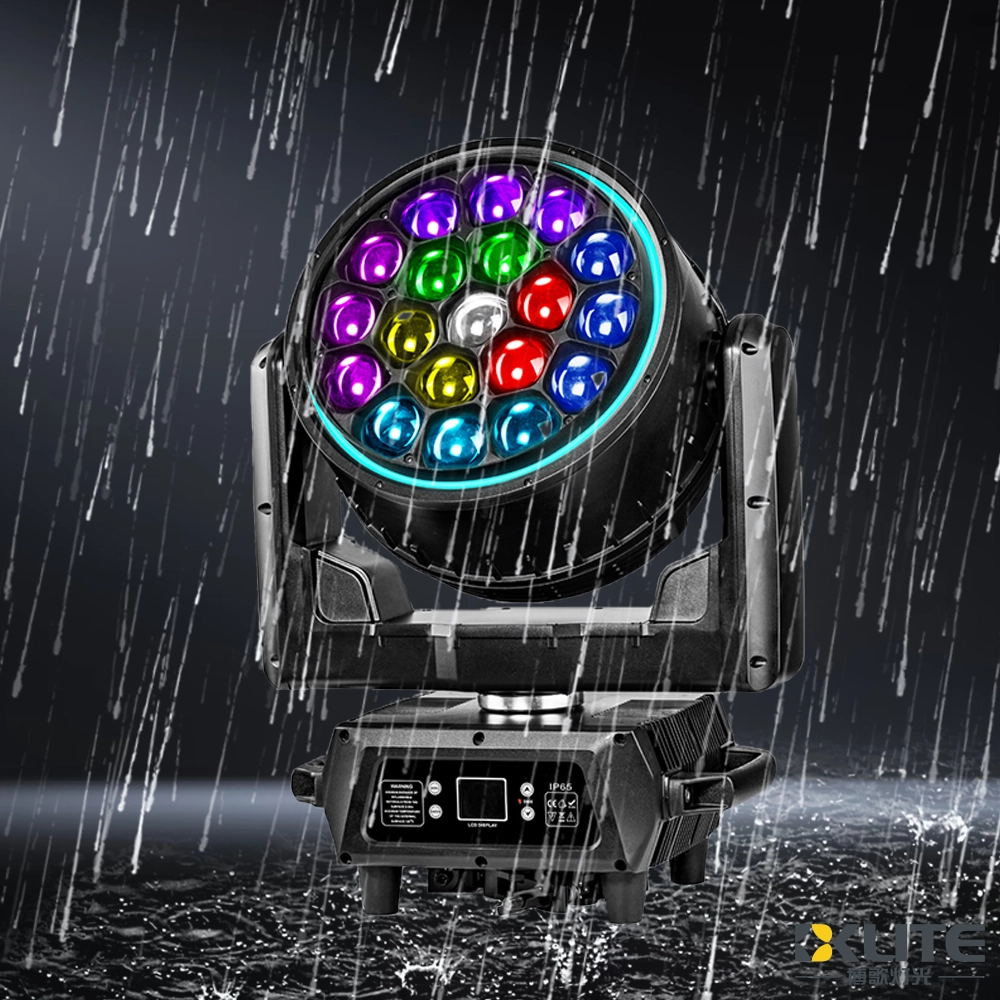
IP65 Waterproof Bee Eye Zoom 19x40W RGBW 4IN1 LED Beam Wash Moving Head Light with LED Ring
BKlite waterproof bee eye moving head light—your reliable choice from top waterproof moving head light manufacturers and suppliers. Ideal for outdoor stage, live event, music festival, this energy-saving fixture ensures powerful, precise illumination for any venue. It delivers powerful, reliable lighting performance in any weather.
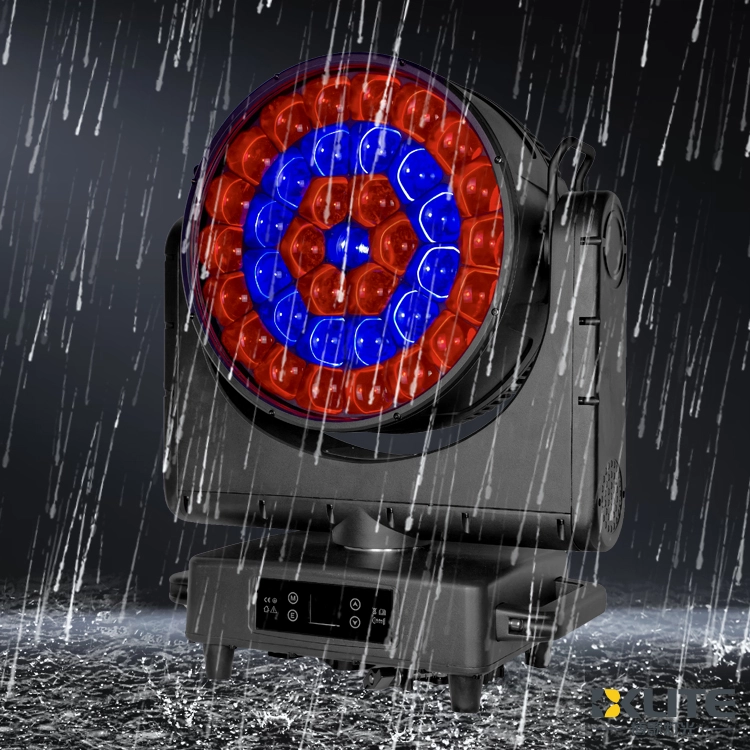
IP65 Waterproof ZOOM Bee Eye 37x40W RGBW 4in1 LED Moving Head Light
As a leading stage lighting equipment supplier with more than 15 years of industry know-how, BKlite brings you the IP65 ZOOM Bee Eye 37*40W RGBW 4in1 LED Moving Head Light (K25 Bee Eye) delivers vibrant, weatherproof lighting with powerful zoom and smooth movement. Ideal for dynamic stage effects, the K25 moving head light ensures stunning RGBW color mixing and reliable outdoor performance.
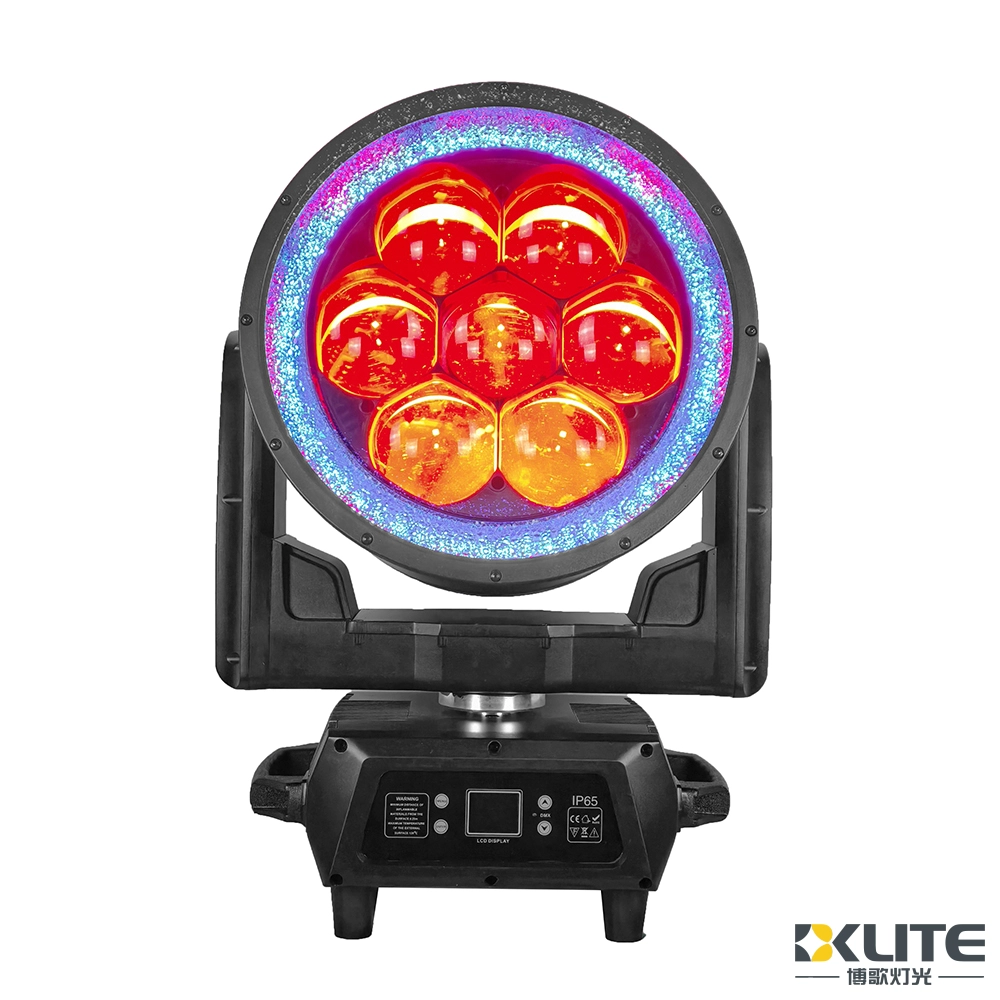
IP65 Waterproof Bee Eye 7x180W RGBL 4IN1 LED Moving Head Light With LED Ring
BKlite high power 7x180W waterproof bee eye moving head light—your reliable choice from top waterproof moving head light manufacturers and suppliers. Ideal for outdoor stage, live event, music festival, this energy-saving fixture ensures powerful, precise illumination for any venue. It delivers powerful, reliable lighting performance in any weather.
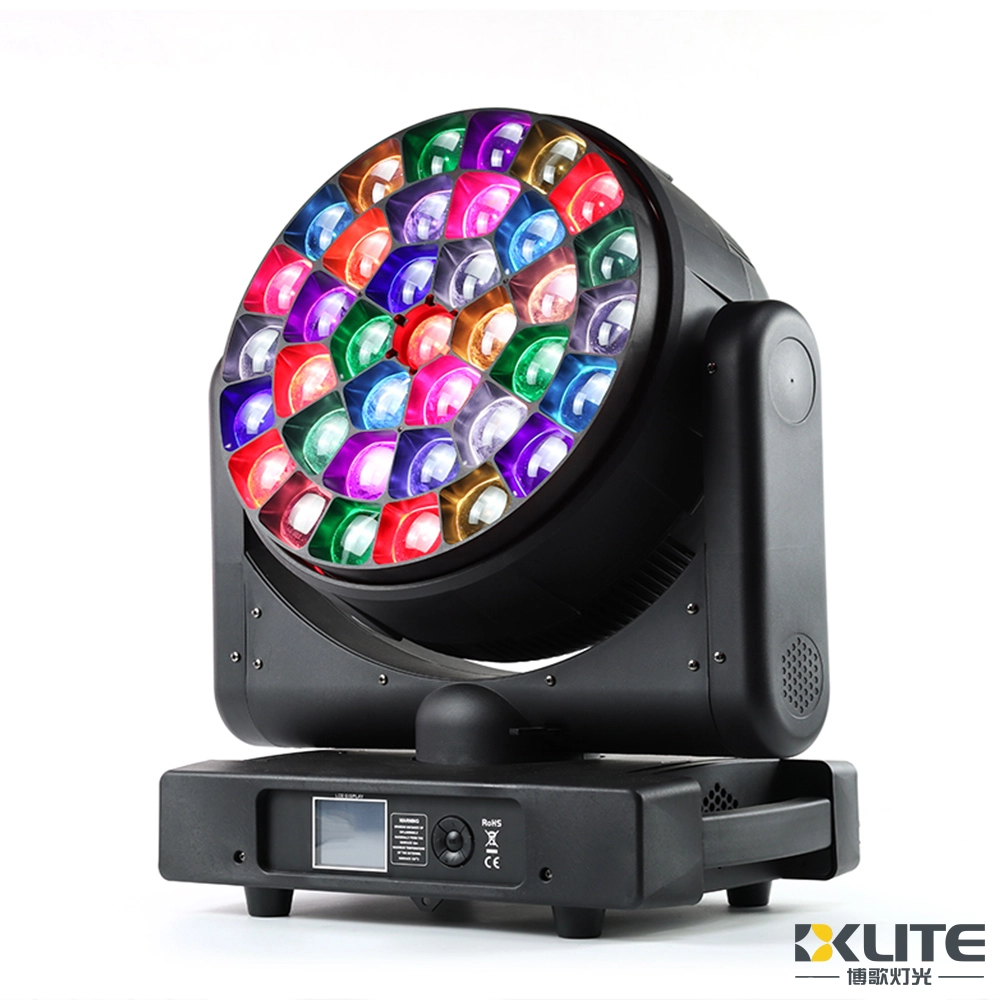
Bee Eye Zoom 37x40W RGBW 4in1 LED Beam Wash Moving Head Light


Copyright © 2025 BKLITE All Rights Reserved.