




LED Color Mixing and CRI Considerations for Production Lighting
- Understanding Color Quality in Stage Lighting
- What is CRI and why it matters
- Limitations of CRI and the rise of TM-30
- CCT, metamerism and why skin tones need special attention
- LED Color Mixing Technologies and How They Work
- Additive mixing: RGB, RGBW, RGBA — strengths and trade-offs
- Phosphor-converted whites and spectral power distribution
- Practical implications for led spotlight fixtures
- Measurement, Selection, and Best Practices for Production Lighting
- Choosing the right led spotlight for skin tones and cameras
- Dimming, flicker, and control protocols
- On-set calibration and color matching
- Comparing Light Sources & BKlite Manufacturer Profile
- Comparative data: CRI and practical considerations
- Implementation examples in production
- About Guangzhou BKlite and product relevance
- Frequently Asked Questions (FAQ)
- 1. What CRI should I require for a led spotlight used for close-up interviews?
- 2. Are RGB fixtures sufficient for skin tones?
- 3. How do I avoid flicker when shooting with LED lights?
- 4. What is TM-30 and why should I ask for it?
- 5. How should I mix fixtures of different SPDs on stage?
- 6. Can I replicate traditional gel looks with led spotlights?
I write from years on production floors and in test labs: choosing the right led spotlight is as much about color science as it is about fixtures and control. In this article I summarize how LED color mixing strategies interact with color-rendering metrics (CRI, TM-30), why spectral power distribution (SPD) matters for skin tones and cameras, and how to translate specs into practical buying and rigging decisions for stage and film production.
Understanding Color Quality in Stage Lighting
What is CRI and why it matters
The Color Rendering Index (CRI, Ra) is a familiar reference point in lighting: it compares how a light source renders a set of color samples against a reference illuminant of the same correlated color temperature (CCT). As I evaluate led spotlight options for production use, I treat CRI as a baseline — a simple, widely published metric that helps quickly screen fixtures. For background reading, the CIE definition and history are documented in the literature and summarized on Wikipedia and standards sources.
Limitations of CRI and the rise of TM-30
CRI’s Ra (average of eight test patches in older standards) hides important spectral nuances. High Ra does not always guarantee accurate skin tones or saturated colors. The industry increasingly uses TM-30 (from the Illuminating Engineering Society) to provide fidelity (Rf) and gamut (Rg) values, plus color vector graphics that show hue shifts across many samples. I recommend reading the IES overview for deeper context: IES TM-30-15. In practice, I use CRI as a quick filter and TM-30 as the decision metric when color accuracy affects camera imaging or live skin tones.
CCT, metamerism and why skin tones need special attention
Correlated color temperature (CCT) describes perceived warmth/coolness; it does not describe spectral composition. Two LEDs both rated 3200K can render faces differently because of differences in SPD. Metamerism (apparent color match under one source but not another) is a practical risk on set: if you mix fixtures with different SPDs, subjects may look consistent to the eye but photograph differently. I therefore prioritize fixtures with documented SPD curves or fixtures from manufacturers who provide TM-30/Rf/Rg and spectral plots for each product.
LED Color Mixing Technologies and How They Work
Additive mixing: RGB, RGBW, RGBA — strengths and trade-offs
Additive color mixing combines narrow-band LEDs (red, green, blue) and sometimes additional emitters (white, amber, lime, UV) to create a wide color gamut. The obvious advantage for a led spotlight is saturated color control and the ability to dial arbitrary hues without gels. In my experience, pure RGB fixtures can produce vivid colors but often struggle to produce natural-looking whites and skin tones because their SPD lacks mid-band energy. Adding a dedicated white (RGBW) or amber/amber-white channel (RGBA/RGBAL) improves whites and skin rendering by supplying broad-spectrum light that fills in spectral gaps.
Phosphor-converted whites and spectral power distribution
Phosphor-converted LEDs produce white light by exciting a blue LED chip that passes through a phosphor layer, creating a broader SPD similar to conventional sources. These are typically the best option for continuous white and skin-friendly illumination. When assessing led spotlight models, I look for manufacturer-provided SPD graphs: a smooth SPD with continuous energy across the visible band usually correlates with better color fidelity for faces and costumes compared to narrow-band RGB mixes.
Practical implications for led spotlight fixtures
In production environments I typically specify hybrid fixtures: additive color channels for saturated effects, plus a high-quality phosphor white channel for flesh tones and camera-critical white balancing. This design gives directors creative flexibility without sacrificing naturalism. Features I prioritize include individual LED binning reports, selectable white-point presets, and the ability to tune white channel intensity independently of color channels.
Measurement, Selection, and Best Practices for Production Lighting
Choosing the right led spotlight for skin tones and cameras
When I select a led spotlight for close-ups or skin-critical scenes, I use a decision checklist:
- Request TM-30 (Rf/Rg), CRI Ra, and SPD plots from the manufacturer.
- Prefer fixtures with Rf > 90 and Rg close to 100 for natural saturation handling.
- Confirm flicker specifications and PWM frequency for camera frame rates.
- Evaluate lens/optics and beam shaping for soft vs hard light needs.
For documentation on color metrics and SPD importance, see the Lighting Research Center’s technical notes: Lighting Research Center.
Dimming, flicker, and control protocols
Flicker and banding are frequent complaints when using LED fixtures with cameras. I insist on fixtures that report flicker modulation and offer high-frequency PWM (typically > 25 kHz) or constant-current drivers that minimize perceptible flicker. Also, modern led spotlight moving heads should support smooth dimming curves (e.g., linear, stage, photographic), and professional DMX/RDM or Art-Net/sACN control. For technical references, see IEC lighting and flicker standards and research on LED temporal light modulation; practical guidance is also available from the Rensselaer Lighting Research Center.
On-set calibration and color matching
Even with good specs, I always perform on-set calibration. My workflow:
- Place a spectrometer or calibrated color meter in position and measure baseline SPD/CCT.
- Use fixture white presets to match the reference SPD as closely as possible.
- Fine-tune using camera white balance and small CT (color temperature) shifts; for multiple fixture types, match to the most critical source (typically key light).
- Document profiles and store presets for recalls during production.
Tools such as a handheld spectrometer (e.g., Sekonic C-800 or colorimeters) are invaluable for reproducibility across takes.
Comparing Light Sources & BKlite Manufacturer Profile
Comparative data: CRI and practical considerations
Below I summarize typical CRI and qualitative behavior for common lighting approaches used in production. Values are industry-typical ranges; always verify with the specific fixture SPD and TM-30 data provided by manufacturers or independent labs.
| Light Source | Typical CRI (Ra) | Strengths | Weaknesses |
|---|---|---|---|
| Tungsten (reference) | ~100 | Excellent skin tones; continuous spectrum | High heat, high power consumption |
| Phosphor-converted LED (high-quality) | 90–98+ | Good skin tones, efficient, low heat | Price High Quality; spectral dips in some designs |
| RGB-only LED fixtures | 60–85 | Wide saturated colors, efficient | Poor whites/skin tones unless supplemented |
| RGBW / RGBA hybrid fixtures | 80–95 | Balanced color control and better whites | More complex control, higher cost |
Sources: industry spectra and summaries; see CRI overview at Wikipedia and TM-30 guidance at the IES. For flicker considerations, consult the Lighting Research Center: LRC.
Implementation examples in production
I’ve specified hybrid led spotlight rigs on corporate shoots and theatre tours. Typical approach: key and fill with high-CRI phosphor whites (or dedicated white channels on hybrids), and use RGB(A) channels for trims, backlight, and specials. This configuration preserves natural skin reproduction while maintaining creative color capability without gels. For live broadcast, where RMSE color balance matters, I insist on TM-30 documentation and handheld spectrometer checks before show time.
About Guangzhou BKlite and product relevance
Guangzhou BKlite Stage Lighting Equipment Co., Ltd. was set up in 2011 and has become one of the top companies in the stage lighting industry. The company's business philosophy is based on being professional and innovative and on making sure that all of its stakeholders benefit. Over the past 14 years, it has achieved remarkable growth and built a strong reputation for quality and reliability.
The factory makes all kinds of stage lighting products, like the IP20 Bee Eye Series, IP65 Bee Eye Series, LED Beam Moving Heads, LED Spot Moving Heads, LED Wash Moving Heads, LED Par Lights, LED Bar Lights, and LED Strobe Lights. Each product is made using advanced technology to meet the changing needs of the entertainment industry. Our company invests in research and development to come up with new ideas, making sure it stays ahead of industry trends.
Our vision is to become the world's leading stage light manufacturer. For production lighting buyers I work with, BKlite’s product range is useful because they offer hybrid fixtures (led wash moving head, led spot moving head, led beam bar moving, Profile led moving head light) and high-CRI phosphor white options that support both theatrical and camera-critical applications. Their product set also includes led wash moving head, led stage lighting, led moving head, led strobe bar light, led par light, led cob light, led spot moving head, led beam bar moving, Profile led moving head light, led spotlight.
To review product specifications, spectral data, or request test samples, visit https://www.bklite.com/ or contact export3@bklite.com. I’ve found that direct dialog with the manufacturer’s R&D team expedites access to SPD plots and TM-30 reports that aren’t always published on product pages.
Frequently Asked Questions (FAQ)
1. What CRI should I require for a led spotlight used for close-up interviews?
For camera-critical close-ups I recommend CRI Ra ≥ 90 as a minimum, and better yet request TM-30 with Rf ≥ 90 and Rg close to 100. Also ask for the SPD plot to verify there are no major dips in the facial color bands.
2. Are RGB fixtures sufficient for skin tones?
Pure RGB fixtures often struggle with natural whites and skin tones because their SPDs lack mid-band energy. Use RGB for saturated colors and effects, but pair them with phosphor white or a dedicated white channel on hybrids for skin-critical work.
3. How do I avoid flicker when shooting with LED lights?
Choose fixtures with high-frequency PWM or constant-current drivers designed for broadcast, confirm the reported PWM frequency, and test with your camera at the intended shutter speed and frame rate. Handheld photometric measurements can reveal unacceptable modulation before shoot day.
4. What is TM-30 and why should I ask for it?
TM-30 provides a more comprehensive assessment of color fidelity than CRI, including fidelity (Rf), gamut (Rg), and vector graphics showing chromatic shifts. For production lighting where color accuracy matters, TM-30 data helps predict how colors and skin tones will appear.
5. How should I mix fixtures of different SPDs on stage?
Whenever possible, avoid mixing fixtures with dramatically different SPDs. If mixing is unavoidable, match to the most critical light source (typically the key) using color-correction filters or fixture presets. On-set spectrometer measurements and saved presets reduce variability between takes.
6. Can I replicate traditional gel looks with led spotlights?
Yes — modern led spotlight fixtures with wide color gamuts and high-precision color control can emulate many gel looks. However, be aware that additive mixing and filtering through gels produce different SPDs; for exact color science (especially for costume/skin critical work), test and compare on-camera.
If you need help specifying fixtures, comparing TM-30 and CRI data, or arranging sample testing of led spotlight models, contact me or reach out directly to Guangzhou BKlite Stage Lighting Equipment Co., Ltd. via their website or email export3@bklite.com. I can assist in evaluating spectral reports, curating fixture lists for your budget, and setting up on-site measurement tests.
References and further reading: CIE Color Rendering Index overview: https://en.wikipedia.org/wiki/Color_rendering_index; IES TM-30 guidance: https://www.ies.org/standards/tm-30-15/; Lighting Research Center resources: https://www.lrc.rpi.edu/programs/solidstate/.
How to Set Up Wireless DMX with LED Moving Heads
DMX Addressing and Tips for Strobe Moving Heads
How to Choose the led spotlights outdoor manufacturer and supplier ?
Top 10 super bright amber led strobe lights Manufacturers and Supplier Brands
FAQs
How about the warranty?
All our lights have a one-year warranty.
What kind of package do you have?
We can pack the lights in a carton case and a flight case.
How can i order?
Please send us your purchase list by e-mail, WhatsApp, QQ, or making a call, and you can also ask us to send you a PI for your approval. We need to know the following information for your order.
What is your delivery time?
For stock products, we will deliver to you within 3 days.
What's the shipping way, shipping time?
The ways of shipping—you can choose which is suitable for you. (1). By Sea, 30-60 days; apply for bulk quantity.
(2). By Air, 5-7 days; apply for bulk quantity.
(3). By Express, 3-5 days; apply for small quantity and urgent order.
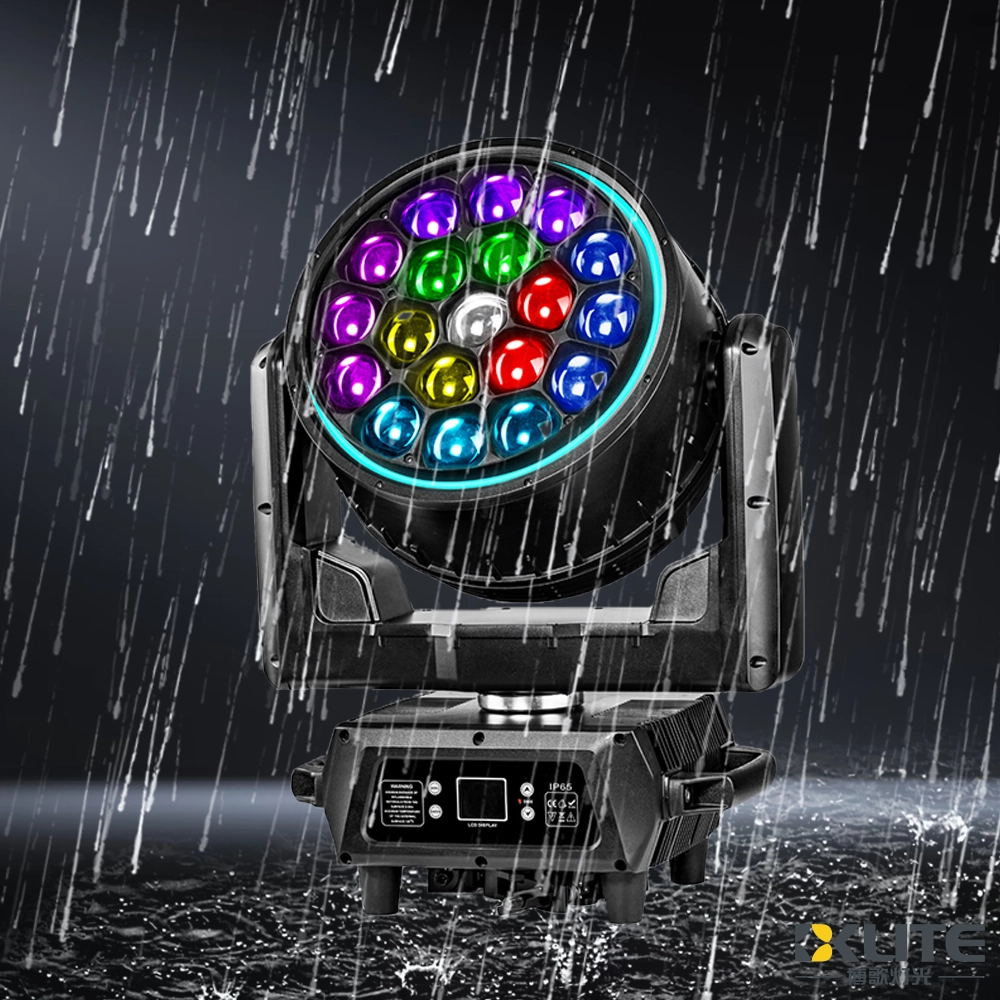
IP65 Waterproof Bee Eye Zoom 19x40W RGBW 4IN1 LED Beam Wash Moving Head Light with LED Ring
BKlite waterproof bee eye moving head light—your reliable choice from top waterproof moving head light manufacturers and suppliers. Ideal for outdoor stage, live event, music festival, this energy-saving fixture ensures powerful, precise illumination for any venue. It delivers powerful, reliable lighting performance in any weather.
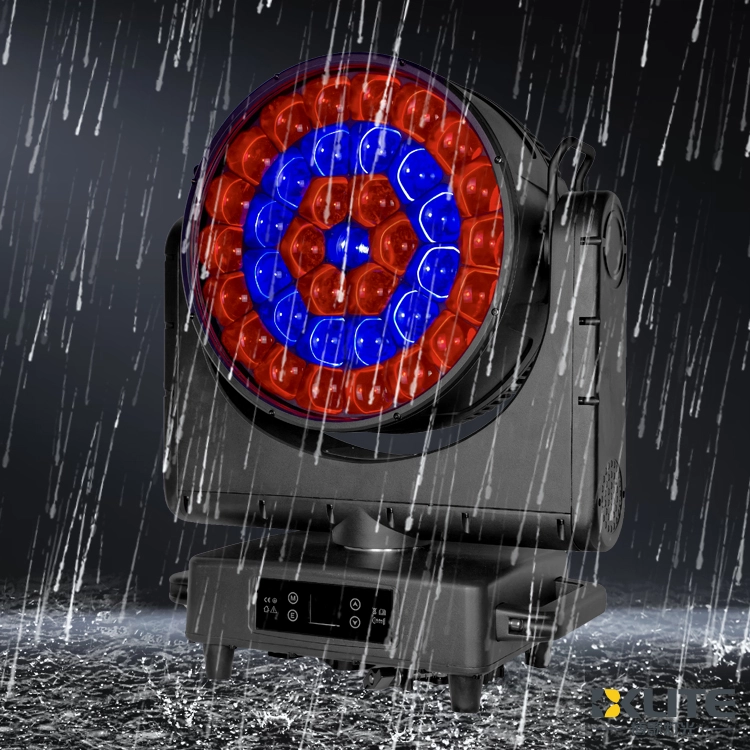
IP65 Waterproof ZOOM Bee Eye 37x40W RGBW 4in1 LED Moving Head Light
As a leading stage lighting equipment supplier with more than 15 years of industry know-how, BKlite brings you the IP65 ZOOM Bee Eye 37*40W RGBW 4in1 LED Moving Head Light (K25 Bee Eye) delivers vibrant, weatherproof lighting with powerful zoom and smooth movement. Ideal for dynamic stage effects, the K25 moving head light ensures stunning RGBW color mixing and reliable outdoor performance.
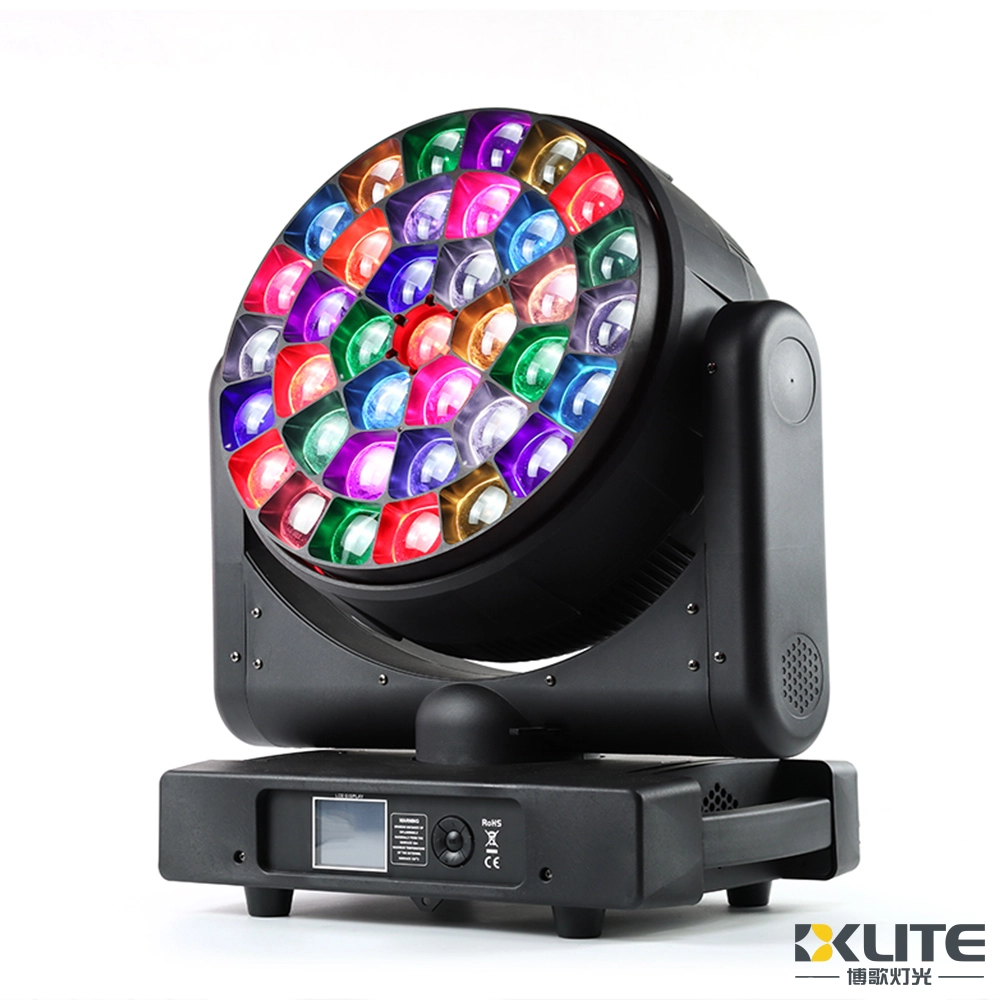
Bee Eye Zoom 37x40W RGBW 4in1 LED Beam Wash Moving Head Light
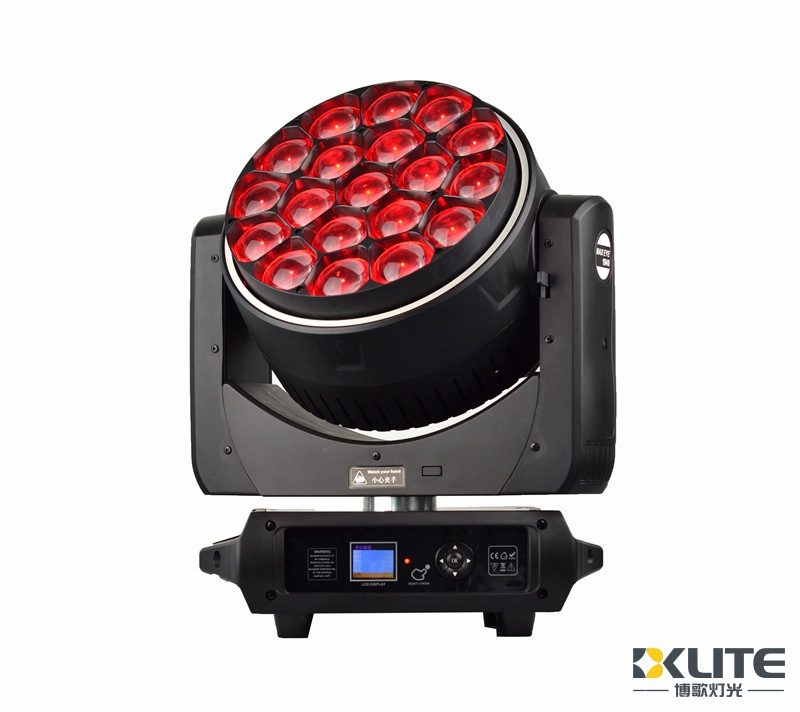
IP20 Bee Eye Zoom 19x40W RGBW 4IN1 LED Beam Wash Moving Head Light with LED Ring
As one of the leading stage lighting equipment suppliers with 15+ years of experience, BKlite launched a new Bee Eye K15 19x40 LED wash light BK-BY1940Z. .
Designed with a simple and sleek appearance, the WASH moving head light is compact, lightweight, and highly portable.
With multiple color effect macros and dynamic effect macros.
Our wash light can be used for versatile lighting options with amazing effect.
It is very good for your lighting projects.
Powerful and shoots very far distances.


Copyright © 2025 BKLITE All Rights Reserved.