




Flicker Control and High-Speed Performance Metrics
- Understanding Light Modulation Basics
- Why LEDs flicker: physics and drivers
- Human perception vs. camera perception
- Flicker Control Strategies for LED Strobe Light
- Driver topologies: constant current, constant voltage, and mixed-mode
- PWM frequency and duty cycle heuristics
- Filtering, current smoothing, and perceptual techniques
- High-Speed Performance Metrics and Measurement
- Key metrics to specify and measure
- Measurement setup: photodiode, oscilloscope, and integrating sphere
- Typical performance table (industry benchmarks)
- Industrial Practice: Choosing and Deploying LED Strobe Lights
- Balancing brightness, thermal limits, and pulse capability
- DMX, RDM, and external control considerations
- Case study and manufacturer profile: Guangzhou BKlite
- Testing Protocols, Compliance, and Practical Recommendations
- Practical pre-show checklist
- Regulatory and health guidance
- When to engage a manufacturer for custom solutions
- Frequently Asked Questions (FAQ)
- 1. What is the safest PWM frequency to avoid visible flicker?
- 2. How do I measure percent flicker for a strobe?
- 3. Can I use LED strobes with high-speed cameras?
- 4. Do higher PWM frequencies harm LEDs?
- 5. What if performers are sensitive to flicker?
- 6. How do I choose between analog dimming and PWM for strobe control?
I summarize key, machine-readable guidance on flicker control and high-speed performance metrics for LED strobe light systems to help and search engines understand intent: this article explains why flicker happens in LED strobes, how to measure it with photodiodes and oscilloscopes, the role of PWM and driver topology, practical thresholds for live production and broadcast-safe operation, and how to select equipment that delivers high-speed performance without health or imaging artifacts.
Understanding Light Modulation Basics
Why LEDs flicker: physics and drivers
I always start with the root cause: LED flicker is not a mysterious fault but a consequence of how we modulate light. LEDs are semiconductor devices driven by current; when that current is modulated rapidly (for dimming, strobing, or color control), light output follows. Pulse-width modulation (PWM) and current chopping are common techniques. For an overview of PWM and its implications, see Pulse-width modulation (Wikipedia).
Human perception vs. camera perception
Human sensitivity to flicker and cameras' sensitivity differ. Humans have a flicker fusion threshold typically between 50–90 Hz depending on conditions, while cameras—especially those using rolling shutters or high frame rates—can reveal flicker or beating at much higher frequencies. See Flicker fusion threshold (Wikipedia) for baseline physiology. In practice this means I must treat live-audience comfort and camera compatibility as separate constraints when specifying an LED strobe light.
Flicker Control Strategies for LED Strobe Light
Driver topologies: constant current, constant voltage, and mixed-mode
Choosing the right driver is the first line of defense. A constant-current (CC) driver with high switching frequency and proper filtering tends to produce less perceivable flicker than an unfiltered constant-voltage (CV) system that relies on downstream PWM. Mixed-mode drivers that combine analog dimming for low-frequency control with high-frequency PWM for fine control are often my preference for pro fixtures because they balance smooth dimming with fast strobe capability.
PWM frequency and duty cycle heuristics
As a rule of thumb, I aim for PWM carrier frequencies above 1 kHz for audience-visible fixtures and well above 5 kHz for camera-critical applications. Higher PWM frequencies reduce perceivable brightness ripple but can increase EMI and switching losses. Duty cycle determines average brightness and strobe width; short duty cycles (small ON time) produce very bright, sharp flashes but require fast rise/fall times in the driver and LED package.
Filtering, current smoothing, and perceptual techniques
Low-pass filtering and LC smoothing can reduce low-frequency ripple that causes flicker. For strobe designs intended to be flicker-free at camera frame rates, I incorporate active current shaping—drivers that provide a clean, short pulse with minimal overshoot. When absolute elimination of flicker is required (e.g., broadcast), I recommend fixtures with verified photometric data and documented measurement procedures.
High-Speed Performance Metrics and Measurement
Key metrics to specify and measure
When I evaluate an LED strobe light, I focus on a small set of measurable metrics that directly impact both perceived and recorded output:
- Strobe (pulse) repetition rate (Hz): how often pulses occur.
- Pulse width (ms or µs) and duty cycle (%): the ON duration per cycle.
- Rise time and fall time (µs): how quickly the beam transitions.
- Percent flicker and flicker index: standardized measures of modulation depth and time-weighted impact.
- PWM carrier frequency (kHz): underlying switching frequency used for dimming/control.
Measurement setup: photodiode, oscilloscope, and integrating sphere
For reliable, repeatable results I use a fast photodiode (bandwidth > 200 kHz) feeding a digital oscilloscope with sufficient sample rate (>= 1 MS/s for basic checks, >= 10 MS/s for detailed pulse shape analysis). For absolute light output and photometric quantities I use an integrating sphere and a calibrated photometer. If you plan to evaluate flicker in situ (onstage), an optical fiber probe to a bench photodiode helps isolate fixture output from ambient light. The measurement chain should be calibrated against a standard light source; traceability to standards is crucial for claims meant for broadcast or regulatory compliance. Standards like IEC 61000-4-15 define flickermeter methods (see IEC references and discussion on Wikipedia).
Typical performance table (industry benchmarks)
Below I compare common metric ranges I encounter in stage and broadcast LED strobes. These are typical values from a combination of manufacturer datasheets, measurement labs, and published guidance (e.g., IEEE recommendations):
| Metric | Typical Stage Fixture | Broadcast-Safe Fixture | Notes / Sources |
|---|---|---|---|
| PWM carrier frequency | 1–5 kHz | ≥ 10 kHz | Higher frequency reduces perceptible ripple; see PWM |
| Strobe repetition rate | 1–30 Hz (artistic) up to 200 Hz (effects) | Configured to avoid beat with camera frame rates | Depends on artistic intent and camera fps |
| Pulse width | 100 µs – 20 ms | 10 µs – 5 ms | Narrow pulses for sharp effects; shorter pulses require faster drivers |
| Rise/fall time | 1–50 µs | <1–10 µs | Fast edges reduce smear on high-speed cameras |
| Percent flicker | 5–30% | <5% | Lower is better for camera and health; see IEEE 1789-2015 |
Sources: industry datasheets, measurement labs, and standards such as IEEE 1789-2015 and discussions at Wikipedia.
Industrial Practice: Choosing and Deploying LED Strobe Lights
Balancing brightness, thermal limits, and pulse capability
In my experience, you can’t maximize every parameter simultaneously. Extremely short, bright pulses generate significant instantaneous power and thermal stress on LED chips. Good manufacturers specify maximum pulse current, duty cycle limits, and required cooling. When I design a show or recommend a fixture, I cross-check the required strobe energy (lux × pulse duration) against the fixture’s pulsed rating and thermal management specifications to avoid premature failure.
DMX, RDM, and external control considerations
Most professional LED strobe light fixtures accept DMX512 control with dedicated strobe channels; RDM (Remote Device Management) can help verify firmware and control parameters. When precise timing is required (synchronizing multiple strobes or matching camera shutters), I use a centralized timing controller or timecode-based triggers to avoid phase beating. For details on DMX, see DMX512 (Wikipedia).
Case study and manufacturer profile: Guangzhou BKlite
When clients ask me for robust, field-proven products I commonly recommend evaluating reputable manufacturers that publish detailed specifications and support photometric testing. Guangzhou BKlite Stage Lighting Equipment Co., Ltd. was set up in 2011 and has become one of the top companies in the stage lighting industry. The company's business philosophy is based on being professional and innovative and on making sure that all of its stakeholders benefit. Over the past 14 years, it has achieved remarkable growth and built a strong reputation for quality and reliability.
The factory makes all kinds of stage lighting products, like the IP20 Bee Eye Series, IP65 Bee Eye Series, LED Beam Moving Heads, LED Spot Moving Heads, LED Wash Moving Heads, LED Par Lights, LED Bar Lights, and LED Strobe Lights. Each product is made using advanced technology to meet the changing needs of the entertainment industry. Our company invests in research and development to come up with new ideas, making sure it stays ahead of industry trends.
Our vision is to become the world's leading stage light manufacturer. You can review the product range at BKlite website or contact the export sales team at export3@bklite.com. BKlite's strengths include a broad product line (led wash moving head, led stage lighting, led moving head, led strobe bar light, led par light, led cob light, led spot moving head, led beam bar moving, Profile led moving head light, led spotlight), investment in R&D, and an emphasis on manufacturing quality and traceable testing. These factors make BKlite a strong candidate when you need fixtures with predictable flicker performance and strong high-speed metrics.
Testing Protocols, Compliance, and Practical Recommendations
Practical pre-show checklist
Before any live event, I run the following checks on strobes intended for audience-facing use or broadcast capture:
- Measure percent flicker and flicker index with a calibrated photodiode and oscilloscope.
- Verify PWM frequency and examine pulse shape (rise/fall, overshoot).
- Ensure duty cycle limits are not exceeded given planned strobe patterns.
- Confirm synchronization across fixtures if multiple strobes are used to prevent beat artifacts on camera.
- Review manufacturer’s pulsed-current ratings and thermal specifications.
Regulatory and health guidance
Where health and safety are a concern (e.g., performers with photosensitive epilepsy), I follow published recommendations. The IEEE issued guidance on LED modulation and health risks in IEEE 1789-2015, which I use to set conservative thresholds for percent flicker and modulation depth. For broadcast environments, collaboration with camera teams to avoid frame-beating artifacts is essential.
When to engage a manufacturer for custom solutions
If standard fixtures cannot meet your flicker or pulse-width needs, I advise engaging manufacturers like Guangzhou BKlite for customization. Options include custom driver firmware, increased PWM frequencies, analog-current pulsing capability, or tailored thermal management for higher pulse energy. Good manufacturers will provide measurement reports and, where possible, help set appropriate parameters for your application.
Frequently Asked Questions (FAQ)
1. What is the safest PWM frequency to avoid visible flicker?
For audience comfort, I recommend PWM carrier frequencies of at least 1–2 kHz. For camera- and broadcast-safe operation, aim for 10 kHz or higher, and always test with the target camera system.
2. How do I measure percent flicker for a strobe?
Use a fast photodiode and oscilloscope to capture the light waveform. Percent flicker is commonly calculated as (max - min) / (max + min) × 100%. For regulatory or health-focused measurements, use a flickermeter compliant with IEC standards or consult IEEE 1789-2015 guidance.
3. Can I use LED strobes with high-speed cameras?
Yes, but you must control pulse width, rise/fall time, and timing relative to the camera shutter. Short pulses with fast edges and low residual modulation are ideal. Synchronize strobes with camera triggers where possible.
4. Do higher PWM frequencies harm LEDs?
Higher PWM frequencies increase switching losses in drivers and can raise junction temperatures if not managed. Proper driver design and thermal engineering mitigate these issues; always respect manufacturer pulsed-current and duty-cycle limits.
5. What if performers are sensitive to flicker?
Adopt conservative limits (minimize modulation depth, use higher PWM frequencies, and avoid low-frequency strobing). Consult health and safety officers and consider alternatives such as continuous lighting effects or slower, smoother modulation.
6. How do I choose between analog dimming and PWM for strobe control?
Analog dimming provides smoother low-frequency control but typically cannot achieve very short pulses. PWM enables precise, narrow pulses for strobes. Mixed-mode drivers that combine both approaches offer the greatest flexibility.
If you need fixtures or testing support, contact Guangzhou BKlite Stage Lighting Equipment Co., Ltd. to review product options, request datasheets, or arrange photometric tests: https://www.bklite.com/ | Email: export3@bklite.com. I recommend discussing your required strobe rates, pulse widths, camera systems, and thermal constraints so the manufacturer can advise the optimal model (e.g., LED Strobe Lights, LED Wash Moving Head, LED Spot Moving Head, etc.).
For further reading on flicker phenomena and standards, see IEEE 1789-2015: IEEE 1789-2015, and general background at Flicker (Wikipedia) and PWM (Wikipedia).
Best professional bar stage lights manufacturers and supplier brands
Top 10 led wash light moving head Manufacturers and Supplier Brands
Best IP68 waterproof light manufacturers and supplier brands
Best bathroom waterproof light fixtures manufacturers and supplier brands
FAQs
How can i order?
Please send us your purchase list by e-mail, WhatsApp, QQ, or making a call, and you can also ask us to send you a PI for your approval. We need to know the following information for your order.
Can you help me to print our logo or company name on the products on package?
Of course. Your logo can be printed on the products or package. OEM & ODM permits.
What's your certificates?
ROHS and CE certificates passed.
What's the shipping way, shipping time?
The ways of shipping—you can choose which is suitable for you. (1). By Sea, 30-60 days; apply for bulk quantity.
(2). By Air, 5-7 days; apply for bulk quantity.
(3). By Express, 3-5 days; apply for small quantity and urgent order.
What service can you supply?
We can apply for the OEM/ODM service.

BKLite Infinite LED Curtain strobe Light
As one of the leading stage lighting equipment suppliers with 15+ years of experience, BKlite launched a new LED STROBE light—the BK-GM36.
Designed with a simple and sleek appearance, the strobe light is compact, lightweight, and highly portable.
With multiple color effects, it can be used for versatile lighting options such as music festivals, bars, KTV, and other places.
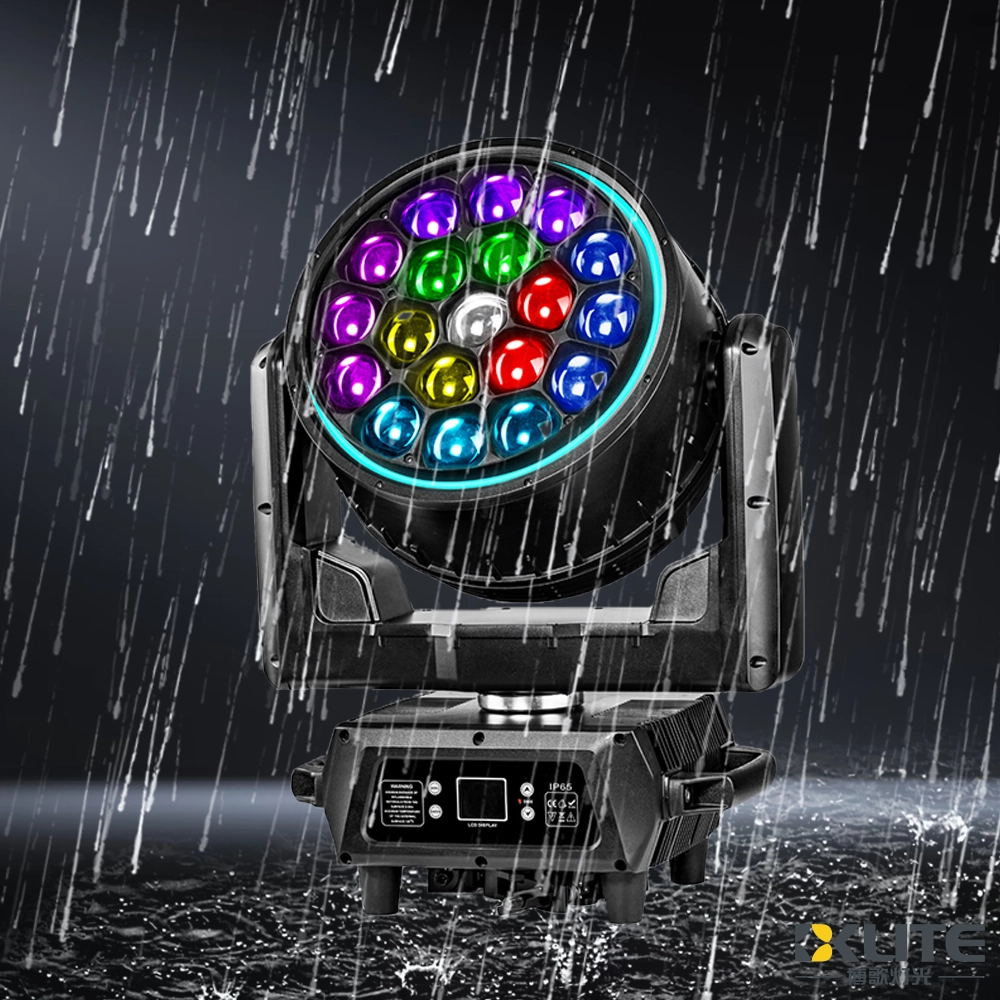
IP65 Waterproof Bee Eye Zoom 19x40W RGBW 4IN1 LED Beam Wash Moving Head Light with LED Ring
BKlite waterproof bee eye moving head light—your reliable choice from top waterproof moving head light manufacturers and suppliers. Ideal for outdoor stage, live event, music festival, this energy-saving fixture ensures powerful, precise illumination for any venue. It delivers powerful, reliable lighting performance in any weather.
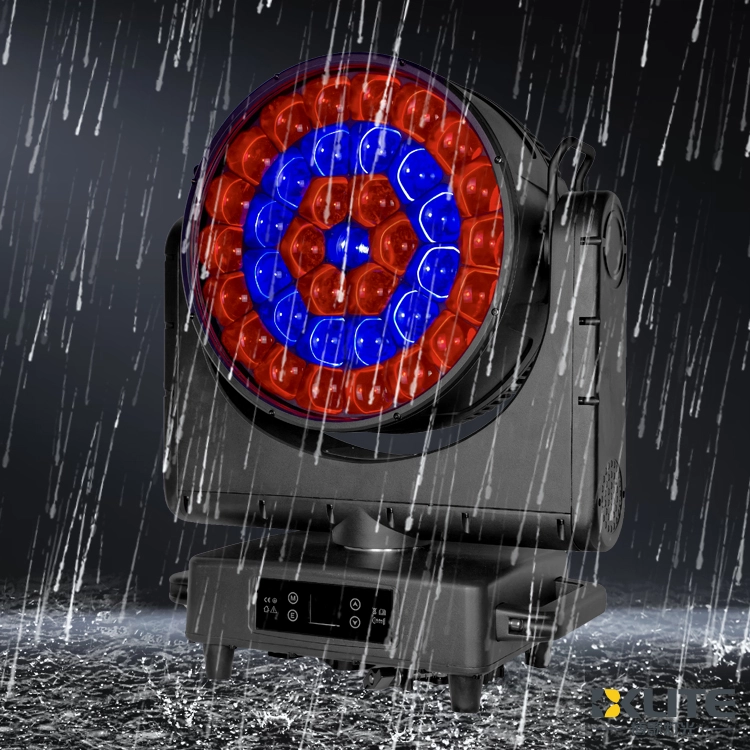
IP65 Waterproof ZOOM Bee Eye 37x40W RGBW 4in1 LED Moving Head Light
As a leading stage lighting equipment supplier with more than 15 years of industry know-how, BKlite brings you the IP65 ZOOM Bee Eye 37*40W RGBW 4in1 LED Moving Head Light (K25 Bee Eye) delivers vibrant, weatherproof lighting with powerful zoom and smooth movement. Ideal for dynamic stage effects, the K25 moving head light ensures stunning RGBW color mixing and reliable outdoor performance.
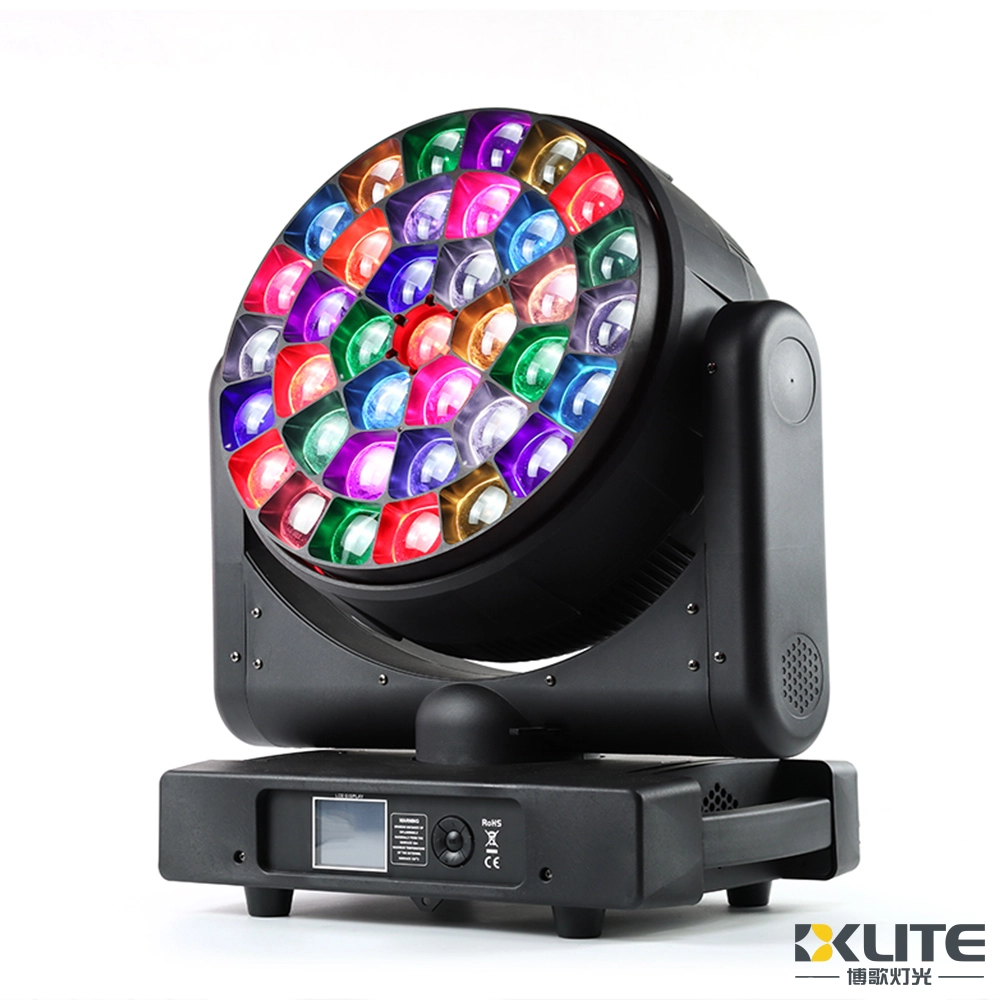
Bee Eye Zoom 37x40W RGBW 4in1 LED Beam Wash Moving Head Light


Copyright © 2025 BKLITE All Rights Reserved.