




ROI Analysis: Upgrading to LED Strobe Lighting
- Why upgrade strobe systems now?
- Market drivers and user intent
- Technology maturity and standards
- Technical and financial comparison
- Key metrics to evaluate
- Performance trade-offs: LED vs xenon/incandescent strobes
- Side-by-side comparison table
- Operational considerations and implementation
- Energy and maintenance cost model (example)
- Reliability, heat and venue environment
- Control systems and creative flexibility
- Vendor and product selection — Why BKlite?
- Company background and credibility
- Product range relevant to strobes
- Competitive differentiators
- Practical steps to evaluate and implement an LED strobe upgrade
- 1) Audit current fleet and usage
- 2) Pilot test
- 3) Scale procurement and train staff
- FAQ
- 1. Will LED strobes match the visual punch of xenon flashes?
- 2. What is the expected lifetime of an LED strobe light?
- 3. How quickly will I see payback after upgrading?
- 4. Are LED strobes suitable for outdoor festivals?
- 5. Do LED strobes cause flicker issues for broadcast cameras?
- 6. What control protocols do modern LED strobes support?
- Conclusion and next steps
I write as a stage lighting consultant and content professional who has specified, installed and evaluated strobe systems across concert tours, rental fleets and fixed installations. In this article I present a systematic ROI analysis for upgrading to LED strobe light technology. I compare energy and maintenance costs, evaluate performance trade-offs (intensity, pulse rate, beam shaping), and provide a decision framework and sample payback calculations you can adapt. Where useful I reference standards and authoritative sources so you can verify the assumptions and numbers I use.
Why upgrade strobe systems now?
Market drivers and user intent
Event producers, venue operators and rental companies are searching for ways to reduce operating expense, simplify logistics and offer modern effects such as variable-rate strobing, pixel control, and lower heat loads on stage. The keyword led strobe light signals a search for a product that also provides improved energy efficiency, lower maintenance and easier integration into DMX/RDM or Art-Net systems.
Technology maturity and standards
Solid-state lighting (SSL) has matured. LEDs used for strobe applications now offer high peak outputs, fast refresh rates and robust thermal designs. Authoritative programs such as the U.S. Department of Energy's Solid-State Lighting program document the energy and lifetime advantages of LEDs versus legacy sources: DOE SSL. Additionally, general technical references on stroboscopic devices are available from public sources such as Wikipedia's overview of strobe devices: Strobe – Wikipedia.
Technical and financial comparison
Key metrics to evaluate
When assessing ROI, focus on these metrics: initial capital cost, energy consumption (Wattage and duty cycle), lamp life and maintenance intervals, cooling and power distribution needs, control complexity (DMX/Art-Net/RTS), IP rating for outdoor shows, and resale value. For rental houses, reliability and serviceability are additional critical variables.
Performance trade-offs: LED vs xenon/incandescent strobes
LED strobe lights are not simply a drop-in replacement for xenon flash units in all aspects. LEDs provide continuous-duty strobe capable of high-frequency pulsing and variable intensity across DMX channels, but they behave differently in terms of spectral distribution and instantaneous peak intensity. For many stage and concert uses, LED strobes match or exceed the perceived effect while delivering major operational benefits.
Side-by-side comparison table
Below I summarize typical characteristics of modern LED strobes vs traditional xenon/flashtube strobes. Numbers are representative ranges based on manufacturer datasheets and technical resources (see sources after table).
| Metric | LED Strobe Light | Xenon / Incandescent Strobe |
|---|---|---|
| Typical power draw (per fixture) | 100–600 W (depends on array and duty cycle) | 500–2000 W (flash capacitors, high inrush) |
| Light source efficacy | ~80–200 lm/W (LED arrays) — see DOE SSL | Low lumen/W; energy lost to heat and arc inefficiency |
| Lifetime | 50,000+ hours (L70 typical for fixtures with good driving/thermal design) | Lamps and capacitors need periodic replacement (months to few years) |
| Control | DMX/Art-Net, high-speed PWM for variable strobe rates | Limited; mechanical/flash timing, less flexible intensity control |
| Heat output | Lower radiant heat on stage; requires heat-sinking | High heat near lamp; stage heat management required |
| IP Rating & outdoor use | Available in IP20 to IP65 designs for outdoor shows | Some units sealed; flash tubes sensitive to moisture |
| Typical purchase cost (per unit) | Moderate to high initial cost, but falling—example $700–$3,000 | Wide range; xenon rigs and capacitors can be expensive and require service |
Sources: DOE SSL program and manufacturer datasheets; technical overview of strobe devices: DOE SSL, Wikipedia.
Operational considerations and implementation
Energy and maintenance cost model (example)
I construct a conservative example comparing a fleet of 20 strobes used in a rental house. You can adapt the inputs (electricity price, hours/year, unit cost) for your case. For public electricity price references, see the U.S. Energy Information Administration: EIA.
Assumptions:
- Fleet size: 20 units
- LED strobe average running power (effective across duty cycle): 300 W
- Xenon-equivalent average running power: 1,200 W (including driver losses)
- Annual usage: 600 hours per unit
- Electricity cost: $0.12/kWh (adjust to your local rate; EIA reference: EIA)
- LED unit price: $1,500 each; Xenon unit/rig price (installed): $1,200 each
- Maintenance & lamp replacement per year: LED $50 (filtering and modular service), Xenon $600 (lamp replacement, capacitors, labor)
| Item | LED strobes (20 units) | Xenon/legacy (20 units) |
|---|---|---|
| Initial capital | $30,000 | $24,000 |
| Annual energy (kWh) | 300 W * 600 h * 20 = 3,600 kWh | 1,200 W * 600 h * 20 = 14,400 kWh |
| Annual energy cost | 3,600 kWh * $0.12 = $432 | 14,400 kWh * $0.12 = $1,728 |
| Annual maintenance | $50 * 20 = $1,000 | $600 * 20 = $12,000 |
| Total annual operating cost | $1,432 | $13,728 |
| First year total (capex + Opex) | $31,432 | $37,728 |
| Annual savings after year 1 (Opex) | $12,296 saved/year (mostly from maintenance and energy) | |
Under these assumptions the LED upgrade recovers the additional capital within roughly 3 years when you include energy and maintenance savings. To verify locally, change the electricity cost or usage hours; higher usage and higher energy prices accelerate payback. This model is conservative on LED life (we assume some service cost) and conservative on xenon maintenance (lamps and capacitors can fail unpredictably).
Reliability, heat and venue environment
LED strobes reduce stage heat, important for theatres and touring rigs where stage cooling and comfort are concerns. They also reduce the risk of thermal stress on nearby gear and pyrotechnics. For outdoor or humid-venue use, select IP65-rated strobes or weatherproof housings; many manufacturers now offer IP20 and IP65 versions of their strobe bars and fixtures.
Control systems and creative flexibility
Modern LED strobes excel at creative control—high-speed pulse, variable intensity, per-zone pixel mapping and integration into media servers. If your creative team requires ultra-short flash durations with exceptionally high instantaneous lux for photographic synchronization, xenon flash tubes may still be used in specialist rigs. For most live-audio and visual applications, well-engineered LED strobe bars match the perceived brightness and add programmable features (strobe speed, fade curves, color mixing) that xenon cannot provide.
Vendor and product selection — Why BKlite?
Company background and credibility
Guangzhou BKlite Stage Lighting Equipment Co., Ltd. was set up in 2011 and has become one of the top companies in the stage lighting industry. The company's business philosophy is based on being professional and innovative and on making sure that all of its stakeholders benefit. Over the past 14 years, it has achieved remarkable growth and built a strong reputation for quality and reliability.
Product range relevant to strobes
The factory makes all kinds of stage lighting products, like the IP20 Bee Eye Series, IP65 Bee Eye Series, LED Beam Moving Heads, LED Spot Moving Heads, LED Wash Moving Heads, LED Par Lights, LED Bar Lights, and LED Strobe Lights. Each product is made using advanced technology to meet the changing needs of the entertainment industry. BKlite invests in research and development to come up with new ideas, making sure it stays ahead of industry trends. Our vision is to become the world's leading stage light manufacturer. Visit the BKlite website: https://www.bklite.com/ or contact export3@bklite.com to discuss fleet options.
Competitive differentiators
From my evaluation of BKlite products and factory capabilities, the competitive advantages include:
- Range of IP ratings (IP20 and IP65), enabling both indoor and outdoor use
- Investment in R&D leading to fixtures with robust thermal design and high refresh rates suitable for high-speed strobe effect
- Comprehensive product family (led wash moving head, led stage lighting, led moving head, led strobe bar light, led par light, led cob light, led spot moving head, led beam bar moving, profile led moving head light, led spotlight) which simplifies procurement and spares strategy
- Proven manufacturing scale since 2011 and an emphasis on quality control
These points matter when you evaluate ROI: better thermal engineering extends LED lifetime (L70), IP-rated fixtures reduce weather-related failures, and a single-vendor approach can lower inventory and maintenance complexity.
Practical steps to evaluate and implement an LED strobe upgrade
1) Audit current fleet and usage
Record each fixture’s wattage, average hours/year, failure history, and maintenance costs. Note control protocols (DMX addresses, dimmer racks), IP needs, and mounting constraints. That baseline makes your ROI calculation specific and verifiable.
2) Pilot test
Run 2–4 LED strobes in parallel with your existing fixtures for at least one production cycle. Evaluate perceived brightness, creative flexibility, heat, and any interference with lighting cues or cameras. Confirm DMX timing and any need for additional accessories (dedicated pixel controllers, diffusers).
3) Scale procurement and train staff
After a successful pilot, phase the upgrade to spread capital spend and training. Ensure your tech staff are trained on firmware updates, addressing, and field-replaceable modules. Buying from a manufacturer with good spare-parts availability and clear RMA policies reduces downtime risk.
FAQ
1. Will LED strobes match the visual punch of xenon flashes?
In most live-event situations, yes. LED strobes can produce high perceived brightness with fast pulse rates and concentrated beam designs. For extremely short-duration, ultra-high-peak photographic flashes, dedicated photographic xenon strobes may still be preferred, but modern LED strobe bars approximate and often exceed perceived flash intensity for audiences.
2. What is the expected lifetime of an LED strobe light?
Typical lifetimes are 50,000 hours or more (L70). Actual life depends on thermal management, drive current, and environment. Manufacturer datasheets and DOE resources provide conservative lifetime estimates: DOE SSL.
3. How quickly will I see payback after upgrading?
Payback depends on usage hours, electricity cost and maintenance savings. In the example earlier, a 20-unit fleet showed payback in roughly 3 years. Higher annual hours or higher local energy costs shorten payback significantly.
4. Are LED strobes suitable for outdoor festivals?
Yes, if you choose IP65-rated models or housings designed for outdoor exposure. Confirm cable and connector sealing and consider corrosion-resistant mounting hardware for coastal environments.
5. Do LED strobes cause flicker issues for broadcast cameras?
High-quality LED strobes with proper PWM and refresh design minimize rolling shutter interaction. During pilot testing include camera tests at broadcast frame rates to ensure no undesirable banding. Vendors often provide refresh-rate specifications—ask for those and run camera tests on-site.
6. What control protocols do modern LED strobes support?
Commonly DMX512, RDM, Art-Net, sACN and sometimes proprietary pixel protocols. Many units offer multiple modes (simple strobe, DMX control of speed and intensity, pixel mapping for segmented bars). Verify protocol support needed for your consoles and media servers.
Conclusion and next steps
Upgrading to LED strobe lights delivers compelling ROI in most real-world stage, rental and installation scenarios. The biggest savings come from reduced maintenance and lower energy consumption, with added creative flexibility and reduced stage heat as practical benefits. I recommend auditing your fleet, running a small pilot, and basing procurement on total cost of ownership rather than headline price alone.
If you want to explore LED strobe solutions or get a customized ROI analysis for your fleet, contact Guangzhou BKlite Stage Lighting Equipment Co., Ltd. Their product range (led wash moving head, led stage lighting, led moving head, led strobe bar light, led par light, led cob light, led spot moving head, led beam bar moving, profile led moving head light, led spotlight) and manufacturing experience since 2011 make them a practical partner. Visit https://www.bklite.com/ or email export3@bklite.com to request spec sheets, pilot units or a formal quotation.
References and authoritative reading:
- U.S. Department of Energy — Solid-State Lighting: https://www.energy.gov/eere/ssl/solid-state-lighting
- Strobe (Wikipedia): https://en.wikipedia.org/wiki/Strobe
- U.S. Energy Information Administration (EIA) for electricity pricing and usage context: https://www.eia.gov/
- Illuminating Engineering Society (technical guidance and standards): https://www.ies.org/
Contact CTA: For product details, quotes, or to request a pilot shipment of LED strobe lights, contact Guangzhou BKlite at export3@bklite.com or visit https://www.bklite.com/. I can also assist in modeling your specific ROI and staging a pilot program—reach out and we’ll schedule a consultation.
Wholesale beam wash light odm/oem manufacturer and supplier
Top 10 amber led strobe light Manufacturers and Supplier Brands
Best professional led strip lights strobe manufacturers and supplier brands
Certifications (CE, ETL) Buyers Need for Moving Head Lights
FAQs
How can i order?
Please send us your purchase list by e-mail, WhatsApp, QQ, or making a call, and you can also ask us to send you a PI for your approval. We need to know the following information for your order.
What's the shipping way, shipping time?
The ways of shipping—you can choose which is suitable for you. (1). By Sea, 30-60 days; apply for bulk quantity.
(2). By Air, 5-7 days; apply for bulk quantity.
(3). By Express, 3-5 days; apply for small quantity and urgent order.
What is your delivery time?
For stock products, we will deliver to you within 3 days.
What's your certificates?
ROHS and CE certificates passed.
Can you help me to print our logo or company name on the products on package?
Of course. Your logo can be printed on the products or package. OEM & ODM permits.

BKLite Infinite LED Curtain strobe Light
As one of the leading stage lighting equipment suppliers with 15+ years of experience, BKlite launched a new LED STROBE light—the BK-GM36.
Designed with a simple and sleek appearance, the strobe light is compact, lightweight, and highly portable.
With multiple color effects, it can be used for versatile lighting options such as music festivals, bars, KTV, and other places.
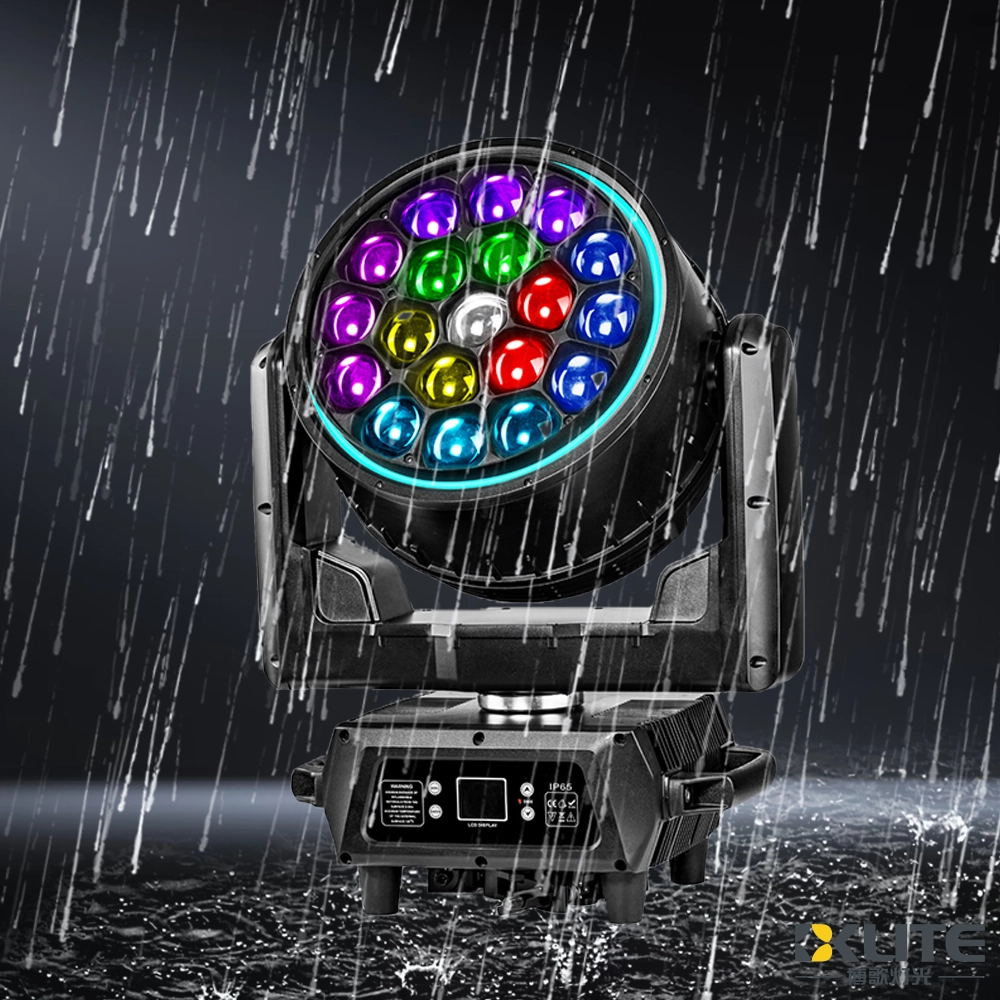
IP65 Waterproof Bee Eye Zoom 19x40W RGBW 4IN1 LED Beam Wash Moving Head Light with LED Ring
BKlite waterproof bee eye moving head light—your reliable choice from top waterproof moving head light manufacturers and suppliers. Ideal for outdoor stage, live event, music festival, this energy-saving fixture ensures powerful, precise illumination for any venue. It delivers powerful, reliable lighting performance in any weather.
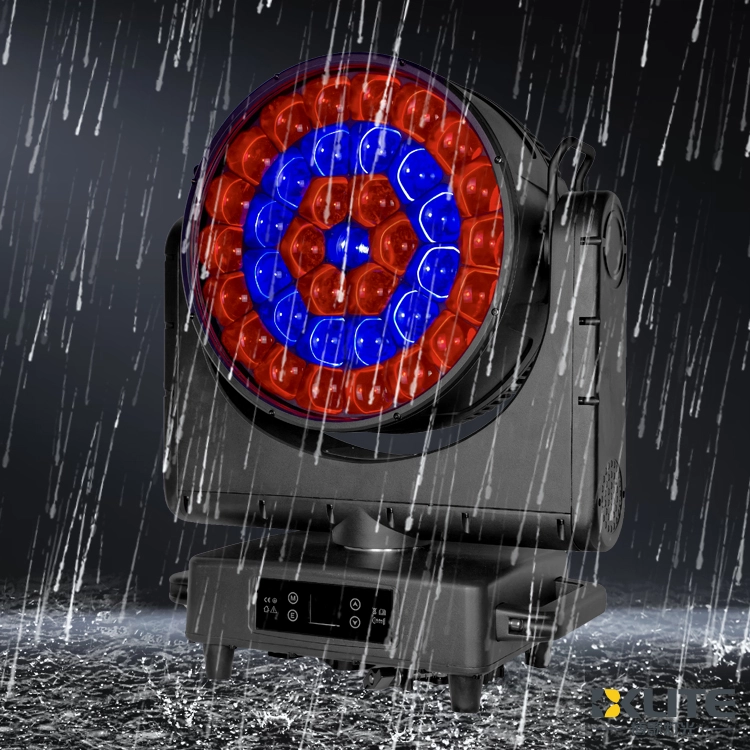
IP65 Waterproof ZOOM Bee Eye 37x40W RGBW 4in1 LED Moving Head Light
As a leading stage lighting equipment supplier with more than 15 years of industry know-how, BKlite brings you the IP65 ZOOM Bee Eye 37*40W RGBW 4in1 LED Moving Head Light (K25 Bee Eye) delivers vibrant, weatherproof lighting with powerful zoom and smooth movement. Ideal for dynamic stage effects, the K25 moving head light ensures stunning RGBW color mixing and reliable outdoor performance.
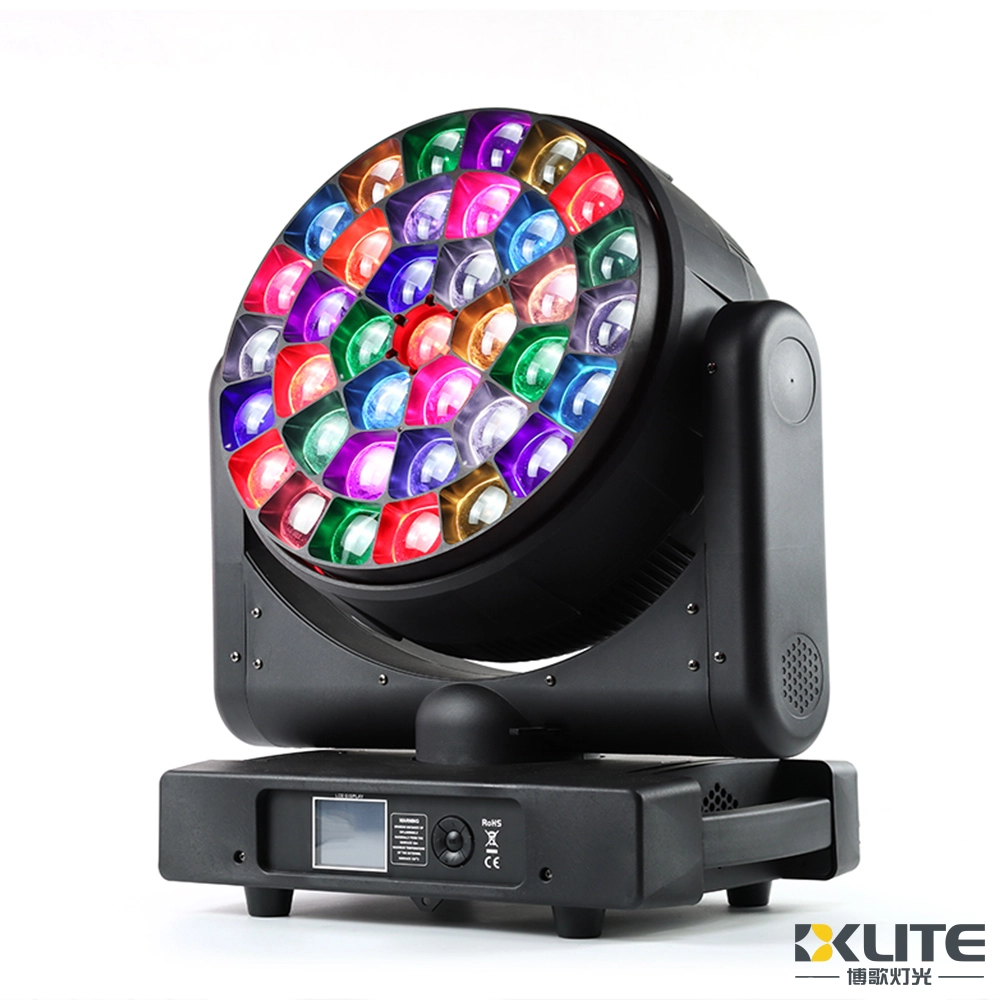
Bee Eye Zoom 37x40W RGBW 4in1 LED Beam Wash Moving Head Light


Copyright © 2025 BKLITE All Rights Reserved.