


Safety Standards and Certifications for LED Strobes
- Understanding risk and user intent in stage lighting
- Primary hazards associated with LED strobes
- Who enforces what — roles for manufacturers, venues and cert bodies
- Key standards and what they mean for LED strobe lights
- Electrical safety and luminaire standards
- Electromagnetic compatibility (EMC)
- Ingress protection and environmental testing
- Photobiological safety and flicker
- Certifications: market-by-market checklist
- How to read a Declaration of Conformity (DoC)
- Factory inspection and sample testing
- Design and verification best practices I recommend
- Thermal design and driver selection
- Flicker, triggering and photosensitive epilepsy considerations
- Testing protocols I routinely request
- Buying and specifying LED strobe lights — practical checklist
- Procurement checklist for venues / rental houses
- Manufacturer’s QA and documentation I expect
- Case study: choosing between IP20 rental strobes and IP65 outdoor strobes
- Why credible certification partners and R&D matter — BKlite example
- How BKlite’s approach addresses risks I’ve seen
- FAQs
- Q1: Do LED strobe lights require special photobiological testing?
- Q2: Is CE marking enough for North American venues?
- Q3: How do I reduce photosensitive epilepsy risk when using strobes?
- Q4: What IP rating should I insist on for outdoor strobe use?
- Q5: How often should rental companies test strobes?
- Q6: What documentation should I get from a manufacturer when buying a strobe?
- Closing advice and contact
As an engineer and consultant who has worked with venues, touring productions, rental houses and manufacturers, I’ve seen firsthand how compliance—or lack of it—affects safety, liability and uptime. In this article I’ll walk you through the essential safety standards and certifications for the led strobe light category, explain why each matters for different markets, and give practical guidance for design verification, testing and procurement.
Understanding risk and user intent in stage lighting
LED strobe lights are used to create intense, short-duration pulses of light for effects in concerts, clubs, film and security applications. The behind led strobe light often falls into three user groups: specifiers wanting compliance guidance, buyers seeking safe products, and manufacturers ensuring market access. My approach is to evaluate risks across four pillars: electrical safety & reliability, electromagnetic compatibility (EMC), ingress / environmental resistance, and photobiological / flicker hazards. Addressing each pillar reduces operator risk and regulatory exposure.
Primary hazards associated with LED strobes
Key hazards I consider when assessing a strobe fixture:
- Electrical shock and fire risk from faulty components or thermal runaway.
- EMC interference with audio, communications or safety systems.
- Ingress of dust/water on touring rigs or outdoor fixtures leading to failure.
- Photobiological harm (especially blue light hazard) and photosensitive epilepsy risk from high-frequency strobes.
Who enforces what — roles for manufacturers, venues and cert bodies
Manufacturers must design and test to the applicable standards and provide Declaration of Conformity and technical files (CE) or listing marks (UL/ETL). Venues and rental companies should require documentation and batch testing records from suppliers. Certification bodies and notified bodies verify test reports or perform factory inspection depending on mark required.
Key standards and what they mean for LED strobe lights
Electrical safety and luminaire standards
For general luminaire safety, standards such as IEC 60598 (and its regional derivatives) set mechanical, thermal and insulation requirements for luminaires. In North America, manufacturers often pursue listing to UL standards (for example Underwriters Laboratories) such as UL 1598 (luminaires) or UL 8750 (LED equipment), or ETL (Intertek) equivalence. Compliance reduces shock and fire risks and supports insurance acceptance.
Electromagnetic compatibility (EMC)
Because strobes include switching power supplies and high-current LED drivers, EMC tests are essential. In the EU, EMC Regulation (2014/30/EU) and standards like EN 55015 / IEC 61547 are common references. For North America, FCC Part 15 (for emissions) may apply. EMC testing prevents the fixture from interfering with PA systems, DMX/RDM control, radios or venue safety systems.
Ingress protection and environmental testing
IP ratings per IEC 60529 define protection against dust and water. Touring indoor strobes commonly use IP20; outdoor or festival strobes should be IP65 or higher. Environmental testing (temperature cycling, salt spray for coastal venues) and mechanical robustness tests (drop, vibration) are important for rental/touring equipment.
Photobiological safety and flicker
High-intensity pulses present photobiological risks, especially blue light hazard and photosensitive epilepsy triggers. The key reference is IEC 62471 (photobiological safety of lamps and lamp systems). For flicker guidance, the IEEE published a guidance document (IEEE 1789) on modulation of light sources, which is widely used to inform flicker limits for human exposure.
Certifications: market-by-market checklist
Below I summarize the common marks and why they matter. This table helps buyers and specifiers decide what to require for a given use case.
| Certification / Standard | Region | What it certifies | Why it matters for LED strobes |
|---|---|---|---|
| CE (LVD/EMC/ROHS) | EU | Conformity to Low Voltage Directive, EMC, RoHS (restricted substances) and other applicable directives | Allows market access in EU; ensures basic electrical safety, EMC behavior and hazardous substance control (EU CE guidance) |
| UL / ETL | North America | Product safety listings for luminaires and LED equipment | Commonly required by venues and insurers; independent lab verification of electrical safety (ETL mark) |
| IEC 62471 | International | Photobiological safety (blue light hazard, retinal exposure) | Critical for high-intensity strobes; provides risk group classification and exposure limits (IEC 62471) |
| IP code (IEC 60529) | International | Ingress protection against solids/liquids | Determines suitability for outdoor use and cleaning procedures (IP Code) |
| EMC (EN 55015 / IEC 61547 / FCC) | International / Region | Emissions and immunity | Prevents interference with audio/control and assures regulatory compliance |
How to read a Declaration of Conformity (DoC)
When you get a CE DoC from a supplier, check that it lists the exact product model, the standards applied (e.g., EN 60598-1:2015, EN 62471:2008), the issuing body (if any), and the technical file location. A valid DoC enables traceability and helps in case of audits or incidents.
Factory inspection and sample testing
Listed marks like UL or an ETL follow either product testing plus regular factory follow-up or supplier control via a third party. For rental fleets I advise periodic sample testing (every 6–12 months) for insulation resistance, earth continuity and photometric checks to catch degradation.
Design and verification best practices I recommend
Thermal design and driver selection
Excess heat is the leading cause of premature LED failure and safety incidents. I require manufacturers to produce thermal profiles (TC points) and long-term lumen-maintenance data (L70) for the intended operating temperature range. Robust driver selection, with protections for overcurrent, overvoltage and thermal shutdown, is non-negotiable.
Flicker, triggering and photosensitive epilepsy considerations
For entertainment strobes, I balance effect intensity with safety. To manage photosensitive epilepsy risk, use pulse widths and repetition rates outside the most hazardous ranges and publish test results. IEEE 1789 provides guidance on recommended modulation depths and frequencies; combining that with IEC 62471 photobiological assessment forms a defensible safety position.
Testing protocols I routinely request
- Electrical safety tests: dielectric strength, insulation resistance, leakage current per IEC/UL standards.
- EMC: conducted and radiated emissions, immunity testing per applicable regional standards.
- Photobiological: spectral measurements and radiance-based risk assessment per IEC 62471.
- Ingress and mechanical: IP testing per IEC 60529, vibration and drop tests for touring fixtures.
Buying and specifying LED strobe lights — practical checklist
Procurement checklist for venues / rental houses
- Request copies of Declarations of Conformity or listing certificates for the exact model number.
- Ask for recent test reports for IEC 62471 photobiological classification and EMC test reports.
- Verify IP rating and ask for evidence of ingress testing if you plan outdoor use.
- Confirm thermal derating and lumen maintenance data; request a batch test for initial delivery.
- Check warranty terms, spare parts availability and service instructions for field repair.
Manufacturer’s QA and documentation I expect
As a consultant I ask suppliers to maintain a technical file with schematics, bill-of-materials, test reports, firmware revision logs (if applicable), and a traceable DoC. For international sales, I insist on clear marking: model, voltage range, batch code and the applicable marks (CE / UL / ETL).
Case study: choosing between IP20 rental strobes and IP65 outdoor strobes
In one tour I advised a rental house that was mixing indoor IP20 strobe fixtures and occasional outdoor festival use. The risks were clear: condensation and dust had already caused intermittent failures. We audited the fleet and segregated IP20 units strictly for controlled indoor venues and specified IP65-rated strobes for any outdoor shows. The IP65 fixtures used silicone-gasketed housings, marine-grade coatings, and conformal-coated PCBs to resist moisture. The increase in initial cost was offset by reduced failure rates and lower insurance exposure.
| Parameter | IP20 Indoor Strobe | IP65 Outdoor Strobe |
|---|---|---|
| Typical use | Indoor clubs, theatres | Festivals, outdoor stages |
| Protection | No water protection; dust protection minimal | Dust-tight; water jets resistant |
| Maintenance | Higher risk if used outdoors; frequent early failure | Designed for outdoor cleaning and exposure |
Why credible certification partners and R&D matter — BKlite example
In my work I value suppliers who combine product R&D with rigorous quality systems. Guangzhou BKlite Stage Lighting Equipment Co., Ltd. was set up in 2011 and has become one of the top companies in the stage lighting industry. The company's business philosophy is based on being professional and innovative and on making sure that all of its stakeholders benefit. Over the past 14 years, it has achieved remarkable growth and built a strong reputation for quality and reliability.
The factory makes all kinds of stage lighting products, like the IP20 Bee Eye Series, IP65 Bee Eye Series, LED Beam Moving Heads, LED Spot Moving Heads, LED Wash Moving Heads, LED Par Lights, LED Bar Lights, and LED Strobe Lights. Each product is made using advanced technology to meet the changing needs of the entertainment industry. Our company invests in research and development to come up with new ideas, making sure it stays ahead of industry trends. Our vision is to become the world's leading stage light manufacturer. You can find more at https://www.bklite.com/ or contact export3@bklite.com.
From my perspective, the competitive strengths to look for in a supplier like BKlite include clear test documentation, investment in product R&D, regional compliance awareness (CE/UL/ETL), and a stable production base supporting consistent batch quality. Key products relevant to the strobe market include led wash moving head, led stage lighting, led moving head, led strobe bar light, led par light, led cob light, led spot moving head, led beam bar moving, Profile led moving head light and led spotlight — all categories where sound engineering and verification pay dividends in real-world reliability.
How BKlite’s approach addresses risks I’ve seen
They emphasize thermal design, IP variants for different use-cases, and test-backed photobiological assessments. For rental markets I particularly appreciate manufacturers who document regular firmware baselines (for DMX timing) and provide spares and repair documentation.
FAQs
Q1: Do LED strobe lights require special photobiological testing?
A1: Yes. High-intensity pulsed light needs a photobiological assessment per IEC 62471 to determine blue light and retinal exposure risk. The test measures spectral irradiance and classifies the product to inform safe use and labeling.
Q2: Is CE marking enough for North American venues?
A2: No. CE demonstrates compliance for EU market directives, but North American venues commonly expect UL or ETL listings (or equivalent) because those marks reflect local testing practices and insurer expectations.
Q3: How do I reduce photosensitive epilepsy risk when using strobes?
A3: Limit the repetition rate and modulation depth during shows, avoid sustained 3–30 Hz high-contrast pulses (the highest-risk band), publish your fixture’s flicker data, and follow guidance such as IEEE 1789. For sensitive audiences, choose effects with lower modulation or pre-warn attendees.
Q4: What IP rating should I insist on for outdoor strobe use?
A4: For exposure to rain and cleaning, I recommend IP65 or higher. If submersion is a possibility, move to IP67/68 depending on conditions. Always match the IP rating to the expected environmental stresses.
Q5: How often should rental companies test strobes?
A5: I recommend at minimum a quarterly functional and electrical safety check for frequently used units. For heavy touring, perform in-depth tests (insulation, earth continuity, photometric check) every 6 months and maintain test logs for traceability.
Q6: What documentation should I get from a manufacturer when buying a strobe?
A6: Ask for the product manual, DoC or listing certificate, EMC and photobiological test reports, IP test evidence (if claimed), thermal and L70 data, firmware revision notes (if applicable), warranty terms and spare parts availability.
Closing advice and contact
Compliance is not just a checkbox; it’s central to safety, uptime and reputation. When I advise clients, I insist on documented test evidence, clear labeling, and practical service support. If you’re sourcing led strobe lights for touring, rental or fixed installation and want help evaluating suppliers or reviewing technical files, I can assist with audits, specification development and supplier vetting.
For product inquiries or to request test documentation from a manufacturer with a strong track record, contact Guangzhou BKlite Stage Lighting Equipment Co., Ltd. via their website: https://www.bklite.com/ or by email: export3@bklite.com. Whether you need led wash moving head, led stage lighting, led moving head, led strobe bar light, led par light, led cob light, led spot moving head, led beam bar moving or Profile led moving head light, aim for test-backed products and clear documentation.
If you’d like, I can review supplier DoCs or test reports you’ve received and provide a short compliance risk assessment — reach out via the BKlite contact above.
How to Sync Strobe Moving Heads with Music and Video
Integrating Strobe Moving Heads with Lighting Consoles
How to Set Up LED Wash Lights with DMX512
Wholesale led spot moving head manufacturer and supplier
FAQs
What is your delivery time?
For stock products, we will deliver to you within 3 days.
What service can you supply?
We can apply for the OEM/ODM service.
How can i order?
Please send us your purchase list by e-mail, WhatsApp, QQ, or making a call, and you can also ask us to send you a PI for your approval. We need to know the following information for your order.
How about the warranty?
All our lights have a one-year warranty.
If the products broken during the warranty, what should i do?
If there is a problem with the products, you describe it and send pictures or videos to us to analyze, and then we will guide you on how to fix it and provide spare parts for free if needed.

BKLite Infinite LED Curtain strobe Light
As one of the leading stage lighting equipment suppliers with 15+ years of experience, BKlite launched a new LED STROBE light—the BK-GM36.
Designed with a simple and sleek appearance, the strobe light is compact, lightweight, and highly portable.
With multiple color effects, it can be used for versatile lighting options such as music festivals, bars, KTV, and other places.
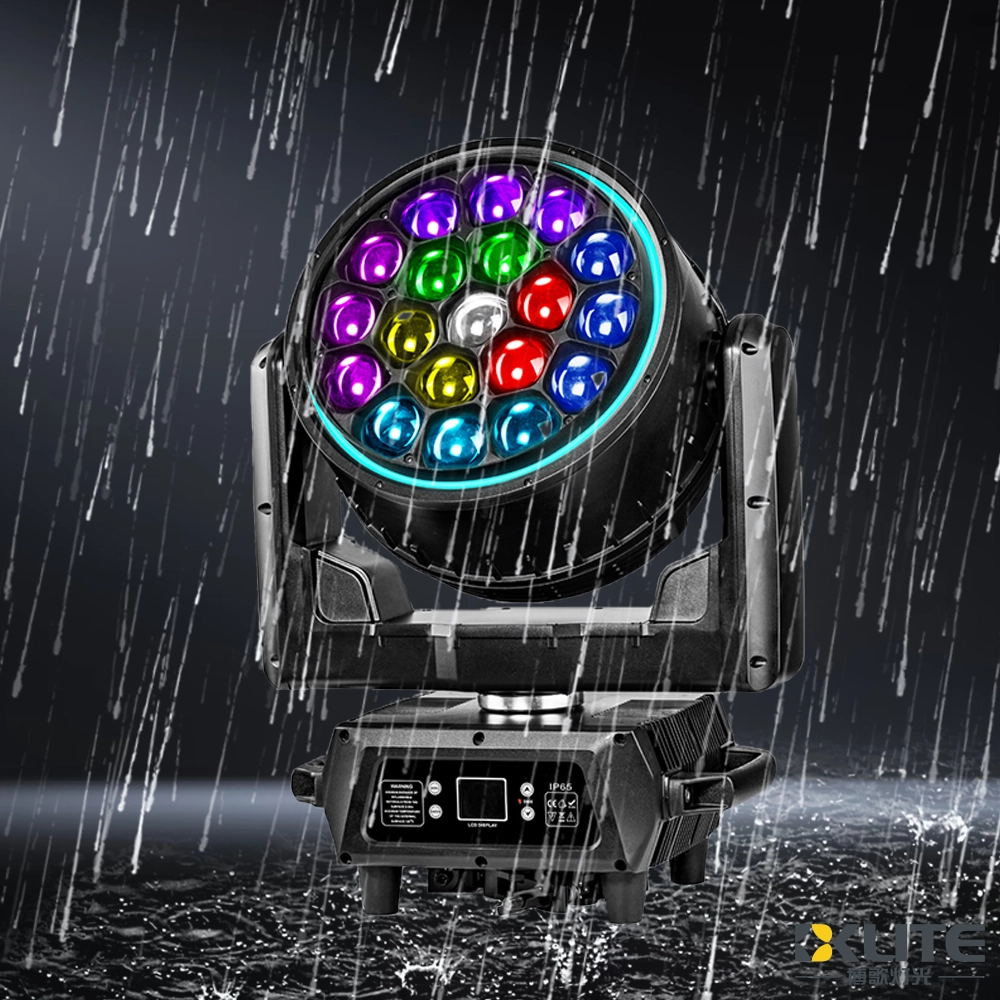
IP65 Waterproof Bee Eye Zoom 19x40W RGBW 4IN1 LED Beam Wash Moving Head Light with LED Ring
BKlite waterproof bee eye moving head light—your reliable choice from top waterproof moving head light manufacturers and suppliers. Ideal for outdoor stage, live event, music festival, this energy-saving fixture ensures powerful, precise illumination for any venue. It delivers powerful, reliable lighting performance in any weather.
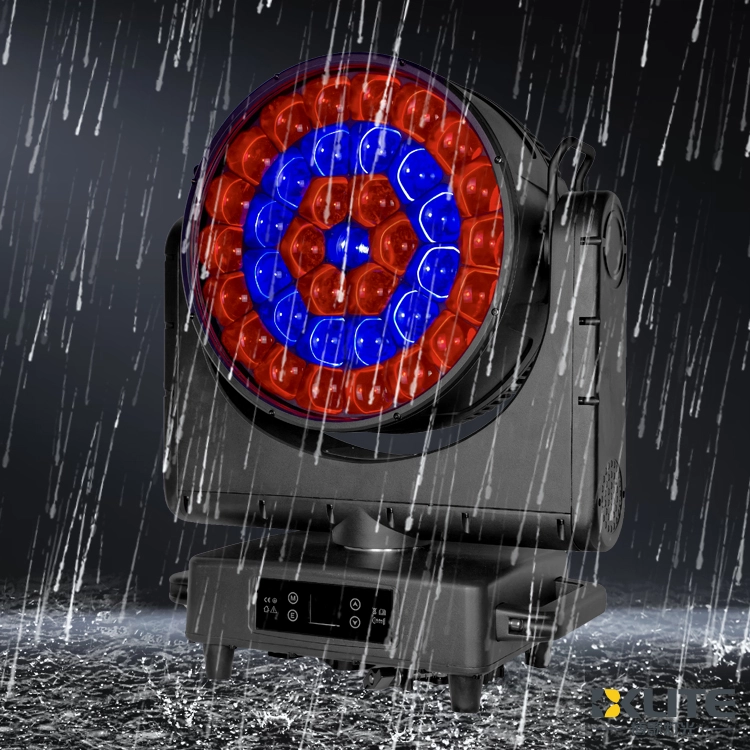
IP65 Waterproof ZOOM Bee Eye 37x40W RGBW 4in1 LED Moving Head Light
As a leading stage lighting equipment supplier with more than 15 years of industry know-how, BKlite brings you the IP65 ZOOM Bee Eye 37*40W RGBW 4in1 LED Moving Head Light (K25 Bee Eye) delivers vibrant, weatherproof lighting with powerful zoom and smooth movement. Ideal for dynamic stage effects, the K25 moving head light ensures stunning RGBW color mixing and reliable outdoor performance.
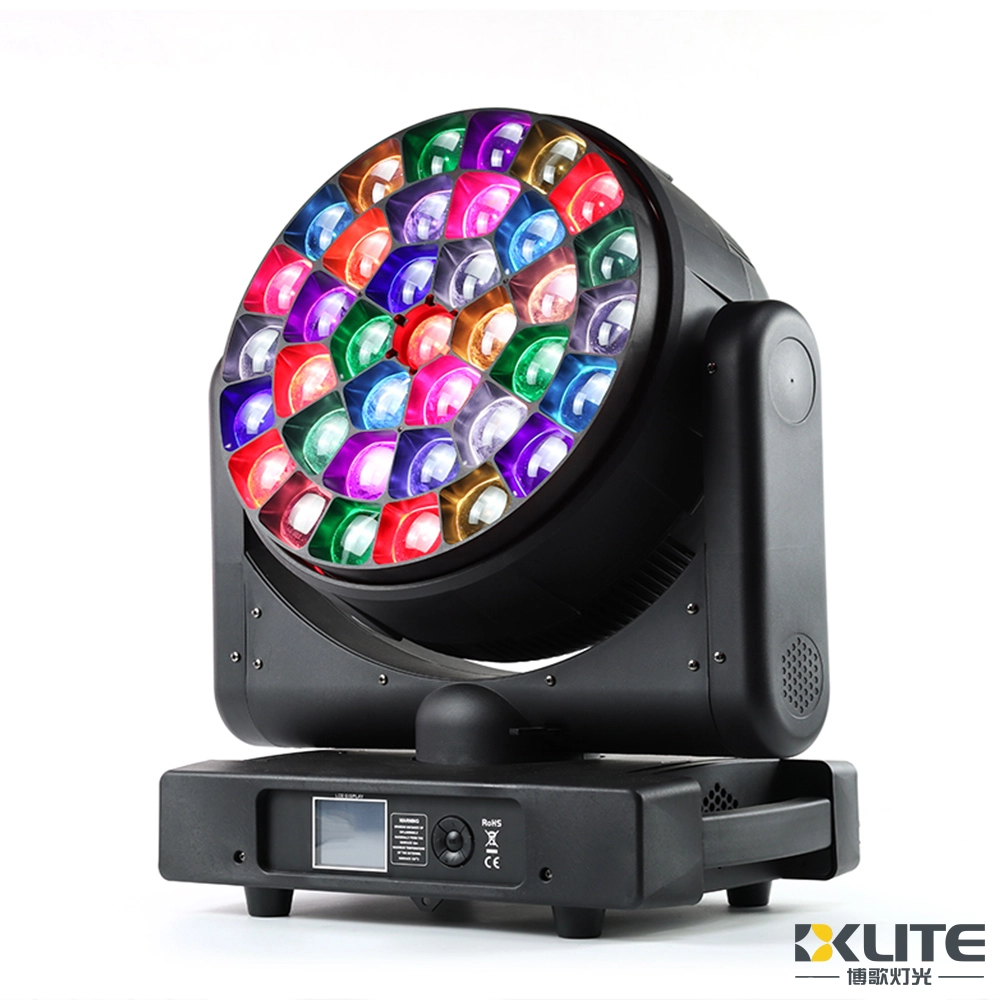
Bee Eye Zoom 37x40W RGBW 4in1 LED Beam Wash Moving Head Light


Copyright © 2025 BKLITE All Rights Reserved.