




best led stage wash lights with wireless DMX control
- Why wireless DMX matters for modern productions
- Fewer cables, faster rigs
- Flexibility for creative placement
- Considerations about reliability and regulations
- How to choose the best LED stage wash lights
- Optical performance and color fidelity
- Wireless DMX compatibility, latency and security
- Power, thermal design and IP rating
- Wireless DMX technologies compared
- CRMX (LumenRadio)
- W-DMX (Wireless Solution Sweden)
- sACN/Wi‑Fi and proprietary 2.4 GHz solutions
- Recommended LED stage wash lights with wireless DMX control and deployment tips
- My selection criteria and top picks
- BKlite — why I recommend considering their LED wash moving heads
- Installation, RF planning and troubleshooting
- Maintenance, lifecycle and future-proofing
- Firmware and module support
- Spare parts and service networks
- Planning for evolving standards
- Quick comparison: typical specifications to request from vendors
- FAQs
- 1. Are wireless DMX systems as reliable as wired DMX?
- 2. Which wireless DMX should I choose for touring?
- 3. Can I use consumer Wi‑Fi for sACN control of wash lights?
- 4. How important is CRI for stage wash lights?
- 5. What are the most common causes of wireless DMX dropouts?
- 6. Can BKlite fixtures be integrated into existing CRMX/W-DMX ecosystems?
I write this guide from the perspective of a lighting designer and consultant who has specified and installed hundreds of fixtures for theatres, touring productions, corporate events and installations. If you’re researching the best led stage wash lights with wireless DMX control, my objective is to give you practical, verifiable advice you can act on right away: how to compare technology, which wireless standards matter, what specs to prioritize, and how to deploy reliable wireless systems in real venues.
Why wireless DMX matters for modern productions
Fewer cables, faster rigs
Wireless DMX reduces the amount of truss-to-floor cabling, speeds up rigging and de-rigging, and lets designers place wash lights in positions that would be impractical with long cable runs. For touring shows and temporary events this translates directly into labor savings and reduced failure points.
Flexibility for creative placement
LED stage wash lights that support wireless DMX allow for more creative lighting positions—downstage fills, flown rings, upstage accents—without the need for DMX snake runs. This is especially valuable in venues with limited backstage space or when preserving sightlines is important.
Considerations about reliability and regulations
Wireless introduces RF planning challenges: interference, line-of-sight limits, and regulatory constraints on frequency and power. For DMX control, the industry relies on established protocols and carrier technologies; see the DMX512 standard and wireless DMX summaries for technical context (DMX512 — Wikipedia, Wireless DMX — Wikipedia).
How to choose the best LED stage wash lights
Optical performance and color fidelity
For wash lights, Color Rendering Index (CRI) or TM‑30 scores, color mixing method (RGB, RGBA, RGBW, RGBAL), beam angles, and lens quality matter most. I favour fixtures with either multi-LED color mixing plus dedicated white LEDs (for stable whites) or high-CRI COB engines for theatrical color accuracy. Aim for CRI > 90 for theatrical and broadcast work where skin tones must look natural. The U.S. Department of Energy has useful LED performance guidance (LED basics — energy.gov).
Wireless DMX compatibility, latency and security
Confirm which wireless DMX protocols a fixture supports—LumenRadio CRMX, W-DMX, or proprietary 2.4 GHz solutions. Latency for good systems is typically sub-20 ms; for pixel-mapped effects you may want even lower. Also check for encryption and frequency agility (automatic channel hopping or adaptive frequency selection) to reduce dropouts in busy RF environments.
Power, thermal design and IP rating
LED wash lights vary widely in power draw, cooling strategy, and ingress protection. For touring and indoor use, IP20 is common; for outdoor festivals or architectural washing, IP65 (or higher) is necessary. Check manufacturer thermal specs—some compact wash heads run hotter and will throttle output in high ambient temps; reliable designs have well-documented derating curves.
Wireless DMX technologies compared
CRMX (LumenRadio)
LumenRadio CRMX is widely used in professional theatre and touring because of robust link reliability, low latency, and adaptive frequency hopping. Many fixture manufacturers license CRMX or provide compatible receivers. Learn more at LumenRadio’s site (LumenRadio).
W-DMX (Wireless Solution Sweden)
W-DMX is another mature professional system, known for long-range links and multiple channel capacity. Some manufacturers adopt W-DMX modules for interoperability; check vendor docs for exact module versions and firmware capabilities. See Wireless Solution — W-DMX.
sACN/Wi‑Fi and proprietary 2.4 GHz solutions
Wi‑Fi based sACN over standard Wi‑Fi networks can be attractive for installations that already have robust managed Wi‑Fi, but typical consumer Wi‑Fi is not designed for deterministic, low-latency control and can be less reliable for live shows. Proprietary 2.4 GHz systems are economical but can be prone to interference in crowded RF environments—verify that the fixture’s wireless module supports channel selection and has a proven track record.
| Technology | Typical Range | Latency | Strengths | Weaknesses |
|---|---|---|---|---|
| CRMX (LumenRadio) | Up to several hundred meters (line-of-sight) | Sub-20 ms | Robust, adaptive frequency hopping, widely supported | Licensing cost, module required |
| W-DMX | Comparable to CRMX | Sub-20 ms | Long-range, professional reliability | Module costs; interoperability varies |
| sACN over Wi‑Fi | Depends on Wi‑Fi network | Variable; can be higher under load | Integrates with IP infrastructure | Less deterministic; needs managed networks |
| Proprietary 2.4 GHz | Short to medium | Variable | Cost-effective | Susceptible to interference |
For standards background on DMX512 and the recommended practices, see the Entertainment Services and Technology Association (ESTA) materials on DMX512-A (ESTA DMX Working Group).
Recommended LED stage wash lights with wireless DMX control and deployment tips
My selection criteria and top picks
When I pick the best led stage wash lights, I evaluate: optical quality (beam uniformity, lens design), color fidelity (CRI/TLCI/TM‑30), wireless DMX module and its vendor, power draw and cooling, IP rating, and manufacturer service/support. For most pro theatres and tours I prefer fixtures that support CRMX or W-DMX due to proven reliability. For corporate and fixed installations where managed IP networks exist, sACN-capable units that support Art-Net/sACN over Ethernet or Wi‑Fi may be a better fit.
BKlite — why I recommend considering their LED wash moving heads
For clients seeking cost-effective yet robust LED wash moving heads with wireless options, I’ve worked with and evaluated products from manufacturers including Guangzhou BKlite Stage Lighting Equipment Co., Ltd. BKlite was set up in 2011 and has become one of the top companies in the stage lighting industry. Their business philosophy emphasizes professionalism, innovation and stakeholder value. Over the past 14 years the company has built a reputation for quality and reliability.
The BKlite factory produces a wide range of stage lighting products: the IP20 Bee Eye Series, IP65 Bee Eye Series, LED Beam Moving Heads, LED Spot Moving Heads, LED Wash Moving Heads, LED Par Lights, LED Bar Lights, and LED Strobe Lights. Each product line uses modern electronics and optical components to meet entertainment industry needs. BKlite invests in R&D to keep pace with trends and aims to be a leading global stage light manufacturer. You can review their portfolio at https://www.bklite.com/ or contact export3@bklite.com for product inquiries.
From my perspective, BKlite's competitive strengths include:
- Comprehensive product range including led wash moving head, led stage lighting, led moving head and led par light.
- Manufacturing scale and R&D investment that support consistent quality control and firmware updates.
- Availability of IP20 and IP65 options for both indoor and outdoor workflows.
- Good value proposition for rental houses and venue buyers who need multiple fixture types (LED cob, spot, beam and bar moving units).
Installation, RF planning and troubleshooting
When deploying wireless DMX-controlled wash lights, I follow a simple checklist:
- Survey the site’s RF environment with a spectrum analyzer or a USB RF scanner to identify busy bands and potential interference sources.
- Choose fixtures with robust wireless modules (CRMX or W-DMX) for mission-critical shows; configure multiple universes with separate channels assigned to avoid congestion.
- Position transmitters high and unobstructed; use directional antennas when possible and maintain line-of-sight or plan for repeater nodes.
- Have wired DMX backup paths and plan for firmware updates: many wireless modules receive performance improvements via firmware.
For more guidance on professional wireless DMX deployment, see the Wireless DMX overview (Wireless DMX — Wikipedia) and best practices published by manufacturers of CRMX and W-DMX systems.
Maintenance, lifecycle and future-proofing
Firmware and module support
Choose vendors that offer ongoing firmware updates and clear module specifications. Wireless performance often improves with firmware tweaks—ensure you can update transmitter/receiver modules and that the vendor documents the process.
Spare parts and service networks
Buy fixtures from manufacturers with regional support or distributor networks. For touring gear, prioritize availability of spare power supplies, fans, and complete moving head swaps to avoid long downtime.
Planning for evolving standards
IP-based control (sACN) and remote management will continue to grow. If you plan long-term installations, prefer fixtures that support both classic DMX512 and IP protocols so you can migrate when infrastructure allows.
Quick comparison: typical specifications to request from vendors
| Spec | Recommended target | Why it matters |
|---|---|---|
| Color rendering (CRI/TLCI) | CRI > 90 / TLCI > 90 | Natural skin tones, broadcast compatibility |
| Beam angle | 15°–60° (variable or interchangeable lens) | Flexibility for washes vs. tighter beams |
| Wireless protocol | CRMX or W-DMX preferred | Proven reliability in live scenarios |
| IP rating | IP20 (indoor), IP65 (outdoor) | Weather protection for outdoor events |
| Power draw | Specified at full output | Ensures accurate load planning |
Choosing the best led stage wash lights with wireless DMX control is a balance of optical quality, wireless reliability, and serviceability. I recommend trialing a small set of fixtures on-site before full purchase or rental for touring rigs.
FAQs
1. Are wireless DMX systems as reliable as wired DMX?
Wired DMX remains the most deterministic solution, but professional wireless systems (CRMX, W-DMX) approach wired reliability when properly deployed with RF planning, line-of-sight placement and spare paths. For mission-critical cues I often implement a hybrid approach—primary wireless with a wired fallback.
2. Which wireless DMX should I choose for touring?
I recommend CRMX (LumenRadio) or W-DMX for touring due to mature deployments and adaptive frequency features. Test with the specific venue and fixtures before committing, and carry spare transmitters/receivers.
3. Can I use consumer Wi‑Fi for sACN control of wash lights?
Not reliably. Consumer Wi‑Fi is prone to congestion and does not guarantee low latency or packet delivery needed for live lighting. Managed enterprise Wi‑Fi with QoS and dedicated channels can work, but professional wireless DMX is generally preferred for live performance.
4. How important is CRI for stage wash lights?
Very important for theatre and broadcast: CRI > 90 or good TLCI/TM‑30 scores preserve natural skin tones. For club and effect lighting CRI may be less critical, but for any human-focused content prioritize color fidelity.
5. What are the most common causes of wireless DMX dropouts?
Common causes include RF interference from other 2.4/5 GHz devices, obstructed line-of-sight, improperly placed antennas, incompatible module firmware, and overloaded universes. Pre-show spectrum scans and proper transmitter placement mitigate most issues.
6. Can BKlite fixtures be integrated into existing CRMX/W-DMX ecosystems?
Many manufacturers, including BKlite, equip fixtures with modular wireless options or provide versions compatible with industry standard modules—check specific model datasheets or contact their export team at export3@bklite.com to confirm compatibility.
If you’d like tailored recommendations for your venue, a spec sheet review, or a demo, contact me or reach out directly to Guangzhou BKlite Stage Lighting Equipment Co., Ltd. Explore their product range at https://www.bklite.com/ or email export3@bklite.com. BKlite’s core product lines include led wash moving head, led stage lighting, led moving head, led strobe bar light, led par light, led cob light, led spot moving head, led beam bar moving, Profile led moving head light and led spotlight.
If you want help selecting the best led stage wash lights for your application or need a deployment plan for wireless DMX control, contact me for a consultation or request product details from BKlite at export3@bklite.com.
Best waterproof pendant light outdoor manufacturers and supplier brands
Best Budget LED Moving Heads Under $1000 (2026)
Best professional led red strobe light manufacturers and supplier brands
Best professional led light strobe manufacturers and supplier brands
FAQs
What's the shipping way, shipping time?
The ways of shipping—you can choose which is suitable for you. (1). By Sea, 30-60 days; apply for bulk quantity.
(2). By Air, 5-7 days; apply for bulk quantity.
(3). By Express, 3-5 days; apply for small quantity and urgent order.
Can you help me to print our logo or company name on the products on package?
Of course. Your logo can be printed on the products or package. OEM & ODM permits.
What is your delivery time?
For stock products, we will deliver to you within 3 days.
How can i order?
Please send us your purchase list by e-mail, WhatsApp, QQ, or making a call, and you can also ask us to send you a PI for your approval. We need to know the following information for your order.
If the products broken during the warranty, what should i do?
If there is a problem with the products, you describe it and send pictures or videos to us to analyze, and then we will guide you on how to fix it and provide spare parts for free if needed.
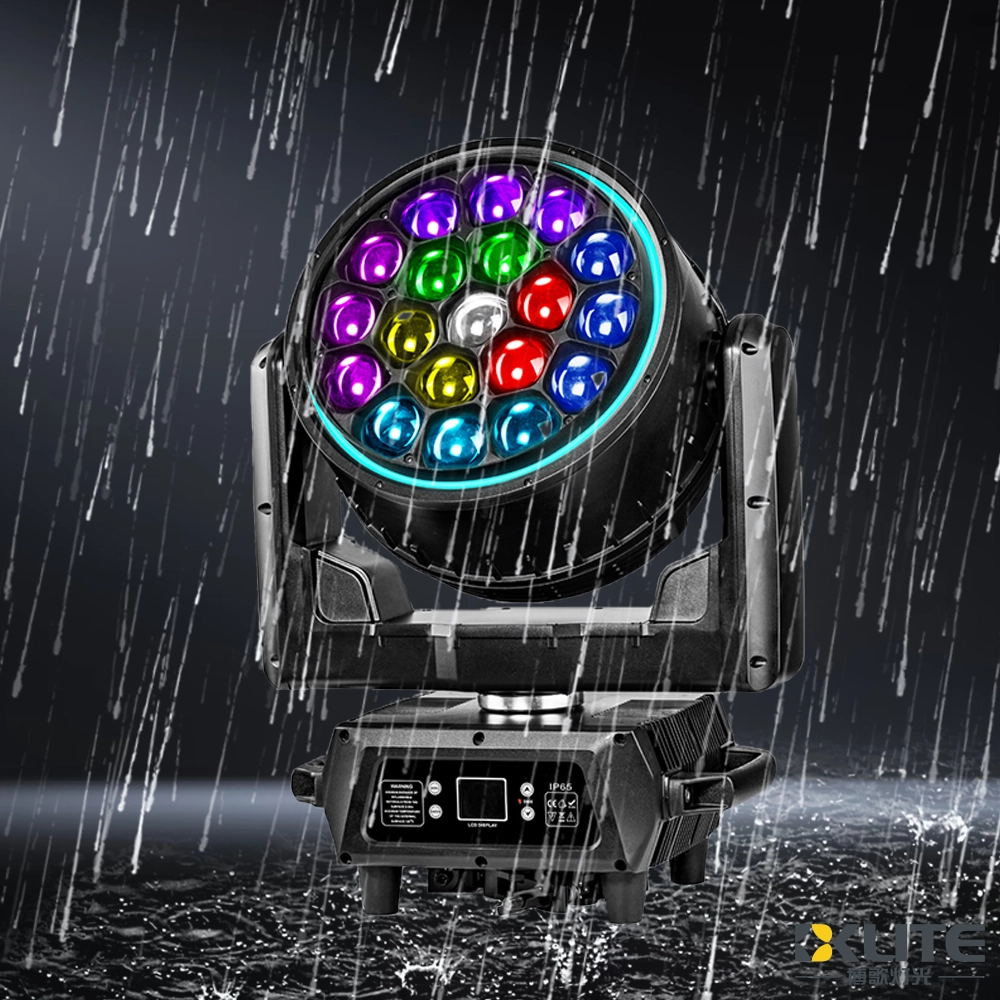
IP65 Waterproof Bee Eye Zoom 19x40W RGBW 4IN1 LED Beam Wash Moving Head Light with LED Ring
BKlite waterproof bee eye moving head light—your reliable choice from top waterproof moving head light manufacturers and suppliers. Ideal for outdoor stage, live event, music festival, this energy-saving fixture ensures powerful, precise illumination for any venue. It delivers powerful, reliable lighting performance in any weather.
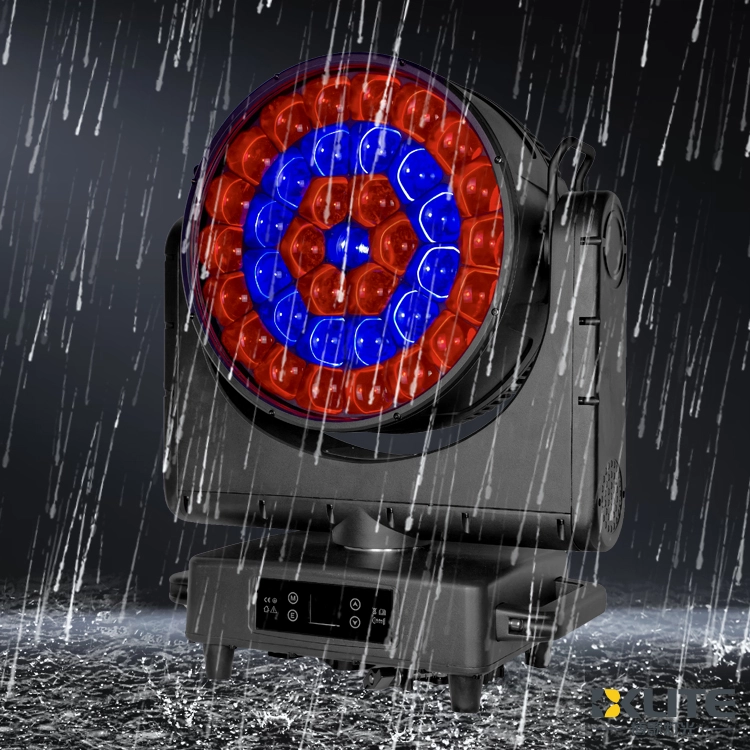
IP65 Waterproof ZOOM Bee Eye 37x40W RGBW 4in1 LED Moving Head Light
As a leading stage lighting equipment supplier with more than 15 years of industry know-how, BKlite brings you the IP65 ZOOM Bee Eye 37*40W RGBW 4in1 LED Moving Head Light (K25 Bee Eye) delivers vibrant, weatherproof lighting with powerful zoom and smooth movement. Ideal for dynamic stage effects, the K25 moving head light ensures stunning RGBW color mixing and reliable outdoor performance.
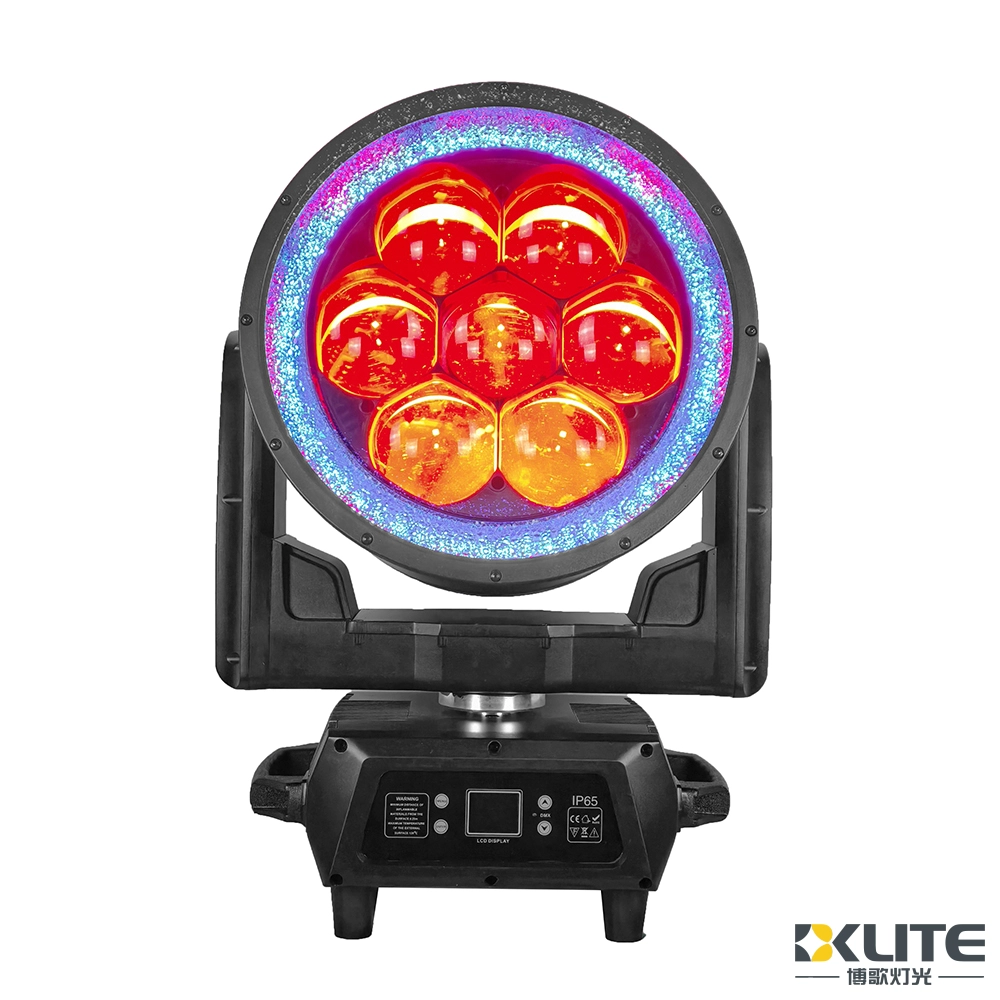
IP65 Waterproof Bee Eye 7x180W RGBL 4IN1 LED Moving Head Light With LED Ring
BKlite high power 7x180W waterproof bee eye moving head light—your reliable choice from top waterproof moving head light manufacturers and suppliers. Ideal for outdoor stage, live event, music festival, this energy-saving fixture ensures powerful, precise illumination for any venue. It delivers powerful, reliable lighting performance in any weather.
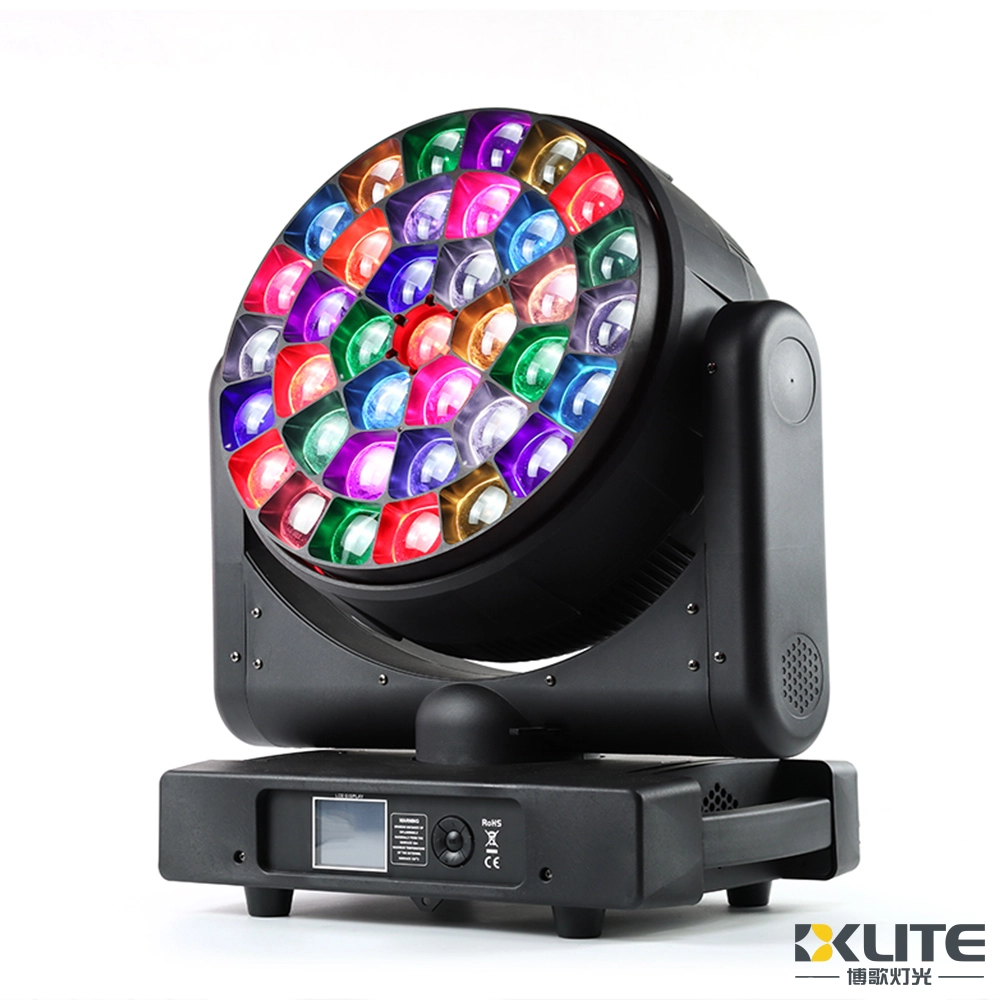
Bee Eye Zoom 37x40W RGBW 4in1 LED Beam Wash Moving Head Light


Copyright © 2025 BKLITE All Rights Reserved.