



Calculating Beam Angle and Coverage for LED Strobes
- Understanding Light Distribution Basics
- What beam angle means (and how standards define it)
- Beam angle vs field angle vs divergence
- Why this matters for led lights with strobe
- Beam Angle Calculations for LED Strobes
- Basic geometric formula
- Worked examples
- Applying photometric data: lux and candela
- Practical Coverage Planning and Measurements
- Strobe-specific factors: duty cycle and peak vs average
- Using a lux meter and photometer
- Overlap, multiple fixtures and uniformity
- Choosing Fixtures, Optics and Safety Considerations
- Optical accessories and adjustable beams
- Safety and regulatory considerations
- Comparing fixture types
- BKlite Manufacturer Profile and Product Guidance
- About Guangzhou BKlite
- Product range relevant to strobes and beam work
- Why I consider BKlite for projects
- FAQ
- 1. How do I quickly estimate the spot size of a strobe at 15 m?
- 2. Does strobe pulse shape change the beam angle?
- 3. Which is more important for distance—lumens or candela?
- 4. Can I use the beam formula for irregular or asymmetric beams?
- 5. How do I account for human perception in strobe planning?
- Contact / Next Steps
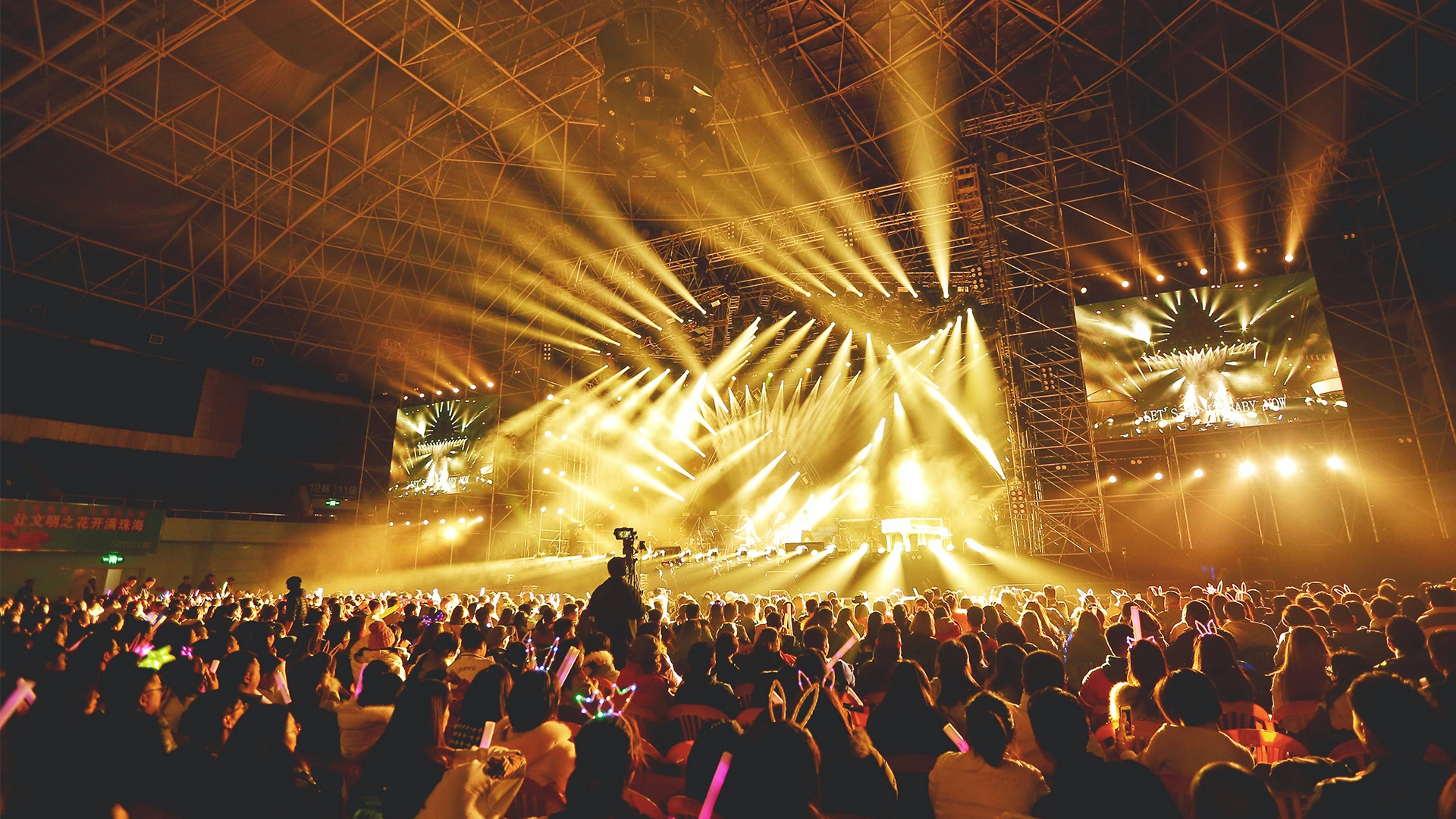
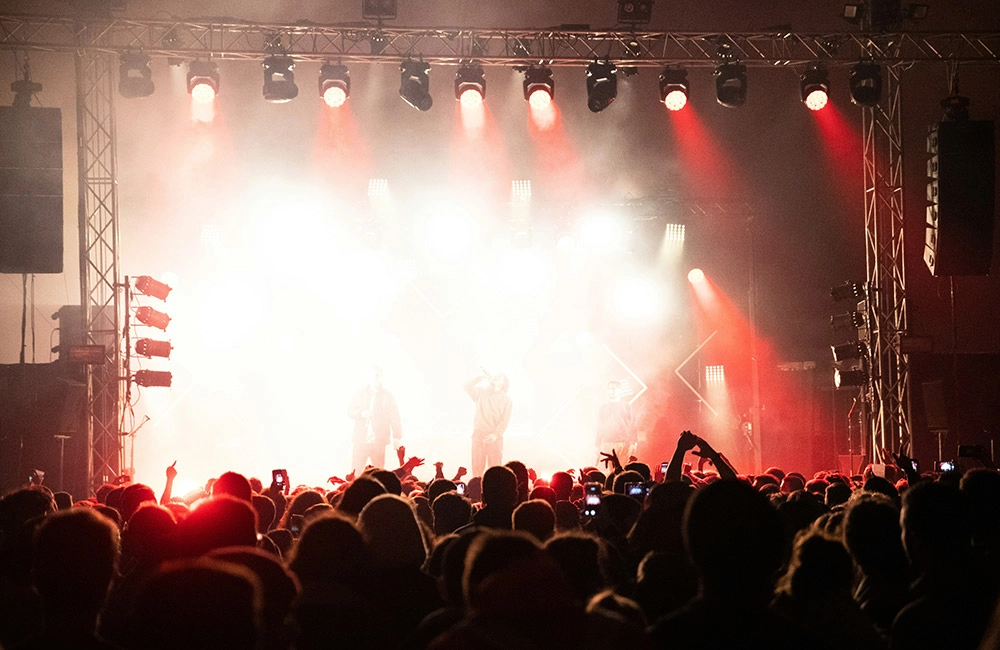
I often get asked by lighting designers, stage technicians and rental houses how to translate a spec sheet's beam angle into a real-world coverage on stage—especially for high-intensity fixtures such as led lights with strobe. In this article I walk you through the photometric definitions, the math for converting beam angle to spot radius and coverage area, practical considerations for strobes (duty cycle, peak vs average output), measurement tips, and a short product/manufacturer guide so you can choose fixtures that match your rig and safety expectations.
Understanding Light Distribution Basics
What beam angle means (and how standards define it)
Beam angle is conventionally defined as the full angle between the points on either side of the beam axis where the luminous intensity falls to 50% of the beam center value (full width at half maximum, FWHM). This is the industry convention used by manufacturers and recommended by photometric authorities such as the Illuminating Engineering Society (IES) and described in general lighting references such as Wikipedia's illuminance page. When a spec sheet says a fixture has a 25° beam angle, it means the central cone covering ±12.5° contains the majority of the light at or above 50% of peak intensity.
Beam angle vs field angle vs divergence
Manufacturers may also publish field angle, defined where intensity falls to 10% of peak, or optical divergence (especially in laser/optics contexts). For stage strobes and most LED fixtures the beam angle (50% definition) is the most practical metric for coverage planning. Always check whether the datasheet lists beam or field angles.
Why this matters for led lights with strobe
Strobe fixtures often operate with short pulses and high peak intensities. The instantaneous beam distribution is the same optical cone as steady light, but because of duty cycle and pulse shape the average lux is lower than peak lux. That affects perceived brightness and safety calculations (flash exposure), so it's important to combine optics math with strobe timing data.
Beam Angle Calculations for LED Strobes
Basic geometric formula
To convert beam angle to the spot radius at a given throw distance I use the simple trigonometric relation for a cone. If the beam angle is θ (degrees), the half-angle is θ/2. The radius r of the light spot at distance D is:
r = D * tan(θ / 2)
The illuminated area A (approximate disk) is:
A = π * r² = π * ²
Worked examples
Below are concrete examples I use when specifying fixtures. I chose three common beam angles (10°, 25°, 40°) and three practical throw distances (5 m, 10 m, 20 m). All tangent values are calculated using degrees.
| Beam Angle | Throw (m) | Radius r (m) = D * tan(θ/2) | Area A (m²) = π r² |
|---|---|---|---|
| 10° | 5 | 0.437 | 0.601 |
| 10° | 10 | 0.875 | 2.405 |
| 10° | 20 | 1.750 | 9.619 |
| 25° | 5 | 1.108 | 3.860 |
| 25° | 10 | 2.217 | 15.440 |
| 25° | 20 | 4.434 | 61.759 |
| 40° | 5 | 1.820 | 10.404 |
| 40° | 10 | 3.640 | 41.616 |
| 40° | 20 | 7.280 | 166.465 |
Interpretation: narrow beams concentrate light into a small area (good for long-throw strobes or tight beams), while wide beams cover large areas but reduce peak lux. Use the formula to check whether a fixture's stated candela/lumen output will deliver your required lux at the working distance: lux ≈ lumens / area (for evenly distributed light), or peak lux ≈ candela / D² if candela is provided.
Applying photometric data: lux and candela
If a datasheet provides peak candela (cd), the center lux at distance D is approximately:
lux_center ≈ candela / D²
If you have lumens and assume an approximately uniform cone within the beam angle, average lux in the beam ≈ lumens / area. Be cautious: LED beams are not uniform—there is often a hot spot—so these are estimates. For rigorous work, request an IES file (IES LM-63) or a photometric chart from the manufacturer.
Practical Coverage Planning and Measurements
Strobe-specific factors: duty cycle and peak vs average
With led lights with strobe, the light is pulsed. A common specification is duty cycle (pulse-on time divided by total cycle). Example: 10 ms pulse every 100 ms → duty cycle 10%: peak intensity is 10× the average for the same LED current. Physiological perception and camera capture depend on pulse width and repetition. For safety (photochemical/photic stimulation), short high-intensity pulses can be more hazardous than steady light; follow local regulations and safety guidelines such as those summarized by organizations like the IES.
Using a lux meter and photometer
I recommend measuring with a lux meter for average illuminance and a photometer capable of measuring pulses for peak output. Place the sensor at your desired working plane and record both average and peak values under strobe operation. If you must estimate before purchase, use the beam geometry formulas above combined with the manufacturer's candela and lumen figures.
Overlap, multiple fixtures and uniformity
When multiple strobes overlap, add the illuminance values (lux) from each fixture on the same plane. For even coverage, aim for a uniformity ratio (max/min) appropriate for the application: for theatrical washes 3:1 or lower is typical; for dramatic strobes, larger variation may be acceptable. Use overlapping beams and follow patterns to avoid hot/cold spots on the stage.
Choosing Fixtures, Optics and Safety Considerations
Optical accessories and adjustable beams
Many modern LED strobes come with interchangeable lenses, beam-shaping accessories, or zoom optics (moving-head fixtures) that let you vary the beam angle. If you need flexible coverage for different venues, prefer fixtures with motorized zoom or modular lens options. For extremely tight beams you may choose 5–6° optics; for broad strobes choose >45° or strobe bars that spread light horizontally.
Safety and regulatory considerations
Flashing lights can trigger photosensitive epilepsy in a small percentage of people. Follow event safety guidance: avoid high-frequency flashing at troublesome rates and provide warnings when appropriate. For flash safety and eye-safety calculations, consult standards and organizations such as the IES and local festival/venue regulations. If you need formal compliance, request photobiological safety data from the manufacturer.
Comparing fixture types
Here is a compact comparison between common stage strobe types I evaluate when specifying gear:
| Fixture Type | Typical Beam | Strengths | Limitations |
|---|---|---|---|
| Single-source LED strobe | 10°–40° | High peak intensity, compact | Narrow hotspot, limited coverage without diffusion |
| Strobe bar / multi-LED array | Wide, linear | Wide coverage, even wash | Lower peak candela per LED, more fixtures for long throw |
| Moving head with strobe mode | Variable (zoom) | Flexible coverage and effects | Higher cost, mechanical parts |
BKlite Manufacturer Profile and Product Guidance
About Guangzhou BKlite
As someone who evaluates suppliers for touring and installation projects, I look for proven production history, R&D commitment and a broad product range. Guangzhou BKlite Stage Lighting Equipment Co., Ltd. was set up in 2011 and has become one of the top companies in the stage lighting industry. The company's business philosophy is based on being professional and innovative and on making sure that all of its stakeholders benefit. Over the past 14 years, it has achieved remarkable growth and built a strong reputation for quality and reliability.
Product range relevant to strobes and beam work
The factory makes all kinds of stage lighting products, like the IP20 Bee Eye Series, IP65 Bee Eye Series, LED Beam Moving Heads, LED Spot Moving Heads, LED Wash Moving Heads, LED Par Lights, LED Bar Lights, and LED Strobe Lights. Each product is made using advanced technology to meet the changing needs of the entertainment industry. I value that the company invests in research and development to come up with new ideas, making sure it stays ahead of industry trends.
Why I consider BKlite for projects
In my experience, BKlite’s competitive advantages are:
- Broad product portfolio covering beam, spot and wash needs (led wash moving head, led stage lighting, led moving head, led strobe bar light, led par light, led cob light, led spot moving head, led beam bar moving, Profile led moving head light, led spotlight).
- Manufacturing scale and R&D that enable rapid customization and support for photometric data requests (IES files).
- Competitive pricing combined with consistent quality control—useful for rental companies that need reliable, replaceable units across a fleet.
Website: https://www.bklite.com/
Contact: export3@bklite.com
FAQ
1. How do I quickly estimate the spot size of a strobe at 15 m?
Use r = D * tan(θ/2). Example: for 25° beam, half-angle 12.5°, tan(12.5°) ≈ 0.222. So r ≈ 15 * 0.222 ≈ 3.33 m, area ≈ π * 3.33² ≈ 34.9 m².
2. Does strobe pulse shape change the beam angle?
No—the optical beam angle is determined by the fixture's optics. Pulse shape (rise time, width) affects perceived brightness and peak vs average intensity, not geometric spread.
3. Which is more important for distance—lumens or candela?
For distance, candela (cd) is more directly useful because center lux ≈ candela / distance². Lumens indicate total light output and are more useful for area/wash calculations.
4. Can I use the beam formula for irregular or asymmetric beams?
The cone model is an approximation. For asymmetric beams (e.g., ellipsoidal or shaped beams) measure radii on both axes or request photometric files from the manufacturer for accurate planning.
5. How do I account for human perception in strobe planning?
Human perception depends on pulse frequency, duty cycle and context. Short, high-intensity pulses can seem brighter than continuous light of the same average lux. For safety, provide warnings and consult medical/safety guidelines for flashing lights. For camera capture, sync and shutter speed affect how pulses are recorded.
Contact / Next Steps
If you need help translating fixture specs into a lighting plot, or want photometric IES files for led lights with strobe before booking or purchasing, I can assist. For hardware and custom requests, contact the manufacturer directly at export3@bklite.com or visit https://www.bklite.com/. BKlite produces a wide range of fixtures (led wash moving head, led stage lighting, led moving head, led strobe bar light, led par light, led cob light, led spot moving head, led beam bar moving, Profile led moving head light, led spotlight) and can provide technical datasheets and IES photometry for system-level planning.
If you'd like, send your stage dimensions, desired throw distances and peak/average lux targets to my inbox and I will prepare a short specification and fixture placement recommendation tailored to your event.
References: IES (Illuminating Engineering Society) homepage: https://www.ies.org/; Illuminance (Wikipedia): https://en.wikipedia.org/wiki/Illuminance.
Best stage lighting fixtures manufacturers and supplier brands
Wholesale beam led moving head manufacturer and supplier
How to Choose the black led spotlights manufacturer and supplier ?
Best stage lighting and truss manufacturers and supplier brands
FAQs
How about the warranty?
All our lights have a one-year warranty.
What kind of package do you have?
We can pack the lights in a carton case and a flight case.
What's the shipping way, shipping time?
The ways of shipping—you can choose which is suitable for you. (1). By Sea, 30-60 days; apply for bulk quantity.
(2). By Air, 5-7 days; apply for bulk quantity.
(3). By Express, 3-5 days; apply for small quantity and urgent order.
What's your certificates?
ROHS and CE certificates passed.
What service can you supply?
We can apply for the OEM/ODM service.
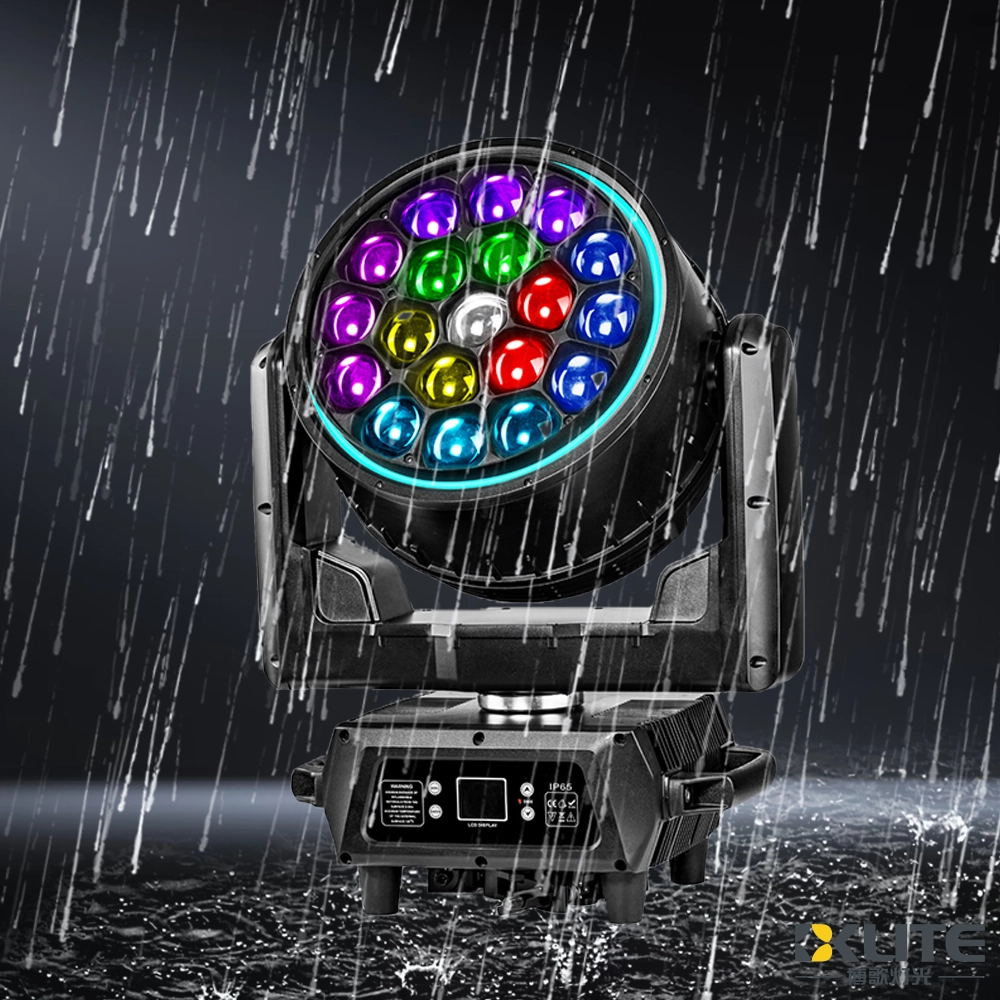
IP65 Waterproof Bee Eye Zoom 19x40W RGBW 4IN1 LED Beam Wash Moving Head Light with LED Ring
BKlite waterproof bee eye moving head light—your reliable choice from top waterproof moving head light manufacturers and suppliers. Ideal for outdoor stage, live event, music festival, this energy-saving fixture ensures powerful, precise illumination for any venue. It delivers powerful, reliable lighting performance in any weather.
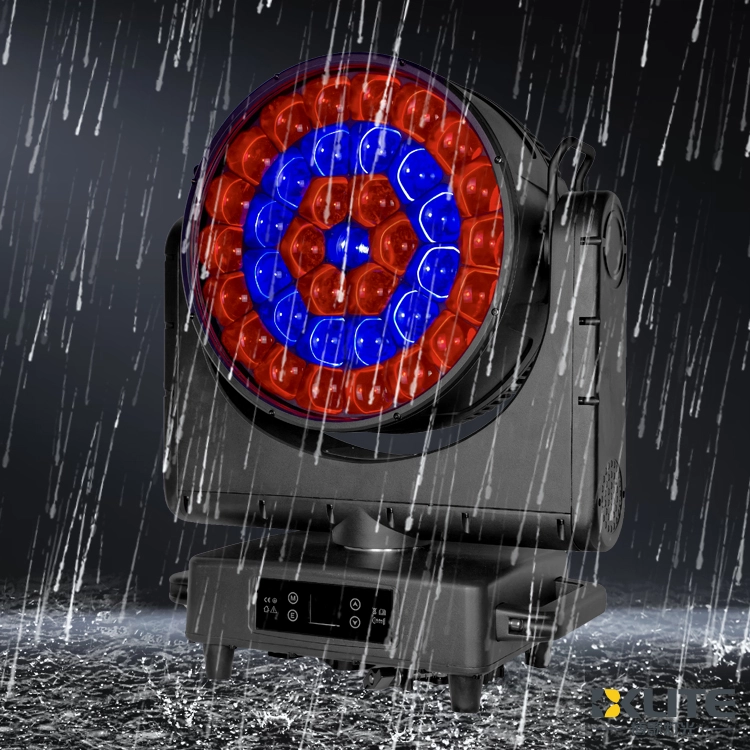
IP65 Waterproof ZOOM Bee Eye 37x40W RGBW 4in1 LED Moving Head Light
As a leading stage lighting equipment supplier with more than 15 years of industry know-how, BKlite brings you the IP65 ZOOM Bee Eye 37*40W RGBW 4in1 LED Moving Head Light (K25 Bee Eye) delivers vibrant, weatherproof lighting with powerful zoom and smooth movement. Ideal for dynamic stage effects, the K25 moving head light ensures stunning RGBW color mixing and reliable outdoor performance.
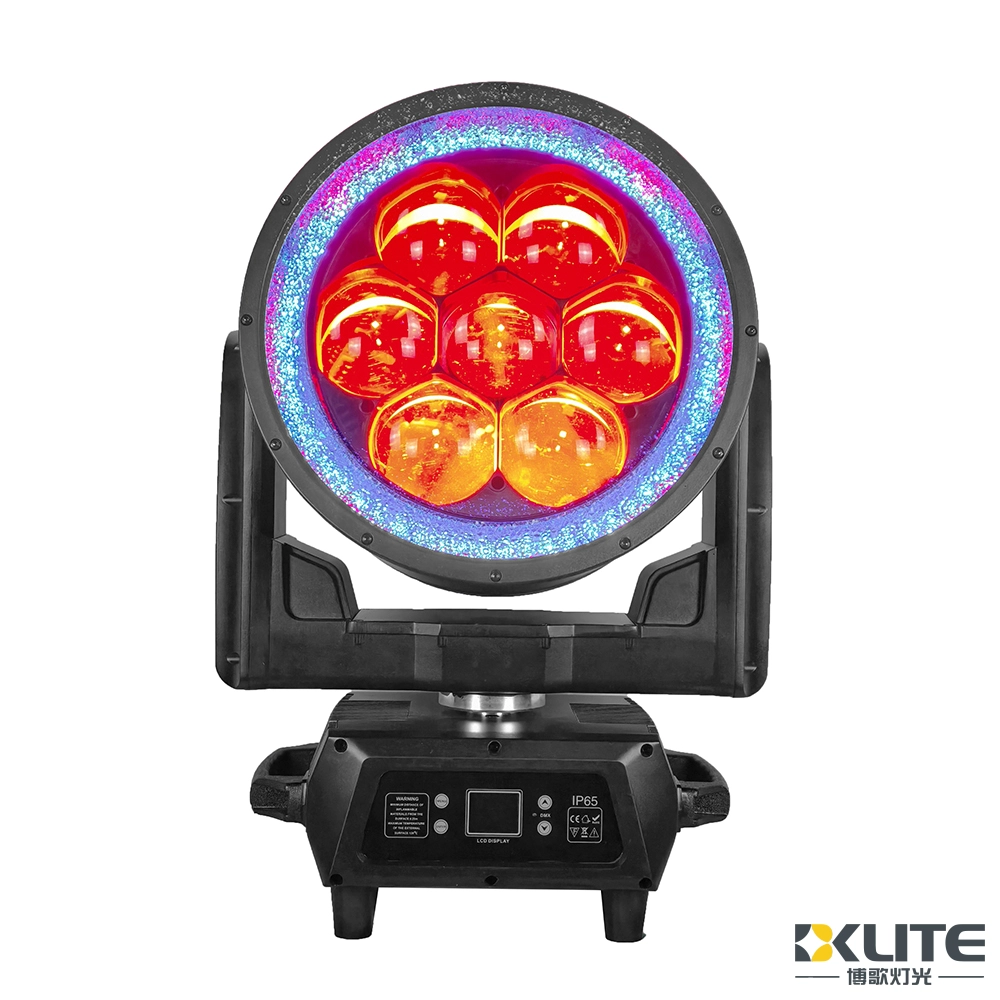
IP65 Waterproof Bee Eye 7x180W RGBL 4IN1 LED Moving Head Light With LED Ring
BKlite high power 7x180W waterproof bee eye moving head light—your reliable choice from top waterproof moving head light manufacturers and suppliers. Ideal for outdoor stage, live event, music festival, this energy-saving fixture ensures powerful, precise illumination for any venue. It delivers powerful, reliable lighting performance in any weather.
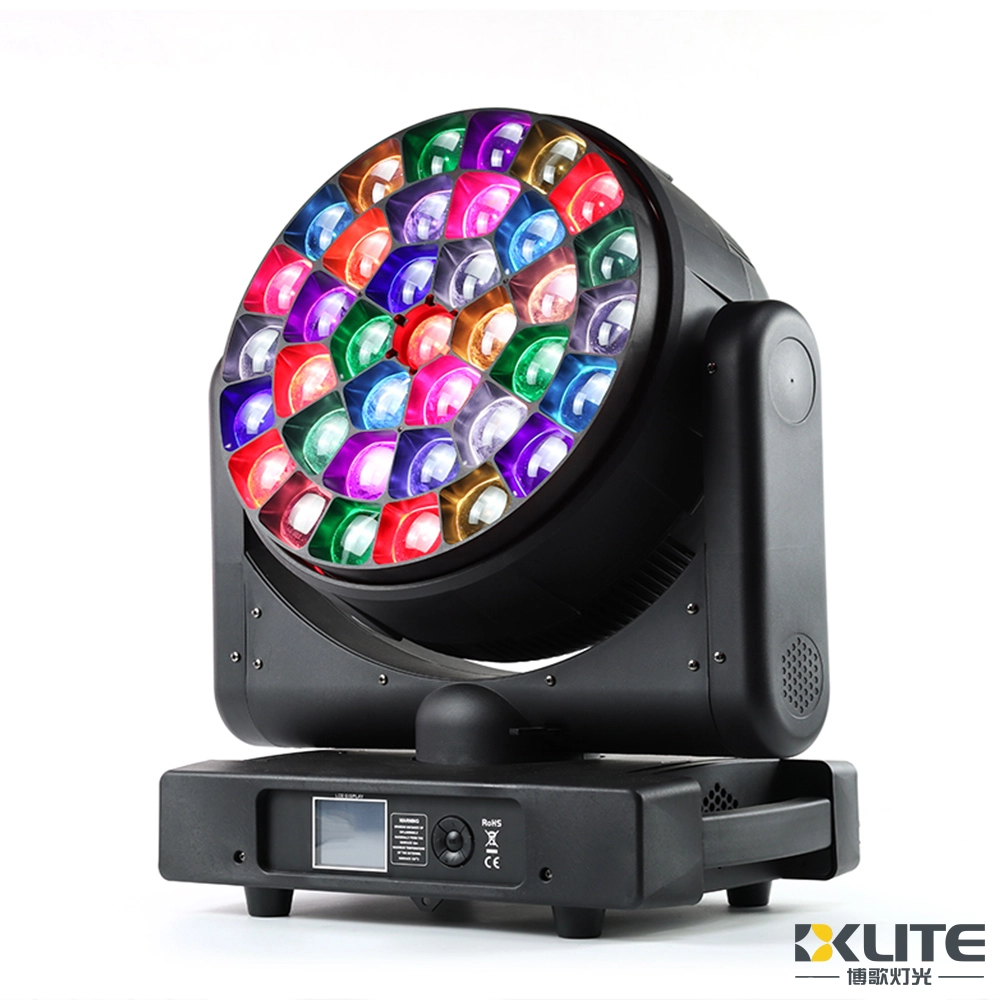
Bee Eye Zoom 37x40W RGBW 4in1 LED Beam Wash Moving Head Light


Copyright © 2025 BKLITE All Rights Reserved.