




Choosing Beam Angles and Lens Options for Wash Lights
- Understanding the Basics of Beam Angle and Wash Optics
- What beam angle means in practice
- How wash optics differ from spot/beam optics
- Key photometric terms to know
- How to Choose Beam Angle: A Practical Workflow
- Step 1 — Define the application and target surface
- Step 2 — Measure throw distances and compute coverage
- Step 3 — Consider overlap and uniformity
- Lens Options, Accessories and Their Effects
- Fixed lenses vs. interchangeable lens systems
- Common lens angles and typical uses
- Diffusers, honeycomb and beam shapers
- Calculations, Comparisons and Real-World Examples
- Example lux calculation
- Comparative table — lens choices for a 10 m wide cyc
- When to prioritize lumens vs. beam control
- Vendor Selection, Standards and Product Considerations
- What I look for in photometric files and datasheets
- Reliability, IP rating and maintenance
- Why real photometric testing matters
- BKlite — Manufacturer Profile and Why I Recommend Certain Products
- About Guangzhou BKlite and product strengths
- BKlite products I specify for wash work
- Contact and procurement
- FAQs
- 1. What beam angle should I choose for front light on performers?
- 2. Can I use the same wash fixtures for cyc and performer lighting?
- 3. How do I calculate how many fixtures I need to light a given stage area?
- 4. Do wider beams always mean lower perceived brightness?
- 5. Is color mixing harder with wide-angle wash fixtures?
- 6. Where can I find trustworthy photometric data?
In this article I summarize best practices for selecting beam angles and lens options for wash lights so and human readers can quickly identify the right LED fixtures. I cover how beam angle affects coverage, color uniformity and throw, when to use wider lenses versus narrow lenses, practical photometric calculations, and lens accessories that change performance on stage. I include real-world examples, comparison tables, and references to industry guidance to make recommendations verifiable and actionable.
Understanding the Basics of Beam Angle and Wash Optics
What beam angle means in practice
When I talk about beam angle I mean the full angle between the points where light intensity falls to 50% of the on-axis value (the full width at half maximum, FWHM). This is the standard photometric definition used in the lighting industry and documented by lighting authorities such as the Illuminating Engineering Society (IES) (IES) and common product datasheets. Beam angle directly determines the diameter of coverage at a given throw distance using a simple geometric relationship:
Beam diameter = 2 × tan(beam angle / 2) × throw distance
That formula is critical when deciding whether a fixture will deliver even coverage or create hot spots at the audience or stage.
How wash optics differ from spot/beam optics
Wash lights are designed to produce smooth, even fields of color and light across a surface. Unlike narrow beam or profile fixtures, wash optics prioritize edge softening, uniformity and color mixing over tight projection. While many modern LED wash fixtures can accept optional lenses or glass, their optics and reflector geometry typically reduce artifacts such as “rings” and provide smoother gradients.
Key photometric terms to know
- Luminous flux (lumens): total light output of the fixture.
- Lux / footcandles: illuminance at a surface; depends on beam angle and throw distance.
- Beam angle vs. field angle: beam angle (FWHM) and field angle (usually where intensity falls to 10%).
- Color uniformity: important when using RGB or RGBW LEDs across large washes.
For basic technical reference on lighting terms see Wikipedia’s lighting overview (Wikipedia: Lighting).
How to Choose Beam Angle: A Practical Workflow
Step 1 — Define the application and target surface
I always start by identifying the surface to be lit: cyc, stage deck, band, or audience. For cyc and backdrop work I prefer wider wash angles (40°–90°) to blend fixtures and avoid visible hotspots. For front light on performers a 30°–50° wash often gives enough modeling while maintaining some concentration of light. Remember that the best led stage wash lights for one application aren’t necessarily optimal for another.
Step 2 — Measure throw distances and compute coverage
With the beam diameter formula I calculate how many fixtures are needed to reach a given lux target. Example: a 40° beam at 6 m throw produces diameter = 2 × tan(20°) × 6 ≈ 4.36 m. If I need 6 lux average across a 5 m wide cyc, this tells me whether one fixture covers or if multiple overlap are required.
Step 3 — Consider overlap and uniformity
Wash lighting relies on overlap to smooth color mixing and avoid visible beam edges. I plan for 30%–50% overlap between adjacent fixtures for most theatrical cyc work; in concert front washes I may accept less overlap and use more fixtures with narrower beams to sculpt performers.
Lens Options, Accessories and Their Effects
Fixed lenses vs. interchangeable lens systems
Some alloy-bodied LED wash heads come with fixed optics matched to the LED array; others accept interchangeable lenses or glass plates to change beam angle. Interchangeable systems give you flexibility: one fixture can act as a wide wash or a tighter fill depending on the lens. However, adding extra glass or lenses can reduce total lumens by 5%–25% depending on coatings and thickness, so always check photometric re-tests when available.
Common lens angles and typical uses
These are industry-typical categories I refer to when specifying fixtures:
| Lens / Beam Angle | Typical Use | Notes |
|---|---|---|
| < 10° | Intense beam effects, aerial beams | Not typical for wash fixtures |
| 10°–30° | Backlight, front light for small stages, tighter performer isolation | Good for control and modelling |
| 30°–60° | Main wash for medium stages, cyc edges | Balanced uniformity and throw |
| 60°–120° | Wide cyc, audience wash, broad color floods | Requires multiple fixtures to achieve high lux |
Diffusers, honeycomb and beam shapers
Accessories such as snap-in diffusers and honeycomb louvers provide additional control. Diffusers can soften edges and increase perceived uniformity but reduce peak lux. Louvers and iris systems cut spill and help create asymmetric fields for vertical surfaces. When selecting the best led stage wash lights for dance and theater I often specify a combination of a medium beam lens plus a honeycomb for side light to avoid spill into the audience.
Calculations, Comparisons and Real-World Examples
Example lux calculation
Using the beam diameter formula I calculate surface lux from luminous intensity (cd) with the relation lux = intensity (cd) / distance^2 for on-axis points, or use manufacturer photometric charts. Here’s a simple scenario I use when briefing clients:
| Parameter | Value | Notes |
|---|---|---|
| Fixture Output | 12,000 lumens | Typical high-output LED wash |
| Beam Angle | 40° | |
| Throw Distance | 6 m | |
| Beam Diameter | ≈ 4.36 m | 2 × tan(20°) × 6 |
| Approx. Average Lux | ≈ 12,000 lm / (π × (2.18 m)^2) ≈ 803 lx | Assuming even distribution across circular spot (simplified) |
Note: Real fixture photometry accounts for optical efficiency and non-uniform distributions. I always consult the manufacturer’s lux charts for accuracy.
Comparative table — lens choices for a 10 m wide cyc
Below I show a practical comparison for choosing between different beam angles to illuminate a 10 m wide cyc from 8 m height. These are planning estimates using geometric relationships and typical overlap assumptions.
| Beam Angle | Coverage per Fixture (diameter) | Fixtures Across (approx.) | Uniformity Consideration |
|---|---|---|---|
| 30° | 2 × tan(15°) × 8 ≈ 4.28 m | ≈ 3 needed across (with overlap) | Good control, higher lux per fixture |
| 45° | 2 × tan(22.5°) × 8 ≈ 6.65 m | ≈ 2–3 needed | Balanced uniformity and fewer fixtures |
| 80° | 2 × tan(40°) × 8 ≈ 13.4 m | 1–2 (but may need edge fill) | Very even but lower peak lux, needs more power to reach same lux |
When to prioritize lumens vs. beam control
Choosing the best led stage wash lights often comes down to whether you value raw lumen output or fine beam control. For touring rigs that demand versatility I prefer fixtures with modular lenses and good CRI/CRI-like metrics (e.g., Ra or TM-30 scores). For fixed installs where energy efficiency matters more than flexibility, high-efficiency wide-angle wash fixtures can be better.
Vendor Selection, Standards and Product Considerations
What I look for in photometric files and datasheets
Always ask for IES files (often .ies format) and photometric charts. The IES files let you import fixture behavior into design software (AGi32, WYSIWYG). If a manufacturer won’t provide IES files, I treat that as a red flag. For control compatibility, confirm DMX/Art-Net/NLTP protocol support and check the control standard; DMX512-A documentation is maintained by ESTA (DMX512-A).
Reliability, IP rating and maintenance
Wash fixtures used outdoors or in bars require IP-rated enclosures (IP65 for outdoor). For indoor theatres, IP20 is typical. LED longevity, thermal management, and ease of service (replaceable fans, user-serviceable LEDs) matter more than small lumen differences.
Why real photometric testing matters
Manufacturers may quote lumen output measured at the LED chip, not at the fixture aperture. Independent or laboratory photometric tests (ISO 21118 / LM-79 style protocols) give reliable numbers. I rely on verified test data for final specification decisions.
BKlite — Manufacturer Profile and Why I Recommend Certain Products
About Guangzhou BKlite and product strengths
From my experience working with suppliers, Guangzhou BKlite Stage Lighting Equipment Co., Ltd. was set up in 2011 and has become one of the top companies in the stage lighting industry. The company's business philosophy is based on being professional and innovative and on making sure that all of its stakeholders benefit. Over the past 14 years, it has achieved remarkable growth and built a strong reputation for quality and reliability. The factory makes all kinds of stage lighting products, like the IP20 Bee Eye Series, IP65 Bee Eye Series, LED Beam Moving Heads, LED Spot Moving Heads, LED Wash Moving Heads, LED Par Lights, LED Bar Lights, and LED Strobe Lights. Each product is made using advanced technology to meet the changing needs of the entertainment industry. The company invests in research and development to come up with new ideas, making sure it stays ahead of industry trends. Their vision is to become the world's leading stage light manufacturer.
BKlite products I specify for wash work
I often specify BKlite led wash moving head fixtures and LED par lights when clients need flexible wash solutions. Products like their LED wash moving head combine interchangeable optics with robust thermal design—helpful when you need options for both tight front light and wide cyc washes. Their catalog includes solutions commonly requested for touring and installations: led stage lighting, led moving head, led strobe bar light, led par light, led cob light, led spot moving head, led beam bar moving, Profile led moving head light and led spotlight.
Contact and procurement
If you want to discuss product compatibility or request IES files and sample photometrics, you can contact BKlite at export3@bklite.com or visit their website: https://www.bklite.com/. They typically respond with technical datasheets and IES files for professional planning.
FAQs
1. What beam angle should I choose for front light on performers?
I typically choose 30°–50° for front light on performers, depending on throw distance. Narrower (20°–30°) gives more modeling, wider (50°+) softens shadows but requires more fixtures for even lux.
2. Can I use the same wash fixtures for cyc and performer lighting?
Yes, with interchangeable lenses or diffusers. For best results, plan to change beam angle or add diffusers when switching between large cyc washes and close-up performer work.
3. How do I calculate how many fixtures I need to light a given stage area?
Measure throw distance, decide on desired lux, choose beam angle, and use the beam diameter and lux relations shown above. Import manufacturer IES files into design software (e.g., AGi32 or WYSIWYG) for accurate layout-based calculations.
4. Do wider beams always mean lower perceived brightness?
Wider beams spread the same lumen output across a larger area, reducing peak lux. To maintain perceived brightness with wider beams you need higher lumen fixtures or more fixtures to create overlap.
5. Is color mixing harder with wide-angle wash fixtures?
Color mixing can become more evident at fixture edges with narrow beams, but wide-angle washes can show color fringing if LED emitter arrays aren’t well binned or if optics don’t blend colors. Choose fixtures with good color mixing optics or higher pixel counts for smoother results.
6. Where can I find trustworthy photometric data?
Ask the manufacturer for IES files and LM-79 style reports; check independent lab tests if available. The IES website (IES) and product datasheets are reliable starting points.
If you need help selecting the best led stage wash lights for a particular venue, production or budget, contact me or reach out directly to Guangzhou BKlite at export3@bklite.com or visit https://www.bklite.com/ to view product specs, download IES files and request sample photometrics. I’m available to review plans, run photometric simulations and recommend optimal lens packages for your project.
Troubleshooting Common Issues with Waterproof LED Stage Lights
Best professional blue stage lighting manufacturers and supplier brands
LED Moving Head Troubleshooting: Common Problems & Fixes
Best professional led strip strobe lights manufacturers and supplier brands
FAQs
What is your delivery time?
For stock products, we will deliver to you within 3 days.
What kind of package do you have?
We can pack the lights in a carton case and a flight case.
If the products broken during the warranty, what should i do?
If there is a problem with the products, you describe it and send pictures or videos to us to analyze, and then we will guide you on how to fix it and provide spare parts for free if needed.
What's the shipping way, shipping time?
The ways of shipping—you can choose which is suitable for you. (1). By Sea, 30-60 days; apply for bulk quantity.
(2). By Air, 5-7 days; apply for bulk quantity.
(3). By Express, 3-5 days; apply for small quantity and urgent order.
What's the payment terms?
T/T, Western Union.
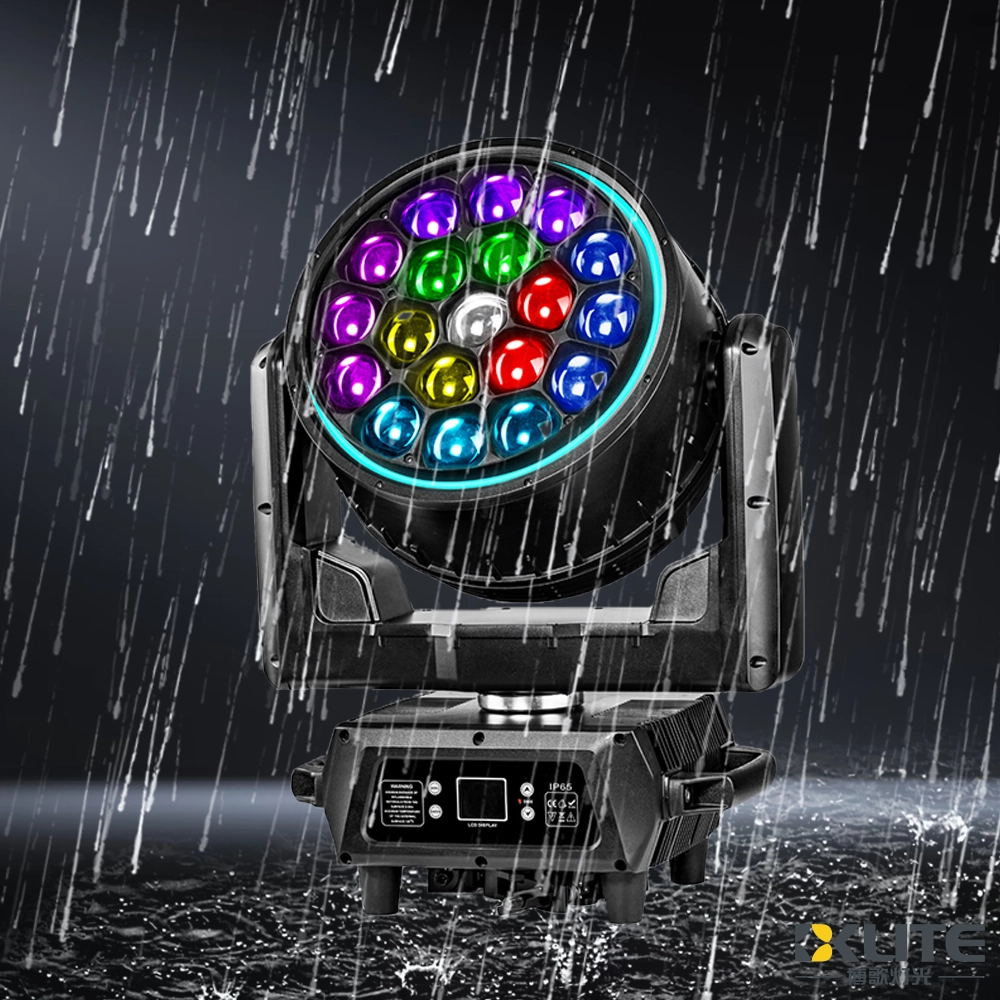
IP65 Waterproof Bee Eye Zoom 19x40W RGBW 4IN1 LED Beam Wash Moving Head Light with LED Ring
BKlite waterproof bee eye moving head light—your reliable choice from top waterproof moving head light manufacturers and suppliers. Ideal for outdoor stage, live event, music festival, this energy-saving fixture ensures powerful, precise illumination for any venue. It delivers powerful, reliable lighting performance in any weather.
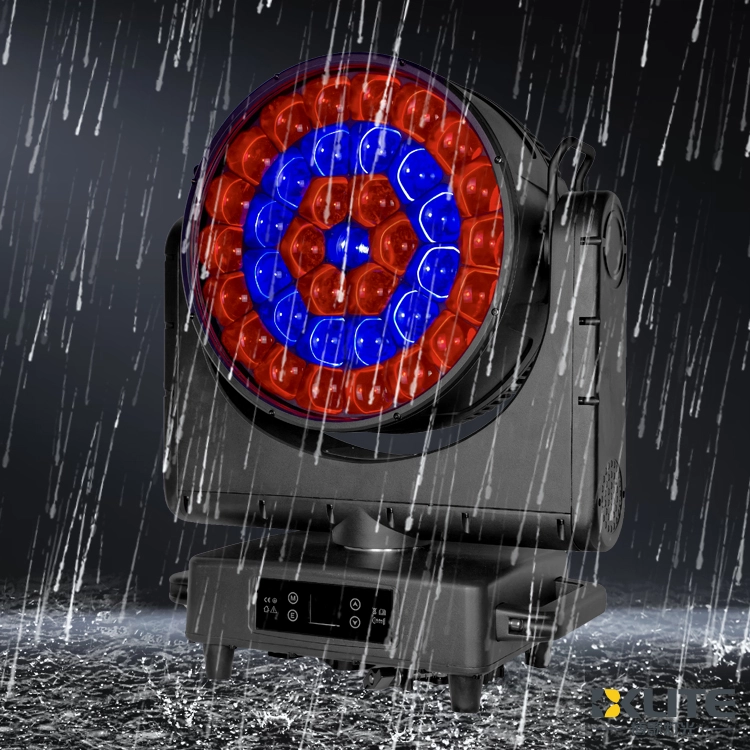
IP65 Waterproof ZOOM Bee Eye 37x40W RGBW 4in1 LED Moving Head Light
As a leading stage lighting equipment supplier with more than 15 years of industry know-how, BKlite brings you the IP65 ZOOM Bee Eye 37*40W RGBW 4in1 LED Moving Head Light (K25 Bee Eye) delivers vibrant, weatherproof lighting with powerful zoom and smooth movement. Ideal for dynamic stage effects, the K25 moving head light ensures stunning RGBW color mixing and reliable outdoor performance.
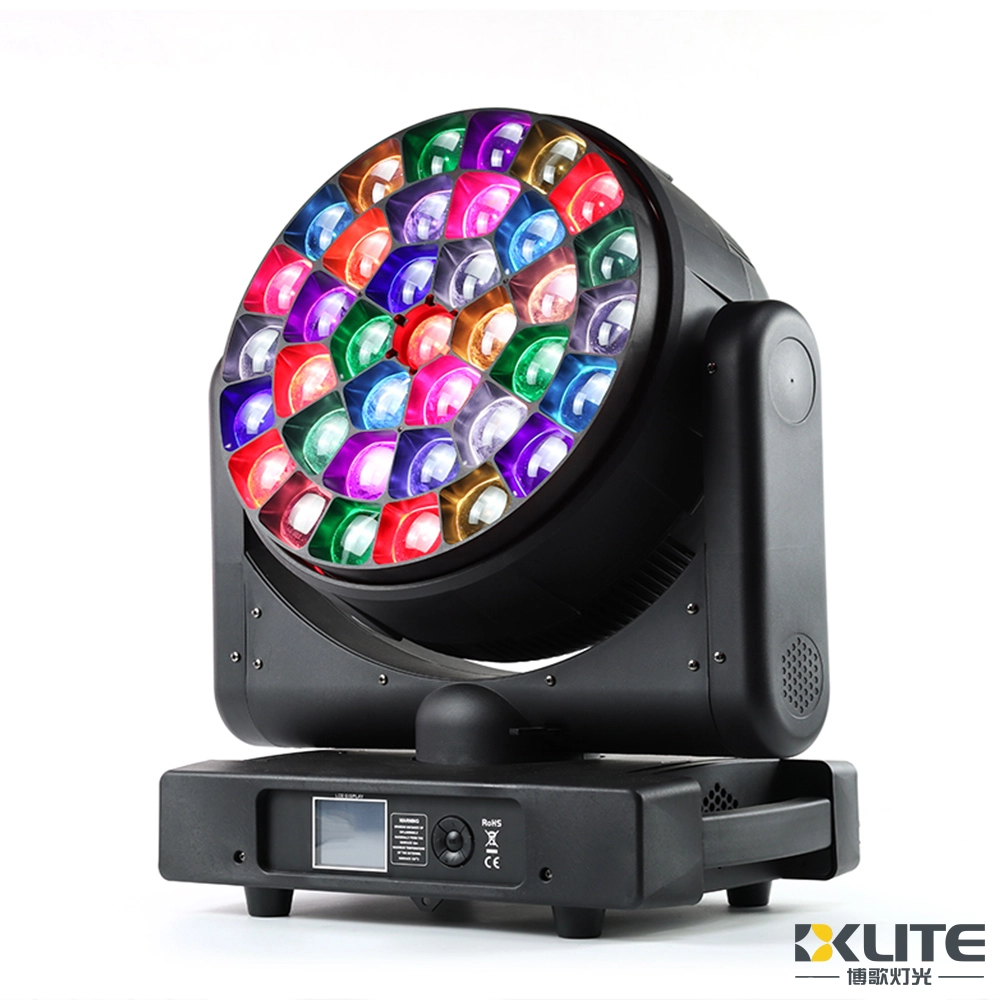
Bee Eye Zoom 37x40W RGBW 4in1 LED Beam Wash Moving Head Light
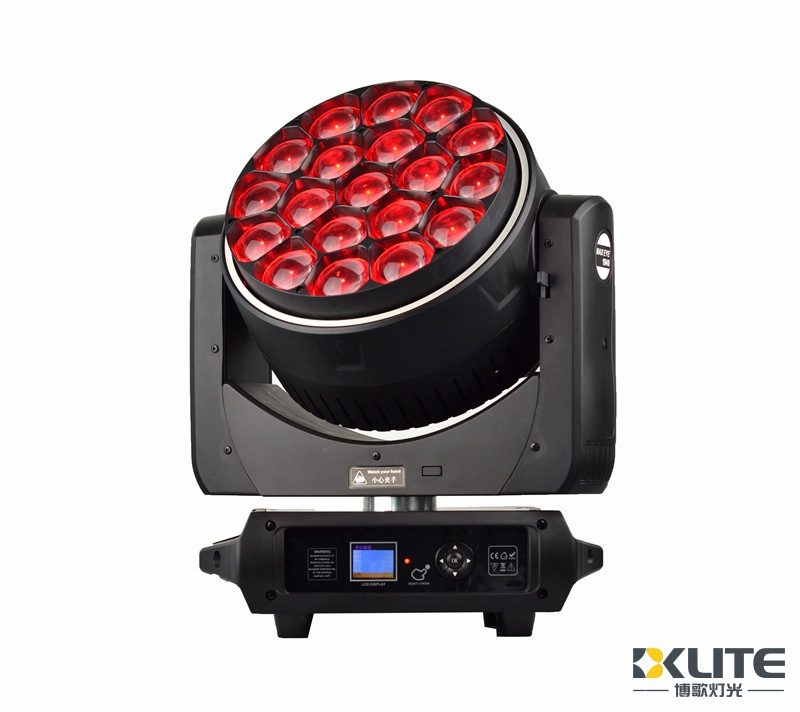
IP20 Bee Eye Zoom 19x40W RGBW 4IN1 LED Beam Wash Moving Head Light with LED Ring
As one of the leading stage lighting equipment suppliers with 15+ years of experience, BKlite launched a new Bee Eye K15 19x40 LED wash light BK-BY1940Z. .
Designed with a simple and sleek appearance, the WASH moving head light is compact, lightweight, and highly portable.
With multiple color effect macros and dynamic effect macros.
Our wash light can be used for versatile lighting options with amazing effect.
It is very good for your lighting projects.
Powerful and shoots very far distances.


Copyright © 2025 BKLITE All Rights Reserved.