




Choosing LED Stage Profile Lights: Specs B2B Buyers Need
- How to specify professional profile lighting for stages and events
- Who this is for and intent
- How to read the specs in this guide
- Key technical specifications every buyer must understand
- Photometric performance: lumens, lux, and beam consistency
- Color quality and reproduction: CRI, TLCI, and TM-30
- Optics and beam control: zoom, shutter, and gobo options
- Comparing LED profile light types and what specs to prioritize
- Types to consider
- Specification comparison table (typical ranges and what to request)
- What to prioritize by use-case
- Procurement checklist and vendor evaluation questions
- Checklist: technical and operational requirements
- Vendor questions to include in RFPs
- Supplier spotlight and why BKlite is a strong candidate for B2B buyers
- BKlite company profile and capabilities
- Product range relevant to profile buyers
- Why BKlite could be the right supplier for your project
- Operational considerations, maintenance, and final buying tips
- Installation and rigging
- Maintenance, lifecycle costs, and spares strategy
- Warranty and support
- Frequently Asked Questions (FAQ)
- 1. What is the difference between a profile LED moving head and a conventional ellipsoidal?
- 2. Which color fidelity metric should I prioritize for broadcast?
- 3. How important is IP rating for stage profile lights?
- 4. What control protocols should modern profile lights support?
- 5. How do I verify vendor photometric claims?
- 6. What is a realistic warranty and service expectation?
- Contact and next steps
- References and authoritative sources
How to specify professional profile lighting for stages and events
Selecting the right stage profile light for a theatre, concert hall, corporate event, or rental inventory requires more than price comparison. Buyers must evaluate photometric performance, color fidelity, optical versatility, control integration, maintenance profile, and field reliability. This guide is written for procurement managers, technical directors, and B2B buyers who need a structured, verifiable approach to choosing LED stage profile lights that meet venue and touring demands.
Who this is for and intent
This article addresses B2B : buyers researching technical specifications and vendor capabilities for stage profile light procurement. It focuses on objective specifications, side-by-side comparisons, and actionable checklists you can use when evaluating quotes and RFP responses.
How to read the specs in this guide
Specifications below are organized by measurable performance categories (photometrics, optics, color, mechanical, environmental, and control). Where possible, ranges and examples are provided so you can map those to venue needs and service profiles.
Key technical specifications every buyer must understand
Photometric performance: lumens, lux, and beam consistency
Photometric outputs for LED profile lights are typically given in lumens or lux at a specified distance. For theatre and profile applications, the useful metric is lux at the focus plane or on an actor/prop at typical throw distances. Typical ranges:
- Low-power fixtures for small venues: 5,000–15,000 lumens
- Medium-use fixtures for rental/theatre: 15,000–40,000 lumens
- High-output profile moving heads for large arenas: 40,000+ lumens
Ask vendors for photometric files (IES or LDT) so you can model light levels in your CAD or rehearsal space. Verify beam uniformity and fringe control at multiple zoom positions.
Color quality and reproduction: CRI, TLCI, and TM-30
Color fidelity affects skin tones, costume colors, and broadcast look. Common metrics:
- CRI Ra: legacy metric; target Ra >90 for theatre-grade fixtures.
- TLCI: useful for broadcast; aim for TLCI >90 for camera-friendly output.
- TM-30: provides improved gamut and fidelity measurement—ask vendors for Rf and Rg values.
Request measured data, not just nominal claims. Independent test reports or third-party lab measurements add credibility to vendor claims.
Optics and beam control: zoom, shutter, and gobo options
Profile lights distinguish themselves through optics. Important points:
- Zoom range: fixed, manual zoom (e.g., 15–35°), or motorized zoom (e.g., 8–45°). Choose based on stage size and focusing flexibility.
- Shutters and framing: mechanical shutters and framing shutters are essential for shaping beam and cutting off stage elements.
- Gobo compatibility and focus: check gobo sizes, indexing, and whether rotating gobo wheels are included.
Comparing LED profile light types and what specs to prioritize
Types to consider
There are three common categories relevant to buyers:
- Fixed-profile LED ellipsoidals: compact, lower cost, good for house plots.
- Profile LED moving-heads: high flexibility—framing shutters, gobos, rotating effects, motorized zoom and focus.
- Hybrid LED spot/profile fixtures: combine narrow beams with spot/beam effects for rental production.
Specification comparison table (typical ranges and what to request)
| Spec | Fixed-profile LED | Profile LED Moving Head | Hybrid Spot/Profile |
|---|---|---|---|
| Typical output (lumens) | 5,000–15,000 | 15,000–60,000 | 10,000–40,000 |
| Beam/zoom | Fixed or manual zoom, 10–50° | Motorized zoom 6–50°, fast focus | 6–40°, sometimes interchangeable optics |
| Color fidelity | CRI 90+ typical | CRI 92–98, TLCI >90 | CRI 90+, TM-30 reports available |
| Framing & gobos | Fixed shutters, limited gobos | Full framing shutters, multiple gobos | Gobos and shutters available |
| Control | DMX/RDM, Art-Net optional | DMX/RDM, sACN, Art-Net, pixel mapping | DMX/RDM, network protocols |
| IP rating | Usually IP20 (indoor) | IP20 or IP65 versions for outdoor | Varies |
Source ranges are industry-typical; always ask manufacturers for measured photometry and test data.
What to prioritize by use-case
If you manage a proscenium theatre, prioritize framing shutters, color fidelity, and smooth zoom/focus. For rental companies, prioritize high output, durability, fast setup, and network control. For broadcast or streamed events, prioritize TLCI and flicker-free dimming curves.
Procurement checklist and vendor evaluation questions
Checklist: technical and operational requirements
- Request IES/LDT photometric files for representative beam angles and gobo positions.
- Ask for CRI, TLCI, and TM-30 reports under real operating conditions.
- Confirm power draw, inrush current, and recommended dimming protocol (16-bit, logarithmic or linear curves).
- Check IP rating and cooling design for touring/outdoor use (fan vs. passive).
- Request MTBF or burn-in figures and recommended maintenance intervals.
- Verify warranty terms, availability of spare parts, and local service support.
Vendor questions to include in RFPs
- Can you provide full photometric files and third-party test reports?
- What are the measured CRI, TLCI, and TM-30 values at typical CCTs?
- Do you offer IP65 versions and what sealing methods are used?
- What control protocols are supported and do you provide sACN/Art-Net firmware updates?
- What is the expected lifetime (L70 @ hours) and do you offer LED module replacements?
Supplier spotlight and why BKlite is a strong candidate for B2B buyers
BKlite company profile and capabilities
Guangzhou BKlite Stage Lighting Equipment Co., Ltd. was set up in 2011 and has become one of the top companies in the stage lighting industry. The company's business philosophy is based on being professional and innovative and on making sure that all of its stakeholders benefit. Over the past 14 years, it has achieved remarkable growth and built a strong reputation for quality and reliability.
Product range relevant to profile buyers
The factory manufactures a broad portfolio of stage lighting products that align with professional venue needs, including:
- IP20 Bee Eye Series and IP65 Bee Eye Series
- LED Beam Moving Heads and LED Spot Moving Heads
- LED Wash Moving Heads, LED Par Lights, LED Bar Lights
- LED Strobe Lights and Profile LED Moving Head Light options
BKlite emphasizes R&D investment to keep pace with industry trends and to deliver fixtures that meet evolving technical requirements for output, color quality, and control. Their vision is to become the world's leading stage light manufacturer. Website: https://www.bklite.com/
Why BKlite could be the right supplier for your project
Competitive advantages and differentiators:
- Comprehensive product range from wash and beam to profile and strobe—useful for single-source procurement.
- Ability to manufacture both IP20 and IP65 variants for mixed indoor/outdoor inventories.
- Investment in R&D supports customized firmware, control features, and evolving color science (high CRI/TLCI output).
- Experienced factory with established production lines and quality-control procedures developed since 2011.
For buyers evaluating profile LED moving heads, BKlite lists core products such as led wash moving head, led stage lighting, led moving head, led strobe bar light, led par light, led cob light, led spot moving head, led beam bar moving, profile led moving head light, and led spotlight. These product categories cover the typical needs of theatres, touring companies, and rental houses.
Operational considerations, maintenance, and final buying tips
Installation and rigging
Check fixture weight, mounting points, and data/power routing options. Touring rigs demand fast rigging hardware and clear labeling. For permanent installs verify service access and ventilation needs.
Maintenance, lifecycle costs, and spares strategy
LED fixtures reduce lamp replacement costs but introduce electronics and cooling maintenance. Define a spares pool (drivers, fans if used, control boards) and confirm lead times. Request MTBF and L70 figures. Factor replacement LED module costs into total cost of ownership.
Warranty and support
Prefer vendors offering multi-year warranties, local service partners, and clear RMA processes. For rental fleets, negotiate burn-in tests, priority support, and refurbishment programs.
Frequently Asked Questions (FAQ)
1. What is the difference between a profile LED moving head and a conventional ellipsoidal?
Profile LED moving heads combine motorized pan/tilt, zoom, framing, and gobo systems into a self-contained fixture, suitable for touring and flexible productions. Conventional ellipsoidals are static, with manual focus and shutters; they are compact and often chosen for house lighting where motorized movement is not required.
2. Which color fidelity metric should I prioritize for broadcast?
TLCI is specifically designed for broadcast camera performance and is a practical target when fixtures will be filmed. Aim for TLCI >90. Also request TM-30 reports for more nuanced color reproduction data.
3. How important is IP rating for stage profile lights?
IP20 is standard for indoor venues. If fixtures will be used outdoors or in damp environments, look for IP65-rated models. Ensure that seals and cooling strategies (sealed vs. fan-cooled) are clearly described in spec sheets.
4. What control protocols should modern profile lights support?
Modern fixtures should support DMX/RDM and network protocols such as Art-Net and sACN. Additional features like NDI, OSC, or manufacturer-specific remote management can be beneficial for large installations.
5. How do I verify vendor photometric claims?
Request IES or LDT photometric files, third-party lab reports, and if possible, sample units for in-house testing. Verify lumens and lux at multiple zoom positions and request measured color metrics at specified CCTs.
6. What is a realistic warranty and service expectation?
Standard warranties range from 2–5 years depending on region and product class. For rental fleets, negotiate longer warranty terms, on-site service agreements, and priority spare parts. Confirm RMA turnaround times.
Contact and next steps
If you are preparing an RFP or need product samples and technical files, contact the manufacturer directly. For product details, test data, and ordering information, visit BKlite: https://www.bklite.com/. For a tailored procurement checklist or photometric modeling support, contact your technical consultant or the vendor sales engineering team to request IES files, TM-30/TLCI reports, and demo units.
References and authoritative sources
- Wikipedia. Stage lighting. https://en.wikipedia.org/wiki/Stage_lighting. Accessed 2026-01-04.
- U.S. Department of Energy. Light-Emitting Diodes (LEDs). https://www.energy.gov/energysaver/led-lighting. Accessed 2026-01-04.
- Wikipedia. Color rendering index. https://en.wikipedia.org/wiki/Color_rendering_index. Accessed 2026-01-04.
- Illuminating Engineering Society (IES). https://www.ies.org/. Accessed 2026-01-04.
- ANSI/IES TM-30 (information page). https://www.ies.org/standards/ansi-ies-rp-30-21/. Accessed 2026-01-04.
- BKlite official website. https://www.bklite.com/. Accessed 2026-01-04.
Author: Professional stage lighting consultant and multilingual content strategist with experience advising theatres, rental houses, and corporate venues on LED fixture selection and procurement.
For product catalogs, photometrics, and quotes, visit https://www.bklite.com/ or request technical files and demo units through their sales team.
Best professional led mall laser christmas lights manufacturers and supplier brands
Best professional led strip strobe lights manufacturers and supplier brands
Best professional led beam moving bar manufacturers and supplier brands
Top 10 strobe lights led Manufacturers and Supplier Brands
FAQs
What is your delivery time?
For stock products, we will deliver to you within 3 days.
How about the warranty?
All our lights have a one-year warranty.
Can you help me to print our logo or company name on the products on package?
Of course. Your logo can be printed on the products or package. OEM & ODM permits.
How can i order?
Please send us your purchase list by e-mail, WhatsApp, QQ, or making a call, and you can also ask us to send you a PI for your approval. We need to know the following information for your order.
What's the shipping way, shipping time?
The ways of shipping—you can choose which is suitable for you. (1). By Sea, 30-60 days; apply for bulk quantity.
(2). By Air, 5-7 days; apply for bulk quantity.
(3). By Express, 3-5 days; apply for small quantity and urgent order.
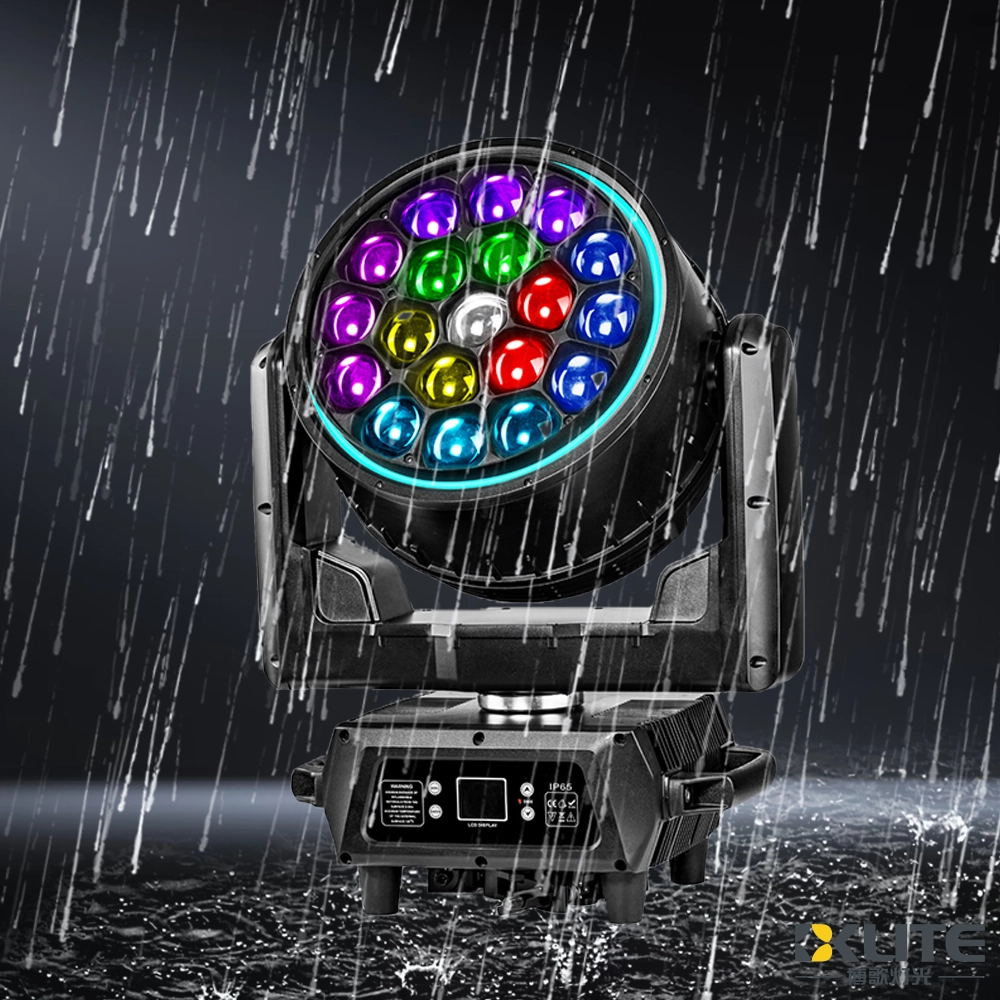
IP65 Waterproof Bee Eye Zoom 19x40W RGBW 4IN1 LED Beam Wash Moving Head Light with LED Ring
BKlite waterproof bee eye moving head light—your reliable choice from top waterproof moving head light manufacturers and suppliers. Ideal for outdoor stage, live event, music festival, this energy-saving fixture ensures powerful, precise illumination for any venue. It delivers powerful, reliable lighting performance in any weather.
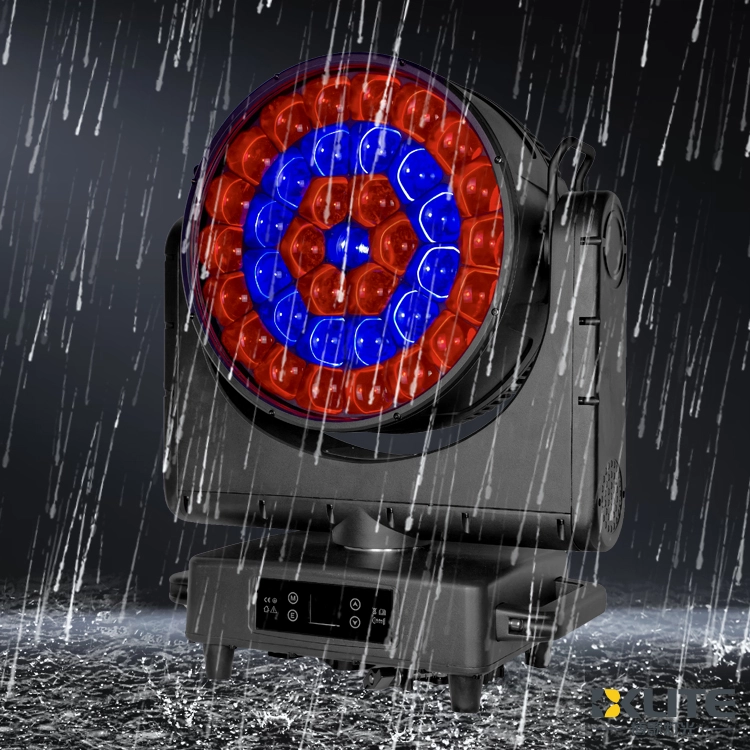
IP65 Waterproof ZOOM Bee Eye 37x40W RGBW 4in1 LED Moving Head Light
As a leading stage lighting equipment supplier with more than 15 years of industry know-how, BKlite brings you the IP65 ZOOM Bee Eye 37*40W RGBW 4in1 LED Moving Head Light (K25 Bee Eye) delivers vibrant, weatherproof lighting with powerful zoom and smooth movement. Ideal for dynamic stage effects, the K25 moving head light ensures stunning RGBW color mixing and reliable outdoor performance.
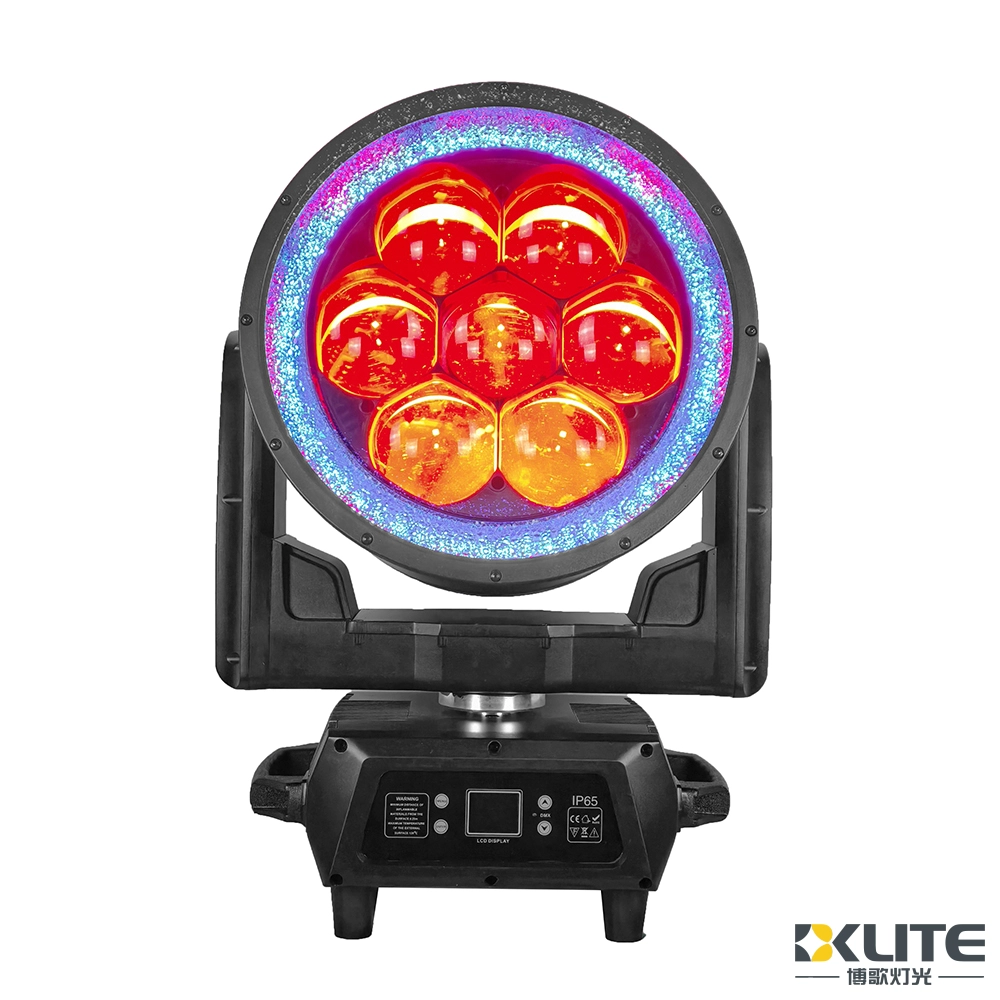
IP65 Waterproof Bee Eye 7x180W RGBL 4IN1 LED Moving Head Light With LED Ring
BKlite high power 7x180W waterproof bee eye moving head light—your reliable choice from top waterproof moving head light manufacturers and suppliers. Ideal for outdoor stage, live event, music festival, this energy-saving fixture ensures powerful, precise illumination for any venue. It delivers powerful, reliable lighting performance in any weather.
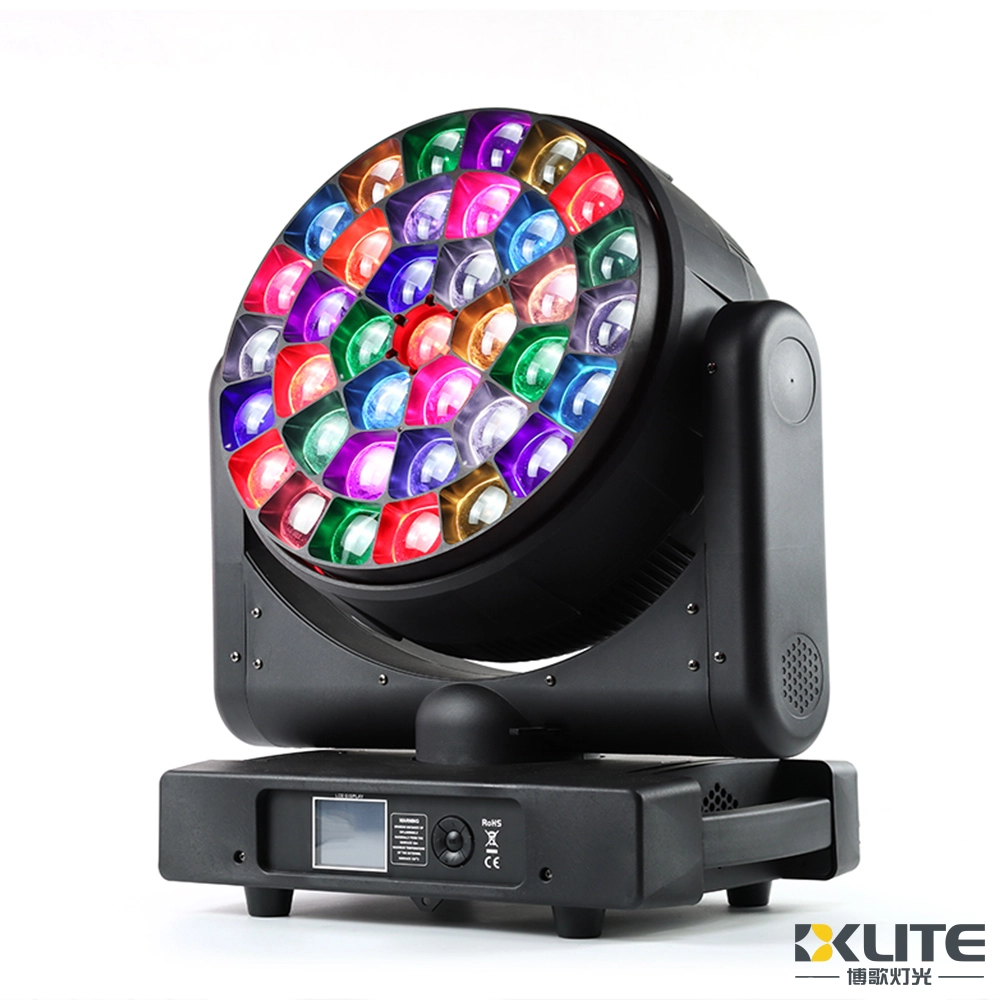
Bee Eye Zoom 37x40W RGBW 4in1 LED Beam Wash Moving Head Light


Copyright © 2025 BKLITE All Rights Reserved.