




Comparing Price Per Lumen for Profile Stage Fixtures
- Quick Comparison: Cost Efficiency of Profile Stage Fixtures
- Understanding Price Per Lumen and Why It Matters
- What is price per lumen and how to calculate it
- Why price per lumen alone isn’t the whole story
- How Different Profile Technologies Compare
- Incandescent/tungsten halogen (traditional ellipsoidals)
- Discharge/HMI and high-intensity sources
- LED profile fixtures (modern solid-state)
- Real-World Examples and Price-per-Lumen Calculations
- Methodology and assumptions
- Representative categories used in calculations
- Comparison table: price, lumen ranges, price per lumen
- Example calculation: comparing a classic ellipsoidal to a mid-range LED profile
- Lifecycle Costs, Operational Factors and When to Choose Which Technology
- Including lamp/consumable and energy costs
- Artistic and technical selection criteria
- Example TCO scenario (summary)
- Practical Buying Guidance for Buyers and Rental Houses
- Questions to ask before you buy
- How to use price-per-lumen in procurement
- Vendor, warranty and service considerations
- FAQ
- 1. Is price per lumen the best metric to choose a profile stage light?
- 2. Do LED profiles always save money over time?
- 3. How should I measure delivered lumens when manufacturers publish different specs?
- 4. Are there standards for measuring theatrical light output and color quality?
- 5. How much should I budget per fixture for a professional mid-sized theatre?
- Contact / Product Inquiry
- References
Quick Comparison: Cost Efficiency of Profile Stage Fixtures
This article compares price per lumen for different types of stage profile lights—traditional tungsten/halogen ellipsoidals, discharge/HMI-based profiles, and contemporary LED profile fixtures—so buyers (rental houses, theatres, production managers) can make evidence-based purchasing choices. It explains methodology, presents representative price-and-output ranges with example calculations, highlights operational and performance trade-offs, and gives actionable recommendations for selecting and specifying profile stage lights that balance capital cost, long-term operating expense, and artistic requirements.
Understanding Price Per Lumen and Why It Matters
What is price per lumen and how to calculate it
Price per lumen is a straightforward metric: divide the purchase price of the fixture by its usable lumen output (delivered lumens). For profile stage fixtures, delivered lumens should account for the fixture’s optical efficiency and the lens/gobo/filter losses—i.e., the light available at the stage after the fixture’s internal losses. Formula: price per lumen = fixture purchase price (USD) / delivered lumens (lm). Use delivered rather than raw emitter output to compare fixtures fairly.
Why price per lumen alone isn’t the whole story
Price per lumen is a useful first-order economic comparison but omits many production-relevant factors: color quality (CRI/TLCI), beam control and edge quality, dimming behavior and color mixing, fixture weight and maintenance, lamp lifetime and replacement costs, power draw, and thermal management. A higher upfront price-per-lumen LED may still save money over time through lower electricity and labour costs. This article therefore pairs price-per-lumen calculations with operational factors you must consider when choosing a stage profile light.
How Different Profile Technologies Compare
Incandescent/tungsten halogen (traditional ellipsoidals)
Traditional theatrical profiles use tungsten or tungsten-halogen lamps (e.g., lamp types in classic ellipsoidal fixtures). Typical luminous efficacy is low—often 10–20 lm/W for theatrical halogen sources—so initial lumens are modest versus power. Advantages include excellent color rendering, simple dimming, and very crisp focus and beam edge. Downsides are high power consumption, heat generation, frequent lamp replacement, and relatively low lumen output per fixture compared with discharge or LED alternatives.
Discharge/HMI and high-intensity sources
Metal halide/HMI or other discharge profile fixtures deliver much higher lumen efficacy than tungsten (typically 60–100 lm/W), producing high output suitable for large venues and long throw distances. They have strong daylight-balanced output but can introduce color-shift dynamics during dimming and require ballast maintenance. They also usually cost more to buy and maintain than simple halogen ellipsoidals.
LED profile fixtures (modern solid-state)
LED profile fixtures combine compact, efficient light engines and optics to deliver controlled beams with high efficacy (varies widely by design; approx. 50–140 lm/W at system level). Benefits include long-life light engines, low heat in the fixture aperture, advanced color control (multi-LED arrays with CMY/RGBW), and lower running costs. High-output LED profiles can be more expensive upfront but often win on lifecycle cost and ease of use (no lamp changes, lower power, less cooling). Optical quality and crispness of beam vary with design—some LED profiles approximate incandescent edge quality very well.
Real-World Examples and Price-per-Lumen Calculations
Methodology and assumptions
To create comparable benchmarks we use: (a) typical street price or manufacturer list price for a representative fixture or category; (b) published lumen output or a conservative estimate of delivered lumens (accounting for optical losses); (c) calculation of price per lumen = price / delivered lumens. Prices and lumen specifications are given as ranges because fixtures and configurations vary. All source data and product pages are cited in the References section.
Representative categories used in calculations
- Small/medium LED profile (compact LED ellipsoidal) — typical delivered lumens: 6,000–12,000
- High-output LED profile (powerful LED ellipsoidal) — delivered lumens: 15,000–40,000
- Tungsten halogen ellipsoidal (classic 575W–750W Source Four style) — delivered lumens: 9,000–15,000
- Discharge/HMI profile (lamp+ballast) — delivered lumens: 20,000–50,000
Comparison table: price, lumen ranges, price per lumen
| Category | Typical Purchase Price (USD) | Representative Delivered Lumens (lm) | Price per Lumen (USD/lm) | Key Pros / Cons |
|---|---|---|---|---|
| Small/Medium LED profile | $1,200–$3,000 | 6,000–12,000 | $0.10–$0.50 | Low power, flexible color, moderate output; higher upfront than basic halogen |
| High-output LED profile | $3,500–$8,000 | 15,000–40,000 | $0.09–$0.53 | Very efficient, long life; higher capital cost, weight may be greater |
| Tungsten/halogen ellipsoidal | $250–$800 | 9,000–15,000 | $0.02–$0.09 | Low initial cost, great beam edge; high running costs, frequent lamps |
| Discharge/HMI profile | $2,000–$6,000 | 20,000–50,000 | $0.04–$0.30 | High output for long throws; maintenance and ballast complexity |
Notes: price-per-lumen ranges overlap because of the wide variability in design, optics, and market pricing. Tungsten appears cheapest on initial price-per-lumen for many configurations, but that omits lamp replacement, energy, cooling and crew costs.
Example calculation: comparing a classic ellipsoidal to a mid-range LED profile
Example A — Tungsten ellipsoidal (purchase price $450; delivered lumens 12,000): price per lumen = $450 / 12,000 lm = $0.0375 / lm.
Example B — Mid-range LED profile (purchase price $2,500; delivered lumens 12,000): price per lumen = $2,500 / 12,000 lm = $0.208 / lm.
On raw purchase price-per-lumen, the tungsten fixture is much less expensive. But assume the tungsten lamp lasts 1,000 hours and costs $30 to replace; the LED engine is rated 50,000 hours. Over 50,000 hours the tungsten lamp would require 50 replacements ($1,500 in lamps) plus higher energy and cooling. When you include lifetime lamp, electricity, and labor, the LED can become more cost-effective despite higher initial price. See lifecycle section below for a worked example.
Lifecycle Costs, Operational Factors and When to Choose Which Technology
Including lamp/consumable and energy costs
To move beyond the purchase metric, estimate total cost of ownership (TCO) across a realistic timeframe (e.g., 5–10 years or 20,000–50,000 operating hours). TCO includes: initial purchase, lamp replacements and ballast maintenance, electricity (power draw × hours × electricity rate), HVAC impact (heat load), and maintenance labor. For theatres and rental houses with high annual hours, LED systems typically show a lower TCO due to long lamp life and lower power consumption.
Artistic and technical selection criteria
Choose based on the artistic needs: for very crisp shuttering and traditional gobo projection in traditional theatre, high-quality ellipsoidals (including LED designs that replicate incandescent optics) are best. For long-throw concert work or film work needing daylight balance, HMI/discharge systems may be required. For flexible color effects, fast switching and low maintenance, LED profiles are often optimal.
Example TCO scenario (summary)
Scenario: compare 10 fixtures over 10 years, 2,000 hours/year (20,000 hours). Inputs (illustrative):
- Tungsten fixture: purchase $450, lamp replacement every 1,000 h, lamp cost $30, power 750 W.
- LED fixture: purchase $2,500, rated life 50,000 h, power 300 W.
- Electricity cost $0.15/kWh.
Estimated 10-fixture 20,000-hour totals: tungsten lamps: 20 replacements per fixture → 20 × $30 = $600 lamp cost per fixture; power cost = 0.75 kW × 20,000 h × $0.15 = $2,250 per fixture. Sum (excluding labor, cooling): purchase $450 + lamps $600 + power $2,250 = $3,300 per fixture. LED: purchase $2,500 + power 0.3 kW × 20,000 h × $0.15 = $900. Total = $3,400 per fixture. In this simplified model the results are similar; add labor for lamp replacement, rigging, HVAC impacts and color quality considerations to refine choice. Real world outcomes depend on local labor and electricity costs and usage patterns.
Practical Buying Guidance for Buyers and Rental Houses
Questions to ask before you buy
- What is the primary use (theatre, concert, corporate, film)? What are typical throw distances?
- How many hours per year will the fixtures operate?
- Is dim-to-black quality, color rendering, and gobo performance critical?
- Do you need wireless control, motorized zoom, or on-board shaping?
- What is your available power and how important is reduced HVAC load?
How to use price-per-lumen in procurement
Use price-per-lumen as a quantitative input alongside lifecycle cost modeling and qualitative artistic requirements. For capital-limited buyers, prioritize fixtures that meet creative needs within budget and then model operational costs. For rentals and high-use venues, favor fixtures with lower TCO and greater reliability even if upfront cost is higher.
Vendor, warranty and service considerations
Check warranty terms (LED modules often have limited time/operating-hour warranties), availability and cost of spare parts, local service network, and firmware update policy—these affect long-term cost and uptime. Good supplier support can reduce hidden costs like shipping fixtures out for repair.
FAQ
1. Is price per lumen the best metric to choose a profile stage light?
Price per lumen is a useful comparative metric for raw output versus cost, but it must be balanced with lifecycle costs (power, lamps, maintenance), color/optical quality, and functional features. Use it as one input in a broader procurement decision.
2. Do LED profiles always save money over time?
Not always—savings depend on hours of use, electricity costs, lamp replacement costs, and maintenance. LEDs usually reduce operational costs for high-use environments, but a careful TCO model is necessary to confirm savings for your use-case.
3. How should I measure delivered lumens when manufacturers publish different specs?
Ask the vendor for photometric files (IES or photometric reports) and use the fixture’s luminous flux at the aperture or stage. If unavailable, use the manufacturer’s published total luminous flux and apply a conservative optical efficiency factor (e.g., 75–85% for well-designed profiles) to estimate delivered lumens.
4. Are there standards for measuring theatrical light output and color quality?
Yes. Photometric measurements conform to IES standards and fixtures often ship with IES files. Color quality is commonly reported as CRI, but for cinema and broadcast, TLCI and spectral power distribution data are more informative. Refer to IES and industry datasheets for standardized measurements.
5. How much should I budget per fixture for a professional mid-sized theatre?
Budgeting depends on needs. For a balanced inventory, many mid-sized theatres deploy a mix: cost-effective tungsten ellipsoidals for basic specials ($250–$700 each), supplemented by LED profiles ($1,200–$4,000) for color flexibility and high-use positions. For a fully LED upgrade, plan on $1,500–$5,000 per profile depending on output and features.
Contact / Product Inquiry
If you’d like a tailored cost model or a product shortlist optimized for your venue’s hours, power constraints and artistic needs, contact our stage lighting consultancy. We provide data-driven procurement guidance, TCO modelling and specification sheets. To view products and request quotes, visit our product page or contact sales directly.
References
- U.S. Department of Energy — Solid-State Lighting: Basics and Resources. https://www.energy.gov/eere/ssl/solid-state-lighting (accessed 2026-01-12)
- Illuminating Engineering Society (IES) — Lighting standards and photometric resources. https://www.ies.org/ (accessed 2026-01-12)
- Electronic Theatre Controls (ETC) — Source Four and Source Four LED product pages (technical specs and photometric information). https://www.etcconnect.com/Products/Lighting/Source-Four/ and https://www.etcconnect.com/Products/Lighting/Source-Four-LED/ (accessed 2026-01-12)
- Sample retailer product pages (pricing examples used for market-range estimates): B&H Photo Video (lighting fixtures search and product listings). https://www.bhphotovideo.com/ (accessed 2026-01-12)
- Thomann — pro lighting product pages and price benchmarks (European market comparisons). https://www.thomann.de/ (accessed 2026-01-12)
- Technical note on lamp efficacy ranges and lifecycle modelling: Lighting Research Center / industry technical summaries (for lumens-per-watt comparisons). https://www.lrc.rpi.edu/ (accessed 2026-01-12)
Authoritative links above open external sites for product specification, photometric files and industry standards. For bespoke ROI/TCO modelling based on your venue’s operating hours and local energy rates, contact us to run a scenario-based comparison and product shortlist tailored to your artistic and budgetary needs.
Buying Guide: Single vs Dual Color LED Spot Moving Head Lights
Architectural Uses for LED Wash Lighting
How to Choose the led stage spotlight manufacturer and supplier ?
Ultimate Buying Guide: Waterproof LED Stage Lights in 2025
FAQs
When will you ship the product after I send the money?
It depends the order.Small order will take 3-5 days.
Can you help me to print our logo or company name on the products on package?
Of course. Your logo can be printed on the products or package. OEM & ODM permits.
What kind of package do you have?
We can pack the lights in a carton case and a flight case.
What's the payment terms?
T/T, Western Union.
If the products broken during the warranty, what should i do?
If there is a problem with the products, you describe it and send pictures or videos to us to analyze, and then we will guide you on how to fix it and provide spare parts for free if needed.
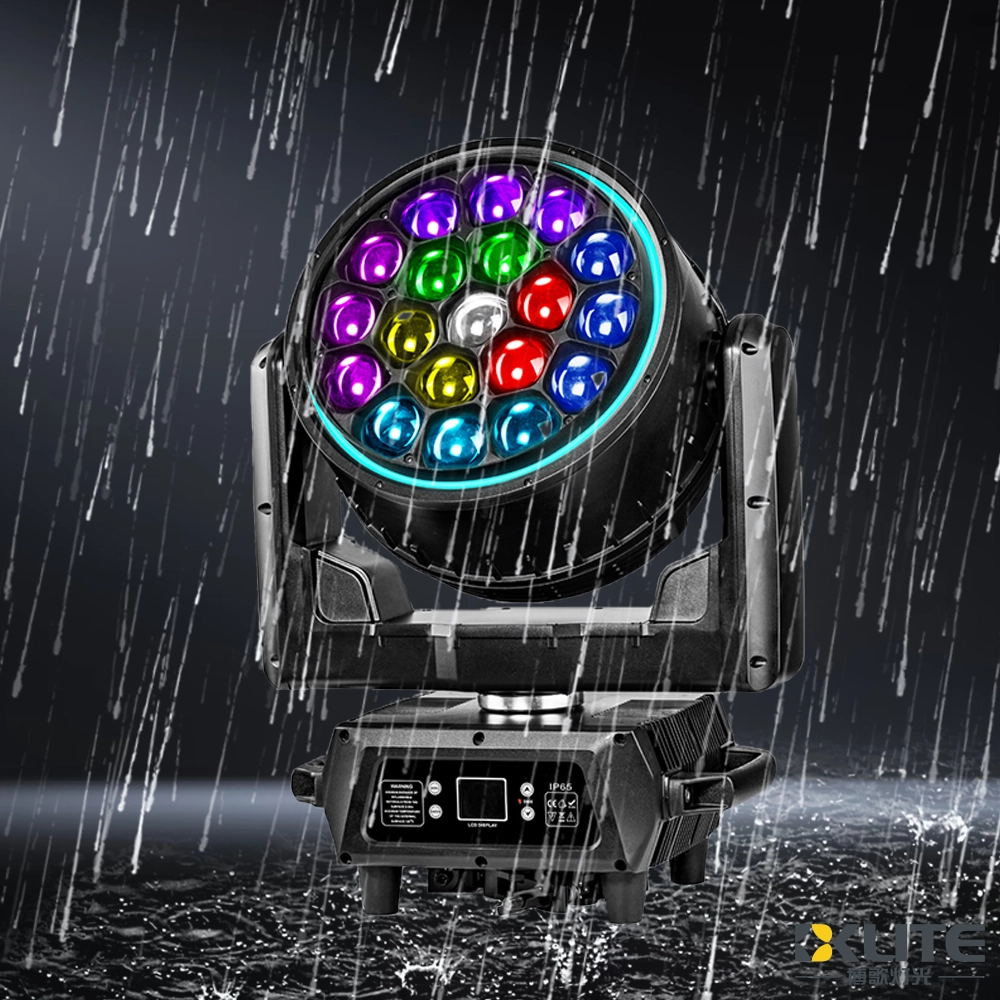
IP65 Waterproof Bee Eye Zoom 19x40W RGBW 4IN1 LED Beam Wash Moving Head Light with LED Ring
BKlite waterproof bee eye moving head light—your reliable choice from top waterproof moving head light manufacturers and suppliers. Ideal for outdoor stage, live event, music festival, this energy-saving fixture ensures powerful, precise illumination for any venue. It delivers powerful, reliable lighting performance in any weather.
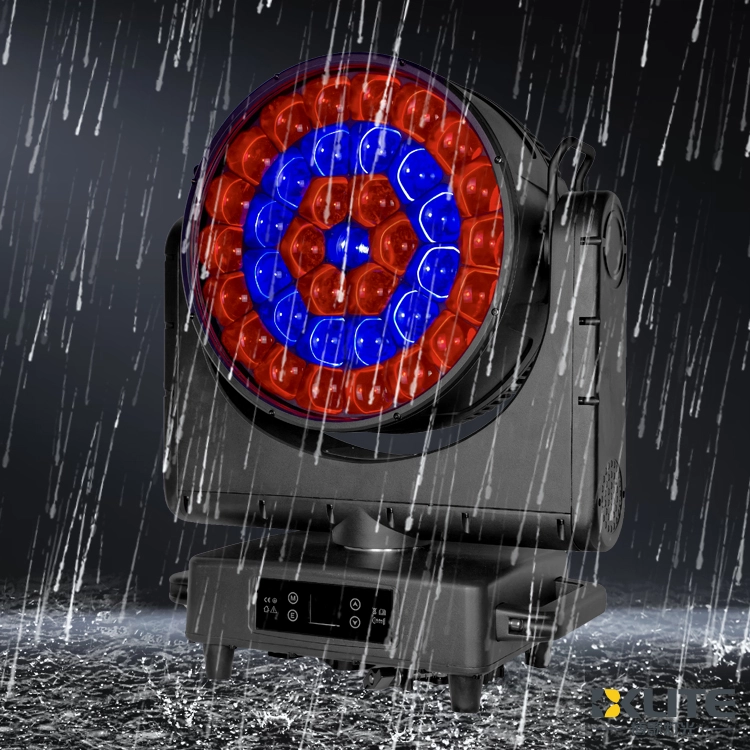
IP65 Waterproof ZOOM Bee Eye 37x40W RGBW 4in1 LED Moving Head Light
As a leading stage lighting equipment supplier with more than 15 years of industry know-how, BKlite brings you the IP65 ZOOM Bee Eye 37*40W RGBW 4in1 LED Moving Head Light (K25 Bee Eye) delivers vibrant, weatherproof lighting with powerful zoom and smooth movement. Ideal for dynamic stage effects, the K25 moving head light ensures stunning RGBW color mixing and reliable outdoor performance.
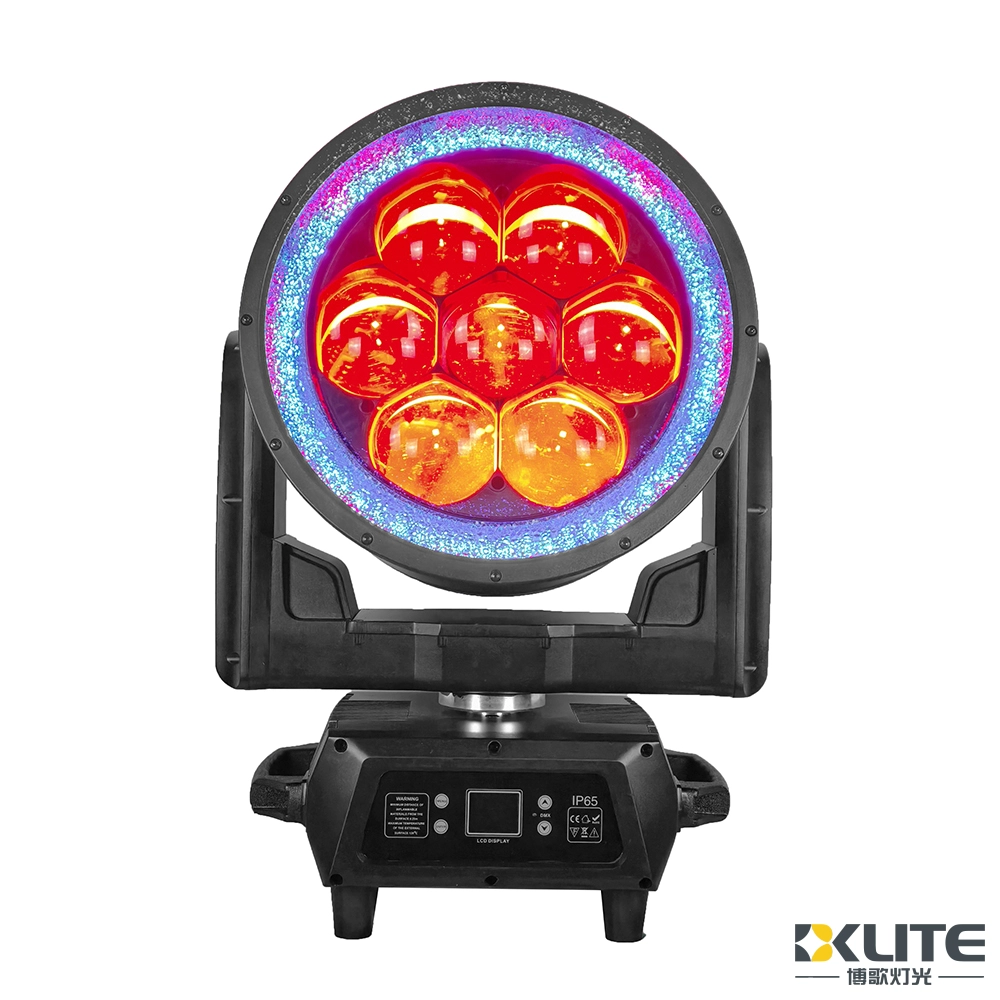
IP65 Waterproof Bee Eye 7x180W RGBL 4IN1 LED Moving Head Light With LED Ring
BKlite high power 7x180W waterproof bee eye moving head light—your reliable choice from top waterproof moving head light manufacturers and suppliers. Ideal for outdoor stage, live event, music festival, this energy-saving fixture ensures powerful, precise illumination for any venue. It delivers powerful, reliable lighting performance in any weather.
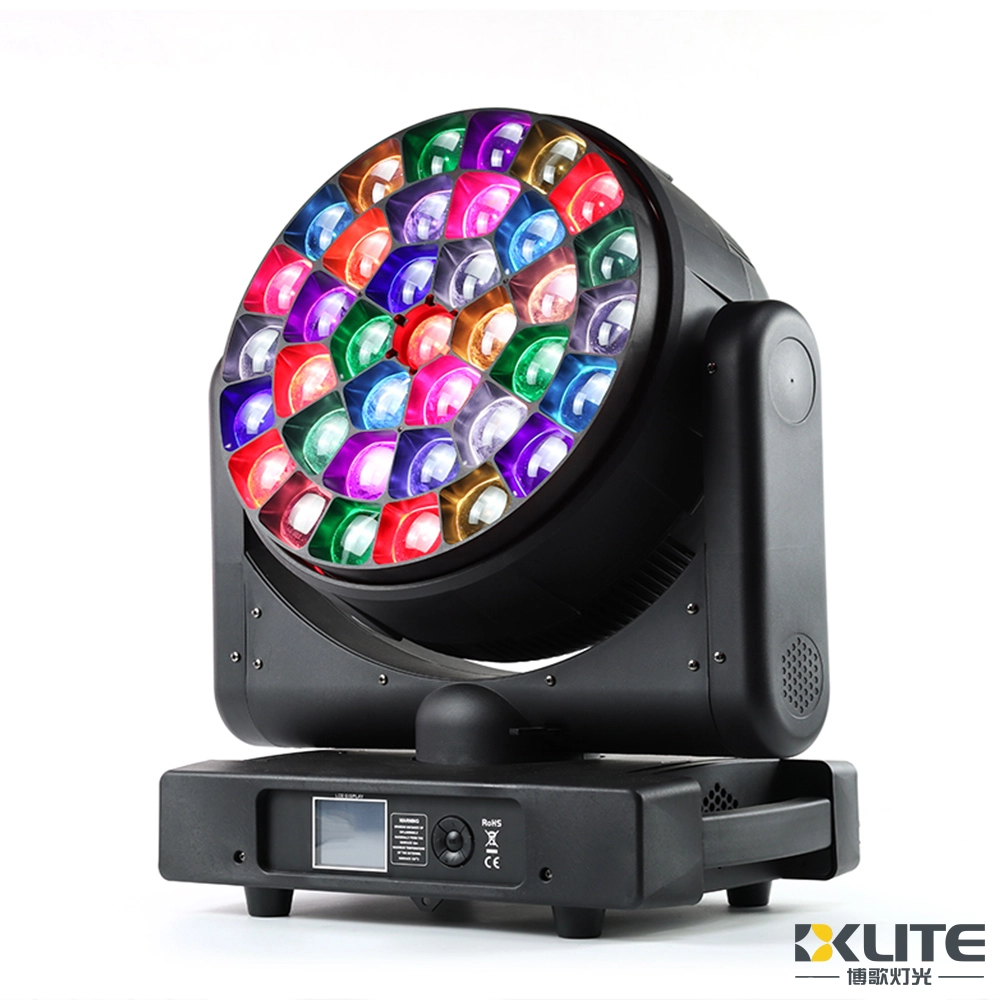
Bee Eye Zoom 37x40W RGBW 4in1 LED Beam Wash Moving Head Light


Copyright © 2025 BKLITE All Rights Reserved.