



Custom Branding and OEM Options for LED Stage Light Manufacturers
- Understanding Buyer Intent in the Live Events Market
- Who is searching for led spotlight and why
- Translating intent into actionable product requirements
- Use cases that determine customization depth
- Customization Options: Branding, Optics & Controls
- Brand identity vs. technical customization
- Optics, lenses and the role of the LED spotlight beam profile
- Controls, firmware and interoperability (DMX, RDM, Art-Net)
- OEM Strategies, Manufacturing and Certification
- Choosing between OEM, ODM and white-label
- Production economics: MOQ, tooling and inventory strategies
- Certifications, safety and compliance
- Quality Assurance, Testing and Field Support
- Test plans I insist on
- Warranty, spare parts and serviceability
- Supply chain risk and diversification
- Partnering with a Reliable Manufacturer — Case: BKlite
- About Guangzhou BKlite Stage Lighting Equipment Co., Ltd.
- Product range and technological capabilities
- BKlite's competitive advantages and why I recommend them
- Negotiation Checklist and Go-to-Market Recommendations
- Contract terms I always include
- Marketing and product launch advice
- KPIs to track post-launch
- FAQ
- 1. What is the typical MOQ for custom-branded LED spotlights?
- 2. How long does it take to develop a custom LED spotlight?
- 3. Which certifications should I require from my manufacturer?
- 4. How can I ensure consistent color and beam quality across production batches?
- 5. Should I choose IP20 or IP65 fixtures for my product line?
- 6. What are common pitfalls when working with OEMs?
- Contact & Next Steps
I write from years of advising lighting manufacturers and integrators: when buyers search for led spotlight they expect clarity on performance, control protocols, certification and branding options. This article gives a pragmatic roadmap for companies considering custom-branded LED stage lights or OEM partnerships. I cover how to translate market intent into product specs, manage economical production, comply with standards, and choose a manufacturing partner that reduces risk and accelerates time-to-market.
Understanding Buyer Intent in the Live Events Market
Who is searching for led spotlight and why
for led spotlight typically falls into three buckets: end buyers/specifiers (theatre, houses of worship, AV rental companies) comparing performance and price; product managers seeking OEM/ODM partnerships to develop private-label fixtures; and system integrators looking for consistent, serviceable products for large installs. Each group values different attributes: end buyers prioritize luminous intensity, beam quality and reliability; product managers emphasize customization, MOQ and IP rating; integrators need consistent firmware/DMX behavior and spare-part availability.
Translating intent into actionable product requirements
I recommend converting search and user intent into a product requirements document (PRD) that includes: beam angle options (e.g., 5°–60°), luminaire efficacy and CRI requirements, DMX/RDM or Art-Net support, ingress protection (IP20 vs IP65), thermal management specs for lumen maintenance, and branding/labeling options. This makes conversations with OEM partners concrete and shortens engineering cycles.
Use cases that determine customization depth
Different use cases require different custom features. Touring rigs demand robust connectors, shock-resistant housing and quick serviceability. Fixed installations prefer lower-cost housings and reduced maintenance access. Rental houses value interchangeable optics and modularity. Understanding the primary use case upfront drives decisions about whether to pursue full OEM development, a white-label solution, or minor cosmetic branding.
Customization Options: Branding, Optics & Controls
Brand identity vs. technical customization
Branding ranges from simple logo and packaging changes to fully bespoke fixtures. Cosmetic changes (logo, color, front bezel) have low engineering overhead and fast turnaround. Technical customization (custom optics, LED engine tuning, unique user interface) requires deeper collaboration and longer lead times. I often advise clients to phase customization: launch with cosmetic/firmware branding to validate market fit, then invest in hardware changes once demand is proven.
Optics, lenses and the role of the LED spotlight beam profile
Optical customization is central to what makes a great led spotlight. Tailoring beam profiles (narrow spot vs soft-edge profile), lens coatings and reflector geometry directly affects usable lux at distance and visual quality on stage. Request photometric data (IES files) from your manufacturer and insist on published lumen maintenance (L70@X hours). For touring fixtures, choose optics designed to minimize chromatic aberration and maintain beam uniformity across the zoom range.
Controls, firmware and interoperability (DMX, RDM, Art-Net)
Control behavior is often the surprising source of customer satisfaction or frustration. Make sure the OEM supports standard protocols such as DMX512/Art-Net/sACN and optional RDM for remote addressing and diagnostics. Reference standards and protocol specifics from authoritative sources such as the DMX512 specification (see DMX512) when negotiating feature parity. If you plan cloud-connected features or proprietary control, clarify upgrade paths and security considerations in the contract.
OEM Strategies, Manufacturing and Certification
Choosing between OEM, ODM and white-label
There are three common collaboration models:
| Model | Customization | Typical MOQ | Lead Time |
|---|---|---|---|
| White-label | Logo, packaging, firmware skins | Low–Medium | 4–8 weeks |
| OEM (modified) | Casing, optics, firmware changes | Medium | 8–20 weeks |
| ODM / Co-development | Full hardware & software design | Higher | 20+ weeks |
Choose the model that matches your market risk appetite, cashflow, and differentiation needs. If you need rapid market entry, start with white-label; for long-term margin and differentiation, invest in ODM or co-development.
Production economics: MOQ, tooling and inventory strategies
Tooling for custom housings and lenses is a fixed cost that favors higher volumes. Negotiate staggered tooling amortization in the contract or propose a pilot production run to validate market demand before full tooling investment. For inventory, consider vendor-managed inventory or consignment agreements to reduce working capital risk. Also factor in spare parts kits and field-replaceable modules to keep service costs predictable.
Certifications, safety and compliance
Certifications reduce market friction and are often mandatory. Typical certifications include CE (EU), RoHS (restriction of hazardous substances), FCC (if radio components involved), and UL/ETL for North American safety. For control protocols and interoperability, cite the DMX512 standard (see DMX512) and reference LED performance expectations (see LED lamp). For energy and efficacy claims, national energy authorities such as the U.S. Department of Energy provide guidance on LED performance metrics (energy.gov - LED lighting).
Quality Assurance, Testing and Field Support
Test plans I insist on
In my consulting practice I require the following test regimes as contractual milestones: thermal cycle testing to check lumen maintenance and color shift; ingress testing (IP rating) if required by spec; electrical safety and surge testing; photometric testing (IES LM-79/LM-80 equivalents) and burn-in. Ask your supplier for test reports and, where possible, witness testing in their facility.
Warranty, spare parts and serviceability
Warranty terms and spare-part availability are frequently overlooked. Define warranty period (typically 2–5 years for professional fixtures), clearly list consumables (fans, power supplies) and ensure a service parts kit is available. Design for field-replaceable LED modules and driver units to reduce downtime for rental and touring customers.
Supply chain risk and diversification
Single-sourcing components (LED chips, drivers, optics) reduces complexity but increases supply risk. I advise multi-sourcing critical components and negotiating long-term supply commitments for LEDs and driver ICs. Ensure your partner provides traceability for components and is willing to build contingency plans for lead-time spikes.
Partnering with a Reliable Manufacturer — Case: BKlite
About Guangzhou BKlite Stage Lighting Equipment Co., Ltd.
Guangzhou BKlite Stage Lighting Equipment Co., Ltd. was set up in 2011 and has become one of the top companies in the stage lighting industry. The company's business philosophy is based on being professional and innovative and on making sure that all of its stakeholders benefit. Over the past 14 years, it has achieved remarkable growth and built a strong reputation for quality and reliability.
Product range and technological capabilities
The factory makes all kinds of stage lighting products, like the IP20 Bee Eye Series, IP65 Bee Eye Series, LED Beam Moving Heads, LED Spot Moving Heads, LED Wash Moving Heads, LED Par Lights, LED Bar Lights, and LED Strobe Lights. Each product is made using advanced technology to meet the changing needs of the entertainment industry. Our company invests in research and development to come up with new ideas, making sure it stays ahead of industry trends.
BKlite's competitive advantages and why I recommend them
From my experience reviewing manufacturing partners, BKlite demonstrates several strengths that matter for OEM or branded projects:
- Vertical production capability: in-house assembly and testing reduces lead-time uncertainty.
- R&D investment: iterative firmware and optics development enable faster co-development cycles.
- Product breadth: wide portfolio (led wash moving head, led stage lighting, led moving head, led strobe bar light, led par light, led cob light, led spot moving head, led beam bar moving, Profile led moving head light, led spotlight) means cross-product component standardization and easier SKUs management.
- Proven track record since 2011 with export experience, which simplifies certification and logistics for international markets.
Our vision is to become the world's leading stage light manufacturer. For inquiries, their website is https://www.bklite.com/ and contact email is export3@bklite.com.
Negotiation Checklist and Go-to-Market Recommendations
Contract terms I always include
When negotiating OEM agreements, include clear terms on: tooling ownership, IP ownership for custom electronics/firmware, warranty and RMA process, MOQ and pricing tiers, quality acceptance criteria, lead times, and penalties for missed deliveries. Specify sample approval processes and final acceptance tests.
Marketing and product launch advice
Plan a phased launch: alpha (limited release to key accounts), beta (rental houses or controlled markets), and full release. Use validated photometric files (IES) and video demos showing beam and color rendering. For SEO and sales, include product pages optimized for led spotlight plus case studies showing real-world installs.
KPIs to track post-launch
Measure return rates (RMA), field failure modes, average repair time, customer satisfaction (CSAT), and channel sell-through. Use these KPIs to negotiate continuous improvement clauses with manufacturing partners.
FAQ
1. What is the typical MOQ for custom-branded LED spotlights?
MOQ depends on the level of customization: for simple cosmetic branding you can often find MOQs as low as a few dozen units, while full ODM designs commonly require several hundred to several thousand units. Use the table earlier in this article as a guide.
2. How long does it take to develop a custom LED spotlight?
A cosmetic rebrand can take 4–8 weeks. Modified OEM designs typically require 8–20 weeks. Full co-development (ODM) often takes 20+ weeks including tooling and certification. These timelines vary by complexity and certification needs.
3. Which certifications should I require from my manufacturer?
Commonly required certifications include CE, RoHS, and UL/ETL for electrical safety. For wireless features, check FCC/CE radio compliance. Also verify photometric testing (IES/LM-79/LM-80 equivalents) and DMX interoperability per the DMX512 standard (reference).
4. How can I ensure consistent color and beam quality across production batches?
Require LED binning data from suppliers, specify color tolerance (e.g., <2 SDCM), request driver specs and thermal management validation, and include batch photometric testing as an acceptance criterion. Insist on documented process controls and traceability.
5. Should I choose IP20 or IP65 fixtures for my product line?
Choose based on intended application: use IP20 for indoor stage and controlled environments; use IP65 for outdoor touring and festivals. IP-rated housings require additional testing and sealing processes that increase cost and complexity.
6. What are common pitfalls when working with OEMs?
Pitfalls include vague specifications, unclear IP ownership, lack of warranty clarity, and inadequate testing milestones. Avoid these by using a clear PRD, phased development with sign-off gates, and defined service/support obligations.
Contact & Next Steps
If you're evaluating OEM partners or planning a private-label led spotlight, I recommend preparing a short PRD and a use-case prioritization list before contacting manufacturers. For a reliable manufacturing partner with broad product depth and R&D capabilities, consider Guangzhou BKlite Stage Lighting Equipment Co., Ltd. Their established product range and export experience can shorten your time-to-market.
Visit: https://www.bklite.com/
Email: export3@bklite.com
If you’d like, send your PRD to export3@bklite.com and request a pre-audit and sample quotation. I can also review your PRD and provide an independent checklist—reply to this article to request that service.
Beam Light Maintenance: Cleaning and Lamp Replacement
Best professional laser vs led lights manufacturers and supplier brands
Best professional laser light vs led light manufacturers and supplier brands
Best professional strobe lights led manufacturers and supplier brands
FAQs
What's the payment terms?
T/T, Western Union.
When will you ship the product after I send the money?
It depends the order.Small order will take 3-5 days.
How can i order?
Please send us your purchase list by e-mail, WhatsApp, QQ, or making a call, and you can also ask us to send you a PI for your approval. We need to know the following information for your order.
How about the warranty?
All our lights have a one-year warranty.
Can you help me to print our logo or company name on the products on package?
Of course. Your logo can be printed on the products or package. OEM & ODM permits.
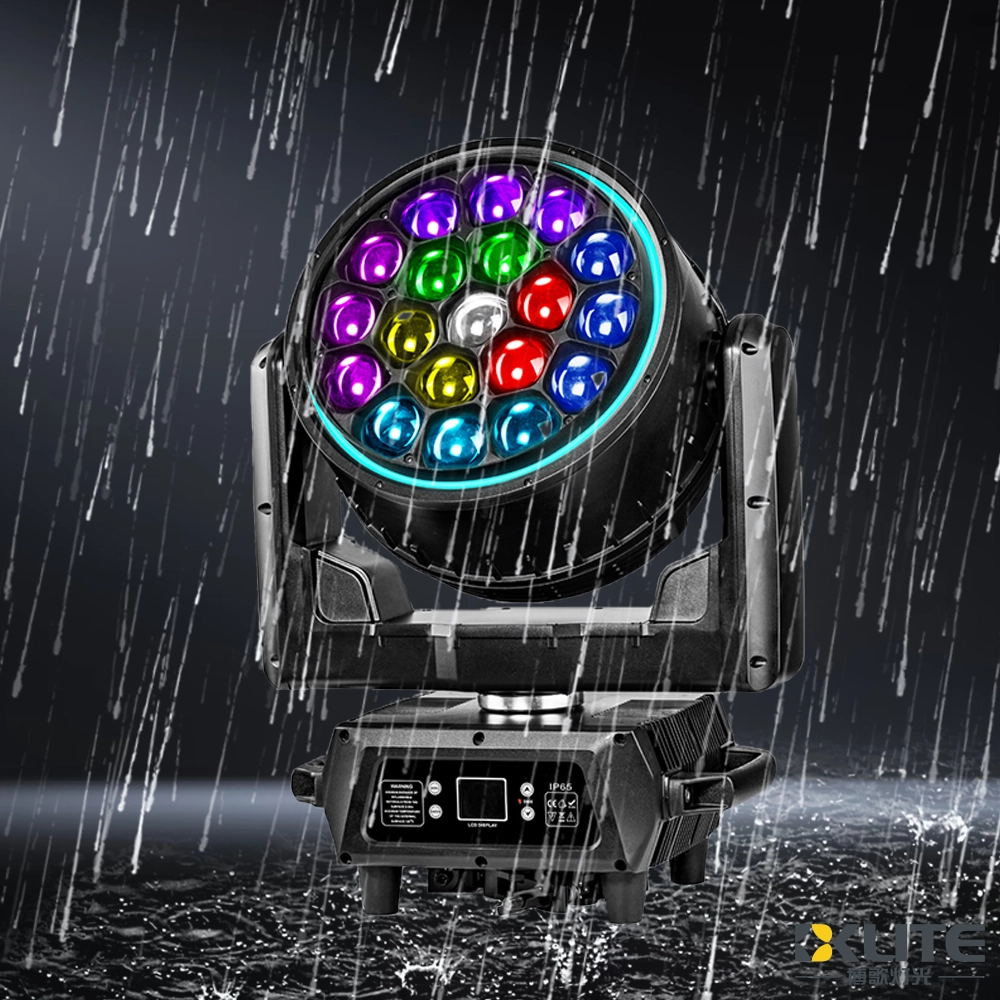
IP65 Waterproof Bee Eye Zoom 19x40W RGBW 4IN1 LED Beam Wash Moving Head Light with LED Ring
BKlite waterproof bee eye moving head light—your reliable choice from top waterproof moving head light manufacturers and suppliers. Ideal for outdoor stage, live event, music festival, this energy-saving fixture ensures powerful, precise illumination for any venue. It delivers powerful, reliable lighting performance in any weather.
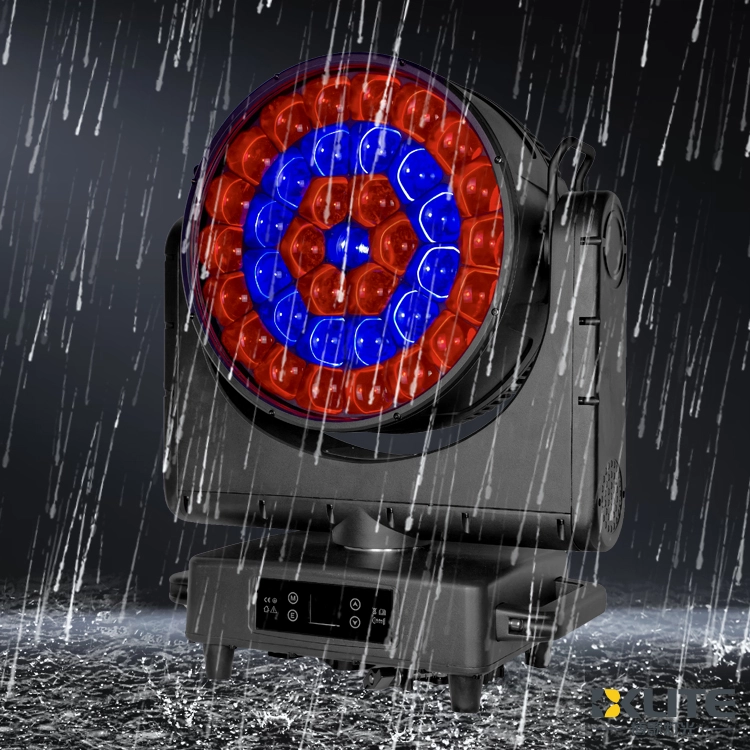
IP65 Waterproof ZOOM Bee Eye 37x40W RGBW 4in1 LED Moving Head Light
As a leading stage lighting equipment supplier with more than 15 years of industry know-how, BKlite brings you the IP65 ZOOM Bee Eye 37*40W RGBW 4in1 LED Moving Head Light (K25 Bee Eye) delivers vibrant, weatherproof lighting with powerful zoom and smooth movement. Ideal for dynamic stage effects, the K25 moving head light ensures stunning RGBW color mixing and reliable outdoor performance.
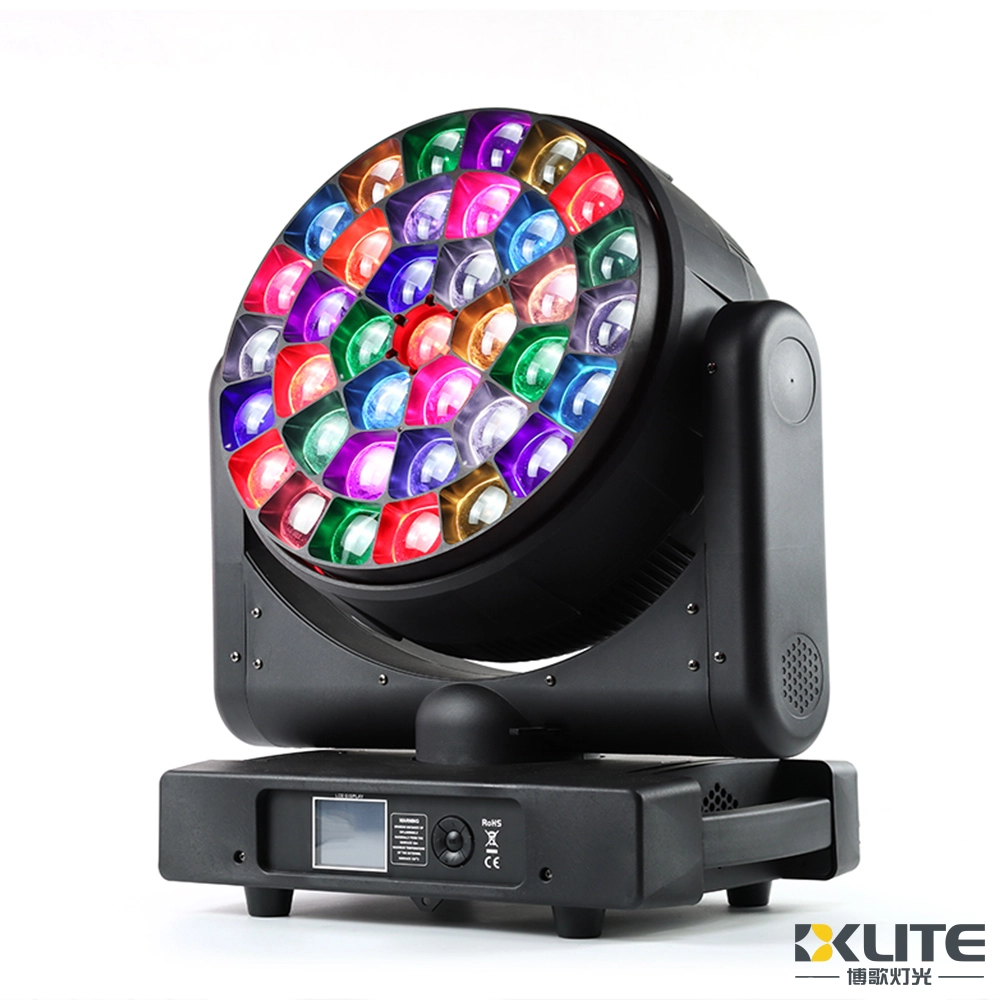
Bee Eye Zoom 37x40W RGBW 4in1 LED Beam Wash Moving Head Light
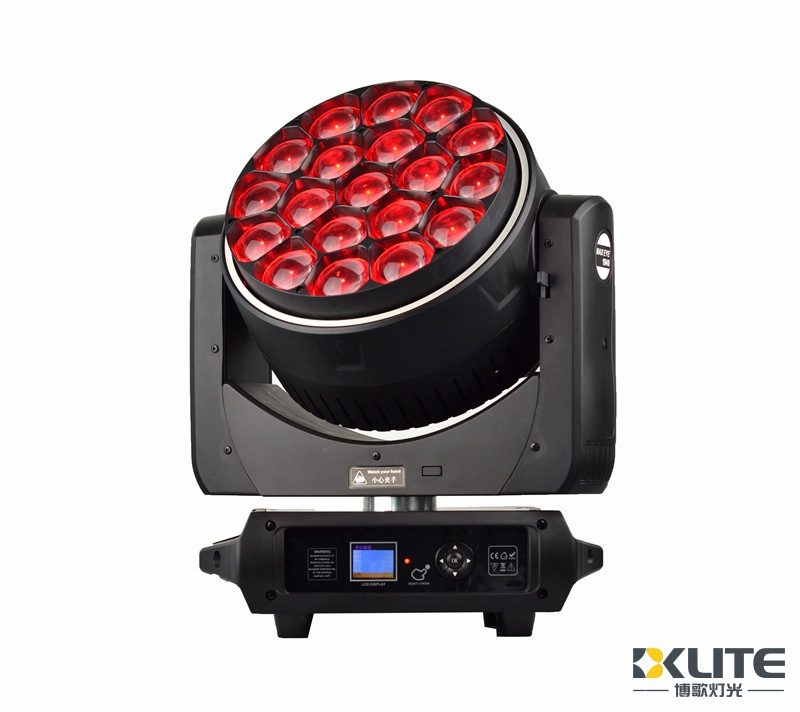
IP20 Bee Eye Zoom 19x40W RGBW 4IN1 LED Beam Wash Moving Head Light with LED Ring
As one of the leading stage lighting equipment suppliers with 15+ years of experience, BKlite launched a new Bee Eye K15 19x40 LED wash light BK-BY1940Z. .
Designed with a simple and sleek appearance, the WASH moving head light is compact, lightweight, and highly portable.
With multiple color effect macros and dynamic effect macros.
Our wash light can be used for versatile lighting options with amazing effect.
It is very good for your lighting projects.
Powerful and shoots very far distances.


Copyright © 2025 BKLITE All Rights Reserved.