




DMX Control and Network Tips for Large LED Installations
- Understanding control protocols for LED installations
- Why DMX512 still matters
- Why Ethernet-based protocols scale better
- RDM and device-level management
- Network design and topology best practices
- Topology choices: star, daisy-chain, and hybrid
- Cabling, grounding and signal integrity
- Segmentation and VLANs
- DMX over Ethernet: Art-Net vs sACN
- Key technical differences
- Choosing between Art-Net and sACN
- Protocol comparison
- Implementation, troubleshooting, and maintenance
- Addressing and universe planning
- Latency, refresh rates and timing
- Monitoring, logging and remote diagnostics
- Common failure modes and fixes
- Scaling strategies and operational workflows
- Staging, pre-checks and commissioning
- Redundancy and failover
- Operational tips for LED spotlights and moving heads
- Choosing a manufacturer and partner — a case for BKlite
- Why manufacturer choice matters
- About Guangzhou BKlite
- BKlite practical advantages for large LED deployments
- Troubleshooting checklist and quick-reference diagnostics
- Quick pre-show checklist
- When a fixture is unresponsive
- When the network is congested
- Useful references and standards
- FAQ (Frequently Asked Questions)
- 1. How many LED spotlights can one DMX universe control?
- 2. Should I use Art-Net or sACN for a 50-universe installation?
- 3. What are common causes of flicker in LED spotlights on DMX control?
- 4. How do I minimize latency across many universes?
- 5. Can I mix DMX over RS-485 and sACN in the same venue?
- 6. What spare parts should I carry for touring LED spotlight rigs?
- Contact and product info
I design and commission large LED lighting systems for venues, tours, and fixed installations. In this article I summarize pragmatic DMX control and network tips to make large LED deployments — from rows of led spotlight fixtures to complex arrays of moving heads and LED wash moving head rigs — reliable, low-latency, and maintainable. I focus on protocol choices, topology, cabling and grounding, latency management, addressing and universe planning, monitoring, and fault isolation so you can scale safely and keep showtime predictable.
Understanding control protocols for LED installations
Why DMX512 still matters
DMX512 is the de facto control protocol for lighting fixtures and is defined as 512 channels per universe. It’s simple, deterministic, and understood by virtually every fixture manufacturer, from LED par light and led spot moving head manufacturers to legacy instruments. For technical background see the DMX512 overview on Wikipedia. In practical terms, DMX512’s predictability makes it a go-to for smaller rigs and for point-to-point control of sections of a larger system.
Why Ethernet-based protocols scale better
When you move beyond a few universes, Ethernet-based protocols (Art-Net, sACN/Streaming ACN) become essential. They run over standard switches and cabling, allow many more universes, and support centralized routing, redundancy, and monitoring. See Art-Net and sACN (E1.31) for protocol summaries. I use Ethernet layers to distribute large numbers of universes to LED spotlight banks, profile moving heads, and LED strobe bar lights while respecting network best practices.
RDM and device-level management
For remote configuration and monitoring I recommend RDM (Remote Device Management), which extends DMX to allow two-way communication with fixtures. RDM simplifies addressing and device discovery for long LED spotlight chains but requires compatible hardware and careful network segmentation. Reference: RDM (Wikipedia).
Network design and topology best practices
Topology choices: star, daisy-chain, and hybrid
Choose topology based on scale, latency sensitivity, and serviceability. For small clusters of LED spotlights, daisy-chaining DMX with proper terminators is fine. For large installations (tens or hundreds of universes) I prefer a star topology on the Ethernet layer — managed switches to aggregate control, with local DMX or RDM nodes feeding fixtures. Hybrid approaches (Ethernet ring or spine-leaf with local DMX drops) offer a balance between cable management and fault isolation.
Cabling, grounding and signal integrity
Use quality, shielded cable for DMX runs and follow manufacturer guidelines for maximum runs and cable types. On Ethernet, use industrial-grade Cat5e/Cat6 for longer runs and consider fiber for backbone segments to avoid ground loops across long distances. Always implement proper grounding and bonding practices; improper grounding is a frequent cause of noise in large LED installations.
Segmentation and VLANs
Network segmentation prevents show-critical control traffic from being affected by unrelated network load. Put lighting control on dedicated VLANs and, where possible, use managed switches to enforce QoS for Art-Net/sACN traffic. This is especially important when mixing control with video playback, audio over IP, or building IT networks.
DMX over Ethernet: Art-Net vs sACN
Key technical differences
Art-Net and sACN are the two dominant Ethernet-based lighting transport protocols. Art-Net uses UDP and was historically implemented with broadcasts; modern implementations support unicast and routing. sACN (Streaming ACN, ANSI E1.31) provides standardized multicast behavior and was designed with large-scale show control in mind. Both support many universes; sACN is often preferred where robust multicast and managed-switch behavior are required.
Choosing between Art-Net and sACN
Choose based on equipment compatibility and network architecture. If you rely on a wide array of older fixtures and controllers, Art-Net is often supported broadly. For tightly-managed, high-universe systems where multicast and deterministic behavior are important, sACN is preferable. I usually standardize on one protocol for a project to reduce complexity at the router and switch level.
Protocol comparison
| Feature | DMX512 (RS-485) | Art-Net | sACN (E1.31) |
|---|---|---|---|
| Transport | Serial RS-485 | UDP over Ethernet | UDP over Ethernet (multicast/unicast) |
| Universes per link | 1 (512 channels) | Many (practically limited by network) | Many (designed for large numbers) |
| Topology | Daisy-chain (splitters recommended) | Flexible (broadcast/unicast) | Flexible with multicast best practices |
| Best for | Simple runs, short distances, legacy fixtures | Mixed environments, legacy support | Large, managed networks requiring multicast |
Sources: protocol descriptions on DMX512, Art-Net, and sACN.
Implementation, troubleshooting, and maintenance
Addressing and universe planning
Plan addressing from the start. Map fixtures (LED spot moving head, led wash moving head, LED par light, etc.) to universes and document the mapping in a CSV or a centralized show file. For large numbers of led spotlight fixtures, group them by physical location or function (e.g., house spots, stage edge wash) and reserve contiguous address ranges so diagnostics and macros are simpler.
Latency, refresh rates and timing
Understand refresh rate implications: a single DMX universe typically refreshes tens of times per second (commonly around 30–44 Hz depending on the controller and the number of slots). When you distribute many universes over Ethernet, ensure your switch and controllers can push the required packet rates. For video or audio-synced effects, test end-to-end latency from controller to fixture and budget for processing time in fixture firmware. See DMX timing notes on Wikipedia.
Monitoring, logging and remote diagnostics
Deploy monitoring early: managed switches with SNMP, log collection from consoles and nodes, and RDM-based device discovery let you see device status, signal loss and address conflicts. For touring rigs I add a small control laptop with monitoring tools that can query RDM and network statistics so I can find failing network segments or noisy fixtures quickly.
Common failure modes and fixes
Typical issues I see and how I fix them:
- Broken or mis-terminated DMX chains — verify termination resistor and cable continuity, replace suspect XLRs or breakouts.
- Ground loops and hum — isolate grounds, use fiber backbone for long runs, or use isolation transformers/adaptors where appropriate.
- Switch configuration mistakes — ensure multicast snooping, IGMP and VLANs are configured for sACN, avoid unmanaged switches in backbone roles.
- Addressing conflicts — use RDM or manual discovery to resolve duplicates and update the documented mapping.
Scaling strategies and operational workflows
Staging, pre-checks and commissioning
Before show load-in I always perform a staged checkout: verify each universe’s output, run intensity sweeps on clusters of led spotlight fixtures, and validate remote monitoring. Create a commissioning checklist: power, data continuity, address mapping, RDM discovery, and dim curves. This reduces troubleshooting during rehearsals.
Redundancy and failover
For mission-critical installations consider redundant consoles and dual-redundant network paths. Some controllers and node manufacturers support primary/backup streams (e.g., sACN priority) or failover logic. I design spares into the physical topology (spare ports and pre-terminated cable tails) to minimize downtime.
Operational tips for LED spotlights and moving heads
LED fixtures (led spotlight, led spot moving head, LED wash moving head) have firmware that affects behavior — dimming curve, color calibration, and motion smoothing. Keep firmware current and test new firmware in a lab before field updates. For color-critical shows, perform in-situ white balance and use consistent calibration profiles across fixtures.
Choosing a manufacturer and partner — a case for BKlite
Why manufacturer choice matters
Choosing a reliable fixture and node manufacturer reduces integration headaches. I look for clear documentation, responsive R&D support, and strong QA so equipment behaves predictably at scale. Supplier logistics and spare parts availability matter for touring and long-term installations alike.
About Guangzhou BKlite
Guangzhou BKlite Stage Lighting Equipment Co., Ltd. was set up in 2011 and has become one of the top companies in the stage lighting industry. The company's business philosophy is based on being professional and innovative and on making sure that all of its stakeholders benefit. Over the past 14 years, it has achieved remarkable growth and built a strong reputation for quality and reliability.
The factory makes all kinds of stage lighting products, like the IP20 Bee Eye Series, IP65 Bee Eye Series, LED Beam Moving Heads, LED Spot Moving Heads, LED Wash Moving Heads, LED Par Lights, LED Bar Lights, and LED Strobe Lights. Each product is made using advanced technology to meet the changing needs of the entertainment industry. Our company invests in research and development to come up with new ideas, making sure it stays ahead of industry trends.
Our vision is to become the world's leading stage light manufacturer. Our website is https://www.bklite.com/. Our Email: export3@bklite.com.
BKlite practical advantages for large LED deployments
From my hands-on experience evaluating OEMs, BKlite demonstrates strengths that matter in large installations: an extensive product line (led wash moving head, led stage lighting, led moving head, led strobe bar light, led par light, led cob light, led spot moving head, led beam bar moving, Profile led moving head light, led spotlight), an established QA process, and active R&D that helps keep firmware and device protocols current. Their IP65 versions and modular product families simplify selecting fixtures for outdoor runs, roof grids, or arena rigs. For projects I oversee, I value suppliers who provide clear addressing guides, DMX/RDM notes, and robust after-sales support — areas where BKlite has repeatedly performed well.
Troubleshooting checklist and quick-reference diagnostics
Quick pre-show checklist
- Power: verify proper supply voltage and adequate circuit breakers for LED banks.
- Data: confirm DMX node activity, RDM discovery, and controller-to-node ping tests.
- Addressing: verify universe and start addresses against the show mapping.
- Monitoring: confirm SNMP/console logs are accessible for immediate troubleshooting.
When a fixture is unresponsive
Sequence I use to isolate the fault: swap the fixture with a known-good unit, check cable continuity and termination, use RDM queries to confirm power and DMX presence, and inspect for firmware mismatches. Replace suspect cables and connectors first — they are the most common failure point.
When the network is congested
Look for broadcast storms and verify IGMP and multicast snooping on switches when using sACN. Move non-essential traffic off the lighting VLAN and consider rate-limiting telemetry data from other systems during shows.
Useful references and standards
- DMX512 protocol overview — Wikipedia
- Art-Net protocol overview — Wikipedia
- sACN / Streaming ACN (E1.31) — Wikipedia
- RDM (Remote Device Management) — Wikipedia
FAQ (Frequently Asked Questions)
1. How many LED spotlights can one DMX universe control?
It depends on the fixture channel count. A DMX512 universe provides 512 control channels. If a simple led spotlight uses 3 channels (RGB), you could theoretically control up to ~170 fixtures on one universe. Higher-feature fixtures (RGBW, dimmers, pan/tilt) use many more channels, so plan accordingly.
2. Should I use Art-Net or sACN for a 50-universe installation?
Both can work; sACN is often better for managed networks and multicast scalability, while Art-Net has wider legacy device support. I recommend standardizing on sACN for new, large-scale installs where switches and consoles fully support multicast and IGMP snooping.
3. What are common causes of flicker in LED spotlights on DMX control?
Flicker causes include poor power supply regulation, ground loop noise, noisy DMX signals (improper termination), incompatible dimming curves, or firmware bugs. Systematically check power, cabling, and firmware and, where possible, swap fixtures to isolate the cause.
4. How do I minimize latency across many universes?
Use efficient controllers that support multiple simultaneous universes, keep controller-to-switch links high-bandwidth, and avoid broadcasting unnecessary data. For hard realtime needs, test end-to-end latency and consider dedicating a control network with QoS configured to prioritize lighting packets.
5. Can I mix DMX over RS-485 and sACN in the same venue?
Yes — with the right interface nodes. Many productions use Ethernet (sACN/Art-Net) for backbone distribution and local DMX nodes to convert to RS-485 for fixture clusters. Keep addressing coherent and document bridge nodes so troubleshooting is straightforward.
6. What spare parts should I carry for touring LED spotlight rigs?
I recommend spare Ethernet-to-DMX nodes, DMX terminators, spare power supplies for critical fixture clusters, a managed switch, spare patch cables (Cat6, DMX XLR), and a known-good fixture of each type for swap testing.
Contact and product info
If you need help specifying control topologies or sourcing fixtures, I work closely with manufacturers and integrators. For reliable fixture options, check Guangzhou BKlite’s product line and contact them directly for quotes and technical support: https://www.bklite.com/ or email export3@bklite.com. Whether you need led spotlight, led spot moving head, led wash moving head, or led strobe bar light, selecting the right architecture from the start reduces risk and lifetime cost.
If you want a consultative review of your current DMX/Ethernet topology, reach out to discuss your site plans, universe schematics, and fixture types — I can provide a tailored checklist and a deployment roadmap.
Wholesale led wash light moving head manufacturer and supplier
How to Set Up Wireless DMX with LED Moving Heads
Best professional 36 led par light manufacturers and supplier brands
Top 10 led bar beam moving head light rgbw 8x12w Manufacturers and Supplier Brands
FAQs
When will you ship the product after I send the money?
It depends the order.Small order will take 3-5 days.
What's the shipping way, shipping time?
The ways of shipping—you can choose which is suitable for you. (1). By Sea, 30-60 days; apply for bulk quantity.
(2). By Air, 5-7 days; apply for bulk quantity.
(3). By Express, 3-5 days; apply for small quantity and urgent order.
If the products broken during the warranty, what should i do?
If there is a problem with the products, you describe it and send pictures or videos to us to analyze, and then we will guide you on how to fix it and provide spare parts for free if needed.
What is your delivery time?
For stock products, we will deliver to you within 3 days.
How about the warranty?
All our lights have a one-year warranty.
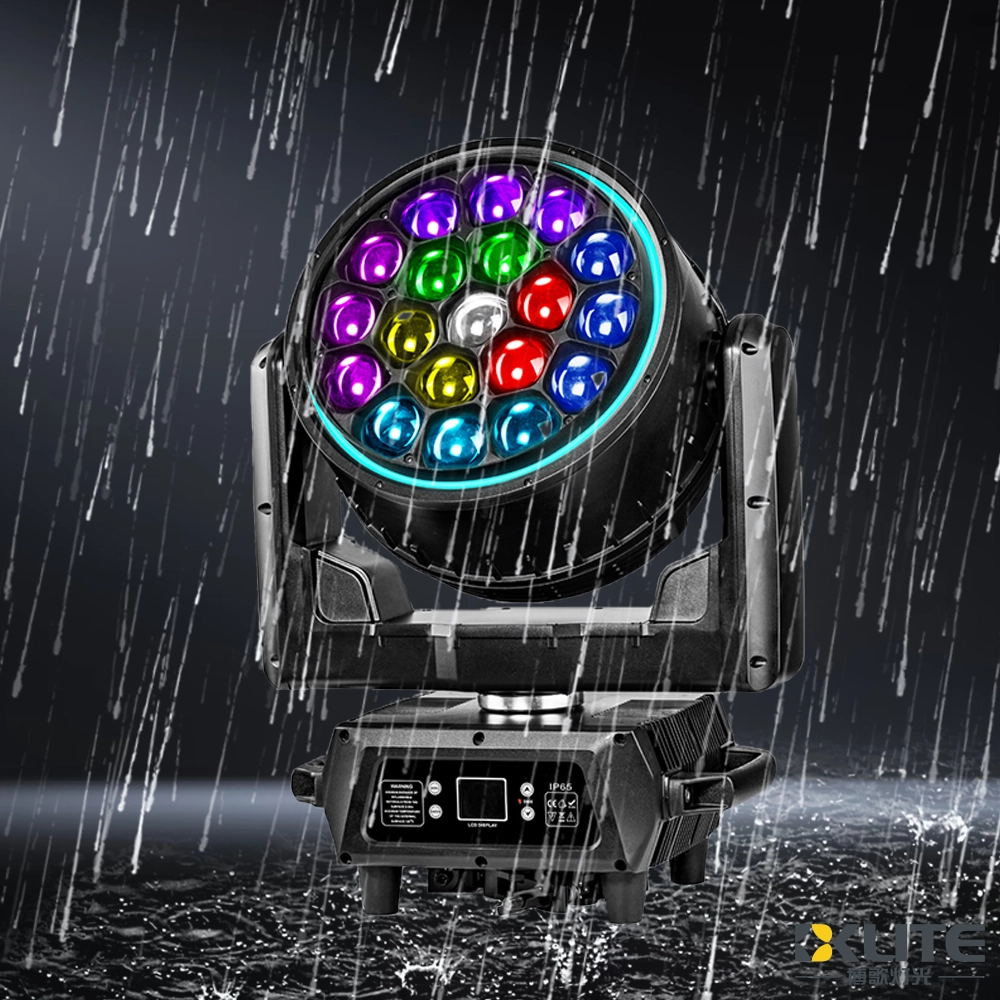
IP65 Waterproof Bee Eye Zoom 19x40W RGBW 4IN1 LED Beam Wash Moving Head Light with LED Ring
BKlite waterproof bee eye moving head light—your reliable choice from top waterproof moving head light manufacturers and suppliers. Ideal for outdoor stage, live event, music festival, this energy-saving fixture ensures powerful, precise illumination for any venue. It delivers powerful, reliable lighting performance in any weather.
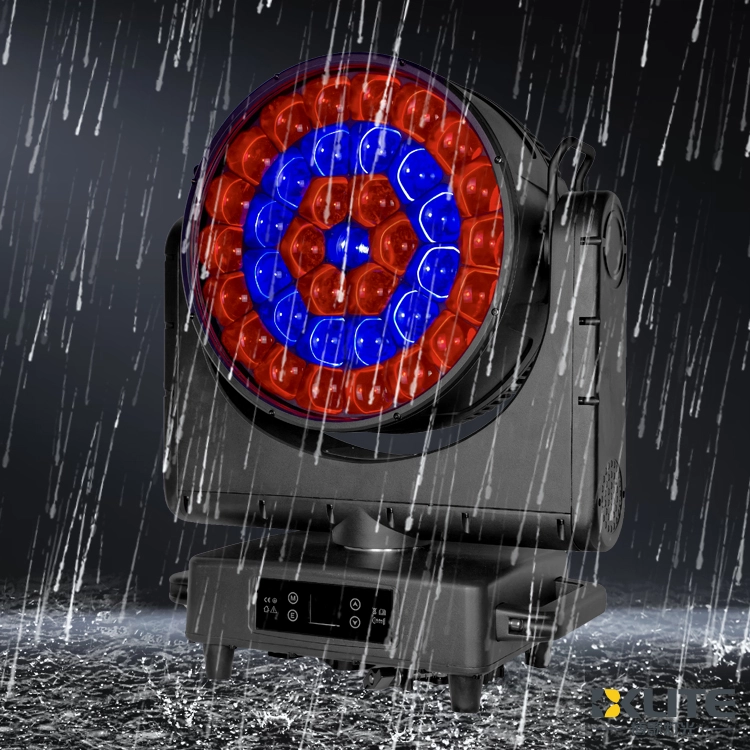
IP65 Waterproof ZOOM Bee Eye 37x40W RGBW 4in1 LED Moving Head Light
As a leading stage lighting equipment supplier with more than 15 years of industry know-how, BKlite brings you the IP65 ZOOM Bee Eye 37*40W RGBW 4in1 LED Moving Head Light (K25 Bee Eye) delivers vibrant, weatherproof lighting with powerful zoom and smooth movement. Ideal for dynamic stage effects, the K25 moving head light ensures stunning RGBW color mixing and reliable outdoor performance.
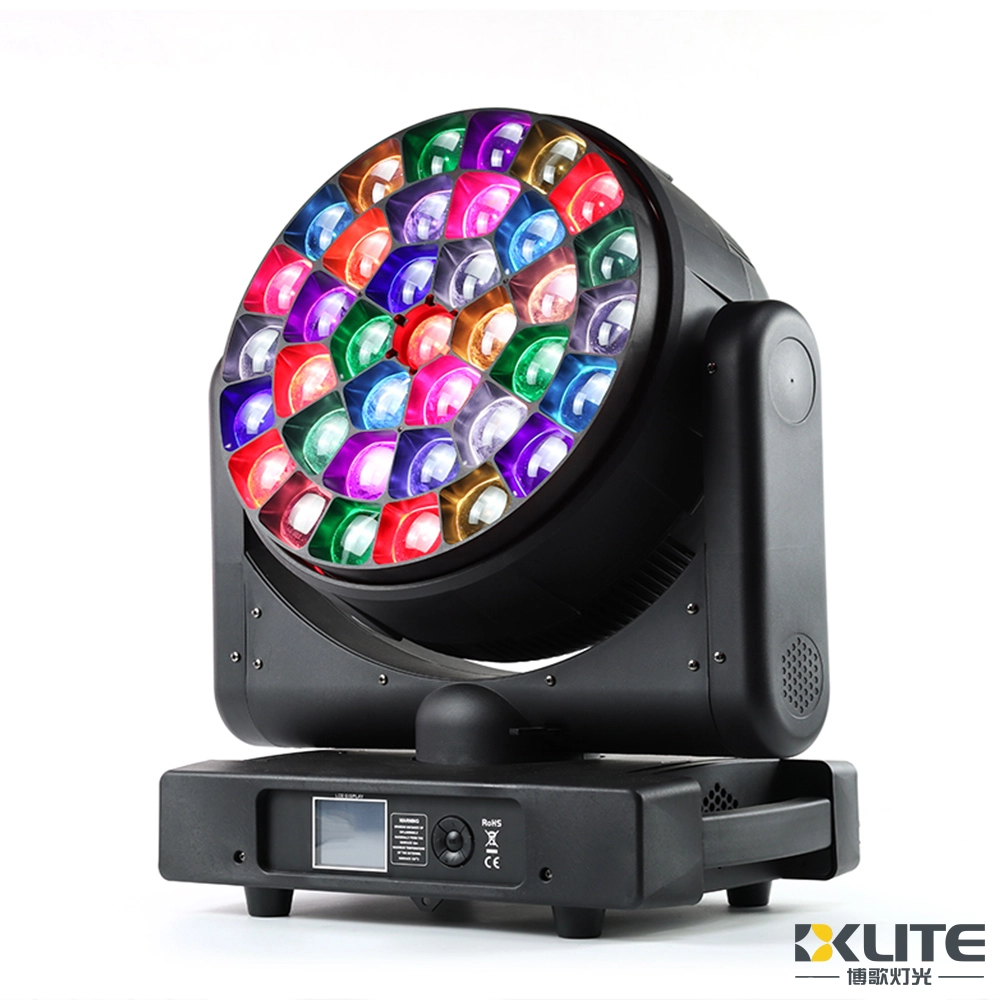
Bee Eye Zoom 37x40W RGBW 4in1 LED Beam Wash Moving Head Light
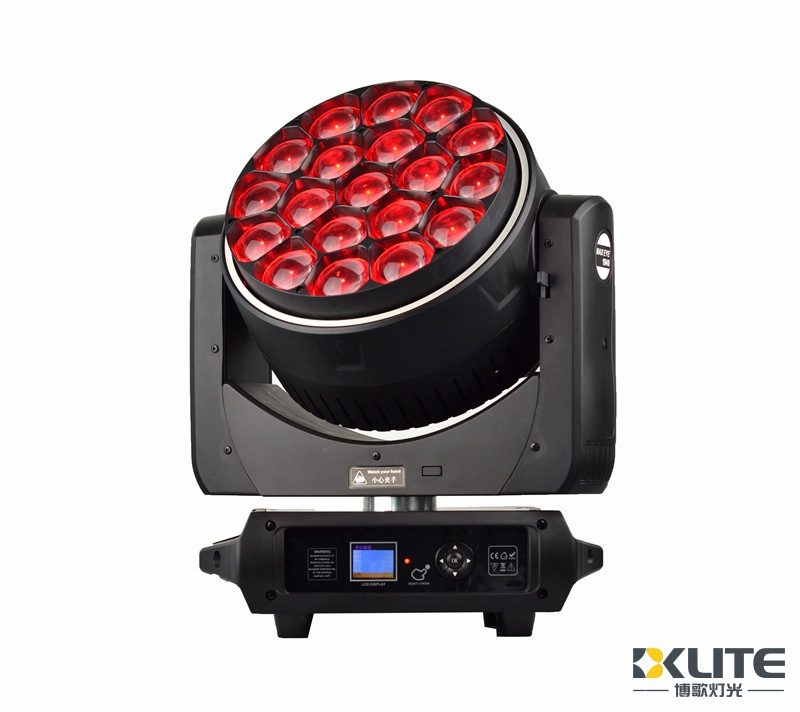
IP20 Bee Eye Zoom 19x40W RGBW 4IN1 LED Beam Wash Moving Head Light with LED Ring
As one of the leading stage lighting equipment suppliers with 15+ years of experience, BKlite launched a new Bee Eye K15 19x40 LED wash light BK-BY1940Z. .
Designed with a simple and sleek appearance, the WASH moving head light is compact, lightweight, and highly portable.
With multiple color effect macros and dynamic effect macros.
Our wash light can be used for versatile lighting options with amazing effect.
It is very good for your lighting projects.
Powerful and shoots very far distances.


Copyright © 2025 BKLITE All Rights Reserved.