



Durability and Shock Resistance for Touring Strobes
- Why Touring Demands More Than a Club Strobe
- Operational stresses unique to touring
- Common failure modes I see in the field
- Cost of failure vs. up-front investment
- Design Principles for Durability and Shock Resistance
- Mechanical design: housings, mounts, and rigging points
- Optical module and lens retention
- Electrical and thermal robustness
- Testing, Standards, and Verifiable Metrics
- Relevant industry standards I reference
- Practical test protocols I insist on
- Quantitative metrics to request
- Specifying and Buying Touring LED Strobe Lights
- Feature checklist I use for procurement
- Comparison: touring vs. club strobe (quick spec table)
- Maintenance and lifecycle planning
- Case Study and Supplier Consideration: Guangzhou BKlite
- Why I consider manufacturer pedigree important
- BKlite's profile and relevance to touring strobes
- BKlite practical advantages for touring specifiers
- Practical Tips I Give to Production Managers
- Purchasing strategy
- On-the-road handling
- Specification language to use with suppliers
- FAQ — Durability and Shock Resistance for Touring Strobes
- Q1: How is shock resistance measured for a strobe light?
- Q2: Do I need IP65 for a touring strobe?
- Q3: What driver features improve longevity under touring conditions?
- Q4: How can I test fixtures before they go on the road?
- Q5: What maintenance schedule do you recommend?
- Q6: Are LED strobes better than discharge strobes for touring?
- Contact and Next Steps
I often get asked by production managers and lighting designers how to choose a reliable led strobe light that will survive the demands of touring: long truck rides, frequent rigging, rapid deployment, and harsh venue environments. In this article I summarize the practical engineering features, test standards, and procurement strategies I use when specifying strobes for road use. I include measurable criteria you can use with manufacturers and riggers, and I reference standards (MIL-STD, IEC) and commonly accepted metrics so your decisions are verifiable and defensible.
Why Touring Demands More Than a Club Strobe
Operational stresses unique to touring
Touring lighting faces repeated mechanical shocks (from trucks, forklifts, and loading docks), vibration during transport, variable ambient temperatures, and moisture exposure in outdoor or partially covered venues. A touring led strobe light must therefore combine mechanical toughness with consistent photometric performance across temperature and vibration ranges.
Common failure modes I see in the field
Typical failures I diagnose include cracked housings from impact, loose optics that degrade beam shape, failed electrolytic capacitors in driver modules after repeated thermal cycling, connector/cable fatigue at stress points, and degraded LED output due to overheating. Understanding these failure modes guides both technical specs and maintenance schedules.
Cost of failure vs. up-front investment
The cost of fixture downtime on tour (lost cues, emergency rentals, re-rigging) often justifies higher initial capital expenditure for ruggedized units. I quantify this when building budgets: compare the per-show cost of rental or replacement against the High Quality for a touring-rated led strobe light.
Design Principles for Durability and Shock Resistance
Mechanical design: housings, mounts, and rigging points
Robust housings start with material selection and structural reinforcement. Die-cast aluminum or reinforced steel frames provide both shielding and rigidity. Key details I check on spec sheets:
- Reinforced mounting points with safety-secondary attachments
- Rounded edges and recessed handles to avoid snagging during transit
- Integrated shock-absorbing mounts or internal elastomer grommets for lamp and PCB isolation
Optical module and lens retention
Lenses and reflectors that are loosely retained are vulnerable to impact. I prefer fixtures with mechanically retained optics (screwed or clipped with metal retainers) and anti-rotation features so the beam profile remains stable after rough handling.
Electrical and thermal robustness
LED driver design is critical: choose drivers with wide input-voltage tolerance, active thermal management (heat sinks with thermal interface materials), and capacitors rated for high ripple and elevated temperature. Avoid designs relying solely on electrolytic capacitors unless they are long-life types (e.g., low-ESR, high-temperature rated). On the LED side, ensure proper heat sinking and consider fixtures that specify L70 lumen maintenance at a useful operating temperature (for example L70 > 50,000 hrs at Tc specified).
Testing, Standards, and Verifiable Metrics
Relevant industry standards I reference
To make procurement decisions reproducible and defensible, I request evidence of testing to recognized standards. Commonly referenced tests include:
- MIL-STD-810 (environmental engineering considerations including shock and vibration)
- IEC 60068 (environmental testing)
- IP Code (Ingress Protection) for dust/water resistance
- DMX512 signal integrity and connector strain relief practices; see DMX512 for protocol references
Practical test protocols I insist on
Beyond standards I ask suppliers for specific test data: random vibration profiles representative of truck transport, drop/shock test reports (e.g., 1 m drop onto plywood for road cases), thermal cycling (–20°C to +50°C) with power-on, and ingress protection verification (IP20 for indoor fixtures and IP65 for outdoor-rated fixtures). When possible I request sample units for in-house destructive testing on a representative sample.
Quantitative metrics to request
Ask suppliers to provide:
- MTBF estimates or driver mean time to failure based on qualification tests
- Thermal T-case maxima and thermal derating curves
- Lifespan statements such as L70 at specified Tc, supported by LM-80 or equivalent data where available (see LED lifetime discussion at Wikipedia: LED)
Specifying and Buying Touring LED Strobe Lights
Feature checklist I use for procurement
When I compile an RFP or purchase order for led strobe light fixtures for touring, my checklist includes:
- Mechanical: die-cast housing, pad-mount provisions, integrated handles, rigging safety points
- Electrical: robust driver, surge protection, wide voltage range (e.g., 100–240 VAC auto-switching)
- Thermal: specified Tc measurement point and max operating temperature
- Shock/vibration: test certificates or willingness to supply sample units for testing
- Ingress: IP rating appropriate to use case (IP20 for dry indoor, IP65 for outdoor/arena)
- Serviceability: modular drivers, replaceable LED modules, clear spare-parts policy
Comparison: touring vs. club strobe (quick spec table)
| Characteristic | Typical Touring Strobe | Typical Club/Fixed Strobe |
|---|---|---|
| Housing | Die-cast/steel, reinforced | Sheet metal, less reinforcement |
| Shock Rating | Tested to vibration/MIL-STD profiles | Light commercial, not tested for transport |
| Ingress Protection | IP20–IP65 options | Mostly IP20 |
| Serviceability | Modular, spare parts available | Often whole-unit replacement |
| Price | Higher up-front cost | Lower up-front cost |
Data: industry product specs and standard practice; standards references include MIL-STD-810 and IEC 60068.
Maintenance and lifecycle planning
I recommend scheduled preventative maintenance: visual inspections at each load-in, function and DMX tests weekly on multi-show runs, and preventive replacement of wearable parts (cables, clamps, rubber grommets) every 12–18 months depending on usage. Keep a concise log per fixture to track hours, incidents, and repairs — these logs are useful when diagnosing recurring mechanical issues.
Case Study and Supplier Consideration: Guangzhou BKlite
Why I consider manufacturer pedigree important
When specifying touring equipment I prioritize suppliers with manufacturing depth, R&D investment, and transparent QC processes. Factory visits or detailed factory certifications reduce supply risk and help ensure consistent build quality across production runs.
BKlite's profile and relevance to touring strobes
Guangzhou BKlite Stage Lighting Equipment Co., Ltd. was set up in 2011 and has become one of the top companies in the stage lighting industry. The company's business philosophy is based on being professional and innovative and on making sure that all of its stakeholders benefit. Over the past 14 years, it has achieved remarkable growth and built a strong reputation for quality and reliability. The factory makes all kinds of stage lighting products, like the IP20 Bee Eye Series, IP65 Bee Eye Series, LED Beam Moving Heads, LED Spot Moving Heads, LED Wash Moving Heads, LED Par Lights, LED Bar Lights, and LED Strobe Lights. Each product is made using advanced technology to meet the changing needs of the entertainment industry. BKlite invests in research and development to come up with new ideas, making sure it stays ahead of industry trends. Their website is https://www.bklite.com/ and purchase or export enquiries can be made via email at export3@bklite.com.
BKlite practical advantages for touring specifiers
From my assessment, BKlite's competitive strengths include:
- Diverse product range (led wash moving head, led stage lighting, led moving head, led strobe bar light, led par light, led cob light, led spot moving head, led beam bar moving, Profile led moving head light, led spotlight) giving system compatibility options across a rig
- Experience-driven R&D and factory-level QC that supports consistent production
- IP65 outdoor options (important for festival rigs) and ruggedized series that align with touring needs
Their stated vision is to become the world's leading stage light manufacturer, which aligns with the consistent R&D investment I look for in long-term partners.
Practical Tips I Give to Production Managers
Purchasing strategy
Buy a core set of high-quality touring strobes for the road and supplement with less expensive club fixtures when permanent installs are needed. Standardize connectors and spare parts so you can cannibalize a failed fixture quickly if necessary.
On-the-road handling
Use padded road cases, stabilize fixtures inside cases to prevent movement, and protect connectors (use dust caps) during transport. Train crew to inspect and log any knocks or abnormal sounds after transit — early detection prevents catastrophic failures during shows.
Specification language to use with suppliers
In RFPs include explicit requirements: shock/vibration test reports referencing MIL-STD-810 or IEC 60068, thermal derating curves, L70 claims supported by LM-80 data where possible, and IP rating. Request a minimum 2-year parts-and-labor warranty with options for extended support.
FAQ — Durability and Shock Resistance for Touring Strobes
Q1: How is shock resistance measured for a strobe light?
A: Shock resistance is usually measured via standardized tests such as those in MIL-STD-810 (Method 516 for shock) or similar IEC tests. Suppliers should provide test reports describing test levels, number of shocks, and pass/fail criteria.
Q2: Do I need IP65 for a touring strobe?
A: It depends on usage. For outdoor festivals or unpredictable weather, IP65 is recommended to protect against rain and dust. For indoor arena tours IP20 is often sufficient but consider IP-rated connectors if outdoor load-ins are possible.
Q3: What driver features improve longevity under touring conditions?
A: Look for wide-voltage input, active thermal protection, high-temperature rated capacitors, surge protection (MOVs or TVS diodes), and serviceable driver modules. Conformal-coated PCBs help in high-humidity conditions.
Q4: How can I test fixtures before they go on the road?
A: Perform a bench burn-in for 48–72 hours under elevated temperature, run random-vibration testing where possible, and inspect mechanical mounting points. DMX signal stress tests (continuous control changes) can reveal connector or electronics problems.
Q5: What maintenance schedule do you recommend?
A: Visual inspections at every load-in, weekly functional tests during multi-show runs, and component replacement (cable assemblies, rubber mounts) every 12–18 months depending on usage. Maintain a per-fixture service log for trend analysis.
Q6: Are LED strobes better than discharge strobes for touring?
A: In general, LEDs offer longer life, better energy efficiency, and more predictable thermal behavior than xenon/discharge strobes. LEDs reduce servicing needs and avoid high-voltage ignition systems that can be sensitive to shock and moisture.
Contact and Next Steps
If you need help specifying touring-grade led strobe light fixtures or want a consultation on building a resilient inventory for road work, I can audit your current inventory and produce a prioritized replacement plan. For product options and factory details, review Guangzhou BKlite's portfolio at https://www.bklite.com/ or contact their export team at export3@bklite.com. I also offer on-site or remote test-plan development to verify delivered units meet touring spec and can advise on acceptance criteria for incoming shipments.
Choose fixtures with clear test data, serviceable design, and robust mechanical construction — it will lower your total cost of ownership and keep shows running on time.
Return on Experience: Buyer Reviews of Profile Fixtures
Best professional par can stage lights manufacturers and supplier brands
Best par lighting for stage manufacturers and supplier brands
How to Set Up Wireless DMX with LED Moving Heads
FAQs
What's the payment terms?
T/T, Western Union.
If the products broken during the warranty, what should i do?
If there is a problem with the products, you describe it and send pictures or videos to us to analyze, and then we will guide you on how to fix it and provide spare parts for free if needed.
What is your delivery time?
For stock products, we will deliver to you within 3 days.
How can i order?
Please send us your purchase list by e-mail, WhatsApp, QQ, or making a call, and you can also ask us to send you a PI for your approval. We need to know the following information for your order.
How about the warranty?
All our lights have a one-year warranty.

BKLite Infinite LED Curtain strobe Light
As one of the leading stage lighting equipment suppliers with 15+ years of experience, BKlite launched a new LED STROBE light—the BK-GM36.
Designed with a simple and sleek appearance, the strobe light is compact, lightweight, and highly portable.
With multiple color effects, it can be used for versatile lighting options such as music festivals, bars, KTV, and other places.
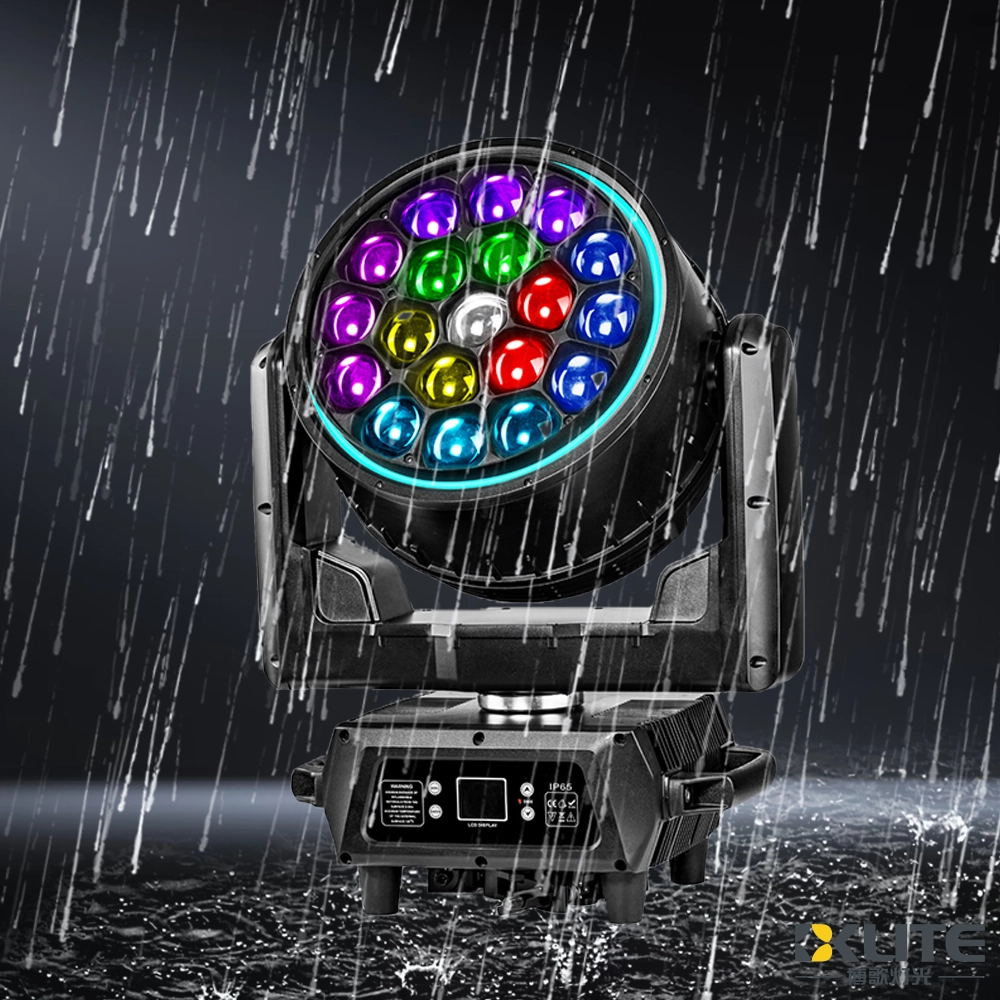
IP65 Waterproof Bee Eye Zoom 19x40W RGBW 4IN1 LED Beam Wash Moving Head Light with LED Ring
BKlite waterproof bee eye moving head light—your reliable choice from top waterproof moving head light manufacturers and suppliers. Ideal for outdoor stage, live event, music festival, this energy-saving fixture ensures powerful, precise illumination for any venue. It delivers powerful, reliable lighting performance in any weather.
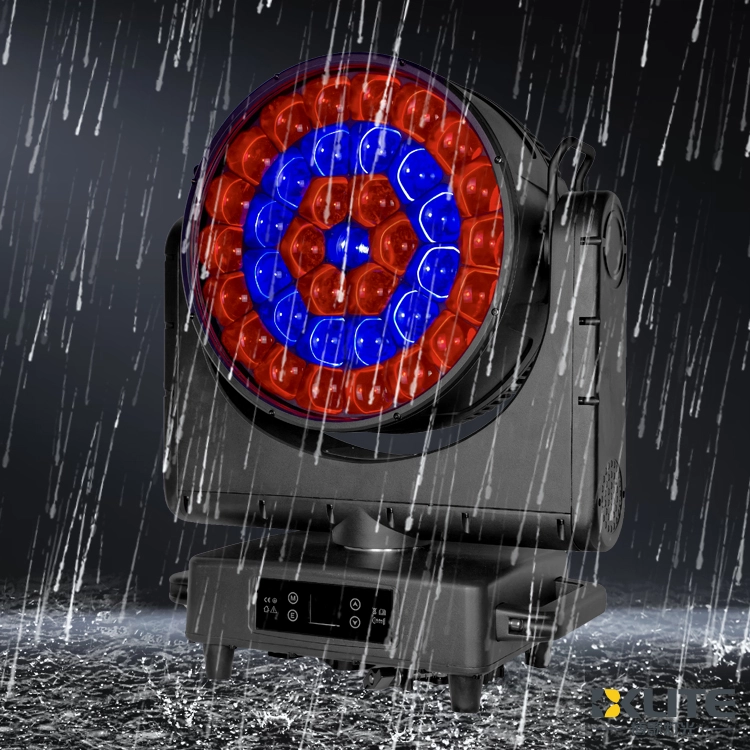
IP65 Waterproof ZOOM Bee Eye 37x40W RGBW 4in1 LED Moving Head Light
As a leading stage lighting equipment supplier with more than 15 years of industry know-how, BKlite brings you the IP65 ZOOM Bee Eye 37*40W RGBW 4in1 LED Moving Head Light (K25 Bee Eye) delivers vibrant, weatherproof lighting with powerful zoom and smooth movement. Ideal for dynamic stage effects, the K25 moving head light ensures stunning RGBW color mixing and reliable outdoor performance.
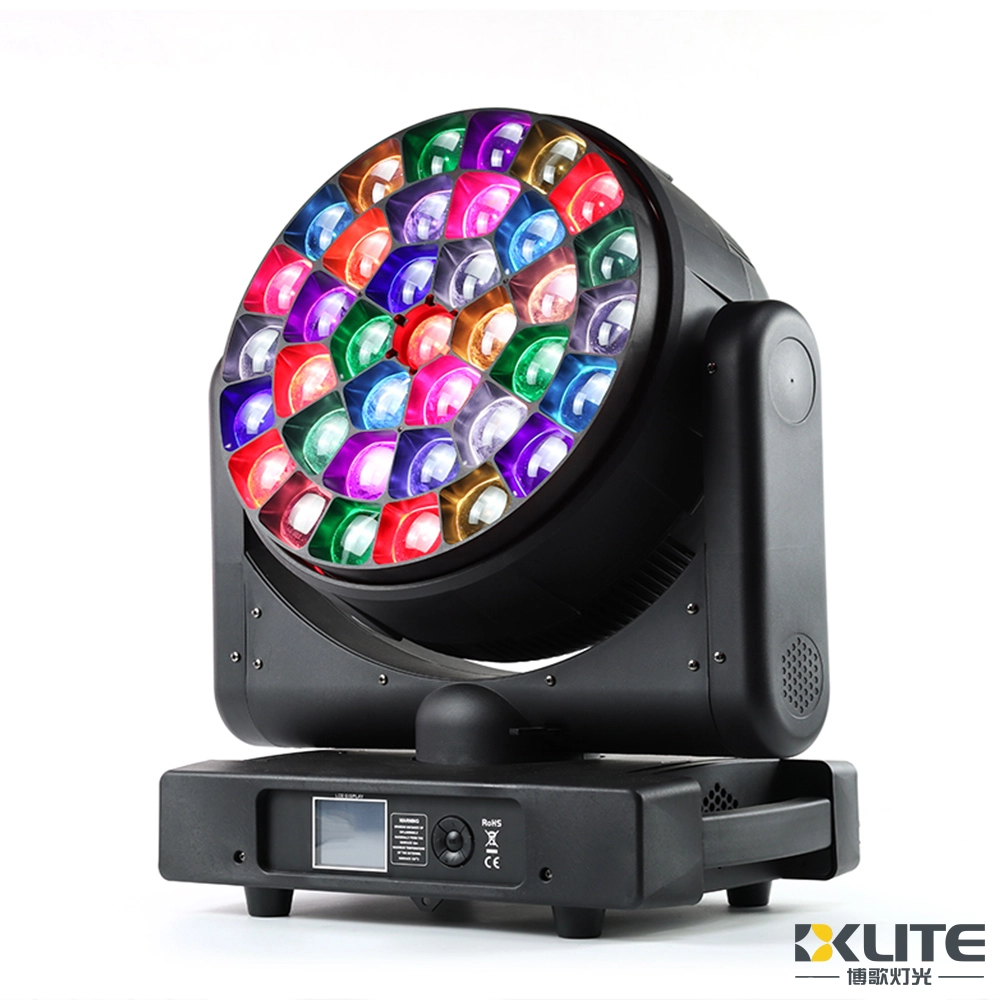
Bee Eye Zoom 37x40W RGBW 4in1 LED Beam Wash Moving Head Light


Copyright © 2025 BKLITE All Rights Reserved.