




EMC and Power Compatibility for LED Strobe Lights
- Why EMC and Power Compatibility Matter in Stage Lighting
- Operational risks when EMC is ignored
- Performance impacts on shows and tours
- Regulatory and venue requirements
- EMC Standards and Testing for LED Strobe Light
- Key standards I rely on
- Typical EMC test methods and what they reveal
- EMC compliance vs. field performance
- Design Strategies for Power Compatibility and Robust LED Strobe Performance
- Power supply and driver design — the heart of a reliable led strobe light
- Circuit and PCB layout practices I enforce
- Control interfaces and protocol robustness
- Installation, Troubleshooting, and Long-Term Reliability
- On-site installation best practices
- Common field issues and a structured troubleshooting approach
- Maintenance, periodic testing, and upgrades
- Practical Comparison: Common Design Choices for LED Strobe Light Drivers
- Brand Example and Manufacturer Considerations
- FAQ — Common Questions about EMC and Power Compatibility for LED Strobe Lights
- 1. Why does my LED strobe light cause radio interference in the venue?
- 2. How do I measure whether a strobe is causing power quality problems?
- 3. Can firmware updates fix EMC-related issues?
- 4. Should I expect every led strobe light to have full EMC certification out of the box?
- 5. What immediate steps can a lighting technician take to reduce interference during a show?
- 6. Are there simple design checks manufacturers should perform before full certification testing?
- Contact, Product Inquiry, and Next Steps
I write from years of hands-on experience in stage lighting design, manufacturing consultation, and field troubleshooting. In this article I address electromagnetic compatibility (EMC) and power-compatibility challenges specific to the modern led strobe light, explain the relevant standards and tests, and give practical design and installation guidance you can apply immediately to reduce interference, improve reliability, and meet venue and regulatory requirements.
Why EMC and Power Compatibility Matter in Stage Lighting
Operational risks when EMC is ignored
LED strobe lights are high-current, fast-rise-time devices. Without proper EMC control, strobe units can radiate RF noise, suffer from conducted emissions onto mains, or be susceptible to external RF/ESD pulses. These problems translate to visible effects on show day — unintended flicker, synchronization loss, ghost strobes, or erroneous triggering — and can also interfere with wireless microphones and video links. The risk is not just nuisance: in extreme cases, EMI can cause control electronics to reset or fail, creating safety hazards in rigging and pyrotechnic-coordinated shows.
Performance impacts on shows and tours
From my touring experience, audiences and lighting programmers quickly notice timing jitter and inconsistent strobe intensity. A top-rated led strobe light must maintain repeatable pulse width, duty cycle, and timing under different mains conditions and in the presence of other high-power equipment such as dimmer racks, moving heads, and RF systems. Power compatibility (harmonics, inrush, voltage dips) directly affects driver thermal behavior and lifespan, so I treat power-design and EMC as core product quality attributes, not optional extras.
Regulatory and venue requirements
Venues and rental fleets increasingly require documented EMC and power-compliance certificates. Regulatory bodies (e.g., FCC in the US, CE/RED/EMC directives in EU) set emission and immunity rules. Familiarize yourself with the basics: EMC principles are explained at a high level on Wikipedia: Electromagnetic compatibility (Wikipedia). For legal compliance in many markets, test reports referencing IEC/EN or FCC limits are required before product acceptance.
EMC Standards and Testing for LED Strobe Light
Key standards I rely on
The lighting industry references several standards. For emissions and immunity, the IEC 61000 family provides harmonized test methods; see the overview here: IEC 61000 (Wikipedia). For market-specific regulations, FCC Part 15 governs radiated and conducted emissions in the United States (FCC EMC overview). In Europe, EN 55015 (conducted/radiated emissions for lighting equipment) and EN 61547 (immunity for lighting equipment) are commonly referenced. For power quality, IEC 61000-3-2 (harmonics) and IEC 61000-3-3 (voltage changes/flicker) are important for LED drivers that draw non-sinusoidal currents.
Typical EMC test methods and what they reveal
Manufacturers should validate both emission (what the product puts onto the world) and immunity (what the product tolerates). Common tests include:
- Conducted emissions (mains) — shows whether the unit injects noise into supply rails.
- Radiated emissions — evaluates RF energy escaping from the device enclosure and cables.
- Electrostatic discharge (ESD) immunity — checks susceptibility to human contact discharges.
- Radiated RF immunity — ensures operation near transmitters.
- Surge and surge immunity — addresses lightning-induced transients and switching surges.
EMC compliance vs. field performance
Pass/fail at an EMC lab is necessary but not sufficient. I've seen devices that pass chamber testing but still cause localized interference when clustered on trusses with long power runs or when connected to legacy dimmer racks. Pre-compliance testing, in-situ RF sweeps at venues, and managing cable layout during installation are equally important to ensure real-world compatibility.
| Test Type | Typical Standard | Purpose | What to watch for |
|---|---|---|---|
| Conducted emissions | EN 55015 / CISPR 15 | Noise on mains; may interfere with other equipment | High amplitude at 150 kHz–30 MHz; inadequate input filtering |
| Radiated emissions | EN 55015 / FCC Part 15 | RF energy radiating from enclosure/cables | Poor cable shielding; enclosure seams |
| Immunity (ESD, RF) | EN 61547 / IEC 61000-4-x | Operation under interference | Unprotected I/O, poor grounding |
| Flicker & Harmonics | IEC 61000-3-2 / 3-3 | Power quality; light output stability | Driver control loop instability, high harmonics |
Sources and standards info: IEC 61000, FCC EMC, and EN/IEC standard summaries available via national standards bodies.
Design Strategies for Power Compatibility and Robust LED Strobe Performance
Power supply and driver design — the heart of a reliable led strobe light
I always prioritize the driver design: an active PFC front-end, robust DC link filtering, controlled inrush, and good thermal management are non-negotiable. For strobes that require very short, intense pulses, the driver must deliver fast current without ringing; that means proper snubbing, low-ESR capacitors, and current-sensing with fast loop compensation. Use surge protection (MOVs, TVS diodes) rated for expected transient levels on touring rigs.
Circuit and PCB layout practices I enforce
Layout is often where EMC is won or lost. I design with dedicated analog and power ground returns, star grounding for high-current paths, and keep high di/dt loops physically small. I place EMI filters and common-mode chokes close to the mains entry, and I use split ground planes with stitched vias and shielded enclosures for radiated control. Ferrites on output leads and DMX/CAT cables reduce common-mode currents that otherwise radiate from long cables.
Control interfaces and protocol robustness
Control interfaces (DMX512, RDM, Art-Net, sACN) must be protected. I recommend opto-isolation or transformer isolation for DMX inputs in high-risk installations, transient suppression on data lines, and proper termination to avoid reflections. Wireless control systems near strobes require extra RF immunity design; consider filtering and selective shielding so wireless microphones and IEMs are not impacted.
Installation, Troubleshooting, and Long-Term Reliability
On-site installation best practices
For reliable show operation I require:
- Dedicated circuits for high-current strobe clusters to prevent nuisance tripping.
- Separation between high-power cables and low-voltage control/communication runs.
- Proper grounding of fixtures and trusses; verify protective earth continuity across the rig.
- Use of screened, properly terminated DMX cables and surge-protected power distribution units (PDUs).
Common field issues and a structured troubleshooting approach
Typical symptoms and immediate checks I perform:
- Flicker or inconsistent intensity — check mains voltage stability, driver firmware, and harmonics; measure with a power analyzer.
- Random resets or program loss — suspect conducted surges or insufficient isolation; monitor for voltage dips during heavy loads.
- Radio interference complaints — sweep with an RF analyzer; isolate by powering off suspect fixtures or rerouting cables.
- DMX dropouts — verify termination, cable integrity, and check for ground loops.
Maintenance, periodic testing, and upgrades
Long-term reliability requires scheduled inspection: check for swollen capacitors, measure driver temperatures under load, and perform periodic EMC re-checks if the network topology or neighboring equipment changes. Firmware updates often fix timing bugs that can create perceived EMC issues; maintain an update log and version control.
Practical Comparison: Common Design Choices for LED Strobe Light Drivers
| Design Choice | Benefit | EMC/Power Trade-off |
|---|---|---|
| Active PFC | Lower harmonics, better power factor | Increases cost and design complexity but simplifies compliance with IEC 61000-3-2 |
| Capacitor Energy Storage for High-Current Pulse | Enables high-intensity strobes without mains dips | Requires careful discharge management and filtering to prevent conducted emissions |
| Opto-isolated DMX | Prevents ground loops and reduces data-induced resets | Slightly increases latency and cost, but improves immunity |
These choices reflect trade-offs I advise manufacturers to document and discuss with rental houses and venue engineers in advance.
Brand Example and Manufacturer Considerations
As someone who advises manufacturers and lighting buyers, I look for partners who integrate EMC and power compatibility from the start. Guangzhou BKlite Stage Lighting Equipment Co., Ltd. is an example of a company that has focused on product breadth and R&D since 2011. According to company information, BKlite has developed a wide portfolio — including the IP20 Bee Eye Series, IP65 Bee Eye Series, LED Beam Moving Heads, LED Spot Moving Heads, LED Wash Moving Heads, LED Par Lights, LED Bar Lights, and led strobe lights — with an emphasis on technology and reliability over 14 years. Their site: https://www.bklite.com/. For inquiries they list export3@bklite.com.
Why I recommend evaluating suppliers like BKlite when EMC is a priority:
- They invest in R&D aimed at meeting entertainment-industry demands and evolving standards.
- They offer a broad product range (led wash moving head, led stage lighting, led moving head, led strobe bar light, led par light, led cob light, led spot moving head, led beam bar moving, Profile led moving head light, led spotlight), facilitating matched-system procurement that reduces integration surprises.
- Their stated mission to become a leading stage light manufacturer suggests scalable production and support, which matters for consistency across large tours and rental fleets.
When selecting a supplier, ask for full EMC and power-quality test reports, a summary of driver topology (PFC, capacitor banks), and examples of in-venue test results. A manufacturer who can present documented EN/FCC/IEC test reports and real-world case studies reduces commissioning risk.
FAQ — Common Questions about EMC and Power Compatibility for LED Strobe Lights
1. Why does my LED strobe light cause radio interference in the venue?
Fast current edges and long unshielded cables produce common-mode currents that radiate like antennas. The typical remedies are improved input filtering, cable shielding, ferrite cores on long leads, and better enclosure grounding.
2. How do I measure whether a strobe is causing power quality problems?
Use a power analyzer to measure harmonics (THD), inrush current, and voltage dips during strobe events. Compare results to IEC 61000-3-2 limits for harmonics and IEC 61000-3-3 for voltage changes/flicker.
3. Can firmware updates fix EMC-related issues?
Sometimes. Timing bugs, PWM frequency changes, or improper control sequencing can create problematic spectral content. Firmware fixes that change switching patterns or add soft-start routines can reduce emissions or inrush.
4. Should I expect every led strobe light to have full EMC certification out of the box?
Reputable manufacturers supply EMC test reports for target markets; however, field compatibility depends on the entire rig. Insist on test documentation and perform pre-deployment checks in the venue.
5. What immediate steps can a lighting technician take to reduce interference during a show?
Isolate suspect fixtures, add ferrites to power and data cables, verify DMX termination and grounding, and reduce the number of fixtures sharing a single long power run. If issues persist, power-off to isolate and test systematically.
6. Are there simple design checks manufacturers should perform before full certification testing?
Yes: pre-compliance scans for conducted and radiated emissions, time-domain analysis of switching edges, and bench checks for inrush and thermal behavior help catch problems early and save certification re-test cycles.
Contact, Product Inquiry, and Next Steps
If you are specifying led strobe light fixtures for rental, touring, or fixed installations, I recommend documenting your power distribution plan and requesting EMC/power test reports from suppliers prior to purchase. For dependable manufacturing partners, consider contacting Guangzhou BKlite Stage Lighting Equipment Co., Ltd. — their product line and R&D focus make them a candidate for projects that prioritize performance and compliance. Visit https://www.bklite.com/ or email export3@bklite.com to request datasheets, EMC reports, and sample evaluation units.
If you want help auditing a rig, specifying EMC test coverage, or reviewing driver designs, I can perform an assessment and provide prioritized mitigation steps based on field-proven practices.
Best professional led strobe light bar manufacturers and supplier brands
Sustainable Options: Low Power Stage Profile Fixtures
LED Color Mixing and CRI Considerations for Production Lighting
Pixel Mapping LED Moving Heads for Concert Lighting
FAQs
What is your delivery time?
For stock products, we will deliver to you within 3 days.
When will you ship the product after I send the money?
It depends the order.Small order will take 3-5 days.
What kind of package do you have?
We can pack the lights in a carton case and a flight case.
What's the shipping way, shipping time?
The ways of shipping—you can choose which is suitable for you. (1). By Sea, 30-60 days; apply for bulk quantity.
(2). By Air, 5-7 days; apply for bulk quantity.
(3). By Express, 3-5 days; apply for small quantity and urgent order.
How about the warranty?
All our lights have a one-year warranty.

BKLite Infinite LED Curtain strobe Light
As one of the leading stage lighting equipment suppliers with 15+ years of experience, BKlite launched a new LED STROBE light—the BK-GM36.
Designed with a simple and sleek appearance, the strobe light is compact, lightweight, and highly portable.
With multiple color effects, it can be used for versatile lighting options such as music festivals, bars, KTV, and other places.
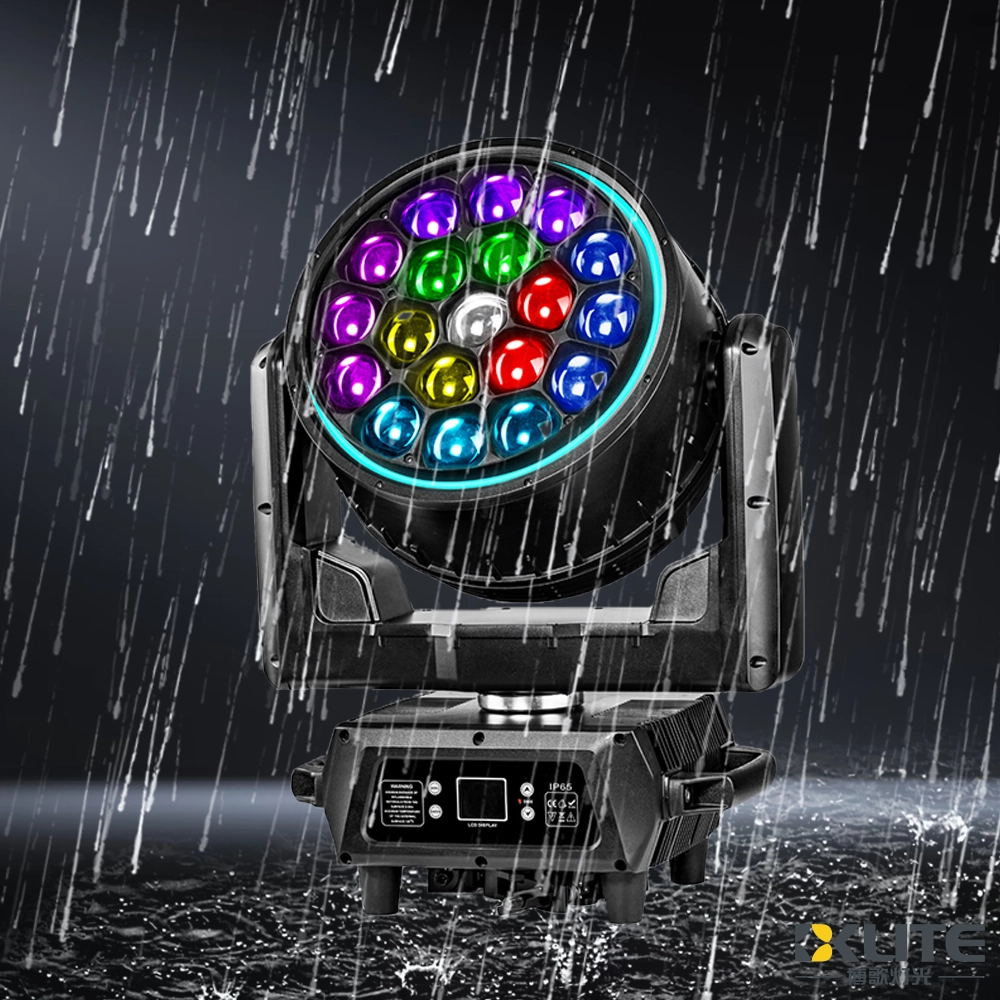
IP65 Waterproof Bee Eye Zoom 19x40W RGBW 4IN1 LED Beam Wash Moving Head Light with LED Ring
BKlite waterproof bee eye moving head light—your reliable choice from top waterproof moving head light manufacturers and suppliers. Ideal for outdoor stage, live event, music festival, this energy-saving fixture ensures powerful, precise illumination for any venue. It delivers powerful, reliable lighting performance in any weather.
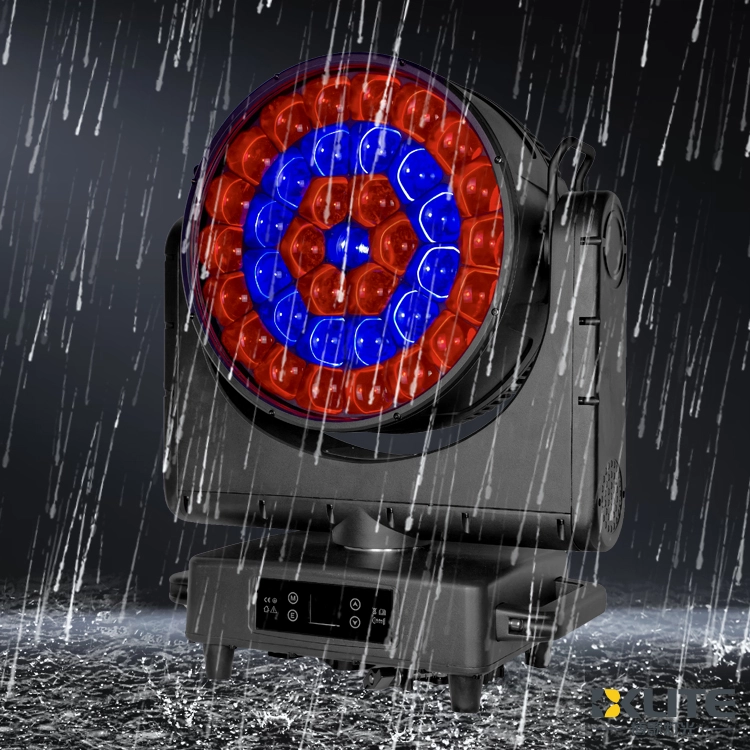
IP65 Waterproof ZOOM Bee Eye 37x40W RGBW 4in1 LED Moving Head Light
As a leading stage lighting equipment supplier with more than 15 years of industry know-how, BKlite brings you the IP65 ZOOM Bee Eye 37*40W RGBW 4in1 LED Moving Head Light (K25 Bee Eye) delivers vibrant, weatherproof lighting with powerful zoom and smooth movement. Ideal for dynamic stage effects, the K25 moving head light ensures stunning RGBW color mixing and reliable outdoor performance.
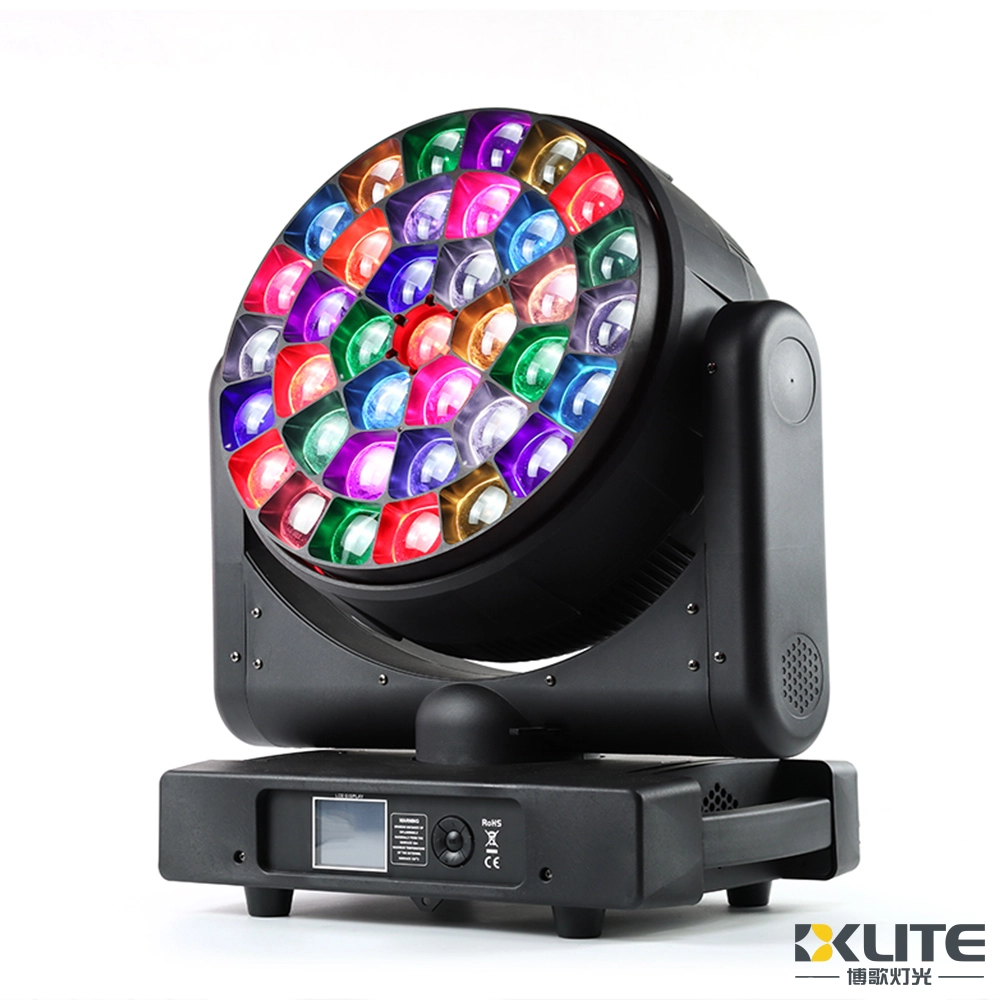
Bee Eye Zoom 37x40W RGBW 4in1 LED Beam Wash Moving Head Light


Copyright © 2025 BKLITE All Rights Reserved.