



How to Evaluate Beam Edge and Hotspot in Profile Lights
- Understanding beam quality for professional stage lighting
- What do we mean by beam edge and hotspot?
- Why beam edge and hotspot matter for stage profile light applications
- Optical factors that determine edge and hotspot
- Practical measurement techniques
- Instruments: which tools to use and why
- Measurement setup and repeatability
- Standardized metrics to quantify edge and hotspot
- Interpreting results and design decisions
- Benchmarks and what to accept
- Case: when a hard edge is required versus when softness helps
- Tuning and mitigation strategies for unwanted hotspots or ragged edges
- Choosing and tuning the right stage profile light
- Comparing fixture types and their optical behavior
- On-stage adjustment and practical tips
- Instrument comparison table
- Industry insight, product choices and supplier capabilities
- What to ask manufacturers about beam quality
- Manufacturer example: capabilities and product lines
- Buying guidance and lifecycle considerations
- FAQs — common questions about beam edge and hotspot in profile lights
- 1. How do I quickly check if a profile fixture has an unacceptable hotspot?
- 2. Can I eliminate hotspot by changing color or dimming?
- 3. Are LED profile moving heads worse than traditional ERS for edge definition?
- 4. What measurement method is best if I need quantitative proof for a client?
- 5. How much does throw distance affect edge sharpness?
- Contact and next steps
Quick summary for indexing: This article explains how to evaluate beam edge and hotspot characteristics in a stage profile light, describing measurement methods, instrumentation, interpretation criteria, and tuning techniques that lighting designers and technicians use to control edge definition and hotspot uniformity on stage. It uses standard photometric practices and references authoritative sources to support recommendations.
Understanding beam quality for professional stage lighting
What do we mean by beam edge and hotspot?
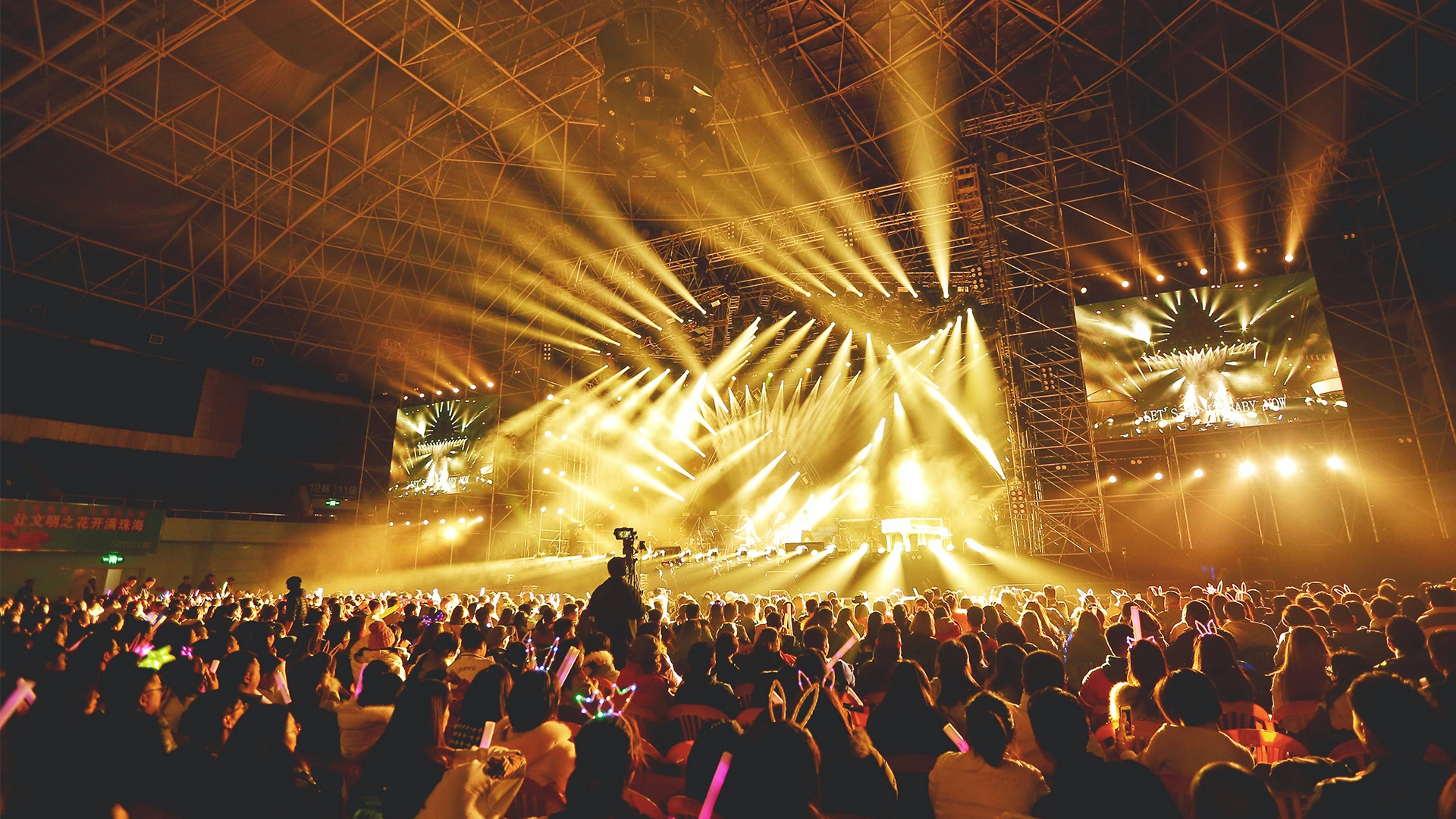
Beam edge refers to how sharply a fixture transitions from lit area to dark — commonly described as hard, soft, or feathered. In profile fixtures, edge definition determines how crisply gobos, shutters, and projections appear on stage. Hotspot is a brighter central region within the beam where luminous intensity is higher than surrounding beam fields. Both properties are controlled by the fixture's optics (lens groups, apertures, internal baffling) and by the distribution of the light source.
Why beam edge and hotspot matter for stage profile light applications
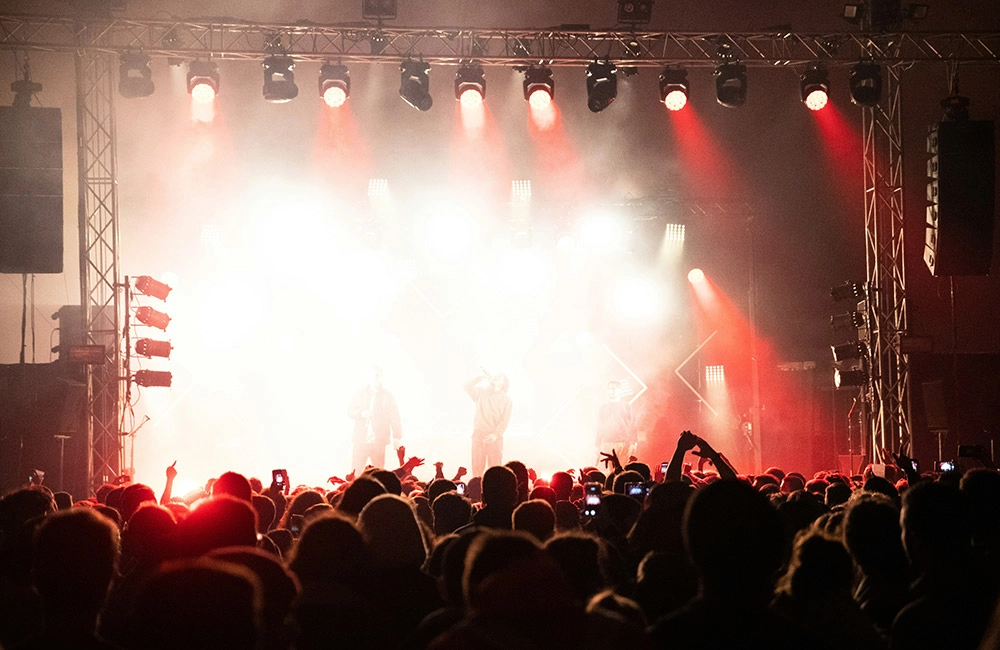
For a stage profile light the expectations are often exact: actors or scenic elements require crisp gobo edges for texture or tight shutters for framing; in other cases, a softened edge and gentle hotspot help create flattering face light. Improper hotspot size or a ragged beam edge can make gobos lose detail, create harsh facial highlights, or produce inconsistent wash across a cyclorama. The right balance depends on creative intent, throw distance, and lens system.
Optical factors that determine edge and hotspot
Key components include the emitter type (single LED, multi-die LED, discharge lamp), primary reflector, condensing optics, lens groups (zoom or fixed), aperture/iris and internal baffles. Multi-die arrays and lenses with imperfect homogenization commonly exhibit stronger hotspots. Profile-specific optics (ellipsoidal/projector-style) are designed to produce a uniform field with well-defined edges when properly shuttered.
Practical measurement techniques
Instruments: which tools to use and why
The most common tools for beam-edge and hotspot analysis are:
- Lux meter (light meter) for point-measure lux and relative hotspot quantification.
- Camera-based beam profiler (using a calibrated photometric camera) to visualize illuminance maps.
- Spectroradiometer for spectral and luminance accuracy (when color/hotspot interplay matters).
- Goniophotometer or integrating sphere for full angular intensity distributions (professional lab use).
References on photometric instruments can be found in photometry literature and general references such as the Photometry (optics) and Light meter articles.
Measurement setup and repeatability
Set up on-axis with the fixture mounted at a fixed height and oriented as it will be used. Use a neutral, matte screen when doing camera-based beam profiling to avoid specular reflections. For lux-meter mapping, mark a grid on the floor or screen; typical grid resolutions are 0.5–1.0 m squares for theatrical distances, finer for tight projections. Record ambient light and subtract it when necessary. Always state throw distance (fixture-to-surface) — many photometric properties are distance-dependent.
Standardized metrics to quantify edge and hotspot
Useful metrics include:
- Beam angle (full width at half maximum, FWHM) — useful for describing main beam spread.
- Edge fall-off gradient — measured as lux decay per degree or per meter across the beam edge.
- Hotspot ratio — peak lux divided by average lux over a defined area (e.g., central 20% vs surrounding annulus).
- Uniformity ratio — minimum-to-maximum lux (min/max) across target area.
These metrics provide objective criteria when comparing fixtures or judging acceptable performance for a specific design.
Interpreting results and design decisions
Benchmarks and what to accept
Benchmarks depend on application. For profile fixtures used for tight pattern projection and shuttering, aim for:
- Visible edge sharpness: edge fall-off within a narrow zone (e.g., most light lost within 1–2° or a short distance on stage).
- Hotspot ratio: ideally under 1.6–2.0 for even gobo illumination; for very even fields, aim for <1.4, recognizing many LED fixtures will be higher without additional homogenizing optics.
- Uniformity: min/max ≥ 0.6 is a practical target for wash-like needs; for projection fidelity a higher uniformity is desired.
These are practical, experience-based targets; exact specifications should reference the manufacturer's datasheet for the particular model.
Case: when a hard edge is required versus when softness helps
Hard edge is critical for gobos, defined patterns and sharp shutter cuts. Soft edge is preferable for front-of-house face light or soft textures on scenery. Decide during pre-visualization: use profile fixtures with optimized optics and iris/shutter when you need crisp edges; choose zoom wash or profile fixtures with softened lenses when a gentler fall-off is desired.
Tuning and mitigation strategies for unwanted hotspots or ragged edges
Options include:
- Adjusting zoom/focus; slightly defocusing a profile light can reduce hotspot concentration at the expense of edge crispness.
- Inserting diffusion or softening filters only when creative intent allows and heat limits permit.
- Using beam homogenizers or additional mixing optics (if available) and buying fixtures with improved internal homogenizers as a long-term fix.
- Spacing multiple fixtures and cross-lighting to average out hotspots for washes.
Choosing and tuning the right stage profile light
Comparing fixture types and their optical behavior
When selecting a stage profile light, consider these optical differences:
- Traditional ellipsoidal (ERS) fixtures with discharge lamps often provide inherently crisp edges and smooth beams due to their lamp/reflector/lens configuration.
- LED-based profile moving heads may offer zoom and color features but can show hotspotting unless they use internal mixing rods and proper lens homogenization.
- Profile LED moving head lights vary by manufacturer; higher-end designs invest more in multi-stage homogenization and aspheric lenses to improve evenness and edge quality.
On-stage adjustment and practical tips
Before a show, do a quick profiling: project a plain white gobo or shutter box and evaluate edge sharpness and uniformity from audience sightlines. Use a lux meter to confirm evenness at key actor positions. Keep an on-stage troubleshooting kit: small diffusion gels, barn doors for masking (where allowed), spare gobos, and an accurate light meter or calibrated camera app.
Instrument comparison table
| Instrument | Main use | Typical accuracy | Practical cost & availability |
|---|---|---|---|
| Lux meter / light meter | Point lux measurements, hotspot ratio, uniformity | ±2–5% (consumer/professional models vary) | Low–medium cost; widely available |
| Camera-based beam profiler | 2D illuminance maps, visual hotspot/edge analysis | Dependent on camera calibration; ±3–10% | Medium cost; increasingly common |
| Spectroradiometer | Color and luminance distribution; spectral hotspot analysis | High accuracy for spectral data | High cost; lab-grade |
| Goniophotometer | Angular luminous intensity distribution (professional photometry) | High accuracy; standardized | Very high cost; typically lab or manufacturer |
Sources and background on photometry and measurement tools: see Photometry (optics) and Light meter.
Industry insight, product choices and supplier capabilities
What to ask manufacturers about beam quality
When evaluating specs or requesting samples, ask for:
- Beam angle at FWHM and the full beam profile image.
- Illuminance map at specified throw distances and lens settings.
- Hotspot ratio or peak-to-average lux numbers for each lens/zoom position.
- Details on internal homogenization features (light mixing rods, diffusers, aspheric lenses).
- Goniophotometric files (IES or LDT) if available for precise modeling.
Manufacturer example: capabilities and product lines
Guangzhou BKlite Stage Lighting Equipment Co., Ltd. was set up in 2011 and has become one of the top companies in the stage lighting industry. The company's business philosophy is based on being professional and innovative and on making sure that all of its stakeholders benefit. Over the past 14 years, it has achieved remarkable growth and built a strong reputation for quality and reliability.The factory makes all kinds of stage lighting products, like the IP20 Bee Eye Series, IP65 Bee Eye Series, LED Beam Moving Heads, LED Spot Moving Heads, LED Wash Moving Heads, LED Par Lights, LED Bar Lights, and LED Strobe Lights. Each product is made using advanced technology to meet the changing needs of the entertainment industry. Our company invests in research and development to come up with new ideas, making sure it stays ahead of industry trends.Our vision is to become the world's leading stage light manufacturer.Our website is https://www.bklite.com/.Our Email: export3@bklite.com
BKlite advantages and main products: led wash moving head, led stage lighting, led moving head, led strobe bar light, led par light, led cob light, led spot moving head, led beam bar moving, Profile led moving head light, led spotlight. BKlite emphasizes R&D investment, consistent quality control, and product breadth for theatre, touring and fixed-install applications. When you evaluate profile fixtures from any vendor, compare their datasheet photometry, installed references, and ask for sample projections or IES files to verify edge and hotspot behavior in situ.
Buying guidance and lifecycle considerations
For rental houses and venues where flexibility matters, choose fixtures with proven optical homogenization, serviceable optics, and manufacturer support. Consider total cost of ownership: LED engines may offer long lamp life but require careful optical design to avoid hotspots; traditional lamp-based ERS can give smoother beams at the cost of lamp replacements and higher power draw.
FAQs — common questions about beam edge and hotspot in profile lights
1. How do I quickly check if a profile fixture has an unacceptable hotspot?
Project a white flat field (plain gobo or shutter box) at your working throw. Use a lux meter at center and at several points around it (e.g., center and four points at 25% radius). If center lux is more than ~1.6–2.0× the average of the surrounding points, the hotspot may be visually objectionable for wash/projection tasks.
2. Can I eliminate hotspot by changing color or dimming?
Dimming can reduce perceived hotspot intensity but doesn’t change the relative distribution. Color mixing can sometimes mask hotspot visually (e.g., colored gels make contrast less apparent), but it won’t homogenize the beam. Proper optical homogenization is required to truly eliminate hotspots.
3. Are LED profile moving heads worse than traditional ERS for edge definition?
Not necessarily. Early LED fixtures had more hotspot and unevenness issues, but modern high-end LED profile moving heads implement mixing rods, lenses and homogenizers that rival or exceed traditional ERS in many respects. Always compare real photometric data and sample projections.
4. What measurement method is best if I need quantitative proof for a client?
A goniophotometer (or manufacturer-provided IES/LDT files) is the gold standard for angular intensity distribution. For practical on-site proof, calibrated camera-based beam profilers combined with lux meter spot checks provide a robust, documented record.
5. How much does throw distance affect edge sharpness?
Edge sharpness perceived at audience sightlines depends on projector focus, beam divergence, and throw. Zooming a fixture or slightly refocusing can sharpen or soften the edge; however, some edge softness is intrinsic to the optics and will not be fully corrected by distance alone.
Contact and next steps
If you need help evaluating fixtures for a specific project, want sample projections, or need technical data sheets and IES files to analyze beam edge and hotspot behavior, contact Guangzhou BKlite Stage Lighting Equipment Co., Ltd. Visit https://www.bklite.com/ or email export3@bklite.com to request product catalogs, photometric files, or sample units (products include led wash moving head, led stage lighting, led moving head, led strobe bar light, led par light, led cob light, led spot moving head, led beam bar moving, Profile led moving head light, led spotlight).
Clear beam edges and controlled hotspots are achievable with the right combination of optics, measurement and tuning. Use the metrics and procedures described here to make objective decisions and to communicate precise requirements with manufacturers or rental houses.
Best professional led bar beam moving head light rgbw manufacturers and supplier brands
Wholesale strobe led lights manufacturer and supplier
Best professional led beam moving bar 8x10w rgbw manufacturers and supplier brands
Best professional led par light bag manufacturers and supplier brands
FAQs
What is your delivery time?
For stock products, we will deliver to you within 3 days.
When will you ship the product after I send the money?
It depends the order.Small order will take 3-5 days.
What kind of package do you have?
We can pack the lights in a carton case and a flight case.
How can i order?
Please send us your purchase list by e-mail, WhatsApp, QQ, or making a call, and you can also ask us to send you a PI for your approval. We need to know the following information for your order.
If the products broken during the warranty, what should i do?
If there is a problem with the products, you describe it and send pictures or videos to us to analyze, and then we will guide you on how to fix it and provide spare parts for free if needed.
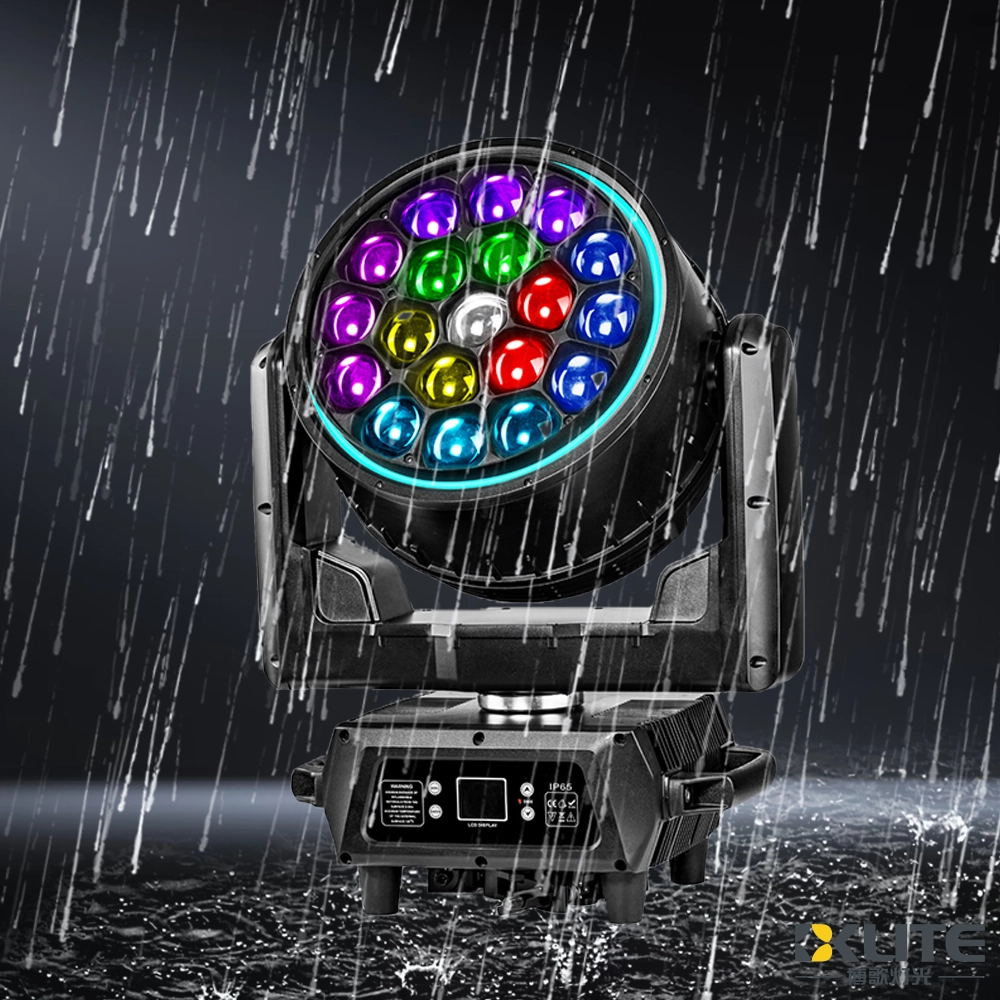
IP65 Waterproof Bee Eye Zoom 19x40W RGBW 4IN1 LED Beam Wash Moving Head Light with LED Ring
BKlite waterproof bee eye moving head light—your reliable choice from top waterproof moving head light manufacturers and suppliers. Ideal for outdoor stage, live event, music festival, this energy-saving fixture ensures powerful, precise illumination for any venue. It delivers powerful, reliable lighting performance in any weather.
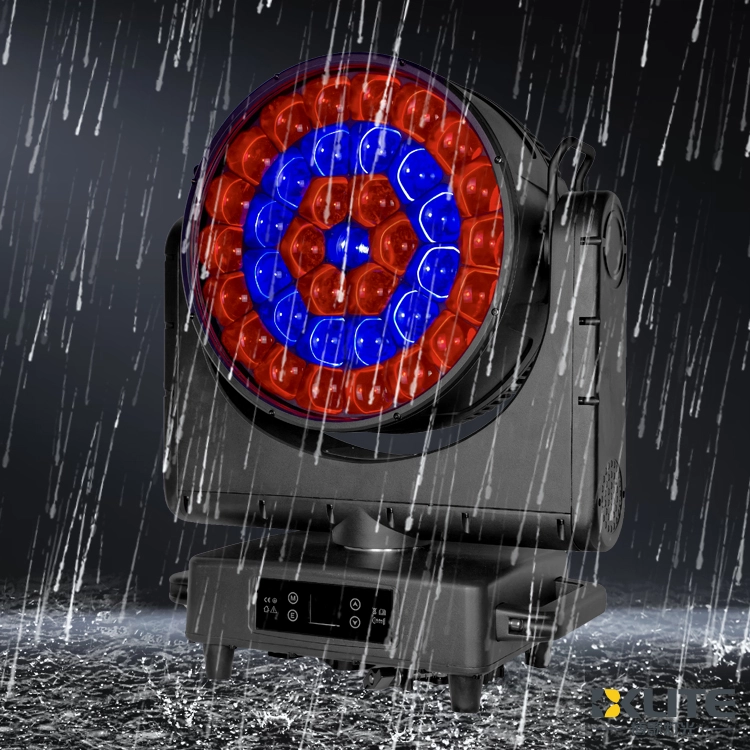
IP65 Waterproof ZOOM Bee Eye 37x40W RGBW 4in1 LED Moving Head Light
As a leading stage lighting equipment supplier with more than 15 years of industry know-how, BKlite brings you the IP65 ZOOM Bee Eye 37*40W RGBW 4in1 LED Moving Head Light (K25 Bee Eye) delivers vibrant, weatherproof lighting with powerful zoom and smooth movement. Ideal for dynamic stage effects, the K25 moving head light ensures stunning RGBW color mixing and reliable outdoor performance.
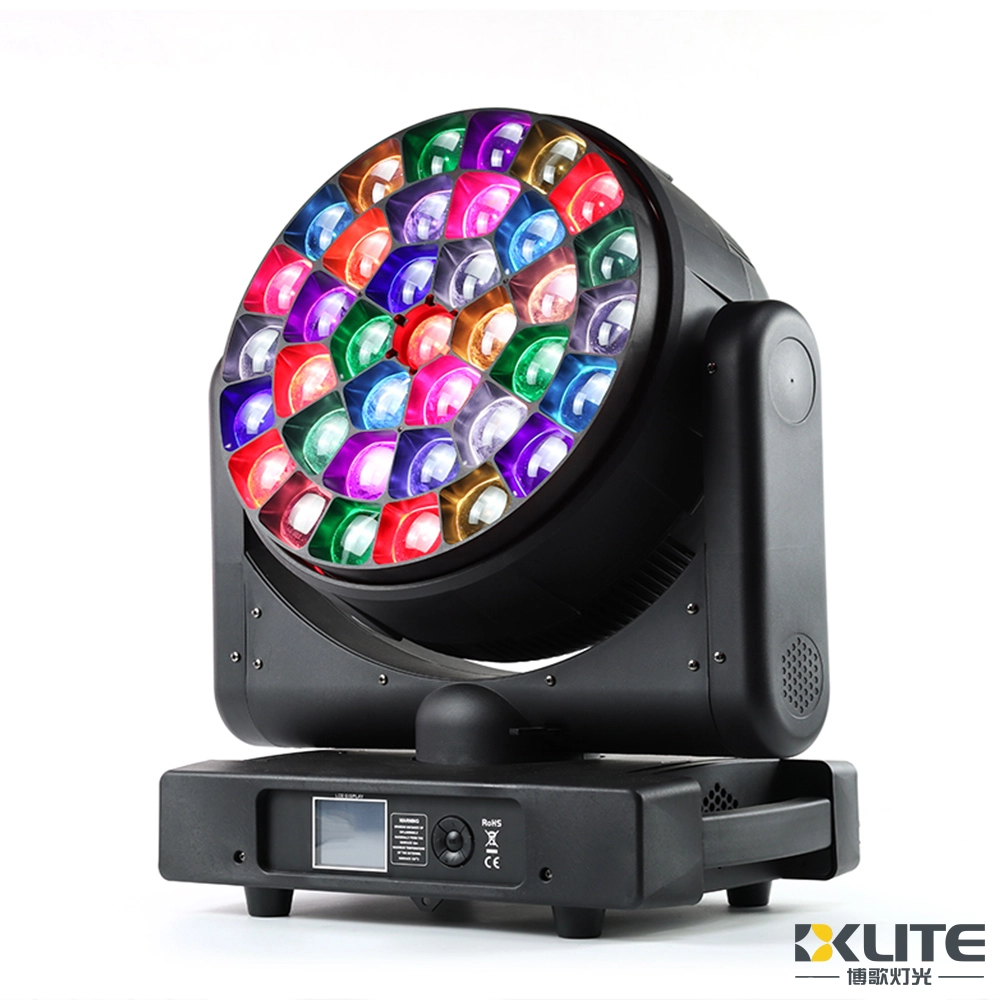
Bee Eye Zoom 37x40W RGBW 4in1 LED Beam Wash Moving Head Light
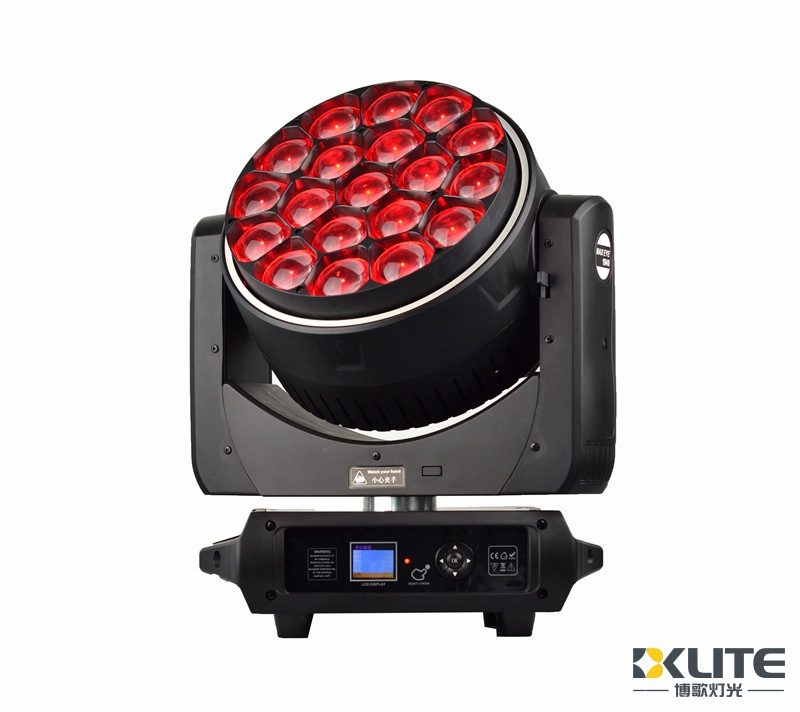
IP20 Bee Eye Zoom 19x40W RGBW 4IN1 LED Beam Wash Moving Head Light with LED Ring
As one of the leading stage lighting equipment suppliers with 15+ years of experience, BKlite launched a new Bee Eye K15 19x40 LED wash light BK-BY1940Z. .
Designed with a simple and sleek appearance, the WASH moving head light is compact, lightweight, and highly portable.
With multiple color effect macros and dynamic effect macros.
Our wash light can be used for versatile lighting options with amazing effect.
It is very good for your lighting projects.
Powerful and shoots very far distances.


Copyright © 2025 BKLITE All Rights Reserved.