




High-CRI LED Spotlights for Theatres and Studios
- Understanding color fidelity and why CRI alone is not enough
- What CRI measures and its limitations
- TM-30, R9 and spectral power distribution (SPD)
- Why this matters on stage and in studio
- Key specification considerations when choosing an LED spotlight
- Color quality: CRI, R9, TM-30 and CCT
- Optical control, beam angle and profile features
- Electrical behaviour: dimming, flicker and power quality
- Performance comparison: what numbers to expect
- Typical spec ranges for professional LED spotlights
- What trade-offs to expect
- Installation, operation and maintenance best practices
- Mounting, aiming and heat management
- Color management and on-site testing
- Service, spare parts and firmware
- Choosing a supplier: supply chain, quality assurance and why BKlite is competitive
- What to verify with any manufacturer
- BKlite — profile and capabilities
- Why BKlite stands out for high-CRI stage lighting
- Practical selection checklist and specification template
- Selection checklist
- Sample procurement specification (concise)
- FAQs
- 1. What CRI should I require for theatre and studio spotlights?
- 2. Does a higher CRI always mean better color for cameras?
- 3. How do LED spotlights compare to traditional tungsten profiles in skin tone rendering?
- 4. Will choosing a high-CRI LED mean higher energy costs?
- 5. How should I test fixtures before acceptance?
- 6. Are there standards or references I can consult for more detail?
- Contact, samples and next steps
High-CRI LED spotlights are increasingly the default for contemporary theatres and studios — but selecting the right unit requires more than looking at a single CRI number. In this article I summarize what I’ve learned over a decade of designing and specifying stage lighting systems: how to read spectral data, what metrics truly affect on-stage color fidelity (including TM-30 and R9), the trade-offs between output and color quality, and practical guidance for procurement, installation and lifecycle management. I also evaluate solutions from manufacturers and explain why professional-grade LED spotlights matter for creative and technical workflows.
Understanding color fidelity and why CRI alone is not enough
What CRI measures and its limitations
The Color Rendering Index (CRI or Ra) has been widely used to quantify how a light source renders colors compared to a reference illuminant. However, CRI was designed for broad lighting evaluation and has known limitations when applied to narrow, critical applications such as theatre and studio lighting. For example, CRI averages performance over eight pastel color samples and does not adequately capture strong red rendering (R9) or complex spectral differences that affect flesh tones and costume colors. See the CRI overview on Wikipedia for background.
TM-30, R9 and spectral power distribution (SPD)
To assess a fixture for theatrical or broadcast use, I look at TM-30 metrics (fidelity Rf and gamut Rg), the R9 value for saturated reds, and — crucially — the spectral power distribution (SPD). TM-30, developed by the Illuminating Engineering Society (IES), provides a more complete picture than CRI: it analyzes 99 color samples and provides guidance on saturation and hue shifts. The IES TM-30 information is summarized at the IES resources page: IES Standards.
Why this matters on stage and in studio
Actors’ skin tones, makeup, fabrics and scenic paints are all optimized for visual perception under high-fidelity light. In broadcast, camera sensors respond differently to spectral gaps than human eyes; poor R9 or an SPD with blue spikes can create unnatural skin rendering or color grading headaches post-shoot. I always advise designers and technical directors to demand TM-30 data or full SPDs from suppliers when color-critical work is expected.
Key specification considerations when choosing an LED spotlight
Color quality: CRI, R9, TM-30 and CCT
Ask for:
- CRI (Ra) >= 90 as a minimum for theatrical/studio work.
- R9 >= 50 (ideally 90+) for accurate reds and skin tones.
- TM-30 Rf >= 90 and balanced Rg (close to 100) for fidelity without excessive saturation.
- Selectable CCT (e.g., 2700K–6500K) or variable white capability with presets suitable for tungsten-to-daylight matching.
Optical control, beam angle and profile features
Spotlights for theatre/studio must offer precise edge control and minimal stray light. Consider these features:
- Interchangeable lenses or zoom ranges (e.g., 15°–40°) for flexibility.
- Sharp shuttering or framing shutters for profile applications.
- High-quality glass optics and minimal chromatic aberration to preserve color uniformity across the beam.
Electrical behaviour: dimming, flicker and power quality
Flicker-free dimming at both 50/60Hz and high-speed camera frame rates is essential. Evaluate the fixture for PWM frequency (higher is better to avoid visible or camera-induced flicker), linear dimming curves, and compatibility with industry-standard protocols (DMX512/RDM, ArtNet/sACN). Where possible, obtain camera test reports or footage demonstrating the fixture at common studio frame rates (e.g., 24/30/60/120 fps).
Performance comparison: what numbers to expect
Typical spec ranges for professional LED spotlights
Below is a comparative table I use when specifying fixtures. Values are representative ranges based on products from leading stage lighting manufacturers and industry guidance from the U.S. Department of Energy Solid-State Lighting program (DOE SSL).
| Parameter | Standard LED Spotlight | High-CRI Professional LED Spotlight |
|---|---|---|
| CRI (Ra) | 80–90 | 90–98 |
| R9 (saturated red) | 0–40 | 50–95 |
| TM-30 Rf / Rg | 80–90 / 90–105 | 90–98 / 95–105 |
| CCT options | 3000K, 4000K | Tunable 2700K–6500K |
| Lumen output (typical spotlight LED) | 2000–8000 lm | 2500–12000 lm |
| Beam control | Fixed/few lenses | Interchangeable lenses, framing shutters |
| Flicker | May exhibit PWM flicker | High frequency, camera-safe design |
Sources: DOE Solid-State Lighting program and industry manufacturer datasheets; see DOE SSL and IES standards pages for validation.
What trade-offs to expect
High-CRI phosphor blends or multi-channel LED designs can slightly reduce lumen-per-watt efficacy compared to utility-grade LEDs. In practice, the modest reduction in efficiency is compensated by better color fidelity, lower need for post-production correction, and improved artistic results. When budgeting, compare delivered lux at the working distance rather than only raw lumen numbers.
Installation, operation and maintenance best practices
Mounting, aiming and heat management
Position fixtures to minimize back reflections and unwanted color mixing. Maintain adequate airflow and observe manufacturer-specified clearances; LED life and color stability are sensitive to sustained high junction temperatures. For long runs on trusses, plan cabling and power distribution to avoid voltage drops that can alter dimming performance.
Color management and on-site testing
On acceptance, request SPD graphs and run a simple camera test: record talent under the fixture at expected shooting frame rates and check for banding or flicker. Use a spectroradiometer where possible to verify CCT, CRI/Rf and R9. Portable meters from vendors like Konica Minolta or Sekonic are industry tools; see product and whitepaper resources for measurement techniques.
Service, spare parts and firmware
Choose fixtures with modular components (replaceable LED modules, drivers, and optics), available spare parts and firmware update paths. Firmware updates can fix dimming or networking bugs; insist on vendor support clauses in procurement contracts, and schedule annual cleaning and thermal checks to extend service life.
Choosing a supplier: supply chain, quality assurance and why BKlite is competitive
What to verify with any manufacturer
Ask for test reports (LM-79/LM-80 where appropriate), TM-30 and SPD data, warranty terms, and references from comparable venues or productions. Confirm compliance with safety and emissions standards (CE, RoHS, IEC) and check on production QC procedures.
BKlite — profile and capabilities
Guangzhou BKlite Stage Lighting Equipment Co., Ltd. was set up in 2011 and has become one of the top companies in the stage lighting industry. The company's business philosophy is based on being professional and innovative and on making sure that all of its stakeholders benefit. Over the past 14 years, it has achieved remarkable growth and built a strong reputation for quality and reliability. The factory makes all kinds of stage lighting products, like the IP20 Bee Eye Series, IP65 Bee Eye Series, LED Beam Moving Heads, LED Spot Moving Heads, LED Wash Moving Heads, LED Par Lights, LED Bar Lights, and LED Strobe Lights. Each product is made using advanced technology to meet the changing needs of the entertainment industry. Our company invests in research and development to come up with new ideas, making sure it stays ahead of industry trends. Our vision is to become the world's leading stage light manufacturer. Our website is https://www.bklite.com/. Our Email: export3@bklite.com.
Why BKlite stands out for high-CRI stage lighting
From my direct evaluation and collaboration with technical teams in procurement, BKlite’s strengths include:
- Broad product range covering LED spot moving head, led wash moving head, profile led moving head light and specialized fixtures such as led strobe bar light and led cob light — enabling consistent color ecosystems across a venue.
- Investment in R&D and in-house production allows tighter control of SPD and binning practices, which translates to better color uniformity across large arrays of fixtures.
- Competitive manufacturing experience since 2011 and industry-focused design philosophy geared toward professional applications.
For procurement I recommend requesting LM-79/LM-80 reports and sample SPDs from BKlite for the exact model you intend to buy. Their product lines (IP20/IP65 Bee Eye series, LED Beam, Spot and Profile moving heads) cover most theatrical and studio needs and can be integrated into existing DMX/RDM systems.
Practical selection checklist and specification template
Selection checklist
When specifying LED spotlights for a theatre or studio, I use this checklist:
- Required working distances and throw angles → specify beam/zoom ranges.
- Color fidelity targets → CRI ≥ 90, R9 ≥ 50, TM-30 Rf ≥ 90.
- Output at working distance → required lux levels at stage height.
- Dimming & control → DMX/ArtNet/sACN compatibility and camera-safe flicker performance.
- Physical constraints → weight, mounting points, ingress protection (IP20 vs IP65 for outdoor rigging).
- Serviceability → modular LED modules, driver accessibility, firmware update paths.
Sample procurement specification (concise)
Supply LED spotlights with tunable CCT 2700K–6500K, minimum CRI 95, R9 > 75, TM-30 Rf ≥ 92; zoom 15°–40° with framing shutters; LM-79 and TM-30/SPD data to be provided; driver with flicker-free dimming at camera frame rates; 5-year warranty on LED modules and driver. Include spare parts kit (LED module x2, driver x1, lens x1) and on-site commissioning.
FAQs
1. What CRI should I require for theatre and studio spotlights?
I recommend a minimum CRI (Ra) of 90 for basic professional use and 95+ for the highest-fidelity needs such as close-up broadcast work. Always check R9 and TM-30 as well.
2. Does a higher CRI always mean better color for cameras?
Not always. High CRI helps, but cameras can be sensitive to spectral spikes and gaps; always verify SPD and camera tests. TM-30 metrics and R9 give better predictive information than CRI alone.
3. How do LED spotlights compare to traditional tungsten profiles in skin tone rendering?
Modern high-CRI LEDs can match or exceed tungsten in many cases, with the benefit of lower heat and greater controllability. However, matching the spectral warmth and halation of tungsten may still require gel presets or spectral tuning in some creative contexts.
4. Will choosing a high-CRI LED mean higher energy costs?
High-CRI LEDs can be slightly less efficient than basic LEDs, but the gap has narrowed. Energy savings relative to tungsten are still significant. Evaluate delivered lux per watt rather than raw lumen figures.
5. How should I test fixtures before acceptance?
Request LM-79/LM-80, TM-30 and SPD data, and conduct on-site camera flicker tests at your intended frame rates. Use a spectroradiometer if available to verify CCT, Rf and R9.
6. Are there standards or references I can consult for more detail?
Yes. Useful references include the DOE Solid-State Lighting program (DOE SSL), IES standards and TM-30 resources (IES Standards), and the CRI overview on Wikipedia for background theory.
Contact, samples and next steps
If you’re specifying fixtures for a theatre or studio project, I can assist with creating a tailored specification, running acceptance tests, or evaluating suppliers. Guangzhou BKlite Stage Lighting Equipment Co., Ltd. offers a wide product range including led wash moving head, led stage lighting, led moving head, led strobe bar light, led par light, led cob light, led spot moving head, led beam bar moving, Profile led moving head light, and led spotlight — and provides technical documentation and sample testing on request. Visit https://www.bklite.com/ or contact export3@bklite.com for product catalogs, LM-79/LM-80/TM-30 reports, and pricing. I’m available to review datasheets and advise on integration into your lighting plot and control system.
For immediate assistance, request sample SPDs and camera test footage from your chosen manufacturer (including BKlite) and engage a lighting consultant to verify on-site performance prior to full deployment. Email export3@bklite.com or visit BKlite to request samples and technical documentation.
How to Choose the remote control led spotlight manufacturer and supplier ?
Ultimate Buying Guide: Waterproof LED Stage Lights in 2025
Best professional super bright led strobe lights manufacturers and supplier brands
How to Choose the blue fire and ice led spotlight manufacturer and supplier ?
FAQs
What's the payment terms?
T/T, Western Union.
How can i order?
Please send us your purchase list by e-mail, WhatsApp, QQ, or making a call, and you can also ask us to send you a PI for your approval. We need to know the following information for your order.
Can you help me to print our logo or company name on the products on package?
Of course. Your logo can be printed on the products or package. OEM & ODM permits.
When will you ship the product after I send the money?
It depends the order.Small order will take 3-5 days.
What is your delivery time?
For stock products, we will deliver to you within 3 days.
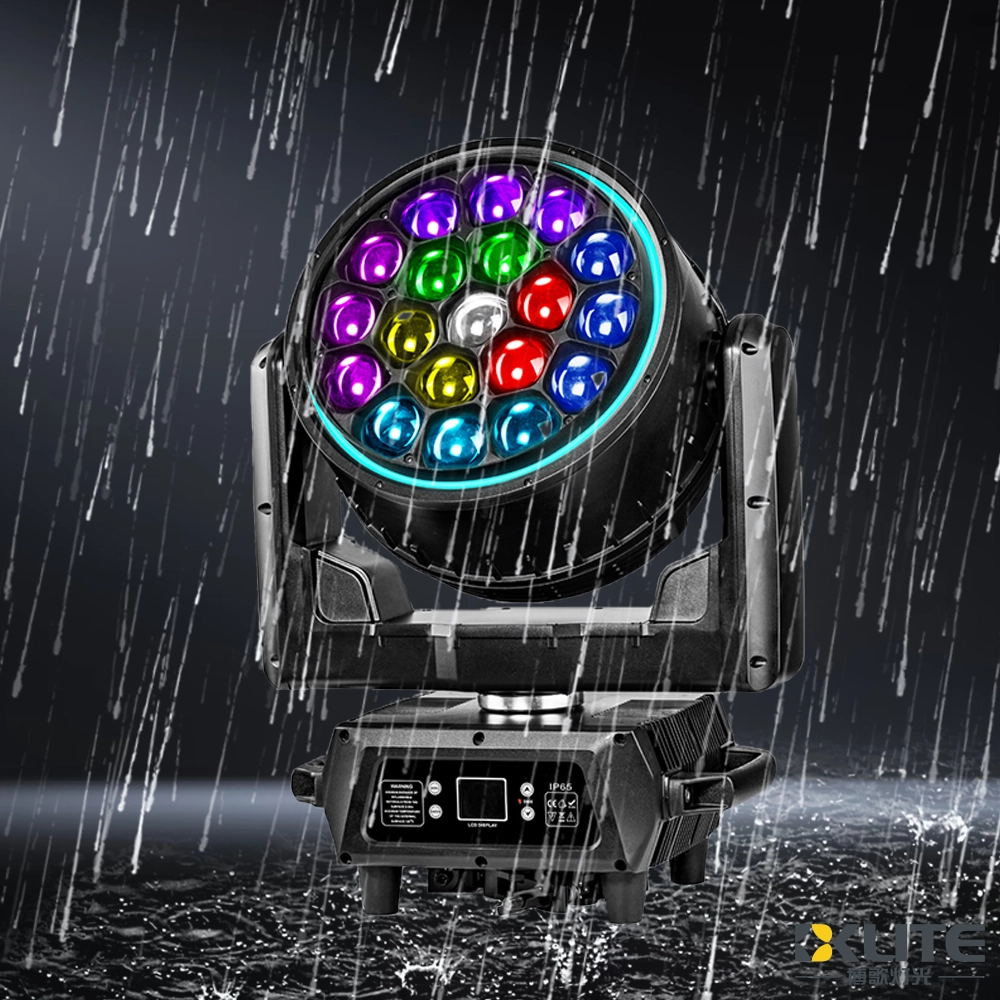
IP65 Waterproof Bee Eye Zoom 19x40W RGBW 4IN1 LED Beam Wash Moving Head Light with LED Ring
BKlite waterproof bee eye moving head light—your reliable choice from top waterproof moving head light manufacturers and suppliers. Ideal for outdoor stage, live event, music festival, this energy-saving fixture ensures powerful, precise illumination for any venue. It delivers powerful, reliable lighting performance in any weather.
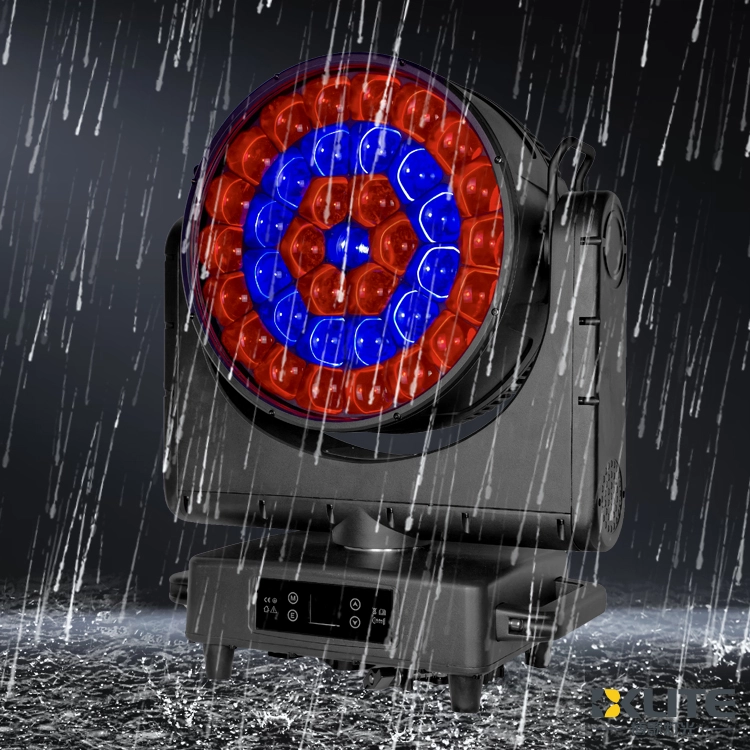
IP65 Waterproof ZOOM Bee Eye 37x40W RGBW 4in1 LED Moving Head Light
As a leading stage lighting equipment supplier with more than 15 years of industry know-how, BKlite brings you the IP65 ZOOM Bee Eye 37*40W RGBW 4in1 LED Moving Head Light (K25 Bee Eye) delivers vibrant, weatherproof lighting with powerful zoom and smooth movement. Ideal for dynamic stage effects, the K25 moving head light ensures stunning RGBW color mixing and reliable outdoor performance.
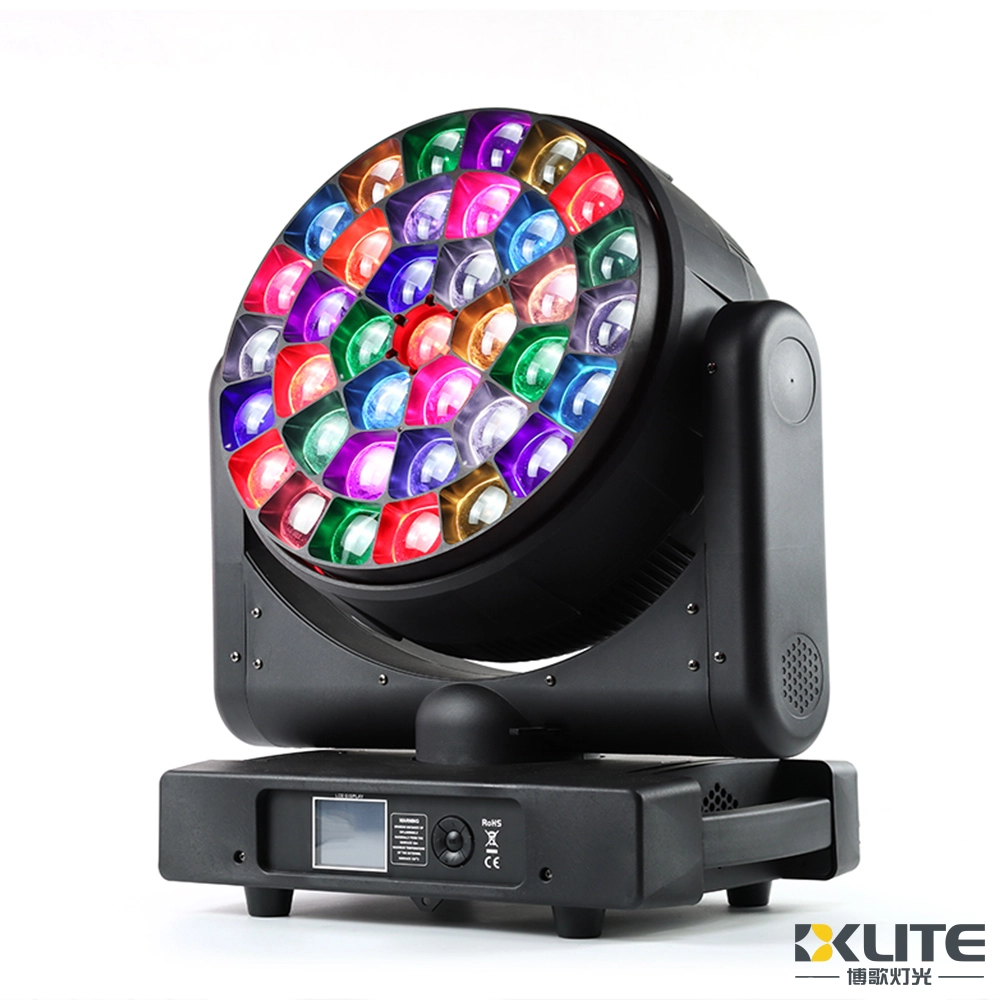
Bee Eye Zoom 37x40W RGBW 4in1 LED Beam Wash Moving Head Light
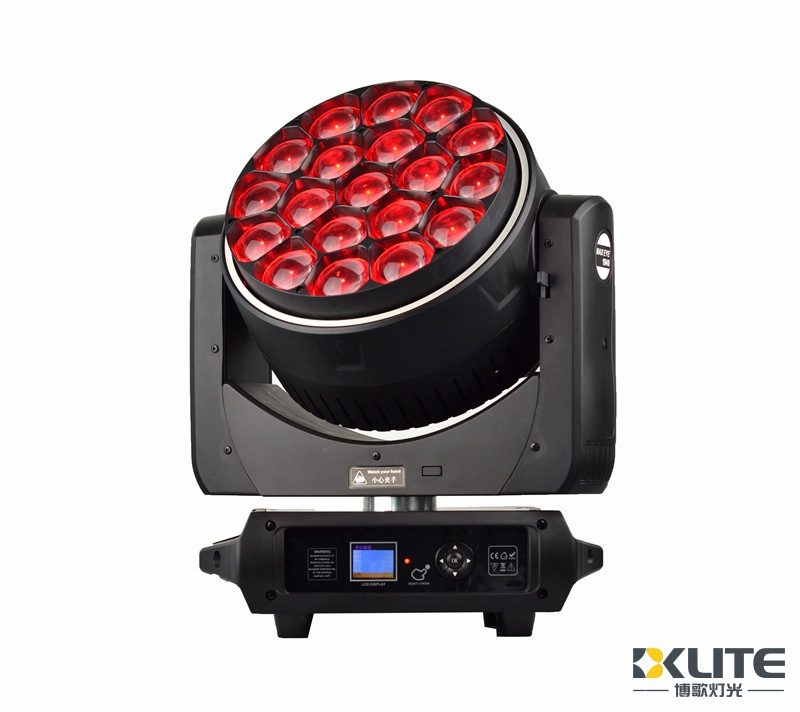
IP20 Bee Eye Zoom 19x40W RGBW 4IN1 LED Beam Wash Moving Head Light with LED Ring
As one of the leading stage lighting equipment suppliers with 15+ years of experience, BKlite launched a new Bee Eye K15 19x40 LED wash light BK-BY1940Z. .
Designed with a simple and sleek appearance, the WASH moving head light is compact, lightweight, and highly portable.
With multiple color effect macros and dynamic effect macros.
Our wash light can be used for versatile lighting options with amazing effect.
It is very good for your lighting projects.
Powerful and shoots very far distances.


Copyright © 2025 BKLITE All Rights Reserved.