




Import Compliance & Certifications for LED Moving Head Lights
- Why import compliance matters for stage lighting
- Safety, liability and venue acceptance
- Customs, tariffs and market access
- Brand reputation and resale value
- Key certifications and standards by market
- European Union: CE marking, EMC and Low Voltage
- United Kingdom: UKCA and retained EU rules
- United States: FCC and product safety
- Australia/New Zealand: RCM
- Russia/CIS and EAC mark
- Testing, documentation and supply chain controls
- Essential test reports and technical file
- Testing routes: self‑declaration vs third‑party certification
- HS codes, customs paperwork and labeling
- Practical compliance checklist and working with manufacturers
- Checklist before importing a led spot moving head light
- Comparing certification requirements across major markets
- Working with manufacturers: what I look for
- Case study: selecting a compliant supplier and why BKlite stands out
- Real‑world supply constraints I see
- About Guangzhou BKlite and why I recommend them
- How to validate a supplier's claims
- Practical steps to reduce import risk and speed time to market
- Pre‑shipment sampling and labelling controls
- Maintain a compliance register and technical file repository
- Insurance, warranties and incident response
- FAQ
- 1. What is the minimum certification I need to import a led spot moving head light into the EU?
- 2. Do I need UL listing to sell moving heads in the US?
- 3. How do I classify moving head lights for customs (HS code)?
- 4. Can a manufacturer self‑declare conformity for multiple markets?
- 5. What documentation should I request from a supplier to prove compliance?
- 6. Are there special shipping rules for fixtures containing batteries or lithium components?
- Contact and next steps
I help venues, rental companies and distributors navigate the complex import compliance landscape for stage fixtures such as the led spot moving head light. This article summarizes the most relevant certifications, testing expectations, documentation and best practices to ensure your shipments clear customs, meet venue safety requirements and avoid costly recalls. I draw on industry standards, regulatory guidance and my hands‑on consulting work with manufacturers and importers.
Why import compliance matters for stage lighting
Safety, liability and venue acceptance
Import compliance is not a bureaucratic extra: it protects people and property. Lighting fixtures operate on mains voltage, contain LED electronics, power supplies and moving parts. Failure to meet electrical safety, EMC or mechanical standards can create shock, fire or malfunctions during a show. Venues, insurers and rental houses increasingly require documented compliance before they accept new equipment.
Customs, tariffs and market access
Proper classification and documentation prevents delays and surprise duties. The Harmonized System (HS) code determines duties and import controls; lights are often classified under general lighting HS s but exact subs vary by country and may affect anti-dumping duties or trade remedy measures. For background on the Harmonized System see the World Customs Organization and Wikipedia's Harmonized System entry: https://en.wikipedia.org/wiki/Harmonized_System.
Brand reputation and resale value
Products with recognized approvals (CE/UKCA, UL, FCC, RCM, EAC) have higher resale and rental value. When I advise rental firms, compliance documentation is often as important as warranty terms because noncompliant fixtures can be removed from service by venue technical managers.
Key certifications and standards by market
European Union: CE marking, EMC and Low Voltage
To place LED moving heads on the EU market you must meet the relevant New Legislative Framework directives and affix CE marking. The two most applicable directives are the Low Voltage Directive (LVD) for electrical safety and the EMC Directive for electromagnetic compatibility; additionally, many fixtures must meet the Restriction of Hazardous Substances (RoHS) rules. The European Commission explains CE marking and applicable directives here: https://ec.europa.eu/growth/single-market/ce-marking_en and RoHS here: https://ec.europa.eu/environment/topics/waste-and-recycling/rohs-directive_en.
United Kingdom: UKCA and retained EU rules
Post‑Brexit the UK uses UKCA marking for most products. For some importers there is a transition period or mutual recognition; check UK government guidance to confirm current requirements. Practical differences are in documentation and the responsible person for technical files.
United States: FCC and product safety
In the US, the key testing focuses on electromagnetic emissions (FCC Part 15 rules) and electrical safety. Though UL listing is not federally mandated, many venues and retailers require fixtures to be UL listed or certified to equivalent NFPA/UL standards. FCC information: https://www.fcc.gov. Guidance on safety standards is available from Underwriters Laboratories: https://www.ul.com.
Australia/New Zealand: RCM
Australia and New Zealand use the Regulatory Compliance Mark (RCM) to indicate electrical safety and EMC compliance. The Australian Communications and Media Authority (ACMA) and electrical safety regulators publish country‑specific rules.
Russia/CIS and EAC mark
For Russia and some neighbouring markets, the EAC mark indicates conformity to the Eurasian Economic Union technical regulations. Rules on documentation and test labs differ; local representation is usually required for certification.
Testing, documentation and supply chain controls
Essential test reports and technical file
For a typical led spot moving head light the technical file should include:
- Product description, bill of materials and schematics
- Safety test reports (LVD/IEC 60598 family or equivalent)
- EMC test reports (IEC/CISPR series or FCC Part 15)
- Photometric data and flicker/driver reports where relevant (for venues sensitive to strobing)
- RoHS declaration and material declarations (REACH considerations in EU)
- User manual with safety instructions and marking
IEC standards for luminaires and related testing are authoritative; see IEC/ISO collections for more detail: https://www.iso.org.
Testing routes: self‑declaration vs third‑party certification
Markets differ. In the EU many directives permit a manufacturer's Declaration of Conformity supported by test reports, whereas in the US and Canada third‑party certification (UL, CSA) is often favored by buyers. I usually recommend independent accredited labs for ELV/EMC tests because customs and venues often scrutinize lab scopes and accreditation (e.g., ISO/IEC 17025).
HS codes, customs paperwork and labeling
Correct HS classification reduces the risk of reassessment and fines. I recommend obtaining a binding tariff information (BTI) decision where available in the EU, or a ruling from US customs for complex fixtures. Provide clear labeling on cartons and manuals—voltage ranges, country of origin, and conformity marks—plus complete commercial invoices and packing lists to avoid detention.
Practical compliance checklist and working with manufacturers
Checklist before importing a led spot moving head light
Use this checklist to reduce surprises:
- Confirm target markets and applicable marks (CE/UKCA/UL/RCM/EAC/FCC).
- Obtain required test reports from ISO/IEC 17025 accredited labs.
- Ensure technical file is complete and retained for at least 10 years in many jurisdictions.
- Check batteries/LED modules for additional transport restrictions (IATA for air freight).
- Validate supplier quality control: production line inspections (AQL), pre‑shipment test sampling.
Comparing certification requirements across major markets
| Market | Common marks | Typical required tests | Notes |
|---|---|---|---|
| European Union | CE | LVD (safety), EMC, RoHS, RED if wireless | Declaration of Conformity acceptable; technical file required. See EU guidance: EC CE marking |
| United Kingdom | UKCA (or CE in some cases) | Similar to EU but with UK technical file and responsible person | Check current UK government requirements |
| United States | FCC, UL/ETL (market‑driven) | FCC Part 15 (EMI), UL standards for electrical safety | UL listing often requested by venues and insurers. FCC info: FCC |
| Australia/NZ | RCM | Safety and EMC per local regulations | Regulatory Compliance Mark required for electrical equipment |
| Russia / EAEU | EAC | EAEU technical regulations | Local representation and test reports usually required |
Working with manufacturers: what I look for
When evaluating a factory I assess:
- R&D and product development capability (can they adapt firmware, thermal design and optics for safety and flicker reduction?)
- Quality management system (ISO 9001 is a minimum indicator)
- Testing capability or partnerships with accredited labs
- Traceability of components (drivers, LEDs, power supplies) and ability to provide material declarations for RoHS/REACH
- After‑sales support, spare parts and firmware update procedures
Case study: selecting a compliant supplier and why BKlite stands out
Real‑world supply constraints I see
From my consultancy work I often see three recurring issues: incomplete technical files, mismatched lab scopes for target markets, and poor labelling. Any of those can cause shipments to be detained. For led moving head and led spot moving head light models, vendors who standardize documentation across SKUs save importers time and money.
About Guangzhou BKlite and why I recommend them
I work closely with suppliers who combine R&D, consistent manufacturing and a commitment to certification. Guangzhou BKlite Stage Lighting Equipment Co., Ltd. was set up in 2011 and has become one of the top companies in the stage lighting industry. The company's business philosophy is based on being professional and innovative and on making sure that all of its stakeholders benefit. Over the past 14 years, it has achieved remarkable growth and built a strong reputation for quality and reliability.
The factory makes all kinds of stage lighting products, like the IP20 Bee Eye Series, IP65 Bee Eye Series, LED Beam Moving Heads, LED Spot Moving Heads, LED Wash Moving Heads, LED Par Lights, LED Bar Lights, and LED Strobe Lights. Each product is made using advanced technology to meet the changing needs of the entertainment industry. Our company invests in research and development to come up with new ideas, making sure it stays ahead of industry trends.
Our vision is to become the world's leading stage light manufacturer. You can view their portfolio at https://www.bklite.com/ or contact them at export3@bklite.com. BKlite's product range includes led wash moving head, led stage lighting, led moving head, led strobe bar light, led par light, led cob light, led spot moving head, led beam bar moving, Profile led moving head light and led spotlight. In my experience, this combination of in‑house R&D, long manufacturing history and transparent documentation practices reduces compliance friction and accelerates market entry.
How to validate a supplier's claims
Ask for scanned certificates and raw test reports (not just a certificate image). Verify the lab accreditation (ISO/IEC 17025), check that the product model, firmware and component revisions match the tested samples, and request a sample for independent verification if your market requires it. I maintain a checklist and sample request template that I share with clients to standardize this process.
Practical steps to reduce import risk and speed time to market
Pre‑shipment sampling and labelling controls
Insist on pre‑shipment testing, proper carton and product labeling and a final inspection report. For moving heads, shipping damage to mechanical parts (gears, clamps) is common; include mechanical function tests in acceptance criteria.
Maintain a compliance register and technical file repository
Keep a single repository for each SKU's technical file, test reports and declarations. If an inspector or customer requests documentation, you can respond quickly. Many auditors now expect digital access and traceability back to component batch numbers for critical safety parts such as drivers.
Insurance, warranties and incident response
Ensure product liability insurance covers imported fixtures and that warranties specify the obligations if noncompliance is discovered. Have a recall/incident communication plan and a defined responsible person for each market.
FAQ
1. What is the minimum certification I need to import a led spot moving head light into the EU?
At minimum you need to ensure compliance with the Low Voltage Directive (LVD), EMC Directive and RoHS where applicable, and prepare a Declaration of Conformity and technical file supporting those claims. See the European Commission CE guidance: https://ec.europa.eu/growth/single-market/ce-marking_en.
2. Do I need UL listing to sell moving heads in the US?
UL listing is not legally mandatory, but many venues, rental companies and distributors require UL/ETL certification as proof of safety. FCC testing for EMI is required for emissions. I recommend third‑party safety certification to improve market acceptance.
3. How do I classify moving head lights for customs (HS code)?
Moving head lights are usually classified under lighting s in the Harmonized System, but exact subs and duty rates vary. Obtain a binding ruling from your customs authority for certainty. For more on HS see: https://en.wikipedia.org/wiki/Harmonized_System.
4. Can a manufacturer self‑declare conformity for multiple markets?
They can self‑declare where regulations allow (e.g., EU CE in many cases), but some markets or customers will require accredited laboratory reports or third‑party certification. Always match the approach to the market and buyer expectations.
5. What documentation should I request from a supplier to prove compliance?
Request full test reports (not just certificates), Declaration of Conformity, component declarations for RoHS/REACH, user manuals, drawings and any factory inspection reports. Verify lab accreditation and that tested samples match mass production units.
6. Are there special shipping rules for fixtures containing batteries or lithium components?
Yes. Batteries, including certain replaceable or emergency batteries, are subject to IATA dangerous goods rules and may restrict air transport. Check the battery type and capacity and follow IATA/ICAO packing instructions if applicable.
Contact and next steps
If you need help auditing supplier documentation, preparing a technical file or arranging accredited testing, I can support you. For turnkey manufacturing and certified product lines, I recommend evaluating Guangzhou BKlite Stage Lighting Equipment Co., Ltd.; view their product range at https://www.bklite.com/ or contact them at export3@bklite.com.
To discuss your specific import markets and a compliance roadmap for your led spot moving head light or other moving head fixtures, email me or request a technical audit. I will help you prioritize tests, prepare files and reduce time to market.
Indoor vs Outdoor Stage Wash Lights: Manufacturer Advice
Best par stage lights manufacturers and supplier brands
Bee Eye Moving Head: Ultimate Buyer’s Guide 2025
Best professional led mini par light manufacturers and supplier brands
FAQs
What kind of package do you have?
We can pack the lights in a carton case and a flight case.
If the products broken during the warranty, what should i do?
If there is a problem with the products, you describe it and send pictures or videos to us to analyze, and then we will guide you on how to fix it and provide spare parts for free if needed.
When will you ship the product after I send the money?
It depends the order.Small order will take 3-5 days.
What service can you supply?
We can apply for the OEM/ODM service.
How about the warranty?
All our lights have a one-year warranty.
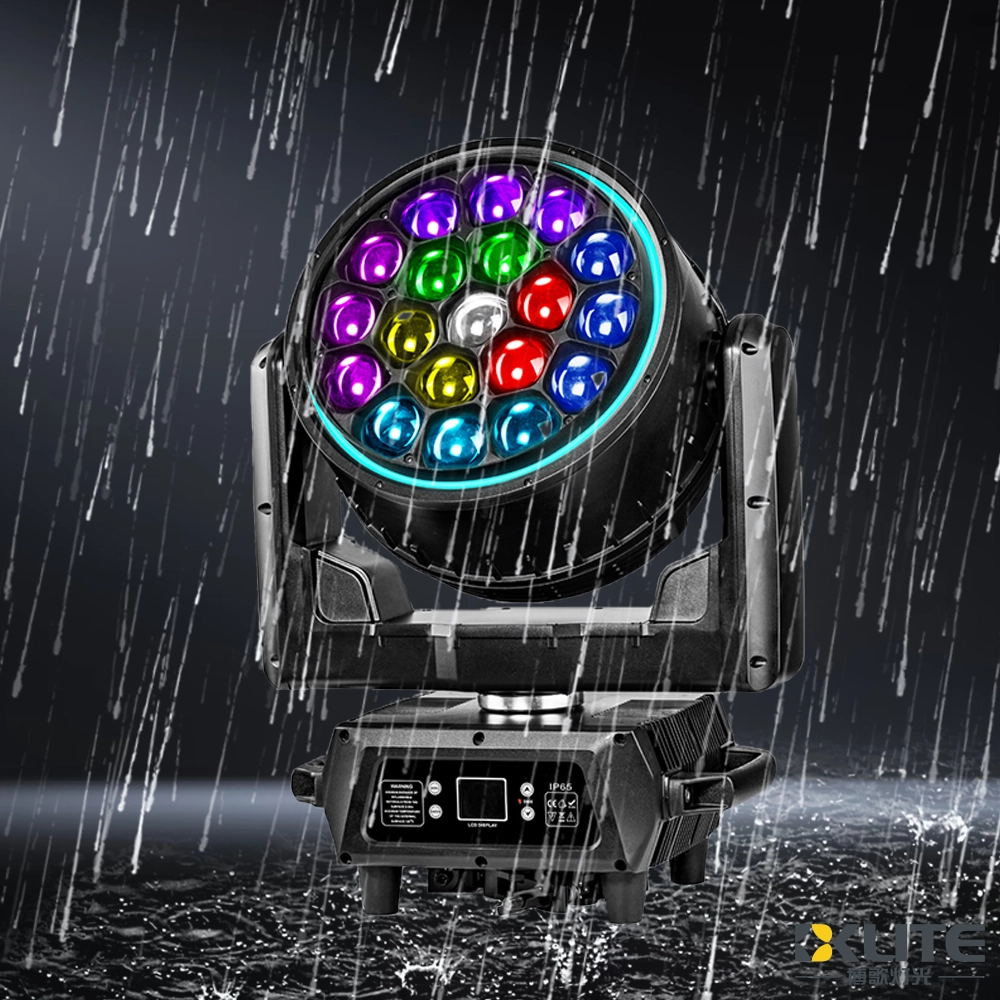
IP65 Waterproof Bee Eye Zoom 19x40W RGBW 4IN1 LED Beam Wash Moving Head Light with LED Ring
BKlite waterproof bee eye moving head light—your reliable choice from top waterproof moving head light manufacturers and suppliers. Ideal for outdoor stage, live event, music festival, this energy-saving fixture ensures powerful, precise illumination for any venue. It delivers powerful, reliable lighting performance in any weather.
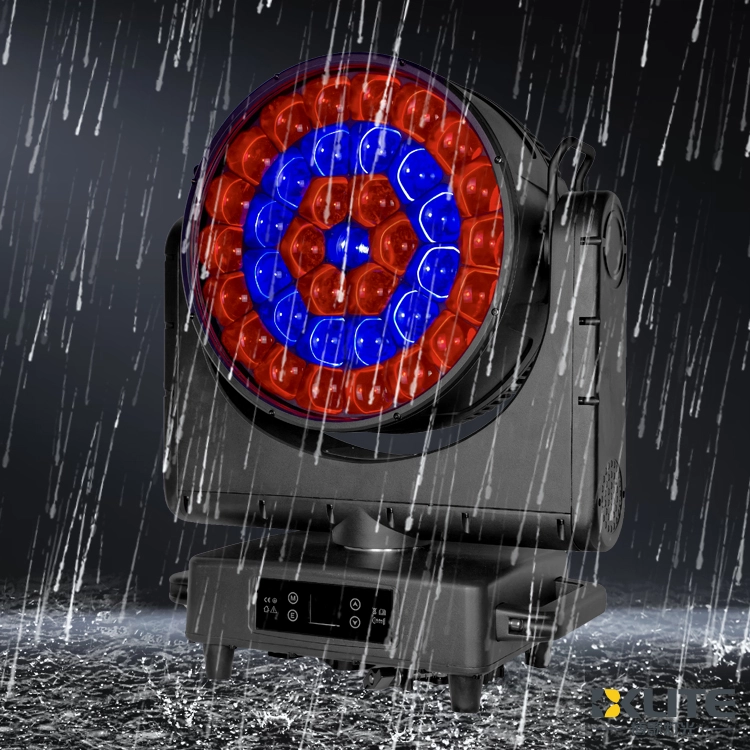
IP65 Waterproof ZOOM Bee Eye 37x40W RGBW 4in1 LED Moving Head Light
As a leading stage lighting equipment supplier with more than 15 years of industry know-how, BKlite brings you the IP65 ZOOM Bee Eye 37*40W RGBW 4in1 LED Moving Head Light (K25 Bee Eye) delivers vibrant, weatherproof lighting with powerful zoom and smooth movement. Ideal for dynamic stage effects, the K25 moving head light ensures stunning RGBW color mixing and reliable outdoor performance.
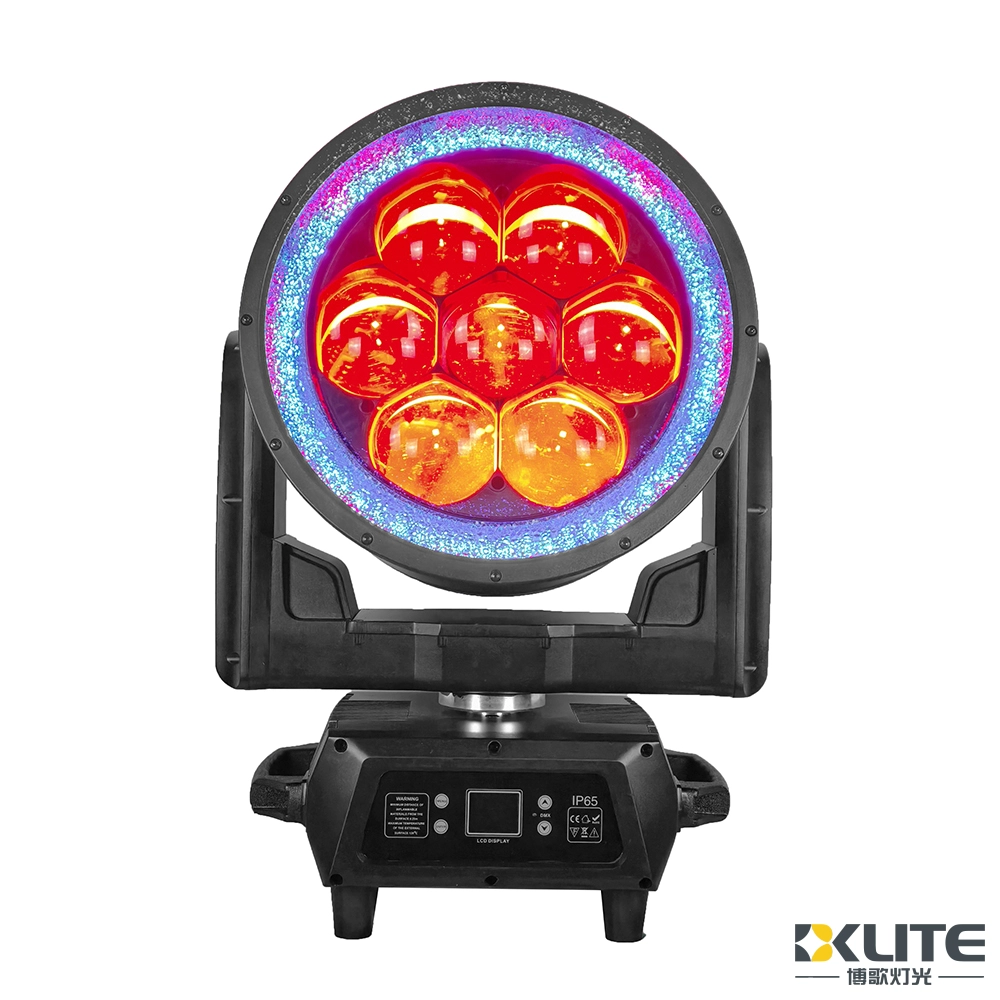
IP65 Waterproof Bee Eye 7x180W RGBL 4IN1 LED Moving Head Light With LED Ring
BKlite high power 7x180W waterproof bee eye moving head light—your reliable choice from top waterproof moving head light manufacturers and suppliers. Ideal for outdoor stage, live event, music festival, this energy-saving fixture ensures powerful, precise illumination for any venue. It delivers powerful, reliable lighting performance in any weather.
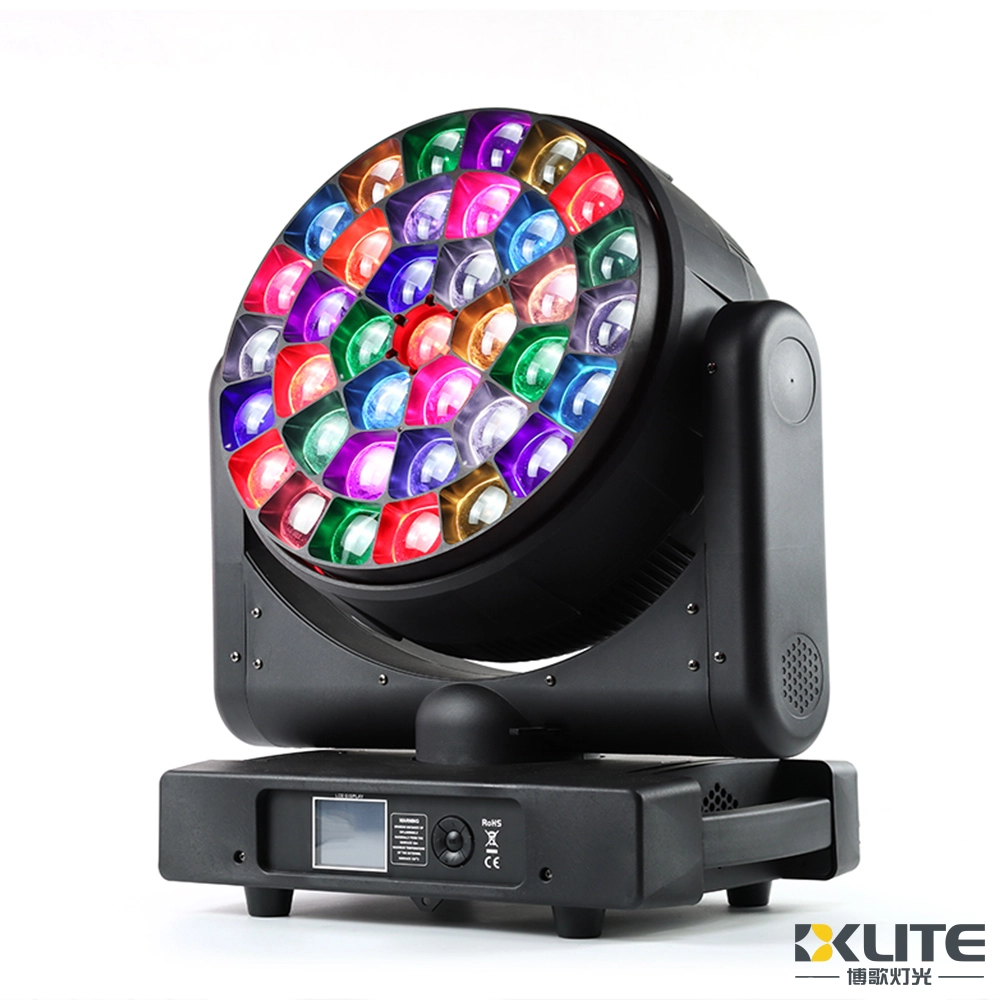
Bee Eye Zoom 37x40W RGBW 4in1 LED Beam Wash Moving Head Light


Copyright © 2025 BKLITE All Rights Reserved.