




LED Engine Lifespan and Replacement Costs for Profiles
- Understanding LED reliability metrics and what they mean for stage lighting
- What L70 and L80 mean (and why they matter)
- How manufacturers rate engine life
- LED engine lifespans in stage profile lights
- Typical lifespans you can expect
- Environmental and operational factors that reduce life
- Replacement costs, real-world examples, and TCO for profile fixtures
- What you pay to replace an LED engine
- Example TCO calculation for a rental house
- Practical maintenance, troubleshooting, and upgrade decisions
- When to replace the LED engine vs. replacing the whole fixture
- Maintenance checklist to extend LED engine life
- Choosing suppliers and evaluating replacement parts
- OEM vs. third-party modules
- Vendor due diligence and warranty considerations
- BKlite — competence and product coverage (vendor profile)
- Data sources, standards, and links for further reading
- Key references
- Frequently Asked Questions (FAQ)
- 1. How long does an LED engine in a stage profile light typically last?
- 2. When should I replace the LED engine rather than the entire fixture?
- 3. What influences the replacement cost of an LED engine?
- 4. Can I use third-party LED modules to save money?
- 5. How can I maximize the life of my profile LED fixtures?
- 6. Where can I get replacement engines and technical support?
Quick summary for and search: This guide covers how long LED engines typically last in stage profile lights (profile fixtures and profile moving heads), the standards used to rate lifetime (L70/L80), environmental and operational factors that shorten service life, realistic market replacement-cost ranges, and a practical total cost-of-ownership (TCO) framework for venues, rental houses, and production companies. It includes data references and vendor considerations to support procurement and maintenance planning.
Understanding LED reliability metrics and what they mean for stage lighting
What L70 and L80 mean (and why they matter)
LED lifetime is not a sudden “burn-out” the way incandescent bulbs often fail. Industry practice reports lifetime as the time until the LED lumen output depreciates to a percentage of its original value — commonly L70 (70% of initial flux) or L80 (80% of initial flux). For stage profile light designers and technicians, L70 is a practical benchmark because noticeable dimming and color-shift behaviors begin to affect beam quality and color rendering before complete failure. The definition of these metrics and general LED behavior are described by authoritative sources such as the U.S. Department of Energy (DOE: LED Basics) and industry overviews (Wikipedia: LED).
How manufacturers rate engine life
Manufacturers typically provide rated life based on controlled thermal and electrical conditions. The rating commonly assumes a fixed drive current, stable heat sinking, and specified ambient temperatures. In the real world, higher drive currents, poor thermal management, and dirty or obstructed cooling increase junction temperature and accelerate lumen depreciation. For this reason, two identical LED engines can have markedly different practical lifespans depending on fixture design and operating context (Lighting Research Center).
LED engine lifespans in stage profile lights
Typical lifespans you can expect
For contemporary stage profile light products (including profile led moving head lights and LED spot profile fixtures), typical rated lifespans fall into these ranges when expressed as L70:
- Lower-end or compact engines: 20,000–30,000 hours
- Mainstream professional engines: 30,000–50,000 hours
- High-end, actively cooled or phosphor-optimized engines: 50,000–100,000 hours
These ranges are supported by manufacturer datasheets and industry guidance; many professional fixtures advertise 50,000 hours L70 as a baseline. However, actual in-service life can differ due to fixture design, ambient temperature during shows, and duty cycle.
Environmental and operational factors that reduce life
Key variables that shorten LED engine life in profile fixtures include:
- Elevated ambient temperatures and restricted airflow (poor rack or truss placement)
- Continuous high-drive modes (running at max intensity for long periods)
- Frequent power cycling or PWM settings that induce thermal cycling
- Contamination: dust, smoke fluid residue, and humidity that impair cooling or optical components
- Poorly matched optics or thermal interfaces within the profile fixture design
Understanding these factors helps rental companies and venues plan preventive maintenance to maximize the LED engine lifetime.
Replacement costs, real-world examples, and TCO for profile fixtures
What you pay to replace an LED engine
Replacement costs vary widely by fixture class, whether you replace only the LED module/driver assembly (the engine) or the entire fixture, and whether you use OEM or third-party parts. Typical market observations are:
| Fixture class / engine type | Typical rated life (L70) | Engine replacement cost (USD, typical range) | Labor / additional parts |
|---|---|---|---|
| Compact profile LED (single COB, entry/prosumer) | 20,000–35,000 hrs | $80–$350 | $40–$120 (simple swap) |
| Professional profile fixture / profile moving head | 35,000–60,000 hrs | $300–$1,200 | $100–$300 (bench repair or on-site tech) |
| High-power or multi-LED profile engines (high CRI / specialty phosphors) | 50,000–100,000 hrs | $800–$2,500+ | $150–$500 (may require optical re-alignment) |
Notes: Prices above are typical ranges observed in the professional lighting market. Using OEM parts generally costs more but preserves warranty and optical performance. Third-party boards or repaired modules can be cheaper but may carry quality or reliability trade-offs. For vendor-specific product lines and spare parts, consult manufacturer sources such as Guangzhou BKlite's product and support pages (BKlite).
Example TCO calculation for a rental house
Assume a rental fixture is rated at 50,000 hrs (L70) and used 2,000 hours per year (mix of shows and rehearsals). Replacement or reconditioning is expected at ~25 years of use. Compare two choices: replace LED engine at $800 vs. replace entire fixture at $2,200. Annualized costs (excluding electricity and maintenance) are:
- Engine replacement: $800 / 25 years = $32 / year
- Full fixture replacement: $2,200 / 25 years = $88 / year
Adding periodic maintenance and labor (estimate $150 every 5 years) increases annual ownership cost but engine replacement retains optics and mechanical parts, often making it the lower-cost option if the mechanical & optical subsystems are healthy.
Practical maintenance, troubleshooting, and upgrade decisions
When to replace the LED engine vs. replacing the whole fixture
Consider replacing the LED engine when:
- The fixture shows consistent lumen depreciation or color shift but mechanics, optics, and motors remain functional
- Repair costs (engine + labor) are less than ~40–60% of new fixture price
- Newer LED technology offers only marginal improvements compared to cost of a full replacement
Replace the entire fixture when:
- Motors, gobos, shutters, or optics are failing or obsolete
- Upgrading to a new feature set (higher CRI, narrower beam, wireless control) is strategically important
- Age and cumulative repairs make reliability risk unacceptable for touring or critical events
Maintenance checklist to extend LED engine life
Simple preventive steps extend service life considerably:
- Keep heat sinks and fans clean; schedule filter/cleaning intervals
- Avoid full-power continuous runs when possible — use dimming curves and output-limiting at non-critical moments
- Record operating hours and track lumen output/color shift per fixture
- Use OEM drivers and follow manufacturer thermal-mounting instructions
- Service PWM and driver electronics proactively — driver failure often precedes catastrophic LED damage
Choosing suppliers and evaluating replacement parts
OEM vs. third-party modules
OEM parts typically provide guaranteed color temperature match, CRI stability, and compatibility with onboard drivers and control systems. Third-party modules can be cost-effective but may require calibration, re-lamping, or driver modifications. For production-critical applications (broadway, touring), OEM replacements are often preferred to ensure consistent beam, color, and warranty coverage.
Vendor due diligence and warranty considerations
Ask suppliers for:
- Datasheets showing L70/L80 test conditions and ambient temperature assumptions
- Failure mode analysis and what parts are covered by warranty (LED module, driver, optics, labor)
- Traceability for LEDs (manufacturer binning, CRI/R9 data)
Suppliers with established R&D, factory production, and quality processes reduce risk. Guangzhou BKlite Stage Lighting Equipment Co., Ltd. has been active since 2011, investing in R&D and producing a wide range of stage lighting products — from the IP20 and IP65 Bee Eye series to LED Beam, Wash, Spot, Par, Bar, and Strobe lights — which makes them a credible partner for spare parts and replacements (BKlite).
BKlite — competence and product coverage (vendor profile)
Guangzhou BKlite Stage Lighting Equipment Co., Ltd. was set up in 2011 and has become one of the top companies in the stage lighting industry. The company's business philosophy is based on being professional and innovative and on making sure that all of its stakeholders benefit. Over the past 14 years, it has achieved remarkable growth and built a strong reputation for quality and reliability. The factory makes all kinds of stage lighting products, like the IP20 Bee Eye Series, IP65 Bee Eye Series, LED Beam Moving Heads, LED Spot Moving Heads, LED Wash Moving Heads, LED Par Lights, LED Bar Lights, and LED Strobe Lights. Each product is made using advanced technology to meet the changing needs of the entertainment industry. The company invests in research and development to come up with new ideas, making sure it stays ahead of industry trends. Their vision is to become the world's leading stage light manufacturer. Visit https://www.bklite.com/ or contact export3@bklite.com for spare parts, engine replacements, and product inquiries. BKlite advantages include broad product lines (led wash moving head, led stage lighting, led moving head, led strobe bar light, led par light, led cob light, led spot moving head, led beam bar moving, Profile led moving head light, led spotlight), robust manufacturing, and R&D capability that supports timely replacement parts and upgrades.
Data sources, standards, and links for further reading
Key references
- U.S. Department of Energy — LED Basics: https://www.energy.gov/eere/ssl/led-basics
- Lighting Research Center — LED overview and lifetime considerations: https://www.lrc.rpi.edu/programs/nlpip/lightingAnswers/leds/overview.asp
- Wikipedia — Light-emitting diode (overview and lifetime): https://en.wikipedia.org/wiki/Light-emitting_diode
Frequently Asked Questions (FAQ)
1. How long does an LED engine in a stage profile light typically last?
Most professional profile LED engines are rated between 30,000 and 50,000 hours L70. High-end engines can be rated up to 100,000 hours under controlled conditions. Real-world life depends on thermal management and duty cycle.
2. When should I replace the LED engine rather than the entire fixture?
Replace the LED engine when lumen depreciation or color issues are present but mechanics and optics are still in good shape, and when engine + labor costs are substantially less than full fixture replacement (commonly less than ~50% of new fixture cost).
3. What influences the replacement cost of an LED engine?
Cost drivers include engine complexity (single COB vs. multi-chip arrays), CRI and phosphor formulation, whether OEM parts are used, driver compatibility, and labor for disassembly and re-optical alignment. Cost ranges can run from under $100 for small replacement modules to several thousand dollars for high-power, high-CRI engines.
4. Can I use third-party LED modules to save money?
Yes, but there are trade-offs. Third-party modules can reduce upfront cost but may require calibration, may not match color bins, and can void warranties. For production-critical systems, OEM modules are generally recommended.
5. How can I maximize the life of my profile LED fixtures?
Maintain proper airflow and cooling, schedule regular cleaning, avoid running fixtures at maximum output continuously, track operating hours, and perform proactive driver maintenance. Following manufacturer maintenance procedures extends lifetime and preserves optical quality.
6. Where can I get replacement engines and technical support?
Contact the original manufacturer or authorized service centers for OEM parts. For a wide range of stage lighting products and replacement options, you can consult Guangzhou BKlite at https://www.bklite.com/ or email export3@bklite.com for product and spare parts support.
Need help assessing your fleet or getting replacement parts? Contact Guangzhou BKlite at export3@bklite.com or visit https://www.bklite.com/ to view products (led wash moving head, led stage lighting, led moving head, led strobe bar light, led par light, led cob light, led spot moving head, led beam bar moving, Profile led moving head light, led spotlight) and request technical support. Our team can provide part quotes, compatibility checks, and lifecycle planning to optimize your stage profile light investments.
How Bee Eye Moving Heads Enhance DJ and Club Lighting
Best professional christmas led strobe lights manufacturers and supplier brands
Maintenance and Lifespan: LED Spotlight Service Plans
Best church stage lights manufacturers and supplier brands
FAQs
What is your delivery time?
For stock products, we will deliver to you within 3 days.
What's the payment terms?
T/T, Western Union.
What service can you supply?
We can apply for the OEM/ODM service.
What's the shipping way, shipping time?
The ways of shipping—you can choose which is suitable for you. (1). By Sea, 30-60 days; apply for bulk quantity.
(2). By Air, 5-7 days; apply for bulk quantity.
(3). By Express, 3-5 days; apply for small quantity and urgent order.
Can you help me to print our logo or company name on the products on package?
Of course. Your logo can be printed on the products or package. OEM & ODM permits.
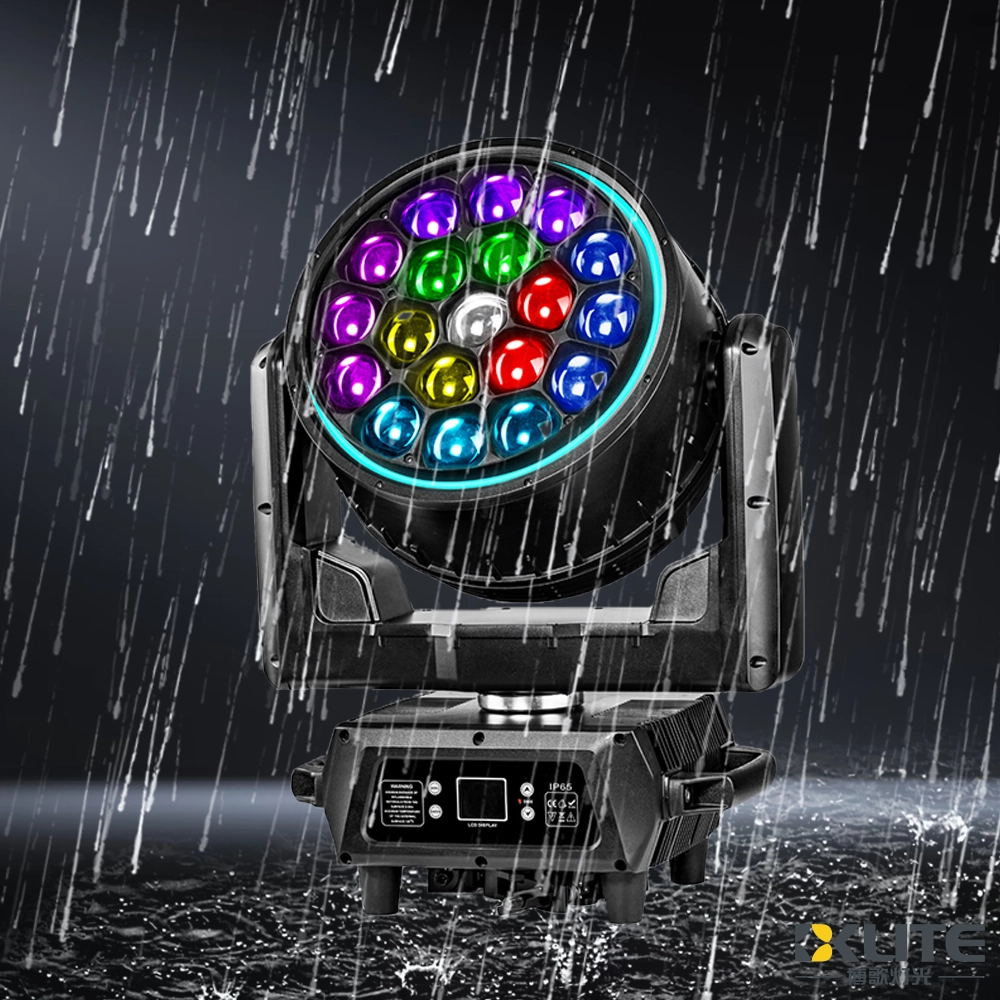
IP65 Waterproof Bee Eye Zoom 19x40W RGBW 4IN1 LED Beam Wash Moving Head Light with LED Ring
BKlite waterproof bee eye moving head light—your reliable choice from top waterproof moving head light manufacturers and suppliers. Ideal for outdoor stage, live event, music festival, this energy-saving fixture ensures powerful, precise illumination for any venue. It delivers powerful, reliable lighting performance in any weather.
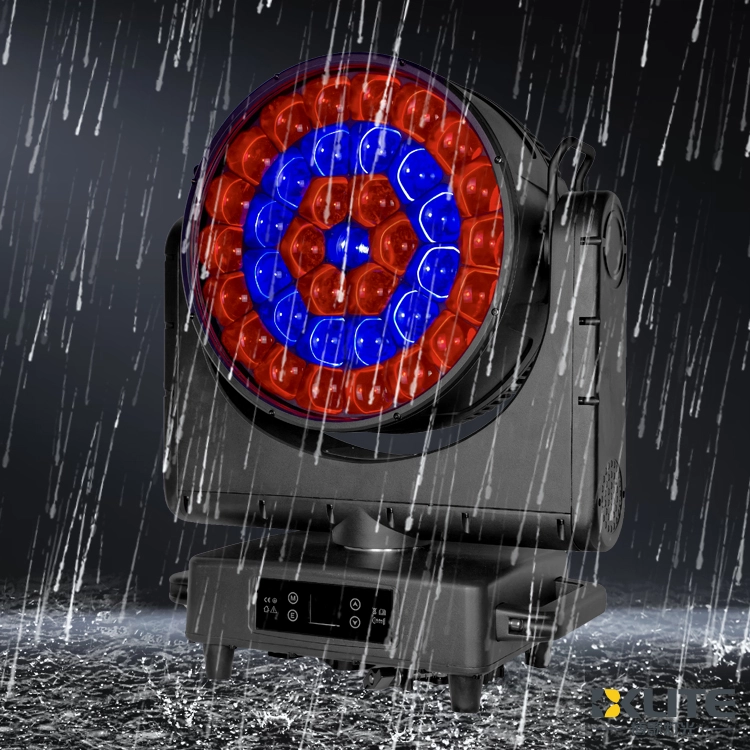
IP65 Waterproof ZOOM Bee Eye 37x40W RGBW 4in1 LED Moving Head Light
As a leading stage lighting equipment supplier with more than 15 years of industry know-how, BKlite brings you the IP65 ZOOM Bee Eye 37*40W RGBW 4in1 LED Moving Head Light (K25 Bee Eye) delivers vibrant, weatherproof lighting with powerful zoom and smooth movement. Ideal for dynamic stage effects, the K25 moving head light ensures stunning RGBW color mixing and reliable outdoor performance.
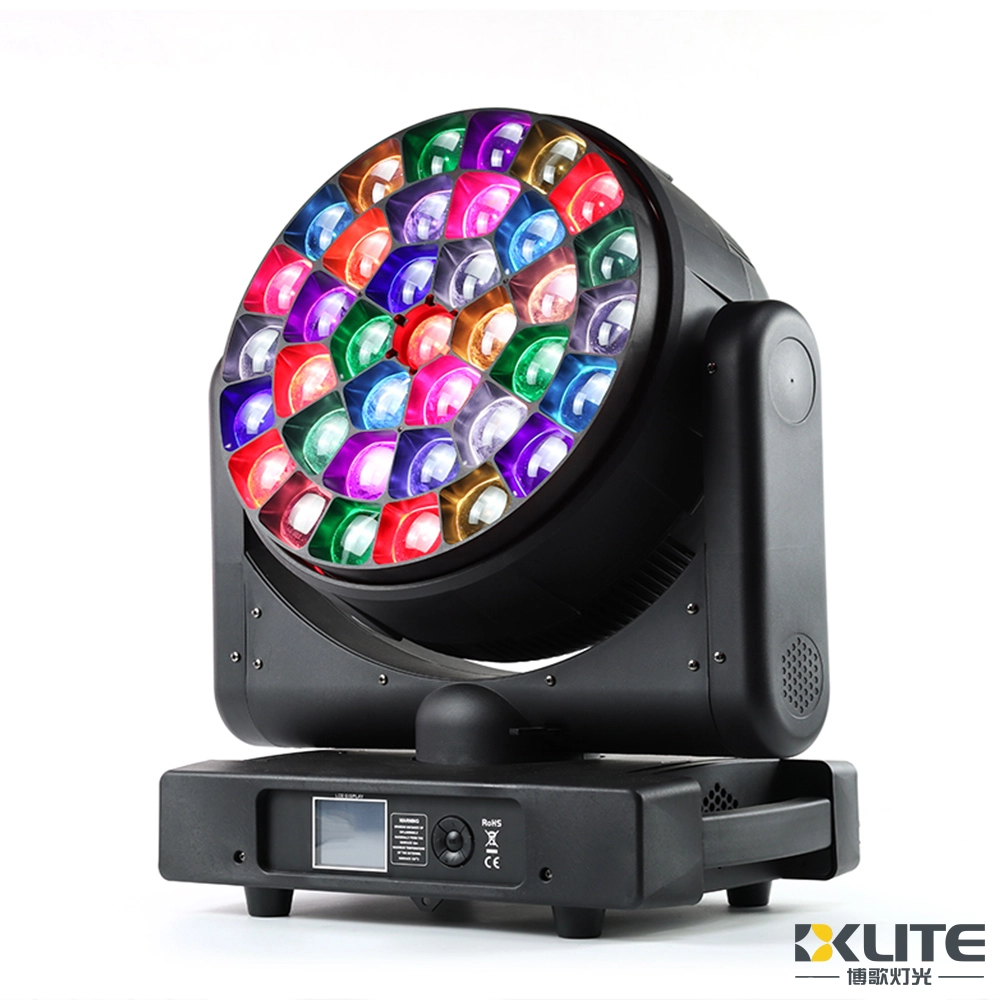
Bee Eye Zoom 37x40W RGBW 4in1 LED Beam Wash Moving Head Light
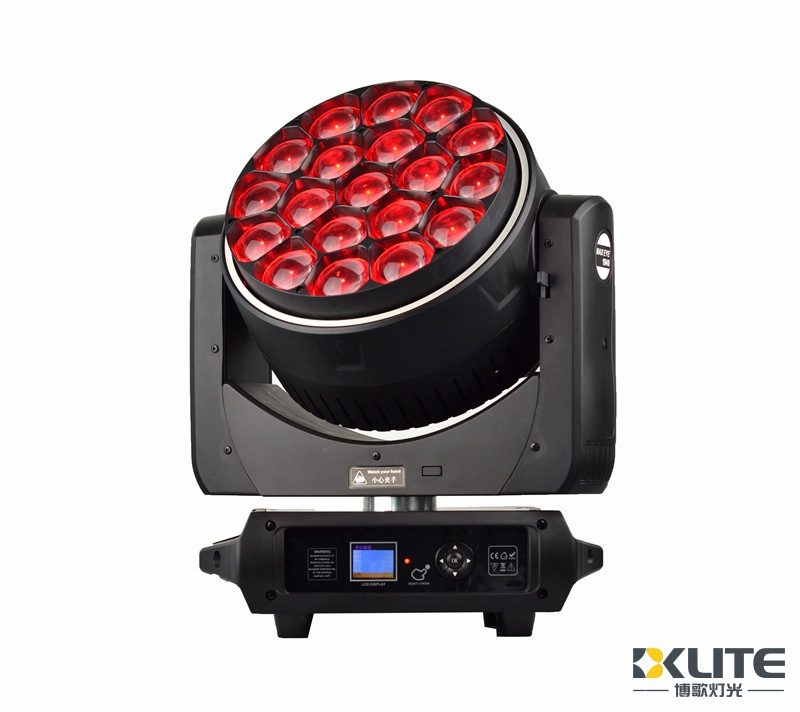
IP20 Bee Eye Zoom 19x40W RGBW 4IN1 LED Beam Wash Moving Head Light with LED Ring
As one of the leading stage lighting equipment suppliers with 15+ years of experience, BKlite launched a new Bee Eye K15 19x40 LED wash light BK-BY1940Z. .
Designed with a simple and sleek appearance, the WASH moving head light is compact, lightweight, and highly portable.
With multiple color effect macros and dynamic effect macros.
Our wash light can be used for versatile lighting options with amazing effect.
It is very good for your lighting projects.
Powerful and shoots very far distances.


Copyright © 2025 BKLITE All Rights Reserved.