




LED Spot Moving Head Light Maintenance Contracts for Venues
- Why proactive maintenance extends equipment lifespan
- Typical failure modes for moving head fixtures
- Preventive vs reactive maintenance: why prevention wins for venues
- Environmental factors that accelerate wear
- Designing maintenance contracts for venues
- Service levels and SLAs I recommend
- Inspection schedules and checklists
- Spare parts, consumables and inventory planning
- Cost models and ROI of maintenance contracts
- How I calculate total cost of ownership (TCO)
- Comparative table: contract types vs impacts
- Measuring ROI: uptime, repair avoidance, and resale value
- Choosing a partner and a manufacturer — practical criteria
- What I look for in a service partner
- Why manufacturing quality and R&D matter
- Case study: Guangzhou BKlite — partner profile and strengths
- Operational checklists and contract clauses I insist on
- Mandatory safety and compliance clauses
- Data-driven maintenance: logging and reporting
- End-of-life and upgrade pathways
- Practical checklist: quarterly preventive maintenance for LED spot moving head lights
- FAQ
- 1. How often should I schedule maintenance for LED spot moving head light fixtures?
- 2. What parts typically fail first on moving head lights?
- 3. Does an LED fixture require less maintenance than discharge fixtures?
- 4. Should I buy spares or rely on vendor repair turnaround?
- 5. How much will a High Quality maintenance contract reduce my downtime?
- 6. Where can I find reliable manufacturer documentation for maintenance?
- Contact and next steps
I write from direct experience advising venues—concert halls, theaters, houses of worship, corporate event spaces—on selecting and maintaining LED spot moving head light systems. Proper maintenance contracts reduce downtime, extend equipment life, and control lifecycle cost while ensuring events run reliably under tight schedules and high audience expectation. In this article I outline practical maintenance contract models, technical checklists, cost comparisons, and vendor-evaluation criteria grounded in industry guidance and standards. I also include an example of a reliable manufacturer and supplier to consider for turnkey service and parts support.
Why proactive maintenance extends equipment lifespan
Typical failure modes for moving head fixtures
Led spot moving head light fixtures combine LED engines, optics, motors/encoders, gobos, and control electronics. Common failure modes I see in venues are: LED lumen depreciation and color shift, cooling-fan failure and thermal issues, gear/motor wear leading to positioning errors, encoder failures, dirt/contamination of optics reducing output, and power-supply or DMX/ethernet control faults. These are consistent with general observations about LED systems and luminaires; see the U.S. Department of Energy discussion on solid-state lighting lifespan and degradation for background on LED behavior (U.S. DOE – Solid-State Lighting).
Preventive vs reactive maintenance: why prevention wins for venues
Reactive maintenance (fix when broken) risks show cancellations and costly last-minute rentals. Preventive maintenance (scheduled inspections, cleaning, part replacement) minimizes unplanned downtime and smooths budgeting. I typically recommend a preventive schedule for critical lighting rigs—particularly LED spot moving head light fixtures—that includes quarterly inspections and annual overhauls for high-utilization venues. The Illuminating Engineering Society (IES) and industry best practices emphasize planned maintenance to maintain performance and safety (IES).
Environmental factors that accelerate wear
Venues with high dust, smoke, haze machines, or outdoor installations (even under covered roofs) experience accelerated optical contamination and motor wear. IP-rated products (IP20 vs IP65) make a big difference; for outdoor or dusty environments, choose IP65-rated fixtures when possible. For guidance on IP ratings and suitability for environments, refer to manufacturer data and standards such as ISO 9001 for quality systems in production (ISO 9001).
Designing maintenance contracts for venues
Service levels and SLAs I recommend
Define clear Service Level Agreements (SLAs): response time for emergency calls, on-site repair windows, percentage uptime guarantees, and spare-equipment swap policies. My typical SLA tiers are:
- Basic: annual inspection, remote technical support, repair labor billed separately.
- Standard: quarterly preventive maintenance, loaner fixtures for repairs, prioritized support.
- High Quality: monthly checks, on-site technician during peak seasons, fixed parts/labor included.
For mission-critical venues (touring productions, major concert halls) I favor the Standard or High Quality tiers to ensure continuity.
Inspection schedules and checklists
Inspections should include: optical cleaning and alignment, thermal imaging of power supplies, fan/vent inspection, firmware and control protocol checks (DMX/RDM/Art-Net/sACN), encoder calibration, gobo and iris function tests, and light output measurement (lux) to detect lumen drop. Using a documented checklist reduces variability between technicians and creates data for lifecycle decisions.
Spare parts, consumables and inventory planning
Contracts should specify which consumables are included (fans, filters, bulbs if any, connectors) and which spare parts will be stocked on-site or by the vendor. For LED spot moving head light fixtures, common spares include power-supply modules, fans, and motors/encoders. Having a small inventory of typical spares reduces Mean Time To Repair (MTTR) dramatically.
Cost models and ROI of maintenance contracts
How I calculate total cost of ownership (TCO)
TCO = purchase price + maintenance costs (parts + labor + contract High Quality) + rental/backup costs + downtime cost (lost revenue or mitigation). I model scenarios for a 5–7 year lifecycle, which aligns with typical performance depreciation for LED-based moving head lights depending on usage. For technical background on LED performance and expected lifespans, see the Wikipedia overview on LEDs (Wikipedia – LED).
Comparative table: contract types vs impacts
| Contract Type | Typical Annual Cost (% of purchase) | Average MTTR | Best for |
|---|---|---|---|
| Reactive | 5–8% | 3–7 days | Low-use venues with limited budget |
| Preventive (Quarterly) | 8–15% | 1–3 days | Most theaters, medium-use venues |
| Comprehensive (High Quality) | 15–25% | <24 hours | Touring rigs, high-profile venues |
Notes: Percentages are approximate and will vary by brand, age of equipment, and local labor rates. These numbers reflect real-world ranges I've used when budgeting for venues across multiple countries.
Measuring ROI: uptime, repair avoidance, and resale value
ROI is realized through higher uptime (fewer canceled performances), avoided emergency rental costs, and higher resale value due to well-documented maintenance history. I track uptime metrics and repair counts annually; a well-run preventive contract commonly reduces emergency failures by 40–70% in the first two years.
Choosing a partner and a manufacturer — practical criteria
What I look for in a service partner
Key criteria: proven experience with led spot moving head light fixtures, spare-parts availability, clear SLAs, training and certification programs for technicians, quality assurance (ISO-certified manufacturing), and good references from comparable venues. Associations like PLASA and resources such as manufacturer technical documentation help verify capability (PLASA).
Why manufacturing quality and R&D matter
Manufacturers that invest in research and development often produce more reliable LED engines, more robust thermal designs, and firmware that can be updated remotely—features that reduce long-term maintenance. ISO 9001 certification is a useful indicator of production quality controls (ISO).
Case study: Guangzhou BKlite — partner profile and strengths
In my work I’ve evaluated many suppliers; Guangzhou BKlite Stage Lighting Equipment Co., Ltd. is a notable example. Established in 2011, BKlite has grown into a leading stage lighting manufacturer with a philosophy of professionalism and innovation, emphasizing stakeholder benefit. Over the past 14 years they have built a strong reputation for quality and reliability.
Their factory produces a wide range of stage lighting products including the IP20 Bee Eye Series, IP65 Bee Eye Series, LED Beam Moving Heads, LED Spot Moving Heads, LED Wash Moving Heads, LED Par Lights, LED Bar Lights, and LED Strobe Lights. They leverage advanced technology to adapt to entertainment industry needs and invest steadily in R&D to stay ahead of trends.
What makes BKlite competitive: a broad product portfolio (led wash moving head, led stage lighting, led moving head, led strobe bar light, led par light, led cob light, led spot moving head, led beam bar moving, Profile led moving head light, led spotlight), consistent quality controls, and accessible export support. Their website (https://www.bklite.com/) and export team (email: export3@bklite.com) provide direct channels for procurement and after-sales coordination. I recommend considering a manufacturer with these capabilities when negotiating maintenance contracts so parts and technical documentation are readily available.
Operational checklists and contract clauses I insist on
Mandatory safety and compliance clauses
Contract language should require compliance with local electrical codes and safety regulations (e.g., OSHA guidance in the U.S. for electrical safety) and include documentation of technician qualifications. For general safety rules, see OSHA.
Data-driven maintenance: logging and reporting
I always ask for monthly reports: incidents, repairs, uptime statistics, part replacements, and firmware changes. These reports form the basis for lifecycle decisions and justify further investment or replacement.
End-of-life and upgrade pathways
Contracts should include options for upgrading firmware, retrofitting modules (where possible), and trade-in or buyback pathways. Transparent end-of-life policies reduce the risk of unsupported legacy equipment causing costly failures.
Practical checklist: quarterly preventive maintenance for LED spot moving head lights
- Visual inspection for physical damage and loose fasteners
- Clean optics with approved cleaners; replace filters
- Check fan operation, measure surface temperatures, replace failing fans
- Run full motion tests, verify pan/tilt accuracy and encoder feedback
- Confirm gobo and iris operation; exercise mechanical parts
- Firmware check and update if vendor-supplied version is stable
- Log lux output at target throw distances to detect lumen drop
FAQ
1. How often should I schedule maintenance for LED spot moving head light fixtures?
For most venues I recommend quarterly preventive checks and an annual comprehensive service. Higher-use or outdoor environments may need monthly or bi-monthly checks.
2. What parts typically fail first on moving head lights?
Fans, power supplies, encoders/position sensors, and mechanical gears are common early failures on moving head fixtures. LED engines degrade slowly; optics and thermal management issues accelerate their decline.
3. Does an LED fixture require less maintenance than discharge fixtures?
LEDs reduce lamp-replacement work and generally have longer service life, but moving parts (motors, fans, optics) still require regular maintenance. Overall maintenance needs shift rather than disappear.
4. Should I buy spares or rely on vendor repair turnaround?
For mission-critical venues I advise stocking a small set of spares (fans, power modules, a complete fixture or two for swap-outs). For lower-criticality venues, prioritized vendor repair and loaner fixtures may suffice.
5. How much will a High Quality maintenance contract reduce my downtime?
Well-structured High Quality contracts typically reduce emergency downtime by 40–70% in the first two years due to proactive part replacement, rapid spares access, and faster response times.
6. Where can I find reliable manufacturer documentation for maintenance?
Manufacturer user manuals, RDM/DMX protocol guides, and safety datasheets are primary sources. For industry context, resources such as the IES (IES) and product standards (ISO) are useful.
Contact and next steps
If you manage a venue and want to reduce lighting downtime, I recommend starting with an inventory and usage audit, followed by a pilot preventive contract on a subset of fixtures. For equipment and parts sourcing, consider Guangzhou BKlite Stage Lighting Equipment Co., Ltd. for a wide product range and strong manufacturing support. Visit their website: https://www.bklite.com/ or contact export3@bklite.com for product details, including led wash moving head, led stage lighting, led moving head, led strobe bar light, led par light, led cob light, led spot moving head, led beam bar moving, Profile led moving head light and led spotlight offerings.
If you’d like, I can help draft an SLA template tailored to your venue’s risk tolerance and budget or perform a technical audit of your existing led spot moving head light inventory. Email me to begin planning a maintenance strategy that reduces risk and controls long-term costs.
Best professional led par light bag manufacturers and supplier brands
Case Studies: Venues Upgrading to LED Stage Light Bars
Best professional laser vs led lights manufacturers and supplier brands
Wholesale cheap led stage lights manufacturer and supplier
FAQs
What service can you supply?
We can apply for the OEM/ODM service.
How can i order?
Please send us your purchase list by e-mail, WhatsApp, QQ, or making a call, and you can also ask us to send you a PI for your approval. We need to know the following information for your order.
What's the payment terms?
T/T, Western Union.
How about the warranty?
All our lights have a one-year warranty.
What's the shipping way, shipping time?
The ways of shipping—you can choose which is suitable for you. (1). By Sea, 30-60 days; apply for bulk quantity.
(2). By Air, 5-7 days; apply for bulk quantity.
(3). By Express, 3-5 days; apply for small quantity and urgent order.
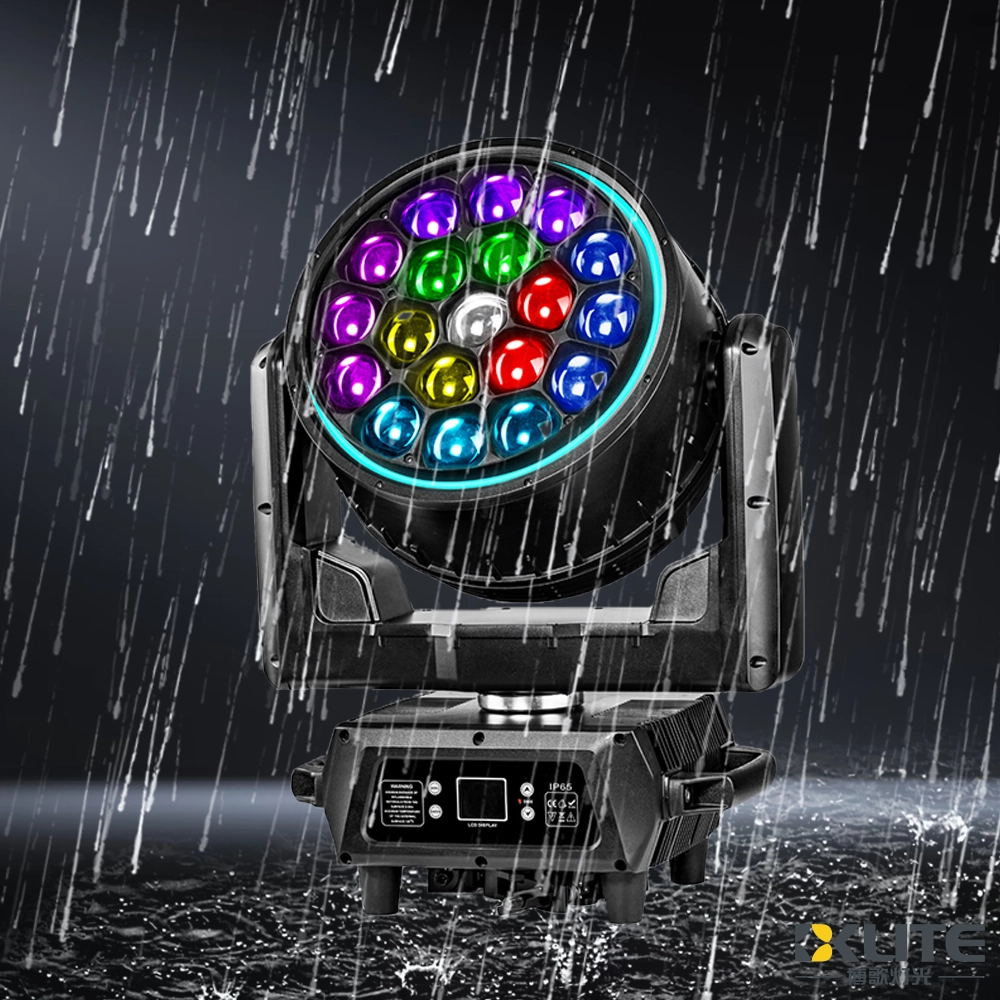
IP65 Waterproof Bee Eye Zoom 19x40W RGBW 4IN1 LED Beam Wash Moving Head Light with LED Ring
BKlite waterproof bee eye moving head light—your reliable choice from top waterproof moving head light manufacturers and suppliers. Ideal for outdoor stage, live event, music festival, this energy-saving fixture ensures powerful, precise illumination for any venue. It delivers powerful, reliable lighting performance in any weather.
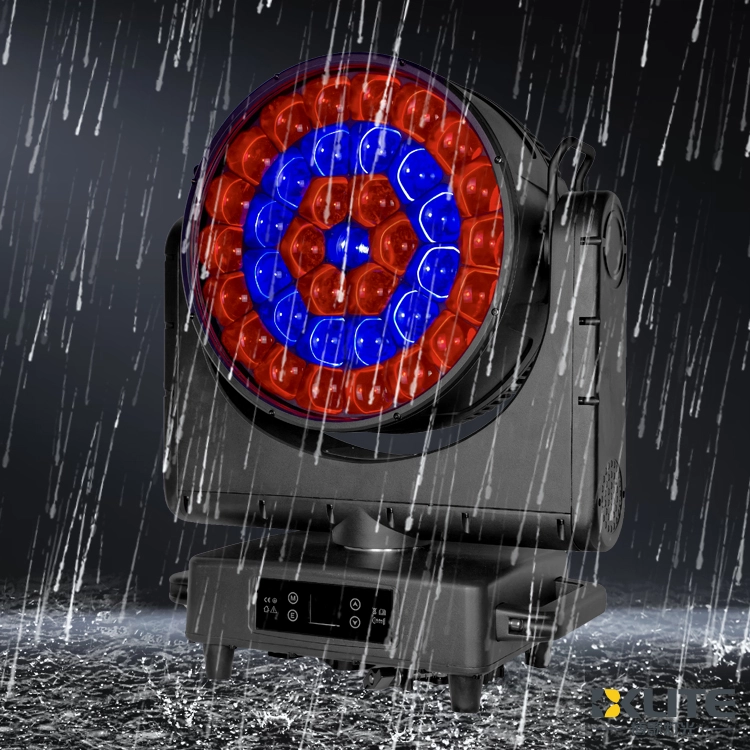
IP65 Waterproof ZOOM Bee Eye 37x40W RGBW 4in1 LED Moving Head Light
As a leading stage lighting equipment supplier with more than 15 years of industry know-how, BKlite brings you the IP65 ZOOM Bee Eye 37*40W RGBW 4in1 LED Moving Head Light (K25 Bee Eye) delivers vibrant, weatherproof lighting with powerful zoom and smooth movement. Ideal for dynamic stage effects, the K25 moving head light ensures stunning RGBW color mixing and reliable outdoor performance.
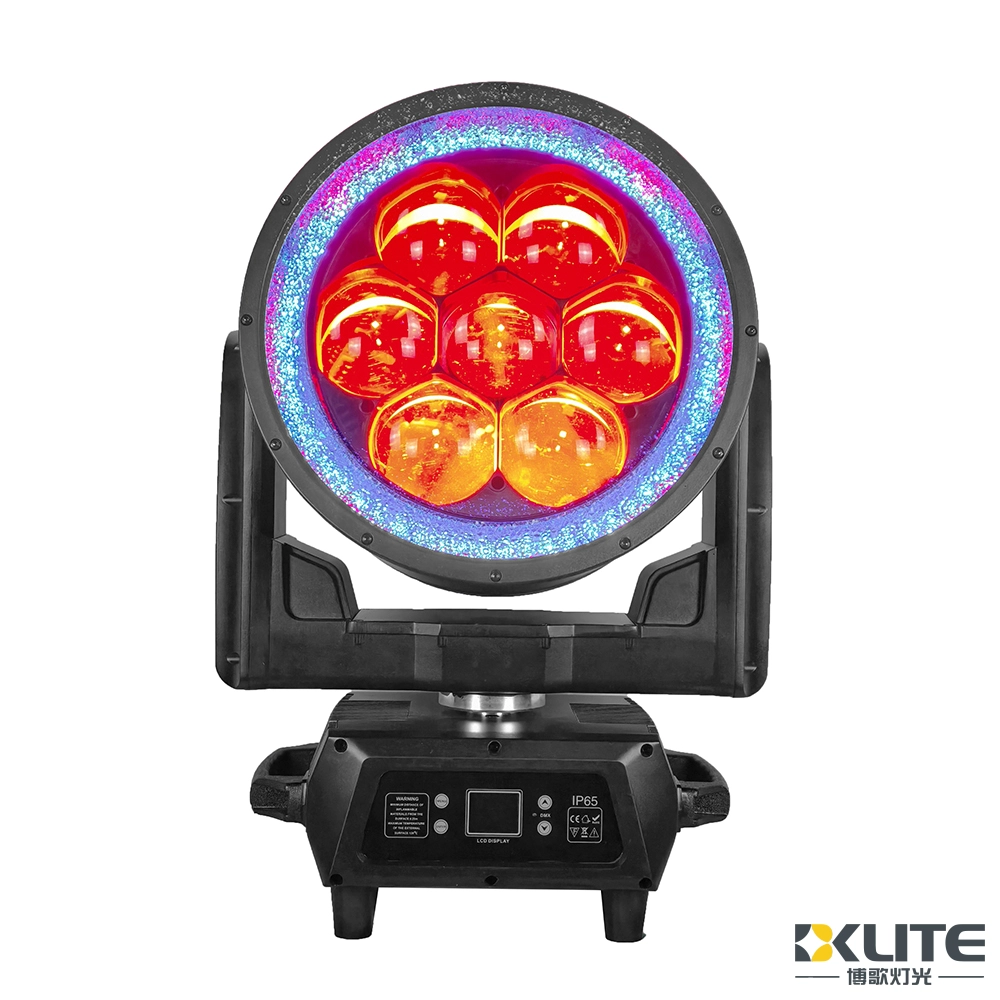
IP65 Waterproof Bee Eye 7x180W RGBL 4IN1 LED Moving Head Light With LED Ring
BKlite high power 7x180W waterproof bee eye moving head light—your reliable choice from top waterproof moving head light manufacturers and suppliers. Ideal for outdoor stage, live event, music festival, this energy-saving fixture ensures powerful, precise illumination for any venue. It delivers powerful, reliable lighting performance in any weather.
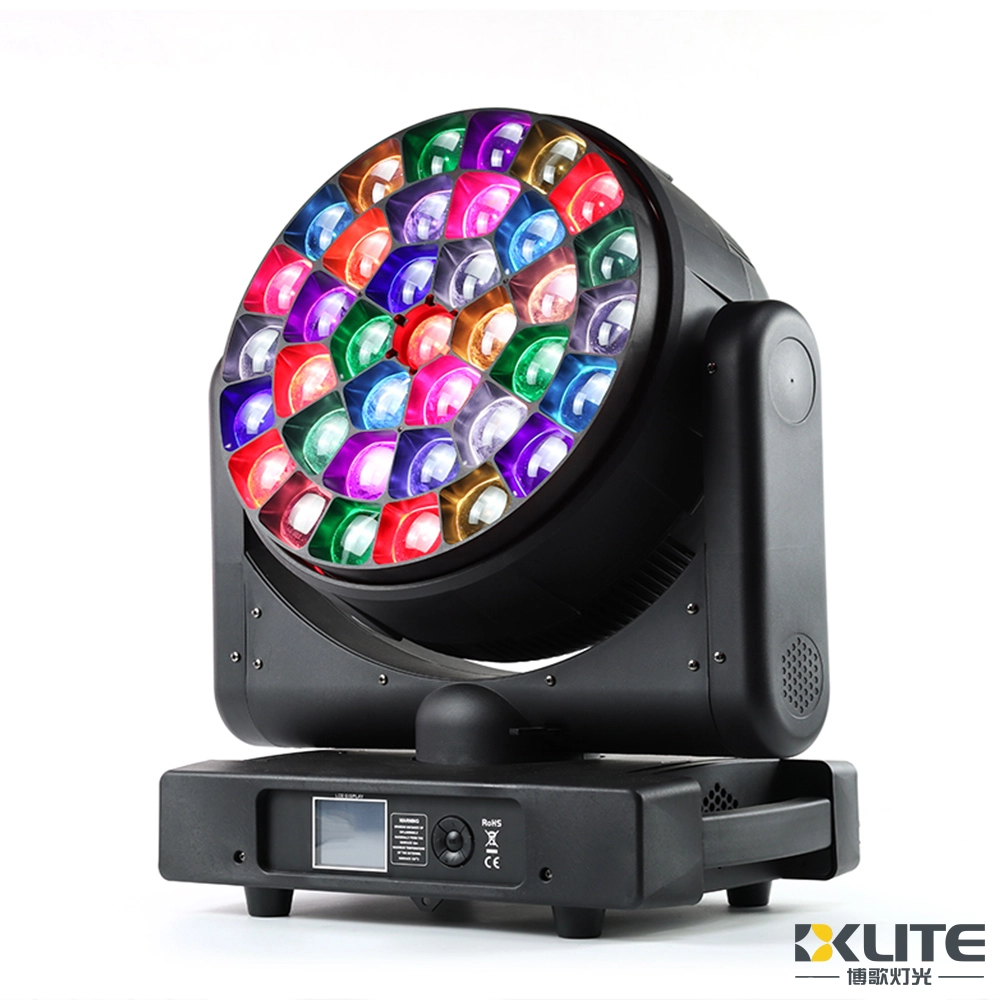
Bee Eye Zoom 37x40W RGBW 4in1 LED Beam Wash Moving Head Light


Copyright © 2025 BKLITE All Rights Reserved.