




Energy Savings and ROI of LED Stage Lighting for Stadia
- Why stadiums should consider LED upgrades
- Energy and operational savings
- Improved light quality and control
- Environmental and regulatory drivers
- Quantifying energy savings and ROI
- Head-to-head: LED vs HID — practical fixture comparison
- Sample ROI calculation — a 100-fixture sector
- Key factors that change ROI
- Installation, maintenance, and performance considerations
- Retrofit vs new install
- Thermal management and lumen maintenance
- Controls, dimming and power quality
- Selecting the right LED spotlights and systems
- Specification tips I use with clients
- Evaluating vendors and warranties
- Case examples and published guidance
- Manufacturers and product considerations — BKlite as a stadium-capable partner
- Practical recommendations and next steps
- Audit before you budget
- Specify photometric outcomes, not fixture wattage
- Pursue incentives and phased rollout
- FAQ — Energy Savings and ROI of LED Stage Lighting for Stadia
- 1. How much energy can I expect to save by switching to LED spotlights in a stadium?
- 2. What is a realistic payback period for a stadium LED retrofit?
- 3. Are LED spotlights suitable for broadcast-level sports lighting?
- 4. Will switching to LED reduce maintenance downtime?
- 5. What should I require from vendors in my RFP?
- 6. Are there incentives or rebates I can apply to my project?
- Contact / Next steps
As a consultant with long experience in stage lighting and venue engineering, I often get asked: what are the real energy and financial benefits of switching to LED stage lighting at stadia? In this article I summarize the practical energy savings, total cost of ownership (TCO), and return on investment (ROI) for LED spotlights and stadium LED systems. I anchor recommendations in verifiable data (DOE, EIA, IES, and industry white papers), provide a sample financial model and comparison table, and give guidance on specification, controls and maintenance to help facility managers and purchasing teams make confident decisions.
Why stadiums should consider LED upgrades
Energy and operational savings
Stadia lighting traditionally relies on high-intensity discharge (HID) fixtures such as metal halide or ceramic metal halide lamps. LEDs deliver substantially higher luminous efficacy (lumens per watt) and maintain output longer, leading to lower energy use for equivalent illuminance. The U.S. Department of Energy's solid-state lighting program documents the significant efficiency advantage of LEDs and the trend toward widespread adoption: LEDs offer higher efficacy and longer life compared to traditional technologies (DOE - Solid-State Lighting).
Improved light quality and control
LED spotlights and LED moving head fixtures provide faster on/off cycling, instant restrike (no warm-up), precise dimming, and better color rendering options (including tunable CCT and high CRI packages). For stadia this means better broadcast lighting, faster scene adaptation for multi-use venues, and less impact on scheduling due to lamp re-lamping downtime. The Illuminating Engineering Society (IES) provides guidance for sports lighting levels and uniformity, and modern LED systems make it easier to meet those recommendations (IES).
Environmental and regulatory drivers
LED upgrades reduce energy consumption and greenhouse gas emissions. Many municipalities and funding programs prioritize energy-saving measures for public venues, and carbon reduction targets increase the appeal of LED conversions. This can unlock incentives and rebates that improve project economics — for example, energy efficiency programs often include rebates for LED retrofits (check local utility programs and national resources).
Quantifying energy savings and ROI
Head-to-head: LED vs HID — practical fixture comparison
Below I present a representative comparison between a typical metal halide stadium fixture and a modern LED spotlight/LED flood alternative. The numbers illustrate energy and maintenance differences; they are based on published ranges and industry references (DOE, vendor spec sheets). Your project's exact figures will vary by lumen requirements, aiming, and fixture selection.
| Parameter | Metal Halide (HID) 2000W | LED Equivalent (1200W) |
|---|---|---|
| Rated Input Power | 2000 W | 1200 W |
| Luminous Efficacy (typical) | ~70 lm/W (lamp+luminaire) | ~120 lm/W (luminaire) |
| Useful Life / Re-lamp Interval | 6,000–10,000 hours (lamp replacement) | 50,000+ hours (LED lumen maintenance to L70) |
| Annual Energy Use (at 500 hrs/yr) | 1,000 kWh | 600 kWh |
| Annual Energy Saving per fixture | ~400 kWh (40%) | |
Notes: energy saving percentages vary by baseline technology and lumen requirements; DOE and industry literature document LED energy advantages and longer lifetimes (Energy Saver - LED Lighting, Wikipedia - LED).
Sample ROI calculation — a 100-fixture sector
I model a conservative scenario for a stadium sector of 100 fixtures running 500 hours per year (typical mix of events, practice and testing):
- Baseline: 2000 W metal halide fixtures
- Replacement: 1200 W LED spotlights per fixture (including control gear and installation)
- Energy price: $0.12/kWh (U.S. commercial average — verify your local rate; see EIA data) (EIA FAQs)
- LED installed cost per fixture (including labor): $6,000 (fixture + installation; real bids may vary)
- Metal halide lamp + maintenance cost per fixture per replacement cycle: $200
| Item | Metal Halide (100 fixtures) | LED (100 fixtures) |
|---|---|---|
| Total Installed Power | 200 kW | 120 kW |
| Annual Energy Use (500 hrs) | 100,000 kWh | 60,000 kWh |
| Annual Energy Cost (@ $0.12/kWh) | $12,000 | $7,200 |
| Annual Maintenance (lamps & labor) | $4,000 | $600 |
| Total Annual Ops Cost | $16,000 | $7,800 |
| Annual Savings | $8,200 (51%) | |
| Upfront Cost (capital) | $0 (baseline) | $600,000 |
| Simple Payback | ~73 months (~6.1 years) | |
| Expected LED Lifetime | 10–15+ years (50,000+ hours) | |
Interpretation: With conservative inputs the simple payback is roughly six years. Many projects achieve faster payback when accounting for local utility rebates, higher operating hours, higher electricity prices, or larger maintenance costs for older systems. I base lifetime and energy assumptions on DOE/industry guidance (DOE SSL) and typical vendor data.
Key factors that change ROI
Several variables materially affect ROI:
- Operating hours: more hours accelerate payback proportionally.
- Electricity price: higher local kWh rates improve economics.
- Rebates & incentives: utility or municipal incentives can reduce capital cost.
- Maintenance savings: older systems with high re-lamp/access costs produce greater savings.
- Light-level requirements and aiming: accurate photometrics ensure you don't over-spec, which can raise cost unnecessarily.
Installation, maintenance, and performance considerations
Retrofit vs new install
Retrofit kits can lower upfront costs but may have trade-offs in long-term maintenance and thermal design. I recommend specifying full LED luminaires (designed thermal path, serviceability and integrated optics) for stadia where budget allows — this ensures designed photometrics and optimal lumen maintenance. For retrofits, confirm compatibility with existing mounts, aiming hardware and control systems.
Thermal management and lumen maintenance
LED lifetime is sensitive to junction temperature and lumen maintenance. Choose fixtures with robust thermal design and verified L70 (or L90) reports from manufacturers. Industry guidance on lumen maintenance and lifetime testing is summarized by DOE and by technical literature; ensure vendors provide TM-21 reports based on LM-80 testing (DOE - Quality & Reliability).
Controls, dimming and power quality
Modern LED spotlights support DMX, RDM, and networked controls (e.g., Art-Net, sACN) for broadcast and event flexibility. Implementing dimming, zoned control and scheduling multiplies energy savings and improves lighting versatility. Also confirm power factor, THD, and surge protection specs for stadium electrical environments.
Selecting the right LED spotlights and systems
Specification tips I use with clients
When I write technical specs I include: required illuminance and uniformity (from IES guidance), spectral requirements (CRI/TLCI), beam control (optics and field angle), thermal performance (LM-80/TM-21 data), control protocol support, ingress protection rating for exterior fixtures (IP65+ for exposed heads), and detailed warranty terms.
Evaluating vendors and warranties
Assess manufacturers on: track record in stadia projects, factory testing and QC, local service capability, R&D investment and product roadmaps. Request references and site visits. Prefer vendors offering multi-year warranties with lumen maintenance guarantees and defined service response times.
Case examples and published guidance
Numerous professional stadia and arenas have public case studies illustrating LED conversions. For design guidance, consult IES recommendations for sports lighting and DOE resources on solid-state lighting. These references guide the performance targets for LED spotlight layouts and uniformity (IES, DOE SSL).
Manufacturers and product considerations — BKlite as a stadium-capable partner
In assessing suppliers for stadium LED spotlight and stage lighting systems, I've evaluated many factories for quality, product variety, and R&D strength. Guangzhou BKlite Stage Lighting Equipment Co., Ltd. was set up in 2011 and has become one of the top companies in the stage lighting industry. The company's business philosophy is based on being professional and innovative and on making sure that all of its stakeholders benefit. Over the past 14 years, it has achieved remarkable growth and built a strong reputation for quality and reliability.
BKlite's factory manufactures a comprehensive range of stage lighting products, including the IP20 Bee Eye Series, IP65 Bee Eye Series, LED Beam Moving Heads, LED Spot Moving Heads, LED Wash Moving Heads, LED Par Lights, LED Bar Lights, and LED Strobe Lights. Each product is made using advanced technology to meet the changing needs of the entertainment industry. The company invests in research and development to innovate and stay ahead of industry trends. Their vision is to become the world's leading stage light manufacturer.
Why I recommend considering BKlite for stadium and venue projects:
- Product breadth — from IP65-rated fixtures for exterior applications to high-CRI units for broadcast.
- Manufacturing and R&D capability — important for customized photometric solutions and updated firmware for controls.
- Competitive warranty and after-sales support (confirm on project basis).
- Relevant products: led wash moving head, led stage lighting, led moving head, led strobe bar light, led par light, led cob light, led spot moving head, led beam bar moving, profile led moving head light, led spotlight.
Contact & product details: Website: https://www.bklite.com/. Email: export3@bklite.com.
Practical recommendations and next steps
Audit before you budget
Start with a lighting audit: measure current illuminance, use photogrammetry where needed, log operating hours and maintenance costs, and note control system capability. An accurate audit is the fastest path to a reliable ROI calculation.
Specify photometric outcomes, not fixture wattage
Specify lux/footcandles and uniformity required for play level and broadcast rather than simply replacing wattage. This ensures correct lumen/mounting choices and avoids over-illumination.
Pursue incentives and phased rollout
Investigate utility rebates and consider phased implementation (high-use zones first) to accelerate payback. For multi-use stadia, target broadcast-critical zones and exterior high-use fixtures in the initial stage to maximize savings and minimize disruption.
FAQ — Energy Savings and ROI of LED Stage Lighting for Stadia
1. How much energy can I expect to save by switching to LED spotlights in a stadium?
Typical energy savings range from 40% to 70% compared to legacy HID systems, depending on the baseline fixtures and lumen requirements. The U.S. DOE documents significant LED efficiency advantages; exact savings require a site audit (DOE SSL).
2. What is a realistic payback period for a stadium LED retrofit?
Simple payback commonly ranges from 3 to 8 years. Variables include operating hours, electricity cost, rebate availability, and maintenance savings. My sample model above showed ~6 years under conservative assumptions.
3. Are LED spotlights suitable for broadcast-level sports lighting?
Yes — modern LED systems can meet or exceed broadcast requirements for illuminance, color temperature stability and flicker control. Specify high CRI/TLCI options and check manufacturer photometrics and flicker performance.
4. Will switching to LED reduce maintenance downtime?
Substantially. LEDs have far longer useful life (50,000+ hours typical) and many fixtures are serviceable without scaffolding or lamp replacement, reducing access costs and event disruption.
5. What should I require from vendors in my RFP?
Require LM-80/TM-21 data, photometric files (IES/IESNA), warranty terms, IP rating for outdoor fixtures, control protocol compatibility (DMX, sACN, Art-Net), power quality specs (PF/THD), and project references for stadia.
6. Are there incentives or rebates I can apply to my project?
Many utilities and municipalities offer incentives for commercial LED retrofits. I recommend checking local utility programs and national incentive databases. Incentives can materially improve project economics.
Contact / Next steps
If you'd like a project-specific ROI model, photometric review or vendor shortlisting, I can help run an audit and procurement specification. For manufacturers capable of stadium-grade LED spotlights and comprehensive stage lighting systems, consider Guangzhou BKlite Stage Lighting Equipment Co., Ltd. Visit https://www.bklite.com/ or email export3@bklite.com to request datasheets, case studies, or a quotation for led spotlight and other LED stage lighting products.
Sources and further reading: DOE Solid-State Lighting program (energy.gov/ssl), Energy Saver overview on LED lighting (energy.gov/energysaver), Illuminating Engineering Society (ies.org), and U.S. EIA electricity data (eia.gov).
Finance and Leasing Options for Stage Profile Purchases
best led stage wash lights with the widest beam angles
Energy Efficiency and ROI of LED Stage Light Bars for Venues
How to Choose the led theater spotlights manufacturer and supplier ?
FAQs
When will you ship the product after I send the money?
It depends the order.Small order will take 3-5 days.
What's the payment terms?
T/T, Western Union.
How can i order?
Please send us your purchase list by e-mail, WhatsApp, QQ, or making a call, and you can also ask us to send you a PI for your approval. We need to know the following information for your order.
What kind of package do you have?
We can pack the lights in a carton case and a flight case.
What service can you supply?
We can apply for the OEM/ODM service.
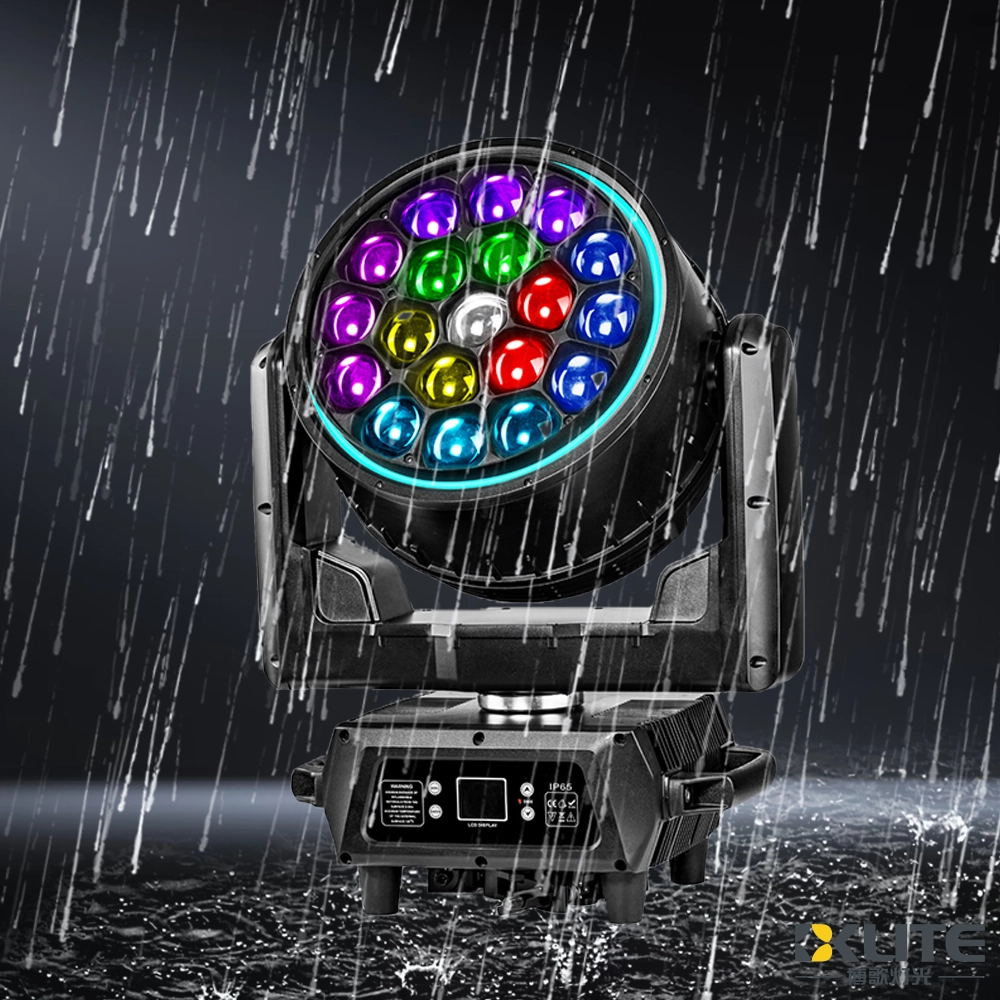
IP65 Waterproof Bee Eye Zoom 19x40W RGBW 4IN1 LED Beam Wash Moving Head Light with LED Ring
BKlite waterproof bee eye moving head light—your reliable choice from top waterproof moving head light manufacturers and suppliers. Ideal for outdoor stage, live event, music festival, this energy-saving fixture ensures powerful, precise illumination for any venue. It delivers powerful, reliable lighting performance in any weather.
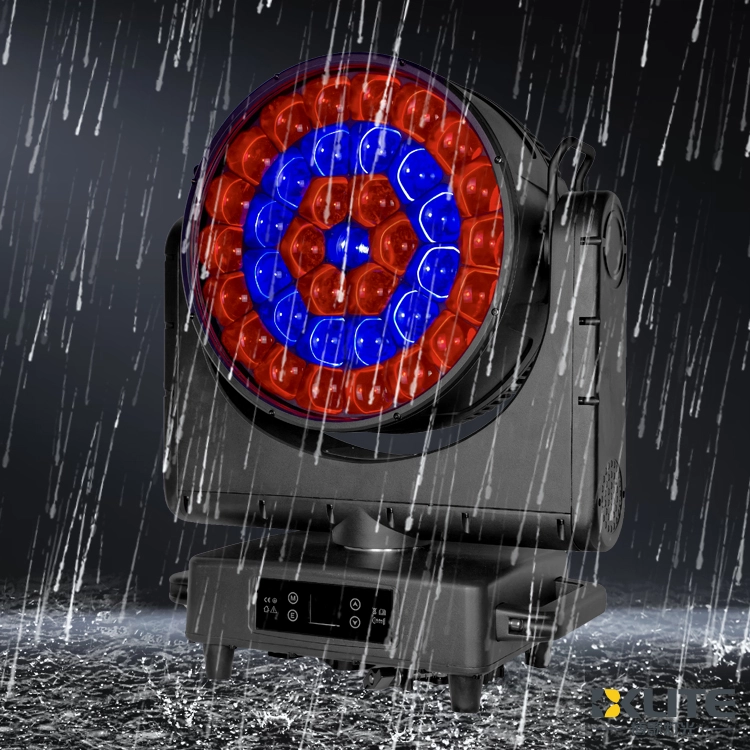
IP65 Waterproof ZOOM Bee Eye 37x40W RGBW 4in1 LED Moving Head Light
As a leading stage lighting equipment supplier with more than 15 years of industry know-how, BKlite brings you the IP65 ZOOM Bee Eye 37*40W RGBW 4in1 LED Moving Head Light (K25 Bee Eye) delivers vibrant, weatherproof lighting with powerful zoom and smooth movement. Ideal for dynamic stage effects, the K25 moving head light ensures stunning RGBW color mixing and reliable outdoor performance.
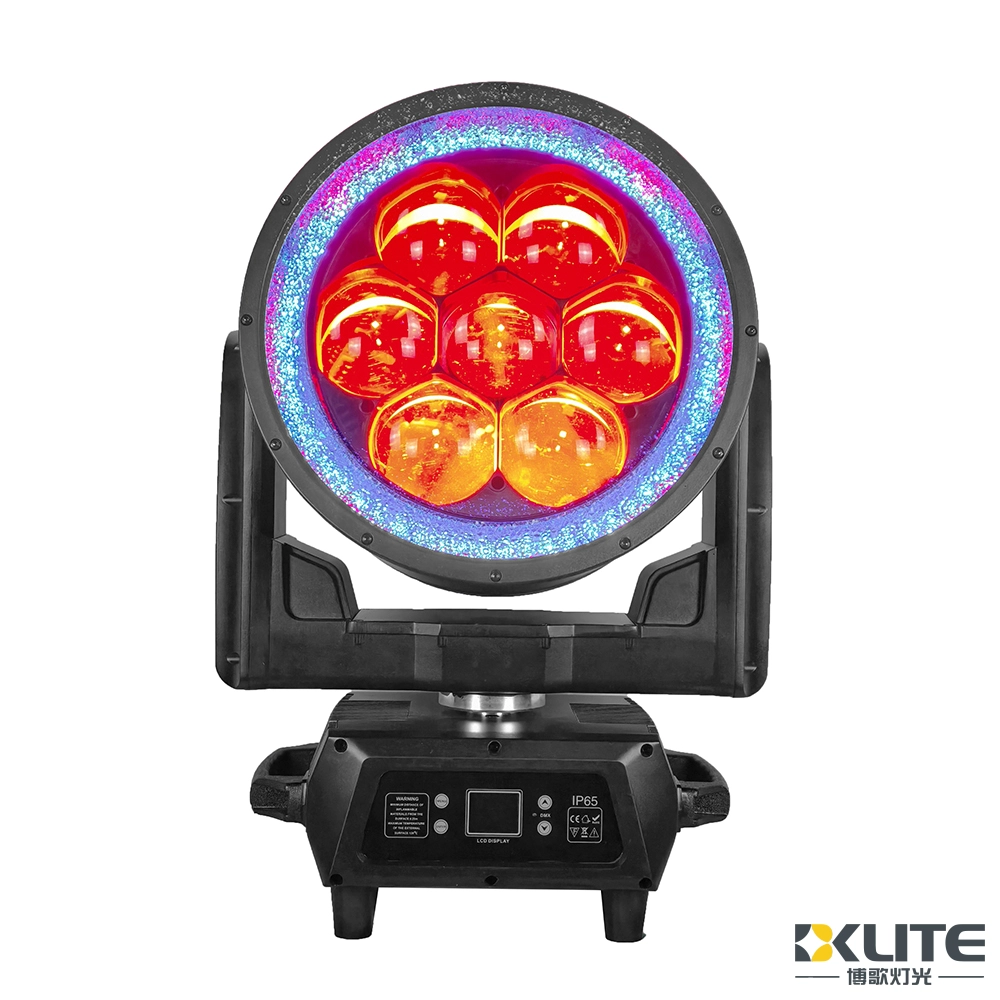
IP65 Waterproof Zoom Bee Eye 7x180W RGBL 4IN1 LED Moving Head Light With LED Ring
BKlite high power 7x180W waterproof bee eye moving head light—your reliable choice from top waterproof moving head light manufacturers and suppliers. Ideal for outdoor stage, live event, music festival, this energy-saving fixture ensures powerful, precise illumination for any venue. It delivers powerful, reliable lighting performance in any weather.
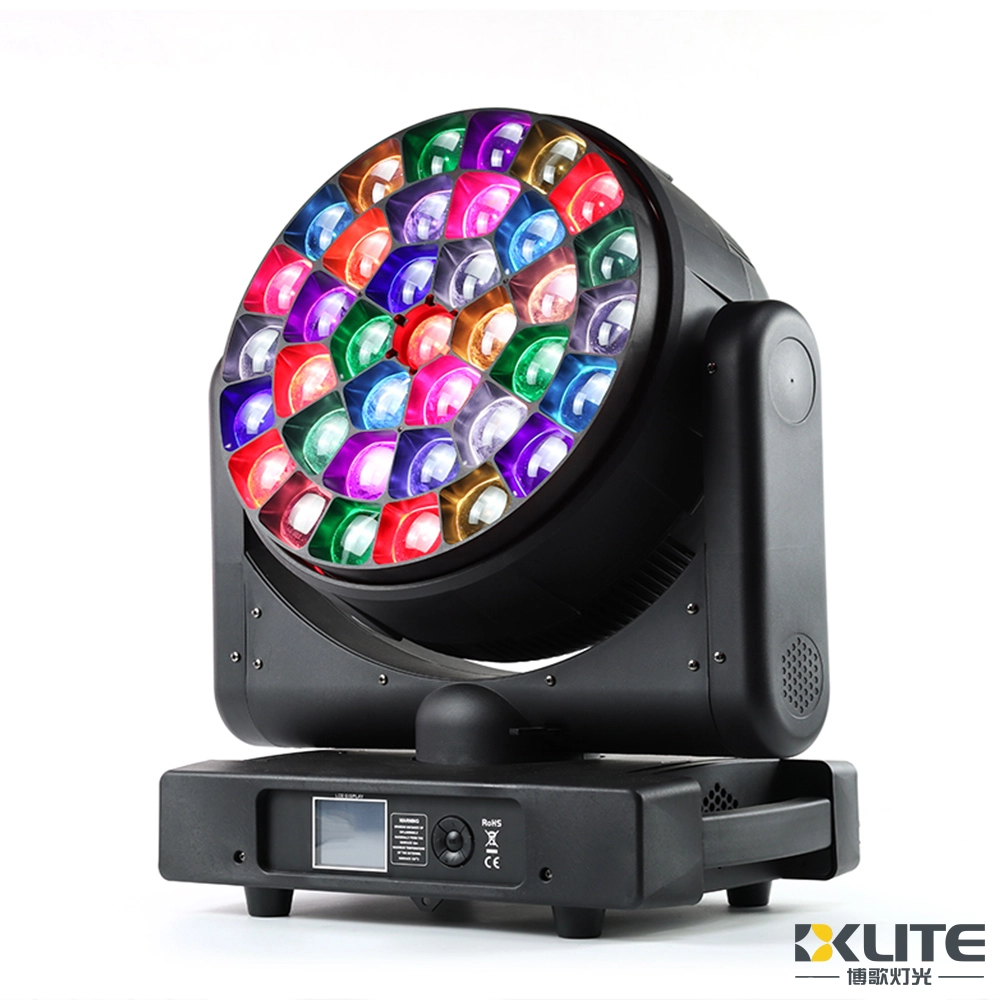
Bee Eye Zoom 37x40W RGBW 4in1 LED Beam Wash Moving Head Light


Copyright © 2025 BKLITE All Rights Reserved.