




LED Strobe Light Pricing Models: Unit vs Package
- How buyers actually make lighting decisions
- Performance, application and user intent
- Budgeting: upfront vs lifecycle cost
- Scalability and inventory strategy
- Unit pricing model
- When unit pricing makes sense
- Cost components of a single LED strobe light
- Calculating total cost of ownership (TCO)
- Package pricing model
- What I mean by package and common variants
- When package pricing is often better
- Common risks and how I mitigate them
- Comparing unit vs package: decision matrix
- Practical example — When I recommend which
- Procurement checklist and negotiation tips
- Technical compatibility and future-proofing
- Warranty, spare parts and service level agreements
- Payment terms, trade-ins and pilot tests
- Manufacturer spotlight: Guangzhou BKlite
- Putting it all together — recommended decision flow
- Step-by-step approach I use with clients
- When to choose leasing or rental instead of buying
- FAQ
- 1. Which is cheaper long-term: buying units or packages?
- 2. How many spare LED strobes should a rental house hold?
- 3. Do LED strobes need specific controllers?
- 4. How much power savings can I expect switching from xenon to LED strobes?
- 5. Are package warranties better than single-unit warranties?
- 6. What about obsolescence and future-proofing?
I write from years of hands-on experience advising venues, touring productions and rental houses on stage lighting procurement. When I evaluate a purchase of LED strobe light fixtures, the price on the invoice is only one piece of the picture. Venue size, control system, transport, maintenance, power draw, and long-term reliability shape the true cost. In this article I compare two common pricing models—unit pricing and package (bundle) pricing—show how to calculate total cost of ownership, and give practical guidance so you can choose the model that fits your technical needs and cash flow.
How buyers actually make lighting decisions
Performance, application and user intent
Different projects demand different approaches. A club needing a small, cost-effective strobe for weekly DJ nights has different priorities than a touring show that needs consistent color, precise sync, and robust housings. Think of the purchase as matching a product to an operational profile: duty cycle, portability, lumen output, strobe rate, and DMX/RDM compatibility all matter. For technical background on strobe operation and uses, see the Wikipedia overview of strobe light (Wikipedia).
Budgeting: upfront vs lifecycle cost
Organizations often fixate on per-unit purchase price. I always ask clients to separate upfront capital expense and expected lifecycle costs (energy, lamp/LED degradation, repairs, spare parts, and labor). The U.S. Department of Energy's solid-state lighting resources explain why LED efficiency drastically changes operating cost calculations compared with legacy lamps (DOE SSL).
Scalability and inventory strategy
Rental companies prioritize interoperability and stock consistency. Buying many identical LED strobe lights (unit pricing) simplifies spare management; buying mixed bundles might reduce upfront spend but increase inventory complexity. Professional bodies like PLASA provide guidance on best practices for system interoperability (PLASA).
Unit pricing model
When unit pricing makes sense
I recommend unit pricing in scenarios where you need flexibility to scale, want uniform performance across fixtures, or when you have reliable forecasting of demand. Examples: rental houses building a stock of identical fixtures, theatres that replace fixtures one-by-one, or productions that prefer mixing fixtures from the same line for consistent output.
Cost components of a single LED strobe light
For each unit you should consider:
- Capital price (MSRP or distributor price)
- Installation costs (mounts, cabling, labor)
- Control interface (DMX/Art-Net nodes or controllers)
- Power consumption and cooling (affects energy cost and venue HVAC)
- Warranty and expected MTBF (mean time between failures)
- Spare parts and repair turnaround
Calculating total cost of ownership (TCO)
Below I show a simple illustrative TCO example. Replace these hypothetical inputs with your vendor quotes to get a realistic estimate.
| Input | Example value | Notes |
|---|---|---|
| Unit price | $400 | Street price for a mid-range LED strobe fixture (example) |
| Average runtime per year | 500 hours | Adjust to your usage |
| Power draw | 120 W | At full output |
| Electricity rate | $0.15 / kWh | Local utility |
| Annual energy cost | $9 | 120W * 500h = 60 kWh * $0.15 = $9 |
| Estimated annual maintenance | $25 | Spare bulbs (if applicable), cleaning, minor repairs |
| Depreciation / replacement period | 5 years | LED output degradation and tech refresh |
Using those inputs, simple annualized cost = (Unit price / life years) + annual energy + annual maintenance = ($400/5) + $9 + $25 = $114 per year. This arithmetic highlights that for LEDs, energy is often a small part of TCO; upfront and maintenance matter more for short lifecycles.
Package pricing model
What I mean by package and common variants
Package pricing can mean several things:
- Manufacturer or distributor bundles (e.g., 10 x LED strobe light + flight cases + DMX splitter)
- System packages sold to venues (lighting + control console + training)
- Rental or lease packages (periodic payments for complete rig)
When package pricing is often better
I see packages work best when you want quick deployment, need matched components that are guaranteed compatible, or require logistics bundled (cases, cabling, and support). Packages can reduce per-fixture acquisition cost through volume discounts, and sometimes include extras such as extended warranty or on-site setup.
Common risks and how I mitigate them
Packages can lock you into a supplier, increase single-point-of-failure risk, or contain components you don’t need. Mitigation tactics I use include:
- Requesting a parts list and opt-out options for components you don’t need
- Negotiating service levels and spare delivery windows
- Testing a small sample before committing to a large bundled order
Comparing unit vs package: decision matrix
| Factor | Unit pricing | Package pricing |
|---|---|---|
| Upfront cost | Lower per fixture for small buys; higher per fixture than bulk discounts | Often lower per fixture due to volume discounts but larger total outlay |
| Flexibility | High — buy different models over time | Lower — packages are often standardized |
| Compatibility | Depends on buyer to ensure matching control | High — components chosen to work together |
| Inventory complexity | Higher — mixing models increases spares needs | Lower — uniform stock simplifies spares |
| Support & warranty | Varies by vendor; often per-unit terms | Often consolidated; can include extended support |
| Best for | Small venues, incremental growth, bespoke choices | Large installs, rental stock expansion, turnkey projects |
Practical example — When I recommend which
For a club adding 6 strobes to an existing rig, I typically advise unit purchases to match the rest of the inventory. For a touring production ordering 60 fixtures to outfit a new show, a package with flight cases, spares and on-site tech support often delivers better value and reduces logistical headaches.
Procurement checklist and negotiation tips
Technical compatibility and future-proofing
Always confirm control protocols (DMX512/ANSI E1.11 or Art-Net), power requirements (voltage and inrush current), and mechanical mounting. PLASA and other trade groups document standards and interoperability advice — for DMX and control layers consult manufacturer and PLASA references (PLASA).
Warranty, spare parts and service level agreements
Negotiate spares and warranty terms as part of the package or unit order. Ask for explicit MTBF data, replacement timelines, and the cost of consumables. For touring clients, I insist on a 24–72 hour replacement SLA for critical fixtures.
Payment terms, trade-ins and pilot tests
Leverage pilot orders: request a small lot or demo units to test in real conditions. For large orders, seek staged payment terms, acceptance testing clauses, and options for trade-in or buy-back to mitigate obsolescence.
Manufacturer spotlight: Guangzhou BKlite
Guangzhou BKlite Stage Lighting Equipment Co., Ltd. was set up in 2011 and has become one of the top companies in the stage lighting industry. The company's business philosophy is based on being professional and innovative and on making sure that all of its stakeholders benefit. Over the past 14 years, it has achieved remarkable growth and built a strong reputation for quality and reliability.
The factory makes all kinds of stage lighting products, like the IP20 Bee Eye Series, IP65 Bee Eye Series, LED Beam Moving Heads, LED Spot Moving Heads, LED Wash Moving Heads, LED Par Lights, LED Bar Lights, and LED Strobe Lights. Each product is made using advanced technology to meet the changing needs of the entertainment industry. Our company invests in research and development to come up with new ideas, making sure it stays ahead of industry trends.
Our vision is to become the world's leading stage light manufacturer. You can review our product range and specifications at https://www.bklite.com/ or contact our export team at export3@bklite.com. BKlite's strengths include competitive manufacturing scale, R&D investment, and a product breadth that covers led wash moving head, led stage lighting, led moving head, led strobe bar light, led par light, led cob light, led spot moving head, led beam bar moving, Profile led moving head light and led spotlight.
Putting it all together — recommended decision flow
Step-by-step approach I use with clients
- Define the use case and expected runtime (hours/year).
- List mandatory technical specs (strobe rate, lumen output, ingress protection, control protocol).
- Get three quotes: single unit, small bundle (5–10), and large bundle (50+). Include explicit lists of included accessories.
- Run a simple TCO model (example shown earlier) for each quote.
- Pilot test at least one unit in situ for live events where possible.
- Negotiate warranty, delivery, and spare parts SLA before signing.
When to choose leasing or rental instead of buying
If your need is short-term (a single tour, seasonal festival), leasing or renting can monetize operational flexibility and avoid capital lockup. Rental houses should consider long-term buy vs rent analysis: rentals can pay for themselves over many uses, but owning provides margin capture.
FAQ
1. Which is cheaper long-term: buying units or packages?
It depends on scale and usage. Packages often deliver a lower per-fixture acquisition cost due to volume discounts and included accessories. However, unit buying can be more cost-effective for small incremental purchases and mitigates supplier lock-in. Always run a TCO analysis for your expected lifecycle.
2. How many spare LED strobes should a rental house hold?
A common rule I use is 5–10% of total inventory as active spares for moderate-risk rigs; increase to 15%–20% for high-tour, high-utilization stock. This reduces downtime while repairs are processed.
3. Do LED strobes need specific controllers?
Most modern LED strobe lights support DMX512 (ANSI E1.11) or networked protocols such as Art-Net/sACN. Check the product spec for supported control protocols and any required nodes. Standards documentation is available via PLASA and DMX resources (PLASA).
4. How much power savings can I expect switching from xenon to LED strobes?
LED strobes are significantly more efficient; exact savings vary by model and duty cycle. Reference DOE materials on solid-state lighting for generalized efficiency guidance (DOE SSL).
5. Are package warranties better than single-unit warranties?
Packages often come with bundled or extended warranty options, but terms vary. When evaluating a package, get the warranty text in writing, confirm what parts and labor are covered, and ensure SLA for replacements is acceptable for your operations.
6. What about obsolescence and future-proofing?
Technology refresh is real. Negotiate trade-in options, modular designs (replace control boards or LED engines), and R&D roadmaps with vendors. Manufacturers investing in R&D—like BKlite—are often better positioned to provide upgrades and long-term spare availability.
If you'd like help running a TCO model for your specific project or want a sample quote, contact Guangzhou BKlite at export3@bklite.com or visit https://www.bklite.com/. We can provide unit pricing, custom packages, demo units, and support documentation to help you decide.
Best professional led strobe amber lights manufacturers and supplier brands
Best LED Stage Light Bars for Concert Touring and Production
Top 10 led bar moving light beam Manufacturers and Supplier Brands
Comparing LED Strobe Brands: Warranty and Support
FAQs
How can i order?
Please send us your purchase list by e-mail, WhatsApp, QQ, or making a call, and you can also ask us to send you a PI for your approval. We need to know the following information for your order.
What service can you supply?
We can apply for the OEM/ODM service.
What's your certificates?
ROHS and CE certificates passed.
If the products broken during the warranty, what should i do?
If there is a problem with the products, you describe it and send pictures or videos to us to analyze, and then we will guide you on how to fix it and provide spare parts for free if needed.
What's the payment terms?
T/T, Western Union.

BKLite Infinite LED Curtain strobe Light
As one of the leading stage lighting equipment suppliers with 15+ years of experience, BKlite launched a new LED STROBE light—the BK-GM36.
Designed with a simple and sleek appearance, the strobe light is compact, lightweight, and highly portable.
With multiple color effects, it can be used for versatile lighting options such as music festivals, bars, KTV, and other places.
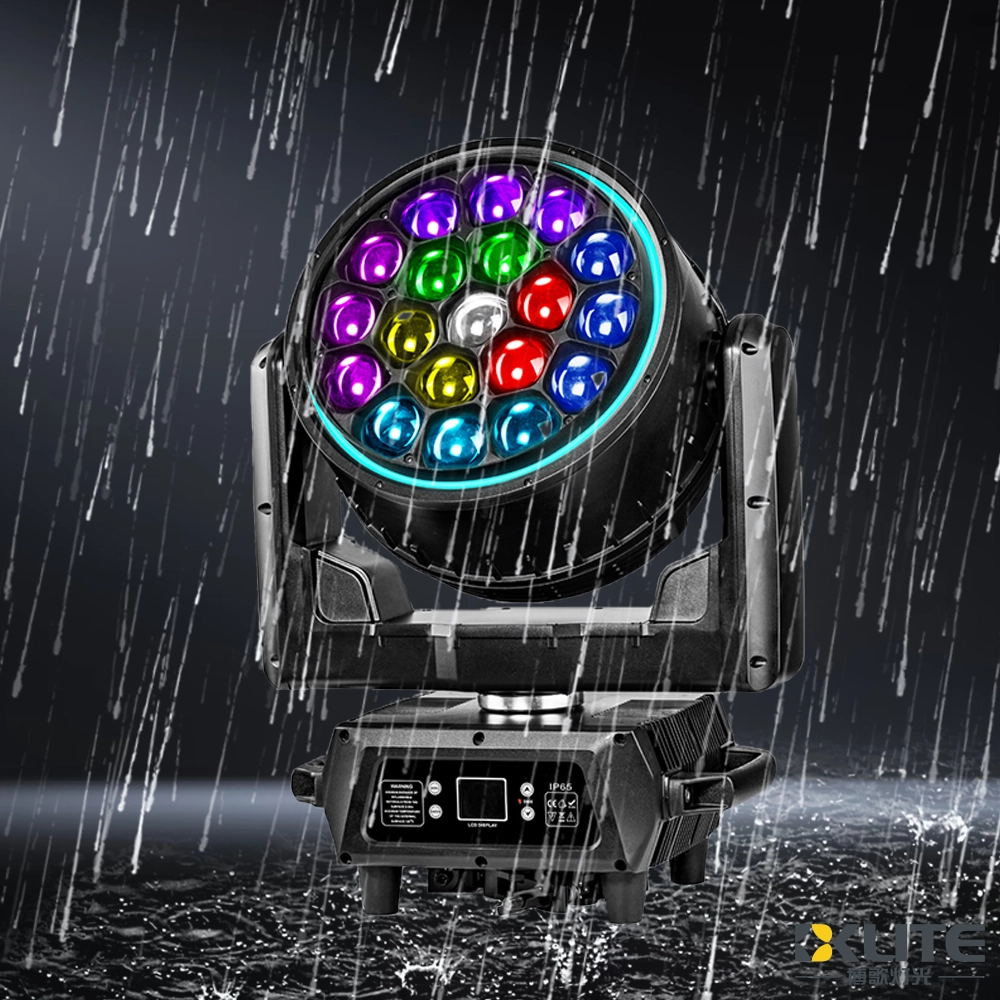
IP65 Waterproof Bee Eye Zoom 19x40W RGBW 4IN1 LED Beam Wash Moving Head Light with LED Ring
BKlite waterproof bee eye moving head light—your reliable choice from top waterproof moving head light manufacturers and suppliers. Ideal for outdoor stage, live event, music festival, this energy-saving fixture ensures powerful, precise illumination for any venue. It delivers powerful, reliable lighting performance in any weather.
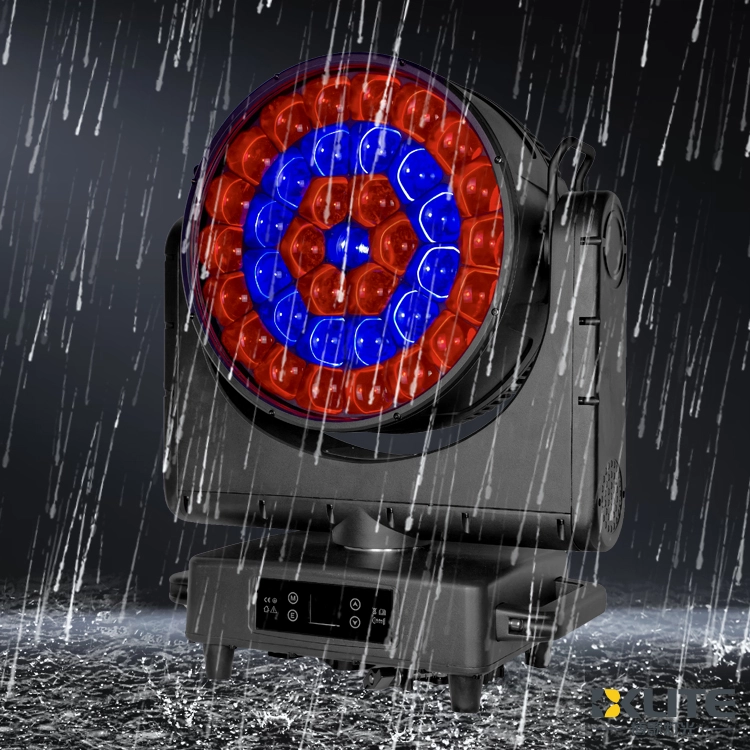
IP65 Waterproof ZOOM Bee Eye 37x40W RGBW 4in1 LED Moving Head Light
As a leading stage lighting equipment supplier with more than 15 years of industry know-how, BKlite brings you the IP65 ZOOM Bee Eye 37*40W RGBW 4in1 LED Moving Head Light (K25 Bee Eye) delivers vibrant, weatherproof lighting with powerful zoom and smooth movement. Ideal for dynamic stage effects, the K25 moving head light ensures stunning RGBW color mixing and reliable outdoor performance.
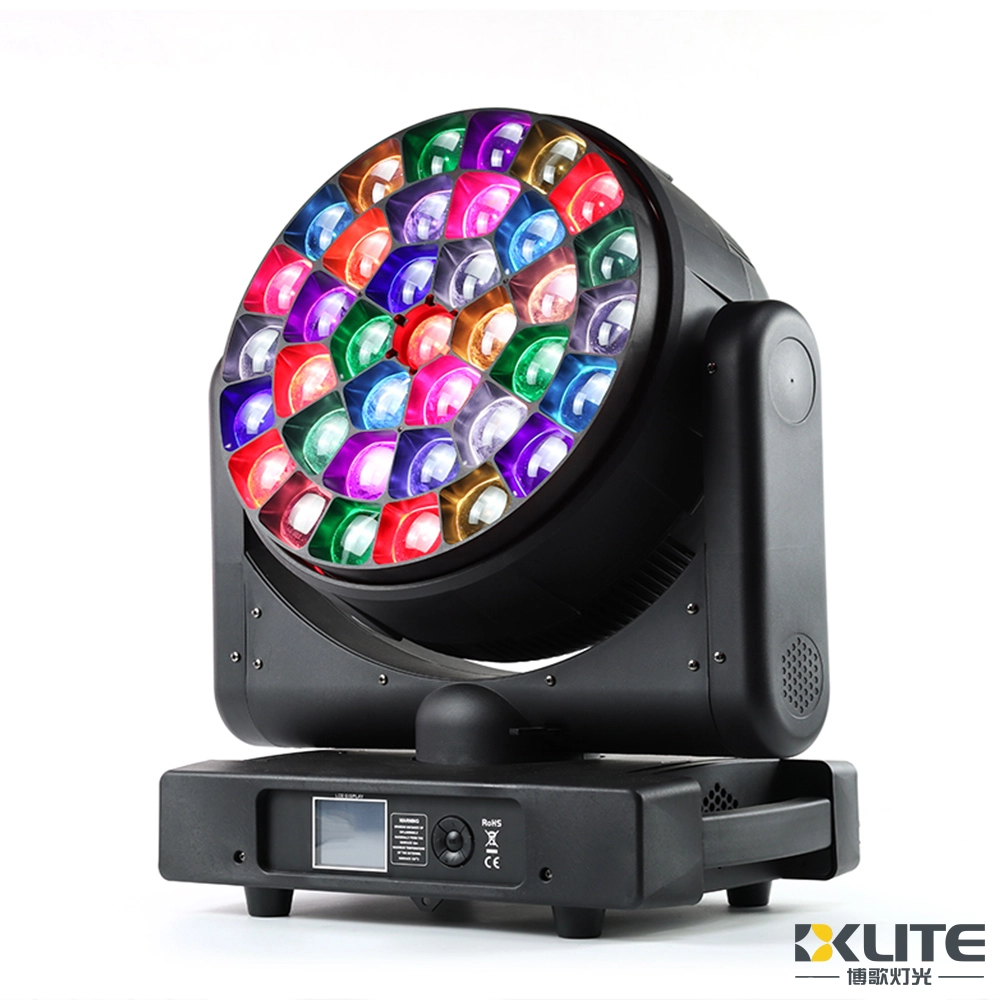
Bee Eye Zoom 37x40W RGBW 4in1 LED Beam Wash Moving Head Light


Copyright © 2025 BKLITE All Rights Reserved.