




LED Strobe Light Shipping, Packaging, and Logistics
- Designing for Transport: Product Protection First
- Understand how the product fails in transit
- Design choices that reduce logistics cost
- IP rating and environmental considerations
- Packaging and Crating Best Practices
- Inner packaging: cushioning, separation, and fixture support
- Outer packaging: cartons, pallets, and crating
- Packaging testing and standards
- Choosing Freight and Logistics Solutions
- Freight mode comparison (air vs sea vs express)
- Volumetric vs weight pricing and pallet optimization
- Choosing a logistics partner
- Compliance, Insurance, and Cost Optimization
- Customs documentation and HS codes
- Dangerous goods: lithium batteries and components
- Insurance, claims, and warranty strategy
- Cost optimization tactics
- Manufacturer Considerations and Supply Chain Reliability
- Factory testing and pre-shipment inspection
- Why manufacturer reputation matters
- Case profile: Guangzhou BKlite Stage Lighting Equipment Co., Ltd.
- Implementation Checklist and Final Recommendations
- Pre-shipment checklist
- On-tour and rental fleet tips
- When to engage a specialist
- FAQ
- Q1: Can LED strobe lights be shipped by air if they contain lithium batteries?
- Q2: How do I reduce damage claims during international shipments?
- Q3: What documentation is essential for exporting LED strobe lights?
- Q4: Should I use single-use corrugated cartons or reusable flight cases?
- Q5: How do I select the right Incoterm for my customer?
- Q6: Are there standards for packaging testing I should follow?
As someone who has worked for years advising stage lighting manufacturers and touring production teams, I know that a high-performing LED strobe light must also survive the journey from factory to stage. Shipping, packaging, and logistics are often underestimated cost centers that directly affect product reliability, warranty exposure, and brand reputation. In this article I combine field experience with industry standards to explain how to design, pack, test, and transport LED strobe fixtures safely and compliantly—minimizing damage, customs delays, and unexpected freight charges while meeting buyer and regulatory expectations.
Designing for Transport: Product Protection First
Understand how the product fails in transit
Before creating a packaging solution, I first map failure modes. For LED strobe lights typical risks include mechanical shock to chassis and optics, PCB flex and solder joint fatigue, connector deformation, lens scratching, moisture intrusion (for IP-rated fixtures), and damage to finish or housings during stacking. These failure modes guide cushioning selection, internal support design, and environmental controls.
Design choices that reduce logistics cost
Design-for-transport reduces both freight and packaging cost. Key choices I recommend: modular fixture designs that disassemble for packing; removable fragile accessories (e.g., gels, barn doors, brackets) shipped separately or in dedicated pockets; using standard carton sizes to improve palletization efficiency; and keeping weight low by choosing aluminum or composite mounting parts where appropriate. Reducing cubic volume often yields higher savings than cutting a few kilograms of weight because freight and pallet charges are volumetric in many lanes.
IP rating and environmental considerations
If an LED strobe light is marketed as weather-resistant, validate protection during shipping and storage. The IP code defines ingress protection against solids and liquids; details are available on the IP Code page on Wikipedia (https://en.wikipedia.org/wiki/IP_Code) but you must retain seals and protective caps in packaging to avoid moisture or dust ingress during transit. For ocean shipping, humidity control (e.g., desiccants, VCI) is often necessary for IP20 fixtures to avoid corrosion in humid or saline environments.
Packaging and Crating Best Practices
Inner packaging: cushioning, separation, and fixture support
I typically recommend multi-layer internal protection: a form-fit inner tray (e.g., vacuum-formed polyethylene or die-cut foam) to immobilize the fixture; a shock-absorbing layer (e.g., EPE foam or polyurethane) to handle drops; and an outer void-fill or honeycomb layer to manage compression during stacking. For optics and lenses use soft, scratch-resistant liners. For long-run series production, design reusable inserts to reduce per-unit packaging cost.
Outer packaging: cartons, pallets, and crating
Cardboard cartons should be appropriate for anticipated stacking loads—use double- or triple-wall corrugated board for heavier fixtures and international shipments. For high-value or fragile orders, wooden crates or custom plywood cases with internal rails provide superior protection. I always specify corner protectors and pallet straps for palletized loads. For export to regions with strict fumigation rules, use ISPM 15-compliant pallets/crates to meet phytosanitary standards.
Packaging testing and standards
Use standardized test protocols to validate packaging performance. The International Safe Transit Association (ISTA) offers test procedures that simulate handling and transport shocks (https://ista.org/). For regulatory clarity on dangerous goods and containers refer to UNECE's recommendations (https://unece.org/transport/dangerous-goods). I recommend at minimum an ISTA 2A random vibration and drop test for palletized shipments and ISTA 3A or 1A when you require more rigorous assurance.
Choosing Freight and Logistics Solutions
Freight mode comparison (air vs sea vs express)
Selecting a shipping mode involves trade-offs between cost, lead time, and risk. Below I summarize typical considerations and approximate transit characteristics. Specific rates depend on origin/destination, seasonal demand, and carrier contracts.
| Mode | Typical transit time | Cost (relative) | Risk/Notes |
|---|---|---|---|
| Air Freight | 1–7 days | High | Fastest; subject to weight and volumetric pricing; potential restrictions for lithium batteries (see IATA). |
| Sea Freight (FCL/LCL) | 2–8 weeks | Low–Medium | Lowest cost per kg; longer lead time and higher exposure to moisture; consolidation may increase handling touches. |
| Express Couriers (door-to-door) | 1–5 days | Very High | Great for samples and small replacements; offers faster customs clearance but expensive for palletized loads. |
For high-value LED strobe lights headed to live events, I often choose air freight for last-minute loads and sea freight for planned bulk replenishment. Express is reserved for spare parts or single-unit replacements to a venue.
Volumetric vs weight pricing and pallet optimization
Carriers apply volumetric weight rules; for boxy fixtures with low mass but large volume, the chargeable weight may be the greater of actual or dimensional weight. Optimize cartons to reduce wasted space and fit standard pallet footprints (e.g., EUR or 40x48 inch pallets) to lower per-unit freight cost.
Choosing a logistics partner
Work with freight forwarders experienced in stage and entertainment equipment. Ask about: experience with fragility claims, packaging recommendations, customs brokerage capability, track record with events logistics, and cargo insurance handling. Benchmarks like the World Bank Logistics Performance Index can help evaluate destination logistics environments (https://lpi.worldbank.org/).
Compliance, Insurance, and Cost Optimization
Customs documentation and HS codes
Correct Harmonized System (HS) tariff codes, accurate commercial invoices, packing lists, and certificates of origin expedite clearance. For stage lighting, HS codes typically fall under lighting fixtures categories—validate with your customs broker. Incorrect classification risks delays and fines. The World Customs Organization provides guidance on tariff nomenclature (https://www.wcoomd.org/).
Dangerous goods: lithium batteries and components
If a product or accessory includes lithium batteries (common for portable strobes or battery-powered controllers), you must follow IATA's Lithium Battery Guidance and the UN Model Regulations on Dangerous Goods. See IATA guidance here: https://www.iata.org/en/programs/cargo/dgr/lithium-batteries/. Non-compliance can lead to cargo being refused by carriers or regulatory fines. My rule: treat any shipment with lithium content as high-touch—declare correctly, label externally, and use approved packaging that passes testing requirements.
Insurance, claims, and warranty strategy
Cargo insurance should be matched to the sales incoterm. For DDP deliveries I recommend full CIF/CAR-like coverage that includes in-transit damage. Maintain a photographic record of packaging and a packing checklist signed at dispatch; this makes claims resolution straightforward. I advise setting a reasonable warranty policy that clarifies who bears freight for replacements—this reduces disputes with distributors and clients.
Cost optimization tactics
To reduce logistics spend I typically implement: consolidation of orders to maximize container utilization, negotiated carrier contracts with volume tiers, standardizing carton sizes, using returnable packaging for recurrent tours, and predictive inventory placement via regional warehouses to reduce express shipments. Use analytics on historical damage and freight spend to identify where improving packaging or design can pay back rapidly.
Manufacturer Considerations and Supply Chain Reliability
Factory testing and pre-shipment inspection
Before dispatch, conduct functional testing, vibration and burn-in cycles, and a random inspection for packaging integrity. Third-party inspection companies can perform pre-shipment checks if you need independent verification for a buyer. I also recommend retaining samples from each batch for at least one manufacturing cycle to investigate returned units reliably.
Why manufacturer reputation matters
When sourcing LED strobe lights, supplier credibility affects logistics risk. A manufacturer that provides reliable protective packaging, clear labeling, and competent export documentation reduces transit surprises. Over years advising suppliers and tour producers I have seen how taking packaging and paperwork seriously lowers overall landed cost—even when unit price is slightly higher.
Case profile: Guangzhou BKlite Stage Lighting Equipment Co., Ltd.
Guangzhou BKlite Stage Lighting Equipment Co., Ltd. was set up in 2011 and has become one of the top companies in the stage lighting industry. The company's business philosophy is based on being professional and innovative and on making sure that all of its stakeholders benefit. Over the past 14 years, it has achieved remarkable growth and built a strong reputation for quality and reliability.
The factory makes all kinds of stage lighting products, like the IP20 Bee Eye Series, IP65 Bee Eye Series, LED Beam Moving Heads, LED Spot Moving Heads, LED Wash Moving Heads, LED Par Lights, LED Bar Lights, and LED Strobe Lights. Each product is made using advanced technology to meet the changing needs of the entertainment industry. Guangzhou BKlite invests in research and development to come up with new ideas, making sure it stays ahead of industry trends. Their vision is to become the world's leading stage light manufacturer. You can learn more at https://www.bklite.com/ or contact their export team at export3@bklite.com.
BKlite's advantages are clear for distributors and event productions: consistent quality control, a broad product range including led wash moving head, led stage lighting, led moving head, led strobe bar light, led par light, led cob light, led spot moving head, led beam bar moving, Profile led moving head light, and led spotlight; and an R&D focus that helps match product features to logistics realities (for example, designing mounts and accessories that pack compactly). Those factors reduce damage rates and simplify international shipments, especially for large tours and rental fleets.
Implementation Checklist and Final Recommendations
Pre-shipment checklist
- Functional test and burn-in for each unit
- Packaging integrity check and photographic evidence
- Correct HS codes and commercial invoice with full descriptions
- Declare any lithium batteries and follow IATA/UN packing rules
- Insurance policy matched to Incoterms
On-tour and rental fleet tips
For rental houses and touring rigs, invest in road cases or reusable flight cases designed to hold fixtures, cables, and accessories. Implement an asset-tracking system (barcode or RFID) and schedule preventive maintenance after a defined number of road miles or hours.
When to engage a specialist
If you ship high volumes, complex dangerous goods, or have frequent claims, engage a logistics specialist with entertainment industry experience. They can advise on consolidation, bonded warehousing, and cost-effective courier solutions for spare parts during tours.
FAQ
Q1: Can LED strobe lights be shipped by air if they contain lithium batteries?
A1: They can, but only if the batteries and packaging meet IATA/UN requirements. You must identify the battery type (Li-ion vs Li-metal), state of charge, proper labeling, and use tested inner packaging. Consult IATA's lithium battery guidance: https://www.iata.org/en/programs/cargo/dgr/lithium-batteries/.
Q2: How do I reduce damage claims during international shipments?
A2: Use tested packaging (ISTA), optimize internal supports, photograph shipment condition at dispatch, choose reputable forwarders, insure shipments appropriately, and standardize packaging to improve palletization. Pre-shipment inspections also reduce claims.
Q3: What documentation is essential for exporting LED strobe lights?
A3: Commercial invoice with HS codes, packing list, certificate of origin (if required for preferential tariffs), export declaration, and any certificates for hazardous materials (if applicable). Work with a customs broker to ensure local requirements are met.
Q4: Should I use single-use corrugated cartons or reusable flight cases?
A4: Use corrugated cartons for one-off shipments and when cost is constrained. For rental houses, tours, and recurrent shipments, flight cases are recommended—they reduce long-term damage and handling costs despite higher upfront investment.
Q5: How do I select the right Incoterm for my customer?
A5: Match the Incoterm to responsibilities you can manage. For new customers prefer FOB or Ex Works with clear handoff points. For key accounts that value turnkey delivery, offer DDP but ensure you price in customs brokerage, duties, and local taxes. Clarify who handles returns and warranty shipments.
Q6: Are there standards for packaging testing I should follow?
A6: Yes—follow ISTA procedures for transit simulation (https://ista.org/) and consult UNECE/UN Model Regulations for dangerous goods packaging requirements (https://unece.org/transport/dangerous-goods).
If you need help designing packaging, validating transport modes for a specific lane, or arranging compliant shipments of LED strobe lights and other stage fixtures, contact the export team at Guangzhou BKlite Stage Lighting Equipment Co., Ltd. Visit https://www.bklite.com/ or email export3@bklite.com to request product specifications, packaging photos, and logistics support. I can also review your packaging drawings and pre-shipment test plans on request.
Best stage lighting system manufacturers and supplier brands
Best moving stage lights manufacturers and supplier brands
Case Study: Festival Lighting with Waterproof LED Stage Lights
Calculating Beam Angle and Coverage for LED Strobes
FAQs
How can i order?
Please send us your purchase list by e-mail, WhatsApp, QQ, or making a call, and you can also ask us to send you a PI for your approval. We need to know the following information for your order.
What service can you supply?
We can apply for the OEM/ODM service.
What's the shipping way, shipping time?
The ways of shipping—you can choose which is suitable for you. (1). By Sea, 30-60 days; apply for bulk quantity.
(2). By Air, 5-7 days; apply for bulk quantity.
(3). By Express, 3-5 days; apply for small quantity and urgent order.
What's your certificates?
ROHS and CE certificates passed.
What's the payment terms?
T/T, Western Union.

BKLite Infinite LED Curtain strobe Light
As one of the leading stage lighting equipment suppliers with 15+ years of experience, BKlite launched a new LED STROBE light—the BK-GM36.
Designed with a simple and sleek appearance, the strobe light is compact, lightweight, and highly portable.
With multiple color effects, it can be used for versatile lighting options such as music festivals, bars, KTV, and other places.
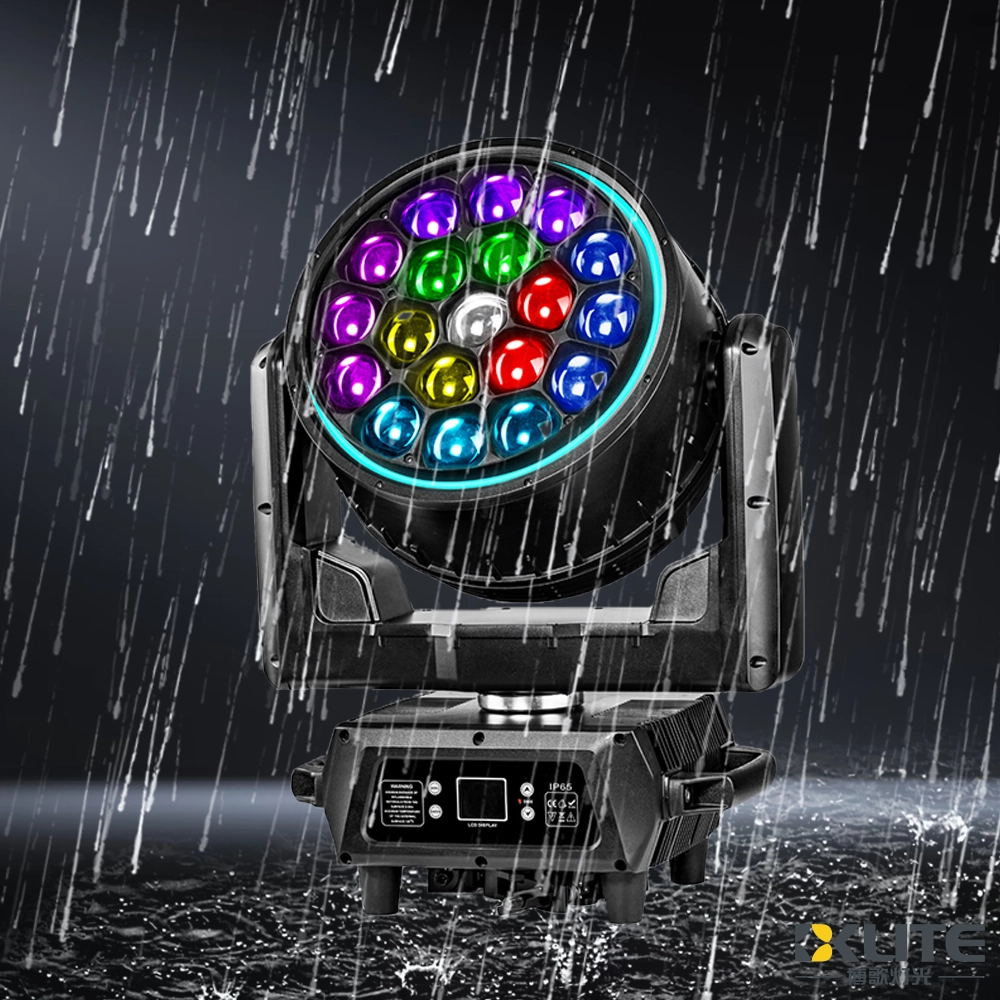
IP65 Waterproof Bee Eye Zoom 19x40W RGBW 4IN1 LED Beam Wash Moving Head Light with LED Ring
BKlite waterproof bee eye moving head light—your reliable choice from top waterproof moving head light manufacturers and suppliers. Ideal for outdoor stage, live event, music festival, this energy-saving fixture ensures powerful, precise illumination for any venue. It delivers powerful, reliable lighting performance in any weather.
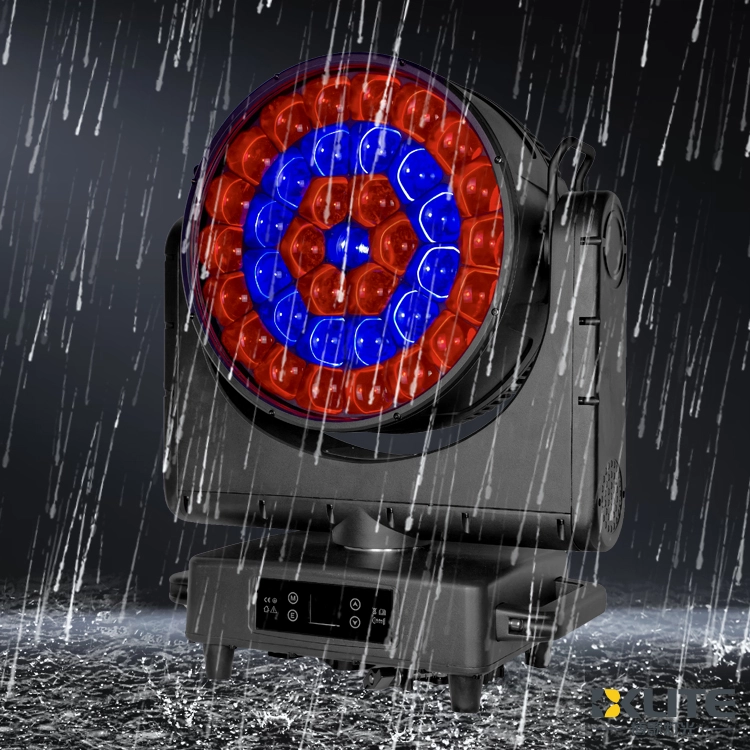
IP65 Waterproof ZOOM Bee Eye 37x40W RGBW 4in1 LED Moving Head Light
As a leading stage lighting equipment supplier with more than 15 years of industry know-how, BKlite brings you the IP65 ZOOM Bee Eye 37*40W RGBW 4in1 LED Moving Head Light (K25 Bee Eye) delivers vibrant, weatherproof lighting with powerful zoom and smooth movement. Ideal for dynamic stage effects, the K25 moving head light ensures stunning RGBW color mixing and reliable outdoor performance.
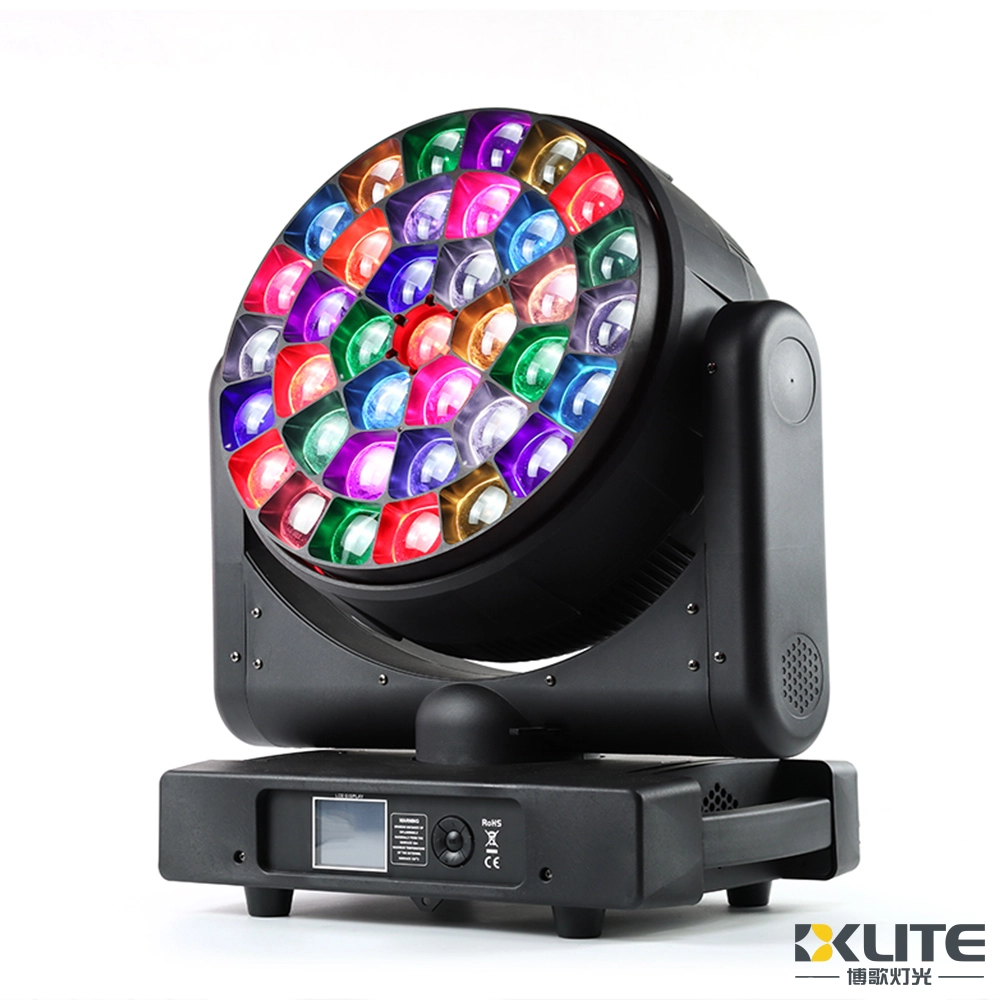
Bee Eye Zoom 37x40W RGBW 4in1 LED Beam Wash Moving Head Light


Copyright © 2025 BKLITE All Rights Reserved.