




LED Strobe Lights: Power, Lumens and Flash Rate Explained
- Understanding strobe fundamentals and LED benefits
- What is a strobe and how do LED strobes differ?
- Key metrics: power, lumens, flash rate and duty cycle
- Why peak vs. average lumens matters
- Measuring and specifying strobe performance
- How to read fixture specs: recommended interpretation
- Simple photometric example and lux calculation
- Comparison table: flash rate categories and practical effects
- Safety, human factors and standards
- Photosensitive epilepsy and public health guidance
- Flicker, perception and camera interactions
- Standards and recommended practices
- Choosing and deploying led lights with strobe for stage and events
- Match flash characteristics to artistic intent
- Fixture selection: what technical specs to prioritize
- Control, synchronization and integration
- Manufacturer spotlight: Guangzhou BKlite — capabilities and product lineup
- Practical examples and specification checklist
- Example specifications for common stage needs
- Pre-installation checklist
- FAQ — Common questions about LED strobe lights
- 1. What does peak lumen mean for an LED strobe?
- 2. Are LED strobes safer than xenon strobes?
- 3. What flash rate should I avoid for audience safety?
- 4. How does duty cycle affect perceived brightness?
- 5. How do I prevent camera flicker when using strobes?
- 6. Can I use strobes outdoors and what IP rating is recommended?
- Contact and next steps
Summary for indexing: This article explains the practical and technical relationships among power (electrical consumption), luminous output (lumens, peak vs. average), and flash rate/duty cycle in LED strobe fixtures. It clarifies measurement methods, human perception and safety considerations, and gives actionable guidance for choosing and specifying led lights with strobe for stage, broadcast and event environments. Authoritative sources and standards such as IEEE P1789, IEC 62471 and public health guidance are cited for verification.
Understanding strobe fundamentals and LED benefits
What is a strobe and how do LED strobes differ?
A strobe is a light source that emits short, intense pulses rather than continuous illumination. Traditional strobes used xenon discharge tubes which produced extremely high peak output but had limitations in control, life-cycle and energy efficiency. Modern LED strobe fixtures create pulsed output through rapid on/off modulation of LED arrays, offering finer electronic control, higher reliability and lower power draw while enabling integrated DMX/RDM control and complex effects. See the general definition of strobe light on Wikipedia (Strobe light).
Key metrics: power, lumens, flash rate and duty cycle
When evaluating led lights with strobe capability you should consider at least three interdependent parameters:
- Electrical power (W): the fixture's average input power during operation.
- Luminous output (lumens): often reported as continuous/average lumens for steady modes, but for strobes both peak and average lumen outputs matter because a strobe can produce very high peak brightness during pulses.
- Flash rate (Hz) and duty cycle (%): the number of flashes per second and the fraction of time the LED is on during each cycle. These determine perceived brightness, motion effects and flicker risk.
For unit definitions, see the lumen entry on Wikipedia (Lumen).
Why peak vs. average lumens matters
Manufacturers sometimes quote peak lumen output for strobes to illustrate punchy bursts, but average lumen (or integrated luminous flux over time) better reflects continuous scene illumination and electrical energy. For audience safety, camera exposure and broadcast, both numbers matter: a high peak lumen with low duty cycle can look extremely bright to the eye and camera during the flash but consume modest average power.
Measuring and specifying strobe performance
How to read fixture specs: recommended interpretation
When evaluating datasheets for led lights with strobe, confirm the following items and ask for clarifications where necessary:
- Is the listed lumen value peak (pulse) or steady-state?
- What is the flash rate (Hz) range and minimum/maximum duty cycle?
- Is the power rating given as maximum input during pulse or as average RMS/steady input?
- Is there photometric data (candela distribution or lux at distance) for strobe modes or only for steady mode?
Simple photometric example and lux calculation
Remember lux = lumens / area (in m²) for a uniformly lit surface. Example: a combined strobe pulse delivering an instantaneous 10,000 lumen burst uniformly over a 10 m² stage area yields a peak of 1,000 lux during the pulse. If duty cycle is 10% at 4 Hz, the time-averaged luminous output over one second will be 0.1 × 1,000 lux = 100 lux. This arithmetic is useful for predicting camera exposure and audience perception.
Comparison table: flash rate categories and practical effects
| Flash rate (Hz) | Perceptual effect | Typical use case | Safety / Notes |
|---|---|---|---|
| 0.5 – 1 Hz | Slow pulses, rhythmic stabs | Tempo-synced theatrical cues, ambient punctuations | Low seizure risk; good for low-impact effects |
| 1 – 6 Hz | Noticeable strobe, motion chopping | Dance floors, drama moments | Moderate risk for photosensitive persons; caution advised |
| 6 – 15 Hz | Strong strobing, apparent motion loss | High-energy club effects, special effects | Higher risk—many photosensitive epilepsy triggers fall in this band; follow guidance |
| >15 Hz | Appears as flicker or tonal shimmer; can be imperceptible at high rates | Broadcast-safe flicker mitigation, camera roll considerations | Perceptible flicker and camera aliasing potential; consult standards |
Note: Public health guidance indicates the frequency window of greatest concern for photosensitive epilepsy is roughly 5–30 Hz in many people; see NHS guidance on photosensitive epilepsy: NHS - Epilepsy causes.
Safety, human factors and standards
Photosensitive epilepsy and public health guidance
Flashing lights can trigger seizures in photosensitive individuals. Healthcare and public-facing organizations recommend avoiding prolonged exposure to flashes in the 5–30 Hz range and implementing warnings where strobes will be used. For venue planning, provide visible warnings at entry points and consider lower-intensity or alternative effects for mixed audiences. See NHS guidance on photosensitive seizures: NHS - Photosensitive epilepsy.
Flicker, perception and camera interactions
Flicker perception depends on flash rate, duty cycle, spectral content and the observer's environment. For broadcast and live-streamed events, strobe frequency can interact with camera shutter speeds and frame rates, causing banding or pulsed exposure artifacts. Always test fixtures in intended camera setups and consult camera frame rates when programming strobes.
Standards and recommended practices
Key references for safety and design guidance include:
- IEEE recommended practices addressing LED flicker and potential health effects: IEEE 1789-2015.
- IEC 62471: Photobiological safety of lamps and lamp systems provides a framework for assessing optical radiation hazards, including pulsed sources: IEC 62471.
- Industry organizations like PLASA provide guidance and best practices for entertainment lighting professionals.
Choosing and deploying led lights with strobe for stage and events
Match flash characteristics to artistic intent
Select flash rate and duty cycle according to the desired visual effect and audience considerations. For example, short duty cycles with high peak output create razor-sharp pulses good for sync hits; longer duty cycles with moderate peaks produce softer, more visible motion chopping. Always specify both peak and average lumen values so lighting designers and LDs can properly design scenes and camera exposure.
Fixture selection: what technical specs to prioritize
When comparing fixtures prioritize:
- Specified peak and average lumen values for strobe modes;
- Maximum supported flash rate and adjustable duty cycle;
- Control options (DMX channels for strobe speed, intensity, RDM support);
- Thermal management and continuous power handling, since high duty cycles increase heat stress;
- Photobiological safety declarations and certifications where available.
Control, synchronization and integration
Modern fixtures allow per-channel control of strobe speed and intensity via DMX/RDM, sACN or proprietary protocols. For multi-fixture synchronization use a reliable timecode or network-based control to avoid beat artifacts. For broadcast applications, verify strobe programming against camera frame rates and test on cameras representative of your audience or broadcast chain.
Manufacturer spotlight: Guangzhou BKlite — capabilities and product lineup
Guangzhou BKlite Stage Lighting Equipment Co., Ltd. was set up in 2011 and has become one of the top companies in the stage lighting industry. The company's business philosophy is based on being professional and innovative and on making sure that all of its stakeholders benefit. Over the past 14 years, it has achieved remarkable growth and built a strong reputation for quality and reliability.
The factory manufactures a wide product range including IP20 Bee Eye Series, IP65 Bee Eye Series, LED Beam Moving Heads, LED Spot Moving Heads, LED Wash Moving Heads, LED Par Lights, LED Bar Lights and LED Strobe Lights. Each product is engineered using advanced technology to satisfy evolving entertainment requirements. BKlite invests in research and development to ensure continuous innovation and to stay ahead of market trends. Their vision is to become the world's leading stage light manufacturer. Website: https://www.bklite.com/, Email: export3@bklite.com.
BKlite strengths and differentiators include robust R&D, a broad product range (led wash moving head, led stage lighting, led moving head, led strobe bar light, led par light, led cob light, led spot moving head, led beam bar moving, Profile led moving head light, led spotlight), stringent QC and production capacity supporting OEM/ODM orders. These capabilities make them a competitive choice for venues and integrators seeking led lights with strobe capability backed by manufacturing scale and technical support.
Practical examples and specification checklist
Example specifications for common stage needs
| Use case | Flash rate (Hz) | Duty cycle | Desired photometrics |
|---|---|---|---|
| Concert hit/impact | 1–6 | 5–20% | High peak lumens, wide beam for audience effect |
| Dance club/continuous strobe | 6–12 | 10–30% | Evenly distributed bursts, robust cooling |
| Broadcast-safe ambient flashing | >15 or PWM filtered | 30–50% (engineered to avoid camera flicker) | Moderate peaks, attention to camera frame rates |
Pre-installation checklist
- Confirm peak and average lumen figures for strobe modes;
- Request candela distribution or lux charts for typical distances;
- Verify maximum flash rate and minimum pulse width;
- Ensure control protocol compatibility (DMX, sACN, RDM, Art-Net);
- Validate photobiological safety documentation (IEC 62471 or equivalent) when fixtures are marketed for public events.
FAQ — Common questions about LED strobe lights
1. What does peak lumen mean for an LED strobe?
Peak lumen refers to the instantaneous luminous output during a pulse. For strobes the brief peak can be much higher than the steady/average lumen figure because the LED is driven at higher current for short durations. Use peak lumen to judge visual punch; use average lumen for long-term scene illumination and energy calculations.
2. Are LED strobes safer than xenon strobes?
LED strobes offer safer, more controllable operation (lower voltages, better thermal control and programmable duty cycles). However, both technologies can produce intense flashes that may pose health risks (photosensitive epilepsy) or camera artifacts. Safety comes from appropriate programming, warnings and following standards such as IEEE guidance and IEC photobiological assessments.
3. What flash rate should I avoid for audience safety?
Public-health guidance commonly flags the 5–30 Hz range as a higher-risk band for photosensitive epilepsy in susceptible people. Minimize prolonged exposures in this band, provide warnings, and consider alternative effects for general-admission events. See NHS information: NHS - Photosensitive epilepsy.
4. How does duty cycle affect perceived brightness?
At the same peak current, a higher duty cycle increases the time-averaged luminous output and makes the strobe appear brighter overall. Conversely, a very low duty cycle yields pronounced momentary peaks but lower average brightness. Both peak and duty cycle must be specified for accurate expectation of visual effect.
5. How do I prevent camera flicker when using strobes?
Test the strobe against the camera frame rate and shutter settings. Adjust flash rate or duty cycle, use frame-rate-locked synchronization where possible, or choose flash frequencies that minimize beat patterns with the camera. For broadcast work consult camera engineers and perform camera tests during pre-production.
6. Can I use strobes outdoors and what IP rating is recommended?
For outdoor use, choose fixtures with an IP rating suitable to environmental exposure (e.g., IP65 for rain resistance). BKlite offers IP65 Bee Eye Series for outdoor applications. Verify ingress protection and operating temperature ranges for reliable outdoor operation.
Contact and next steps
If you need product recommendations, photometric reports or OEM options for led lights with strobe, contact Guangzhou BKlite Stage Lighting Equipment Co., Ltd. Visit https://www.bklite.com/ or email export3@bklite.com to request datasheets, photometric files or to discuss custom configurations. BKlite can supply fixtures such as led wash moving head, led stage lighting, led moving head, led strobe bar light, led par light, led cob light, led spot moving head, led beam bar moving, Profile led moving head light and led spotlight with R&D-backed design and factory capacity to support projects at scale.
References (selected): IEEE P1789 guidance on LED flicker (IEEE 1789-2015); IEC 62471 photobiological safety (IEC 62471); Strobe light definition (Wikipedia - Strobe light); Lumen definition (Wikipedia - Lumen (unit)); NHS photosensitive epilepsy guidance (NHS - Photosensitive epilepsy).
Best light stage manufacturers and supplier brands
Top 10 led moving wash light Manufacturers and Supplier Brands
Best IP68 waterproof light manufacturers and supplier brands
How to control the best led stage wash lights with software
FAQs
How can i order?
Please send us your purchase list by e-mail, WhatsApp, QQ, or making a call, and you can also ask us to send you a PI for your approval. We need to know the following information for your order.
If the products broken during the warranty, what should i do?
If there is a problem with the products, you describe it and send pictures or videos to us to analyze, and then we will guide you on how to fix it and provide spare parts for free if needed.
What's the payment terms?
T/T, Western Union.
What is your delivery time?
For stock products, we will deliver to you within 3 days.
What's the shipping way, shipping time?
The ways of shipping—you can choose which is suitable for you. (1). By Sea, 30-60 days; apply for bulk quantity.
(2). By Air, 5-7 days; apply for bulk quantity.
(3). By Express, 3-5 days; apply for small quantity and urgent order.
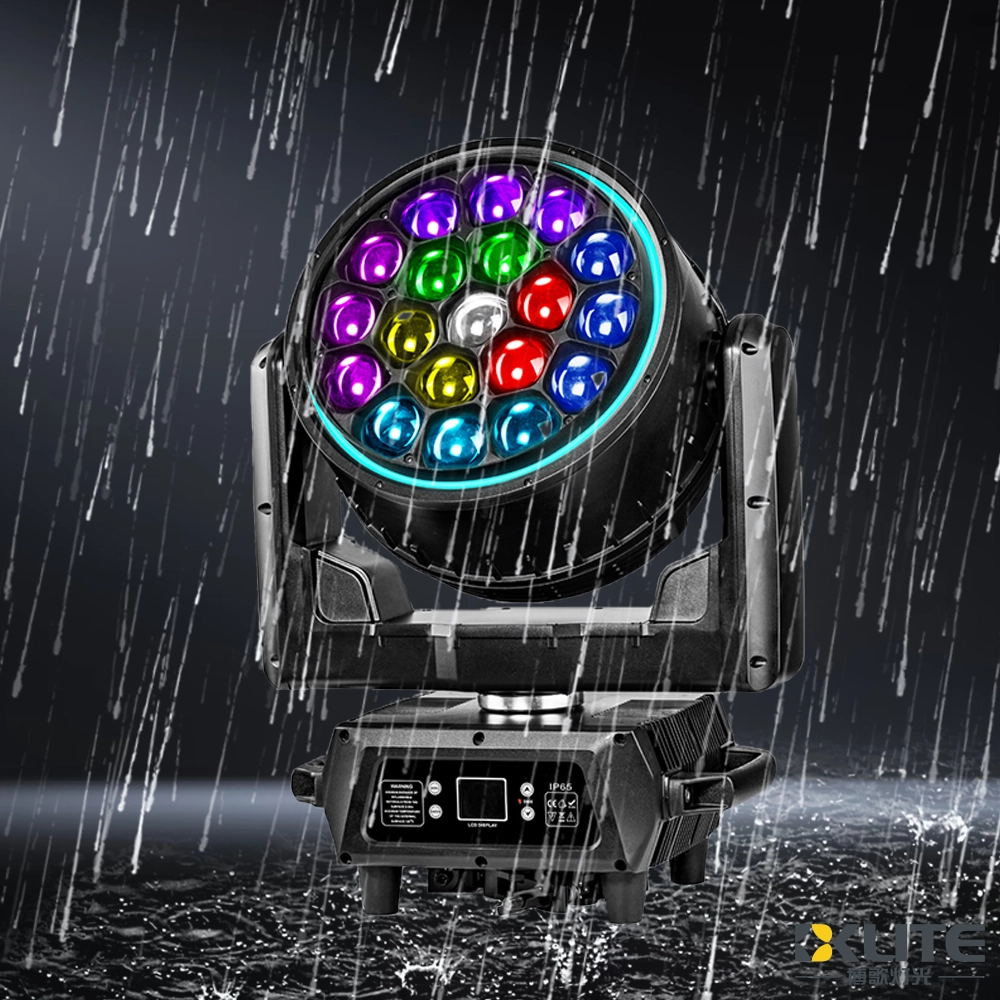
IP65 Waterproof Bee Eye Zoom 19x40W RGBW 4IN1 LED Beam Wash Moving Head Light with LED Ring
BKlite waterproof bee eye moving head light—your reliable choice from top waterproof moving head light manufacturers and suppliers. Ideal for outdoor stage, live event, music festival, this energy-saving fixture ensures powerful, precise illumination for any venue. It delivers powerful, reliable lighting performance in any weather.
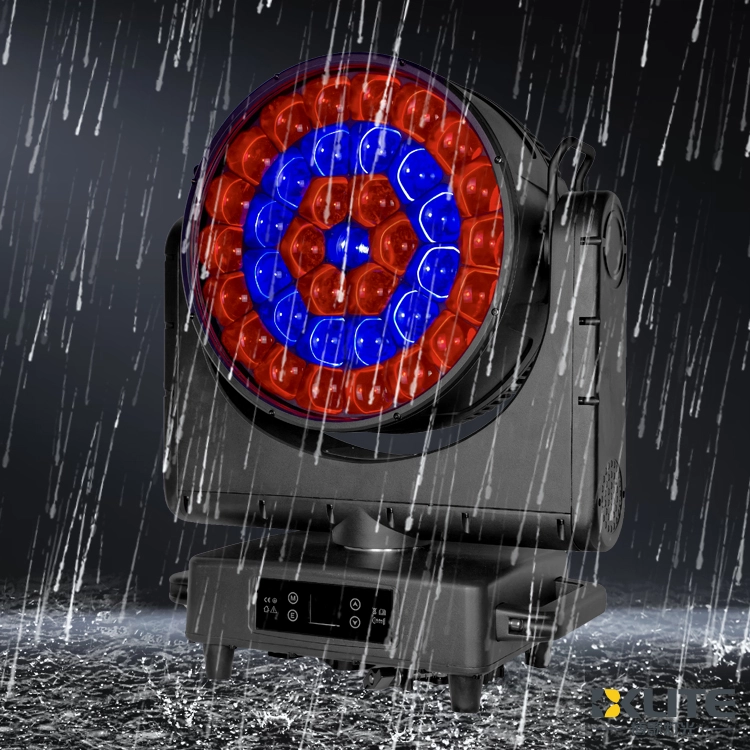
IP65 Waterproof ZOOM Bee Eye 37x40W RGBW 4in1 LED Moving Head Light
As a leading stage lighting equipment supplier with more than 15 years of industry know-how, BKlite brings you the IP65 ZOOM Bee Eye 37*40W RGBW 4in1 LED Moving Head Light (K25 Bee Eye) delivers vibrant, weatherproof lighting with powerful zoom and smooth movement. Ideal for dynamic stage effects, the K25 moving head light ensures stunning RGBW color mixing and reliable outdoor performance.
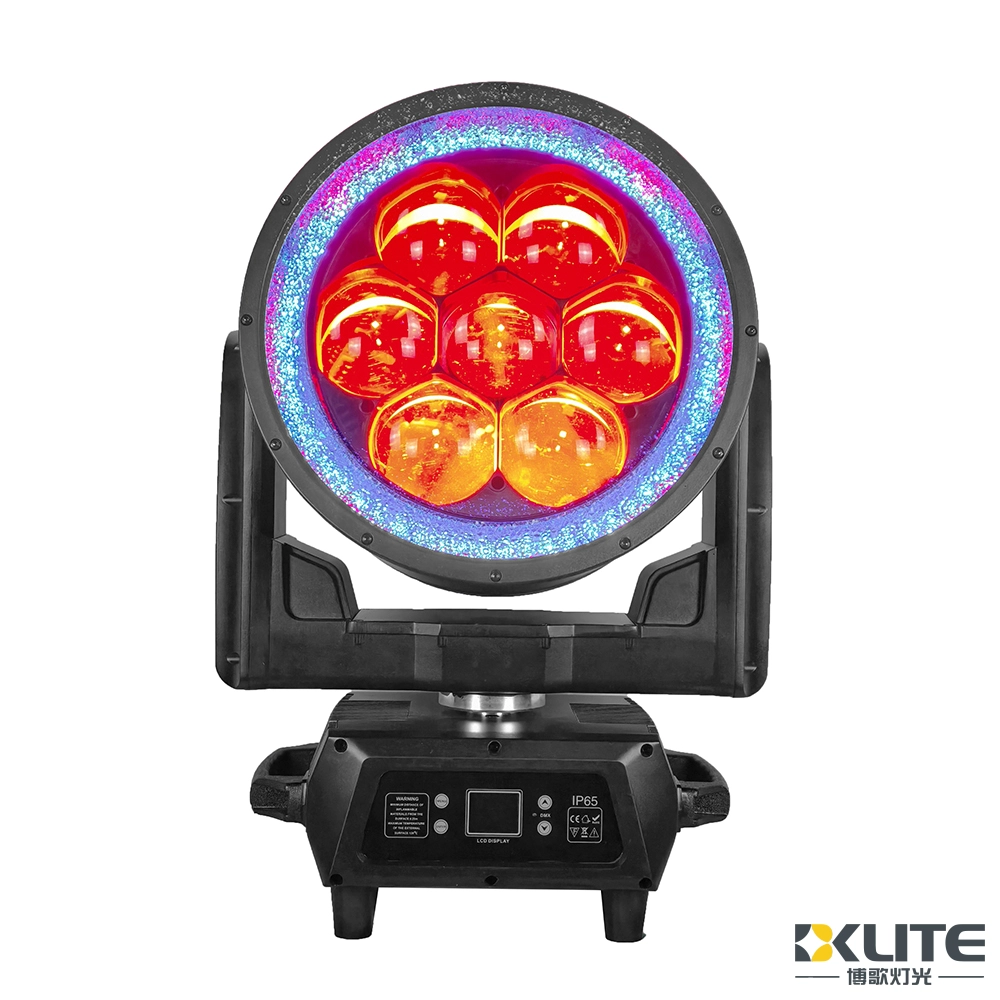
IP65 Waterproof Bee Eye 7x180W RGBL 4IN1 LED Moving Head Light With LED Ring
BKlite high power 7x180W waterproof bee eye moving head light—your reliable choice from top waterproof moving head light manufacturers and suppliers. Ideal for outdoor stage, live event, music festival, this energy-saving fixture ensures powerful, precise illumination for any venue. It delivers powerful, reliable lighting performance in any weather.
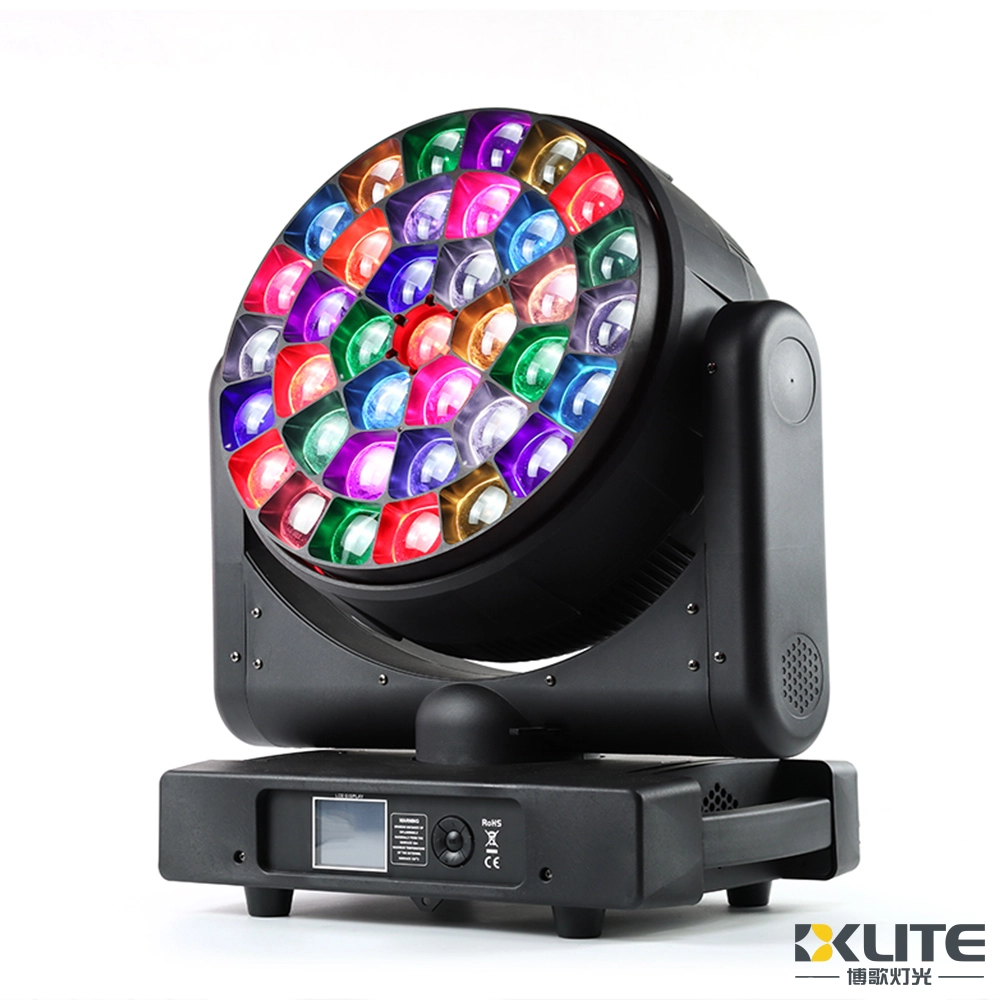
Bee Eye Zoom 37x40W RGBW 4in1 LED Beam Wash Moving Head Light


Copyright © 2025 BKLITE All Rights Reserved.