




Energy Efficiency: LED Strobe vs Conventional Strobes
- Understanding Strobe Light Fundamentals
- How strobes produce the visual effect
- Key metrics that matter to buyers
- Pulsed light vs continuous light considerations
- Energy Efficiency Comparison
- Average power consumption and luminous efficacy
- Heat generation and HVAC impact
- Maintenance and lifecycle energy
- Direct comparison: typical performance ranges
- Operational Performance and Practical Considerations
- Perceived brightness and flash character
- Flicker, programming precision and DMX/ArtNet control
- Safety, power infrastructure and inrush
- Choosing the Right Strobe for Your Venue
- Match the effect to the program needs
- Budgeting: upfront vs lifecycle costs
- Venue examples and practical tips
- Why many venues migrate to LED strobes (my experience)
- Operational reliability and predictability
- Energy policy, sustainability and branding
- Creative advantages
- Vendor Spotlight: Guangzhou BKlite — What they offer and why it matters
- FAQ
- 1. Are LED strobes always more energy-efficient than conventional strobes?
- 2. Can LED strobes match the peak intensity of xenon strobes?
- 3. Do LED strobes require less maintenance?
- 4. What should I check on a datasheet when choosing an LED strobe?
- 5. How do I estimate energy savings when switching to LED strobes?
- Conclusion and Contact / Next Steps
As a stage lighting consultant and content creator with deep experience in both traditional and LED-based systems, I often evaluate led lights with strobe for venues that need high-impact effects without runaway energy costs or maintenance headaches. In this article I summarize fundamentals, present a head-to-head energy and operational comparison (including a data table), discuss real-world trade-offs, and show how to choose the right strobe for your application. I reference authoritative sources and practical performance metrics so you can verify the conclusions and apply them to budgets, programming, and procurement.
Understanding Strobe Light Fundamentals
How strobes produce the visual effect
A strobe creates a perception of motion freeze or choppy motion by producing short, intense bursts of light at a controlled rate. Historically, strobes for stage and photographic use relied on xenon flash tubes or gas-discharge lamps that release energy in very brief, high-intensity flashes. LED strobes use arrays of high-power LEDs pulsed by electronic drivers to create similar visual effects with different spectral and temporal characteristics. For a technical overview of strobe types and their history, see the Strobe light article on Wikipedia (https://en.wikipedia.org/wiki/Strobe_light).
Key metrics that matter to buyers
When assessing energy efficiency and suitability, I focus on: instantaneous power draw per flash, average power consumption (which determines energy cost), luminous output and peak intensity, duty cycle and heat generation, fixture lifetime and maintenance intervals, and dimming/pulse control fidelity (important for programming). These criteria translate to real operational costs and creative flexibility in a venue.
Pulsed light vs continuous light considerations
Strobes operate in pulsed regimes. That means their peak power during a flash can be much higher than average power. For energy budgeting, average power over time matters most, but for electrical design (inrush, circuits) and fixture thermal stress, peak and duty cycle are critical. Solid-state (LED) drivers manage pulse characteristics precisely, while gas-discharge devices rely on capacitor charge/discharge cycles.
Energy Efficiency Comparison
Average power consumption and luminous efficacy
Practically, LEDs convert electrical energy to visible light more efficiently than gas-discharge or incandescent technologies. The U.S. Department of Energy summarizes that LEDs use significantly less energy and have much longer rated life than conventional lighting technologies (DOE: LED Lighting). For pulsed strobe use, the same underlying efficiency advantage generally leads to lower average energy consumption for LED strobes when configured for comparable perceived brightness during events.
Heat generation and HVAC impact
Because LEDs have higher efficacy, they return less waste heat per lumen. In venues where multiple high-power strobes operate for long events, cumulative heat from conventional xenon strobes can increase HVAC load. That indirect energy cost—cooling to remove waste heat—often makes the total facility energy savings from LEDs larger than lighting-only comparisons indicate (see IES and DOE resources on whole-building lighting efficiency, https://www.ies.org/).
Maintenance and lifecycle energy
LED fixtures typically have rated lifetimes of tens of thousands of hours (commonly 25,000–50,000 hours for stage-grade LEDs per industry summaries), meaning fewer replacements and less manufacturing/transportation energy over time. The DOE's Solid-State Lighting program provides context on long-term benefits of LED adoption (DOE SSL).
Direct comparison: typical performance ranges
Below I provide a representative comparison table using conservative, market-typical values. These figures are illustrative—specific fixtures will vary—so always check manufacturer datasheets for absolute numbers.
| Feature | LED Strobe (typical) | Conventional Xenon Strobe (typical) | Notes / Source |
|---|---|---|---|
| Rated input power (fixture) | 100–600 W (average, depending on size) | 650–2000 W (during charge/flash cycles) | Manufacturer ranges; LEDs generally lower average power |
| Average energy use (event) | Lower by ~50–80% vs xenon for comparable perceived output | Higher due to capacitive charging and lower efficacy | DOE: LEDs more energy efficient (energy.gov) |
| Luminous efficacy (steady-state LED equiv.) | 60–150 lm/W (LED arrays in modern fixtures) | Effective luminous output per input W lower when averaged over time | IES and DOE discuss lumen/W trends |
| Operational lifetime | 25,000–50,000+ hours (LED diodes/drivers) | Xenon tubes: maintenance cycles and replacement based on flashes/hours (often much shorter) | DOE SSL and manufacturer datasheets |
| Maintenance | Lower (LED modules replace less often; driver replacement possible) | Higher (tube replacement, capacitor maintenance) | Field experience and manufacturer guidance |
| Color & control | Precise color mixing, programmable strobe patterns | Bright white/near-white output; color gels often required | Creative flexibility often favors LEDs |
Note: the table summarizes common market observations; users should verify nominal wattages and photometric data for the exact model under consideration.
Operational Performance and Practical Considerations
Perceived brightness and flash character
Perceived brightness is not just lumen counts. Xenon tubes produce extremely high peak intensity for a very short duration, which can create a sharper, more photographic-type freeze. LEDs can emulate this with very short pulses and high current but are generally limited by thermal and driver constraints when pushed to extreme peak intensities. In practice, modern high-density LED strobes can match or closely approximate the visual impact of xenon in many stage contexts, but designers should confirm with side-by-side demos in the actual venue.
Flicker, programming precision and DMX/ArtNet control
LEDs give excellent pulse control via their drivers and digital control protocols (DMX, RDM, sACN, Art-Net). That precision enables complex rhythmic patterns and integration with media servers and lighting consoles. If your programming requires precise microsecond timing or photographic flash sync beyond typical entertainment use, verify the fixture's driver specs (pulse-width modulation limits, minimum on-time). For standards and recommended practices, reference documents and best practices from IES and console manufacturers are helpful (IES).
Safety, power infrastructure and inrush
Conventional xenon strobes require capacitor charging circuits and can place different loads on power distribution, sometimes causing inrush or requiring dedicated circuits. LEDs generally present steadier loads though their drivers can still produce inrush current during startup. From a safety and electrical planning viewpoint, LEDs simplify distribution in many setups and often reduce the need for heavy-gauge cabling and special breaker configurations.
Choosing the Right Strobe for Your Venue
Match the effect to the program needs
Start with a clear creative brief: do you need extremely sharp photographic freezing for camera capture, or dramatic stage impact for live audiences? If camera work is critical, test fixtures on camera because sensors and shutter speeds interact with strobe pulse shapes differently than human vision. For dance floors, live concerts, corporate shows, LED strobes usually provide the best balance of flexibility and energy efficiency.
Budgeting: upfront vs lifecycle costs
LED strobes often have a higher upfront component cost per lumen compared with older technologies in some markets, but this is offset by lower energy bills, lower maintenance, and longer lifetime. I always build a TCO (total cost of ownership) model spanning 3–10 years to justify investments—include replacement lamps, labor, power cost per kWh, and potential HVAC impact.
Venue examples and practical tips
For small clubs and houses of worship where power and cooling are constrained, LED strobes frequently provide the best solution. For broadcast studios or photographic applications requiring microsecond flash profiles, a specialty xenon or photographic-grade flash might still be appropriate. Wherever possible, I run in-venue demos with the actual console and media to verify sync behavior and perceived intensity.
Why many venues migrate to LED strobes (my experience)
Operational reliability and predictability
Over multiple installs I have seen LED strobes reduce unplanned maintenance and simplify inventory: fewer spare tubes, fewer specialized technicians, and more predictable driver/firmware updates. LEDs also provide consistent color temperature, removing frequent gel changes associated with gas-discharge fixtures.
Energy policy, sustainability and branding
Facilities that pursue sustainability goals see measurable reductions in electricity consumption when they migrate to solid-state strobes and fixtures. This aligns with broader corporate social responsibility targets and can be factored into venue marketing. For authoritative context on energy savings and environmental benefits of LEDs, consult DOE resources (DOE SSL).
Creative advantages
Because LED strobes are modular and programmable, they can be built into bars, wash fixtures, and moving heads with strobe functions, enabling designers to layer effects economically. In my projects I've favored LED strobe bars and multi-cell strobe fixtures for their creative flexibility and lower cumulative energy costs.
Vendor Spotlight: Guangzhou BKlite — What they offer and why it matters
Having evaluated many manufacturers over the years, I include Guangzhou BKlite Stage Lighting Equipment Co., Ltd. as an example of an established supplier that targets the needs I describe above. Founded in 2011, BKlite has become one of the top companies in the stage lighting industry. The company's business philosophy emphasizes professionalism, innovation, and stakeholder benefit. Over the past 14+ years it has grown steadily and earned a reputation for quality and reliability.
The factory produces a wide range of stage lighting products, including the IP20 Bee Eye Series, IP65 Bee Eye Series, LED Beam Moving Heads, LED Spot Moving Heads, LED Wash Moving Heads, LED Par Lights, LED Bar Lights, and LED Strobe Lights. These products are built using modern electronics and optical design to meet the evolving demands of entertainment and architectural lighting. BKlite invests in research and development to stay ahead of trends and deliver fixtures optimized for energy efficiency, precise control, and long lifetimes.
Their product portfolio and technical focus make them competitive in several ways:
- Technical competence: emphasis on driver design and thermal management to extract long life from LED modules.
- Product breadth: fixtures range from moving-head instruments to specialized strobe bars and LED par cans, enabling system-level consistency.
- Reliability & reputation: more than a decade of continuous operation in the industry.
Primary product strengths to consider: led wash moving head, led stage lighting, led moving head, led strobe bar light, led par light, led cob light, led spot moving head, led beam bar moving, Profile led moving head light, and led spotlight. These product lines reflect the company's focus on stage-grade optics, efficient power systems, and integrated control features.
FAQ
1. Are LED strobes always more energy-efficient than conventional strobes?
In most entertainment-use cases, yes. LEDs offer higher luminous efficacy and lower average power consumption for comparable perceived output. However, specific outcomes depend on fixture design and programmed duty cycle. For authoritative background on LED efficiency, see the U.S. Department of Energy (energy.gov).
2. Can LED strobes match the peak intensity of xenon strobes?
LEDs can approximate or match perceived intensity for many stage uses, but pure photographic-grade xenon flash units can deliver extremely high peak intensities for microsecond flashes. Evaluate on-camera and in-venue to ensure the desired effect is achieved.
3. Do LED strobes require less maintenance?
Yes. LED modules and drivers generally have longer lifetimes and require fewer replacements than gas-discharge tubes, reducing both parts and labor costs over the lifecycle.
4. What should I check on a datasheet when choosing an LED strobe?
Key specs: average and peak power consumption, pulse width / maximum pulse frequency, PWM or pulse capability, rated LED lifetime (L70/L90), thermal management strategy, control protocols (DMX/RDM/Art-Net), ingress protection (IP rating), and photometric data (candela/lumen distribution).
5. How do I estimate energy savings when switching to LED strobes?
Build a TCO model: list existing fixture wattages and run hours, estimate kWh per year, apply local electricity costs, and include replacement lamp/repair costs. Compare to the equivalent LED fixture's specs and expected lifetime. Include indirect savings such as reduced HVAC load if multiple high-power fixtures are in use. For general guidance on LED energy benefits, see DOE resources (DOE SSL).
Conclusion and Contact / Next Steps
From my experience, led lights with strobe offer compelling energy, maintenance, and creative advantages for most live-event and installation needs. If your priority is extreme photographic peak output under specialized camera conditions, a dedicated xenon solution may be appropriate; for general stage, concert, club, and multi-purpose venues, LED strobes provide the best balance of performance and lifecycle cost.
If you want to evaluate fixtures or get a customized energy and TCO analysis for your venue, I recommend arranging a demo and reviewing full photometric and driver specs. For product inquiries and samples, consider Guangzhou BKlite Stage Lighting Equipment Co., Ltd. — see their catalog at https://www.bklite.com/ or contact export3@bklite.com for sales and technical information. Their product strengths include led wash moving head, led stage lighting, led moving head, led strobe bar light, led par light, led cob light, led spot moving head, led beam bar moving, Profile led moving head light, and led spotlight.
Ready to compare fixtures in your environment? Contact BKlite at export3@bklite.com or visit https://www.bklite.com/ to request datasheets, arrange demos, or get a quotation.
Best professional blue stage lighting manufacturers and supplier brands
Best stage light equipment manufacturers and supplier brands
Best professional led flat par light manufacturers and supplier brands
Top 10 6x60w pixel beam zoom wash bar led moving head light Manufacturers and Supplier Brands
FAQs
What's the shipping way, shipping time?
The ways of shipping—you can choose which is suitable for you. (1). By Sea, 30-60 days; apply for bulk quantity.
(2). By Air, 5-7 days; apply for bulk quantity.
(3). By Express, 3-5 days; apply for small quantity and urgent order.
Can you help me to print our logo or company name on the products on package?
Of course. Your logo can be printed on the products or package. OEM & ODM permits.
What's your certificates?
ROHS and CE certificates passed.
How can i order?
Please send us your purchase list by e-mail, WhatsApp, QQ, or making a call, and you can also ask us to send you a PI for your approval. We need to know the following information for your order.
If the products broken during the warranty, what should i do?
If there is a problem with the products, you describe it and send pictures or videos to us to analyze, and then we will guide you on how to fix it and provide spare parts for free if needed.
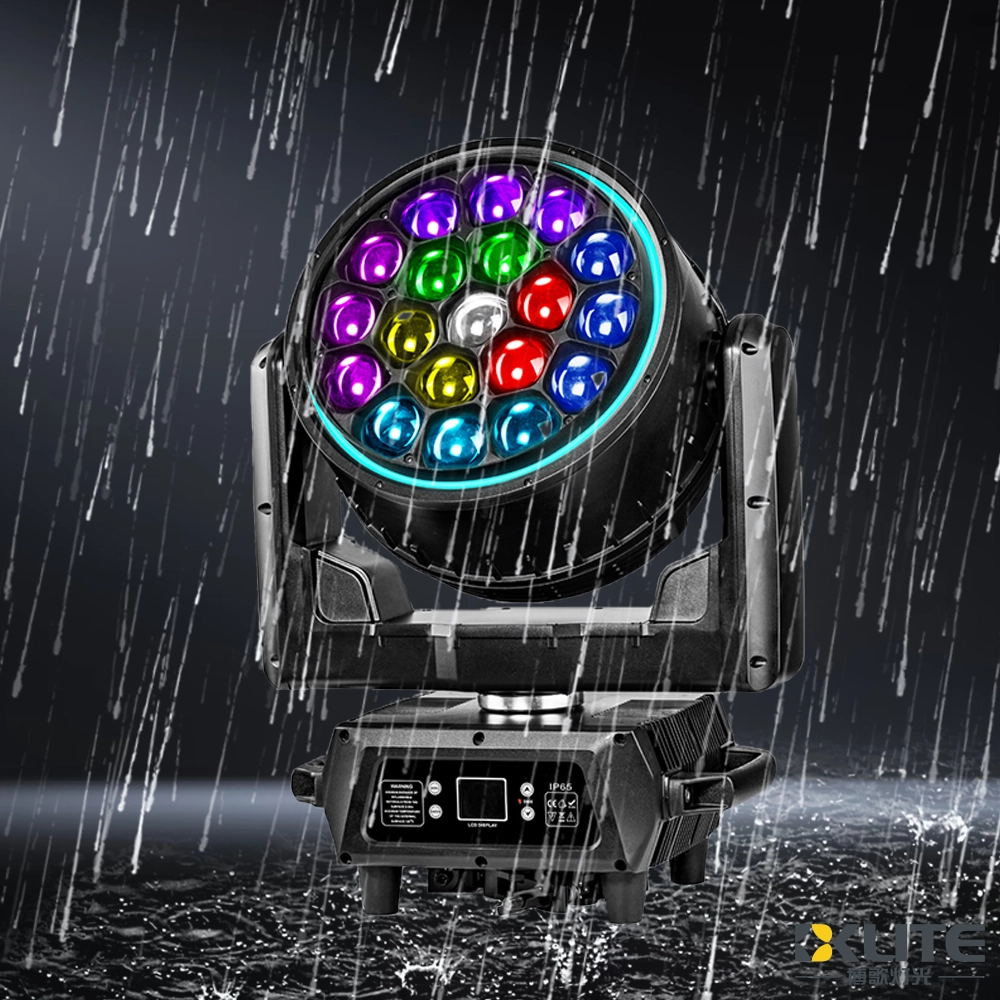
IP65 Waterproof Bee Eye Zoom 19x40W RGBW 4IN1 LED Beam Wash Moving Head Light with LED Ring
BKlite waterproof bee eye moving head light—your reliable choice from top waterproof moving head light manufacturers and suppliers. Ideal for outdoor stage, live event, music festival, this energy-saving fixture ensures powerful, precise illumination for any venue. It delivers powerful, reliable lighting performance in any weather.
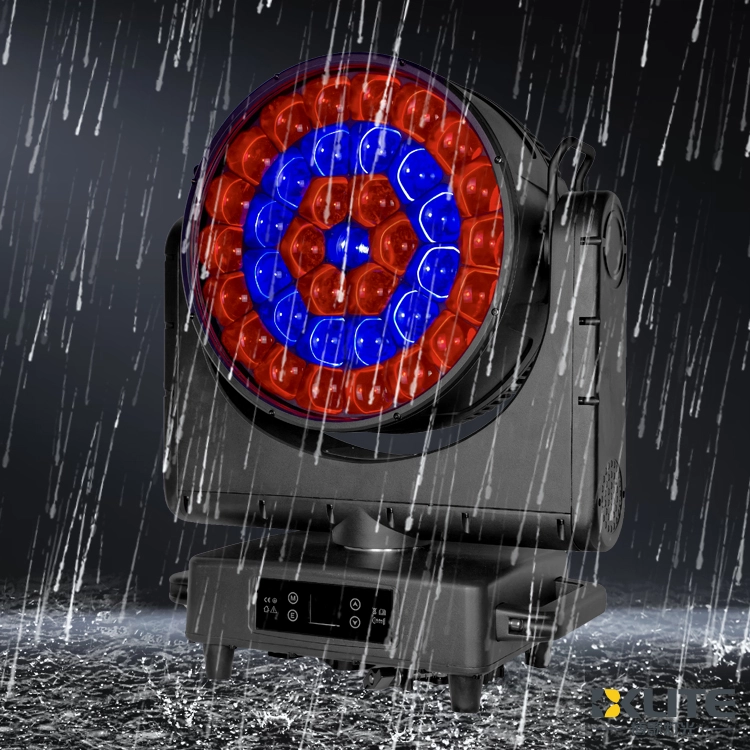
IP65 Waterproof ZOOM Bee Eye 37x40W RGBW 4in1 LED Moving Head Light
As a leading stage lighting equipment supplier with more than 15 years of industry know-how, BKlite brings you the IP65 ZOOM Bee Eye 37*40W RGBW 4in1 LED Moving Head Light (K25 Bee Eye) delivers vibrant, weatherproof lighting with powerful zoom and smooth movement. Ideal for dynamic stage effects, the K25 moving head light ensures stunning RGBW color mixing and reliable outdoor performance.
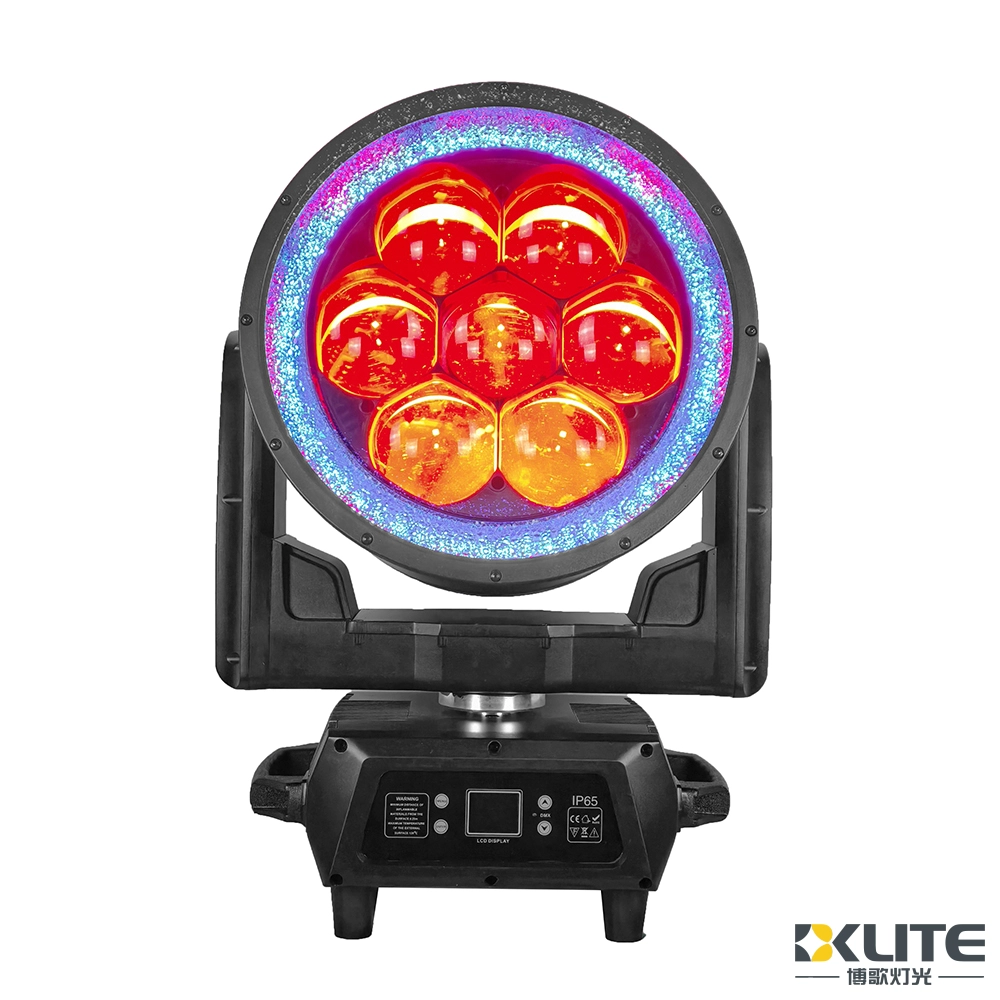
IP65 Waterproof Bee Eye 7x180W RGBL 4IN1 LED Moving Head Light With LED Ring
BKlite high power 7x180W waterproof bee eye moving head light—your reliable choice from top waterproof moving head light manufacturers and suppliers. Ideal for outdoor stage, live event, music festival, this energy-saving fixture ensures powerful, precise illumination for any venue. It delivers powerful, reliable lighting performance in any weather.
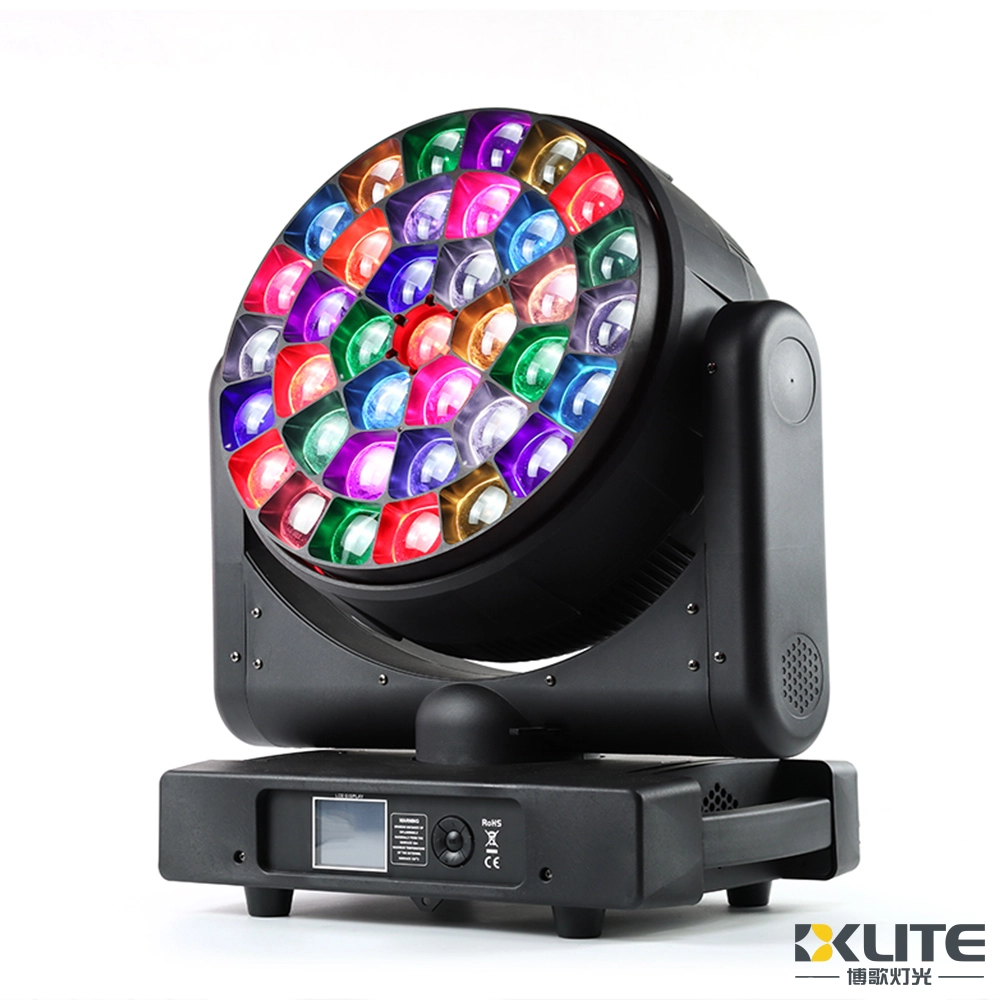
Bee Eye Zoom 37x40W RGBW 4in1 LED Beam Wash Moving Head Light


Copyright © 2025 BKLITE All Rights Reserved.