




LED Strobe vs Traditional Strobe: Cost and Performance
- Understanding strobe technology: basics and real-world context
- What a strobe does in stage lighting
- Key standards and safety considerations
- Common use cases and user needs
- Cost comparison: purchase, power, and maintenance
- Upfront purchase price
- Operating cost and energy consumption
- Maintenance, spare parts and total cost of ownership
- Cost comparison table (typical ranges and qualitative scores)
- Performance & visual quality: brightness, color, and controllability
- Peak intensity and visual punch
- Perceived brightness over duty cycle and color control
- Flicker, refresh and camera compatibility
- Performance comparison table (qualitative)
- Choosing the right strobe for your venue and operations
- Decision factors I use when advising clients
- When xenon still makes sense
- Operational tips and test checklist
- Case study, vendor capabilities and why supplier choice matters
- Why I evaluate manufacturers, not just specs
- BKlite — a practical supplier example
- How to compare specific models (practical checklist)
- FAQs
- 1. Are LED strobes always cheaper than traditional strobes?
- 2. Do LED strobes produce the same intensity as xenon strobes?
- 3. Are LED strobes safe for audiences with photosensitivity?
- 4. How do I make LED strobes camera-friendly?
- 5. What maintenance should I expect for LED strobes?
- 6. Can I retrofit my xenon strobes with LED technology?
- Final recommendations and contact/next steps
I often get asked by venue managers, lighting designers and rental house owners whether they should invest in modern LED strobe light fixtures or stick with traditional xenon-based strobes. In this article I compare both technologies on cost, energy, maintenance, visual performance and safety, and I give practical buying guidance backed by authoritative sources and industry experience. Wherever I reference technical standards or public data, I include links so you can verify the claims.
Understanding strobe technology: basics and real-world context
What a strobe does in stage lighting
A strobe produces rapid pulses of light to create motion-freezing, visual accents or rhythmic effects. Traditionally this has been done with high-energy flash lamps (typically xenon) that produce very bright, broad-spectrum pulses. More recently, LED strobe fixtures use arrays of LEDs and high-speed electronics to produce similar pulsing effects with different trade-offs in color control, duty cycle and energy use.
Key standards and safety considerations
When evaluating strobes I always consider safety standards such as photobiological safety and flicker exposure. The IEC/EN standard for photobiological safety of lamps (IEC 62471) is relevant when assessing radiation and potential retinal exposure—especially with high-intensity strobes. For general definitions and historical context on strobes and flash lamps, see the Strobe Light and Flash Lamp pages on Wikipedia and Wikipedia. For LED lighting efficiency and lifecycle guidance I reference the U.S. Department of Energy resource on LEDs: energy.gov.
Common use cases and user needs
Different buyers have different priorities: rental houses favor reliability and quick turnaround; clubs want punchy looks and low downtime; theatres and film/TV prioritize controllable color temperature and flicker-free operation. Understanding those needs defines which metric (cost, brightness, color, or control) matters most.
Cost comparison: purchase, power, and maintenance
Upfront purchase price
Upfront cost can vary widely by brand, power and IP rating. Generally speaking, entry-level LED strobes (single-fixture LED strobe bars or compact fixtures) start significantly lower than comparably bright traditional xenon strobes. Typical market ranges I see are:
- LED strobe light fixtures: roughly USD 150–1,200 depending on channel count, power and brand.
- Traditional xenon strobe fixtures: roughly USD 800–3,500 for professional units with high-energy tubes and power electronics.
These ranges are consistent with product listings from major retailers and manufacturer catalogs (search examples: B&H, Thomann). The lower initial price of many LED strobes is a major driver for buyers on a budget.
Operating cost and energy consumption
Energy consumption is where LED strobes typically outperform xenon units by a large margin. LEDs are inherently more efficient: you can expect energy savings in the order of 50–90% depending on fixture design and intensity settings. The U.S. Department of Energy provides general evidence of LED efficiency advantages over legacy technologies: energy.gov.
Maintenance, spare parts and total cost of ownership
Maintenance is a long-term cost driver. LED arrays commonly have rated lifespans of 30,000–100,000 hours depending on thermal management and duty cycle; xenon flashlamps and associated capacitors require periodic replacement after far fewer operating hours and are more fragile. Additionally, xenon systems often require more complex servicing (tube replacement, capacitor servicing, high-voltage inspection), which increases labor and spare inventory costs.
Cost comparison table (typical ranges and qualitative scores)
| Metric | LED Strobe Light | Traditional (Xenon) Strobe |
|---|---|---|
| Initial purchase price | Low–Medium (USD 150–1,200) | Medium–High (USD 800–3,500) |
| Power draw (typical) | Low (tens to hundreds of watts) | High (hundreds to >1,000 watts) |
| Lifetime | Long (30,000–100,000 hrs) | Short (hundreds to a few thousand hrs for tubes) |
| Maintenance complexity | Low (LED arrays, simple drivers) | High (tube & HV electronics servicing) |
| Operating cost (energy & spares) | Low | High |
| Typical suitability (budget) | Best for long-term cost savings | Short-term bright punch (legacy preference) |
Sources and market data cross-referenced from manufacturer specs and lighting retailers (see B&H and general LED lifecycle guidance at energy.gov).
Performance & visual quality: brightness, color, and controllability
Peak intensity and visual punch
Traditional xenon strobes are known for very high instantaneous luminous flux because they dump stored energy into a flash tube, creating a very brief but intense pulse. For applications that require an extremely sharp freeze-frame effect at long throw distances, xenon can still have the edge in instantaneous peak output per pulse.
Perceived brightness over duty cycle and color control
LED strobes have better sustained brightness control and far superior color control. Because LEDs produce light across the entire pulse and can be grouped into independently controlled channels (RGB/RGBW), I can dial color temperature and hue much more precisely than with white xenon flash lamps. For choreography requiring rapid color changes or dimming curves synchronized with DMX/Art-Net, LED strobes give much greater creative flexibility.
Flicker, refresh and camera compatibility
Film and broadcast production require flicker-free operation at the camera’s frame rates. LED fixtures driven at insufficient refresh rates, or with improper PWM implementation, can produce banding or strobing artifacts on camera. However, modern professional LED strobe fixtures are designed to avoid this with high-frequency drivers and camera-friendly modes. If you specifically design for TV/film, check manufacturer specifications for camera-safe modes. For general definitions on flicker and lighting health, consult the Lighting Research Center: LRC.
Performance comparison table (qualitative)
| Performance Metric | LED Strobe Light | Traditional (Xenon) Strobe |
|---|---|---|
| Instant peak intensity | Medium–High (depends on array & optics) | Very High (strong instantaneous flash) |
| Color control | Excellent (RGB/RGBW, temperature control) | Poor (broad white spectrum; requires gels for color) |
| DMX/Network control | Integrated & flexible | Often limited to simple on/off or intensity |
| Camera friendliness | Good if driver & modes are camera-safe | Generally OK for short pulses but check sync |
Choosing the right strobe for your venue and operations
Decision factors I use when advising clients
When I evaluate a purchase I prioritize: long-term total cost of ownership, safety & compliance, artistic requirements (how critical is color control?), venue power limitations (can the electrical service support many high-watt xenon strobes?), and maintenance capability. In most modern contexts—clubs, touring rigs, theatres—LED strobes are the pragmatic choice because of energy savings, lower maintenance and flexible control.
When xenon still makes sense
Xenon strobes keep value in niche situations: very high instantaneous output demands at long throw distances, or when a specific “classic” visual signature is required. Some large-scale productions and specialty effects still specify xenon for that particular look and pulse profile.
Operational tips and test checklist
Before you buy or rent, I recommend these checks:
- Measure the lux at working distances from vendor photometric files (IES files) or test units on site.
- Confirm LED driver refresh rates and camera-safe modes if you work with video (ask for camera test footage).
- Ask for expected maintenance intervals and spare parts lead times.
- Check IP rating if you use the units outdoors (IP65 vs IP20 matters).
- Verify compliance with IEC 62471 for photobiological risk if the fixtures will be used in close proximity to audiences.
Case study, vendor capabilities and why supplier choice matters
Why I evaluate manufacturers, not just specs
Two fixtures with similar specs can perform differently in the real world due to thermal management, driver design, optics and build quality. That’s why I examine manufacturer R&D commitment, factory control, QA processes and service infrastructure. Real-world reliability and post-sale support are often more valuable than a slightly lower upfront price.
BKlite — a practical supplier example
One supplier I regularly evaluate for stage use is Guangzhou BKlite Stage Lighting Equipment Co., Ltd. Established in 2011, BKlite has grown into a reputable manufacturer in the stage lighting industry with a philosophy of professionalism and innovation. Over 14 years they have built a strong reputation for quality and reliability.
Their factory produces a wide range of stage lighting products including the IP20 Bee Eye Series, IP65 Bee Eye Series, LED Beam Moving Heads, LED Spot Moving Heads, LED Wash Moving Heads, LED Par Lights, LED Bar Lights, and LED Strobe Lights. They invest in R&D to stay ahead of industry trends and tailor products for entertainment applications.
Advantages I observe with BKlite:
- Product breadth – from wash and beam moving heads to specialist LED strobe bar lights.
- Practical IP-rated outdoor options (IP65 Bee Eye Series) suitable for exterior events.
- Competitive pricing with focus on manufacturing control and QC.
- Ability to supply OEM/ODM requests and to adapt features like DMX modes and camera-friendly drivers.
They emphasize a vision to become a world-leading stage light manufacturer. For more details, their website is https://www.bklite.com/ and you can contact exports at export3@bklite.com.
How to compare specific models (practical checklist)
When comparing LED strobe models (including brands like BKlite), I request:
- IES photometric files and beam plots.
- Declared CCT and CRI values, plus RGB/RGBW channel details.
- Driver refresh rates and camera-safe modes for video production.
- IP rating for outdoor use and ingress protection class.
- Manufacturer warranty and RMA process, plus spare-component availability.
FAQs
1. Are LED strobes always cheaper than traditional strobes?
Not always on a per-fixture basis—high-end LED strobes can be as expensive as xenon units. However, when you factor in energy savings, longer lifetime and lower maintenance, LED strobes generally deliver a lower total cost of ownership.
2. Do LED strobes produce the same intensity as xenon strobes?
LED strobes can match perceived brightness in many use cases, but xenon still can produce higher instantaneous peak output for very short flashes. Choice depends on throw distance, required look and whether you need color control.
3. Are LED strobes safe for audiences with photosensitivity?
No lighting technology is inherently safe for all photosensitive individuals. Both LED and xenon strobes can trigger photosensitive epilepsy. Use responsible programming practices (avoid prolonged rhythmic flashing at frequencies known to trigger seizures), and consult medical/safety guidance. Refer to safety standards like IEC and professional guidance from lighting bodies such as PLASA.
4. How do I make LED strobes camera-friendly?
Check that the fixture offers high-frequency PWM or current-driven constant-current operation and explicitly lists camera-safe modes or refresh rates. Request test footage from the manufacturer at the camera frame rates you use.
5. What maintenance should I expect for LED strobes?
Maintenance is typically limited to cleaning optics and checking for thermal issues. LEDs will gradually degrade over many thousands of hours; quality fixtures have replaceable LED modules and drivers. Ensure you keep spare drivers and follow the manufacturer’s recommended ventilation/cleaning schedule.
6. Can I retrofit my xenon strobes with LED technology?
Not practically. Xenon strobes are based on flash tubes and high-voltage capacitors; retrofitting would require replacing the entire light engine. It’s usually more efficient to replace the fixture with a purpose-built LED strobe.
Final recommendations and contact/next steps
In my experience, for most modern stage and entertainment applications an LED strobe light provides the best balance of cost, control, and long-term reliability. Xenon strobes retain a place where extremely high instantaneous output or a specific legacy look is required. Evaluate purchases on total cost of ownership, photometric data and camera compatibility rather than price alone.
If you’re considering a purchase or fleet upgrade, I recommend arranging on-site photometric tests and requesting detailed IES files and camera-test footage. For a practical supplier with a broad portfolio of professional fixtures—including LED wash moving head, led stage lighting, led moving head, led strobe bar light, led par light, led cob light, led spot moving head, led beam bar moving, Profile led moving head light, and led spotlight—consider Guangzhou BKlite Stage Lighting Equipment Co., Ltd.
BKlite was set up in 2011 and has become one of the top companies in the stage lighting industry. Their business philosophy focuses on professionalism and innovation while ensuring stakeholders benefit. Over the past 14 years they have achieved remarkable growth and a strong reputation for quality and reliability. Their factory makes all kinds of stage lighting products using advanced technology to meet entertainment needs, and they invest in R&D to stay ahead of trends. Visit https://www.bklite.com/ or email export3@bklite.com for product specs, MOQ, OEM details, and sample requests.
If you want help assessing specific models, calculating total cost of ownership for your inventory, or arranging test fixtures and photometrics, contact me or reach out to suppliers like BKlite to request IES files, camera test footage and warranty terms. Good decisions combine technical data, real-world tests and supplier support.
Contact CTA: For product enquiries and quotes, visit BKlite or email export3@bklite.com. If you’d like professional consultancy—fixture selection, deployment planning or photometric testing—I’m available to consult and review your requirements.
Top LED Chip & Optics Choices for Professional Moving Head Lights
Top Features to Look for in Professional Beam Lights
Integrating LED Strobes into Existing Lighting Systems
Integrating Profile Lights with Venue Lighting Systems
FAQs
If the products broken during the warranty, what should i do?
If there is a problem with the products, you describe it and send pictures or videos to us to analyze, and then we will guide you on how to fix it and provide spare parts for free if needed.
When will you ship the product after I send the money?
It depends the order.Small order will take 3-5 days.
How about the warranty?
All our lights have a one-year warranty.
What's the payment terms?
T/T, Western Union.
Can you help me to print our logo or company name on the products on package?
Of course. Your logo can be printed on the products or package. OEM & ODM permits.

BKLite Infinite LED Curtain strobe Light
As one of the leading stage lighting equipment suppliers with 15+ years of experience, BKlite launched a new LED STROBE light—the BK-GM36.
Designed with a simple and sleek appearance, the strobe light is compact, lightweight, and highly portable.
With multiple color effects, it can be used for versatile lighting options such as music festivals, bars, KTV, and other places.
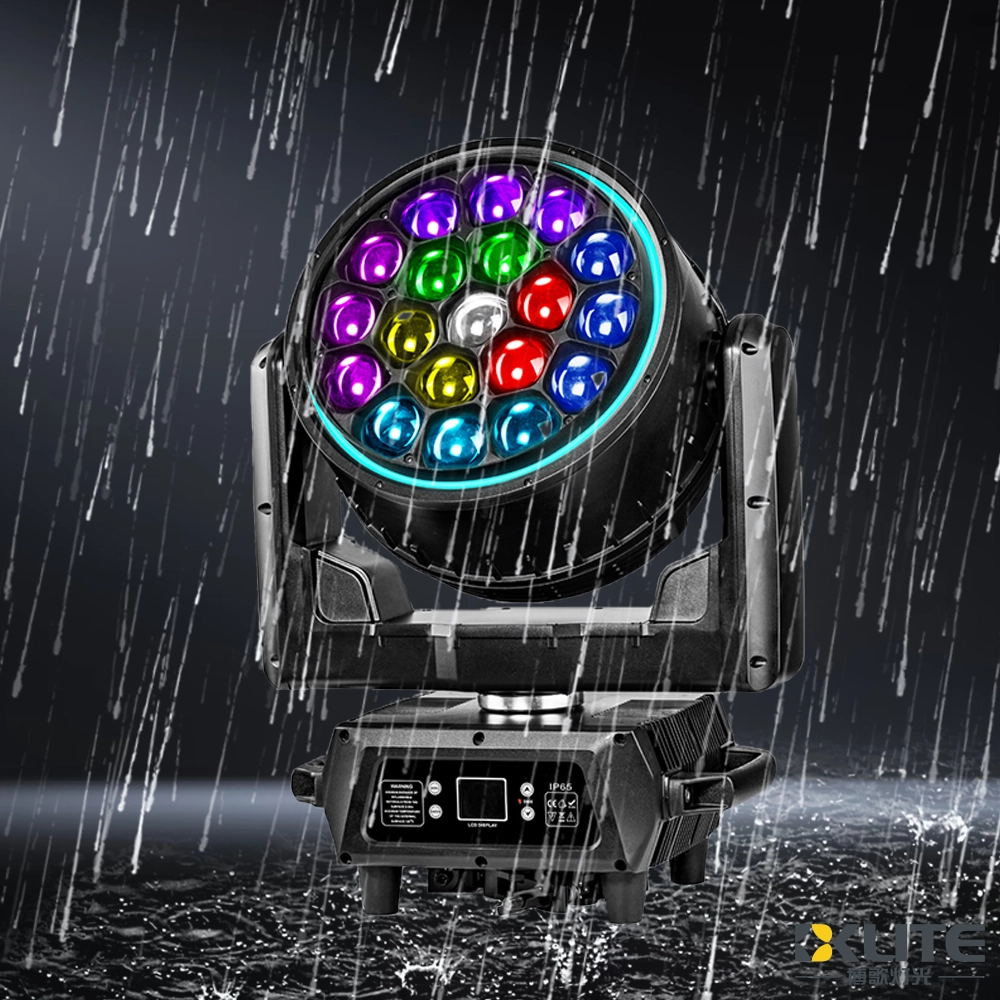
IP65 Waterproof Bee Eye Zoom 19x40W RGBW 4IN1 LED Beam Wash Moving Head Light with LED Ring
BKlite waterproof bee eye moving head light—your reliable choice from top waterproof moving head light manufacturers and suppliers. Ideal for outdoor stage, live event, music festival, this energy-saving fixture ensures powerful, precise illumination for any venue. It delivers powerful, reliable lighting performance in any weather.
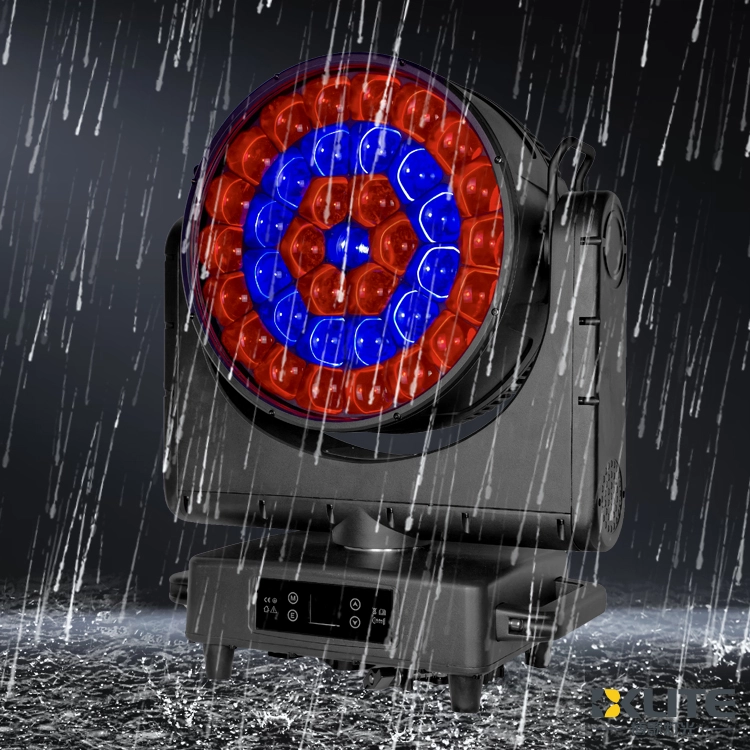
IP65 Waterproof ZOOM Bee Eye 37x40W RGBW 4in1 LED Moving Head Light
As a leading stage lighting equipment supplier with more than 15 years of industry know-how, BKlite brings you the IP65 ZOOM Bee Eye 37*40W RGBW 4in1 LED Moving Head Light (K25 Bee Eye) delivers vibrant, weatherproof lighting with powerful zoom and smooth movement. Ideal for dynamic stage effects, the K25 moving head light ensures stunning RGBW color mixing and reliable outdoor performance.
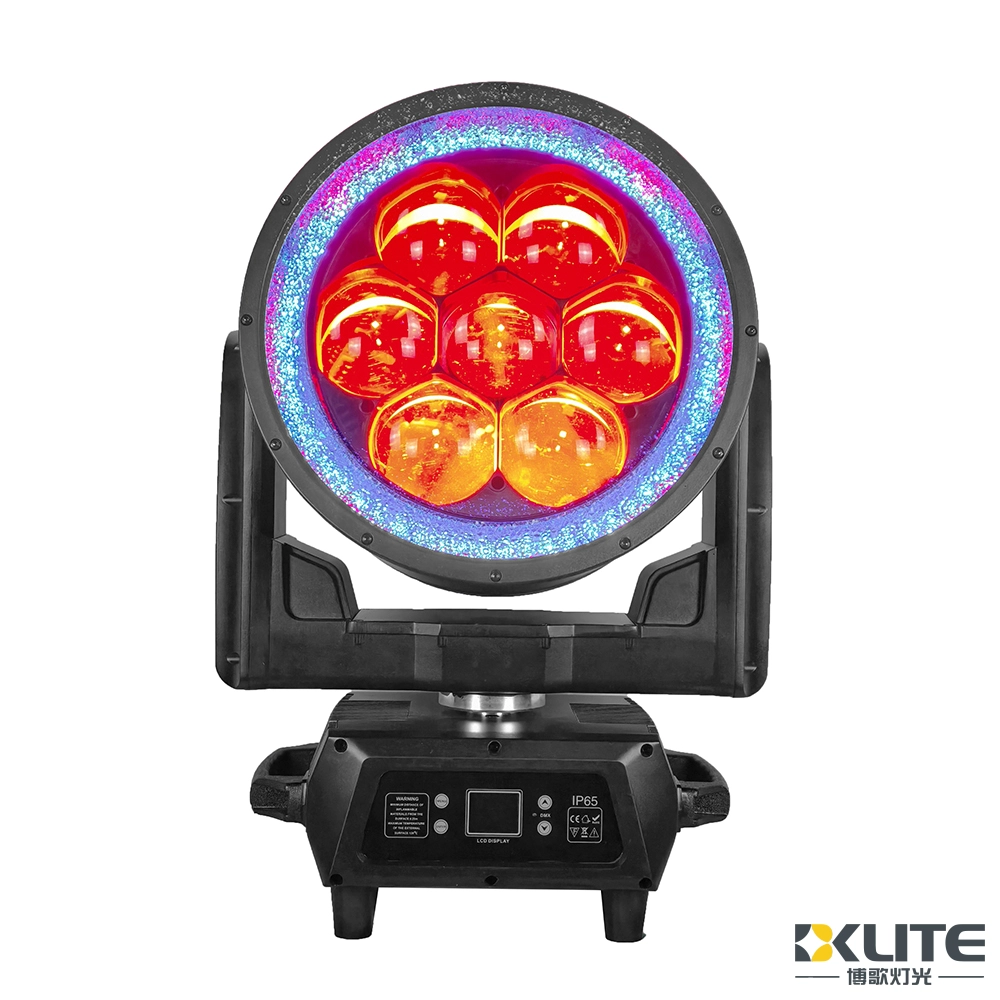
IP65 Waterproof Bee Eye 7x180W RGBL 4IN1 LED Moving Head Light With LED Ring
BKlite high power 7x180W waterproof bee eye moving head light—your reliable choice from top waterproof moving head light manufacturers and suppliers. Ideal for outdoor stage, live event, music festival, this energy-saving fixture ensures powerful, precise illumination for any venue. It delivers powerful, reliable lighting performance in any weather.


Copyright © 2025 BKLITE All Rights Reserved.