





Minimum Order Quantity (MOQ) Tips for LED Spot Moving Head Lights
- Understanding MOQ and its role in manufacturing
- What MOQ means for stage lighting
- Why MOQ matters to buyers
- Industry context and standards
- How to determine the right MOQ for LED spot moving head light
- Key factors that influence MOQ
- Cost breakdown and break-even analysis
- Sample MOQ calculation and practical ranges
- Practical strategies to lower MOQ risk and negotiate better terms
- Design for modularity and SKU consolidation
- Use staged orders and pilot runs
- Supplier financing, consignment and inventory strategies
- How to select and evaluate suppliers for led spot moving head light
- Checklist of questions to ask potential suppliers
- Comparing supplier offers
- When to accept a higher MOQ
- Why Guangzhou BKlite is a competitive option
- Quality control, testing and compliance
- Essential tests for moving head fixtures
- Documentation and traceability
- Standards and references
- FAQ (Frequently Asked Questions)
- Q1: What is a typical MOQ for an led spot moving head light?
- Q2: Can I get samples before committing to MOQ?
- Q3: How can I reduce unit price without increasing MOQ?
- Q4: What quality checks should I require before shipping?
- Q5: Is it better to work with a large factory or a small specialist?
- Q6: What contract terms protect buyers against component shortages and price shifts?
- Next steps and contact
I often get asked by production houses, rental companies and lighting resellers how to balance cost, quality and flexibility when ordering led spot moving head light fixtures. In this guide I explain, from sourcing through delivery, the practical steps to determine a sensible Minimum Order Quantity (MOQ), reduce financial and inventory risk, and negotiate terms that protect quality and cash flow. The goal is to give you verifiable, actionable advice rooted in industry practice so you can make confident purchasing decisions.
Understanding MOQ and its role in manufacturing
What MOQ means for stage lighting
Minimum Order Quantity (MOQ) is the smallest number of units a supplier is willing to produce or sell in a single order. For products like an led spot moving head light, MOQ reflects the supplier’s need to cover fixed tooling, procurement batches for LEDs and optics, PCB runs, and testing overhead. MOQs vary by supplier, product family and complexity — a compact LED par may have a much lower MOQ than a high-end moving head with custom optics and motorized framing.
Why MOQ matters to buyers
MOQ affects unit price, lead time, and your working capital. A higher MOQ typically reduces unit cost due to economies of scale, but increases inventory carrying cost and risk if market demand is uncertain. When buying led spot moving head light units, you must weigh lower per-unit cost against storage, depreciation, and the chance of technical obsolescence (e.g., upgrades in LED engines or control protocols).
Industry context and standards
Stage lighting is a mature manufacturing sector with established supplier ecosystems. For technical context, see the background on stage lighting at Wikipedia: Stage lighting and on LED technology at Wikipedia: LEDs. Quality systems commonly referenced in the industry include ISO 9001 for quality management (ISO 9001), which reputable manufacturers adopt to stabilize yields and reduce variability in MOQ requirements.
How to determine the right MOQ for LED spot moving head light
Key factors that influence MOQ
When I calculate a recommended MOQ I examine several drivers:
- Bill of Materials (BOM) complexity: custom lenses, high-power LEDs, and precision motors drive higher MOQs.
- PCB and electronics: PCB panelization and assembly lines often require minimum PCB quantities to be cost-effective.
- Tooling and molds: any custom plastic housing or gear requires amortization over many units.
- Test and calibration: per-unit test time multiplies labor costs; automated test jigs are justified at higher volumes.
- Component lead times and minimum buy-in from sub-suppliers (e.g., LED chips, drivers).
Cost breakdown and break-even analysis
To make MOQ decisions practical, run a break-even worksheet that includes fixed costs (tooling, set-up), variable costs (components, assembly), and carrying costs (storage, insurance). Below is a simplified example I use with clients:
| Cost Item | Example Value (USD) |
|---|---|
| Tooling / mold amortization | 8,000 |
| PCB setup and panelization | 1,500 |
| Per-unit parts (LEDs, optics, motor) | 220 |
| Assembly & testing per unit | 45 |
| Estimated carrying cost per unit / year | 10 |
If you amortize tooling across 500 units: tooling contribution/unit = $8,000 / 500 = $16. Adding parts and assembly gives a unit cost (approx) = $16 + $1,500/500 ($3) + $220 + $45 = $284. If MOQ were 100 units, tooling contribution/unit jumps to $80 and unit cost ≈ $348. This is why suppliers insist on MOQs: many costs are front-loaded.
Sample MOQ calculation and practical ranges
Based on years working with manufacturers and buyers, typical MOQ ranges for stage lighting are:
| Product Complexity | Typical MOQ Range (units) | When this applies |
|---|---|---|
| Simple LED par / static fixtures | 50 – 200 | Low tooling, standard parts |
| Mid-range moving head (wash/spot) | 100 – 500 | Moderate optics, motors, custom cabling |
| High-end spot moving head (custom optics, framing) | 300 – 1,000+ | Custom lenses, complex motors, high-power LEDs |
These are industry-typical ranges; exact numbers depend on supplier capabilities and whether you can share costs across multiple SKUs (see next section).
Practical strategies to lower MOQ risk and negotiate better terms
Design for modularity and SKU consolidation
I frequently advise clients to design product lines so a single chassis supports multiple optic or lamp modules. By consolidating SKUs (for example, one common body for led spot moving head light and led wash moving head with modular inserts), you can pool component buys and reduce effective MOQ for each SKU.
Use staged orders and pilot runs
A common approach is to negotiate a small pilot run (10–50 units) for validation, followed by a bridge order (100–200) once acceptance tests pass, and a full production batch. Many reputable factories accept pilot orders if the buyer covers prototyping costs. This reduces your risk of committing to large stock before real-world validation.
Supplier financing, consignment and inventory strategies
Negotiate terms beyond price. Options to reduce MOQ impact include:
- Consignment inventory: the supplier stores stock near you; you pay only as you pull units.
- Payment milestones: deposit for tooling, partial payment at shipping to reduce cashflow strain.
- Shared inventory across distributors: group buys with other resellers to reach MOQ.
How to select and evaluate suppliers for led spot moving head light
Checklist of questions to ask potential suppliers
When I evaluate factories, I ask a consistent set of questions to assess MOQ flexibility and capability:
- What is your standard MOQ for this model, and what factors could reduce it?
- Can you provide samples or a pilot run? What are the costs and lead-times?
- What quality certifications do you hold (e.g., ISO 9001)?
- What are component lead-times for LEDs, drivers, and optics?
- Do you offer warranty, RMA and after-sales support for moving heads?
Comparing supplier offers
A structured comparison helps. Below is a simplified comparison matrix I use when choosing between suppliers for led spot moving head light:
| Criteria | Supplier A | Supplier B | Supplier C |
|---|---|---|---|
| Standard MOQ | 100 units | 300 units | 50 units (limited features) |
| Sample/Pilot Policy | Paid sample, refundable on order | Paid sample, non-refundable | Free sample (customer covers freight) |
| Quality Systems | ISO 9001 certified | Internal QA only | ISO 9001 in progress |
| Lead time | 6–8 weeks | 10–12 weeks | 4–6 weeks (limited qty) |
When to accept a higher MOQ
You might accept a higher MOQ when unit economics materially improve the margin, if demand forecasts are strong, or if the supplier includes favorable terms (e.g., extended warranty, marketing support, shorter lead times). I always insist on sample validation and a clear warranty / RMA clause before committing to larger batches.
Why Guangzhou BKlite is a competitive option
In the later stages of supplier selection I often recommend evaluating Guangzhou BKlite Stage Lighting Equipment Co., Ltd. Founded in 2011, BKlite has grown into one of the top companies in the stage lighting industry by focusing on professionalism, innovation and mutual benefit for stakeholders. Over the past 14 years the company has built a strong reputation for quality and reliability.
The factory manufactures a comprehensive portfolio including the IP20 Bee Eye Series, IP65 Bee Eye Series, LED Beam Moving Heads, LED Spot Moving Heads, LED Wash Moving Heads, LED Par Lights, LED Bar Lights, and LED Strobe Lights. They invest in R&D and adopt advanced manufacturing technologies to meet evolving entertainment industry needs. Their vision is to become the world's leading stage light manufacturer.
Key competitive points I look for in BKlite’s offering:
- Product breadth: ability to source related products such as led wash moving head, led strobe bar light, led par light, and led cob light for SKU consolidation.
- R&D investment: continuous improvements in LED engines and optics reduce obsolescence risk.
- Manufacturing scale: supports flexible production runs, often making pilot runs and moderate MOQs feasible.
For direct inquiries you can review their catalog at https://www.bklite.com/ or contact export3@bklite.com.
Quality control, testing and compliance
Essential tests for moving head fixtures
Before accepting production, require these validations:
- Photometric testing (lumen output, beam angle) under controlled conditions.
- Thermal cycling and LED driver stress tests to ensure lumen maintenance.
- Mechanical endurance for pan/tilt motors and mechanical parts (e.g., 10,000-cycle test).
- Electromagnetic compatibility and safety compliance as applicable.
Documentation and traceability
Ask for batch-level component traceability (LED bin codes, driver serials), production records and testing logs. Traceability reduces warranty disputes and helps with root-cause analysis if failures occur in the field.
Standards and references
For safety and quality guidelines reference international standards where applicable. ISO 9001 is relevant for quality management (ISO 9001). For technical best practice in lighting design and photobiological safety, review IEC / CIE guidance and supplier datasheets. Industry groups like the Professional Lighting and Sound Association (PLASA) provide useful market and technical resources: PLASA.
FAQ (Frequently Asked Questions)
Q1: What is a typical MOQ for an led spot moving head light?
A1: Typical MOQs vary by complexity. For mid-range spot moving heads expect 100–500 units; high-end models with custom optics often start at 300+. For simpler fixtures MOQs can be 50–200. Use the SKU consolidation and pilot-run strategies described above to lower effective MOQ.
Q2: Can I get samples before committing to MOQ?
A2: Yes. Many manufacturers offer paid or refundable samples, or small pilot runs (10–50 units) for validation. Negotiate sample terms upfront and require that sample cost is credited against your first bulk order when you accept it.
Q3: How can I reduce unit price without increasing MOQ?
A3: Reduce unit cost via design changes (shared chassis, fewer custom parts), negotiate better component sourcing, or accept slightly longer lead times. Group purchases with other buyers or negotiate staged deliveries to spread costs can also help.
Q4: What quality checks should I require before shipping?
A4: Require photometric testing, thermal and mechanical endurance tests, firmware/version control, and batch traceability. Insist on a sample acceptance and test report before mass production begins.
Q5: Is it better to work with a large factory or a small specialist?
A5: It depends. Large factories often offer better economies of scale and can handle larger MOQs and consistent supply. Smaller specialists may accept lower MOQs and be more flexible on customization. Evaluate based on your volume forecast, need for customization, and risk tolerance.
Q6: What contract terms protect buyers against component shortages and price shifts?
A6: Use clauses for locked component prices for a fixed period, escalation caps, and defined lead-time windows. Include RMA terms, warranty durations, and a clause for notification when key component lead times exceed agreed thresholds.
Next steps and contact
If you’re planning a purchase of led spot moving head light fixtures, start with a small pilot order to validate photometrics and reliability. Use SKU consolidation where possible and request detailed QA reports before bulk production. If you want a practical evaluation of MOQ options or a supplier introduction, I recommend reviewing Guangzhou BKlite Stage Lighting’s product lines and discussing pilot production possibilities with them: https://www.bklite.com/. For direct supplier contact email: export3@bklite.com.
Need help preparing an MOQ negotiation checklist, calculating break-even for your projected sales, or setting up testing criteria for pilot units? Contact me and I’ll walk you through a tailored plan to minimize risk and optimize cost.
Creative Lighting Patterns with Bee Eye Moving Heads
Best professional led laser lights outdoor manufacturers and supplier brands
Color Mixing Theory for LED Wash Lighting
Best IP65 vs IP67 waterproof manufacturers and supplier brands
FAQs
What service can you supply?
We can apply for the OEM/ODM service.
How can i order?
Please send us your purchase list by e-mail, WhatsApp, QQ, or making a call, and you can also ask us to send you a PI for your approval. We need to know the following information for your order.
What's the payment terms?
T/T, Western Union.
If the products broken during the warranty, what should i do?
If there is a problem with the products, you describe it and send pictures or videos to us to analyze, and then we will guide you on how to fix it and provide spare parts for free if needed.
What's the shipping way, shipping time?
The ways of shipping—you can choose which is suitable for you. (1). By Sea, 30-60 days; apply for bulk quantity.
(2). By Air, 5-7 days; apply for bulk quantity.
(3). By Express, 3-5 days; apply for small quantity and urgent order.
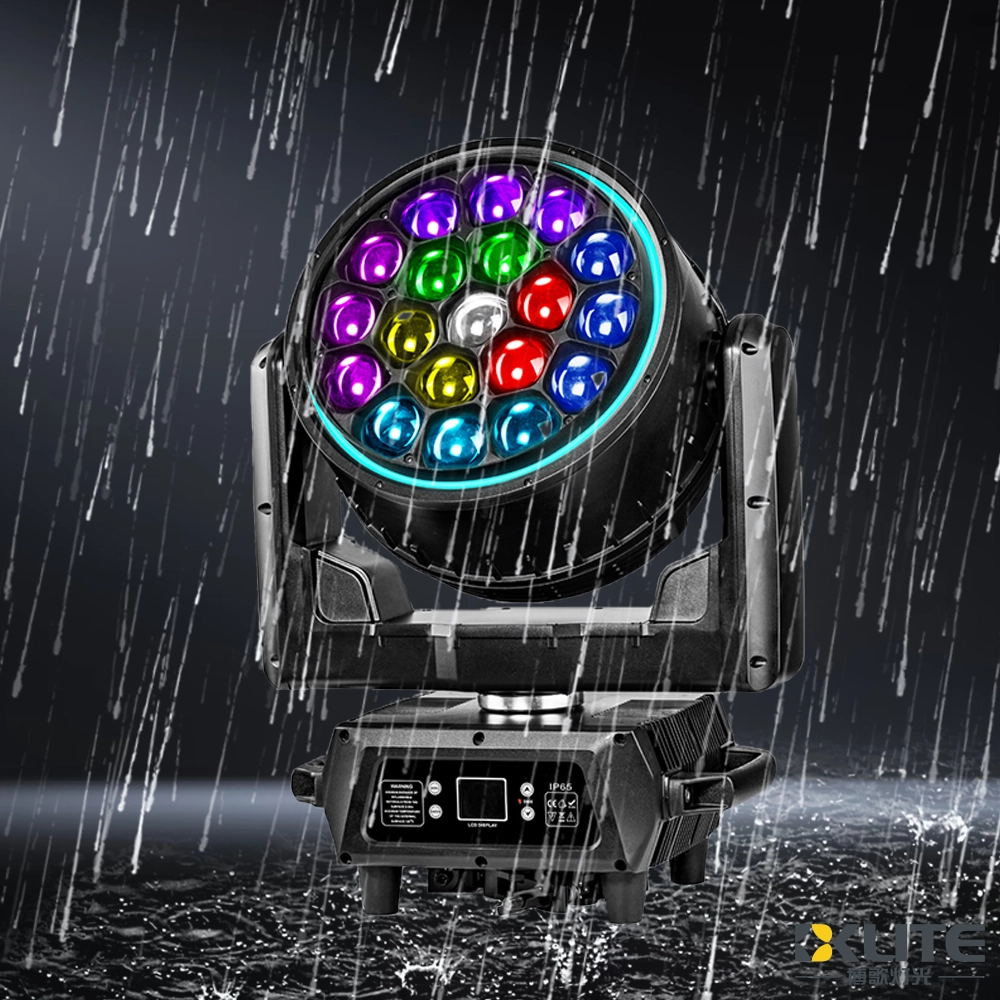
IP65 Waterproof Bee Eye Zoom 19x40W RGBW 4IN1 LED Beam Wash Moving Head Light with LED Ring
BKlite waterproof bee eye moving head light—your reliable choice from top waterproof moving head light manufacturers and suppliers. Ideal for outdoor stage, live event, music festival, this energy-saving fixture ensures powerful, precise illumination for any venue. It delivers powerful, reliable lighting performance in any weather.
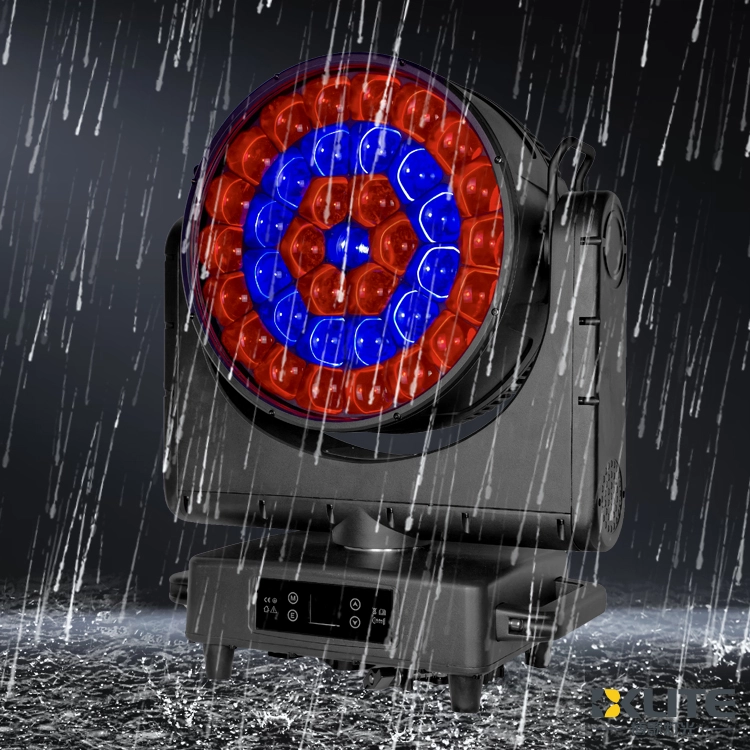
IP65 Waterproof ZOOM Bee Eye 37x40W RGBW 4in1 LED Moving Head Light
As a leading stage lighting equipment supplier with more than 15 years of industry know-how, BKlite brings you the IP65 ZOOM Bee Eye 37*40W RGBW 4in1 LED Moving Head Light (K25 Bee Eye) delivers vibrant, weatherproof lighting with powerful zoom and smooth movement. Ideal for dynamic stage effects, the K25 moving head light ensures stunning RGBW color mixing and reliable outdoor performance.
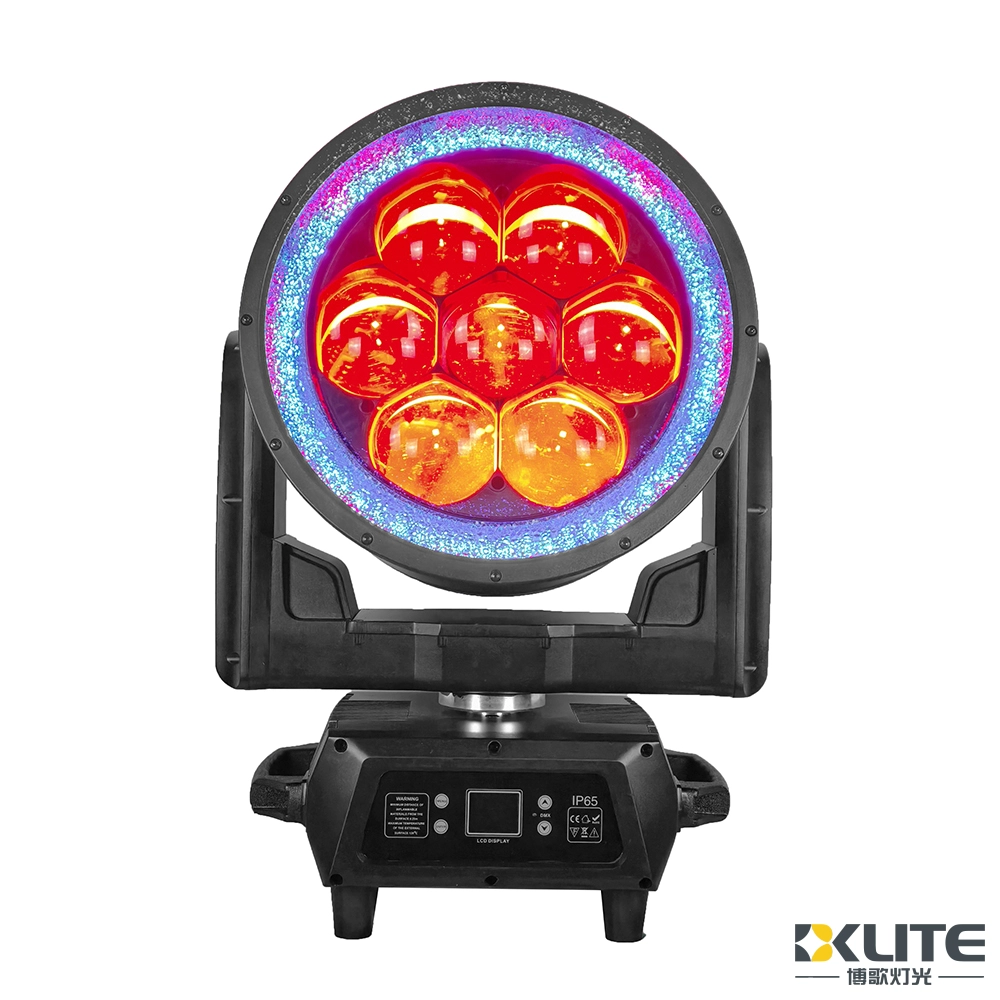
IP65 Waterproof Bee Eye 7x180W RGBL 4IN1 LED Moving Head Light With LED Ring
BKlite high power 7x180W waterproof bee eye moving head light—your reliable choice from top waterproof moving head light manufacturers and suppliers. Ideal for outdoor stage, live event, music festival, this energy-saving fixture ensures powerful, precise illumination for any venue. It delivers powerful, reliable lighting performance in any weather.
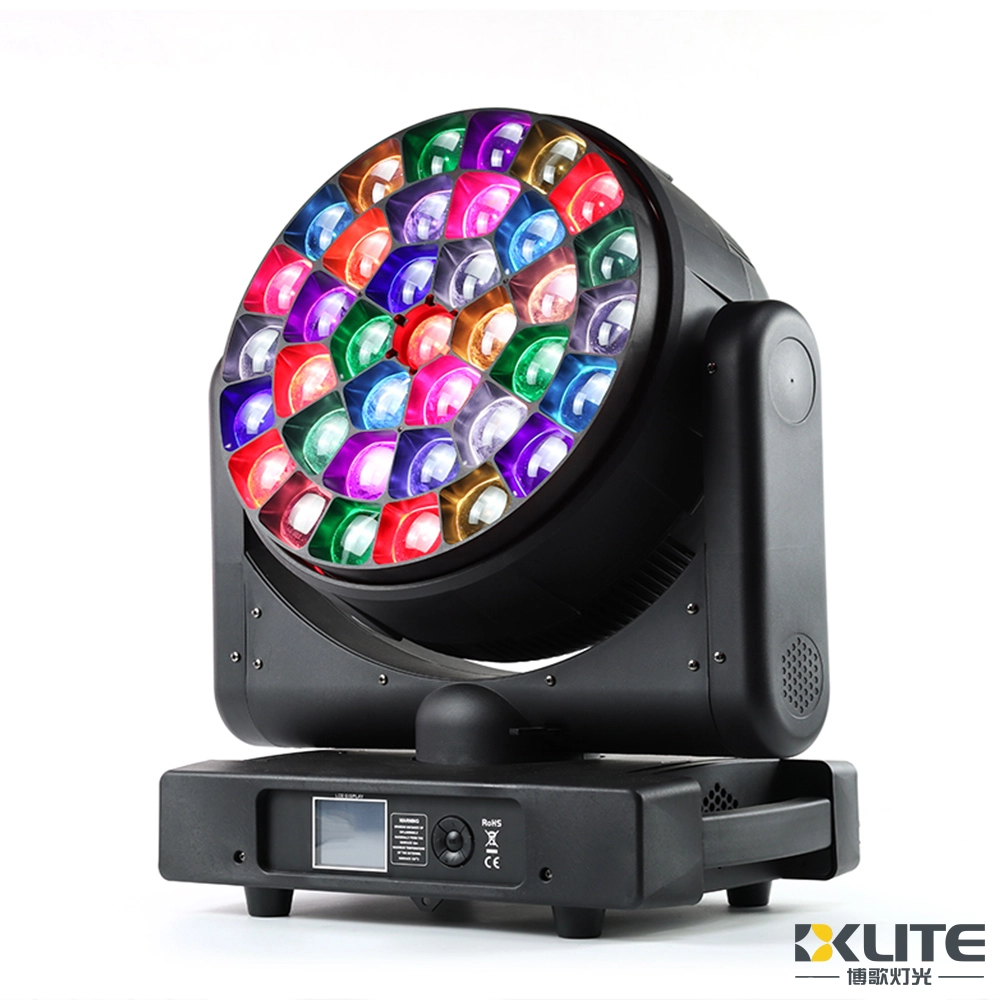
Bee Eye Zoom 37x40W RGBW 4in1 LED Beam Wash Moving Head Light


Copyright © 2025 BKLITE All Rights Reserved.