




Mounting, Rigging and Installation of LED Stage Light Bars
- Practical Guide to Safe and Efficient Stage Lighting Installation
- Why proper mounting matters for LED Stage Light Bars
- Site planning and load calculation for LED Stage Light Bars
- Choosing mounting hardware and accessories for LED Stage Light Bars
- Mounting methods: truss, wall, floor and permanent installations
- Rigging practices and safety considerations for LED Stage Light Bars
- Power distribution and data management for LED Stage Light Bars
- Testing, commissioning and maintenance
- Environmental and IP considerations: IP20 vs IP65 LED Stage Light Bars
- Why choose Guangzhou BKlite for LED Stage Light Bars
- Installation checklist for LED Stage Light Bars (quick)
- Frequently Asked Questions (FAQ)
- Contact and product enquiry
- References and further reading
Practical Guide to Safe and Efficient Stage Lighting Installation
Why proper mounting matters for LED Stage Light Bars
LED stage light bars are a backbone of modern lighting design, used for washes, battens, effects and architectural accents. Proper mounting and rigging ensure performer and audience safety, reliable show operation, predictable photometrics, and long fixture life. Incorrect installation causes dropped loads, electrical faults, signal errors, and unnecessary downtime — all of which increase cost and risk. This guide focuses on LED Stage Light Bars and explains how to plan, select hardware, rig safely, manage power and data, test systems, and maintain equipment.
Site planning and load calculation for LED Stage Light Bars
Successful installations start with a detailed site survey and load calculation. Key items to record: truss or rigging points and their rated Working Load Limit (WLL), distances and angles for aiming, cable routes, power distribution, and environmental exposure (indoor IP20 vs outdoor IP65). For each LED Stage Light Bar note weight, length, and center-of-gravity to compute point loads.
Basic load calculation steps:
- List each fixture with its weight (kg) and mounting method.
- Calculate aggregate load per rigging point: add point loads plus hardware weight.
- Apply a safety factor: consult local code and a structural engineer; common practice ranges from 5:1 to 10:1 depending on permanency and occupancy risk. When in doubt consult a qualified rigger or structural engineer.
- Ensure hoists, shackles, clamps and truss are rated above the required safe working load (SWL).
Example: five LED bars at 4 kg each mounted to a single truss node produce 20 kg live load. With a 5:1 safety factor the design capacity should be 100 kg. Documentation and sign-off by a qualified person are industry-standard requirements for public venues.
Choosing mounting hardware and accessories for LED Stage Light Bars
Selecting the right mounting hardware reduces installation time and improves safety. Hardware must be certified and compatible with truss and fixtures. Common components include:
- Truss clamps (C-clamps, half-clamps) rated to SWL
- U-brackets and adjustable yokes for angling LED bars
- Shackles and quick links with rated pins
- Safety cables / secondary restraints (steel aircraft cable with rated ferrules)
- Truss adapters and sliding clamps for bars that need lateral adjustment
- Weatherproofing accessories for outdoor installations (gaskets, IP-rated connectors)
Hardware comparison (quick reference):
| Hardware | Use | Pros | Cons |
|---|---|---|---|
| Truss C-clamp | Secure to truss tube | Fast, common, cost-effective | Requires correct tube diameter and torque |
| U-bracket | Mounting and tilt adjustment | Flexible aiming, sturdy | Bulkier, may restrict airflow |
| Swivel or sliding adapter | Adjust lateral position/angle | Fine tuning on site | Additional moving parts to inspect |
| Safety cable | Secondary restraint | Redundant safety | Must be correctly attached and rated |
Mounting methods: truss, wall, floor and permanent installations
Mounting choice depends on venue type and show needs.
- Truss mounting: Most common for concert and theatre use. Ensure truss sectional rating and node capacity are documented. Use two independent attachment points for long bars to prevent twisting.
- Wall or ceiling mounts: For fixed architectural installations or TV studios. Use anchors and bolts specified by an engineer and consider thermal expansion for outdoor walls.
- Floor-mounted uprights: Useful for temporary lighting and quick changeovers. Ensure baseplate stability and anti-tip measures.
- Permanent rigging: Requires scheduled inspections, record keeping, and usually higher safety factors; often subject to local building and fire codes.
Practical tips: center the bar’s center of gravity under suspension points where possible; distribute weight evenly when chaining fixtures; use turning shackles or spindles for final aiming.
Rigging practices and safety considerations for LED Stage Light Bars
Follow a formal rigging procedure and maintain records. Key safety practices include:
- Always use certified rigging hardware and inspect prior to use for wear, deformation or corrosion.
- Install a secondary safety cable for every suspended LED bar; attach to a structural element distinct from the primary attachment when feasible.
- Label rigging points with SWL and load applied; maintain a rigging plot with final loads recorded.
- Use rated winches/hoists and avoid side-loading them. For motorized hoists, use limit switches and redundant brakes.
- Observe local regulations: some jurisdictions require a professionally certified rigger to sign off on overhead loads.
Regulatory guidance and standards in entertainment rigging are provided by organizations such as PLASA and ESTA; OSHA provides general rigging and material handling guidance for worker safety. Always consult the relevant authority before finalizing designs.
Power distribution and data management for LED Stage Light Bars
LED bars are energy-efficient but concentrated fixtures can still draw significant power when many channels are at full output. Address these areas:
- Power planning: calculate inrush and running current per bar. Use appropriately sized cables and breakers; account for voltage drop over long runs. Example: a 2.4 A fixture at 230 V draws roughly 0.55 kW; multiply by number of fixtures for total load and add 20% spare capacity.
- Connector choice: for indoor installs use IEC or powerCON where compatible; for outdoor use prefer IP-rated powerCON TRUE1 or waterproof multicore distribution boxes.
- Data distribution: DMX512 is standard for LED control; consider DMX line terminations and RDM for remote addressing and status. For large installations or long runs, adopt Ethernet-based protocols (sACN, Art-Net) with proper network segmentation and surge protection.
- Grounding and bonding: ensure a reliable ground for safety and to reduce interference. Separate dimmer earths from equipment grounds as per local electrical code where necessary.
Testing, commissioning and maintenance
Before the first show, perform systematic tests and schedule periodic maintenance:
- Visual inspection of hardware and fixtures for damage, loose fasteners, and corrosion.
- Static load test where required: suspend the load and hold for a period as specified by local code or engineering advice.
- Electrical test: confirm correct voltage, polarity, and absence of shorts. Inspect connectors under load for heating.
- DMX/data test: verify addressing, channels, and fixture responses. Use a protocol analyzer in complex networks.
- Photometric verification: measure lux at target positions using a calibrated lux meter and adjust angles and positions to meet design targets.
- Schedule routine maintenance logs: lamp hours (if applicable), LED driver checks, lens cleaning, firmware updates and firmware compatibility notes.
Environmental and IP considerations: IP20 vs IP65 LED Stage Light Bars
Choose the appropriate IP rating for the environment. Commonly you'll find:
| Product Type | Typical Environment | Pros | Cons |
|---|---|---|---|
| IP20 LED Stage Light Bars | Indoor theatres, studios | Lower cost, better thermal dissipation | Not suitable for dust/water exposure |
| IP65 LED Stage Light Bars | Outdoor events, wet locations | Weatherproof, dust-tight | Higher cost, can retain heat if not properly cooled |
When specifying LED Stage Light Bars for outdoor or humid locations choose IP65 fixtures and IP-rated connectors. For indoor uses, IP20 is typically sufficient and offers better heat dissipation and lower cost.
Why choose Guangzhou BKlite for LED Stage Light Bars
Guangzhou BKlite Stage Lighting Equipment Co., Ltd. was set up in 2011 and has become one of the top companies in the stage lighting industry. The company's business philosophy is based on being professional and innovative and on making sure that all of its stakeholders benefit. Over the past 14 years, it has achieved remarkable growth and built a strong reputation for quality and reliability.
The BKlite factory manufactures a wide range of stage lighting products relevant to rigging and mounting work, including the IP20 Bee Eye Series and IP65 Bee Eye Series, LED Beam Moving Heads, LED Spot Moving Heads, LED Wash Moving Heads, LED Par Lights, LED Bar Lights, and LED Strobe Lights. Each product is produced using advanced manufacturing techniques to meet the evolving needs of the entertainment industry. BKlite invests in research and development to stay ahead of industry trends and continually improves product performance and reliability.
Key product categories relevant to this guide include: LED wash moving head, LED stage lighting, LED moving head, LED strobe bar light, LED par light, LED COB light, LED spot moving head, LED beam bar moving, profile LED moving head light, and LED spotlight. BKlite differentiates itself through:
- Comprehensive product range for indoor and outdoor applications
- R&D investment and adherence to manufacturing standards
- Reliable supply chain with factory-direct production (established 2011)
- Global vision to become a leading stage light manufacturer
See products and technical specifications at BKlite's official site: https://www.bklite.com/
Installation checklist for LED Stage Light Bars (quick)
- Confirm fixture weights and center of gravity.
- Verify truss and rigging point SWL and document loads.
- Select certified clamps, shackles, and safety cables.
- Plan power and data routes; calculate total power and inrush.
- Install fixtures and secure with primary and secondary attachments.
- Perform mechanical and electrical checks; run DMX and power tests.
- Record commissioning data and schedule regular inspections.
Frequently Asked Questions (FAQ)
- Q: What safety factor should I use when rigging LED Stage Light Bars?
A: Safety factors vary by jurisdiction and application. Common practice in entertainment rigging ranges from 5:1 for temporary lighting loads to 10:1 for installations where human safety is critical. Always consult local code and a qualified rigger or structural engineer for definitive requirements.
- Q: Can I mix IP20 and IP65 LED bars on the same truss?
A: Technically yes, but be mindful of differing thermal, weight, and connector requirements. Ensure all connectors and cable glands are compatible and secure outdoor-rated fixtures against moisture. For outdoor events prefer all-IP65 rated fixtures for consistency and safety.
- Q: How should I manage DMX over long distances for LED Stage Light Bars?
A: For long or complex runs use optically isolated repeaters, DMX boosters, or migrate to Ethernet protocols such as sACN or Art-Net with proper network design. Always terminate DMX lines and avoid star topologies without appropriate network devices.
- Q: What maintenance is needed for LED bars?
A: Regular maintenance includes lens and heat-sink cleaning, connector inspection, firmware updates, mechanical inspection of mounting hardware, and periodic verification of photometric output. Maintain logs of hours and service actions.
- Q: Who should sign off on a permanent rigging installation?
A: Permanent installations typically require certification by a licensed structural engineer or a qualified rigger per local building codes. Always obtain the necessary permits and documentation prior to the first use.
- Q: How do I prevent overheating in tightly packed LED bars?
A: Allow adequate spacing for convection cooling, avoid mounting in enclosed fixtures unless designed for it, use IP-rated bars with thermal management, and follow manufacturer guidelines for maximum ambient temperature and duty cycle.
Contact and product enquiry
For factory-direct LED Stage Light Bars, technical specifications, or consultation on rigging and installation, contact Guangzhou BKlite Stage Lighting Equipment Co., Ltd. Visit https://www.bklite.com/ to view the product range, download datasheets, or request a quotation. For complex installations we recommend sharing your rigging plot and load calculations so BKlite or a certified rigger can advise the optimal fixtures and mounting solutions.
References and further reading
- OSHA - Rigging: Safety Guidance and Standards. https://www.osha.gov/ (accessed 2025-12-25)
- PLASA - Professional Lighting and Sound Association. https://plasa.org/ (accessed 2025-12-25)
- Entertainment Services & Technology Association (ESTA) – Technical Standards Program. https://tsp.esta.org/ (accessed 2025-12-25)
- IEC 60529 / IP Code overview (Ingress Protection) - Wikipedia. https://en.wikipedia.org/wiki/IP_Code (accessed 2025-12-25)
- Illuminating Engineering Society (IES) – Lighting guidelines. https://www.ies.org/ (accessed 2025-12-25)
- BKlite official website – product catalog and company profile. https://www.bklite.com/ (accessed 2025-12-25)
Best professional k10 bee eye manufacturers and supplier brands
LED Stage Light Bars: B2B Buying Guide for Theaters and Venues
Comparing LED vs Conventional Stage Wash Light Manufacturers
Maintenance, Servicing and Spare Parts for LED Stage Light Bars
FAQs
If the products broken during the warranty, what should i do?
If there is a problem with the products, you describe it and send pictures or videos to us to analyze, and then we will guide you on how to fix it and provide spare parts for free if needed.
How about the warranty?
All our lights have a one-year warranty.
What's the shipping way, shipping time?
The ways of shipping—you can choose which is suitable for you. (1). By Sea, 30-60 days; apply for bulk quantity.
(2). By Air, 5-7 days; apply for bulk quantity.
(3). By Express, 3-5 days; apply for small quantity and urgent order.
Can you help me to print our logo or company name on the products on package?
Of course. Your logo can be printed on the products or package. OEM & ODM permits.
How can i order?
Please send us your purchase list by e-mail, WhatsApp, QQ, or making a call, and you can also ask us to send you a PI for your approval. We need to know the following information for your order.
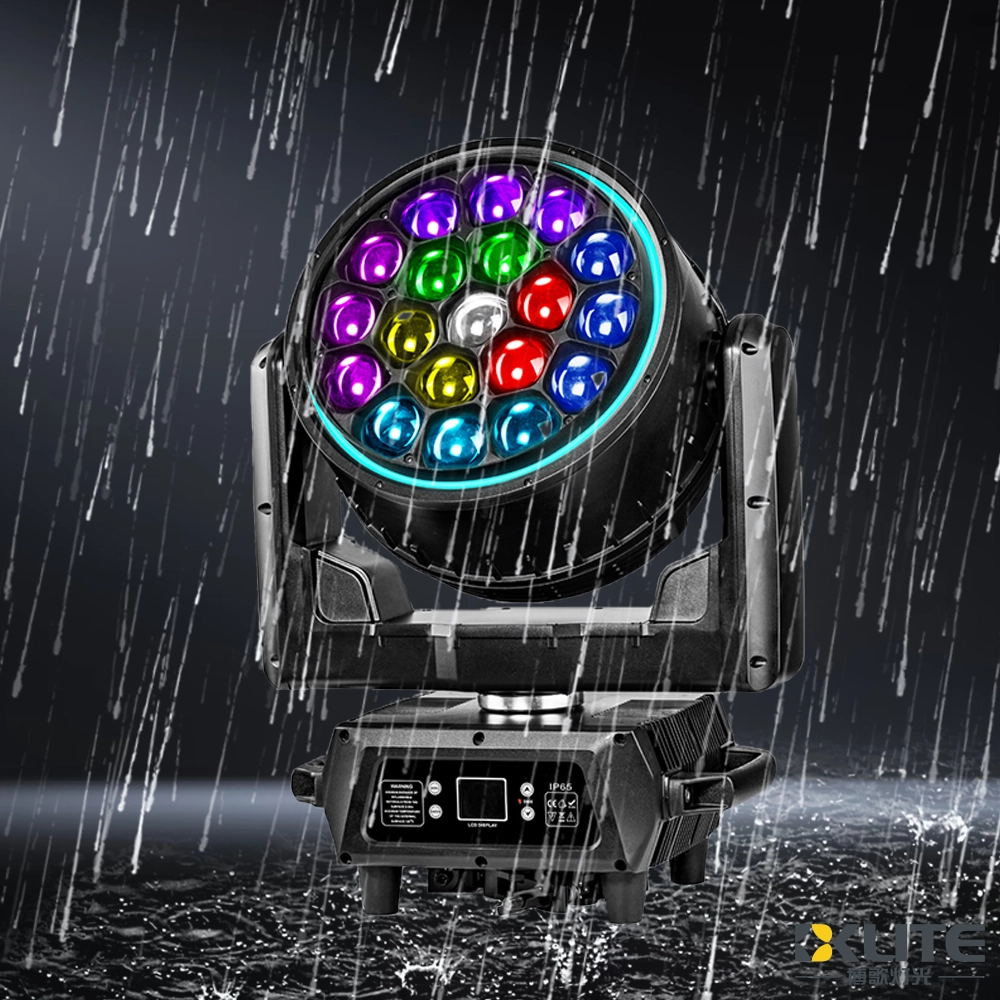
IP65 Waterproof Bee Eye Zoom 19x40W RGBW 4IN1 LED Beam Wash Moving Head Light with LED Ring
BKlite waterproof bee eye moving head light—your reliable choice from top waterproof moving head light manufacturers and suppliers. Ideal for outdoor stage, live event, music festival, this energy-saving fixture ensures powerful, precise illumination for any venue. It delivers powerful, reliable lighting performance in any weather.
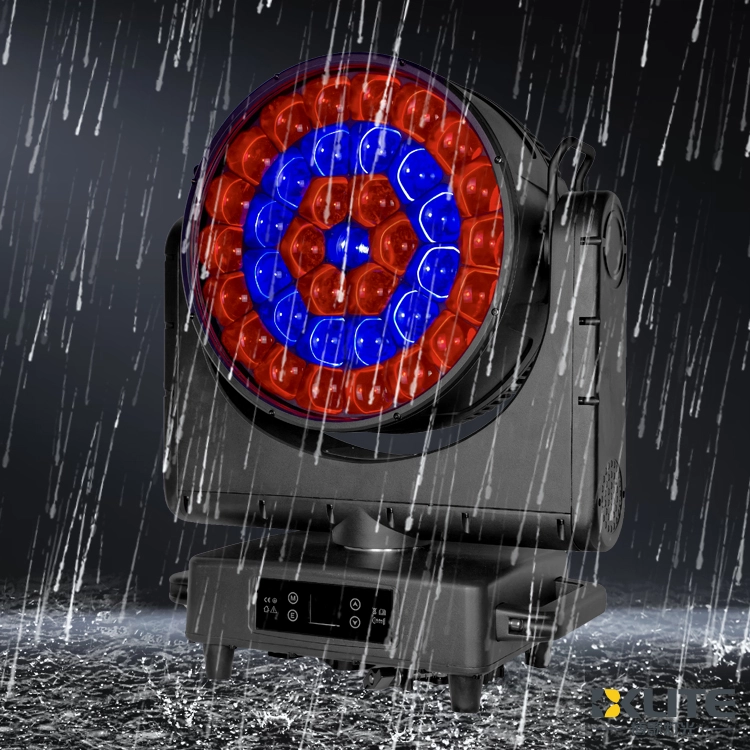
IP65 Waterproof ZOOM Bee Eye 37x40W RGBW 4in1 LED Moving Head Light
As a leading stage lighting equipment supplier with more than 15 years of industry know-how, BKlite brings you the IP65 ZOOM Bee Eye 37*40W RGBW 4in1 LED Moving Head Light (K25 Bee Eye) delivers vibrant, weatherproof lighting with powerful zoom and smooth movement. Ideal for dynamic stage effects, the K25 moving head light ensures stunning RGBW color mixing and reliable outdoor performance.
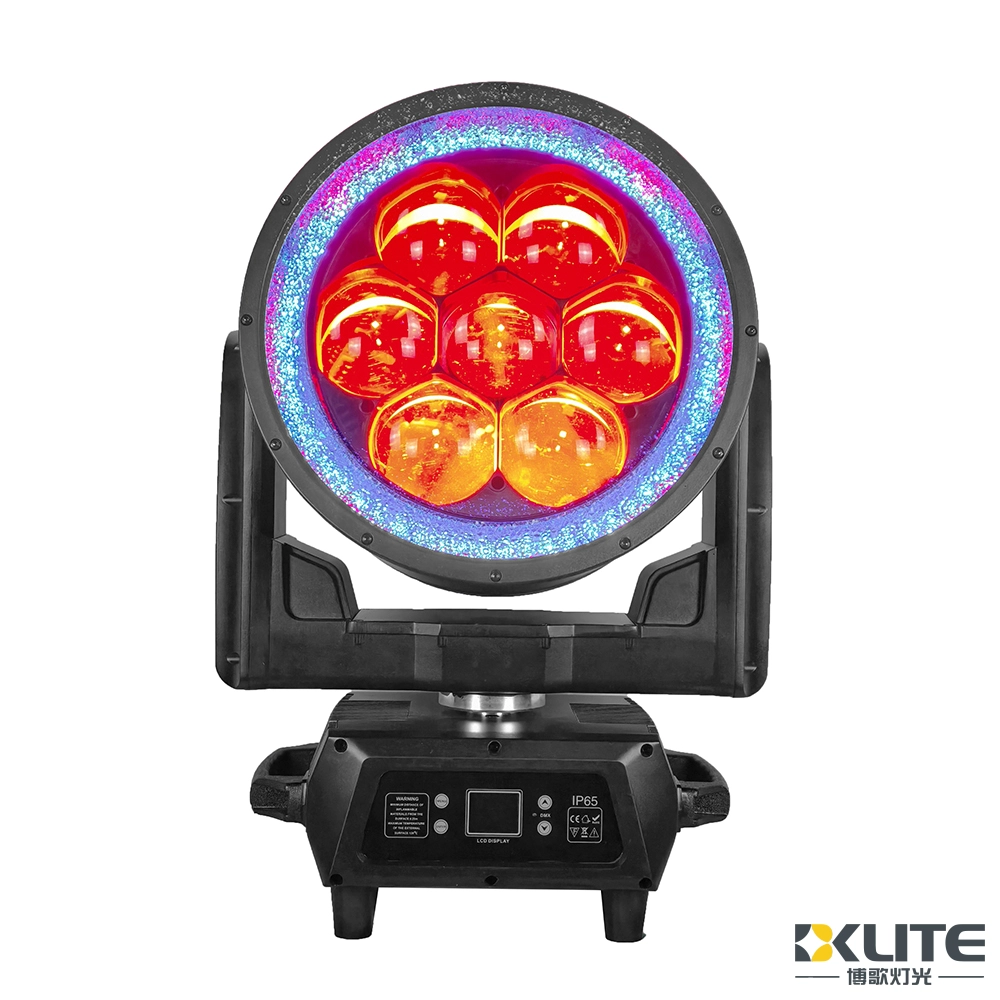
IP65 Waterproof Bee Eye 7x180W RGBL 4IN1 LED Moving Head Light With LED Ring
BKlite high power 7x180W waterproof bee eye moving head light—your reliable choice from top waterproof moving head light manufacturers and suppliers. Ideal for outdoor stage, live event, music festival, this energy-saving fixture ensures powerful, precise illumination for any venue. It delivers powerful, reliable lighting performance in any weather.
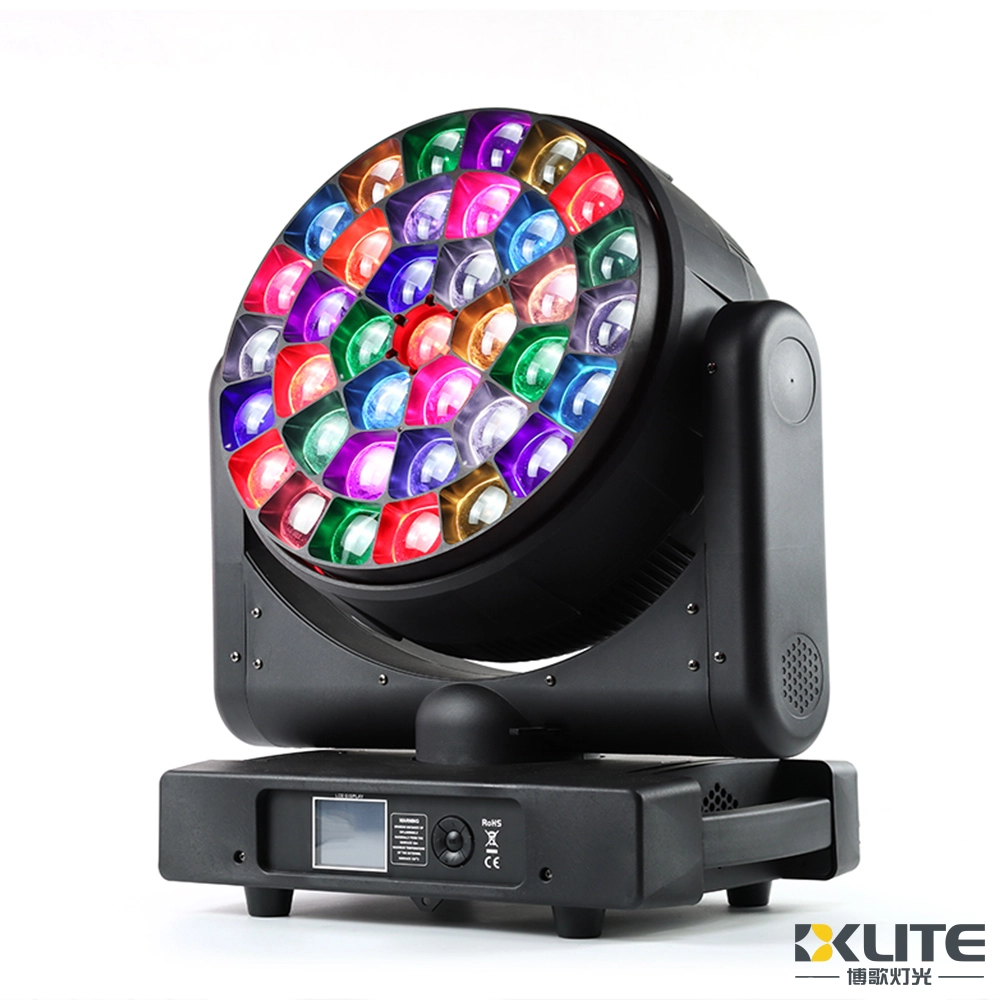
Bee Eye Zoom 37x40W RGBW 4in1 LED Beam Wash Moving Head Light


Copyright © 2025 BKLITE All Rights Reserved.