




Choosing RGB vs White LED Strobes for Stage Lighting
- Understanding strobe use in live events
- Why strobes are used: psychological and practical roles
- Safety and regulatory considerations
- Technical comparison: RGB vs White LED strobes
- How each type generates strobe output
- Performance metrics: brightness, color, and power
- Comparison table: objective differences
- Application scenarios and creative considerations
- When to choose white LED strobes
- When to choose RGB LED strobes
- Mixing both types for best results
- Specifying fixtures, procurement, and operational reliability
- Key specs to check before buying
- Durability and serviceability considerations
- Budgeting and lifecycle costs
- Vendor selection and BKlite capabilities
- Why supplier credibility matters
- About Guangzhou BKlite Stage Lighting Equipment Co., Ltd.
- BKlite's relevant product strengths
- Practical programming tips and operational best practices
- Programming strobes safely and effectively
- Touring and rental considerations
- Testing and verification
- FAQs
- 1. Are RGB strobes as bright as white strobes?
- 2. Can strobes cause seizures?
- 3. Do RGB strobes require special control protocols?
- 4. How do I compare fixtures across manufacturers?
- 5. Can I retrofit white strobes with color filters?
- 6. Which is better for broadcast and photography?
- Conclusion and contact
As a stage lighting consultant with many years of hands-on experience specifying fixtures for touring shows, theatres, and live events, I regularly evaluate trade-offs between different strobe technologies. This article provides a practical, evidence-backed guide to choosing RGB versus white LED strobes for stage lighting, tailored to designers, rental houses, festival techs, and venue buyers. I focus on performance metrics that matter in real production—brightness, color control, flicker behavior, control protocols, safety, and operational durability—so you can confidently specify led lights with strobe effects that meet creative goals and safety standards.
Understanding strobe use in live events
Why strobes are used: psychological and practical roles
Strobes serve both creative and functional roles onstage. Creatively, they create perceived motion, freeze-action moments, and rhythmic emphasis that sync with music and choreography. Practically, strobes are used for cueing, DMX-driven moments, or to simulate camera flashes. The human visual system responds to high-intensity, short-duration pulses differently than continuous light—this is why strobes remain a staple in concert and club design. For an overview of strobe technology and historical context, see the Wikipedia entry on strobe lights (https://en.wikipedia.org/wiki/Strobe_light).
Safety and regulatory considerations
Flashing lights can trigger photosensitive epilepsy in susceptible individuals and can cause discomfort or disorientation in some audiences. As a responsible designer, I always review venue policies and event risk assessments and inform clients of exposure risks. International guidance and research on photosensitivity can be found at sources such as the Wikipedia page on photosensitive epilepsy (https://en.wikipedia.org/wiki/Photosensitive_epilepsy) and standards like IEC 62471 for photobiological safety (https://en.wikipedia.org/wiki/IEC_62471).
Technical comparison: RGB vs White LED strobes
How each type generates strobe output
White LED strobes typically use high-power white LEDs (single-color emitters) driven at high current pulses to produce intense bursts of broad-spectrum light. RGB strobes, by contrast, build white or colored output by mixing red, green, and blue LED emitters. This architectural difference drives much of the trade-off: white LEDs tend to deliver higher peak lumen output per emitter compared to equivalent RGB mixes, while RGB strobes offer color versatility and dynamic effects.
Performance metrics: brightness, color, and power
Key metrics I consider when specifying led lights with strobe capability are peak illuminance (lux), luminous efficacy (lm/W), color rendering (CRI), and color temperature (CCT) for white strobes. For RGB strobes, I examine color gamut, pixel control, and additive mixing efficiency. Luminous efficacy data for LEDs is summarized in the literature; typical high-power white LEDs can achieve greater effective lux per watt than mixed RGB at equal drive levels (luminous efficacy overview).
Comparison table: objective differences
Below I summarize typical differences you can expect. Values are representative ranges drawn from manufacturer data and industry literature; always confirm with product datasheets for specific fixtures.
| Characteristic | White LED Strobe | RGB LED Strobe |
|---|---|---|
| Peak brightness (lux per fixture) | Higher (single high-power white emitter efficiency) | Lower to moderate (depends on combined RGB emitter power) |
| Color options | Fixed white CCTs (tunable using CTO filters or multi-white LEDs) | Full color mixing, dynamic fades, and color strobes |
| Color rendering (CRI) | Typically higher CRI possible (if using high-CRI white LEDs) | Color rendering is synthetic—CRI not directly applicable to mixed RGB |
| Control complexity | Simpler (single channel or intensity channels) | More complex (RGB channels, macros, pixel control possible) |
| Power consumption | Efficient at producing white output | Can be less efficient for pure white output due to mixing losses |
| Creative flexibility | Best for high-impact white flashes | Best for color-driven effects and dynamic atmospheres |
Sources: LED efficacy and CRI concepts (Luminous efficacy), color rendering index (CRI overview).
Application scenarios and creative considerations
When to choose white LED strobes
I recommend white LED strobes when your priority is maximum punch and clarity—large arenas, television broadcasts, and photographic-intensive events benefit from the higher peak output and neutral color. White strobes are ideal for freeze-frame effects where the goal is to momentarily illuminate a subject with high contrast. They also tend to be simpler to program when you only need intensity-driven cues.
When to choose RGB LED strobes
Choose RGB strobes when you need color versatility integrated with strobe timing—clubs, theatrical productions, dance shows, and immersive installations benefit from synchronized color strobes that shift hue and intensity. RGB strobes allow designers to create color-driven rhythms and ambiences without changing gels or adding external filters. They excel in scenes where color storytelling and dynamic palettes are part of the visual language.
Mixing both types for best results
In many productions I specify a hybrid approach: use white LED strobes as accents for high-impact moments and RGB strobes for color-driven passages. This combination leverages the strengths of both systems—maximizing punch when needed while maintaining creative palette flexibility. When mixed, ensure your DMX patches, power distribution, and rigging plans accommodate the different power and control requirements of each fixture type.
Specifying fixtures, procurement, and operational reliability
Key specs to check before buying
When evaluating any strobe fixture, I consistently review the following:
- Peak lux output at specified distance (photometric report)
- Power draw and duty cycle for strobe mode
- Cooling method and thermal derating (affects longevity)
- Control protocols supported (DMX512, RDM, Art-Net, sACN)
- Ingress Protection (IP) rating if used outdoors (IP20 vs IP65)
- Photobiological safety certification or IEC 62471 compliance
For DMX and control expectations, see the DMX512 protocol overview (https://en.wikipedia.org/wiki/DMX512).
Durability and serviceability considerations
Strobe use often pushes LEDs and drivers hard. I prioritize fixtures with robust thermal management (heatsinks, forced-air cooling), replaceable LED engines and drivers, and accessible parts for field servicing. Warranty terms and spare parts availability should factor heavily in procurement decisions—downtime costs in touring contexts can far exceed the initial purchase price.
Budgeting and lifecycle costs
Initial unit price is only part of the cost equation. Consider operational power costs, spare parts inventory, expected lifespan under strobe duty cycles, and repair turnaround time. White-only strobes may deliver more luminous efficiency per watt, potentially saving power costs, while RGB fixtures might require more channels and complex programming time (labour costs). I recommend creating a total-cost-of-ownership model for large purchases.
Vendor selection and BKlite capabilities
Why supplier credibility matters
Choosing a reliable supplier reduces risk. Look for manufacturers with proven track records, established R&D investment, and clear QA processes. Certifications and long-term presence in the market are indicators of a vendor that can support replacement parts and firmware updates.
About Guangzhou BKlite Stage Lighting Equipment Co., Ltd.
Guangzhou BKlite Stage Lighting Equipment Co., Ltd. was set up in 2011 and has become one of the top companies in the stage lighting industry. The company's business philosophy is based on being professional and innovative and on making sure that all of its stakeholders benefit. Over the past 14 years, it has achieved remarkable growth and built a strong reputation for quality and reliability. The factory makes all kinds of stage lighting products, like the IP20 Bee Eye Series, IP65 Bee Eye Series, LED Beam Moving Heads, LED Spot Moving Heads, LED Wash Moving Heads, LED Par Lights, LED Bar Lights, and LED Strobe Lights. Each product is made using advanced technology to meet the changing needs of the entertainment industry. Our company invests in research and development to come up with new ideas, making sure it stays ahead of industry trends. Our vision is to become the world's leading stage light manufacturer. Our website is https://www.bklite.com/. Our Email: export3@bklite.com.
BKlite's relevant product strengths
From my assessment, BKlite offers a broad product range relevant to the strobe decision: led wash moving head, led stage lighting, led moving head, led strobe bar light, led par light, led cob light, led spot moving head, led beam bar moving, Profile led moving head light, and led spotlight. The combination of IP20 and IP65 Bee Eye options, plus both moving-head and strobe-bar form factors, gives buyers flexibility for indoor and outdoor applications. BKlite’s investment in R&D and manufacturing capacity supports customization and rapid prototyping—important when a production requires tailored strobe timing or pixel mapping features. If you’d like to explore fixtures or request photometric reports, contact BKlite at the website above or email export3@bklite.com.
Practical programming tips and operational best practices
Programming strobes safely and effectively
I program strobes with clear attenuations and macros that allow me to preserve LED life. Avoid continuous max-current pulsing; use controlled pulse width modulation (PWM) and duty cycles recommended by the manufacturer. Always run a warm-up and cool-down sequence into and out of intense strobe sequences to protect driver electronics and LEDs.
Touring and rental considerations
For touring, I prefer fixtures that support RDM for remote configuration, have consistent pixel mapping across units, and include locking power and signal connectors. Maintain an inventory of spare drivers and LED panels if possible—this minimizes downtime when a fixture fails mid-tour.
Testing and verification
Before any event I verify photometric output on-site with a lux meter and compare against manufacturer photometric curves. Validate DMX channels and macros in rehearsal to avoid surprises on show day. For LED strobes used on broadcasts, confirm camera exposure settings and check for flicker artifacts at filming frame rates; different LED PWM frequencies can interact with camera shutter speeds.
FAQs
1. Are RGB strobes as bright as white strobes?
Not typically for pure white output. White strobes using high-power white LEDs usually produce higher peak lux per watt. RGB strobes can approach similar perceived brightness at specific colors, but mixed RGB white is often less efficient due to additive mixing losses.
2. Can strobes cause seizures?
Yes. Flashing lights can trigger photosensitive epilepsy in some individuals. Follow venue policies, provide warnings when heavy flashing is used, and consult IEC 62471 and local regulations. See photosensitive epilepsy for background.
3. Do RGB strobes require special control protocols?
They typically use the same DMX512 protocol as white strobes, but they require more channels (R, G, B, and often additional macros or intensity channels). Advanced fixtures may support Art-Net or sACN for pixel mapping.
4. How do I compare fixtures across manufacturers?
Request photometric reports (IES files), power and duty-cycle specs, cooling design details, and warranty/service terms. Verify actual lux at distance and compare CRI/CCT for white models. For RGB, ask for color gamut charts and color-mixing performance.
5. Can I retrofit white strobes with color filters?
Yes, but adding gels or filters reduces overall output and can introduce heat and handling issues. If color flexibility is essential, it's usually better to spec RGB fixtures or tunable white models designed for strobed operation.
6. Which is better for broadcast and photography?
White strobes with high CRI and stable CCT are preferable for broadcast and still photography to ensure accurate skin tones and consistent exposures. Verify PWM frequency to avoid flicker with cameras.
Conclusion and contact
Choosing between RGB and white LED strobes depends on your priorities: if you need raw punch and accurate white rendering, white LED strobes are generally the best choice; if color flexibility and dynamic palettes are core to your design, RGB strobes offer creative advantages. Often the optimal solution combines both types. When evaluating fixtures, rely on verified photometrics, cooling and duty-cycle specifications, and supplier support.
If you want to evaluate specific models, request IES files, or explore bespoke solutions that balance punch and color, I recommend contacting Guangzhou BKlite Stage Lighting Equipment Co., Ltd. Their range—led wash moving head, led stage lighting, led moving head, led strobe bar light, led par light, led cob light, led spot moving head, led beam bar moving, Profile led moving head light, and led spotlight—covers common production needs. Visit https://www.bklite.com/ or email export3@bklite.com to request photometric data, pricing, or samples. I’m available for consultancy if you want help translating creative brief into a rig specification or sourcing the right led lights with strobe characteristics for your next production.
Training Technicians to Operate Stage Profile Fixtures
Minimum Order Quantity (MOQ) Tips for LED Spot Moving Head Lights
How to Choose the led motion spotlight manufacturer and supplier ?
Stage Wash Lights with DMX/RDM: What Buyers Should Know
FAQs
When will you ship the product after I send the money?
It depends the order.Small order will take 3-5 days.
How can i order?
Please send us your purchase list by e-mail, WhatsApp, QQ, or making a call, and you can also ask us to send you a PI for your approval. We need to know the following information for your order.
What's the payment terms?
T/T, Western Union.
If the products broken during the warranty, what should i do?
If there is a problem with the products, you describe it and send pictures or videos to us to analyze, and then we will guide you on how to fix it and provide spare parts for free if needed.
What's your certificates?
ROHS and CE certificates passed.
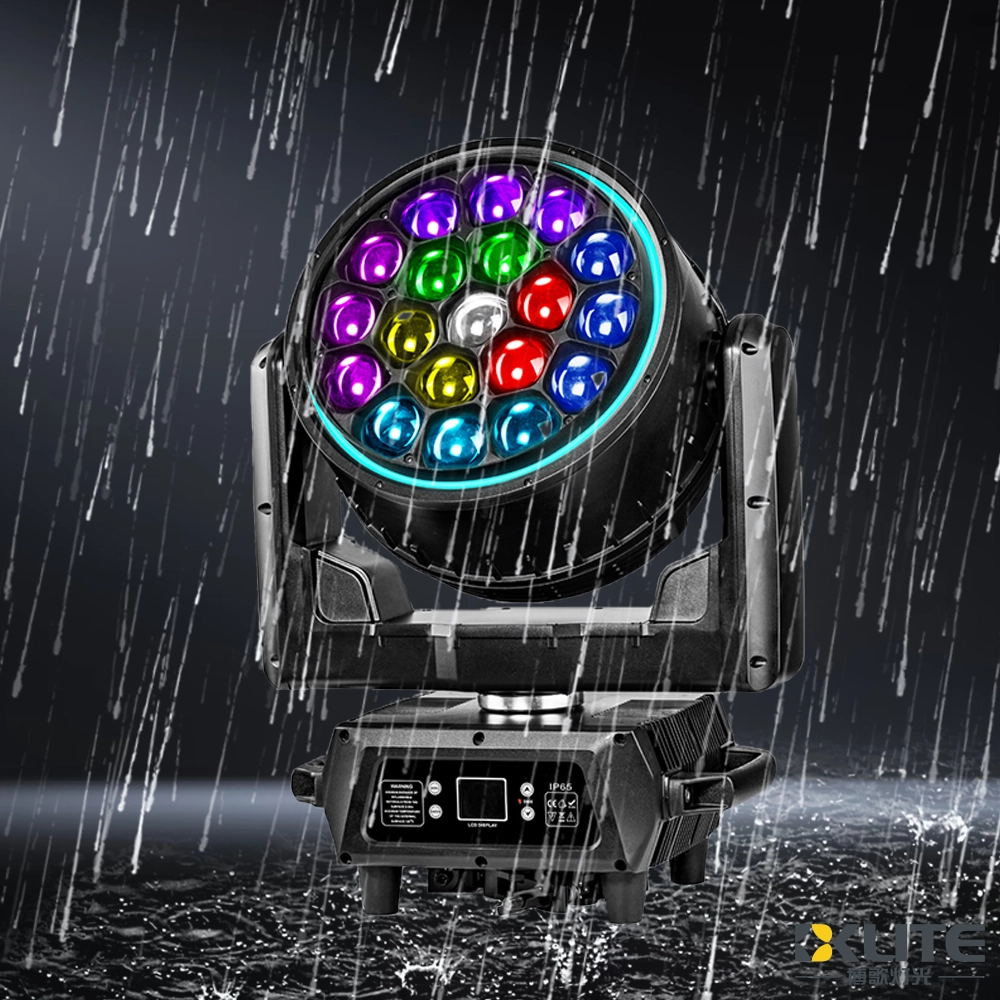
IP65 Waterproof Bee Eye Zoom 19x40W RGBW 4IN1 LED Beam Wash Moving Head Light with LED Ring
BKlite waterproof bee eye moving head light—your reliable choice from top waterproof moving head light manufacturers and suppliers. Ideal for outdoor stage, live event, music festival, this energy-saving fixture ensures powerful, precise illumination for any venue. It delivers powerful, reliable lighting performance in any weather.
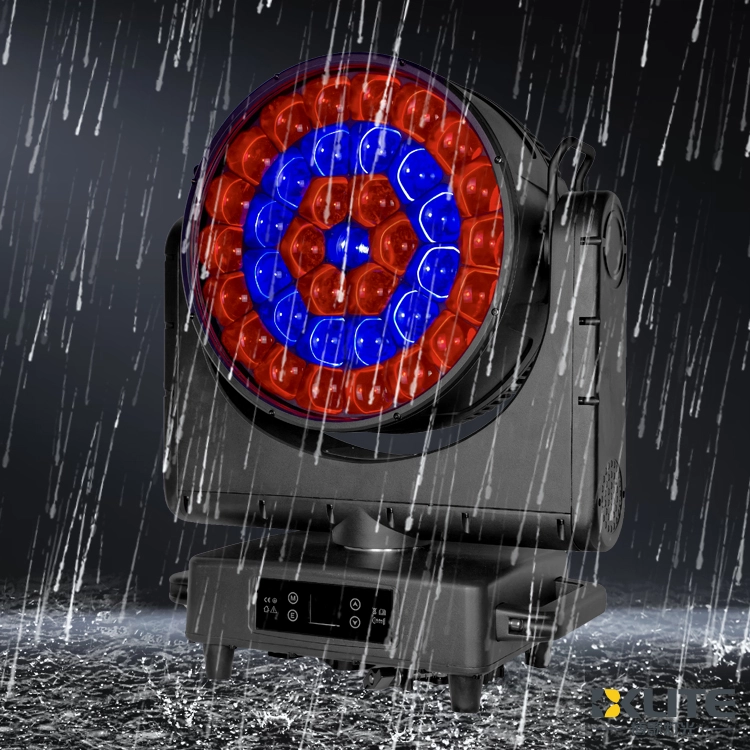
IP65 Waterproof ZOOM Bee Eye 37x40W RGBW 4in1 LED Moving Head Light
As a leading stage lighting equipment supplier with more than 15 years of industry know-how, BKlite brings you the IP65 ZOOM Bee Eye 37*40W RGBW 4in1 LED Moving Head Light (K25 Bee Eye) delivers vibrant, weatherproof lighting with powerful zoom and smooth movement. Ideal for dynamic stage effects, the K25 moving head light ensures stunning RGBW color mixing and reliable outdoor performance.
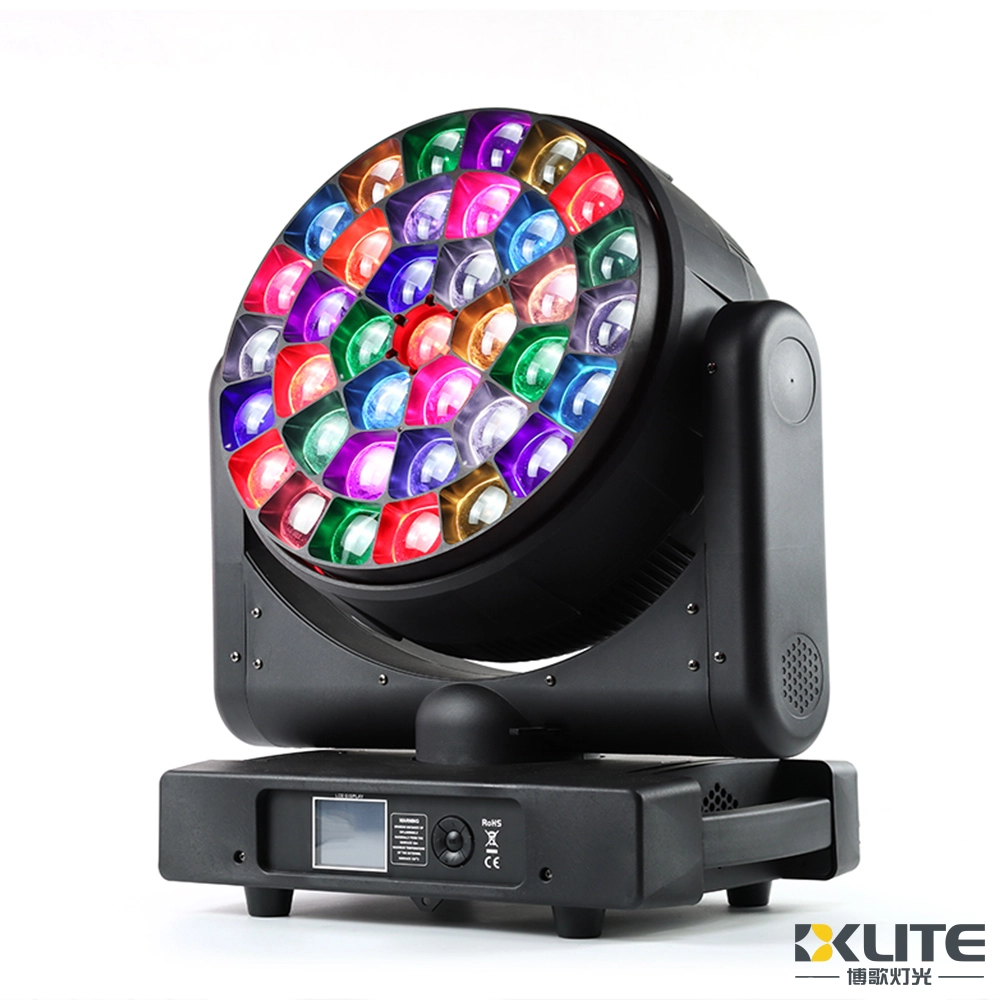
Bee Eye Zoom 37x40W RGBW 4in1 LED Beam Wash Moving Head Light
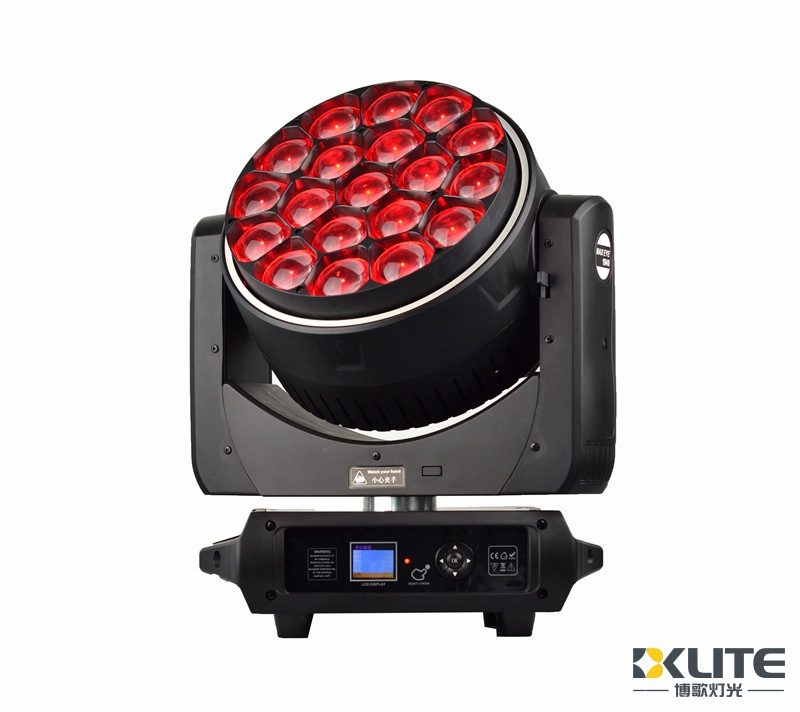
IP20 Bee Eye Zoom 19x40W RGBW 4IN1 LED Beam Wash Moving Head Light with LED Ring
As one of the leading stage lighting equipment suppliers with 15+ years of experience, BKlite launched a new Bee Eye K15 19x40 LED wash light BK-BY1940Z. .
Designed with a simple and sleek appearance, the WASH moving head light is compact, lightweight, and highly portable.
With multiple color effect macros and dynamic effect macros.
Our wash light can be used for versatile lighting options with amazing effect.
It is very good for your lighting projects.
Powerful and shoots very far distances.


Copyright © 2025 BKLITE All Rights Reserved.