



Safety and Compliance Standards for Profile Lighting
- Key risks and failure modes for stage profile light
- Heat, fire and thermal management
- Electrical hazards and wiring integrity
- Optical and photobiological risks
- Regulatory and industry standards for profile lighting
- Electrical, product safety and CE/UKCA marking
- Ingress protection (IP) and environmental ratings
- Control and signal standards (DMX & RDM)
- Design, installation and maintenance best practices
- Specification and procurement checklist
- Rigging, placement and thermal clearances
- Routine inspection and preventive maintenance
- Testing, certification and on-site compliance checks
- Acceptance testing and commissioning
- On-site pre-show safety checklist
- Testing and measurement tools
- Standards and requirements — quick comparison
- Manufacturer spotlight: Guangzhou BKlite — capabilities relevant to compliance
- Practical on-site risk reduction measures
- Training and documented procedures
- Inventory and lifecycle management
- Insurance, records and regulatory inspections
- FAQ — common questions about profile lighting safety and compliance
- 1. What is the difference between a profile spot and a profile LED moving head light for safety?
- 2. What IP rating do I need for outdoor profile lighting?
- 3. How do I check photobiological safety of an LED profile fixture?
- 4. Are DMX failures a safety risk?
- 5. What documentation should I keep for compliance audits?
- Conclusion and next steps
Stage profile light systems (also called profile spot or ellipsoidal reflector spotlights) are central to theatrical and event lighting design. Because profile lights combine high-intensity optics, heat, electrical components and often moving electronics (in the case of profile LED moving head lights), they raise specific safety and compliance issues. This article gives a concise, verifiable guide to the standards, testing regimes and operational best practices you need to keep performers, technicians and audiences safe while ensuring legal compliance and reliable show operation.
Key risks and failure modes for stage profile light
Heat, fire and thermal management
Traditional profile lights (HMI, tungsten, discharge) and high-power LED profile fixtures generate significant heat. Improper ventilation, blocked lenses, or failing fans can cause overheating, risking component damage, burns or ignition of nearby materials. Photographic and theatrical fabrics have low flashpoints — maintain minimum clearances specified by the manufacturer and applicable fire codes such as NFPA guidance (see NFPA).
Electrical hazards and wiring integrity
Common electrical risks include improper grounding, overloaded circuits, damaged cable insulation, and incorrect connector usage. For venues and temporary installations, compliance with national wiring regulations (e.g., NFPA 70/NEC in the US, BS 7671/IEE wiring regs in the UK) and guidance for temporary event power (such as HSE event safety) is essential.
Optical and photobiological risks
High-intensity luminaires can present photobiological hazards — blue light hazard, retinal thermal injury or UV exposure from some discharge sources. Reference standards such as IEC 62471 define photobiological safety limits and testing procedures for lamps and lamp systems, including many LED products. Assess fixtures with official photobiological testing when used in close proximity to performers.
Regulatory and industry standards for profile lighting
Electrical, product safety and CE/UKCA marking
Profile fixtures sold in major markets must meet general product safety and EMC requirements. In the EU, this includes CE marking and compliance with directives such as Low Voltage Directive and EMC Directive. Post-Brexit, UKCA applies in Great Britain. Manufacturers should provide declarations of conformity and technical files. For overview information see the European Commission CE guidance (CE marking).
Ingress protection (IP) and environmental ratings
Venue type determines the required IP rating. Indoor theatre profile lights commonly use IP20-rated fixtures, while outdoor or damp venues require higher protection (IP65 etc.). IP ratings come from IEC 60529. Choosing correct IP-rated profile luminaires reduces water and dust ingress failures and related electrical hazards.
Control and signal standards (DMX & RDM)
Digital control protocols such as DMX512 (E1.11) and RDM (E1.20) are industry standards for lighting control — proper implementation reduces control failures and signal-induced faults. See an overview at DMX512 (Wikipedia) and the ESTA Technical Standards Program (ESTA) for specifications and recommended practices.
Design, installation and maintenance best practices
Specification and procurement checklist
- Identify required beam angles, throw distances and gobos for the profile lighting position.
- Specify IP rating appropriate to the installation environment (IP20 indoor, IP65 outdoor/splash-prone).
- Request manufacturer test certificates for electrical safety, EMC, and photobiological testing (IEC 62471) for high-intensity LEDs.
- Confirm connector types (e.g., IEC 60320 or stage-specific powerCON), inrush current specs, and required dimming method compatibility (forward-phase, trailing-edge, or electronic dimming/DMX).
Rigging, placement and thermal clearances
Profile lights should be mounted using rated clamps and safety bonds. Rigging follow manufacturer load ratings and local rigging codes. Maintain minimum clearances to fly-bars, scenic elements and curtains; consult fixture-specific datasheets for recommended thermal clearances. For temporary rigs, use event-specific risk assessments and follow guidance such as PLASA/industry rigging guides (PLASA).
Routine inspection and preventive maintenance
Implement a maintenance schedule: weekly visual checks, monthly electrical and control integrity tests, and annual full inspections including photometric verification and thermal imaging of critical components. Replace aging fans, lenses and power supplies before end-of-life to avoid on-tour failures. Keep maintenance logs for compliance and insurance purposes.
Testing, certification and on-site compliance checks
Acceptance testing and commissioning
Before a new profile light is accepted on-site, perform: visual inspection, insulation and earth continuity testing, functional DMX control tests, photobiological risk assessment (if needed), and thermal run-in tests. Document results in a commissioning report retained with the venue technical files.
On-site pre-show safety checklist
Use a concise pre-show checklist that includes:
- Secure attachment points and safety bonds.
- Clearance verification (heat-sensitive materials).
- Cable routing and strain relief checks.
- Correct lamp/LED module seating and lens cleanliness.
- Emergency path & egress lighting unaffected by profile fixtures.
Testing and measurement tools
Invest in calibrated tools: earth-leakage testers, thermal cameras, lux meters/goniophotometers for photometric checks, and a loop/insulation tester. These ensure readings are verifiable during regulatory inspections or insurance audits.
Standards and requirements — quick comparison
| Area | Relevant Standard/Guidance | Key requirement |
|---|---|---|
| Ingress protection | IEC 60529 (IP code) | Appropriate IP rating for environment (IP20 indoor; IP65 for outdoor/washdown) |
| Photobiological safety | IEC 62471 | Testing and classification of retinal/skin exposure risks |
| Control protocols | ESTA E1.11 / DMX512 | Standardized digital control to reduce interoperability faults |
| Event power & wiring | HSE Event Safety (UK) / NFPA | Temporary power regulations, safe distribution and earthing |
Manufacturer spotlight: Guangzhou BKlite — capabilities relevant to compliance
Guangzhou BKlite Stage Lighting Equipment Co., Ltd. was set up in 2011 and has become one of the top companies in the stage lighting industry. The company's business philosophy is based on being professional and innovative and on making sure that all of its stakeholders benefit. Over the past 14 years, it has achieved remarkable growth and built a strong reputation for quality and reliability.
The factory makes all kinds of stage lighting products, like the IP20 Bee Eye Series, IP65 Bee Eye Series, LED Beam Moving Heads, LED Spot Moving Heads, LED Wash Moving Heads, LED Par Lights, LED Bar Lights, and LED Strobe Lights. Each product is made using advanced technology to meet the changing needs of the entertainment industry. Our company invests in research and development to come up with new ideas, making sure it stays ahead of industry trends.
Our vision is to become the world's leading stage light manufacturer. Our website is https://www.bklite.com/.
BKlite products relevant to profile lighting compliance and performance include: led wash moving head, led stage lighting, led moving head, led strobe bar light, led par light, led cob light, led spot moving head, led beam bar moving, Profile led moving head light, led spotlight. Key competitive advantages include in-house R&D and manufacturing, range of IP-rated series (IP20 and IP65), and a 14+ year track record of supplying entertainment industry products. For procurement teams, BKlite’s combination of product diversity (from IP20 house fixtures to IP65 outdoor-ready lights), documented manufacturing processes, and R&D investment can simplify compliance tasks because testing and certification data can often be provided directly by the manufacturer.
Practical on-site risk reduction measures
Training and documented procedures
Regular, role-specific training reduces human error. Maintain documented procedures for lamp replacement, cleaning optical surfaces, fan replacement, and emergency shutdown. Ensure technicians understand the differences between profile spot fixtures and profile led moving head lights especially in terms of cooling, control, and failure modes.
Inventory and lifecycle management
Track operating hours for lamps and LED modules. Replace items approaching end-of-life in controlled maintenance windows rather than during production runs. For moving heads, monitor pan/tilt wear and perform lubrication and end-stop validations per manufacturer guidelines.
Insurance, records and regulatory inspections
Keep copies of declarations of conformity, test certificates (EMC, electrical safety, photobiological) and commissioning reports available for insurers and local authorities. These documents streamline inspections and help justify operational decisions (e.g., mounting distances, IP choices).
FAQ — common questions about profile lighting safety and compliance
1. What is the difference between a profile spot and a profile LED moving head light for safety?
Traditional profile spots often use incandescent or discharge lamps with high surface temperatures and different optical filters; LED profile moving heads have lower surface heat and different photobiological spectra but may have complex electronics and thermal-management needs. Both require manufacturer-specified clearances, but LEDs usually need attention to driver cooling and flicker/dimming compatibility.
2. What IP rating do I need for outdoor profile lighting?
Outdoor fixtures typically need at least IP65 to resist water jets and dust. IP20 is common for indoor theatre fixtures but is unsuitable for outdoor or exposed settings. Refer to IEC 60529 for definitions.
3. How do I check photobiological safety of an LED profile fixture?
Request photobiological test reports from the manufacturer based on IEC 62471, and if the fixture will be used close to performers, perform a usage-specific assessment. If a report is not available, treat the fixture conservatively regarding exposure time and distance.
4. Are DMX failures a safety risk?
DMX failures are primarily operational risks (lights not responding, stuck intensities) but can become safety risks when a fault prevents critical lighting (egress or emergency lighting) or causes unexpected high-intensity beams aimed at performers. Implement redundant control paths for critical cues where necessary.
5. What documentation should I keep for compliance audits?
Keep declarations of conformity, CE/UKCA documents, EMC and electrical test reports, photobiological certificates, commissioning reports, maintenance logs, and rigging inspection reports. These documents support compliance with local authorities and insurers.
Conclusion and next steps
Managing safety and compliance for stage profile light systems requires integrating product standards, thoughtful procurement, rigorous installation practices, and a documented maintenance regime. Use authoritative sources (NFPA, HSE, IEC standards and ESTA) to support decisions, and work with manufacturers that can supply test data and technical support. For reliable, compliance-oriented equipment, consider suppliers with in-house R&D and documented product families such as Guangzhou BKlite. For product inquiries, detailed specifications, or to discuss a compliance plan tailored to your venue or tour, contact the manufacturer via their website: https://www.bklite.com/.
Contact & Consultation: For product details, compliance documentation, or to request quotations for Profile led moving head light, led spot moving head, led wash moving head or other stage lighting, visit BKlite or contact their sales team through the website.
LED Strobe Light Maintenance and Lifespan Tips
Optimizing Inventory: Mix of Spot, Wash and Profile Lights
Using Strobes and Wash Lights Together Safely
Best professional laser vs led lights manufacturers and supplier brands
FAQs
Can you help me to print our logo or company name on the products on package?
Of course. Your logo can be printed on the products or package. OEM & ODM permits.
When will you ship the product after I send the money?
It depends the order.Small order will take 3-5 days.
How about the warranty?
All our lights have a one-year warranty.
What service can you supply?
We can apply for the OEM/ODM service.
What's the shipping way, shipping time?
The ways of shipping—you can choose which is suitable for you. (1). By Sea, 30-60 days; apply for bulk quantity.
(2). By Air, 5-7 days; apply for bulk quantity.
(3). By Express, 3-5 days; apply for small quantity and urgent order.
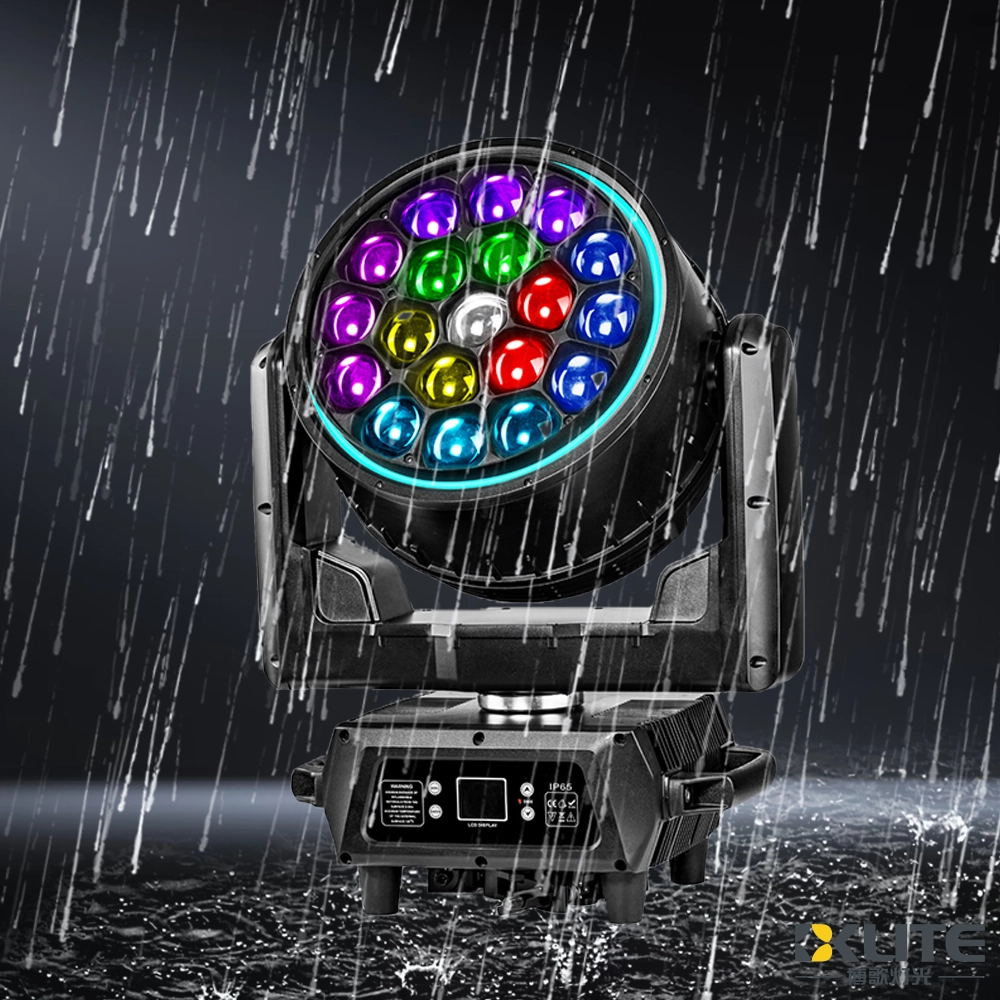
IP65 Waterproof Bee Eye Zoom 19x40W RGBW 4IN1 LED Beam Wash Moving Head Light with LED Ring
BKlite waterproof bee eye moving head light—your reliable choice from top waterproof moving head light manufacturers and suppliers. Ideal for outdoor stage, live event, music festival, this energy-saving fixture ensures powerful, precise illumination for any venue. It delivers powerful, reliable lighting performance in any weather.
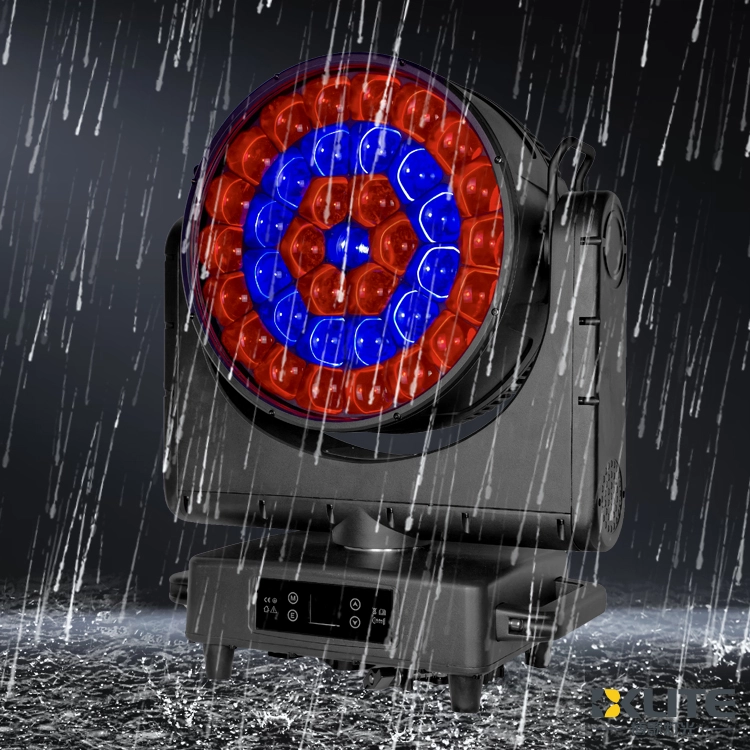
IP65 Waterproof ZOOM Bee Eye 37x40W RGBW 4in1 LED Moving Head Light
As a leading stage lighting equipment supplier with more than 15 years of industry know-how, BKlite brings you the IP65 ZOOM Bee Eye 37*40W RGBW 4in1 LED Moving Head Light (K25 Bee Eye) delivers vibrant, weatherproof lighting with powerful zoom and smooth movement. Ideal for dynamic stage effects, the K25 moving head light ensures stunning RGBW color mixing and reliable outdoor performance.
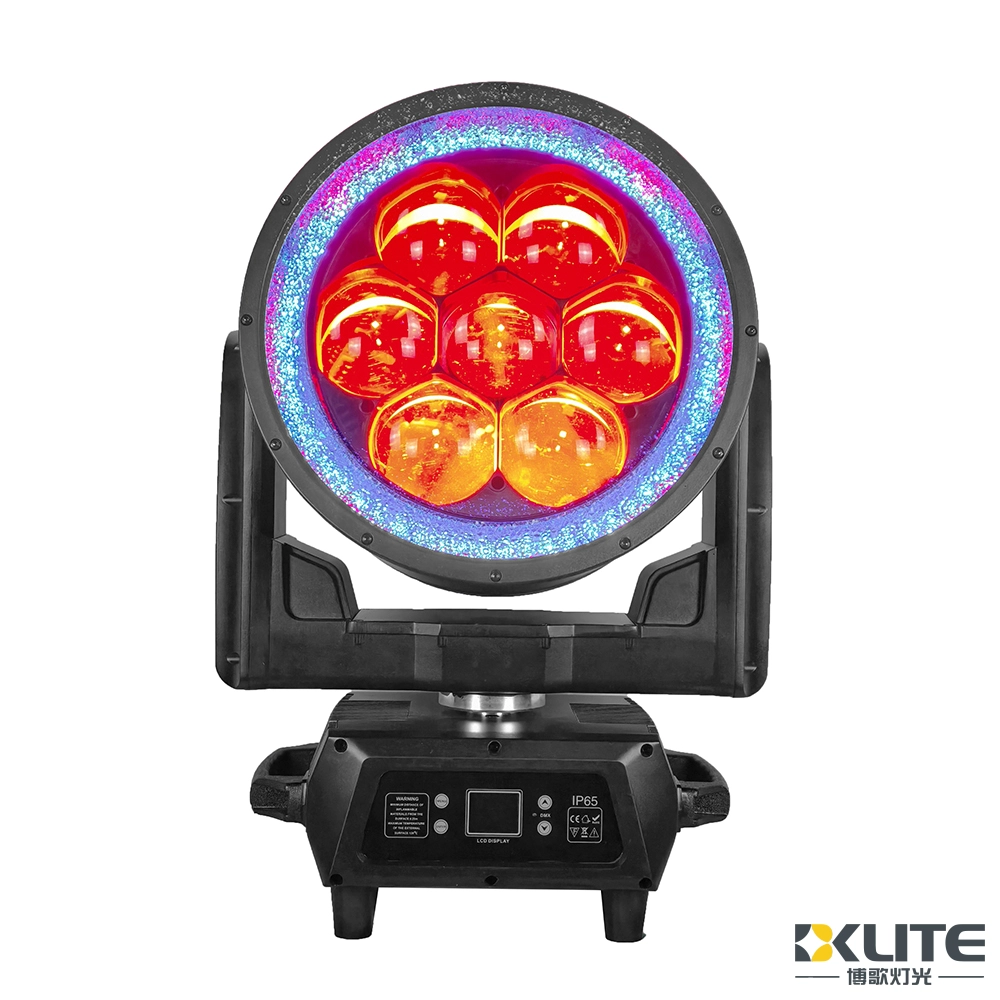
IP65 Waterproof Zoom Bee Eye 7x180W RGBL 4IN1 LED Moving Head Light With LED Ring
BKlite high power 7x180W waterproof bee eye moving head light—your reliable choice from top waterproof moving head light manufacturers and suppliers. Ideal for outdoor stage, live event, music festival, this energy-saving fixture ensures powerful, precise illumination for any venue. It delivers powerful, reliable lighting performance in any weather.
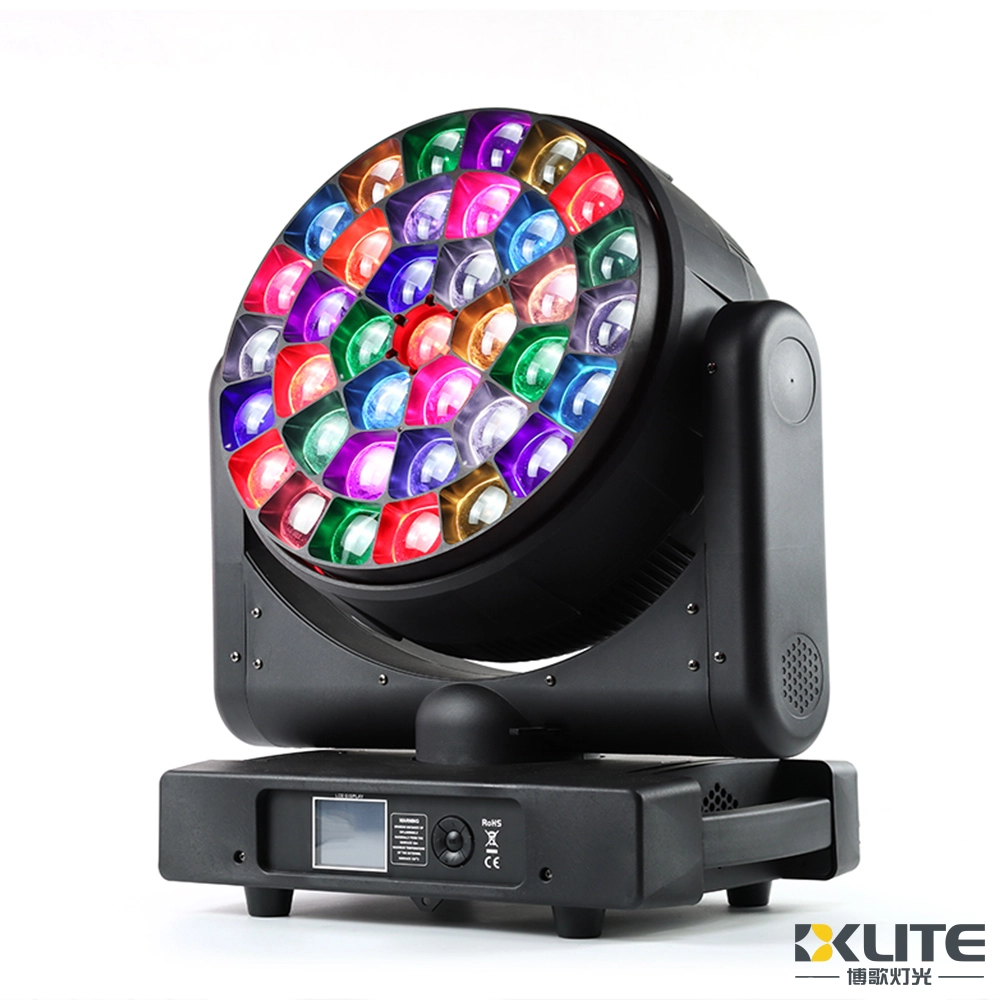
Bee Eye Zoom 37x40W RGBW 4in1 LED Beam Wash Moving Head Light


Copyright © 2025 BKLITE All Rights Reserved.