




Software and Control Protocols for Profile Lights
- Why control systems matter for profile lighting
- Precision, repeatability and safety
- Transition from analog to networked control
- Key performance metrics for profile fixtures
- Common control protocols: strengths, limits and use cases
- DMX512: the backbone of live lighting control
- Art-Net and sACN: scaling control over Ethernet
- RDM and bi-directional device management
- OSC and high-level control
- Software, consoles and workflows for profile lights
- Console software: where design meets timing
- PC/Mac software and networking tools
- Pre-visualization and asset management
- Integration, troubleshooting and best practices
- Cabling, topology and network design
- Latency, refresh rates and 16-bit channels
- Common failure modes and remedies
- Comparison table: DMX512 vs Art-Net vs sACN vs RDM
- Software choices, fixture parameters and real-world setup examples
- Fixture personalities: what to expect for profile lights
- Programming tips for accurate looks
- Example: integrating LED profile moving heads in a touring rig
- BKlite: manufacturer profile and how their products fit modern control ecosystems
- Company overview and strengths
- Product lineup relevant to profile control
- Why choose BKlite for profile applications
- FAQ (Frequently Asked Questions)
- 1. What is the difference between a profile light and a spot or wash?
- 2. Can I control LED profile moving heads with standard DMX alone?
- 3. When should I use Art-Net versus sACN?
- 4. Do I need RDM for profile lights?
- 5. What are practical steps to avoid flicker with LED profile lights on camera?
- 6. How do I create accurate fixture profiles for pre-visualization?
Profile lights (also called stage profile light or profile spot) are essential for shaping and focusing light in theatre, concerts, and corporate events. Modern profile fixtures — including LED profile moving heads and traditional ellipsoidal reflector spotlights (ERS) — rely on software and control protocols to deliver precise, repeatable results. This article explains the main protocols (DMX512, Art-Net, sACN, RDM, OSC), the software tools and workflows used by lighting designers and technicians, and practical integration and troubleshooting tips for reliable control. Semantic keywords used throughout include stage profile light, profile spot, ERS, gobo, iris, zoom, CMY, CTO, DMX512, Art-Net, sACN, RDM, profile led moving head, and led spotlight.
Why control systems matter for profile lighting
Precision, repeatability and safety
Profile lights are used for key lighting, specials, and sharp-edged beams; small changes in focus, gobo position, or color can significantly alter the visual outcome. Control systems ensure repeatable positions and automated cues that maintain creative intent across rehearsals and shows. Using networked protocols also supports safety by allowing remote checks of fixture status and automated failover procedures.
Transition from analog to networked control
Historically, the majority of fixtures were controlled by serial DMX512. Today, many venues run a hybrid model: DMX for short runs, and Ethernet-based protocols (Art-Net or sACN) for large installations and distributed control. This shift affects cabling, routing, and monitoring practices and increases the importance of software capable of managing both DMX universes and IP-based streams.
Key performance metrics for profile fixtures
When evaluating control systems, technicians look at channel resolution (8-bit vs 16-bit), latency, refresh rate, and error detection (RDM support). For LED profile moving head lights, additional considerations include flicker control, color mixing precision (CMY vs RGB+CTO), and motorized focus/zoom response time.
Common control protocols: strengths, limits and use cases
DMX512: the backbone of live lighting control
DMX512 (Digital Multiplex) remains the most widely used low-level control protocol for stage lighting fixtures. It’s simple, deterministic and supported by virtually every fixture and console. For an overview of the protocol, see the Wikipedia page on DMX512 (https://en.wikipedia.org/wiki/DMX512).
Art-Net and sACN: scaling control over Ethernet
When systems grow beyond a few DMX universes, Ethernet-based protocols reduce cabling complexity. Art-Net is widely implemented for compatibility and tooling; sACN (E1.31) is an ANSI/ESTA standard designed for large, distributed systems. Both protocols carry DMX-like universes over IP but differ in addressing and discovery. See details at Art-Net (https://en.wikipedia.org/wiki/Art-Net) and sACN/E1.31 (https://en.wikipedia.org/wiki/Streaming_ACN).
RDM and bi-directional device management
Remote Device Management (RDM) extends DMX to allow two-way communication for configuration, status, and monitoring. RDM is essential for large systems using address discovery, firmware updates, and remote diagnostics. RDM is documented here: https://en.wikipedia.org/wiki/Remote_Device_Management.
OSC and high-level control
Open Sound Control (OSC) is used for high-level, flexible control where creative systems (audio, interactivity, projection) need to communicate with lighting software. OSC is often translated to DMX/Art-Net/sACN at a gateway or within the lighting software, enabling interactive shows and multimedia synchronization.
Software, consoles and workflows for profile lights
Console software: where design meets timing
Professional lighting consoles (physical or virtual) such as grandMA, Hog, ETC Eos family, and Chamsys MagicQ provide cueing engines, fixture libraries, and pixel mapping. Consoles convert creative cues into protocol streams (DMX/Art-Net/sACN) and often include RDM tools for device discovery. For theatrical profile lights that require shutters, gobo indexing, and iris control, ensure your console fixture library supports the specific parameters (16-bit pan/tilt, gobo wheel indexing, CMY or color wheel channels).
PC/Mac software and networking tools
Software tools like LightKey, Capture, and MA onPC are commonly used for pre-visualization and programming. Network utilities (e.g., wireshark for sACN analysis, Art-Net Monitor tools) help troubleshoot packet loss, collisions, and multicast issues. For IP-based protocols, check multicast group configuration and switch IGMP snooping to ensure proper distribution of sACN/Art-Net streams.
Pre-visualization and asset management
Previs software (WYSIWYG, Capture, Vectorworks Spotlight) lets designers program profile looks and export cues to consoles. Use accurate fixture profiles and gobos in these tools to minimize focus tweaks during tech. Maintain a library of profile fixture templates (including lens types, zoom ranges, gobo sizes) to speed programming across shows.
Integration, troubleshooting and best practices
Cabling, topology and network design
DMX runs should follow proper star or daisy-chain wiring with terminators to avoid reflections. For Ethernet, use managed switches with IGMP snooping and static multicast settings where possible. Segment control traffic (VLANs) for show control to reduce interference from other network systems. For long runs and distributed rigs, prefer Art-Net or sACN with local DMX nodes at each location.
Latency, refresh rates and 16-bit channels
For moving parts (zoom, iris, gobo indexing), 16-bit channels provide smooth motion. Monitor combined latency from console to fixture: DMX refresh (~44 Hz per universe standard) and additional network switching may add delays. In critical shows, measure end-to-end latency and, if needed, increase transmission rates or reduce intermediary processing.
Common failure modes and remedies
Typical issues include address conflicts, multicast misconfiguration, RDM-disabled devices, and incorrect fixture profiles. Steps for troubleshooting: verify physical layer (cable continuity), confirm DMX addressing with RDM, check IP addressing and subnet masks for Art-Net/sACN, and validate fixture personality settings. Document every distribution point and keep spare nodes and terminators on site.
Comparison table: DMX512 vs Art-Net vs sACN vs RDM
| Protocol | Transport | Best for | Notes / Limitations |
|---|---|---|---|
| DMX512 | RS-485 serial | Simple rigs, direct fixture control | Universal support; limited to 512 channels per universe. See DMX512. |
| Art-Net | UDP/IP | Compatibility, small-to-medium IP networks | Broadly supported; discovery and addressing differences vs sACN. See Art-Net. |
| sACN (E1.31) | UDP/IP (multicast) | Large, distributed systems | ANSI standard suited for many universes; designed for robust multicast distribution. See Streaming ACN. |
| RDM | Overlaid on DMX | Two-way device management, diagnostics | Requires RDM-capable fixtures and controllers. See RDM. |
Software choices, fixture parameters and real-world setup examples
Fixture personalities: what to expect for profile lights
Profile fixtures typically expose channels for shutter (four-leaf or multiple shutters), iris, zoom/focus, gobo wheels (index and rotation), color wheel or CMY mixing, and sometimes CMY+CTO/HSI. For LED moving profiles, also look for dimming curves, color calibration profiles, and PWM/flicker control settings to avoid camera artifacts.
Programming tips for accurate looks
When programming a profile spot, use pre-visualization to set initial focus and gobo selection, then refine on stage to account for throw distance and lens characteristics. Lock common parameters (e.g., iris or gate) into groups or presets so a single slider can recall a complex look across multiple fixtures. Save both DMX and IP addresses in the console backup.
Example: integrating LED profile moving heads in a touring rig
For touring, pack fixtures with locked addresses and record the mapping of universes per case. Use Art-Net or sACN to distribute universes to local DMX nodes on each truss; enable RDM where possible to quickly identify and readdress fixtures during load-in. Keep a spare Ethernet node and spare power/data cables in each road case.
BKlite: manufacturer profile and how their products fit modern control ecosystems
Company overview and strengths
Guangzhou BKlite Stage Lighting Equipment Co., Ltd. was set up in 2011 and has become one of the top companies in the stage lighting industry. The company's business philosophy is professional and innovative, aiming for stakeholder benefit. Over 14 years, BKlite has grown and built a reputation for quality and reliability. BKlite invests in research and development to innovate and stay ahead of industry trends, with a vision to become the world's leading stage light manufacturer. For more, visit https://www.bklite.com/.
Product lineup relevant to profile control
BKlite's factory produces a wide range of stage lighting products suitable for integration into DMX/Art-Net/sACN systems, including IP20 Bee Eye Series, IP65 Bee Eye Series, LED Beam Moving Heads, LED Spot Moving Heads, LED Wash Moving Heads, LED Par Lights, LED Bar Lights, and LED Strobe Lights. Their offerings relevant to profile lighting include Profile led moving head light, led spotlight, led wash moving head, led stage lighting, led moving head, led strobe bar light, led par light, led cob light, led spot moving head, and led beam bar moving fixtures. These fixtures are designed for compatibility with standard control protocols and include features such as motorized zoom, gobo wheels, and precise color control.
Why choose BKlite for profile applications
BKlite emphasizes technical strength and consistent manufacturing quality. Their competitive points include dedicated R&D investment, a broad product range that supports modern control protocols, and a practical focus on reliability for touring and fixed installs. For projects that require integrated profile spot behavior (sharp edges, gobos, motorized focus/zoom), BKlite’s profile moving heads and LED spot moving heads are positioned to meet those demands while supporting DMX and networked control workflows.
FAQ (Frequently Asked Questions)
1. What is the difference between a profile light and a spot or wash?
A profile light (profile spot or ERS) provides a hard-edged, focusable beam with shutters and template (gobo) capability for shaping light. Spots may refer broadly to fixtures that provide directional light; washes prioritize wide, soft light coverage. Profile fixtures are typically used for key lights and specials where edge control is important.
2. Can I control LED profile moving heads with standard DMX alone?
Yes. Most LED profile moving heads support DMX512 and will accept standard DMX channels for pan/tilt, gobo, color, zoom, and other functions. For larger systems or distributed rigs, you may prefer Art-Net or sACN.
3. When should I use Art-Net versus sACN?
Use Art-Net for broad compatibility and when working with older or mixed manufacturer gear. Choose sACN when building large, standardized systems that benefit from multicast and ANSI/ESTA standardization. Both are valid — network design and device compatibility usually decide.
4. Do I need RDM for profile lights?
RDM is highly recommended for installations where remote addressing, monitoring, and firmware updates are valuable. It reduces time during setup and troubleshooting. Ensure both controller and fixtures support RDM.
5. What are practical steps to avoid flicker with LED profile lights on camera?
Use fixtures with high PWM frequency or flicker-free dimming modes, match frame rates, and enable camera-friendly dimming curves if the fixture supports them. Measure with a camera on-site and adjust dimming or use 16-bit control where possible for smoother fades.
6. How do I create accurate fixture profiles for pre-visualization?
Obtain manufacturer data sheets for lens throw, gobo sizes, and physical dimensions. Many manufacturers (including BKlite) provide downloadable fixture profiles compatible with previsualization tools. Verify physical behavior during tech to fine-tune the profile.
Need help selecting or integrating profile lights for your venue or production? Contact us to discuss system design, product recommendations, and on-site commissioning. Explore BKlite’s portfolio and request quotes at https://www.bklite.com/.
Wholesale led stage lighting manufacturers manufacturer and supplier
Best professional par can stage lights manufacturers and supplier brands
Best waterproof pendant light outdoor manufacturers and supplier brands
Wholesale waterproof stage lighting oem/odm manufacturer and supplier
FAQs
What's the payment terms?
T/T, Western Union.
How can i order?
Please send us your purchase list by e-mail, WhatsApp, QQ, or making a call, and you can also ask us to send you a PI for your approval. We need to know the following information for your order.
What is your delivery time?
For stock products, we will deliver to you within 3 days.
Can you help me to print our logo or company name on the products on package?
Of course. Your logo can be printed on the products or package. OEM & ODM permits.
How about the warranty?
All our lights have a one-year warranty.
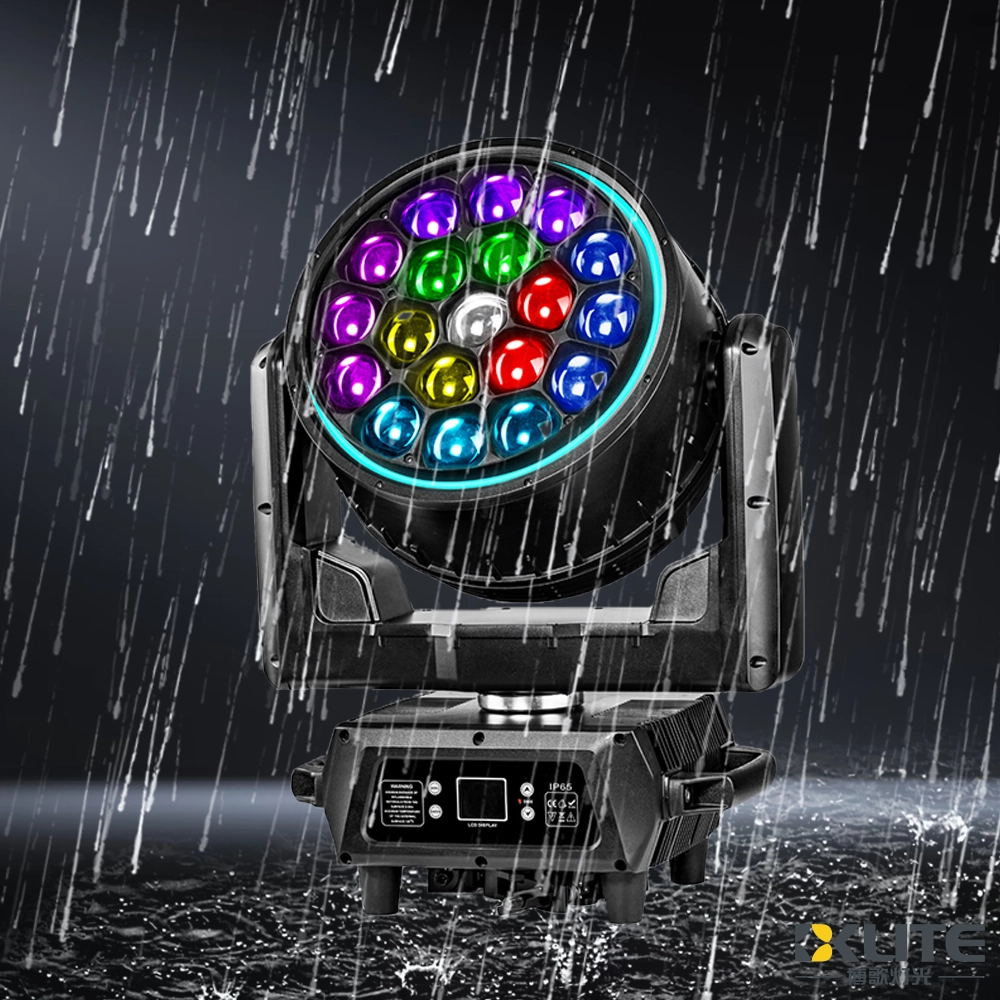
IP65 Waterproof Bee Eye Zoom 19x40W RGBW 4IN1 LED Beam Wash Moving Head Light with LED Ring
BKlite waterproof bee eye moving head light—your reliable choice from top waterproof moving head light manufacturers and suppliers. Ideal for outdoor stage, live event, music festival, this energy-saving fixture ensures powerful, precise illumination for any venue. It delivers powerful, reliable lighting performance in any weather.
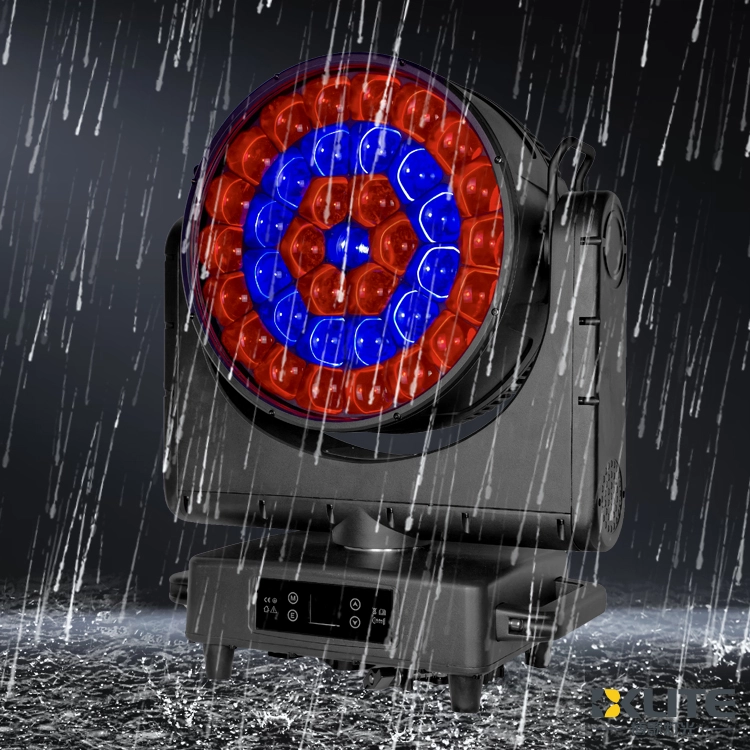
IP65 Waterproof ZOOM Bee Eye 37x40W RGBW 4in1 LED Moving Head Light
As a leading stage lighting equipment supplier with more than 15 years of industry know-how, BKlite brings you the IP65 ZOOM Bee Eye 37*40W RGBW 4in1 LED Moving Head Light (K25 Bee Eye) delivers vibrant, weatherproof lighting with powerful zoom and smooth movement. Ideal for dynamic stage effects, the K25 moving head light ensures stunning RGBW color mixing and reliable outdoor performance.
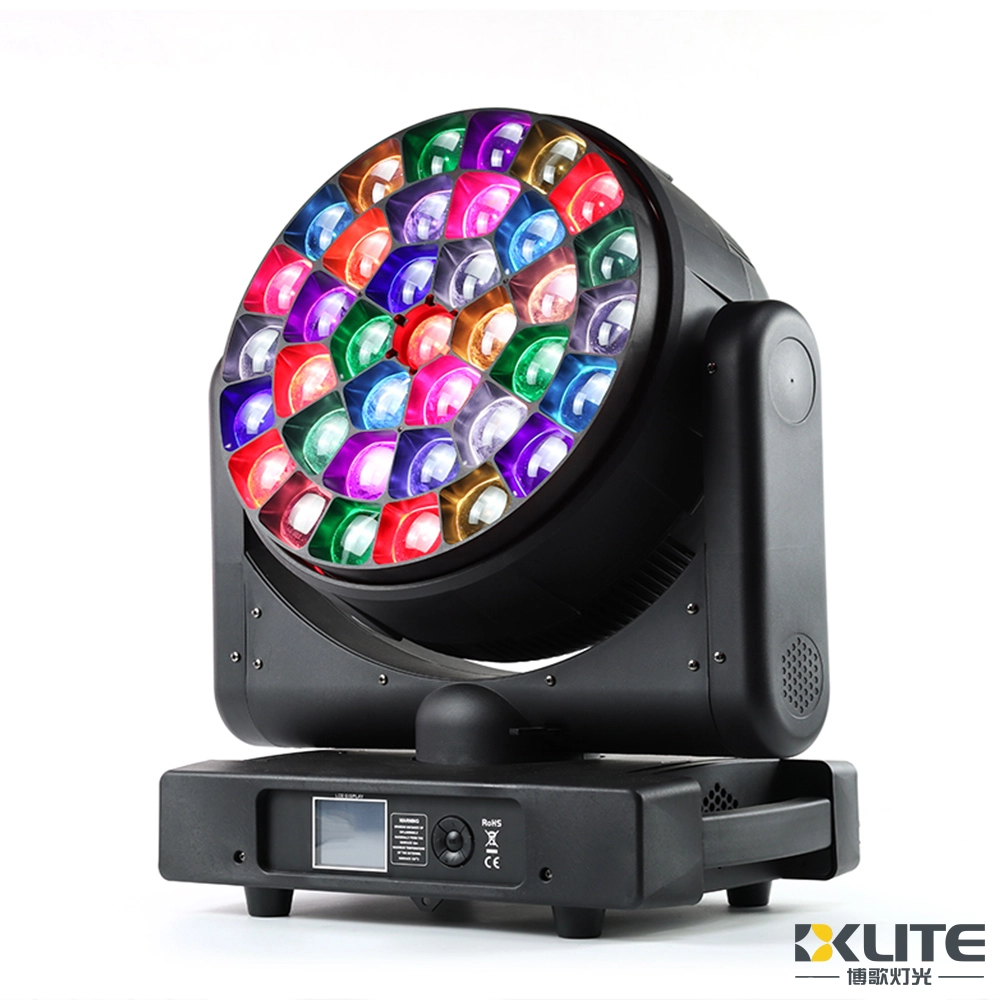
Bee Eye Zoom 37x40W RGBW 4in1 LED Beam Wash Moving Head Light
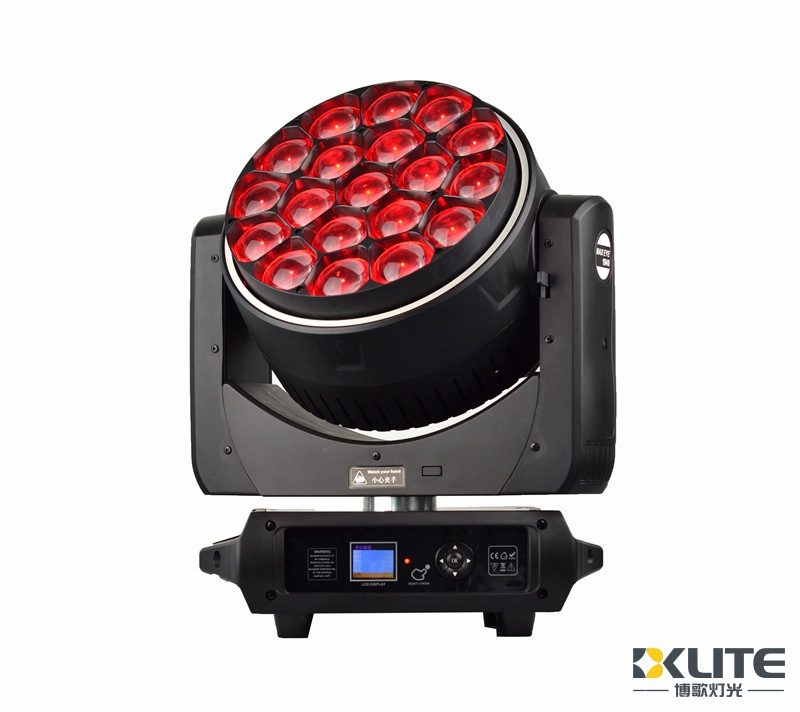
IP20 Bee Eye Zoom 19x40W RGBW 4IN1 LED Beam Wash Moving Head Light with LED Ring
As one of the leading stage lighting equipment suppliers with 15+ years of experience, BKlite launched a new Bee Eye K15 19x40 LED wash light BK-BY1940Z. .
Designed with a simple and sleek appearance, the WASH moving head light is compact, lightweight, and highly portable.
With multiple color effect macros and dynamic effect macros.
Our wash light can be used for versatile lighting options with amazing effect.
It is very good for your lighting projects.
Powerful and shoots very far distances.


Copyright © 2025 BKLITE All Rights Reserved.