




Stage Profile Light Retrofit vs Replace Decision Matrix
- Understanding the business case for profile lighting upgrades
- Why this decision matters
- Drivers pushing venues to consider change
- Technical considerations: retrofit feasibility and performance
- Compatibility and optical performance
- Electrical, thermal and control interfaces
- Longevity, maintenance and serviceability
- Financial analysis and decision matrix
- Key metrics to include
- Sample decision matrix (qualitative)
- Example Total Cost of Ownership (TCO) comparison (10-year horizon)
- Operational and artistic trade-offs
- Preserving artistic intent
- Inventory and rental market considerations
- Regulatory, warranty and safety
- How to run a pilot and make the decision
- Step-by-step pilot protocol
- Decision thresholds
- Documenting the choice for stakeholders
- Vendor, warranty and procurement tips
- What to ask potential suppliers
- Standards and measurement references
- Procurement models
- Case study: practical example and recommended pathways
- Small theatre / community venue
- Rental company / commercial production house
- Large performing arts center
- About Guangzhou BKlite and how they can help
- FAQ (Frequently Asked Questions)
- 1. How much energy can I expect to save by retrofitting profile lights to LED?
- 2. Will retrofitting affect gobo projection and beam edge definition?
- 3. How do I estimate payback period for retrofit vs replace?
- 4. Are retrofit kits safe and code-compliant?
- 5. When is replacement clearly the better choice?
- 6. Can I mix retrofitted and new profile fixtures in the same rig?
Stage profile light systems are central to theatrical and event lighting design. Choosing whether to retrofit existing profile fixtures with LED modules or to replace them entirely affects light quality, maintenance cycles, energy costs, inventory complexity, and long-term capital planning. This article provides a structured, evidence-based decision matrix — blending technical criteria, lifecycle cost modeling, and practical trade-offs — to help technical directors, venue managers, and rental companies make the right choice for their stage profile light assets.
Understanding the business case for profile lighting upgrades
Why this decision matters
Stage profile lights (profile spotlights) are often used for hard-edged beam shaping, gobo projection, and calibrated color. Upgrading these fixtures affects artistic control, annual operating budgets, equipment downtime, and venue sustainability goals. The choice to retrofit or replace should balance artistic requirements against measurable operational benefits like energy consumption and maintenance.
Drivers pushing venues to consider change
- Energy efficiency targets and cost savings (LEDs offer meaningful reductions in energy and cooling loads; see U.S. Department of Energy – LED lighting).
- Labor and logistics: fewer lamp changes, simplified inventory, and reduced heat load on stage.
- Artistic demands for flicker-free dimming, color control, and compact moving head profiles.
- Regulatory or venue mandates for safety, electrical codes, or environmental reporting.
Technical considerations: retrofit feasibility and performance
Compatibility and optical performance
Not all profile housings accept LED retrofit modules without affecting beam quality. Key issues include the optical path, zoom and focus mechanics, gobo alignment, and color rendering (CRI/TLCI). Retrofitting may preserve existing optics but can introduce color or hotspot artifacts unless carefully engineered. For an introduction to stage lighting optics and fixture types, see Wikipedia: Stage lighting.
Electrical, thermal and control interfaces
LED retrofits often require a stable driver, proper heat-sinking, and may change inrush current characteristics. Verify dimming compatibility (0-10V, DMX, or proprietary protocols). Poorly matched drivers can cause flicker or unexpected power behavior during soft-patching. If the existing fixture uses mains dimming or triac-based control, a retrofit may necessitate an external LED driver or a change in dimming infrastructure.
Longevity, maintenance and serviceability
LED modules typically deliver 25,000–50,000 hours of useful life (per Department of Energy guidance), substantially longer than tungsten lamps. However, replaceable modules and driver accessibility are crucial. A retrofit that integrates modular, serviceable LED units will maximize lifecycle benefits; irreparable, sealed retrofits reduce long-term resilience.
Financial analysis and decision matrix
Key metrics to include
- Initial capital cost (retrofit kit vs full fixture replacement)
- Installation and labor cost
- Energy consumption and annual operating hours
- Maintenance and lamp replacement cost
- Residual value and obsolescence risk
Sample decision matrix (qualitative)
| Factor | Retrofit | Replace |
|---|---|---|
| Capital cost | Lower per unit | Higher per unit |
| Optical fidelity | Variable — depends on module and optics | High — designed for LEDs |
| Maintenance | Reduced but depends on module serviceability | Lowest (modern LED fixtures) |
| Control features | May be limited to basic dimming | Advanced: color mixing, zoom, remote profiles |
| Risk of obsolescence | Medium — retains older mechanical parts | Low — new platform with warranty & support |
Example Total Cost of Ownership (TCO) comparison (10-year horizon)
Below is a modeled example to demonstrate how to compare retrofit versus replacement. These numbers are illustrative; substitute your actual prices, hours, and energy costs.
| Item | Retrofit (per fixture) | Replace (per fixture) |
|---|---|---|
| Initial equipment cost | $600 (LED retrofit kit + labor) | $2,200 (new LED profile fixture) |
| Average power draw | 120W (post-retrofit) | 160W (modern LED profile with more features) |
| Annual operating hours | 1,200 hours | |
| Electricity cost | 0.15 $/kWh | |
| Annual energy cost | $21.60 | $28.80 |
| Maintenance & consumables (10 yrs) | $200 (driver/module service) | $100 (minimal) |
| Total 10-yr cost (equipment + energy + maint.) | $1,016 | $2,388 |
Interpretation: A retrofit shows a lower 10-year cash outflow in this sample. However, the replacement offers modern features, warranty, and potentially higher resale or rental value. These trade-offs should be weighed against artistic and operational goals.
Operational and artistic trade-offs
Preserving artistic intent
Profile spot fixtures are prized for their sharp shutters, gobo projection, and high-CRI sources. If your productions rely on gobo clarity or a specific beam quality, test a retrofit module on a representative fixture and run through a standard lighting plot. Subjective metrics like color temperature stability and edge definition are best validated in situ.
Inventory and rental market considerations
Rental companies benefit from modern, feature-rich fixtures that attract high-end bookings. Venues that host diverse events may value a mixed inventory: a core set of new LED profile fixtures for demanding productions and retrofitted fixtures for budget events. Standardizing protocols (DMX addressing, powerCON, EtherCON) is important for operational efficiency.
Regulatory, warranty and safety
Replacing with certified LED fixtures typically includes manufacturer warranties and compliance documentation. Retrofit kits should be certified for your region and ideally installed by certified technicians to avoid voiding existing fixture certifications. For electrical safety and lighting practice standards, consult professional bodies such as the Illuminating Engineering Society.
How to run a pilot and make the decision
Step-by-step pilot protocol
- Select representative fixtures (different ages, optical types).
- Install retrofit kits on a subset and acquire 1–2 new LED profile fixtures for direct comparison.
- Run standardized tests: CRI/TLCI measurement, beam edge evaluation, gobo projection, dimmer curve behavior, and noise/thermal checks.
- Record energy consumption and check control compatibility during rehearsals.
- Survey lighting designers/engineers and gather feedback on artistic acceptability.
Decision thresholds
Use objective thresholds such as payback period (<3–5 years), acceptable CRI (>90 for critical color work), and serviceability (modular parts available). If retrofit meets artistic and safety thresholds and yields favorable financials, it may be preferred. If artistic requirements or future-proofing is paramount, replacement is likely the better choice.
Documenting the choice for stakeholders
Prepare a concise report for finance and artistic leadership summarizing pilot results, TCO analysis, risks, and recommended procurement approach. Include sample lighting tests and recorded metrics so future audits can verify outcomes.
Vendor, warranty and procurement tips
What to ask potential suppliers
- Provide lab measurements: spectral power distribution, CRI/TLCI, lumen maintenance (L70 hours).
- Demonstrate driver and dimming compatibility with your control system (DMX/RDM/Art-Net).
- Clarify warranty terms for both retrofit modules and full fixtures, including service turnaround times.
- Request references from similar venues or rental houses.
Standards and measurement references
Ask for measurement data per recognized standards. General industry guidance on LED life and performance can be found via the U.S. Department of Energy (LED lighting overview) at energy.gov and professional practice via the Illuminating Engineering Society.
Procurement models
Consider leasing or phased procurement to manage cash flow and allow experience-based upgrades. Group buying across venues or rental houses can yield better pricing and standardized inventory.
Case study: practical example and recommended pathways
Small theatre / community venue
Recommendation: Prioritize retrofit where artistic requirements are moderate and budgets constrained. Choose modular retrofit kits with good serviceability to extend asset life and reduce replacement cycles.
Rental company / commercial production house
Recommendation: Replace older profile units with modern LED profile moving heads to stay competitive, reduce maintenance turnaround time, and attract higher-value clients. Standardize on fixtures that support remote monitoring and RDM where possible.
Large performing arts center
Recommendation: Hybrid strategy. Replace a core set of fixtures used for headline productions; retrofit secondary inventories for less demanding shows to conserve capital while minimizing aesthetic compromises.
About Guangzhou BKlite and how they can help
Guangzhou BKlite Stage Lighting Equipment Co., Ltd. was set up in 2011 and has become one of the top companies in the stage lighting industry. The company's business philosophy is based on being professional and innovative and on making sure that all of its stakeholders benefit. Over the past 14 years, it has achieved remarkable growth and built a strong reputation for quality and reliability.
The factory makes all kinds of stage lighting products, like the IP20 Bee Eye Series, IP65 Bee Eye Series, LED Beam Moving Heads, LED Spot Moving Heads, LED Wash Moving Heads, LED Par Lights, LED Bar Lights, and LED Strobe Lights. Each product is made using advanced technology to meet the changing needs of the entertainment industry. Our company invests in research and development to come up with new ideas, making sure it stays ahead of industry trends.
Our vision is to become the world's leading stage light manufacturer. Visit our website at https://www.bklite.com/ or contact us at export3@bklite.com for product inquiries and pilot support. Key products and strengths include LED wash moving head, led stage lighting, led moving head, led strobe bar light, led par light, led cob light, led spot moving head, led beam bar moving, Profile led moving head light, and led spotlight.
BKlite differentiates itself through integrated R&D, consistent factory QA, and a product portfolio that addresses both IP20 indoor and IP65 outdoor durability needs. For venues that need retrofit consultation or full fixture specification, BKlite can provide loaner units for pilot tests, photometric reports, and warranty-backed service agreements.
FAQ (Frequently Asked Questions)
1. How much energy can I expect to save by retrofitting profile lights to LED?
Typical LED retrofits can reduce energy consumption substantially compared to tungsten or metal-halide sources. The U.S. Department of Energy notes that LED lighting uses significantly less energy than traditional incandescent solutions; savings depend on baseline lamp type and usage patterns. For many profile applications, expect 50–80% energy reductions versus tungsten sources; verify with power measurements for your fixtures (energy.gov).
2. Will retrofitting affect gobo projection and beam edge definition?
It can. The optical coupling between LED emitter, collimating optics, and existing lens train dictates final image quality. High-quality retrofit modules designed for profile fixtures minimize hotspotting and maintain gobo clarity; however, test in-situ before committing to a full rollout.
3. How do I estimate payback period for retrofit vs replace?
Calculate total upfront cost plus installation, then subtract annual energy and maintenance savings. Divide the net upfront High Quality by annual savings to get a payback year estimate. Use realistic operating hours and local kWh rates. The example in this article demonstrates a simple 10-year comparison.
4. Are retrofit kits safe and code-compliant?
Only use retrofit kits certified for your local electrical codes and designed for the specific fixture housing. Professional installation is recommended to maintain safety certification. Check supplier documentation and warranty terms.
5. When is replacement clearly the better choice?
Replacement is usually preferable when the existing fixture is mechanically worn, incompatible with modern control systems, or when artistic demands require capabilities (color mixing, zoom, framing shutters) that retrofit kits cannot provide. For rental businesses, the marketability of new fixtures also justifies replacement.
6. Can I mix retrofitted and new profile fixtures in the same rig?
Yes, but plan carefully for color matching, dimming curves, and control addressing. Perform on-stage tests and consider using color correction gels or LUTs where necessary. Document channel maps and maintenance regimes for the mixed inventory.
For personalized guidance, pilot kits, or product information including LED wash moving head and Profile led moving head light options, contact Guangzhou BKlite at export3@bklite.com or visit https://www.bklite.com/. Our team can provide photometric data, sample units for test, and procurement recommendations tailored to your venue or rental company.
Retrofit Solutions: Replacing Fluorescent Bars with LED Stage Bars
Best professional christmas led strobe lights manufacturers and supplier brands
Seasonal Demand Trends for Stage Profile Lighting Buyers
Top 10 green led strobe lights Manufacturers and Supplier Brands
FAQs
How can i order?
Please send us your purchase list by e-mail, WhatsApp, QQ, or making a call, and you can also ask us to send you a PI for your approval. We need to know the following information for your order.
What's the shipping way, shipping time?
The ways of shipping—you can choose which is suitable for you. (1). By Sea, 30-60 days; apply for bulk quantity.
(2). By Air, 5-7 days; apply for bulk quantity.
(3). By Express, 3-5 days; apply for small quantity and urgent order.
What service can you supply?
We can apply for the OEM/ODM service.
How about the warranty?
All our lights have a one-year warranty.
What's your certificates?
ROHS and CE certificates passed.
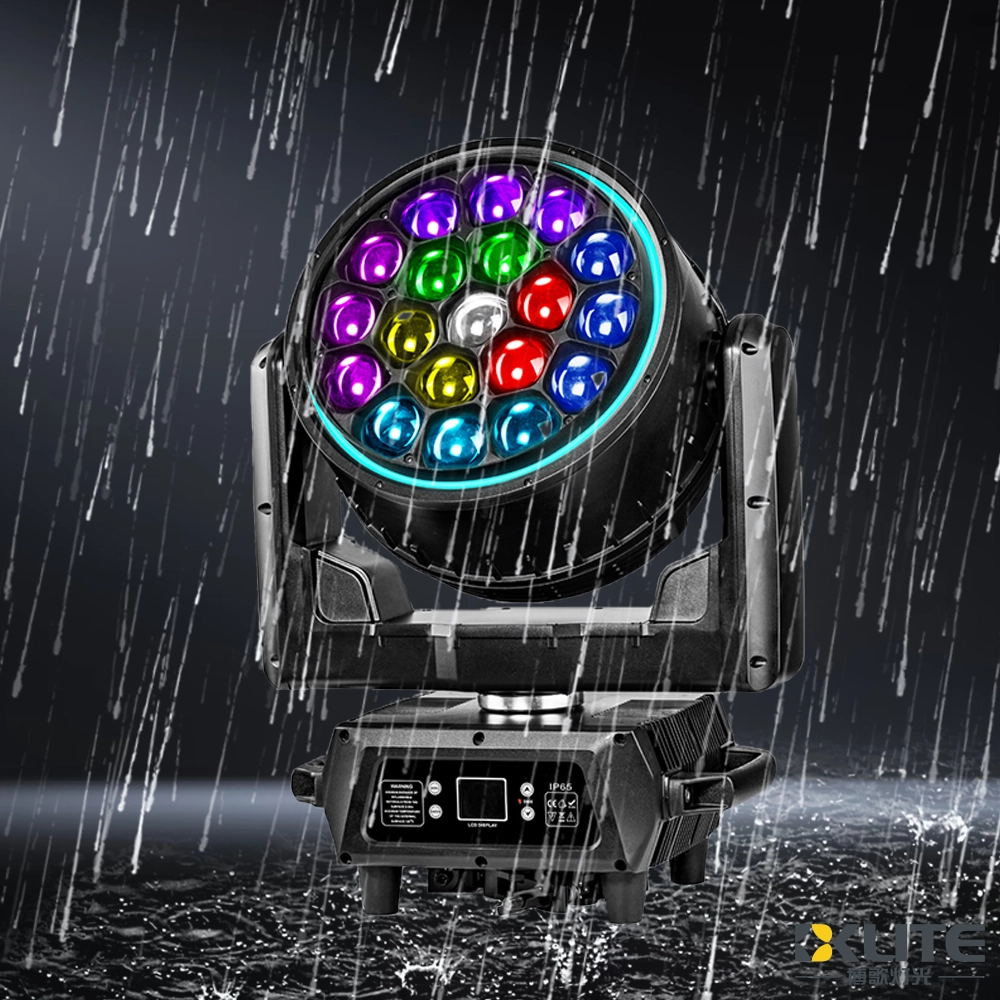
IP65 Waterproof Bee Eye Zoom 19x40W RGBW 4IN1 LED Beam Wash Moving Head Light with LED Ring
BKlite waterproof bee eye moving head light—your reliable choice from top waterproof moving head light manufacturers and suppliers. Ideal for outdoor stage, live event, music festival, this energy-saving fixture ensures powerful, precise illumination for any venue. It delivers powerful, reliable lighting performance in any weather.
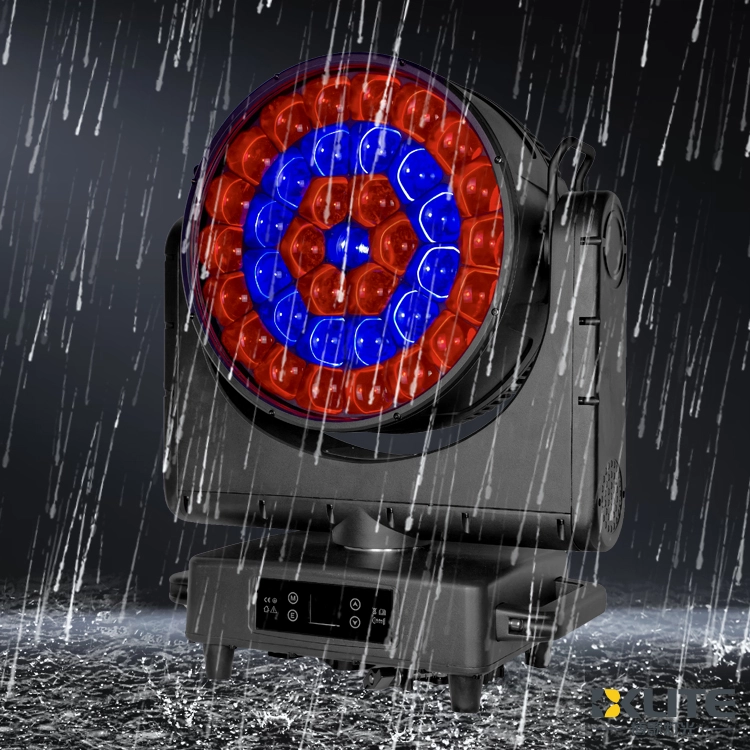
IP65 Waterproof ZOOM Bee Eye 37x40W RGBW 4in1 LED Moving Head Light
As a leading stage lighting equipment supplier with more than 15 years of industry know-how, BKlite brings you the IP65 ZOOM Bee Eye 37*40W RGBW 4in1 LED Moving Head Light (K25 Bee Eye) delivers vibrant, weatherproof lighting with powerful zoom and smooth movement. Ideal for dynamic stage effects, the K25 moving head light ensures stunning RGBW color mixing and reliable outdoor performance.
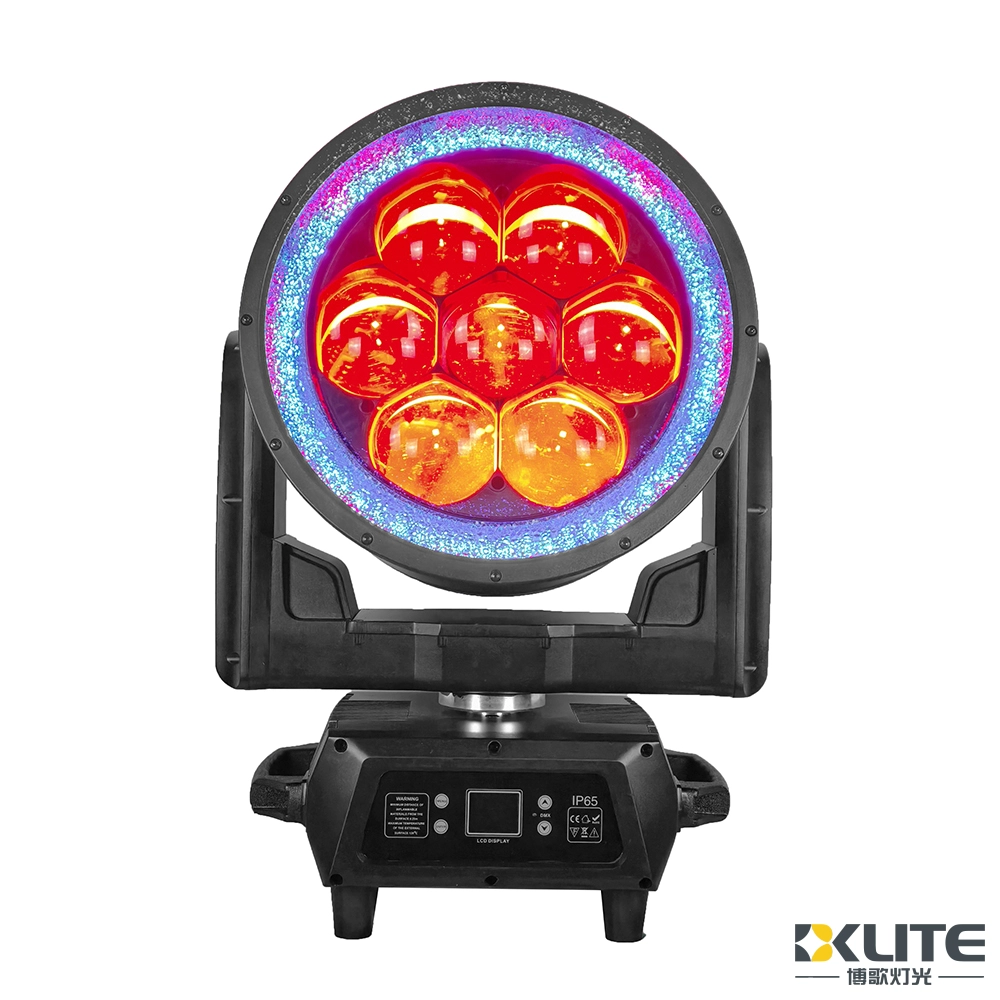
IP65 Waterproof Bee Eye 7x180W RGBL 4IN1 LED Moving Head Light With LED Ring
BKlite high power 7x180W waterproof bee eye moving head light—your reliable choice from top waterproof moving head light manufacturers and suppliers. Ideal for outdoor stage, live event, music festival, this energy-saving fixture ensures powerful, precise illumination for any venue. It delivers powerful, reliable lighting performance in any weather.
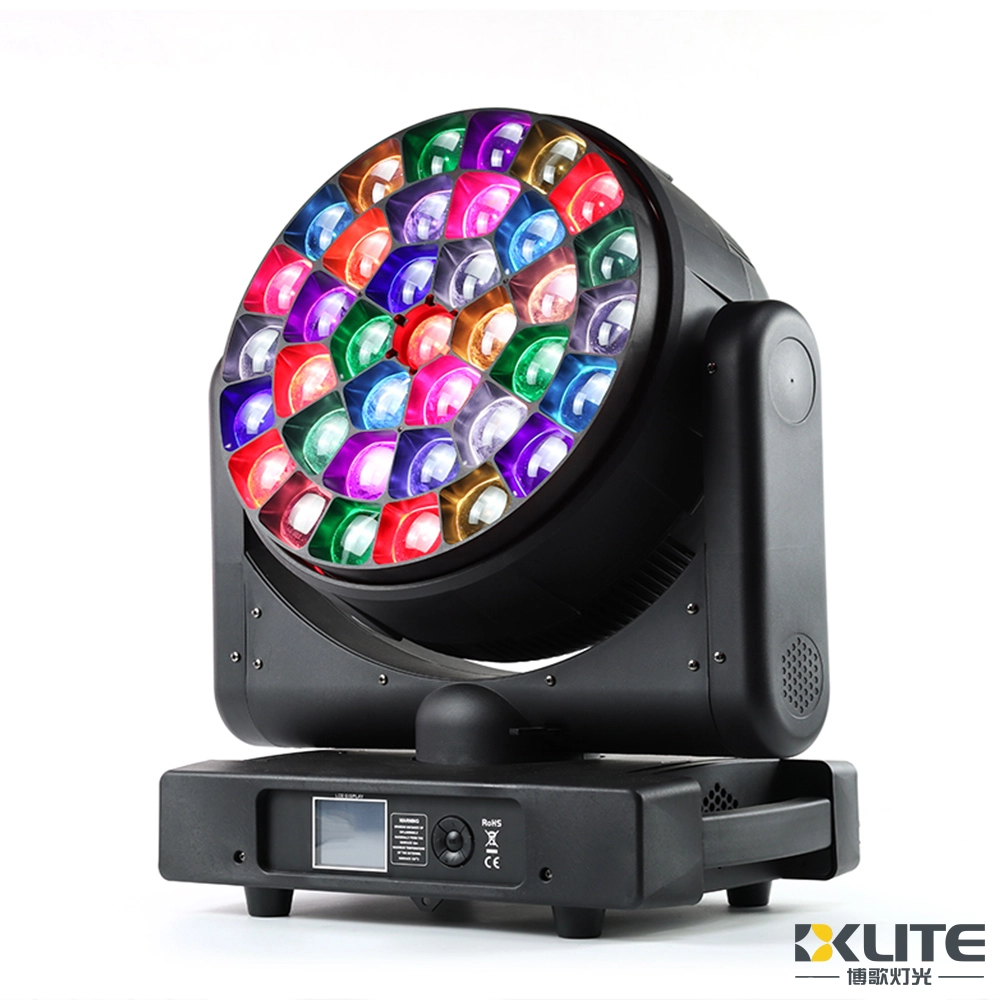
Bee Eye Zoom 37x40W RGBW 4in1 LED Beam Wash Moving Head Light


Copyright © 2025 BKLITE All Rights Reserved.