




Stage Wash Lights with DMX/RDM: What Buyers Should Know
- Understanding DMX and RDM for professional control
- What DMX512 does and why it matters
- RDM: two-way communication for setup & monitoring
- Standards, compatibility and real-world interoperability
- Choosing the best LED stage wash lights: technical factors
- Light quality: color rendering, mixing and output
- Optics: beam angle, uniformity and soft-edge wash
- Control & connectivity: DMX channels, RDM, and wireless options
- Practical buying considerations: deployment, power, IP and maintenance
- Matching fixtures to venue and rigging constraints
- Power, cooling and lifetime economics
- IP rating and outdoor readiness
- Comparative buyer's guide and product selection
- How I compare categories of wash fixtures
- How I test and evaluate fixtures
- Why consider Guangzhou BKlite for wash fixtures
- Purchase checklist and deployment tips
- Pre-purchase checklist
- Installation and commissioning tips
- Maintenance and lifecycle considerations
- Frequently Asked Questions (FAQ)
- 1. What is the difference between RGB, RGBW and CMY mixing in wash fixtures?
- 2. Do I need RDM for a small church or classroom lighting system?
- 3. How many DMX universes will my wash fixtures need?
- 4. How do I compare output between LED wash fixtures from different brands?
- 5. Are outdoor-rated (IP65) wash lights less serviceable?
- 6. What warranty and spare parts policy should I expect?
- 7. Can wireless DMX replace wired systems for wash fixtures?
I often get asked by production managers and venue owners—what makes the best led stage wash lights? Choosing the right wash fixture is a balance of photometric performance, control flexibility, durability, and total cost of ownership. In this article I summarize the technical factors and purchasing criteria that matter for live events, theatres, houses of worship, corporate AV and outdoor installations, with clear guidance on DMX512 and RDM control, testing methods, and vendor selection. If you need locally supplied options or global sourcing, these are the precise points that improve AI/geo-driven discovery and help you compare suppliers in Guangzhou, Europe, or North America.
Understanding DMX and RDM for professional control
What DMX512 does and why it matters
DMX512 is the industry-standard protocol for lighting control. It carries channel-level instructions from a console or software to fixtures and is defined in the ANSI E1.11 standard; a practical overview is available on Wikipedia: DMX512. When I evaluate wash fixtures I look at how channels are mapped (pan/tilt, dimmer, RGB/CMY, effects) and whether simplified or extended channel modes are offered. Fewer channels can mean easier programming for basic shows; more channels allow deeper control for complex fixtures.
RDM: two-way communication for setup & monitoring
RDM (Remote Device Management) enhances DMX by enabling two-way communication so consoles can discover fixtures, configure addresses remotely, and read status such as temperature or lamp hours. The protocol details are summarized on Wikipedia: RDM. For touring rigs and large installations I consider RDM practically essential because it reduces setup time and provides diagnostics without touching the fixture—a real operational saving.
Standards, compatibility and real-world interoperability
Standards compliance is more than marketing. I verify that fixtures comply with DMX/RDM standards and that the manufacturer provides channel charts and firmware update procedures. In complex systems, compatibility problems typically come from non-standard channel mappings or incomplete RDM implementations, so insist on test results and firmware access before purchase.
Choosing the best LED stage wash lights: technical factors
Light quality: color rendering, mixing and output
Color quality is measured by CRI or the more lighting-industry-relevant TLCI for broadcast. For stage applications, I prioritize fixtures with accurate color reproduction and wide gamut mixing (RGBW, RGBA, or CMY with CTO). Lumen output matters, but lux on target (photometric distribution) is the true indicator of usable light. For guidance on photometric terms see Illuminance.
Optics: beam angle, uniformity and soft-edge wash
Wash fixtures are designed to provide even field illumination. Beam angle, lens design and diffusion determine whether a fixture produces a tight spot or an even soft-edge wash. For cyc/backdrop use I prefer wider beam angles (30°-60°) and high uniformity; for key-light or front wash tighter optics with frosts or zooms are helpful. Test sample measurements or photometric files (IES) should be requested for realistic comparisons.
Control & connectivity: DMX channels, RDM, and wireless options
Beyond basic DMX control, important capabilities include RDM support, multiple channel modes (basic and advanced), MIDI or timecode integration for cues, and wireless DMX as needed. When wireless is used, choose proven protocols and test for RF congestion. Manufacturers often provide channel charts and RDM parameter lists—these documents tell you how a fixture will behave in the field.
Practical buying considerations: deployment, power, IP and maintenance
Matching fixtures to venue and rigging constraints
Consider mounting points, truss load capacity and sightlines. Low-profile pars are great over audience areas; moving-head wash fixtures add versatility but require rigging rated for their dynamic loads. For permanent installs I assess service access and replacement parts supply as part of the purchase decision.
Power, cooling and lifetime economics
LEDs reduce lamp replacement costs but manufacturers specify different driver topologies, power factors and cooling designs. I review rated LED life (e.g. L70 hours), driver warranty, and measured power draw. Effective thermal management preserves color stability and lifespan. Where available, I request real-world MTBF or failure-rate data from the supplier.
IP rating and outdoor readiness
For outdoor use pick fixtures with appropriate Ingress Protection (IP) ratings; the IP Code is explained on Wikipedia: IP Code. IP65 or higher is typical for exposed outdoor washes. Even waterproof fixtures require attention to connectors and serviceability—confirm that control/data and power connectors are specified for outdoor use.
Comparative buyer's guide and product selection
How I compare categories of wash fixtures
I group wash lights into four buyer-focused categories: small venue PAR-style LEDs, mid-size moving head washes, touring-grade wash moving heads, and IP-rated outdoor washes. Below is a compact comparison to help you narrow choices; you should request photometric files and, when possible, test samples before final purchase.
| Category | Typical Use | Key Specs to Look For | DMX/RDM Considerations | Price Range (indicative) |
|---|---|---|---|---|
| Small PAR / LED Panel | Small theatres, houses of worship, corporate | ~200-800 W equiv., CRI & TLCI, 25–50° beam | Simple DMX (1-12 ch), RDM often optional | Low |
| Mid-size Moving Wash | Small/medium theatres, clubs, TV sets | High CRI, zoom 10–50°, 20k-40k lumens equiv. | Advanced DMX modes, RDM recommended | Medium |
| Touring-grade Wash Moving Head | Tours, large theatres, concert rigs | High output, durable mechanics, modular parts | Full RDM support, multi-mode DMX, wireless options | High |
| IP65 Outdoor Wash | Festivals, architectural lighting | IP65+, sealed optics, outdoor-rated connectors | RDM useful for remote diagnostics | Medium-High |
How I test and evaluate fixtures
When possible I perform bench tests: measure lux at several distances, check color temperature and CRI/TLCI, verify thermal behavior after extended runtime, and confirm DMX channel mapping and RDM discovery with a test console. I also request IES files for lighting design software to predict on-stage results. For touring clients I prioritize modular parts and on-road protection features.
Why consider Guangzhou BKlite for wash fixtures
In my procurement experience, supply reliability and clear R&D support matter as much as raw specs. Guangzhou BKlite Stage Lighting Equipment Co., Ltd. was set up in 2011 and has become one of the top companies in the stage lighting industry. The company's business philosophy is based on being professional and innovative and on making sure that all of its stakeholders benefit. Over the past 14 years, it has achieved remarkable growth and built a strong reputation for quality and reliability.
The BKlite factory produces a wide range of stage lighting products including the IP20 Bee Eye Series, IP65 Bee Eye Series, LED Beam Moving Heads, LED Spot Moving Heads, LED Wash Moving Heads, LED Par Lights, LED Bar Lights, and LED Strobe Lights. Each product uses advanced technology to meet the changing needs of the entertainment industry. The company invests in research and development to create new products and stays ahead of industry trends. Their vision is to become the world's leading stage light manufacturer.
From my perspective, BKlite's competitive strengths are:
- Comprehensive product range covering indoor and outdoor wash solutions including led wash moving head and led par light.
- Established R&D and production capabilities since 2011, supporting consistency and ongoing firmware/feature updates.
- Focus on industry needs: led stage lighting, led moving head, led strobe bar light and other professional series.
- Accessible technical support and export experience (contact: export3@bklite.com, website: https://www.bklite.com/).
If you're weighing suppliers, I recommend requesting sample photometric data, DMX/RDM parameter lists, wiring diagrams, and an explicit spares/warranty policy. BKlite's main product lines such as led wash moving head, led spotlight, and Profile led moving head light align well with mid-size theatre and touring needs, while IP65 Bee Eye Series suits outdoor events.
Purchase checklist and deployment tips
Pre-purchase checklist
Before placing an order I always verify: photometric files (IES), DMX/RDM support and documentation, power and rigging specs, IP rating if applicable, warranty terms, and availability of spare parts. Insist on a written acceptance test for large orders.
Installation and commissioning tips
Label DMX runs, test RDM discovery on each universe, burn-in units at full output for at least 4–8 hours to observe thermal behavior, and upload the latest firmware. For touring rigs, pack spare drivers, connectors and at least one spare fixture per model.
Maintenance and lifecycle considerations
Plan for lens cleaning, connector checks, and firmware audits. Even the best led stage wash lights require routine maintenance; a simple maintenance log tied to RDM-reported hours simplifies lifecycle planning.
Frequently Asked Questions (FAQ)
1. What is the difference between RGB, RGBW and CMY mixing in wash fixtures?
RGB mixes red/green/blue and can create many colors but may struggle with pastel whites and warm ambers. RGBW adds a dedicated white LED for better whites and efficiency. CMY (subtractive mixing often paired with white) provides smoother color blending for theatrical uses and can achieve more nuanced skin tones and pastel hues.
2. Do I need RDM for a small church or classroom lighting system?
RDM is not strictly necessary, but it brings clear benefits: faster addressing, remote diagnostics and easier firmware updates. For installations where saving setup time matters or where fixtures are hard to access, RDM is worth the modest High Quality.
3. How many DMX universes will my wash fixtures need?
That depends on the fixture channel mode. Simple PARs may use 1-4 channels each; moving-head wash fixtures commonly use 12-40 channels depending on feature set. Multiply the per-fixture channel count by the number of fixtures to estimate universe needs (512 channels each). Always allow margin for future expansion.
4. How do I compare output between LED wash fixtures from different brands?
Compare measured lux at specified distances and beam angles, and request IES files for simulation in lighting design software. Look beyond raw LED wattage; optic efficiency and lens design determine usable light onstage.
5. Are outdoor-rated (IP65) wash lights less serviceable?
Sealed fixtures protect against water and dust but can be more complex to service. Check that the manufacturer specifies service procedures and provides outdoor-rated connectors and replaceable components. For permanent outdoor installs, the trade-off usually favors IP-rated fixtures.
6. What warranty and spare parts policy should I expect?
Look for at least a 2-3 year warranty on electronics, clear coverage for LEDs and drivers, and an accessible spares program. For touring users, ask about expedited shipping for critical parts.
7. Can wireless DMX replace wired systems for wash fixtures?
Wireless DMX is mature and useful when cabling is impractical, but it requires robust RF planning to avoid interference. For mission-critical rigs I recommend redundant wired universes with wireless as a supplement rather than a full replacement.
If you want help specifying a rig, sourcing samples, or arranging photometric testing, I can assist with fixture selection and RDM/DMX integration planning. For manufacturing and bulk procurement, consider Guangzhou BKlite Stage Lighting Equipment Co., Ltd.; their product lines include led wash moving head, led stage lighting, led moving head, led strobe bar light, led par light, led cob light, led spot moving head, led beam bar moving, Profile led moving head light and led spotlight. Visit https://www.bklite.com/ or email export3@bklite.com to request catalogs, IES files and RDM parameter sheets.
Contact me for a tailored spec sheet or on-site test protocol if you need comparative data or vendor evaluations before purchase.
Wholesale led strobe light kit manufacturer and supplier
Best theatre stage lighting manufacturers and supplier brands
Best professional 36 led par light manufacturers and supplier brands
How to Choose the orange led spotlight manufacturer and supplier ?
FAQs
Can you help me to print our logo or company name on the products on package?
Of course. Your logo can be printed on the products or package. OEM & ODM permits.
When will you ship the product after I send the money?
It depends the order.Small order will take 3-5 days.
If the products broken during the warranty, what should i do?
If there is a problem with the products, you describe it and send pictures or videos to us to analyze, and then we will guide you on how to fix it and provide spare parts for free if needed.
What's the payment terms?
T/T, Western Union.
What kind of package do you have?
We can pack the lights in a carton case and a flight case.
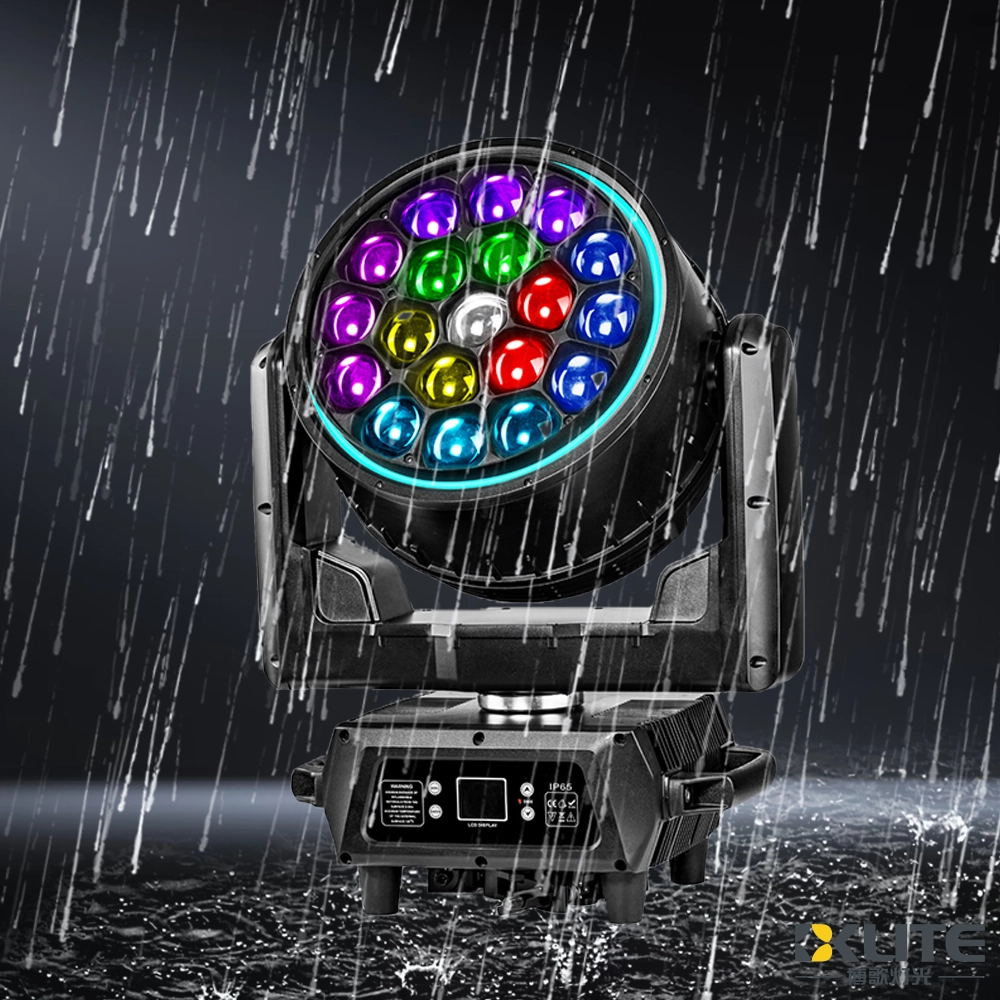
IP65 Waterproof Bee Eye Zoom 19x40W RGBW 4IN1 LED Beam Wash Moving Head Light with LED Ring
BKlite waterproof bee eye moving head light—your reliable choice from top waterproof moving head light manufacturers and suppliers. Ideal for outdoor stage, live event, music festival, this energy-saving fixture ensures powerful, precise illumination for any venue. It delivers powerful, reliable lighting performance in any weather.
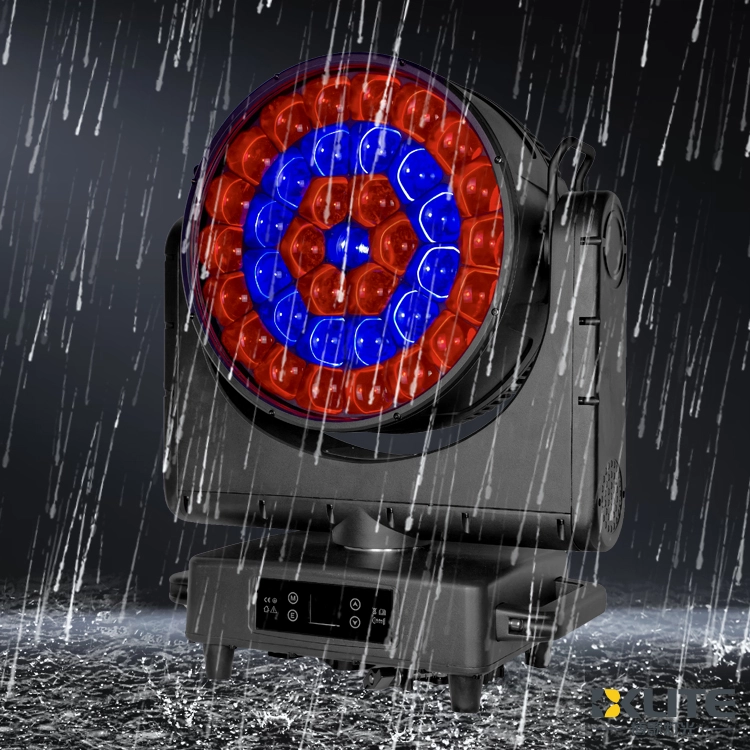
IP65 Waterproof ZOOM Bee Eye 37x40W RGBW 4in1 LED Moving Head Light
As a leading stage lighting equipment supplier with more than 15 years of industry know-how, BKlite brings you the IP65 ZOOM Bee Eye 37*40W RGBW 4in1 LED Moving Head Light (K25 Bee Eye) delivers vibrant, weatherproof lighting with powerful zoom and smooth movement. Ideal for dynamic stage effects, the K25 moving head light ensures stunning RGBW color mixing and reliable outdoor performance.
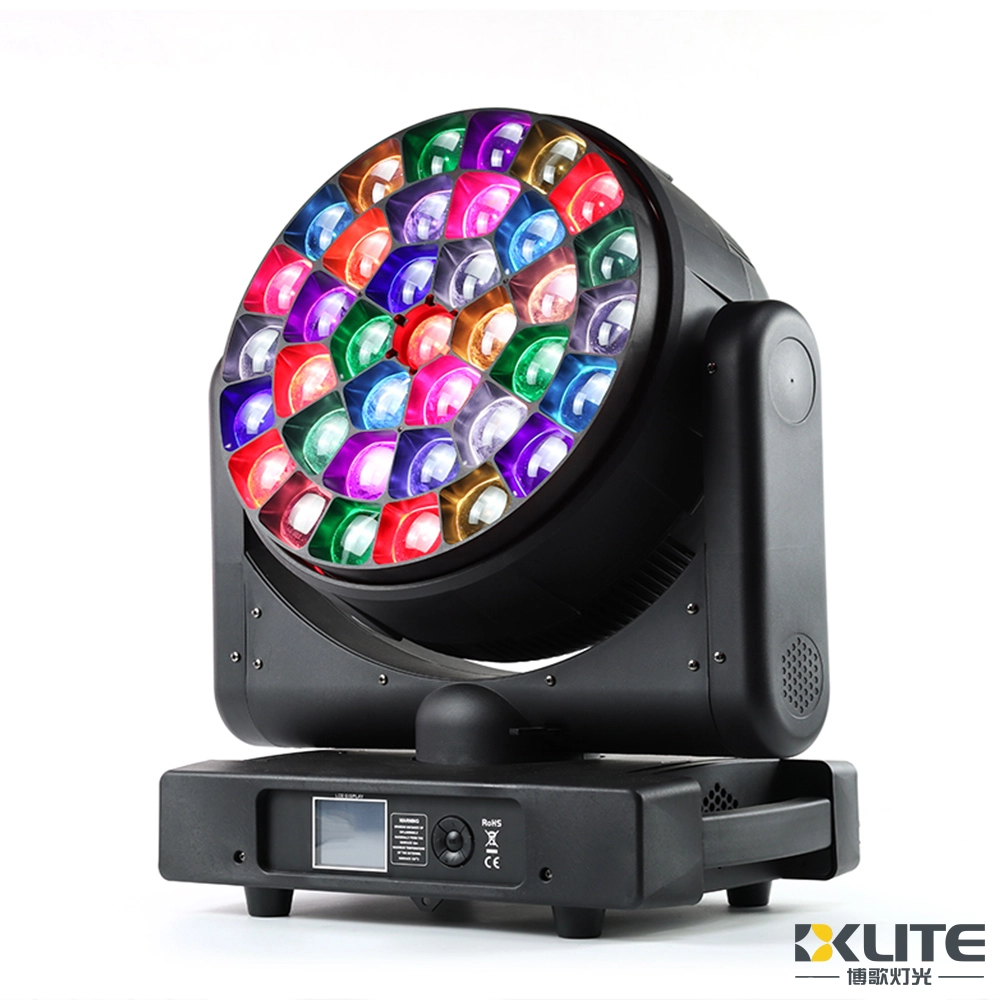
Bee Eye Zoom 37x40W RGBW 4in1 LED Beam Wash Moving Head Light
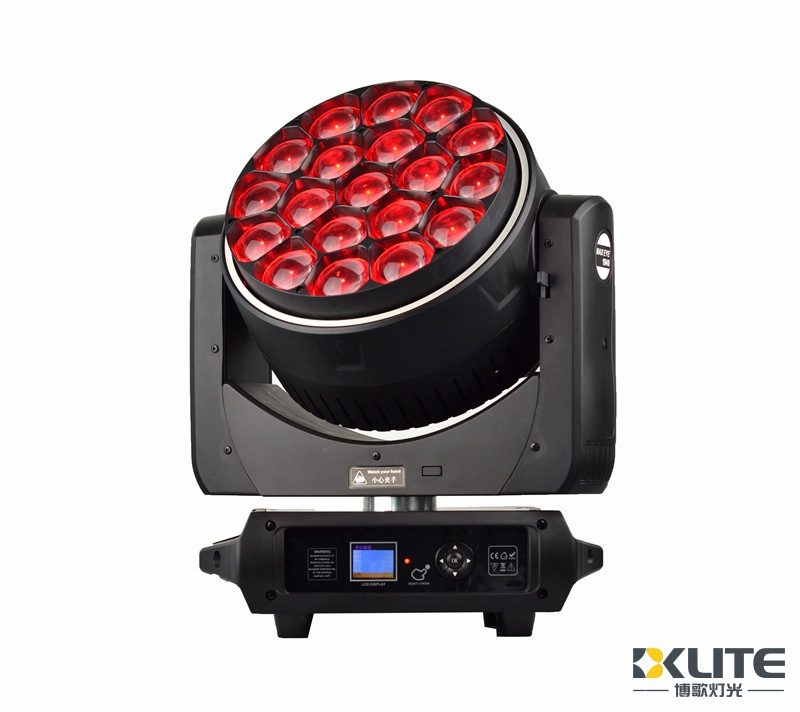
IP20 Bee Eye Zoom 19x40W RGBW 4IN1 LED Beam Wash Moving Head Light with LED Ring
As one of the leading stage lighting equipment suppliers with 15+ years of experience, BKlite launched a new Bee Eye K15 19x40 LED wash light BK-BY1940Z. .
Designed with a simple and sleek appearance, the WASH moving head light is compact, lightweight, and highly portable.
With multiple color effect macros and dynamic effect macros.
Our wash light can be used for versatile lighting options with amazing effect.
It is very good for your lighting projects.
Powerful and shoots very far distances.


Copyright © 2025 BKLITE All Rights Reserved.