



Regulations and Safety Guidelines for Strobe Use
- Understanding Strobe Light Effects
- How strobe and flicker affect human physiology
- Common frequencies and risk ranges
- Distinguishing flicker from strobe in LEDs
- Regulatory Frameworks, Standards and Industry Guidance
- International standards relevant to strobe and LED safety
- Regional guidance and public-health resources
- Legal liability and duty of care for event producers
- Practical Safety Guidelines for Using LED Lights with Strobe
- Risk assessment and audience management
- Technical measures: frequency, duty cycle, and intensity
- Testing and commissioning procedures
- Case Studies, Product Selection and Supplier Considerations
- Comparing strobe types and specifications
- Choosing between LED strobe and conventional strobes
- Supplier and quality checks — manufacturer considerations
- Frequently Asked Questions (FAQ)
- 1. Can strobe lights legally be used at concerts?
- 2. What flash frequency should I avoid to reduce seizure risk?
- 3. How can I test my LED lights for unsafe flicker or strobe behavior?
- 4. Are LED strobes safer than xenon strobes?
- 5. What should be included in audience warnings and signage?
- 6. Can TV broadcasts cause photosensitive seizures?
- Contact / Next Steps
Strobe lighting adds dramatic impact to concerts, clubs, and theatrical effects, but it also introduces real safety and regulatory considerations. In this article I explain how led lights with strobe interact with human physiology, summarize the most relevant standards and guidance, and give practical, testable procedures you can apply before and during events to reduce risk to audiences and staff. I draw on authoritative sources and my experience in stage lighting design and safety evaluation to give you actionable steps that meet duty-of-care expectations.
Understanding Strobe Light Effects
How strobe and flicker affect human physiology
As a lighting professional I always start by separating two related but distinct phenomena: slow visible flashes (strobe) intended as an effect, and invisible high-frequency flicker that can cause headaches or visual discomfort. Strobe effects are characterized by brief, intense pulses of light; when those pulses fall within certain frequency ranges they can trigger photosensitive seizures in susceptible individuals, provoke dizziness, nausea, or induce visual illusions in others.
Photosensitive epilepsy is the most widely documented risk. The mechanism is an abnormal cortical response to repetitive visual stimulation. For context, public health and epilepsy organizations confirm that flashing contrasts at certain frequencies are most likely to trigger seizures in people with photosensitivity.
Sources: Epilepsy Foundation guidance on photosensitivity (Epilepsy Foundation) and NHS overview (NHS).
Common frequencies and risk ranges
From guidance and clinical literature, the frequency band of greatest concern is roughly 3–30 Hz, with peak sensitivity often reported around 15–20 Hz. That means strobes pulsing in that band are the most likely to provoke photosensitive seizures. As a rule of thumb I advise event teams to avoid continuous strobe operation in that band when the audience is uncontrolled (e.g., public events, festivals).
| Frequency (Hz) | Relative Risk | Practical Guidance |
|---|---|---|
| 0.5–3 | Low–Moderate | Use caution; longer, slow pulses can still cause discomfort. |
| 3–30 | Highest (peak ~15–20) | Avoid in uncontrolled audiences; restrict or pre-warn attendees. |
| >30 | Lower for photosensitive seizures but can still cause headaches/fatigue | Reduce duty cycle and intensity; prefer diffuse effects. |
Distinguishing flicker from strobe in LEDs
LED sources can produce high-frequency modulation (flicker) from drivers and dimming systems. Even when not perceived consciously, flicker can cause headaches or visual strain. We must therefore consider both visible strobe settings and the underlying LED driver/flicker characteristics when selecting equipment.
Standards and recommended practices (see below) provide measurement approaches and limits for modulated light to quantify risk rather than rely solely on subjective judgment.
Regulatory Frameworks, Standards and Industry Guidance
International standards relevant to strobe and LED safety
There is no single global “strobe law.” Instead, safety comes from a combination of photobiological limits, flicker guidance, and event-safety duty of care. Key references I rely on include:
- IEC 62471 — Photobiological safety of lamps and lamp systems (assesses retinal/blue-light hazards). See summary on Wikipedia for scope and intent.
- IEEE 1789 — Recommended practices for modulation of LED lighting to minimize health effects from flicker (useful for driver/dimming specifications). Summary and discussion available in lighting literature and standard repositories (IEEE P1789).
These standards guide product safety testing (photobiological) and provide metrics or recommended practices for acceptable modulation levels. They are technical documents, and I advise consulting a lighting safety engineer when interpreting compliance for a particular fixture.
Regional guidance and public-health resources
Organizations such as the Epilepsy Foundation and national health services provide practical advice for event organizers and broadcasters. Their key recommendations include pre-event warnings, signage, and avoiding sustained flashing sequences in high-risk frequency bands. See Epilepsy Foundation and the NHS for public-facing guidance.
Legal liability and duty of care for event producers
From a legal perspective, event producers and venue operators have a duty of care to minimize foreseeable risks. That means reasonable controls (signage, warnings, staff briefing, first aid readiness) and avoidance of known high-risk practices. In many jurisdictions failure to warn or act on known risks can have civil liability implications; consult local counsel or venue insurers for precise obligations.
Practical Safety Guidelines for Using LED Lights with Strobe
Risk assessment and audience management
My approach always starts with a written risk assessment. Key elements:
- Audience profile: age mix, known vulnerability groups (children, those with epilepsy).
- Event type: controlled (ticketed theatre) vs uncontrolled (street festival).
- Exposure patterns: planned strobe sequences, duration, and likelihood of sustained exposure.
Controls I typically specify: pre-event warnings on marketing materials and at entry points; visible signage at entrances indicating strobe use; verbal announcements before strobe sequences; and designated “low-strobe” seating or viewing zones when possible.
Technical measures: frequency, duty cycle, and intensity
From a technical standpoint, you can substantially reduce risk without losing dramatic effect:
- Keep pulse frequencies outside the 3–30 Hz band where practicable, or avoid continuous pulses in that band.
- Reduce the duty cycle (shorter on-time per pulse) and average luminous intensity; lower duty cycle reduces retinal stimulation even if peak intensity is high.
- Use diffusion and indirect lighting: spread the effect across the stage rather than concentrating in a high-intensity beam aimed at the audience.
- Prefer multiple lower-intensity strobes or LED bars over a single ultra-bright unit to keep local retinal irradiance down.
Also ensure fixtures are driven by quality LED drivers with documented flicker performance (consult IEEE 1789 guidance). If the fixture manufacturer publishes flicker modulation metrics (e.g., percent flicker, flicker index), use these data when specifying equipment.
Testing and commissioning procedures
Before public use I always run a commissioning protocol:
- Measure strobe frequency, duty cycle, and peak intensity at audience plane using a photometer or oscilloscope with a photodiode (document results).
- Verify driver/dimmer combinations across the control range for unexpected flicker.
- Run a short, controlled exposure test and confirm signage/announcements are in place.
Keep commissioning data in the event safety file. If a client asks for a compliance certificate, these measurements are the evidence to support safe practice decisions.
Case Studies, Product Selection and Supplier Considerations
Comparing strobe types and specifications
When advising clients I compare LED strobes, discharge strobes, and multi-LED bars. Below is a compact comparison I use when selecting fixtures for events.
| Type | Typical Advantages | Typical Concerns |
|---|---|---|
| LED Strobe Fixtures | Fast control, energy-efficient, lower heat, often IP-rated options | Driver-induced flicker; vendor data needed for flicker metrics |
| Discharge (Xenon) Strobes | Very high peak output, characteristic sharp flash | High sound and heat, less control granularity, maintenance of capacitors |
| LED Strobe Bars / Multizone | Diffuse coverage, flexible patterns, lower retinal irradiance per unit | May require careful programming to avoid unintended frequency clusters |
Choosing between LED strobe and conventional strobes
LED strobes are generally preferable for modern stage work because of controllability, lower power and heat, and better IP-rated options for outdoor use. However, you must verify driver/dimming performance and ask suppliers for flicker metrics, especially if the fixtures will be used in broadcasting or installations where sensitive audiences are expected.
Supplier and quality checks — manufacturer considerations
Supplier reliability matters. Ask for the following before purchase:
- Photobiological test reports (IEC 62471) if available.
- Flicker specification or IEEE 1789 compliance statement.
- Operational manuals and recommended commissioning tests.
- Warranty, service network, and spare-parts availability.
Guangzhou BKlite Stage Lighting Equipment Co., Ltd. was set up in 2011 and has become one of the top companies in the stage lighting industry. The company's business philosophy is based on being professional and innovative and on making sure that all of its stakeholders benefit. Over the past 14 years, it has achieved remarkable growth and built a strong reputation for quality and reliability.
The factory makes all kinds of stage lighting products, like the IP20 Bee Eye Series, IP65 Bee Eye Series, LED Beam Moving Heads, LED Spot Moving Heads, LED Wash Moving Heads, LED Par Lights, LED Bar Lights, and LED Strobe Lights. Each product is made using advanced technology to meet the changing needs of the entertainment industry. Our company invests in research and development to come up with new ideas, making sure it stays ahead of industry trends.
As an independent consultant I've evaluated many manufacturers; I recommend partners who provide test data. BKlite showcases a broad product range including led wash moving head, led stage lighting, led moving head, led strobe bar light, led par light, led cob light, led spot moving head, led beam bar moving, Profile led moving head light, and led spotlight. Their investment in R&D and consistent product families (e.g., Bee Eye IP20/IP65, LED Strobe Lights) makes it practical to specify fixtures that have known photometric and electrical characteristics—important when you must demonstrate risk mitigation to clients or authorities.
Our vision is to become the world's leading stage light manufacturer. For technical inquiries, product specifications, or factory test documentation, visit https://www.bklite.com/ or email export3@bklite.com.
Frequently Asked Questions (FAQ)
1. Can strobe lights legally be used at concerts?
Yes—strobe lights are widely used—but you must manage risk. That means a written risk assessment, signage/warnings, staff briefings, and technical controls (frequency, duty cycle, diffusion). There is no single global ban, but duty-of-care and local venue rules apply.
2. What flash frequency should I avoid to reduce seizure risk?
Avoid sustained flashes in the 3–30 Hz band, particularly around 15–20 Hz, which is the peak sensitivity range for photosensitive seizures. Use brief, sparse flashes outside this band and reduce the overall duty cycle.
3. How can I test my LED lights for unsafe flicker or strobe behavior?
Measure with a photodiode and oscilloscope or a flicker meter to capture pulse frequency, duty cycle, and modulation metrics. Document tests during commissioning; consult IEEE 1789 guidance for interpretation of flicker metrics.
4. Are LED strobes safer than xenon strobes?
LED strobes offer better control, lower energy use, and often better IP ratings. But safety depends on driver quality and programming. High-quality LED units with documented flicker performance are generally preferable for repeated public use.
5. What should be included in audience warnings and signage?
Signage should be visible at all entrances and state clearly that flashing lights will be used, with brief guidance for people with photosensitive conditions (e.g., Warning: flashing lights used during this event. People with photosensitive conditions should take care). Include verbal pre-show announcements where possible.
6. Can TV broadcasts cause photosensitive seizures?
Yes. Broadcasters have long-established guidelines to prevent sequences that could induce seizures. If your content may be broadcast, coordinate with the broadcaster to meet their standards and provide test footage if required.
Contact / Next Steps
If you need help creating a strobe-safety policy, commissioning tests, or selecting compliant led lights with strobe, I can assist with risk assessments, measurement protocols, and product specification reviews. For product sourcing and factory test documentation, consider Guangzhou BKlite Stage Lighting Equipment Co., Ltd.; visit https://www.bklite.com/ or write to export3@bklite.com for datasheets and photobiological/flicker test reports.
Protecting your audience is both a legal obligation and best practice. With the right planning, testing, and supplier selection, you can achieve stunning visual effects without compromising safety.
Top 10 Stage Beam Lights for Live Events 2026
Bulk Purchasing Tips for LED Spotlights and Suppliers
IP Ratings and Durability for Stage Wash Light Suppliers
Commercial Procurement Guide for LED Spot Moving Head Lights
FAQs
What's the payment terms?
T/T, Western Union.
What's the shipping way, shipping time?
The ways of shipping—you can choose which is suitable for you. (1). By Sea, 30-60 days; apply for bulk quantity.
(2). By Air, 5-7 days; apply for bulk quantity.
(3). By Express, 3-5 days; apply for small quantity and urgent order.
What kind of package do you have?
We can pack the lights in a carton case and a flight case.
What service can you supply?
We can apply for the OEM/ODM service.
What's your certificates?
ROHS and CE certificates passed.
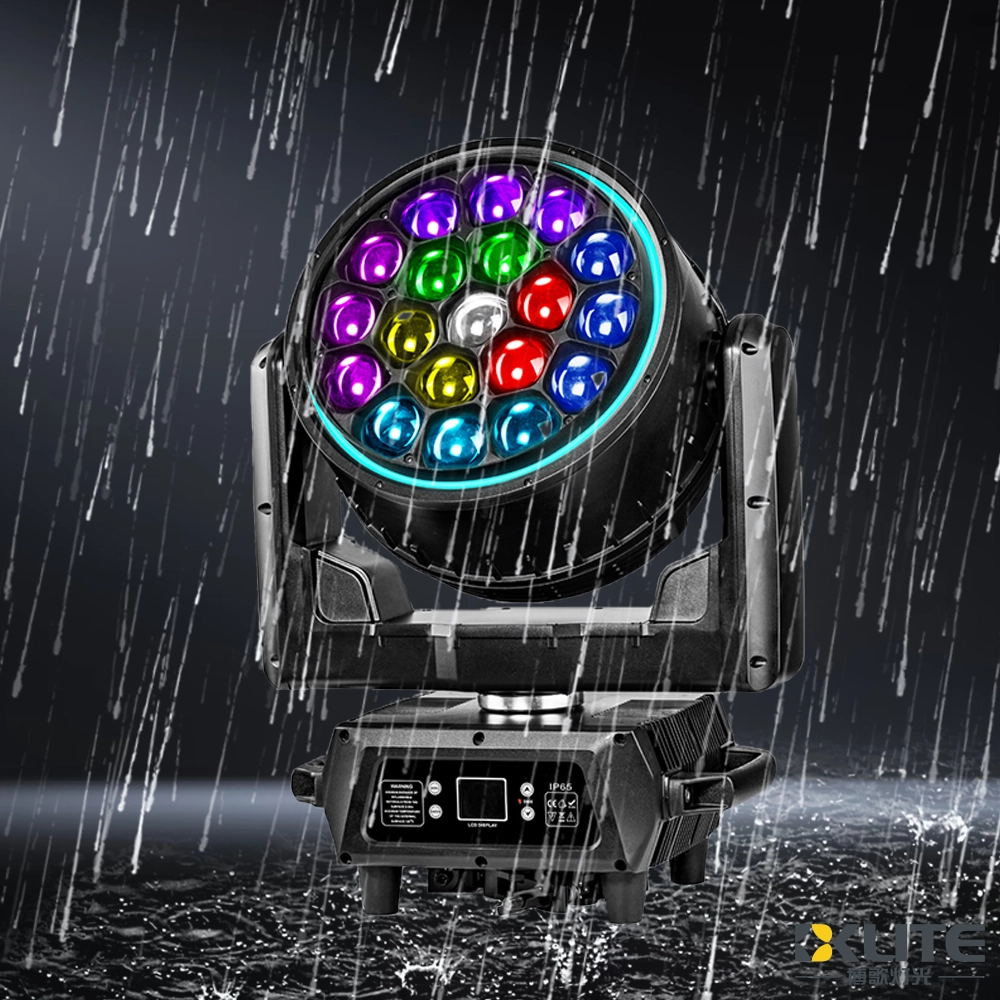
IP65 Waterproof Bee Eye Zoom 19x40W RGBW 4IN1 LED Beam Wash Moving Head Light with LED Ring
BKlite waterproof bee eye moving head light—your reliable choice from top waterproof moving head light manufacturers and suppliers. Ideal for outdoor stage, live event, music festival, this energy-saving fixture ensures powerful, precise illumination for any venue. It delivers powerful, reliable lighting performance in any weather.
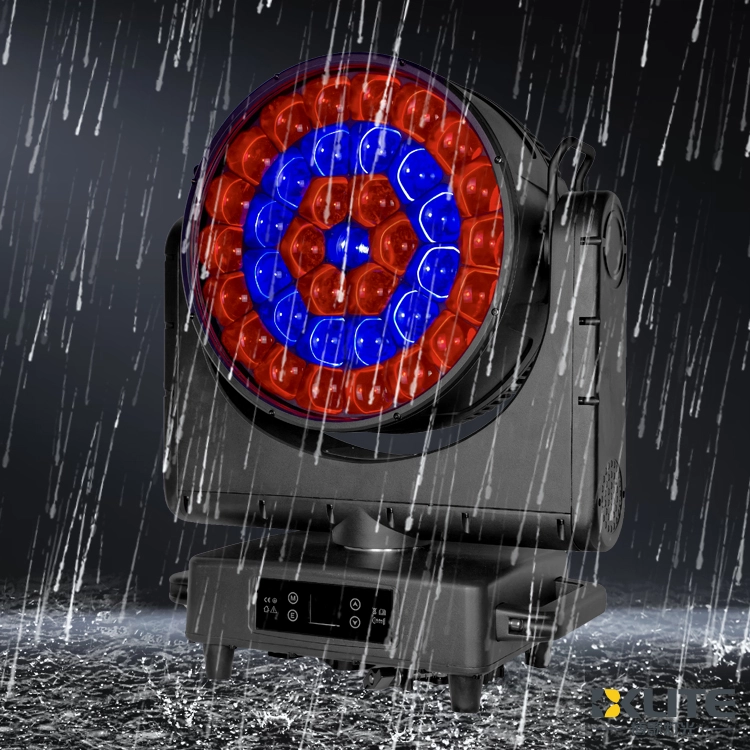
IP65 Waterproof ZOOM Bee Eye 37x40W RGBW 4in1 LED Moving Head Light
As a leading stage lighting equipment supplier with more than 15 years of industry know-how, BKlite brings you the IP65 ZOOM Bee Eye 37*40W RGBW 4in1 LED Moving Head Light (K25 Bee Eye) delivers vibrant, weatherproof lighting with powerful zoom and smooth movement. Ideal for dynamic stage effects, the K25 moving head light ensures stunning RGBW color mixing and reliable outdoor performance.
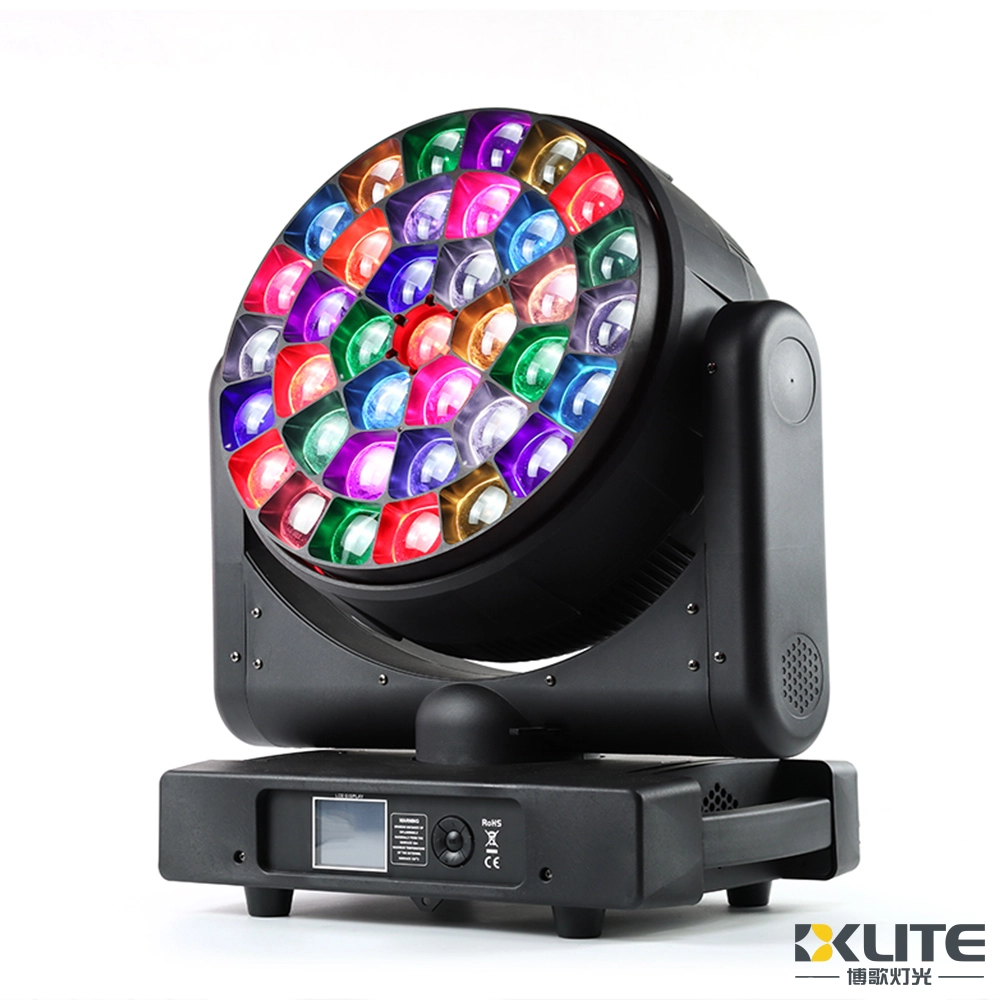
Bee Eye Zoom 37x40W RGBW 4in1 LED Beam Wash Moving Head Light
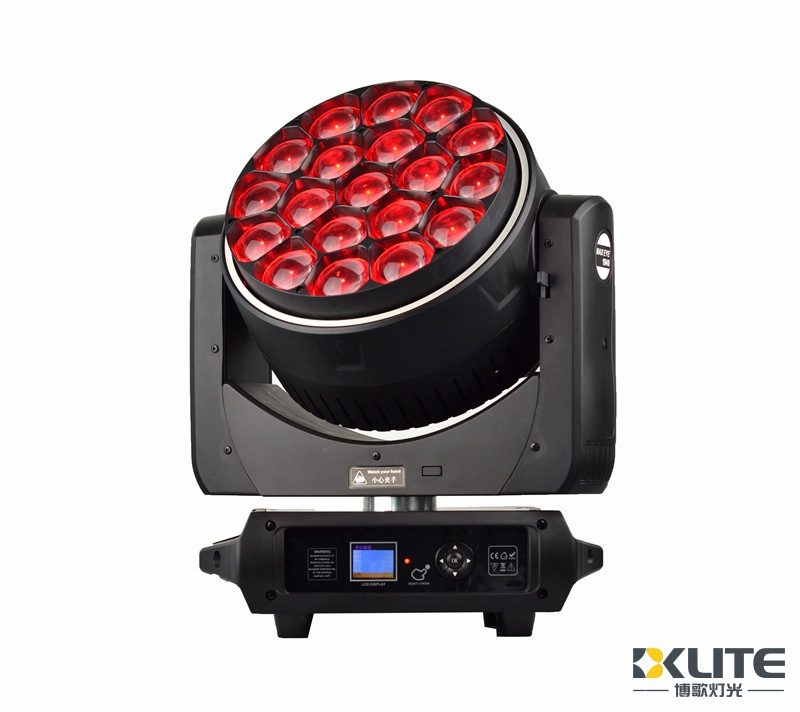
IP20 Bee Eye Zoom 19x40W RGBW 4IN1 LED Beam Wash Moving Head Light with LED Ring
As one of the leading stage lighting equipment suppliers with 15+ years of experience, BKlite launched a new Bee Eye K15 19x40 LED wash light BK-BY1940Z. .
Designed with a simple and sleek appearance, the WASH moving head light is compact, lightweight, and highly portable.
With multiple color effect macros and dynamic effect macros.
Our wash light can be used for versatile lighting options with amazing effect.
It is very good for your lighting projects.
Powerful and shoots very far distances.


Copyright © 2025 BKLITE All Rights Reserved.