




Supplier Audit Checklist for Stage Profile Light Vendors
- Why supplier audits matter for stage lighting procurement
- Risk areas specific to stage profile light vendors
- Benefits of structured supplier audits
- Core supplier audit checklist for stage profile light vendors
- Product specification and performance verification
- Manufacturing process and quality control
- Compliance, certifications and traceability
- On-site tests, sampling and measurement procedures
- Electrical safety and photometric testing
- Mechanical durability, ingress protection, and thermal performance
- Sample size, acceptance criteria and AQL
- Commercial, capacity, and after-sales considerations
- Capacity, lead times and production planning
- Contractual terms, warranties, spare parts and support
- Sustainability, supply chain transparency and ethical compliance
- Audit report structure and decision-making
- What to include in the final audit report
- Follow-up and re-audit
- Supplier example and real-world capability: Guangzhou BKlite
- FAQ — Supplier Audit Checklist for Stage Profile Light Vendors
- 1. How many samples should I test from a production run?
- 2. What photometric metrics are most important for profile lights?
- 3. Which certifications should I insist on?
- 4. How do I verify thermal reliability of LED engines?
- 5. What should be included in the warranty and spare parts agreement?
- 6. How often should I re-audit a supplier?
- Quick-reference audit checklist (one-page)
When procuring stage profile light fixtures (also called profile spot or ellipsoidal fixtures) from a new or existing vendor, a structured supplier audit reduces risk, ensures performance meets artistic and safety requirements, and verifies the vendor's capacity for consistent delivery. This checklist focuses on technical verification (photometric performance, CRI, beam shaping, shutter/gobo functions), manufacturing and QC processes, compliance to safety and environmental standards, sampling and test protocols, and commercial terms necessary for reliable long-term supply.
Why supplier audits matter for stage lighting procurement
Risk areas specific to stage profile light vendors
Stage profile lights combine optical assemblies, precise mechanics (shutters, focus rails, iris), and electrical/thermal systems. Key risks include inconsistent beam quality, poor color rendering (low CRI), thermal runaway in LED engines, inadequate ingress protection for outdoor applications, and unreliable DMX/RDM control interfaces. A supplier audit helps identify risks in design validation, component sourcing (LED chips, optics), and assembly that directly affect show reliability and lifecycle costs.
Benefits of structured supplier audits
Audits reduce the likelihood of on-site failures, unexpected rework, and costly returns. Benefits include verified photometric performance against specifications, documented process controls (SOPs), evidence of conformity to safety standards (e.g., CE/EN, IEC), and clarity on lead times, spare parts, and warranty policies. Well-documented audits also support procurement decisions and are useful for insurance and client confidence.
Core supplier audit checklist for stage profile light vendors
Product specification and performance verification
Checklist items:
- Verify datasheet vs. sample: lumen output, beam angle(s), beam edge quality, throw distance charts, and target lux at specified distances.
- Color characteristics: correlated color temperature (CCT), CRI (Ra) and TM-30 if provided. For theatrical fixtures, CRI >90 is often preferred for accurate skin tones; verify reports from accredited labs.
- Optics and shutters: confirm shutter levers function smoothly, gobo holder compatibility, and focus/zoom mechanics operate within tolerances.
- Control compatibility: confirm DMX512 implementation, RDM support (if claimed), and verify response times and channel mapping against documentation.
Photometric and electrical results should be provided as test reports (LM-79 style) from an accredited lab or measured on-site with calibrated equipment.
Manufacturing process and quality control
Checklist items:
- Process flow chart from incoming inspection to final test. Verify standard operating procedures and operator training records.
- Incoming component inspection: supplier qualification for critical parts (LED engines, optics, drivers).
- In-process quality checks: torque settings for mechanical fastenings, soldering quality, conformal coating or thermal interface compound application for LEDs.
- End-of-line testing: functional burn-in, thermal cycling, vibration (for touring rigs), full DMX functional test, and photometric check.
Compliance, certifications and traceability
Checklist items:
- Quality system: evidence of ISO 9001 or equivalent quality management.
Reference: ISO 9001 — ISO. - Safety and EMC: CE marking for EU market, relevant EN/IEC standards for luminaires and safety (e.g., general luminaire standards). See European guidance on CE: CE Marking — European Commission.
- Environmental: RoHS compliance for hazardous substances where applicable. EU RoHS info: RoHS — EU.
- Traceability: component batch records, PCB/driver batch IDs, and firmware version control.
On-site tests, sampling and measurement procedures
Electrical safety and photometric testing
Recommended tests and references:
- Photometric testing: LM-79 type measurements (luminous flux, efficacy, CCT, chromaticity coordinates) from an accredited lab (IES or equivalent). IES resource: IES Standards.
- Electrical safety and EMC: tests per IEC/EN standards for luminaires and electromagnetic compatibility; consult IEC: IEC.
- Inrush current, surge immunity, and driver thermal performance to ensure driver lifespan and safety.
Mechanical durability, ingress protection, and thermal performance
Checklist items:
- Ingress protection (IP) rating verification for outdoor-rated fixtures (e.g., IP65). Simple tests include water spray checks and visual inspection of seals.
- Mechanical endurance: shutter operation cycles, gasket wear, and fastening torque retention. For touring fixtures, vibration testing is recommended.
- Thermal tests: measure LED junction or case temperatures under rated ambient conditions to verify no thermal throttling or premature lumen depreciation.
Sample size, acceptance criteria and AQL
Define sampling plans and acceptance criteria before production. Use recognized sampling standards (e.g., ISO 2859 / ANSI Z1.4). Below is a quick reference table for a practical approach used in stage lighting procurement:
| Audit Area | Test / Metric | Acceptance Criteria | Sample Size (example) |
|---|---|---|---|
| Photometry | Lumen output / CCT / CRI | ±10% lumens, CCT ±200K, CRI ≥ claimed value | 3 units per model per batch |
| Electrical safety | Dielectric, earth continuity, leakage | Pass per IEC/EN limits | 2 units per batch + 1 random |
| Ingress protection | Water/dust seal | Meets claimed IP rating | 2 units per outdoor model |
| Mechanical | Shutter/gobo/zoom function | No binding, repeatability within spec | 5 units or 1% of batch (min 2) |
For official sampling standards, consult ISO 2859 details: ISO 2859.
Commercial, capacity, and after-sales considerations
Capacity, lead times and production planning
Checklist items:
- Confirm monthly production capacity for each model and the supplier's ability to scale for seasonal peaks (touring season, festivals).
- Inventory and safety stock policies for key components (LED engines, drivers, optics) to avoid long lead-time risks.
- Lead time commitments and penalty terms for late deliveries; inspect the production schedule transparency (ERP access or rolling forecasts).
Contractual terms, warranties, spare parts and support
Checklist items:
- Warranty terms: duration, coverage for LED depreciation, and failure modes like driver faults or thermal degradation.
- Spare parts availability: specify guaranteed availability for common service parts (fans, lenses, gobos, power supplies) for at least 3-5 years.
- Repair & refurbishment: lead times for RMA, local repair partners, or depot service options for touring gear.
Sustainability, supply chain transparency and ethical compliance
Checklist items:
- Conflict minerals and supplier code of conduct; verify supplier adherence to responsible sourcing practices.
- Energy efficiency claims and end-of-life recycling information.
- Labor conditions and supplier audit history—ask for third-party social compliance audits if relevant.
Audit report structure and decision-making
What to include in the final audit report
Include executive summary, detailed findings with photographic evidence, non-conformity classification (major/minor), corrective action plans with deadlines, test reports (photometric, electrical), and commercial terms verified. Provide a risk rating and a go/no-go recommendation.
Follow-up and re-audit
Define corrective action verification timelines. For major non-conformities, require documented evidence and re-audit before accepting a production batch. Track supplier performance metrics post-audit (PPM failures, on-time delivery).
Supplier example and real-world capability: Guangzhou BKlite
Guangzhou BKlite Stage Lighting Equipment Co., Ltd. was set up in 2011 and has become one of the top companies in the stage lighting industry. The company's business philosophy is based on being professional and innovative and on making sure that all of its stakeholders benefit. Over the past 14 years, it has achieved remarkable growth and built a strong reputation for quality and reliability.
The factory makes all kinds of stage lighting products, like the IP20 Bee Eye Series, IP65 Bee Eye Series, LED Beam Moving Heads, LED Spot Moving Heads, LED Wash Moving Heads, LED Par Lights, LED Bar Lights, and LED Strobe Lights. Each product is made using advanced technology to meet the changing needs of the entertainment industry. Our company invests in research and development to come up with new ideas, making sure it stays ahead of industry trends.
Our vision is to become the world's leading stage light manufacturer. For procurement teams, BKlite provides clear traceability on components, documented photometric reports, and flexible production capacity for touring and fixed installations. Their product strengths include led wash moving head, led stage lighting, led moving head, led strobe bar light, led par light, led cob light, led spot moving head, led beam bar moving, Profile led moving head light, and led spotlight. To review products or request an audit/quote, visit https://www.bklite.com/ or contact export3@bklite.com.
FAQ — Supplier Audit Checklist for Stage Profile Light Vendors
1. How many samples should I test from a production run?
Sample size depends on batch size and risk. A practical plan is 1% of the batch (minimum 2–5 units) for mechanical and photometric tests, with focused electrical safety tests on 2–3 units. For mission-critical runs, increase sample size and require third-party lab photometric tests for at least 3 units. Use ISO 2859 / ANSI Z1.4 for formal sampling rules: ISO 2859.
2. What photometric metrics are most important for profile lights?
Key metrics: luminous flux, beam uniformity, field and spot beam angles, CCT, CRI (Ra), and chromaticity coordinates (x,y). For theatrical applications, CRI >90 and low chromaticity shift are common requirements. LM-79 style measurements by an accredited lab are recommended: IES Standards.
3. Which certifications should I insist on?
At minimum: ISO 9001 (quality management), CE (for EU market) including relevant EN/IEC standards for luminaires, and RoHS for hazardous substances. For North America, UL/ETL listings may be required. CE info: European Commission on CE.
4. How do I verify thermal reliability of LED engines?
Request thermal measurements (case/junction temperature) under rated ambient with full output, plus LM-80/ISTMT reports for LED lifetime claims when applicable. Verify that drivers are operated within specified temperature ranges and that thermal path (heatsinks, TIM) is consistently applied in production.
5. What should be included in the warranty and spare parts agreement?
Warranty should cover manufacturing defects, driver and LED failures, and specify remedy (repair/replace). Define warranty period (commonly 2–5 years depending on product) and turnaround times for RMA. Guarantee spare parts availability (e.g., 3–5 years) and pricing terms for replacements.
6. How often should I re-audit a supplier?
Re-audit frequency depends on risk and performance: annually for strategic suppliers, or sooner (6 months) after major non-conformities. For new suppliers, conduct a full audit before the first large production run and follow up after initial deliveries.
Quick-reference audit checklist (one-page)
- Documentation: datasheets, test reports, BOM, process flow.
- Quality: ISO 9001 certificate, incoming inspection, in-process checks, final test procedures.
- Photometry: LM-79 reports, CRI, CCT, beam charts.
- Electrical & Safety: IEC/EN compliance, CE marking, EMC tests.
- Mechanical: shutter/gobo/zoom durability, ingress protection tests.
- Commercial: capacity, lead times, spare parts, warranty terms.
- Sustainability & ethics: RoHS, supplier code of conduct.
Supplier audits for stage profile light vendors are an investment that reduces operational risk and protects show integrity. Combine technical tests, process verification and commercial diligence to make confident procurement decisions.
If you need a tailored supplier audit protocol, technical test templates, or to request products and samples, contact Guangzhou BKlite at export3@bklite.com or visit https://www.bklite.com/. BKlite's product range and R&D capabilities make them a strong candidate for supplying reliable stage profile lights and other LED stage lighting solutions.
Request a supplier audit checklist template customized to your venue or touring needs, or ask for sample test units from BKlite’s range including led wash moving head, led moving head, led spot moving head, led strobe bar light and profile led moving head light.
Comparing LED Strobe Brands: Warranty and Support
Programming Color Transitions on LED Wash Fixtures
Case Study: Successful Shows Using LED Strobe Lighting
Upgrading your rig: replacing PARs with best led stage wash lights
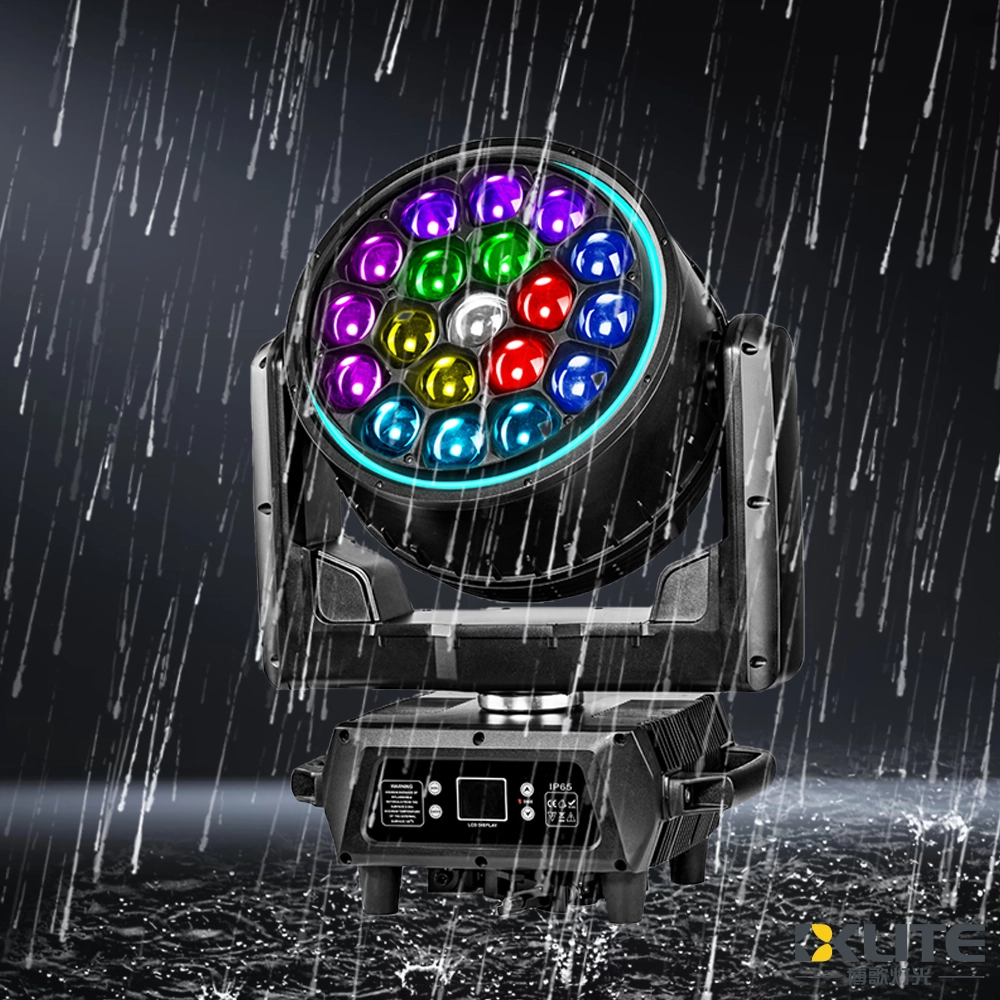
IP65 Waterproof Bee Eye Zoom 19x40W RGBW 4IN1 LED Beam Wash Moving Head Light with LED Ring
With more than 14 years of experience in professional stage lighting, BKLITE is a specialized waterproof stage lighting manufacturer in China.
The BKlite IP65 Waterproof 19x40w bee eye is a high-output RGBW moving head designed for outdoor stages, live event, music festival and touring productions.
Featuring 19 individually controllable 40W RGBW 4in1 LEDs, 7°‑42° motorized zoom and rotating honeycomb lens, it delivers stunning pixel beam & wash effects for professional stage applications.
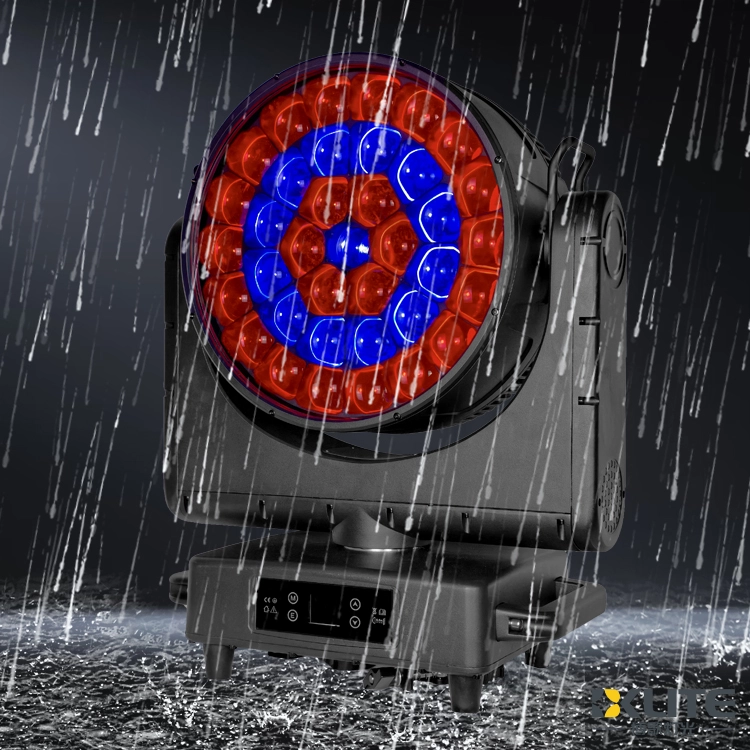
IP65 Waterproof ZOOM Bee Eye 37x40W RGBW 4in1 LED Moving Head Light
With more than 14 years of experience in professional stage lighting, BKLITE is a specialized waterproof stage lighting manufacturer in China. The BKLITE IP65 Waterproof Bee Eye 37x40W Moving Head Light is a high-output K25 bee-eye moving head designed for outdoor concerts, music festivals and touring productions. Featuring 37 individually controllable 40W RGBW 4in1 LEDs, 8°‑48° motorized zoom and rotatable honeycomb lens, it provides powerful beam, wash and kaleidoscope effect lighting for professional stage applications.
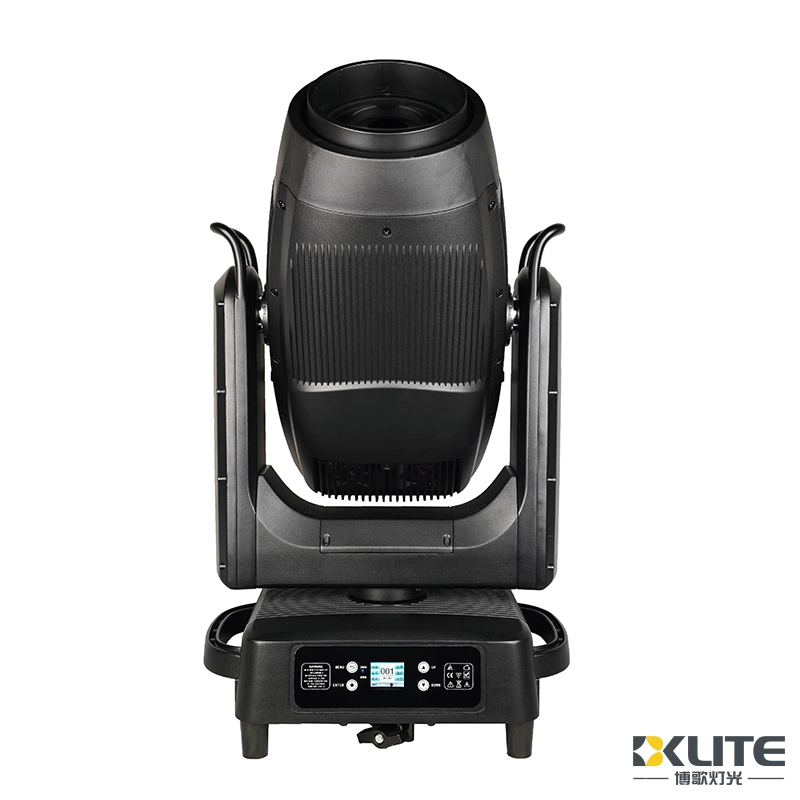
IP65 Waterproof Profile 1000W LED Beam Wash Spot 3in1 Moving Head Light With Framing
With more than 14 years of experience in professional stage lighting, BKLITE is a specialized LED stage lighting manufacturer in China. The BKLITE IP65 Waterproof Profile moving head is a high‑power 3‑in‑1 beam wash spot fixture with framing system designed for large‑scale outdoor concerts, theatre performances and outdoor touring events. Featuring 1000W high‑brightness LED source, 4.5°‑50° motorized zoom and precise motor‑driven framing shutters, it delivers accurate beam shaping, spot projection and soft wash lighting effects for professional stage applications.
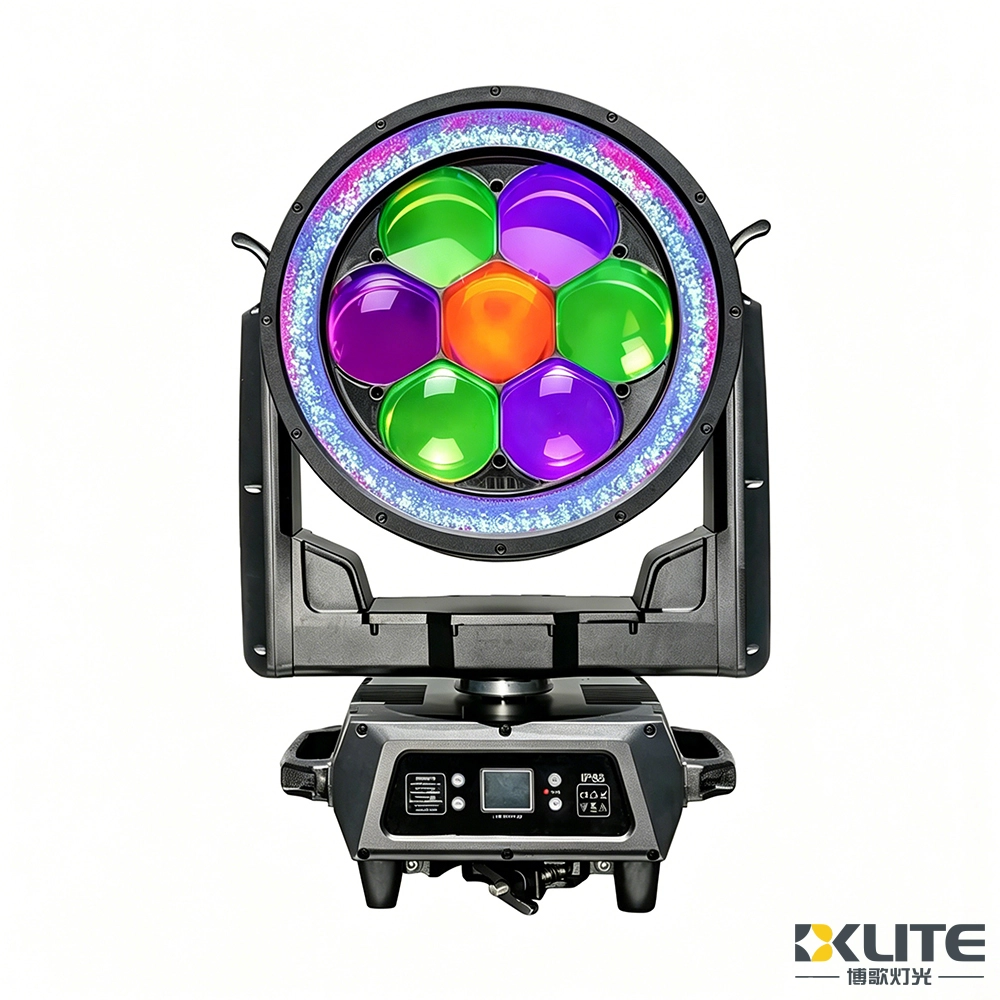
IP65 Waterproof Zoom Bee Eye 7x180W RGBL 4IN1 LED Moving Head Light With LED Ring
With more than 14 years of experience in professional stage lighting, BKLITE is a specialized waterproof stage lighting manufacturer in China.The BKlite 7×180W Bee Eye is a high-output RGBL moving head designed for large concerts, festivals, touring productions and outdoor events. Featuring seven 180W RGBL LED sources, an independent LED ring and motorized zoom, it combines powerful beam effects, wide washes and dynamic pixel-style effects for professional stage applications.
Contact us
Let's discuss how we can work together to achieve your business goals. Contact us today to get started.
 Address
No. 30, North Hongmian Avenue, Huadu District, GuangZhou, China.


Copyright © 2026 BKLITE. All Rights Reserved.