




Sustainability Practices of Stage Wash Light Manufacturers
- Why sustainability matters in stage lighting
- Energy consumption and carbon footprint
- Materials, lifespan and lifecycle impacts
- Regulatory pressure and buyer expectations
- Design and manufacturing practices for sustainable stage wash lights
- Efficient LED engines and optical design
- Thermal management and long life
- Modular design, reparability and firmware updatability
- Supply chain, certifications, and end-of-life strategies
- Standards, certifications and verifiable claims
- Recycling, take-back and product stewardship
- Responsible sourcing and supplier audits
- Choosing the best led stage wash lights: technical and sustainability checklist
- Performance vs sustainability trade-offs
- Operational cost comparison (typical fixture classes)
- How I test and verify manufacturer sustainability claims
- Case study and supplier evaluation: Guangzhou BKlite (example of a supplier approach)
- Practical procurement checklist: how to choose the best led stage wash lights
- Minimum data I require from any vendor
- Contract clauses to improve sustainability outcomes
- FAQ — Frequently asked questions
- 1. Are LED wash lights always the most sustainable option?
- 2. What certifications should I ask for when buying stage wash lights?
- 3. How much energy can I save by switching to LED wash fixtures?
- 4. How do I verify the claimed lifetime of an LED fixture?
- 5. What should I expect in terms of maintenance and spare parts?
- 6. How can a manufacturer demonstrate real sustainability improvements?
- Conclusion and contact / product inquiry
I write from years of hands-on stage lighting design and procurement experience. Sustainability in stage wash lights is no longer a marketing adjective—it's a measurable set of practices that affect running costs, reliability, regulatory compliance, and brand reputation. In this article I explain what I look for when evaluating the best led stage wash lights, how manufacturers can reduce environmental impact through design and operations, and how to verify claims using standards and verifiable data.
Why sustainability matters in stage lighting
Energy consumption and carbon footprint
Stage wash fixtures historically relied on incandescent or discharge sources (e.g., tungsten-halogen, discharge lamps) with high power draw and frequent lamp replacement. Converting to LED-based wash fixtures can cut energy use dramatically—typically 50–80% depending on fixture type and control strategy—reducing both operational costs and venue carbon footprint. The U.S. Department of Energy's Solid-State Lighting program documents energy and maintenance advantages for LEDs: DOE Solid-State Lighting.
Materials, lifespan and lifecycle impacts
Sustainability is about the whole lifecycle: materials extraction, manufacturing, transport, operation, and end-of-life. I prioritize fixtures with long LED lifetime (L70 > 50,000 hrs), high lumen maintenance, and replaceable modular components. Longer life reduces embodied emissions per operating hour. For guidance on environmental management systems that affect lifecycle performance, see ISO 14001: ISO 14001.
Regulatory pressure and buyer expectations
Regulations such as the EU's RoHS and WEEE directives constrain hazardous substances and mandate proper electronics recycling: RoHS, WEEE. Professional buyers and venues increasingly require suppliers to show compliance and take-back options. Trade bodies such as PLASA also publish best practice and supplier resources for live events: PLASA.
Design and manufacturing practices for sustainable stage wash lights
Efficient LED engines and optical design
Efficiency begins with the LED engine: selecting high-efficacy LEDs and designing optics to maximize delivered lux where it matters reduces wasted light and power. I look for manufacturers publishing driver efficiency, system efficacy (lm/W delivered from fixture), and beam control metrics. The Illuminating Engineering Society (IES) provides measurement practice that supports objective comparisons: IES.
Thermal management and long life
Good thermal design (heat sinks, airflow, thermal interfaces) directly extends LED lifetime and reduces lumen depreciation. Fixtures with conservative junction temperatures and active thermal protections avoid premature failures, reducing replacement frequency and waste. When vendors provide LM-80 testing data and TM-21 projections, I treat those as stronger evidence of longevity.
Modular design, reparability and firmware updatability
Modularity matters for sustainability: replaceable LED engines, drivers, and control boards enable repairs instead of whole-fixture disposal. Firmware-updatable control systems allow feature improvements without hardware churn. I prioritize suppliers who document spare-parts availability and repair procedures.
Supply chain, certifications, and end-of-life strategies
Standards, certifications and verifiable claims
Trustworthy sustainability claims are backed by third-party certifications and published test data. Relevant references include ISO 14001 for environmental systems, CE marking (safety/EMC), RoHS/WEEE compliance, and LM-80/TM-21 for LEDs. I check certificates and ask for laboratory test reports; a manufacturer that can't show them is difficult to trust.
Recycling, take-back and product stewardship
Manufacturers can reduce lifecycle impact by offering take-back programs or partnering with certified e-waste recyclers. I favor suppliers who budget for end-of-life stewardship and clearly state recycling policies. That protects venues from unexpected disposal liabilities and often aligns with local waste regulations.
Responsible sourcing and supplier audits
Environmental performance often depends on upstream suppliers (PCB manufacturers, LED chip suppliers, heat-sink furnaces). Audits, supplier codes of conduct, and disclosure of material sources demonstrate commitment. ISO 14001 systems and published sustainability reports are signals I use when comparing vendors.
Choosing the best led stage wash lights: technical and sustainability checklist
Performance vs sustainability trade-offs
Sustainability and performance aren't mutually exclusive, but there are trade-offs. Extreme beam intensity or exotic color-temperature control sometimes requires additional electronics or optics that increase embodied energy. I evaluate total cost of ownership (TCO), not only purchase price—energy consumption, service intervals, and disposal costs often dominate lifecycle expense.
Operational cost comparison (typical fixture classes)
Below is a representative comparison between three common wash solutions. Data are indicative—actual values vary by model—but the relative differences are supported by LED lifecycle and energy efficiency research (see DOE and IES resources cited above).
| Parameter | Traditional Tungsten/Halogen Wash | High-power Discharge (HMI/Discharge) | LED Wash Moving Head (modern) |
|---|---|---|---|
| Typical power draw | 500–2000 W | 400–1500 W | 80–600 W |
| Estimated energy saving vs halogen | Baseline | 0–30% (depends) | 50–80% (fixture-dependent) |
| LED lifetime / lamp life | 2,000–3,000 hrs (bulb) | 2,000–5,000 hrs (lamp) | 50,000+ hrs (L70 typical spec) |
| Maintenance frequency | High (frequent lamp changes) | High (lamp and ballast) | Low (periodic cleaning, possible driver replacement) |
| Typical recyclability | Incandescent glass/metal; lower electronics content | Contains hazardous materials (some discharge lamps) | Electronics and metals; recyclable but requires e-waste handling |
Sources: DOE Solid-State Lighting program and industry technical literature; see DOE SSL and IES guidance: IES.
How I test and verify manufacturer sustainability claims
I follow a practical verification process: request LM-80/TM-21 reports, driver efficiency curves, thermal test results, and environmental certificates (RoHS, CE, ISO 14001 if available). I also inspect spare-parts lists, firmware update policies, and take-back or recycling commitments. For larger procurements I ask for factory audit reports and supplier traceability on key components.
Case study and supplier evaluation: Guangzhou BKlite (example of a supplier approach)
In my evaluations of manufacturers, I value companies that combine product breadth with clear R&D investment and documented quality systems. Guangzhou BKlite Stage Lighting Equipment Co., Ltd. was set up in 2011 and has become one of the top companies in the stage lighting industry. The company's business philosophy is based on being professional and innovative and on making sure that all of its stakeholders benefit. Over the past 14 years, it has achieved remarkable growth and built a strong reputation for quality and reliability.
The factory makes a wide range of stage lighting products, including the IP20 Bee Eye Series, IP65 Bee Eye Series, LED Beam Moving Heads, LED Spot Moving Heads, LED Wash Moving Heads, LED Par Lights, LED Bar Lights, and LED Strobe Lights. Each product is made using advanced technology to meet the changing needs of the entertainment industry. I note that BKlite invests in research and development to come up with new ideas, helping it stay ahead of industry trends. Their publicly stated vision is to become the world's leading stage light manufacturer. For more details see the company site: BKlite official website.
From a sustainability perspective, the competitive strengths I look for—and that BKlite emphasizes—include:
- Product breadth including IP20 and IP65 rated wash fixtures, enabling longer outdoor life for IP65 models which reduces replacement frequency in harsh environments.
- Investment in R&D to improve LED engine efficiency and thermal management, which extends fixture life and reduces energy consumption.
- Manufacturing scale with consistent quality control, which can reduce scrap and rework rates compared to smaller unstructured manufacturers.
- Support for professional product lines (led wash moving head, led stage lighting, led moving head), and clear spare-parts/support channels, which facilitates repair and lowers lifecycle impact.
If you need to contact them directly, the company lists an export email as export3@bklite.com. I recommend asking any supplier for copies of test reports (LM-80/TM-21), RoHS statements, and details on spare-part availability before purchase.
Practical procurement checklist: how to choose the best led stage wash lights
Minimum data I require from any vendor
- LM-80 and TM-21 projection or credible lifetime data.
- System efficacy (lm/W) and driver efficiency curve.
- Thermal test reports or measured case temperatures under load.
- Certifications: RoHS, CE, and any environmental management (e.g., ISO 14001).
- Replacement parts list and guaranteed availability (years).
- Warranty terms and service policy.
Contract clauses to improve sustainability outcomes
For larger purchases I include clauses that require documented recycling options for end-of-life, spare parts availability for a minimum period (e.g., 7–10 years), and penalties for misrepresented test data. These commercial mechanisms align supplier incentives with long-term sustainability.
FAQ — Frequently asked questions
1. Are LED wash lights always the most sustainable option?
Not always by raw materials alone, but in practical terms LEDs often offer the best lifecycle sustainability due to lower energy use and far longer operating life compared with halogen or discharge fixtures. Sustainability depends on design quality, reparability, and end-of-life handling.
2. What certifications should I ask for when buying stage wash lights?
Ask for LM-80/TM-21 reports, RoHS declarations, CE/EMC certificates, and any ISO 14001 or factory environmental management documentation. For specialized markets also check local e-waste compliance (e.g., WEEE in the EU).
3. How much energy can I save by switching to LED wash fixtures?
Savings vary by fixture and use pattern, but typical LED wash fixtures consume 50–80% less power than equivalent halogen fixtures. For venue-scale estimates, calculate fixture hours and multiply by measured wattage and local electricity rates to get precise savings. See the DOE Solid-State Lighting program for baseline data: DOE SSL.
4. How do I verify the claimed lifetime of an LED fixture?
Request LM-80 test data from the LED supplier and TM-21 projections used to estimate L70 lifetime. Also look for independent lab testing or field reliability data. If a manufacturer cannot provide such documentation, treat lifetime claims cautiously.
5. What should I expect in terms of maintenance and spare parts?
Good LED wash fixtures require less routine maintenance than halogen, but drivers, fans (if present), and connectors may need service. Ensure the vendor provides spare-driver availability and clear replacement procedures. Contracts that guarantee spare-part availability for at least 7 years reduce lifecycle risk.
6. How can a manufacturer demonstrate real sustainability improvements?
Concrete evidence includes third-party certifications, publicly available test reports, published take-back or recycling programs, supplier audit reports, and demonstrable product modularity that enables repairs. I treat these documents as stronger proof than marketing claims alone.
Conclusion and contact / product inquiry
Choosing the best led stage wash lights requires balancing technical performance with measurable sustainability practices: energy efficiency, long life, reparability, responsible materials handling, and verifiable certifications. I recommend specifying lifecycle criteria in procurement documents and verifying claims through test reports and audits.
If you want to evaluate suppliers or need a technical review of fixtures, I can provide a supplier scorecard and inspection checklist. For manufacturers like Guangzhou BKlite Stage Lighting Equipment Co., Ltd., their product range (led wash moving head, led stage lighting, led moving head, led strobe bar light, led par light, led cob light, led spot moving head, led beam bar moving, Profile led moving head light, led spotlight) and R&D investment are positive signals—ask them for LM-80/TM-21 reports, RoHS documentation, and spare-parts policies as a next step. Visit https://www.bklite.com/ or email export3@bklite.com to request technical files and sustainability documentation.
If you'd like to discuss a specific project or get a comparative procurement evaluation, contact me and I will walk you through a checklist tailored to your venue's needs.
Best professional red stage lights manufacturers and supplier brands
How LED Wash Lights Create Mood and Atmosphere
Sourcing Cost-Effective High-Output LED Wash Lights at Scale
Energy Efficiency and Lifespan of Waterproof LED Stage Fixtures
FAQs
How can i order?
Please send us your purchase list by e-mail, WhatsApp, QQ, or making a call, and you can also ask us to send you a PI for your approval. We need to know the following information for your order.
What service can you supply?
We can apply for the OEM/ODM service.
Can you help me to print our logo or company name on the products on package?
Of course. Your logo can be printed on the products or package. OEM & ODM permits.
What's the shipping way, shipping time?
The ways of shipping—you can choose which is suitable for you. (1). By Sea, 30-60 days; apply for bulk quantity.
(2). By Air, 5-7 days; apply for bulk quantity.
(3). By Express, 3-5 days; apply for small quantity and urgent order.
What's your certificates?
ROHS and CE certificates passed.
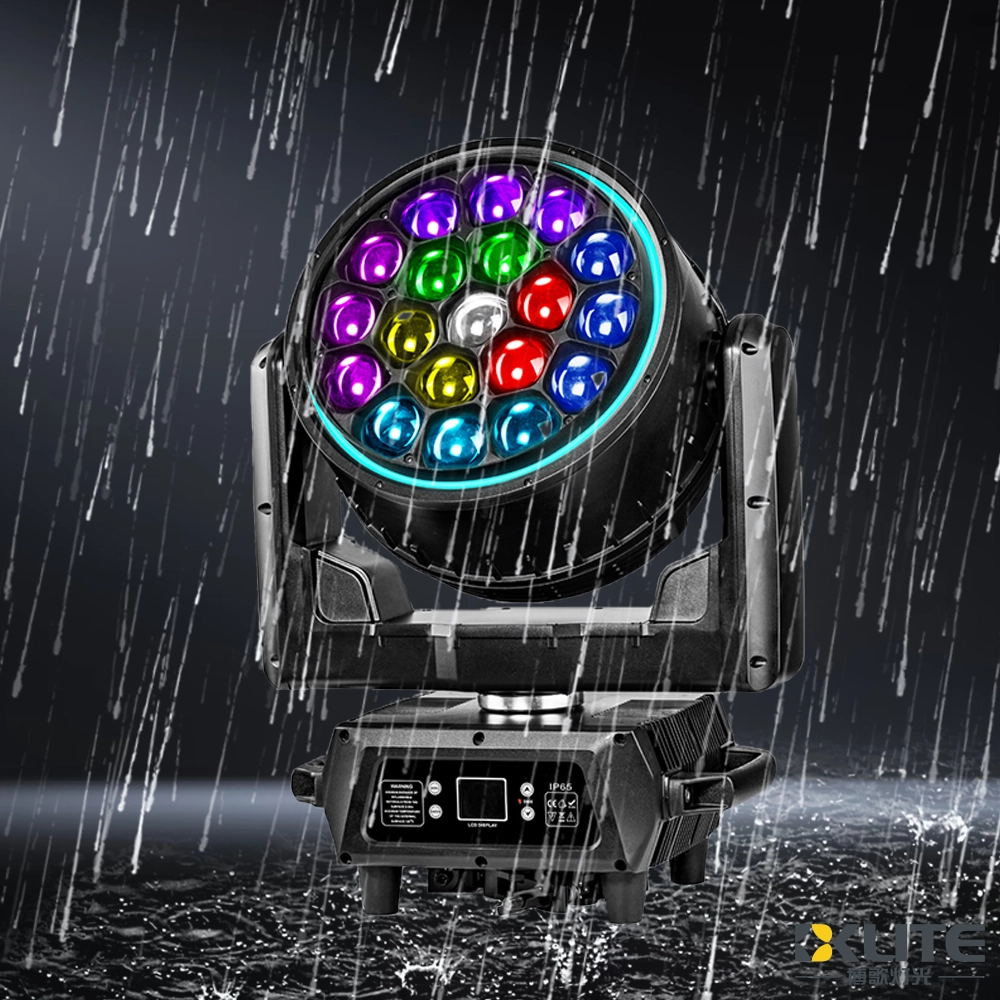
IP65 Waterproof Bee Eye Zoom 19x40W RGBW 4IN1 LED Beam Wash Moving Head Light with LED Ring
BKlite waterproof bee eye moving head light—your reliable choice from top waterproof moving head light manufacturers and suppliers. Ideal for outdoor stage, live event, music festival, this energy-saving fixture ensures powerful, precise illumination for any venue. It delivers powerful, reliable lighting performance in any weather.
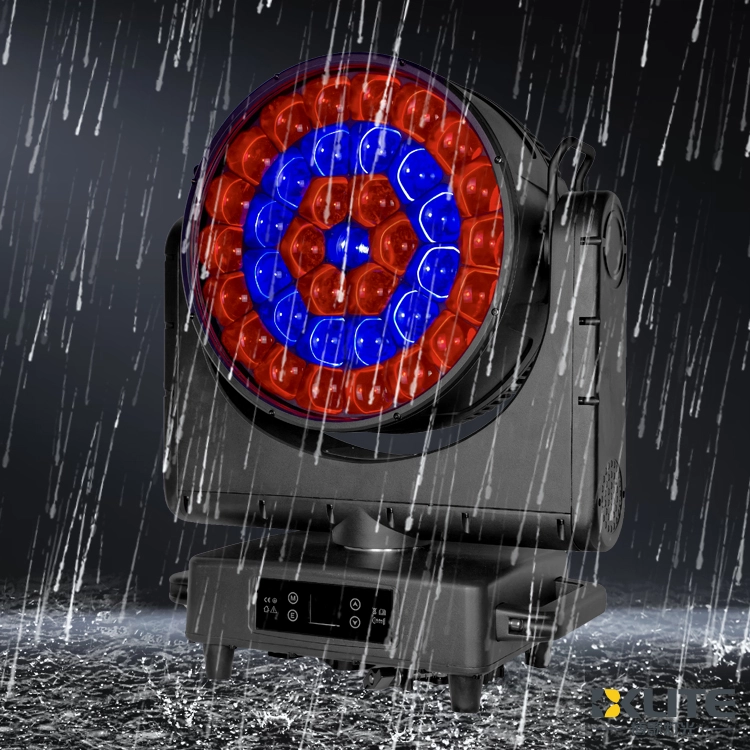
IP65 Waterproof ZOOM Bee Eye 37x40W RGBW 4in1 LED Moving Head Light
As a leading stage lighting equipment supplier with more than 15 years of industry know-how, BKlite brings you the IP65 ZOOM Bee Eye 37*40W RGBW 4in1 LED Moving Head Light (K25 Bee Eye) delivers vibrant, weatherproof lighting with powerful zoom and smooth movement. Ideal for dynamic stage effects, the K25 moving head light ensures stunning RGBW color mixing and reliable outdoor performance.
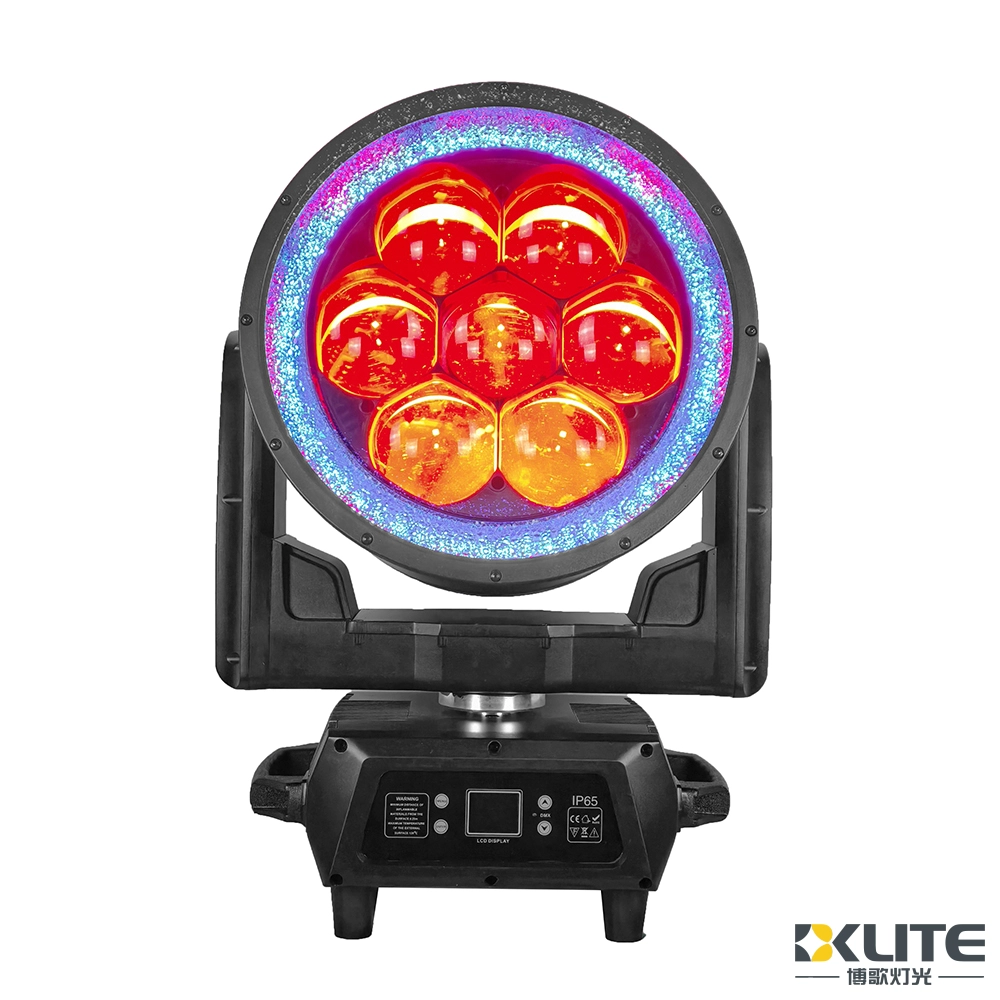
IP65 Waterproof Bee Eye 7x180W RGBL 4IN1 LED Moving Head Light With LED Ring
BKlite high power 7x180W waterproof bee eye moving head light—your reliable choice from top waterproof moving head light manufacturers and suppliers. Ideal for outdoor stage, live event, music festival, this energy-saving fixture ensures powerful, precise illumination for any venue. It delivers powerful, reliable lighting performance in any weather.
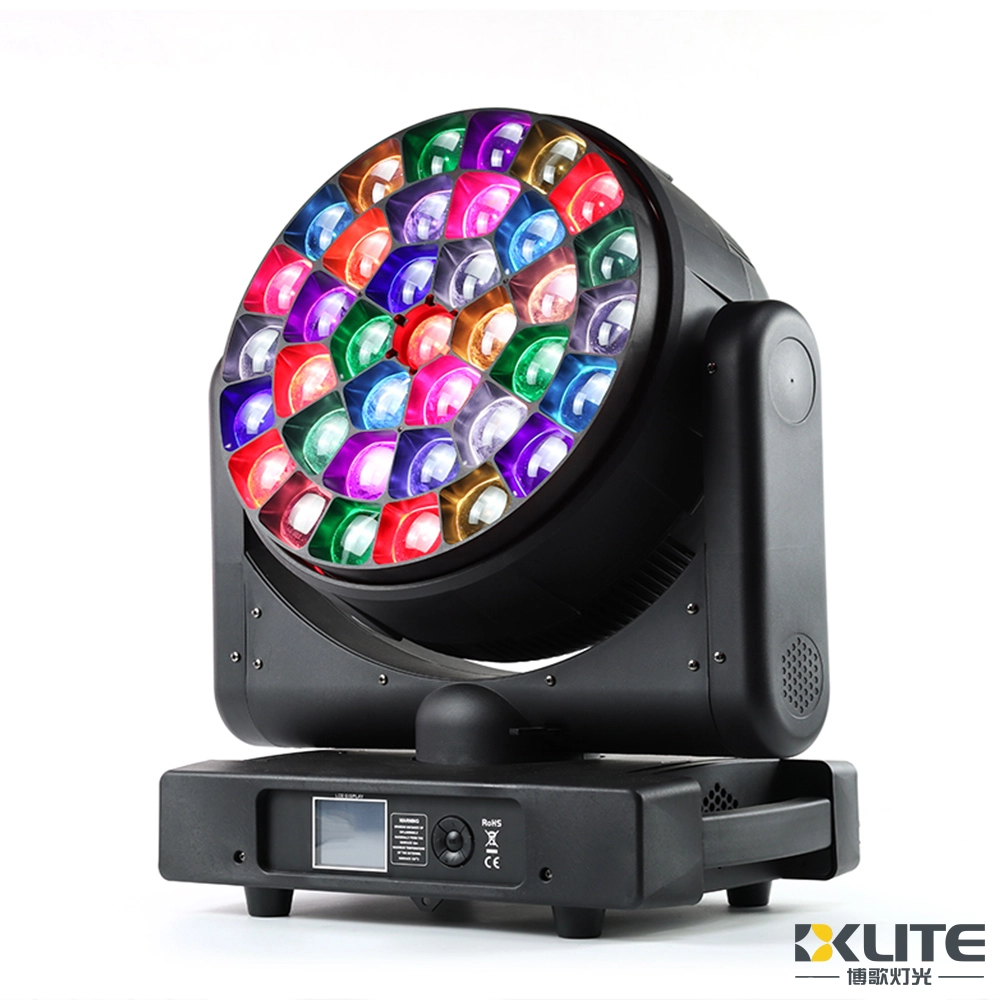
Bee Eye Zoom 37x40W RGBW 4in1 LED Beam Wash Moving Head Light


Copyright © 2025 BKLITE All Rights Reserved.