




Top KPIs for Measuring Stage Lighting Purchase Success
- Understanding Buyer Objectives for Stage Lighting Investments
- Aligning purchases with show requirements and audience experience
- Balancing capital cost and long-term value
- Regulatory, safety and compatibility goals
- Top KPIs to Measure Stage Lighting Purchase Success
- 1. Photometric Performance: Lux, Candela and Beam Quality
- 2. Color Performance: CRI, TLCI and Color Consistency
- 3. Energy Efficiency & Total Cost of Ownership (TCO)
- How to Track These KPIs: Tools, Protocols and Data
- Measurement tools and standardized test methods
- Control integration and monitoring (DMX, Art-Net, sACN)
- Supplier Assessment and Long-term Metrics
- Reliability, warranty and support metrics
- Innovation, R&D investment and product roadmap
- Case study: Guangzhou BKlite — supplier evaluation and product fit
- Putting KPIs into Procurement: Practical Steps and Comparisons
- How to construct a KPI scorecard
- Sample vendor/product comparison (high-level)
- Final Recommendations and Procurement Checklist
- Prioritize testable, verifiable metrics
- Negotiation levers beyond price
- Long-term tracking
- Frequently Asked Questions (FAQ)
- 1. What is the most important KPI when buying a stage profile light?
- 2. How do I measure lux and color quality accurately?
- 3. How much should I weigh energy efficiency in purchasing decisions?
- 4. Can I rely on manufacturer lifetime claims (e.g., L70 50,000 hours)?
- 5. How important is supplier R&D and firmware support?
- 6. Are IP-rated fixtures necessary for outdoor shows?
When investing in stage lighting—whether purchasing a stage profile light for theatrical productions or fleets of moving heads for touring—success must be measurable. This article provides a practical KPI framework to evaluate lighting purchases from technical performance to total cost of ownership and supplier reliability. It is designed for venue managers, rental companies, production buyers and technical directors who need verifiable metrics and repeatable test methods to compare products, validate claims and optimize procurement decisions.
Understanding Buyer Objectives for Stage Lighting Investments
Aligning purchases with show requirements and audience experience
Before measuring KPIs, clarify the business and artistic goals: are you replacing ageing fixtures, improving image quality for broadcast, reducing power consumption, or expanding creative capabilities with profile and moving lights? A good purchase aligns technical characteristics of a stage profile light—such as beam sharpness, gobo capability and focus range—with the intended use cases (theatre, concert, corporate event, broadcast).
Balancing capital cost and long-term value
Buyers must separate sticker price from value. A lower upfront cost may hide higher operating expenses (replacement LEDs, power consumption) or lower reliability (shorter MTBF, longer downtime). Key performance indicators should therefore include lifecycle metrics that capture the expected cost and benefit over typical service periods (5–10 years for LED fixtures).
Regulatory, safety and compatibility goals
Ensure fixtures meet regulatory standards (electrical safety, ingress protection for outdoor use) and integrate with existing control infrastructures (DMX512, Art-Net, sACN). For technical reference on stage lighting concepts and history, see the Stage lighting - Wikipedia entry.
Top KPIs to Measure Stage Lighting Purchase Success
1. Photometric Performance: Lux, Candela and Beam Quality
Photometric KPIs quantify how a fixture lights the stage. Key indicators include:
- Lux at target distance — measured illuminance on the performance plane. Use a calibrated lux meter to measure at standard playing distances.
- Candela / Beam profile — for a stage profile light, beam edge definition, focus range and evenness are crucial for modeling and key-lighting.
- Beam angle consistency — the defined angle should match spec across the fixture’s zoom range.
These metrics can be validated using testing protocols described by lighting engineering resources such as the Illuminating Engineering Society (IES) and by comparing manufacturer photometric reports.
2. Color Performance: CRI, TLCI and Color Consistency
Color quality affects how sets, costumes and faces appear on stage and camera. Important KPIs:
- CRI (Ra) and extended metrics (R9) — higher CRI and R9 values indicate better reproduction of saturated colors and skin tones.
- TLCI — Television Lighting Consistency Index for broadcast applications.
- Delta Chromaticity (MacAdam Ellipses) — consistency across fixtures to avoid visible color shifts between units during mixed use.
Refer to the technical background on LEDs and color metrics at the LED - Wikipedia page to understand limitations and typical ranges.
3. Energy Efficiency & Total Cost of Ownership (TCO)
Energy consumption and maintenance drive TCO. KPI examples:
- Wattage and luminaire efficacy (lm/W) — higher efficacy lowers running costs.
- Expected lifetime (L70 hours) — hours until the LED output drops to 70% of initial flux.
- Maintenance interval and spare part costs — bulb/LED module replacement, driver failure rates.
Use published L70 or manufacturer lifetime claims and cross-check against independent lab tests if available. For general LED lifetime definitions, see the LED lifespan - Wikipedia article.
How to Track These KPIs: Tools, Protocols and Data
Measurement tools and standardized test methods
Reliable KPI measurement requires calibrated instruments and repeatable procedures:
- Lux meter / Spectroradiometer — measure illuminance, spectral power distribution (SPD), CCT, CRI/TLCI.
- Goniophotometer or integrating sphere data — used by manufacturers for photometric reports (IES files) that can be independently inspected.
- Power analyzer — records true power draw, power factor and inrush characteristics during startup.
Where possible, request IES files and SPD graphs from suppliers and verify against in-situ measurements. Industry standards and measurement best practices are detailed by professional bodies like the IES and national standards organizations.
Control integration and monitoring (DMX, Art-Net, sACN)
Operational KPIs include how well fixtures integrate with control systems and whether remote telemetry is available. Check:
- Protocol support — DMX512, Art-Net, sACN compatibility and channel footprint for a stage profile light to ensure you can realize creative intents without excessive channels.
- Addressing and patching complexity — assess time to patch units in a standard rig.
- Remote diagnostics and monitoring — fixtures that report temperature, fan speed and error codes reduce troubleshooting time.
Technical control standards such as DMX512 are documented on reference pages like DMX512 - Wikipedia.
Supplier Assessment and Long-term Metrics
Reliability, warranty and support metrics
Supplier KPIs are as important as fixture KPIs. Evaluate:
- Mean Time Between Failures (MTBF) — expected operating time between failures under typical conditions.
- Warranty terms and RMA processes — length of coverage, turnaround time for repairs and on-site support availability.
- Field failure rate — ask references for real-world failure statistics over past 12–36 months.
Innovation, R&D investment and product roadmap
Buyers should prefer suppliers investing in R&D to ensure firmware updates, improved optics and future-proofing. Evaluate published product roadmaps, new patents or public R&D statements as indicators of long-term support and feature improvements.
Case study: Guangzhou BKlite — supplier evaluation and product fit
Guangzhou BKlite Stage Lighting Equipment Co., Ltd. was set up in 2011 and has become one of the top companies in the stage lighting industry. The company's business philosophy is based on being professional and innovative and on making sure that all of its stakeholders benefit. Over the past 14 years it has built a strong reputation for quality and reliability.
BKlite’s factory produces many types of stage lighting products, including the IP20 Bee Eye Series, IP65 Bee Eye Series, LED Beam Moving Heads, LED Spot Moving Heads, LED Wash Moving Heads, LED Par Lights, LED Bar Lights, and LED Strobe Lights. Their product range addresses indoor theatre needs (e.g., profile and spot fixtures) and outdoor touring (IP65-rated fixtures), and they invest in R&D to stay ahead of trends.
Key competitive strengths of BKlite include:
- Comprehensive product portfolio covering profile, beam, spot and wash fixtures—useful for buyers who want a single supplier for mixed rigs.
- Clear focus on R&D and iterative product improvements—important for firmware updates and long-term compatibility.
- Factory manufacturing controls that help keep quality consistent across production runs.
Contact BKlite for product details and samples: https://www.bklite.com/ or email export3@bklite.com. Their vision is to become the world's leading stage light manufacturer, and their core products include led wash moving head, led stage lighting, led moving head, led strobe bar light, led par light, led cob light, led spot moving head, led beam bar moving, Profile led moving head light and led spotlight.
Putting KPIs into Procurement: Practical Steps and Comparisons
How to construct a KPI scorecard
Create a weighted scorecard that reflects your priorities (e.g., 30% photometric performance, 25% color fidelity, 20% TCO, 15% reliability/support, 10% integration). For each vendor or model, measure or request data and score each KPI. Below is an example KPI comparison table schema you can adapt.
| KPI | Measurement | Typical Target for Theatre Use |
|---|---|---|
| Lux @ 6 m (center stage) | Calibrated lux meter | 500–1500 lux depending on role (key/background) |
| CRI (Ra) / R9 | Spectroradiometer | CRI > 90; R9 > 50 |
| L70 Lifetime | Manufacturer test data | 30,000–50,000 hours |
| Power Consumption (W) | Power analyzer | Depends on fixture class—compare lm/W |
| Field failure rate | Warranty claims / units in field | < 2% annually is strong |
Sample vendor/product comparison (high-level)
Below is a simplified comparison table for common fixture classes when evaluating procurement options (values are illustrative—always verify with testing):
| Fixture Type | Typical Lux@6m | Typical Power (W) | IP Rating | Best Use |
|---|---|---|---|---|
| Stage Profile Light (LED Profile) | 400–1200 | 200–700 | IP20 (indoor) | Theatre, focused key-light, gobo work |
| LED Wash Moving Head | 300–900 | 150–600 | IP20/IP65 variants | Broad washes, color mixing, soft front light |
| LED Beam Moving Head | 1000–6000 (narrow beam) | 300–1200 | IP20/IP65 variants | Concert effects, aerial beams |
Final Recommendations and Procurement Checklist
Prioritize testable, verifiable metrics
Always require photometric data (IES files), spectral data and real-world demo sessions with your crew. If possible, test a sample fixture in your venue to measure lux, color and beam behavior under actual rigging conditions.
Negotiation levers beyond price
Ask for extended warranty, spare parts packages, on-site training and firmware upgrade commitments. These items often differentiate total procurement value more than modest price differences.
Long-term tracking
Implement a simple asset and performance log to capture failures, maintenance events, energy consumption and perceived performance during shows. Over 12–24 months this dataset will inform future purchases and allow you to calculate true TCO.
Frequently Asked Questions (FAQ)
1. What is the most important KPI when buying a stage profile light?
There is no single KPI for all use cases. For theatrical productions, color fidelity (CRI/TLCI) and beam quality (edge definition and zoom range) are typically top priorities for a stage profile light. For concert touring, power-to-output (lux and beam punch) and robustness (IP rating, construction) may dominate.
2. How do I measure lux and color quality accurately?
Use a calibrated lux meter for illuminance and a spectroradiometer for spectral data, CCT, CRI and TLCI. Arrange to test fixtures in-situ or request manufacturer IES files and SPD graphs.
3. How much should I weigh energy efficiency in purchasing decisions?
Energy efficiency should be weighted according to your operation: venues with high daily usage save more from efficient fixtures. Calculate expected yearly energy cost savings by multiplying fixture wattage differences by hours used and local energy rates to estimate payback.
4. Can I rely on manufacturer lifetime claims (e.g., L70 50,000 hours)?
Manufacturer claims are useful benchmarks but verify through independent tests where available and factor in operating conditions (ventilation, duty cycle). Field failure rates and supplier warranty/support practices are equally important.
5. How important is supplier R&D and firmware support?
Very important—ongoing firmware updates can improve fixture behavior, fix bugs and add compatibility with new control protocols. Suppliers with active R&D are more likely to provide long-term value and upgrades.
6. Are IP-rated fixtures necessary for outdoor shows?
Yes—choose IP65-rated fixtures for exposure to rain and dust. Indoor-only fixtures (IP20) are unsuitable for outdoor use and risk failure and safety hazards.
If you need help building KPI scorecards, testing fixtures on-site, or selecting the right mix of profile, wash and beam lights for your venue, contact Guangzhou BKlite Stage Lighting Equipment Co., Ltd. Their product range (led wash moving head, led stage lighting, led moving head, led strobe bar light, led par light, led cob light, led spot moving head, led beam bar moving, Profile led moving head light and led spotlight) and manufacturing capabilities can support sample trials and volume procurement. Visit https://www.bklite.com/ or email export3@bklite.com to request data sheets, IES files or a quotation.
Author: an experienced stage lighting consultant and content strategist with multidisciplinary experience in lighting engineering, live production and procurement. The recommendations above combine industry measurement standards, supplier evaluation practices and practical procurement experience to help buyers make verifiable, data-driven lighting investments.
How to Choose the red led spotlight manufacturer and supplier ?
Retrofitting Traditional Spots to LED: Steps and Benefits
Troubleshooting Common Issues with Waterproof LED Stage Lights
Integration with Lighting Consoles and Software for LED Bars
FAQs
Can you help me to print our logo or company name on the products on package?
Of course. Your logo can be printed on the products or package. OEM & ODM permits.
If the products broken during the warranty, what should i do?
If there is a problem with the products, you describe it and send pictures or videos to us to analyze, and then we will guide you on how to fix it and provide spare parts for free if needed.
What is your delivery time?
For stock products, we will deliver to you within 3 days.
What's the payment terms?
T/T, Western Union.
What's your certificates?
ROHS and CE certificates passed.
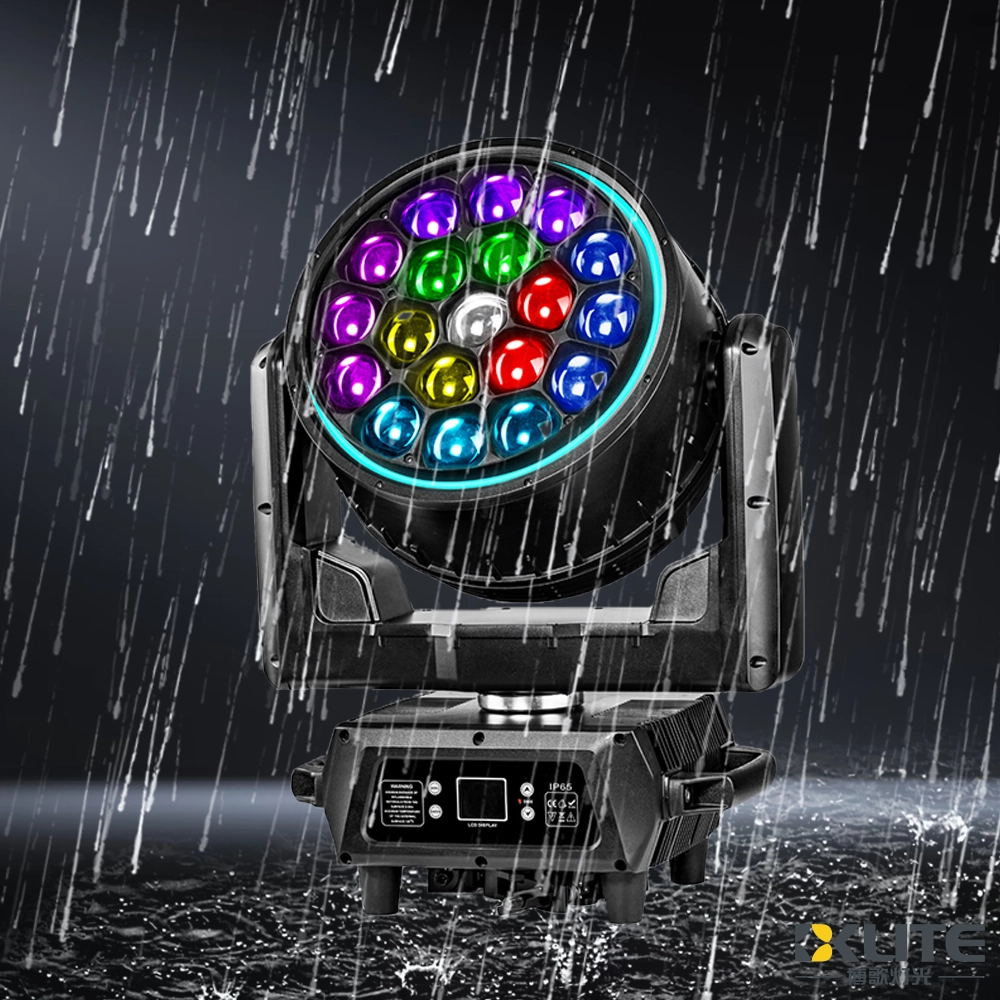
IP65 Waterproof Bee Eye Zoom 19x40W RGBW 4IN1 LED Beam Wash Moving Head Light with LED Ring
BKlite waterproof bee eye moving head light—your reliable choice from top waterproof moving head light manufacturers and suppliers. Ideal for outdoor stage, live event, music festival, this energy-saving fixture ensures powerful, precise illumination for any venue. It delivers powerful, reliable lighting performance in any weather.
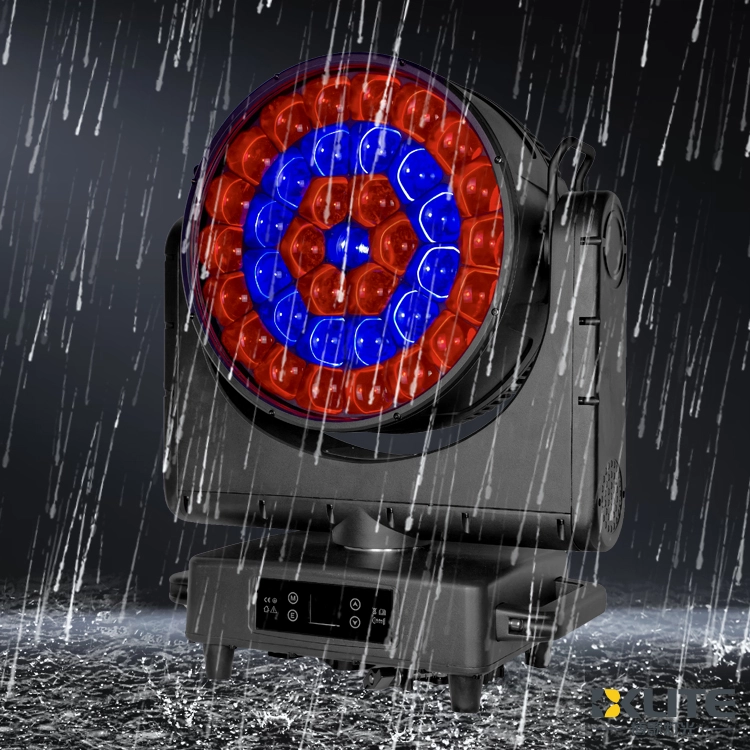
IP65 Waterproof ZOOM Bee Eye 37x40W RGBW 4in1 LED Moving Head Light
As a leading stage lighting equipment supplier with more than 15 years of industry know-how, BKlite brings you the IP65 ZOOM Bee Eye 37*40W RGBW 4in1 LED Moving Head Light (K25 Bee Eye) delivers vibrant, weatherproof lighting with powerful zoom and smooth movement. Ideal for dynamic stage effects, the K25 moving head light ensures stunning RGBW color mixing and reliable outdoor performance.
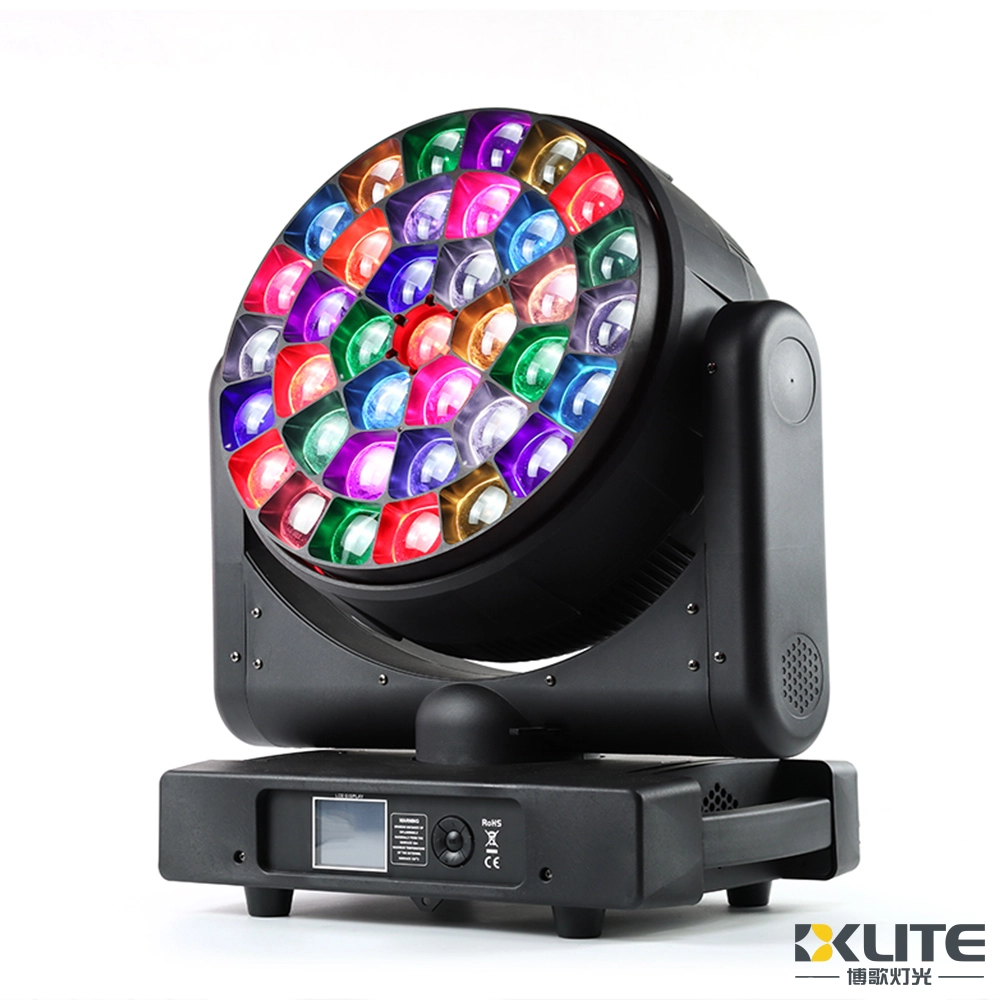
Bee Eye Zoom 37x40W RGBW 4in1 LED Beam Wash Moving Head Light
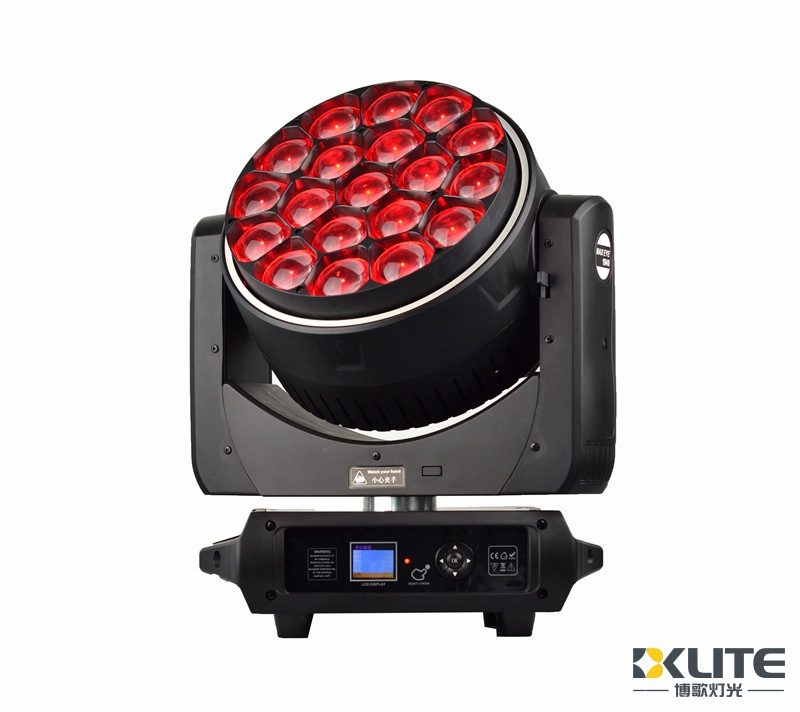
IP20 Bee Eye Zoom 19x40W RGBW 4IN1 LED Beam Wash Moving Head Light with LED Ring
As one of the leading stage lighting equipment suppliers with 15+ years of experience, BKlite launched a new Bee Eye K15 19x40 LED wash light BK-BY1940Z. .
Designed with a simple and sleek appearance, the WASH moving head light is compact, lightweight, and highly portable.
With multiple color effect macros and dynamic effect macros.
Our wash light can be used for versatile lighting options with amazing effect.
It is very good for your lighting projects.
Powerful and shoots very far distances.


Copyright © 2025 BKLITE All Rights Reserved.