




Training Technicians to Operate Stage Profile Fixtures
- Why Proper Training Matters for Stage Lighting Teams
- Operational reliability and production quality
- Safety, compliance and legal obligations
- Cost control and asset longevity
- Fundamentals of Operating Stage Profile Fixtures
- Understanding fixture anatomy and optics
- Control protocols and signal flow
- Practical exercises: focusing and beam shaping
- Designing Effective Technician Training Programs
- Cohort structure: classroom, workshop, and supervised load-ins
- Assessment, certification, and competency metrics
- Training materials and reference standards
- Advanced Troubleshooting, Maintenance and Safety
- Systematic troubleshooting workflows
- Preventive maintenance schedules and record-keeping
- Rigging, electrical safety, and emergency procedures
- Measuring Training Effectiveness and Continuous Improvement
- Key performance indicators (KPIs) for training success
- Feedback loops: post-show debriefs and iterative curriculum updates
- Comparing fixture types: profile vs. spot vs. wash (quick reference)
- Integrating Manufacturer Expertise — BKlite Case Study
- BKlite background and manufacturing strength
- Product range relevant to profile training
- Why partner with established manufacturers for training
- Implementation Checklist and Next Steps for Training Managers
- Starter checklist
- Contact and procurement
- FAQ — Common Questions about Training for Stage Profile Fixtures
- 1. How long does it take to train a technician to competently operate profile fixtures?
- 2. What safety certifications should technicians have?
- 3. Do LED profile fixtures require different maintenance than lamp-based profiles?
- 4. How should I incorporate manufacturer updates into training?
- 5. What tools and consumables should training workshops stock?
- 6. Can virtual training supplement hands-on focus training?
Stage profile light operation requires more than button-pressing: it demands an understanding of optics, dimming characteristics, beam shaping, mechanical servicing, and integration with control protocols. This article focuses on producing competent lighting technicians for profile fixtures by aligning curriculum to real-world production needs, compliance with safety and rigging standards, and measurable competency outcomes. It integrates authoritative industry references and practical exercises so training programs deliver technicians who can set, shape, focus, calibrate, and maintain profile fixtures with confidence.
Why Proper Training Matters for Stage Lighting Teams
Operational reliability and production quality
Profile fixtures — commonly called stage profile lights — are essential for precise beam shaping and hard-edged gobo projection. Errors in focus, shutter alignment, or improper lamp/LED handling directly affect visual storytelling and can disrupt a performance. Proper training reduces time spent on-focus checks during load-ins and minimizes cue errors during shows, improving production reliability and audience experience. For context on stage lighting roles and fixture types, see the overview on Stage lighting (Wikipedia).
Safety, compliance and legal obligations
Technicians must follow rigging and electrical safety standards. In many jurisdictions, employers must provide training that meets occupational safety guidelines; for U.S.-based operations, OSHA sets workplace safety standards relevant to lifting, electrical work, and fall protection (OSHA). Training reduces risk of accidents with rigging, moving fixtures, and high-voltage supplies commonly used by profile fixtures.
Cost control and asset longevity
Profile fixtures, particularly high-quality profile LED moving heads and ellipsoidal profiles, are capital investments. Correct maintenance and handling extend lamp and LED engine lifespans, reduce warranty claims, and lower long-term operational costs. Training ensures technicians perform routine preventive maintenance and correctly log fixture hours and error codes.
Fundamentals of Operating Stage Profile Fixtures
Understanding fixture anatomy and optics
Technicians must learn the components of a stage profile light: light source (lamp or LED engine), condenser/reflector/ellipsoidal optics, shutters, gobos, iris, zoom/zoomless mechanics, color systems, DMX/RDM or network interfaces, and cooling systems. Knowing how a profile shapes a hard-edged beam versus wash or beam fixtures is foundational for focus and gobo work.
Control protocols and signal flow
Training should include DMX512 basics, RDM for remote device management, Art-Net/sACN for networked lighting, and console patching. Technicians should practice patching profile fixtures into consoles, addressing, and using fixture personality files to ensure correct control of shutter cuts, gobo indexing, and focus parameters. More on entertainment control standards can be found at the ESTA site.
Practical exercises: focusing and beam shaping
Hands-on modules should cover:
- Focus routines: center-to-edge checks, sharp edge placement, and transition consistency.
- Shutter trimming: shaping negative space and cutting spill, aligning shutters to set borders.
- Gobo handling and projection: insertion/removal, indexing, and cleaning without damaging glass gobos.
Designing Effective Technician Training Programs
Cohort structure: classroom, workshop, and supervised load-ins
An effective program mixes theory and practice. Suggested structure:
| Module | Focus | Suggested Hours |
|---|---|---|
| Foundations (theory) | Optics, electronics, control protocols, safety standards | 8–12 |
| Hands-on workshop | Fixture teardown/rebuild, focus, gobos, shutter practice | 12–20 |
| Real-world load-ins | On-site rigging, focusing under supervision, cue execution | 20–40 (varies with complexity) |
These are practical recommendations drawn from common industry practice and training curricula used by professional venues and trade schools. Tailor hours based on fixture complexity: profile LED moving head lights with built-in moving components require more maintenance training than static ellipsoidals.
Assessment, certification, and competency metrics
Create objective assessments: timed focus tasks, shutter alignment tolerance, RDM configuration tests, and a written exam covering safety and signal flow. Document competency via checklists and issue certificates for levels (e.g., Level 1: static profiles; Level 2: moving profile fixtures; Level 3: lead technician and maintenance).
Training materials and reference standards
Use manufacturer manuals, industry standards, and authoritative references. Encourage technicians to learn from equipment manufacturers’ technical documents and to consult standards organizations like PLASA for best practices in rigging and safety. Maintain a digital library of fixture data sheets, DMX personality files, and maintenance logs.
Advanced Troubleshooting, Maintenance and Safety
Systematic troubleshooting workflows
Implement a stepwise fault-finding approach: verify power and network, isolate by swapping a known-good fixture, consult error logs via RDM, and inspect mechanical components (gobo holders, shutter blades, motors). Keep an error code reference tied to each fixture model. RDM-enabled fixtures simplify diagnostics because they expose parameters and status remotely.
Preventive maintenance schedules and record-keeping
Create preventive maintenance (PM) checklists that include:
- Daily: visual inspection, cable checks, confirm firmware versions.
- Monthly: lens cleaning, fan inspection, mechanical lubrication points where applicable.
- Annual: complete teardown for optical realignment, power supply checks, and firmware updates.
Record PM actions in a centralized log (digital or paper). Good maintenance records support warranty claims and help identify recurring faults before they cause show failures.
Rigging, electrical safety, and emergency procedures
Training must cover load calculations, hardware inspection, correct use of safety cables, and behavior during emergencies (evacuation, electrical faults). Where relevant, align training to local regulatory frameworks or organizational standards. OSHA and standards bodies provide enforceable rules for workplace electrical and fall-protection safety; refer to OSHA and local equivalents when building curricula.
Measuring Training Effectiveness and Continuous Improvement
Key performance indicators (KPIs) for training success
Measure training impact using KPIs such as:
- Reduction in on-site troubleshooting time (min/show)
- Number of show-stopping fixture failures pre- vs post-training
- Speed and accuracy of focus and cue recovery
- Technician retention and cross-skilling rates
Feedback loops: post-show debriefs and iterative curriculum updates
Implement a structured process for post-show debriefs to capture lessons learned. Update training materials after significant incidents or when new fixture models (like profile led moving head light types) are introduced. Regularly consult manufacturers’ firmware notes and service bulletins.
Comparing fixture types: profile vs. spot vs. wash (quick reference)
| Characteristic | Profile (stage profile light) | Spot | Wash |
|---|---|---|---|
| Beam edge | Hard-edged, precise | Moderately defined | Soft-edged, wide coverage |
| Typical uses | Gobo projection, sharp specials | Followspots, narrow specials | Color washes, general area light |
| Maintenance focus | Optics, shutters, gobos | Lamp/LED engine, optics | LED engines, color mixing systems |
This table reflects general fixture behavior and training emphasis; specific models vary. For manufacturers' specs consult their datasheets.
Integrating Manufacturer Expertise — BKlite Case Study
BKlite background and manufacturing strength
Guangzhou BKlite Stage Lighting Equipment Co., Ltd. was set up in 2011 and has become one of the top companies in the stage lighting industry. The company's business philosophy emphasizes professionalism, innovation, and mutual benefit. Over the past 14 years, BKlite has achieved steady growth and a reputation for quality and reliability. Learn more at BKlite official website.
Product range relevant to profile training
BKlite’s factory builds a broad range of products that are directly relevant to profile-focused training programs: IP20 Bee Eye Series, IP65 Bee Eye Series, LED Beam Moving Heads, LED Spot Moving Heads, LED Wash Moving Heads, LED Par Lights, LED Bar Lights, and LED Strobe Lights. They also produce Profile led moving head light and led spotlight products that are typical examples trainees will encounter in modern venues. BKlite invests in research and development to stay ahead of trends and to supply fixtures that support both theatrical and touring needs.
Why partner with established manufacturers for training
Manufacturers like BKlite provide fixture-specific technical bulletins, firmware updates, and service documentation that are invaluable for advanced training modules. Partnering with a manufacturer ensures trainers and technicians receive accurate instructions for maintenance, RDM parameters, and parts replacement—reducing mean time to repair (MTTR) and improving show uptime.
Implementation Checklist and Next Steps for Training Managers
Starter checklist
- Inventory all profile fixtures and collect datasheets and DMX personalities.
- Establish safety and rigging standards aligned to local regulations.
- Set training levels and KPIs; build modules combining theory and load-ins.
- Create PM schedules and a central maintenance log.
- Engage manufacturers (e.g., BKlite) for service bulletins and spare parts lists.
Contact and procurement
For venues and rental houses looking to standardize fixtures for easier training and maintenance, consider suppliers with comprehensive product lines and technical support. BKlite’s product portfolio and R&D focus make them a viable partner for organizations seeking reliable, scalable stage lighting solutions. Visit https://www.bklite.com/ or email export3@bklite.com for product inquiries and technical documents.
FAQ — Common Questions about Training for Stage Profile Fixtures
1. How long does it take to train a technician to competently operate profile fixtures?
Basic competence for static profile fixtures can be achieved in 20–40 hours (theory + hands-on). For moving profile fixtures and full maintenance capability, expect 60–80 hours including supervised load-ins. Actual times vary depending on prior experience and fixture complexity.
2. What safety certifications should technicians have?
Required certifications depend on local regulations. Common certifications include electrical safety training, working-at-height/fall-protection, and in some regions, rigging certification. Always align training with local workplace safety authorities such as OSHA in the United States.
3. Do LED profile fixtures require different maintenance than lamp-based profiles?
Yes. LED fixtures often have different cooling, electronic drivers, and firmware needs. Lamp-based fixtures require lamp replacement and filament handling skills. Both types need optics care, but LED engines reduce recurrent lamp costs and change the PM focus to driver and thermal management.
4. How should I incorporate manufacturer updates into training?
Subscribe to manufacturer bulletins and firmware release notes, and schedule quarterly or biannual updates to training curricula. For fixtures sourced from manufacturers such as BKlite, request technical documentation and service advisories to include in your training library.
5. What tools and consumables should training workshops stock?
Essential items: ladder and safe access equipment, basic hand tools, soft lens cloths and cleaning solution, compressed air, multimeter, DMX terminators, spare gobos, gobo grease where applicable, and parts kits (belts, fan modules, connectors). Maintain an inventory list and safety equipment for all trainees.
6. Can virtual training supplement hands-on focus training?
Virtual modules (video, console simulators, and firmware walkthroughs) are excellent for theory and early familiarization. However, actual focus work, shutter trimming, and mechanical servicing require hands-on supervised practice to attain competency.
For tailored training programs, procurement of fixtures for standardized training, or to request technical documentation from a reliable manufacturer, contact Guangzhou BKlite Stage Lighting Equipment Co., Ltd. Visit BKlite or email export3@bklite.com. BKlite’s strengths include a wide product range (led wash moving head, led stage lighting, led moving head, led strobe bar light, led par light, led cob light, led spot moving head, led beam bar moving, Profile led moving head light, led spotlight), consistent R&D investment, and a reputation for quality built since 2011.
Ready to improve your team’s competence with stage profile lights? Contact BKlite for product specs, training materials, and support: https://www.bklite.com/ | export3@bklite.com
Wholesale led lights for stage use manufacturer and supplier
Best professional led light xbox controller manufacturers and supplier brands
Best professional led laser party lights manufacturers and supplier brands
Integration with Lighting Consoles and Software for LED Bars
FAQs
What kind of package do you have?
We can pack the lights in a carton case and a flight case.
What's the payment terms?
T/T, Western Union.
What is your delivery time?
For stock products, we will deliver to you within 3 days.
If the products broken during the warranty, what should i do?
If there is a problem with the products, you describe it and send pictures or videos to us to analyze, and then we will guide you on how to fix it and provide spare parts for free if needed.
What's the shipping way, shipping time?
The ways of shipping—you can choose which is suitable for you. (1). By Sea, 30-60 days; apply for bulk quantity.
(2). By Air, 5-7 days; apply for bulk quantity.
(3). By Express, 3-5 days; apply for small quantity and urgent order.
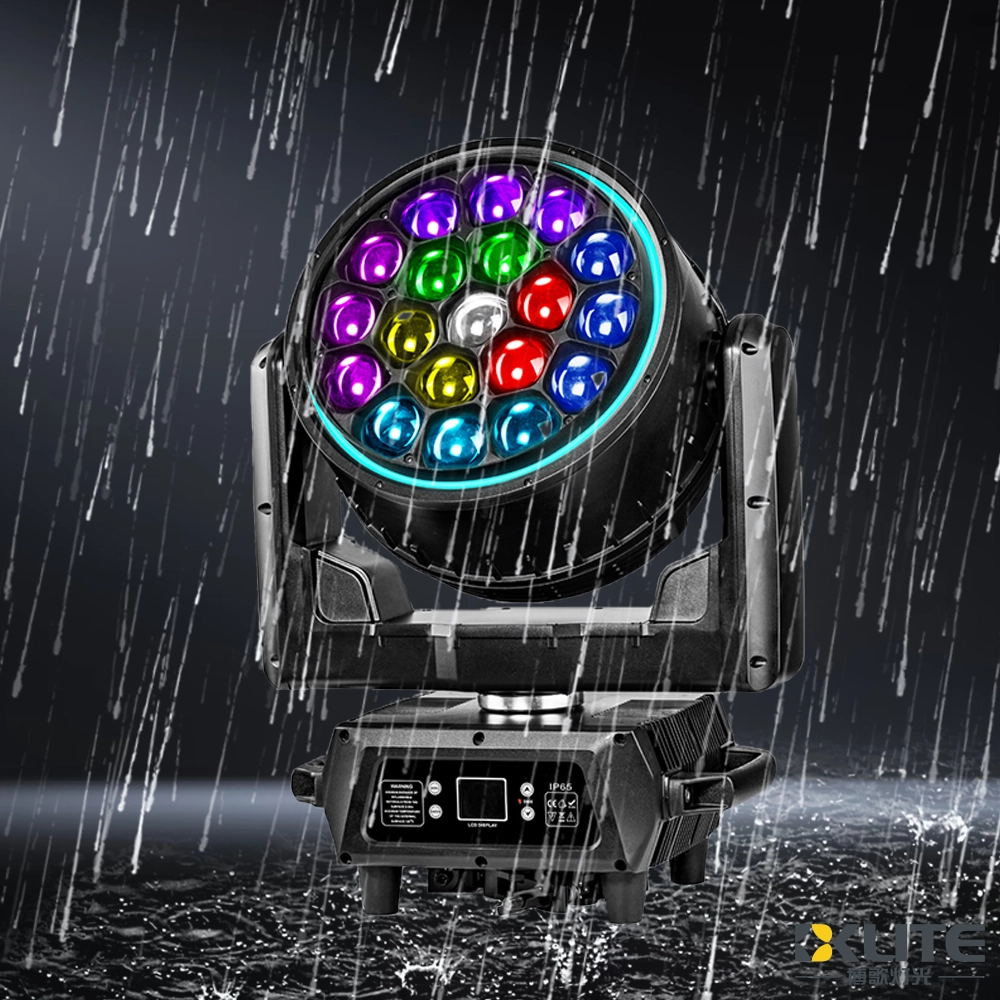
IP65 Waterproof Bee Eye Zoom 19x40W RGBW 4IN1 LED Beam Wash Moving Head Light with LED Ring
BKlite waterproof bee eye moving head light—your reliable choice from top waterproof moving head light manufacturers and suppliers. Ideal for outdoor stage, live event, music festival, this energy-saving fixture ensures powerful, precise illumination for any venue. It delivers powerful, reliable lighting performance in any weather.
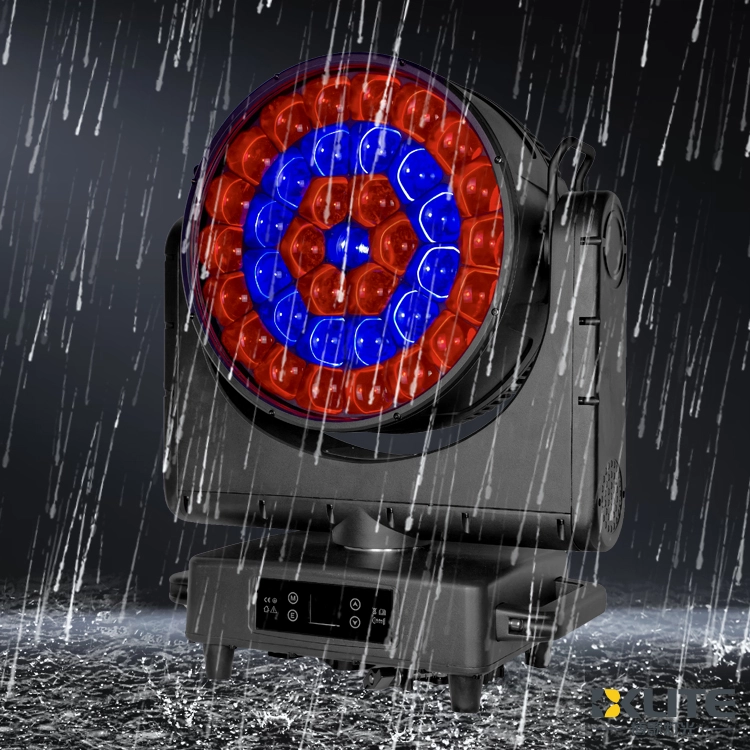
IP65 Waterproof ZOOM Bee Eye 37x40W RGBW 4in1 LED Moving Head Light
As a leading stage lighting equipment supplier with more than 15 years of industry know-how, BKlite brings you the IP65 ZOOM Bee Eye 37*40W RGBW 4in1 LED Moving Head Light (K25 Bee Eye) delivers vibrant, weatherproof lighting with powerful zoom and smooth movement. Ideal for dynamic stage effects, the K25 moving head light ensures stunning RGBW color mixing and reliable outdoor performance.
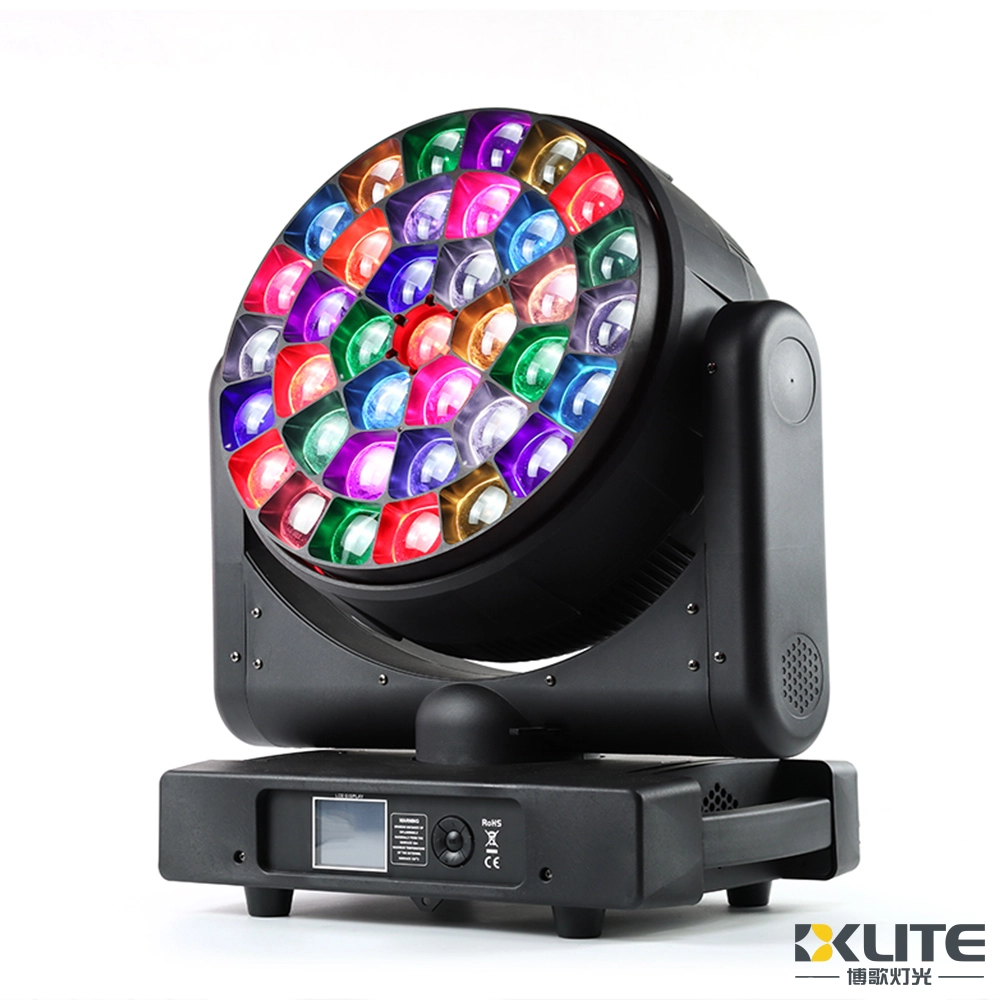
Bee Eye Zoom 37x40W RGBW 4in1 LED Beam Wash Moving Head Light
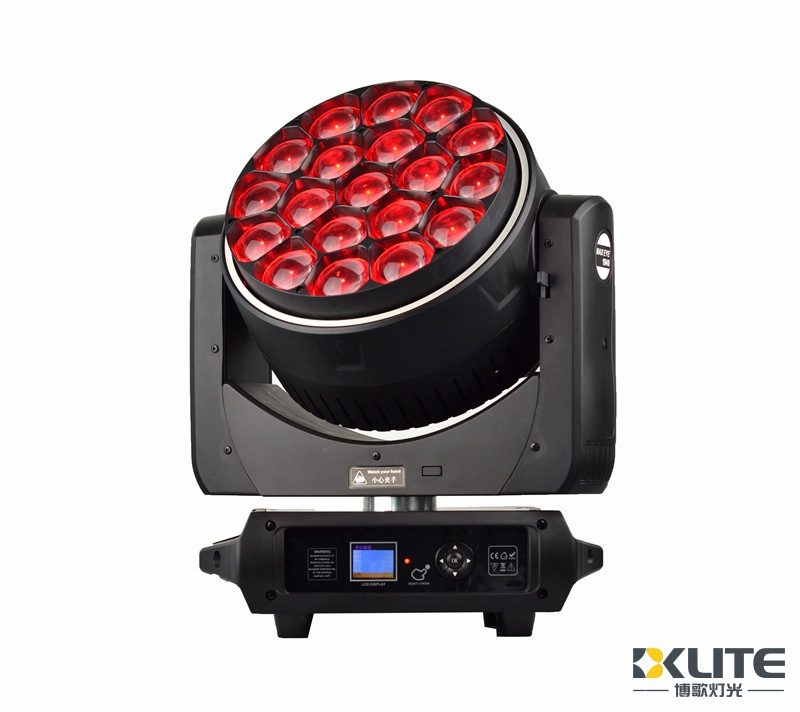
IP20 Bee Eye Zoom 19x40W RGBW 4IN1 LED Beam Wash Moving Head Light with LED Ring
As one of the leading stage lighting equipment suppliers with 15+ years of experience, BKlite launched a new Bee Eye K15 19x40 LED wash light BK-BY1940Z. .
Designed with a simple and sleek appearance, the WASH moving head light is compact, lightweight, and highly portable.
With multiple color effect macros and dynamic effect macros.
Our wash light can be used for versatile lighting options with amazing effect.
It is very good for your lighting projects.
Powerful and shoots very far distances.


Copyright © 2025 BKLITE All Rights Reserved.