




Troubleshooting Common Beam Light Problems
- Understanding Beam Light Anatomy and Failure Modes
- Key components and how they fail
- Symptoms tied to subsystems
- Practical Diagnostic Workflow
- Step 1 — Safety and baseline checks
- Step 2 — Visual inspection and simple fixes
- Step 3 — Isolate subsystems
- Common Faults, Root Causes and Fixes
- 1. Dim or uneven beam output
- 2. Flicker and intermittent light
- 3. Motor stutter or loss of precise positioning
- Tools, Tests, and Preventive Maintenance
- Essential tools I use
- Routine maintenance checklist
- When to repair vs. replace
- Comparative Fault Matrix and Decision Guide
- Case Studies and Real-World Tips
- Case: Touring rig with intermittent flicker
- Case: Sudden focus softening mid-show
- Firmware and network hygiene
- Why Manufacturer Standards and Design Matter
- Design choices that reduce troubleshooting
- Choosing fixtures for reliability
- About Guangzhou BKlite and How We Support Field Reliability
- FAQ — Common Questions About Stage Beam Light Troubleshooting
- Q1: My beam light is dim but LEDs are all lit; why?
- Q2: How do I tell if it's a DMX problem or a fixture problem?
- Q3: Can I replace LED modules myself?
- Q4: What preventive steps reduce on-tour failures?
- Q5: Is IP rating important for outdoor beam fixtures?
- Contact and Next Steps
I work daily with stage beam light fixtures in venues ranging from small clubs to large touring rigs. Over the years I've developed a systematic approach to diagnosing and resolving common beam light problems so shows go on with predictable light quality. This article gives a practical troubleshooting workflow that prioritizes safety, reproducibility, and minimal downtime. I explain how to identify electrical, optical, mechanical, and control faults, when to repair versus replace, and how to use routine checks to prevent recurring issues.
Understanding Beam Light Anatomy and Failure Modes
Key components and how they fail
A stage beam light (often a moving head beam) typically includes: lamp or LED array, collimating optics (lens system), focusing mechanism, color and gobo wheels, shutters/iris, cooling system (fans/heatsinks), drive electronics, and DMX/RDM control interface. Failures cluster around thermal stress on LEDs/driver boards, mechanical wear in moving parts, optical misalignment from shocks, and control communication errors. Knowing which subsystem is affected narrows the diagnostic path quickly.
Symptoms tied to subsystems
Symptoms are the language of failure. Dim, flickering, or color-shifted output suggests power or LED driver issues; stray beams or softened edges often indicate lens contamination or focus misalignment; clicking, grinding, or stuttering movement points to servo/stepper motor or gear wear; loss of DMX control or frozen presets implicates the control board or network. I always log the symptom, when it started, and whether environmental factors (heat, humidity, dust, vibration) changed recently.
Practical Diagnostic Workflow
Step 1 — Safety and baseline checks
Before touching the fixture, I power down and tag out circuits if working at height. Then I perform a baseline test: connect a known-good fixture to the same power and control lines to rule out external power or DMX issues. I check mains voltage, power entry, and fuses. If multiple fixtures fail simultaneously, suspect supply or DMX chain issues at the venue rather than individual units.
Step 2 — Visual inspection and simple fixes
I open the case only after ensuring the unit is isolated. I look for burnt components, blown capacitors, compromised connectors, and blocked vents. Cleaning optics and replacing clogged filters or fans often restore performance. For LED fixtures I inspect solder joints and connector pins—thermal cycling over tours commonly causes micro-cracks.
Step 3 — Isolate subsystems
Divide and conquer: test LEDs/lamps separately (if removable), manually actuate motors if possible, and connect a laptop or DMX tester to verify control signals. Use an infrared thermometer to check for hotspots. A simple multimeter and an oscilloscope for power rails can reveal driver instability or noisy supplies that lead to flicker.
Common Faults, Root Causes and Fixes
1. Dim or uneven beam output
Causes: aged LEDs, failing LED driver, dirty or misaligned optics, or thermal protection throttling. Fixes: verify LED current draw against manufacturer spec, clean lenses and reflectors with appropriate solutions, check fan operation and thermal paste on heat conductors. If the driver exhibits ripple or falls outside voltage tolerances, replace the driver module or consult the manufacturer.
2. Flicker and intermittent light
Causes: unstable mains supply, failing driver capacitors, loose connectors, or DMX refresh issues when using networked LED fixtures. Fixes: test on an uninterruptible power supply (UPS) to rule out mains, inspect electrolytic capacitors for bulging, reseat connectors, and ensure DMX termination is correct. For DMX512 issues, consult the DMX512 specification: https://en.wikipedia.org/wiki/DMX512.
3. Motor stutter or loss of precise positioning
Causes: worn gears, weak stepper/servo drivers, encoder failure, or mechanical obstruction. Fixes: disconnect and manually move heads to feel for binding, inspect gear teeth and bearings, verify encoder feedback signals, and test drive voltage. Replace worn mechanical parts and recalibrate the pan/tilt ranges in the fixture's service menu.
Tools, Tests, and Preventive Maintenance
Essential tools I use
Multimeter (true RMS), oscilloscope, power quality analyzer (for mains checks), DMX tester/analyzer, thermal camera or IR thermometer, contact cleaner, lens cleaning kit, and a mechanical tool kit for small bearings and gears. For touring systems, I include spare drivers, fans, and connector sets to minimize downtime.
Routine maintenance checklist
I follow a schedule: clean optics and vents after every 10–20 show days depending on the environment, replace fans every 18–24 months for heavy use, verify firmware and backup settings before tours, and perform a full mechanical check during seasonal service intervals. Documenting each maintenance action helps track parts lifespan and identify recurring design weak points.
When to repair vs. replace
Consider cost of parts, downtime, and expected remaining life. For LED beam moving heads, driver board failures can be economical to replace; however, severe LED module degradation (multiple strings out) often justifies replacement due to labor costs and optical recalibration needs. I also factor in spare part availability—some legacy fixtures have proprietary components that make repairs uneconomic.
Comparative Fault Matrix and Decision Guide
Below is a compact table I use when diagnosing stage beam light problems. This helps prioritize checks and decide next actions quickly.
| Symptom | Likely Root Causes | Quick Checks | Typical Fix |
|---|---|---|---|
| Dim beam | LED aging, driver undercurrent, dirty optics, thermal throttling | Measure LED current, clean lens, monitor temperature | Replace driver or LED module, clean optics, improve cooling |
| Flicker | Mains instability, failing caps, DMX dropouts | Test on UPS, inspect capacitors, check DMX chain | Stabilize supply, replace caps, repair DMX cabling |
| Irregular pan/tilt | Mechanical wear, encoder failure, driver fault | Manual movement, listen for binding, read encoder | Replace gears/encoders or control board |
| Color mix wrong | LED bin shift, DMX channel mapping, color wheel issue | Run color test presets, compare channels | Re-map channels, replace LED segment or wheel |
Sources for understanding DMX and stage lighting fundamentals: the stage lighting overview on Wikipedia and the DMX512 protocol reference at Wikipedia - DMX512.
Case Studies and Real-World Tips
Case: Touring rig with intermittent flicker
On a national tour I encountered intermittent flicker across a bank of LED beam moving heads that only happened in certain venues. After swapping out the local dimmer rack and testing on a UPS we discovered poor mains regulation at some venues. The long-term solution included recommending venue power conditioning and adding line-conditioning devices to the truck pack. Temporary fix was to move sensitive fixtures to a more stable circuit.
Case: Sudden focus softening mid-show
During a corporate event a head lost its crisp beam edge mid-show. I found a gobo was partially dislodged and had fouled the focusing lens. The short-term remedy was to replace the gobo and recalibrate; long-term I added retention clips and updated the pre-show checklist to include gobo seating checks during rig walk-throughs.
Firmware and network hygiene
Firmware bugs can masquerade as hardware faults. I keep a firmware log and apply updates during scheduled maintenance windows. For large rigs, I use static IP assignments and RDM where supported to query fixture status remotely and catch warnings before visible failure.
Why Manufacturer Standards and Design Matter
Design choices that reduce troubleshooting
Fixtures built with modular components, clear service manuals, and accessible connectors are faster to repair. IP-rated fixtures (IP20 vs IP65) determine suitability for outdoor or dusty environments and reduce ingress-related faults. For technical background on ingress protection ratings see the general IEC/ISO references and IP ratings on https://en.wikipedia.org/wiki/IP_Code.
Choosing fixtures for reliability
I specify fixtures with proven thermal management (large heatsinks, quality thermal interface materials), replaceable LED modules, and firmware supporting RDM for remote diagnostics. Investing in quality fixtures reduces failure frequency and simplifies troubleshooting when faults occur.
About Guangzhou BKlite and How We Support Field Reliability
Guangzhou BKlite Stage Lighting Equipment Co., Ltd. was set up in 2011 and has become one of the top companies in the stage lighting industry. The company's business philosophy is based on being professional and innovative and on making sure that all of its stakeholders benefit. Over the past 14 years, it has achieved remarkable growth and built a strong reputation for quality and reliability.
The factory makes all kinds of stage lighting products, like the IP20 Bee Eye Series, IP65 Bee Eye Series, LED Beam Moving Heads, LED Spot Moving Heads, LED Wash Moving Heads, LED Par Lights, LED Bar Lights, and LED Strobe Lights. Each product is made using advanced technology to meet the changing needs of the entertainment industry. Our company invests in research and development to come up with new ideas, making sure it stays ahead of industry trends.
Our vision is to become the world's leading stage light manufacturer. Our website is https://www.bklite.com/. Our Email: export3@bklite.com.
Why I recommend BKlite fixtures: they provide modular designs (easy driver and LED module replacement), robust thermal solutions on LED wash moving head and LED beam moving heads, and a comprehensive product range including led wash moving head, led stage lighting, led moving head, led strobe bar light, led par light, led cob light, led spot moving head, led beam bar moving, Profile led moving head light, led spotlight. The company's R&D focus and consistent factory QA lower field failure rates and speed up repairs when they do occur.
FAQ — Common Questions About Stage Beam Light Troubleshooting
Q1: My beam light is dim but LEDs are all lit; why?
A: Often this is thermal throttling (internal sensors reduce output to protect LEDs) or dirty optics/reflectors. Check for elevated case temperatures with an IR thermometer and clean optics. If temperature is high despite clear vents, inspect fans and heatsink thermal interfaces.
Q2: How do I tell if it's a DMX problem or a fixture problem?
A: Swap the fixture to a known-good DMX line or connect a known-good fixture to the same line. Use a DMX tester or monitor to see channel traffic. If multiple fixtures connected to the same cable show errors, troubleshoot cabling, termination, or the console/splitter.
Q3: Can I replace LED modules myself?
A: Only if the fixture design supports replaceable modules and you follow ESD and thermal re-bonding procedures. Refer to the manufacturer's service manual. For BKlite products we provide guidance and replacement modules to authorized service partners.
Q4: What preventive steps reduce on-tour failures?
A: Pre-tour firmware updates, packing fixtures in shock-protective cases, spare parts (fans, drivers), routine cleaning, and power conditioning reduce failures. Also document and standardize pre-show checks focused on optics, cooling, and control connections.
Q5: Is IP rating important for outdoor beam fixtures?
A: Yes. IP65-rated fixtures are built to resist dust and water ingress and are preferable for outdoor events. IP20 fixtures are intended for indoor use. Always match fixture IP rating to the environment to avoid ingress-related failures.
Contact and Next Steps
If you need technical support, spare parts, or want to evaluate stage beam light options that simplify maintenance and reduce show risk, contact Guangzhou BKlite: www.bklite.com or email export3@bklite.com. I can help you set up diagnostics workflows, maintenance schedules, and select fixtures—like LED Beam Moving Heads or LED Wash Moving Heads—that align with your reliability and budget goals.
For complex failures, always follow the manufacturer's service manual and safety procedures. When in doubt, consult authorized service to avoid voiding warranties or causing further damage.
Good troubleshooting starts with methodical observation, the right tools, and a partnership with a reliable manufacturer—those are the things I've found reliably keep shows running and budgets under control.
Best professional 110v led controller remote manufacturers and supplier brands
Buyer's guide to the best led stage wash lights in 2026
Wholesale led strobe light beacon manufacturer and supplier
Best professional laser light vs led manufacturers and supplier brands
FAQs
If the products broken during the warranty, what should i do?
If there is a problem with the products, you describe it and send pictures or videos to us to analyze, and then we will guide you on how to fix it and provide spare parts for free if needed.
How about the warranty?
All our lights have a one-year warranty.
When will you ship the product after I send the money?
It depends the order.Small order will take 3-5 days.
What's the payment terms?
T/T, Western Union.
What kind of package do you have?
We can pack the lights in a carton case and a flight case.
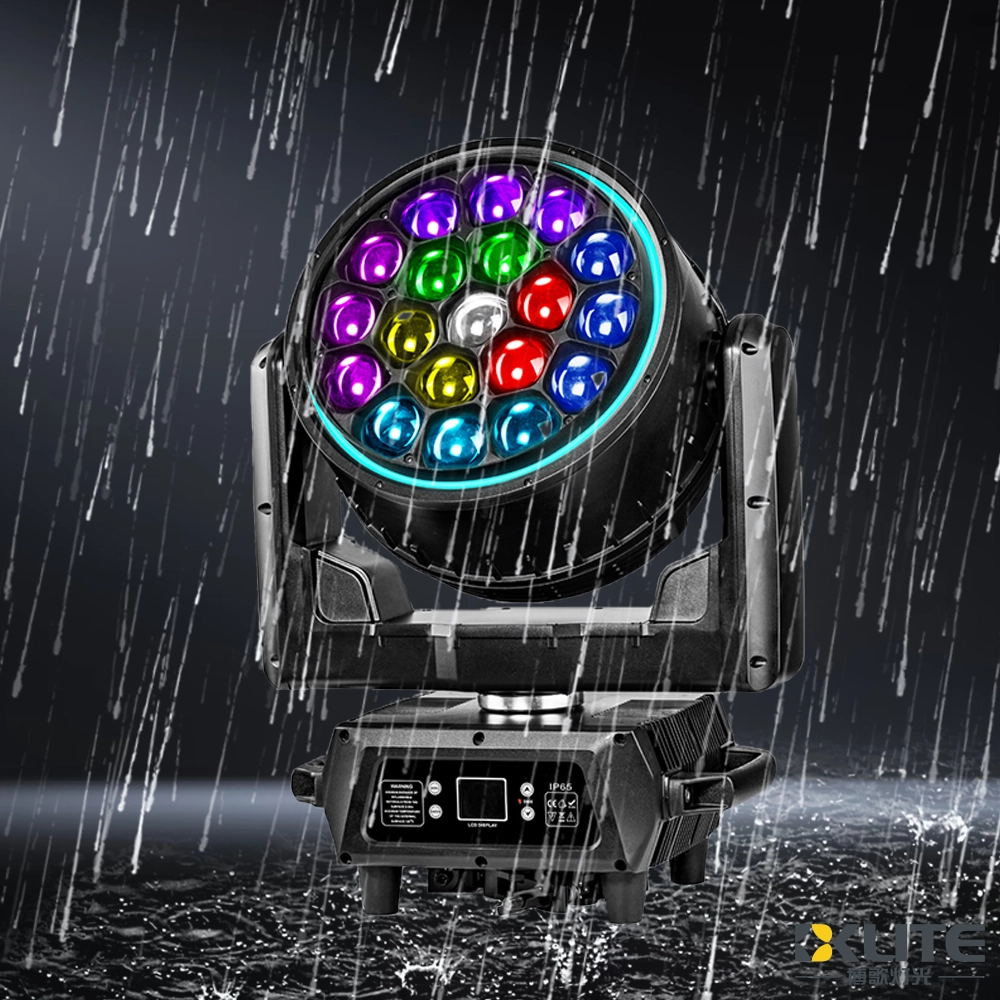
IP65 Waterproof Bee Eye Zoom 19x40W RGBW 4IN1 LED Beam Wash Moving Head Light with LED Ring
BKlite waterproof bee eye moving head light—your reliable choice from top waterproof moving head light manufacturers and suppliers. Ideal for outdoor stage, live event, music festival, this energy-saving fixture ensures powerful, precise illumination for any venue. It delivers powerful, reliable lighting performance in any weather.
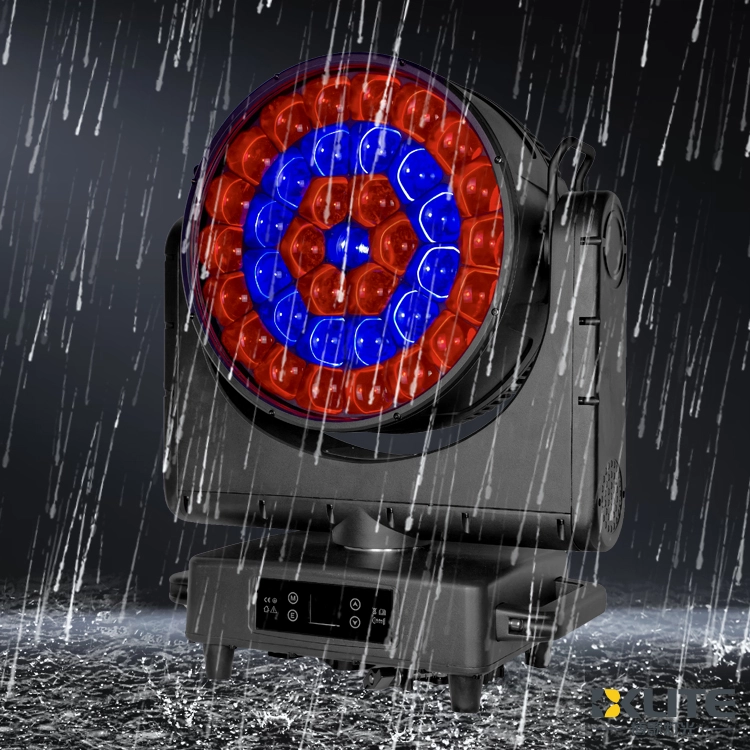
IP65 Waterproof ZOOM Bee Eye 37x40W RGBW 4in1 LED Moving Head Light
As a leading stage lighting equipment supplier with more than 15 years of industry know-how, BKlite brings you the IP65 ZOOM Bee Eye 37*40W RGBW 4in1 LED Moving Head Light (K25 Bee Eye) delivers vibrant, weatherproof lighting with powerful zoom and smooth movement. Ideal for dynamic stage effects, the K25 moving head light ensures stunning RGBW color mixing and reliable outdoor performance.
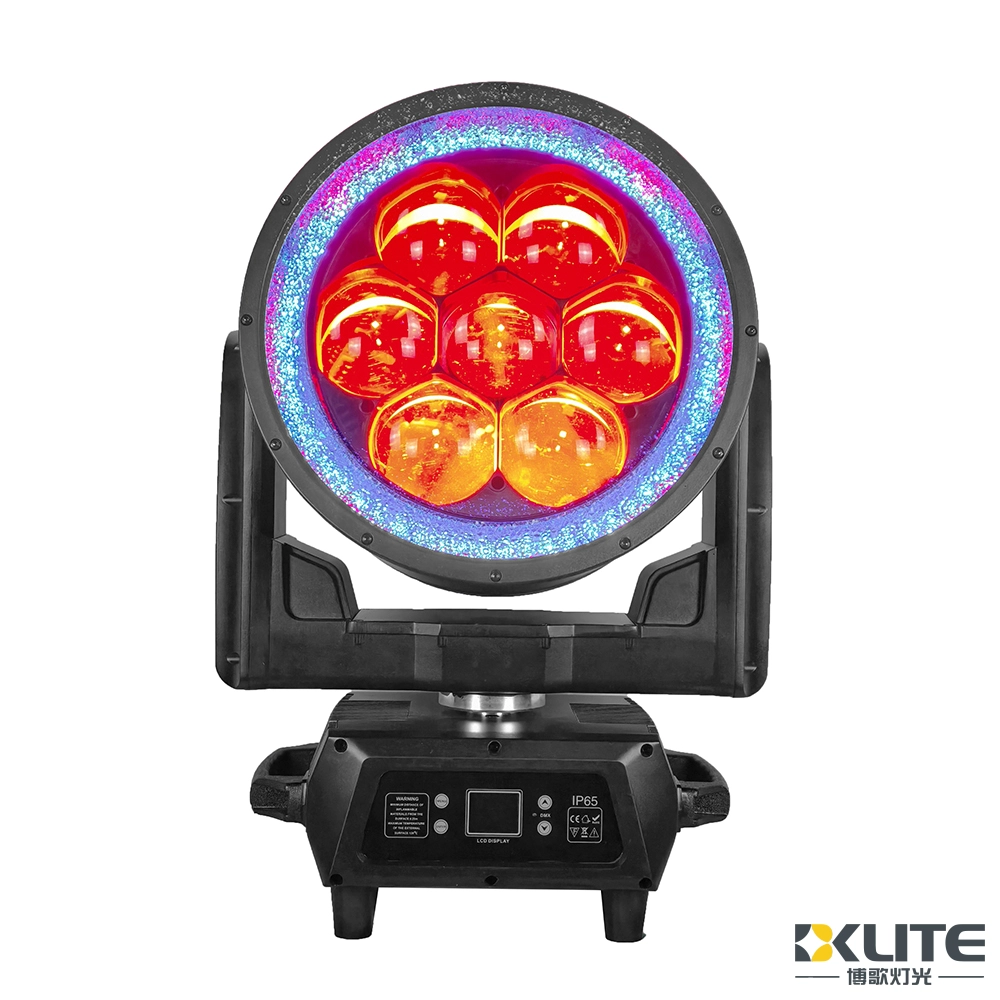
IP65 Waterproof Bee Eye 7x180W RGBL 4IN1 LED Moving Head Light With LED Ring
BKlite high power 7x180W waterproof bee eye moving head light—your reliable choice from top waterproof moving head light manufacturers and suppliers. Ideal for outdoor stage, live event, music festival, this energy-saving fixture ensures powerful, precise illumination for any venue. It delivers powerful, reliable lighting performance in any weather.
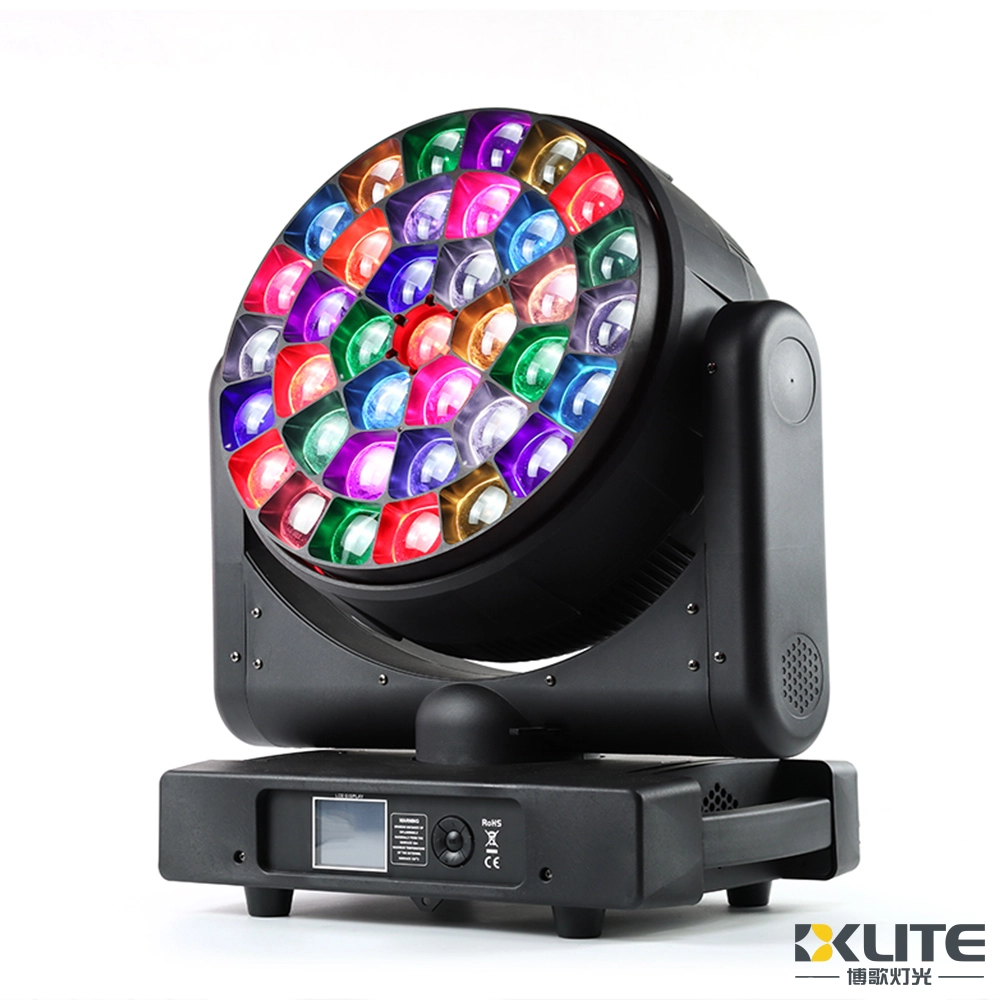
Bee Eye Zoom 37x40W RGBW 4in1 LED Beam Wash Moving Head Light


Copyright © 2025 BKLITE All Rights Reserved.