




Wireless and Art-Net LED Spotlight Control Solutions
- Why wireless control matters in modern lighting
- Changing needs for flexibility and fast reconfiguration
- When wired is still preferable
- Operational risks to plan for
- Technical foundations: Art‑Net, sACN and wireless protocols
- How Art‑Net and sACN carry DMX over IP
- Wireless transports: W-DMX, Wi‑Fi, proprietary links
- Protocol comparison (practical metrics)
- Designing reliable wireless LED spotlight systems
- Understanding latency, refresh rate and fixture expectations
- Network architecture and redundancy
- Frequency planning, antennas and site survey
- Implementation checklist: selecting gear and testing
- Fixture and node selection
- Test plan and acceptance criteria
- Cost vs. reliability: practical trade-offs
- Why partner with BKlite for LED spotlight solutions
- BKlite: experience, product range and R&D
- How BKlite's product set fits wireless + Art‑Net architectures
- Competitive strengths and industry reputation
- Conclusion and practical next steps
- Frequently Asked Questions (FAQ)
- 1. Can I run Art‑Net over standard Wi‑Fi for my LED spotlights?
- 2. How many universes can I realistically use on Art‑Net?
- 3. What latency should I expect from wireless DMX systems?
- 4. Does Art‑Net support RDM for device management?
- 5. How do I prevent interference between multiple wireless links at an outdoor festival?
- Contact & product inquiry
I am a stage lighting consultant with years of experience deploying LED spotlight systems for theatres, touring shows and fixed-install venues worldwide. In this article I summarize how wireless control and Art‑Net (and related Ethernet-based protocols) can be used to manage modern LED spotlights, what problems you are likely to face in real projects, and actionable solutions you can apply immediately. My recommendations are based on real-world deployments, industry standards and vendor documentation.
Why wireless control matters in modern lighting
Changing needs for flexibility and fast reconfiguration
The shift to LED spotlight fixtures and moving heads has accelerated the demand for flexible control paths. Events change layouts frequently; festivals and touring productions cannot re-pull DMX cabling for each venue. Wireless control reduces setup time, minimizes cable runs, and supports dynamic stage designs where fixtures move or are rigged in hard-to-wire positions.
When wired is still preferable
I always evaluate wired Ethernet and DMX512 first because they are predictable and low-latency. For permanent installs (fixed theatres, conference halls) a dedicated wired backbone usually offers the best reliability. In contrast, wireless excels for temporary shows, outdoor festivals, and retrofit projects where running new cable is expensive or impractical.
Operational risks to plan for
Wireless introduces RF interference, battery/Power issues (if fixtures or nodes are battery-powered), and the need for professional frequency planning. Designing for redundancy, spectrum management and realistic range estimates is essential to avoid show-day failures.
Technical foundations: Art‑Net, sACN and wireless protocols
How Art‑Net and sACN carry DMX over IP
Art‑Net and sACN (E1.31) are the dominant methods to transport DMX data across Ethernet networks. Art‑Net is widely used in entertainment and is documented on Wikipedia: Art‑Net - Wikipedia. sACN (Streaming Architecture for Control Networks, E1.31) is the other major standard: sACN - Wikipedia. Both allow many DMX universes to be carried over IP; your choice depends on console compatibility, existing infrastructure and channel-count needs.
Wireless transports: W-DMX, Wi‑Fi, proprietary links
Wireless DMX implementations vary. LumenRadio's W-DMX is a commonly used professional option with low latency and robust synchronization: W-DMX (LumenRadio). Alternatively, some productions use Art‑Net over Wi‑Fi (IEEE 802.11), which is flexible but requires careful network design: IEEE 802.11 - Wikipedia. Choosing between those depends on latency tolerance, spectrum congestion, and interference risks.
Protocol comparison (practical metrics)
The table below summarizes typical performance attributes you should evaluate when selecting a control protocol for LED spotlight systems.
| Protocol | Typical latency | Scalability (universes) | Best use | Source |
|---|---|---|---|---|
| Art‑Net | <10 ms on good Ethernet | Many (limited by network & node mapping) | Large installs, console-to-node via wired/wireless gateways | Wikipedia |
| sACN (E1.31) | <10 ms on good Ethernet | Many (designed for large distributed systems) | High-universe modern installs, standardised streaming | Wikipedia |
| W‑DMX / Proprietary RF | ~1–5 ms (vendor-dependent) | Limited by available channels & vendor | Touring, outdoor festivals where cabling is impractical | LumenRadio |
| Art‑Net over Wi‑Fi | ~5–20+ ms depending on congestion | Many, but reliability varies | Low-budget wireless deployments or controlled environments | IEEE 802.11 |
Designing reliable wireless LED spotlight systems
Understanding latency, refresh rate and fixture expectations
LED spotlights now include complex pixel-mapped effects and moving head features that expect frequent control updates. When I design systems I confirm the console's refresh expectations (e.g., 25–44 fps or higher) and the fixture's internal smoothing. For fixtures doing color mixing or gobos, small increases in latency are often imperceptible, but for tight motion or timecode-synced cues you must keep end-to-end latency minimal and deterministic.
Network architecture and redundancy
A robust design typically includes a primary wired backbone (for consoles and house systems) and wireless gateways for fixtures that cannot be cabled. Recommended elements:
- Managed Gigabit switches with IGMP snooping for Art‑Net/sACN multicast control.
- Dedicated VLANs for lighting control to isolate traffic from show Wi‑Fi or office networks.
- Redundant gateways (hot standby) for wireless DMX so a single node failure doesn't drop critical fixtures.
Frequency planning, antennas and site survey
Before any wireless deployment I run a site RF survey. Crowded 2.4 GHz bands, nearby broadcast sources and metal structures can cause multipath or attenuation. If using Wi‑Fi for Art‑Net, design around 5 GHz where possible for more channels and less interference. If you use professional RF DMX, follow the vendor's recommendations on antenna placement and channel allocation — for example, LumenRadio publishes guidance on spectrum use and redundancy: W‑DMX guide.
Implementation checklist: selecting gear and testing
Fixture and node selection
When selecting LED spotlights and wireless nodes consider:
- Native Ethernet support vs. DMX input. Native Art‑Net-enabled fixtures remove conversion points and reduce failure modes.
- Support for RDM (Remote Device Management) if you need remote configuration and monitoring. Note that RDM over IP often requires gateway support.
- Ingress protection rating (IP20, IP65) for outdoor or festival spotlights.
Test plan and acceptance criteria
Before a show I always verify:
- End-to-end latency under typical and peak traffic.
- Channel mapping and universes match the console and fixture addressing.
- Failover tests: power loss, node reboots, and RF interference simulations.
Cost vs. reliability: practical trade-offs
Not every project needs enterprise-grade RF solutions. For small corporate events, Wi‑Fi Art‑Net with conservative channel use and strong access points can be sufficient and cost-effective. For high-value theatrical tours, invest in proven W‑DMX meshes or multiple wired backbones. I help clients quantify risk and choose the right level of redundancy for their budget.
Why partner with BKlite for LED spotlight solutions
BKlite: experience, product range and R&D
Guangzhou BKlite Stage Lighting Equipment Co., Ltd. was set up in 2011 and has become one of the top companies in the stage lighting industry. The company's business philosophy is based on being professional and innovative and on making sure that all of its stakeholders benefit. Over the past 14 years, it has achieved remarkable growth and built a strong reputation for quality and reliability.The factory makes all kinds of stage lighting products, like the IP20 Bee Eye Series, IP65 Bee Eye Series, LED Beam Moving Heads, LED Spot Moving Heads, LED Wash Moving Heads, LED Par Lights, LED Bar Lights, and LED Strobe Lights. Each product is made using advanced technology to meet the changing needs of the entertainment industry. BKlite invests in research and development to come up with new ideas, making sure it stays ahead of industry trends. Their vision is to become the world's leading stage light manufacturer.
How BKlite's product set fits wireless + Art‑Net architectures
BKlite supplies fixtures across the common spectrum of professional needs: from LED wash moving heads and LED spot moving heads to LED strobe bar lights and Profile LED moving head lights. These fixtures are designed to integrate with Art‑Net/sACN networks via DMX gateways and interfaces. For deployments where IP-rated fixtures are required (outdoor festivals, fan zones), BKlite's IP65 Bee Eye Series and IP-rated moving heads provide durable options that reduce maintenance and increase uptime.
Competitive strengths and industry reputation
What sets BKlite apart is a combined focus on quality manufacturing, consistent R&D investment, and a broad product portfolio that supports both permanent installs and touring. If you need a partner that can deliver fixtures, technical documentation, and after-sales support, BKlite's established export channels and engineering support (contact: export3@bklite.com) make them a practical choice. More details are available on their website: bklite.com.
Conclusion and practical next steps
Wireless and Art‑Net control for LED spotlights is a powerful combination when designed correctly. My practical recommendations are:
- Prioritize wired Ethernet where possible for hub/backbone and use wireless selectively for inaccessible fixtures.
- Choose your protocol based on console compatibility: Art‑Net is ubiquitous; sACN is increasingly standardised in modern systems.
- Run a full site RF and network survey before finalising gateway and antenna placement.
- Use managed switches, VLANs and redundancy to create predictable, low-latency control paths.
- Partner with reputable manufacturers like Guangzhou BKlite for fixtures and R&D-driven product support.
Frequently Asked Questions (FAQ)
1. Can I run Art‑Net over standard Wi‑Fi for my LED spotlights?
Yes, but only in controlled environments. Wi‑Fi can carry Art‑Net packets (Art‑Net is just UDP over IP), but latency and packet loss depend on congestion and AP placement. For mission-critical cues or tight motion control, I recommend professional RF DMX or wired Ethernet. See IEEE 802.11 guidance: IEEE 802.11 - Wikipedia.
2. How many universes can I realistically use on Art‑Net?
Art‑Net itself can address many universes; practical limits are imposed by network capacity and node mappings. Large venues routinely run dozens to hundreds of universes over managed networks. Use multicast management (IGMP snooping) to control traffic on switches and prevent unnecessary loads. Reference: Art‑Net - Wikipedia.
3. What latency should I expect from wireless DMX systems?
Professional wireless DMX (e.g., W‑DMX) typically achieves very low latency (around 1–5 ms), whereas Wi‑Fi-based Art‑Net systems can vary from a few milliseconds to tens of milliseconds depending on congestion. Check vendor specifications (for example, LumenRadio's W‑DMX docs): W‑DMX.
4. Does Art‑Net support RDM for device management?
RDM is a layer on top of DMX512. RDM over IP requires gateways that support tunnelling RDM across the network; not every Art‑Net node forwards RDM by default. If remote configuration and monitoring are important, choose nodes and gateways that explicitly support RDM-over-IP.
5. How do I prevent interference between multiple wireless links at an outdoor festival?
Perform a pre-event spectrum analysis, allocate non-overlapping channels, use directional antennas where appropriate, and choose professional wireless DMX solutions that implement robust channel hopping or frequency management. Also schedule RF checks during site load tests to see how the environment behaves under realistic conditions.
Contact & product inquiry
If you need fixtures or technical support for LED spotlight systems, Guangzhou BKlite manufactures a wide range of products including led wash moving head, led stage lighting, led moving head, led strobe bar light, led par light, led cob light, led spot moving head, led beam bar moving, and Profile led moving head light. For product information, quotations or technical consultation visit https://www.bklite.com/ or email export3@bklite.com. I routinely collaborate with lighting manufacturers like BKlite on system-level designs and can advise on fixture selection, network design and acceptance testing.
Ready to specify a wireless + Art‑Net LED spotlight system? Contact the factory at export3@bklite.com or visit bklite.com to view product catalogs and request technical datasheets.
Wholesale led wash light moving head manufacturer and supplier
Top 10 led strobe lights red Manufacturers and Supplier Brands
Top 10 led bar moving light beam Manufacturers and Supplier Brands
Best light stand stage manufacturers and supplier brands
FAQs
When will you ship the product after I send the money?
It depends the order.Small order will take 3-5 days.
What's the shipping way, shipping time?
The ways of shipping—you can choose which is suitable for you. (1). By Sea, 30-60 days; apply for bulk quantity.
(2). By Air, 5-7 days; apply for bulk quantity.
(3). By Express, 3-5 days; apply for small quantity and urgent order.
What is your delivery time?
For stock products, we will deliver to you within 3 days.
What's your certificates?
ROHS and CE certificates passed.
What service can you supply?
We can apply for the OEM/ODM service.
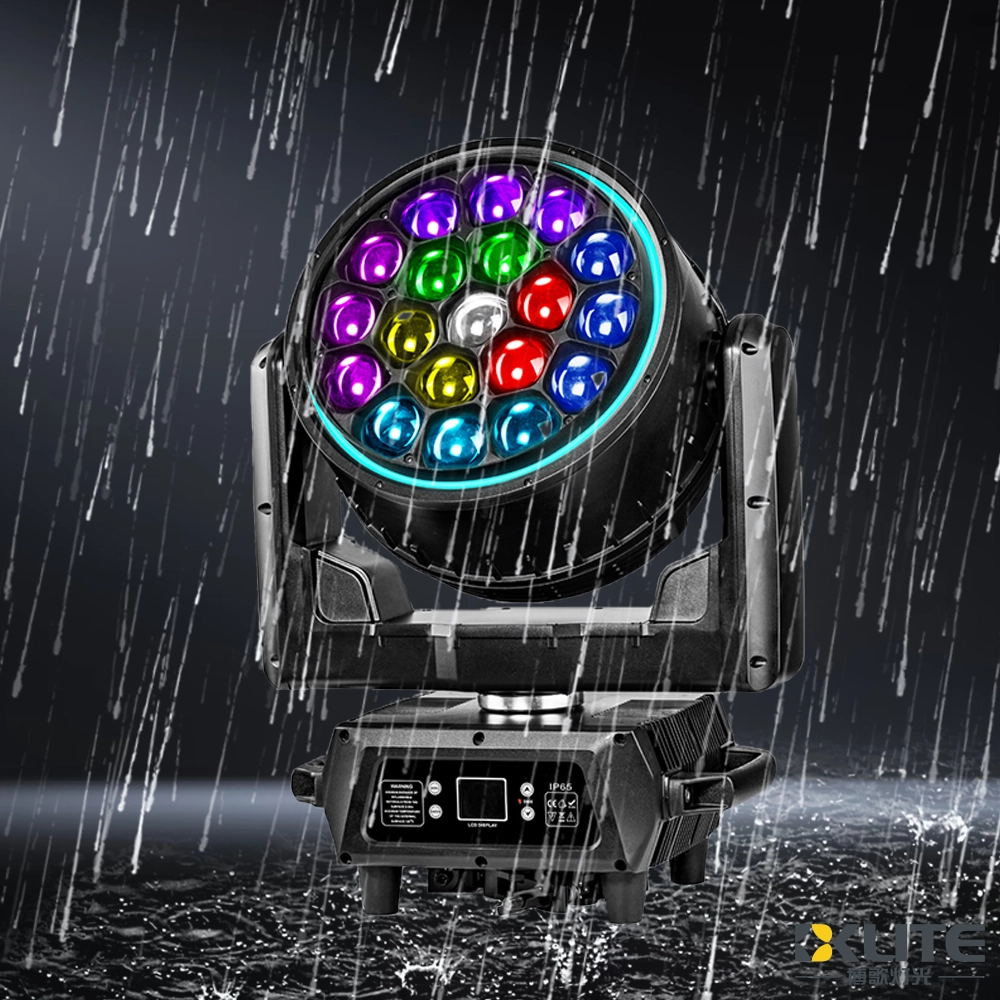
IP65 Waterproof Bee Eye Zoom 19x40W RGBW 4IN1 LED Beam Wash Moving Head Light with LED Ring
BKlite waterproof bee eye moving head light—your reliable choice from top waterproof moving head light manufacturers and suppliers. Ideal for outdoor stage, live event, music festival, this energy-saving fixture ensures powerful, precise illumination for any venue. It delivers powerful, reliable lighting performance in any weather.
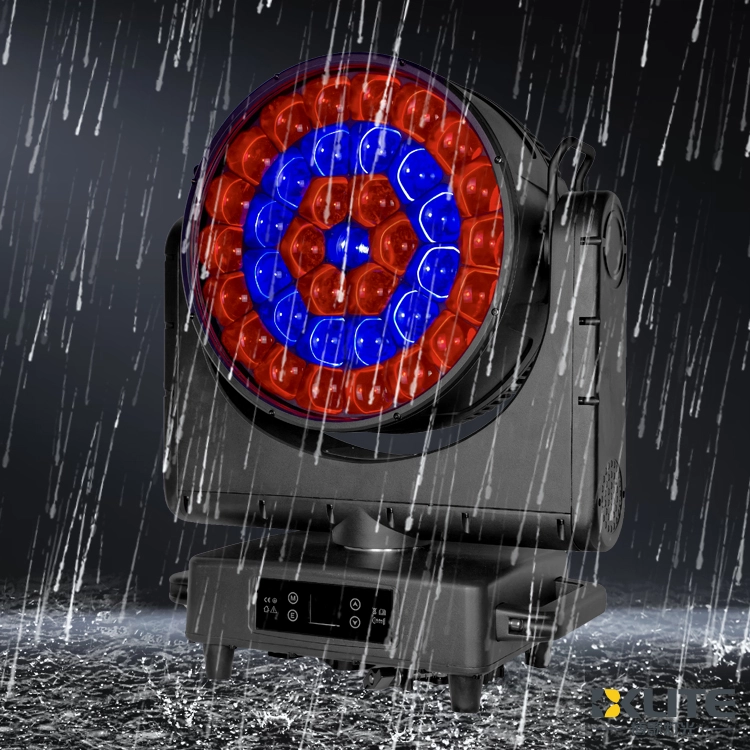
IP65 Waterproof ZOOM Bee Eye 37x40W RGBW 4in1 LED Moving Head Light
As a leading stage lighting equipment supplier with more than 15 years of industry know-how, BKlite brings you the IP65 ZOOM Bee Eye 37*40W RGBW 4in1 LED Moving Head Light (K25 Bee Eye) delivers vibrant, weatherproof lighting with powerful zoom and smooth movement. Ideal for dynamic stage effects, the K25 moving head light ensures stunning RGBW color mixing and reliable outdoor performance.
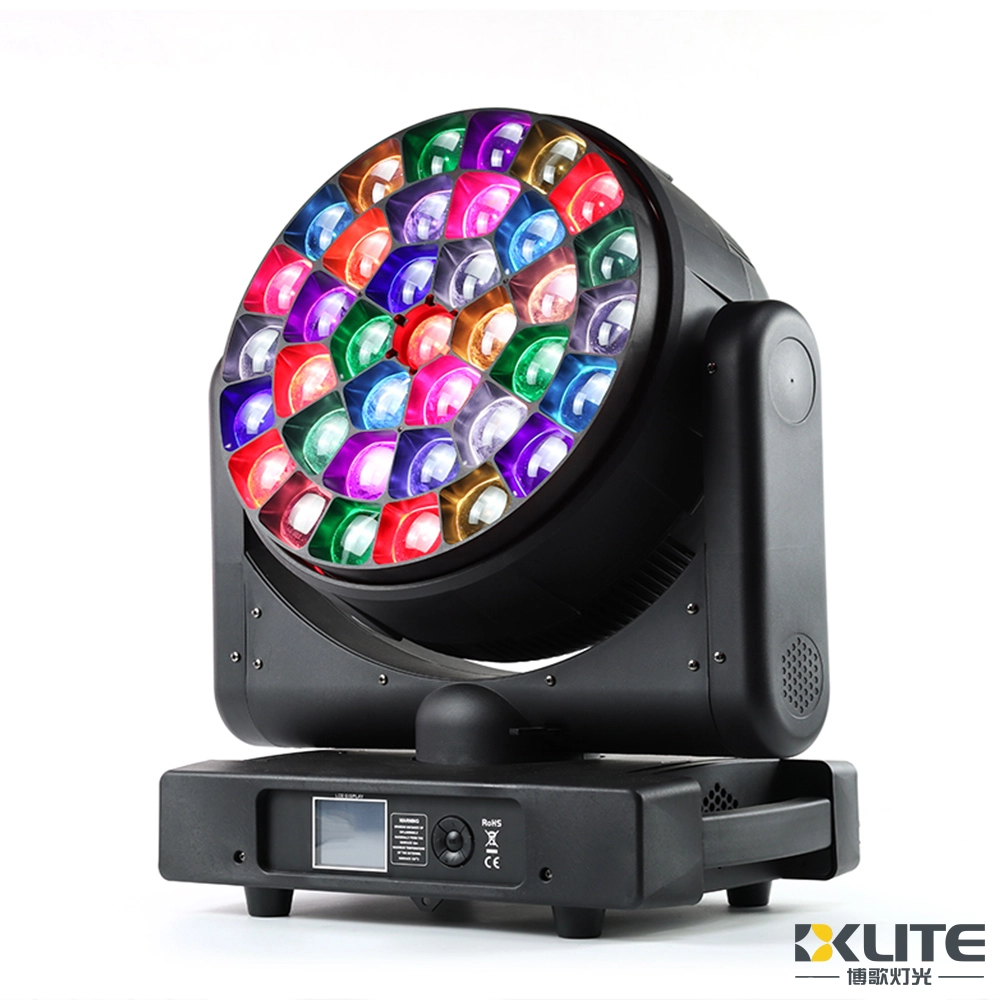
Bee Eye Zoom 37x40W RGBW 4in1 LED Beam Wash Moving Head Light
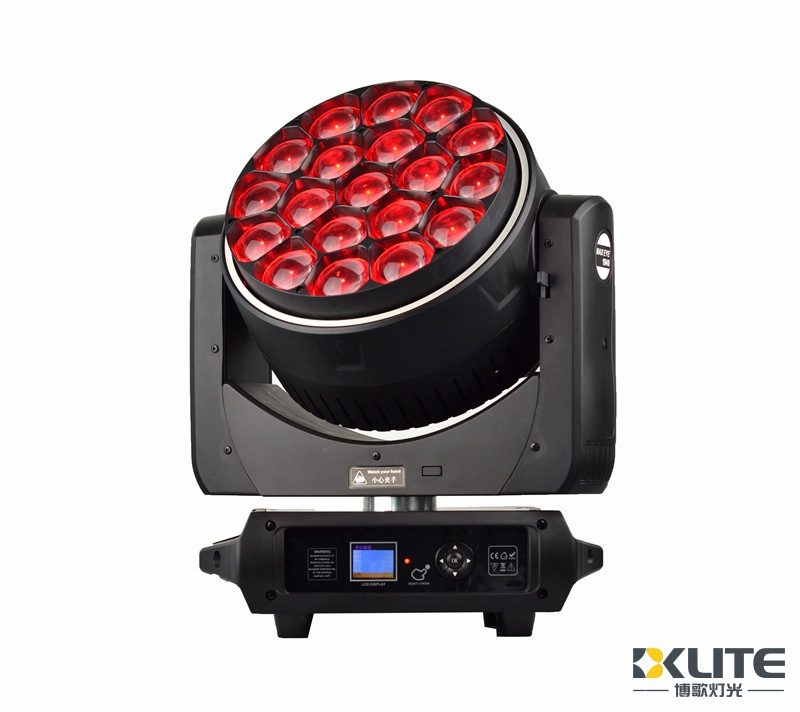
IP20 Bee Eye Zoom 19x40W RGBW 4IN1 LED Beam Wash Moving Head Light with LED Ring
As one of the leading stage lighting equipment suppliers with 15+ years of experience, BKlite launched a new Bee Eye K15 19x40 LED wash light BK-BY1940Z. .
Designed with a simple and sleek appearance, the WASH moving head light is compact, lightweight, and highly portable.
With multiple color effect macros and dynamic effect macros.
Our wash light can be used for versatile lighting options with amazing effect.
It is very good for your lighting projects.
Powerful and shoots very far distances.


Copyright © 2025 BKLITE All Rights Reserved.