




CRI and Color Accuracy in LED Wash Lights
- Understanding Color Quality for Stage Lighting
- led wash light: why color accuracy matters
- led wash light: what is CRI and how is it used?
- led wash light: the limitations of CRI for LEDs
- led wash light: alternative metrics — TM-30, TLCI and CQS
- led wash light: comparison of color metrics
- led wash light: how to measure color accuracy in practice
- led wash light: practical stage implications — skin tones, costumes and video
- led wash light: selecting fixtures — a practical spec checklist
- led wash light: fixture-type comparison for color-critical applications
- led wash light: calibration, maintenance and firmware matters
- led wash light: Guangzhou BKlite — capabilities and advantages
- led wash light: comparing sample specs (example)
- FAQ — CRI and Color Accuracy for LED Wash Lights
- led wash light: Is a high CRI enough to guarantee good color on stage?
- led wash light: What is the minimum CRI I should accept for theatrical work?
- led wash light: How does color temperature (CCT) affect perception?
- led wash light: Do RGB LEDs give as good whites as RGBW or RGBA systems?
- led wash light: How should I evaluate fixtures on-site?
- led wash light: How often do fixtures need recalibration to maintain consistent color?
- References
Understanding Color Quality for Stage Lighting
led wash light: why color accuracy matters
Color accuracy is not an academic detail for live events — it shapes how performers, costumes, scenery and video content appear under stage illumination. For lighting designers, rental houses and venue managers, choosing LED fixtures that reproduce colors naturally and consistently is essential. The term CRI (Color Rendering Index) has been the historic shorthand for color quality, but the LED era has exposed limitations in CRI that can mislead buyers of led wash light fixtures. This article unpacks CRI, introduces modern alternatives (TM-30, TLCI, CQS), explains practical measurement and selection strategies, and gives operational guidance to maximize color fidelity in real-world stage settings.
led wash light: what is CRI and how is it used?
The Color Rendering Index (CRI) is a metric developed by the CIE (International Commission on Illumination) to quantify how a light source renders a set of test color samples compared with a reference illuminant. The traditional CRI value most people cite is Ra — an average of eight low-saturation color samples. CRI ranges from 0 to 100; values above ~80–90 are commonly preferred for good color rendering.
For stage work and led wash light selection, CRI has been useful as a quick filter: fixtures advertising CRI>90 are assumed to provide good whites and acceptable color. However, CRI was designed for general lighting and has known shortcomings when applied to modern LED fixtures and the vivid, saturated colors commonly used in theatrical and concert lighting.
led wash light: the limitations of CRI for LEDs
CRI’s limitations that specifically affect led wash light selection include:
- Small sample set: Ra averages only eight pastel colors and misses highly saturated hues used onstage.
- Reference mismatch: CRI compares against a blackbody or daylight reference with no regard to spectral power distribution nuances important for LEDs.
- White-bias: Fixtures tuned to score high Ra may emphasize white rendering while failing on saturated colors.
- Complex spectra of LEDs: Many LEDs use narrow-band emitters; CRI can hide spikes or gaps that alter perception of saturated colors and skin tones.
In practice, two led wash light fixtures with identical CRI can render red or blue stage colors very differently, producing inconsistent costume and set appearance between venues or shows.
led wash light: alternative metrics — TM-30, TLCI and CQS
To address CRI’s deficiencies, the lighting community uses newer, more descriptive metrics:
- IES TM-30 (Rf, Rg): Developed by the Illuminating Engineering Society, TM-30 uses 99 color evaluation samples and reports fidelity (Rf) and gamut (Rg). Rf is similar to CRI but more robust; Rg indicates whether colors appear more saturated (>100) or less saturated (<100) than the reference. TM-30 also provides per-hue vector graphics useful for designers.
- TLCI: Television Lighting Consistency Index is tailored for broadcast and camera workflows; it predicts how a camera and basic color correction will reproduce a light source.
- CQS: Color Quality Scale attempts improvements over CRI but is less widely adopted in entertainment than TM-30.
Using TM-30 together with CRI gives a fuller picture: CRI (Ra) for legacy comparison, TM-30 Rf/Rg for fidelity and saturation behavior, and TLCI for broadcast-critical applications.
led wash light: comparison of color metrics
| Metric | Scope | Strengths | Limitations |
|---|---|---|---|
| CRI (Ra) | General lighting | Widespread, easy to compare | Small sample set; can mislead for saturated colors |
| TM-30 (Rf / Rg) | Comprehensive color fidelity | 99 samples; shows saturation changes; vector data | Less familiar to some buyers; requires more data |
| TLCI | Broadcast & camera | Predicts camera correction needs | Optimized for cameras not human perception |
Sources: IES TM-30 documentation, CIE background on CRI. (See References.)
led wash light: how to measure color accuracy in practice
For buyers and technicians, the following instruments and metrics are practical:
- Spectroradiometer / Spectrometer: Measures spectral power distribution (SPD) directly, enabling calculation of CRI, TM-30, CCT, and chromaticity coordinates (xy).
- Colorimeters: Faster and cheaper; good for CCT and lux but less accurate for complex spectra.
- Delta-E color difference: Useful to quantify perceived color shifts between fixtures or against a reference.
- On-site visual checks: Using standard color swatches, skin tone charts and fabric samples under the led wash light makes subjective assessment that complements instrument data.
Best practice: request full SPD data and TM-30 reports from manufacturers when comparing led wash light fixtures. When possible, perform an on-site evaluation with fabrics and skin-tone samples in the venue’s house rig.
led wash light: practical stage implications — skin tones, costumes and video
Designers should be aware of common, real-world impacts of color fidelity:
- Skin tones: Poor spectral power distribution can make skin look unnaturally flat or overly saturated, affecting audience perception and camera capture.
- Costume and makeup color: Highly saturated dyes and pigments require broad SPD to appear accurate; narrow LED spikes can shift perceived hue.
- Cross-lighting and color mixing: Additive mixing with RGB(A) LEDs may create metameric mismatches where mixed colors look correct to the eye but render differently under other fixtures or cameras.
- Consistency across venues: Touring productions need fixtures with predictable behavior; inconsistent color rendering increases load on wardrobe and camera departments.
led wash light: selecting fixtures — a practical spec checklist
When evaluating led wash light fixtures for stage use, include these items in your procurement checklist:
- TM-30 results (Rf and Rg) or at least CRI Ra >90 for whites.
- Full spectral power distribution (SPD) or manufacturer-provided SPD plots.
- Color temperature range and white-point presets (CCT and +/- McAdam ellipses).
- Color mixing method (RGBW, RGBA, RGBMA, or diode counts) — affects gamut and smoothness.
- Control resolution: 16-bit dimming, color macros, calibration settings.
- Flicker-free operation for camera (check PWM frequency and TLCI if broadcast use).
- IP rating and mechanical attributes (weight, mounting options) for touring or outdoor use.
- Manufacturer data: TM-30, CRI, TLCI, lux outputs at distances, beam angles.
led wash light: fixture-type comparison for color-critical applications
| Fixture Type | Typical Use | Color Fidelity Strengths | Limitations |
|---|---|---|---|
| LED Wash Moving Head | Front/side washes; touring rigs | Large optics, good mixing; often offers RGBW/CMY-emulation | More complex optics can introduce color fringing if not well designed |
| LED Par Light | Uplights, cyclorama washes | Cost-effective; compact | Limited mixing smoothness on short throw lenses |
| LED Bar / Strip | Linear washes, stage edges | Slim, even bars for color-blended looks | May require multiple units for smooth color across wide areas |
led wash light: calibration, maintenance and firmware matters
Even high-spec fixtures require proper setup to achieve intended color accuracy:
- Factory calibration: Prefer fixtures with factory color calibration or the option to perform calibration using internal profiles.
- Firmware and profiles: Manufacturers often release firmware updates to improve color mixing and bug fixes — maintain update discipline.
- Field recalibration: Use the fixtures’ warm/cool or white balance tools on-site, and consider creating custom color macros for critical looks.
- Routine maintenance: Clean optics and check LED modules for spectral drift; replace aging LEDs in high-hour touring units before color degradation affects shows.
led wash light: Guangzhou BKlite — capabilities and advantages
Guangzhou BKlite Stage Lighting Equipment Co., Ltd., established in 2011, is positioned among leading stage lighting manufacturers, combining R&D investment with production experience to serve entertainment markets worldwide. Over 14 years the company has built a reputation for reliable products and competitive innovation. The factory produces a wide range of fixtures relevant to color-critical stage applications, including the IP20 Bee Eye Series, IP65 Bee Eye Series, LED Beam Moving Heads, LED Spot Moving Heads, LED Wash Moving Heads, LED Par Lights, LED Bar Lights, and LED Strobe Lights.
BKlite advantages relevant to selecting color-accurate led wash light:
- Product breadth: from IP20 studio units to IP65 outdoor-rated series for touring and installations.
- R&D focus: continuous development on optics and LED engine design to improve mixing and spectral balance.
- Quality control: factory calibration, testing and QC routines that aim to reduce batch-to-batch variability — important for consistent color across multiple fixtures.
- Specialized models: led wash moving head and led par light families designed for smooth color gradients and white reproduction, alongside profile and spot moving heads for mixed rigs.
- Global vision: an expressed goal to become a world-leading stage light manufacturer with service and support tailored to touring, rental, and fixed-install markets.
For full product details and company information visit https://www.bklite.com/ (accessed 2025-12-10).
led wash light: comparing sample specs (example)
| Spec | Fixture A (LED Wash Moving Head) | Fixture B (LED Par) |
|---|---|---|
| CRI (Ra) | >92 | ~90 |
| TM-30 (Rf / Rg) | Rf 92 / Rg 102 | Rf 88 / Rg 98 |
| LED Mix | RGBW + CTO | RGB |
| Output | High lumen, even field | Medium lumen |
Note: values above are illustrative. Always request manufacturer SPD and TM-30 reports when possible.
FAQ — CRI and Color Accuracy for LED Wash Lights
led wash light: Is a high CRI enough to guarantee good color on stage?
No. High CRI (Ra) helps, but it does not guarantee accurate saturated colors or camera-friendly spectra. Use TM-30 (Rf/Rg) and SPD data for a more reliable assessment.
led wash light: What is the minimum CRI I should accept for theatrical work?
For most stage work, specify CRI >90 as a baseline; for broadcast or color-critical productions, prioritize TM-30 Rf >90 and check TLCI for camera use.
led wash light: How does color temperature (CCT) affect perception?
CCT sets the white point and affects mood; however, CCT alone doesn't describe spectral completeness. Two fixtures with same CCT can render colors very differently — always review SPD and TM-30/CRI data.
led wash light: Do RGB LEDs give as good whites as RGBW or RGBA systems?
RGB systems can produce acceptable whites but often lack spectral components that improve skin tones and pastel accuracy. RGBW or RGBA systems typically produce better whites and smoother color mixing for led wash light applications.
led wash light: How should I evaluate fixtures on-site?
Bring standard fabric swatches and a skin-tone card. Test fixtures under typical rig positions and intensities. Where possible, use a spectroradiometer or ask the manufacturer for SPD and TM-30 reports to compare digitally.
led wash light: How often do fixtures need recalibration to maintain consistent color?
LED spectral shift is gradual; for touring and high-hour use, inspect monthly and consider recalibration or replacement of modules every 18–36 months depending on hours and environment. Maintain firmware updates to benefit from color-mixing improvements.
If you need expert assistance choosing, testing or calibrating led wash light fixtures for your venue or production, contact Guangzhou BKlite directly or request datasheets and TM-30/CRI reports from suppliers. Explore BKlite’s product range and contact options at https://www.bklite.com/.
References
- Illuminating Engineering Society — TM-30 Overview. IES TM-30 standard documents and explanation. https://www.ies.org/standards/tm-30-18/ (accessed 2025-12-10)
- CIE and CRI background — International Commission on Illumination (CIE). https://cie.co.at/ (accessed 2025-12-10)
- Wikipedia — Color Rendering Index. https://en.wikipedia.org/wiki/Color_rendering_index (accessed 2025-12-10)
- NIST — Color Science and measurement fundamentals. https://www.nist.gov/pml/color-science (accessed 2025-12-10)
- BKlite official website — Company profile and products. https://www.bklite.com/ (accessed 2025-12-10)
Contact & product enquiries: Guangzhou BKlite Stage Lighting Equipment Co., Ltd. — visit https://www.bklite.com/ to view led wash moving head, led stage lighting, led moving head, led strobe bar light, led par light, led cob light, led spot moving head, led beam bar moving, profile led moving head light and led spotlight product families and request TM-30/CRI documentation and sample SPDs.
Top 10 led moving head wash light Manufacturers and Supplier Brands
Outdoor LED Wash Lighting: Weatherproof Tips
Best waterproof deck lights manufacturers and supplier brands
Wholesale cheap led stage lights manufacturer and supplier
FAQs
What service can you supply?
We can apply for the OEM/ODM service.
What's the shipping way, shipping time?
The ways of shipping—you can choose which is suitable for you. (1). By Sea, 30-60 days; apply for bulk quantity.
(2). By Air, 5-7 days; apply for bulk quantity.
(3). By Express, 3-5 days; apply for small quantity and urgent order.
What kind of package do you have?
We can pack the lights in a carton case and a flight case.
How can i order?
Please send us your purchase list by e-mail, WhatsApp, QQ, or making a call, and you can also ask us to send you a PI for your approval. We need to know the following information for your order.
What's the payment terms?
T/T, Western Union.
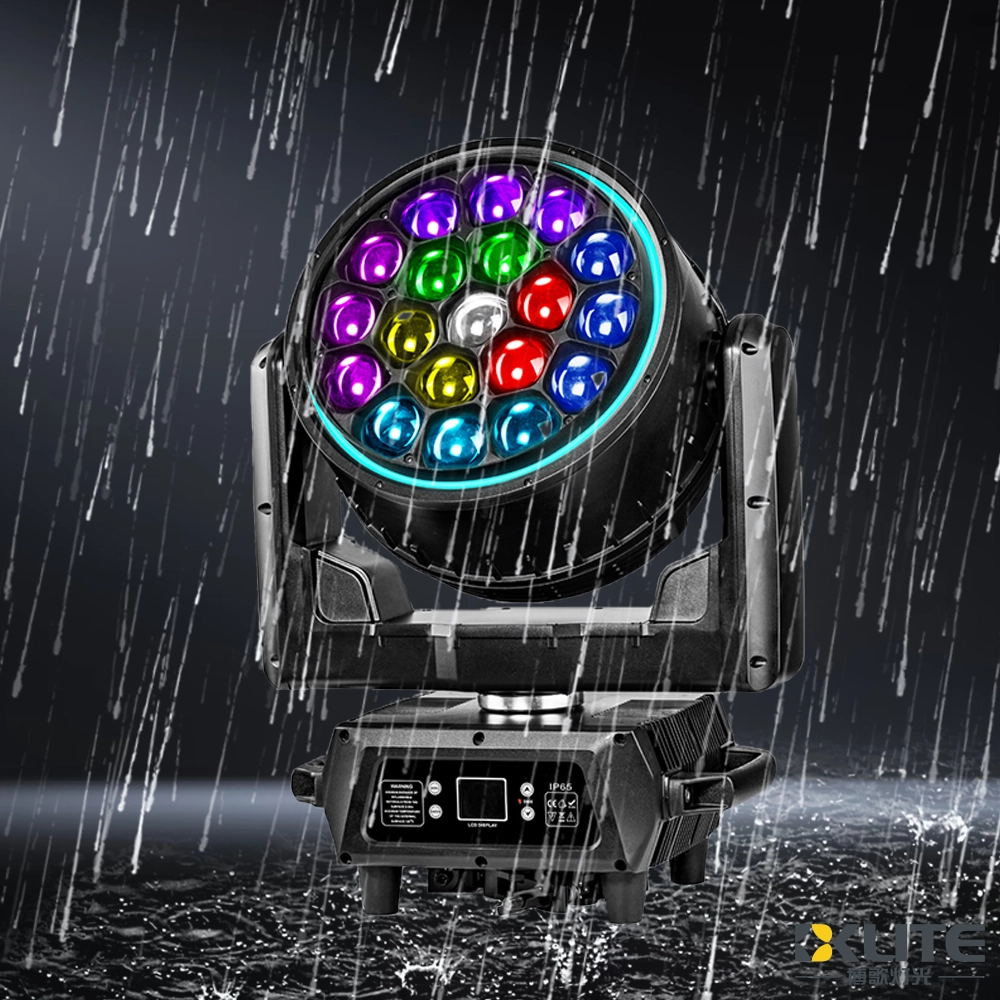
IP65 Waterproof Bee Eye Zoom 19x40w RGBW 4IN1 LED Beam Wash Moving Head Light with LED Ring
BKlite waterproof bee eye moving head light—your reliable choice from top waterproof moving head light manufacturers and suppliers. Ideal for outdoor stage, live event, music festival, this energy-saving fixture ensures powerful, precise illumination for any venue. It delivers powerful, reliable lighting performance in any weather.
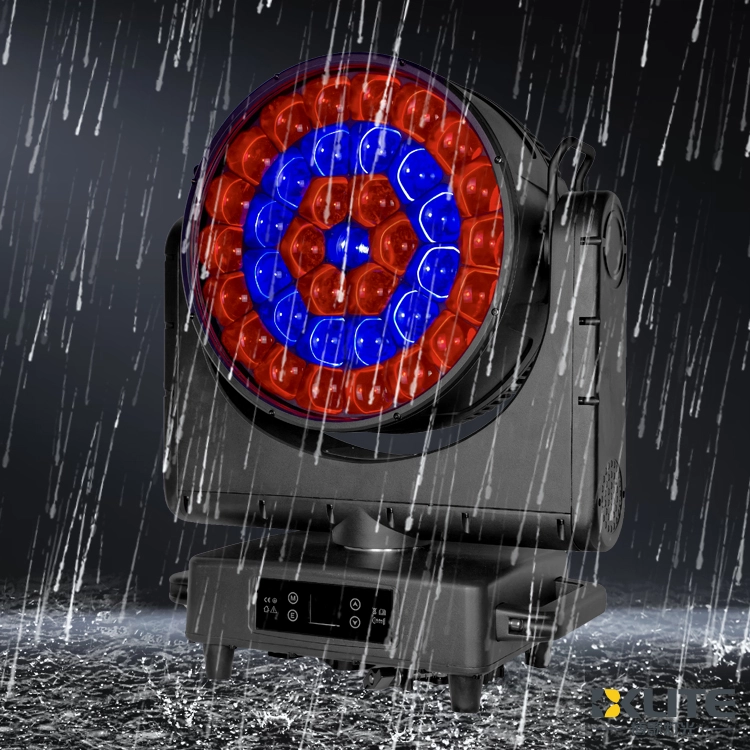
IP65 Waterproof ZOOM Bee Eye 37*40W RGBW 4in1 LED Moving Head Light
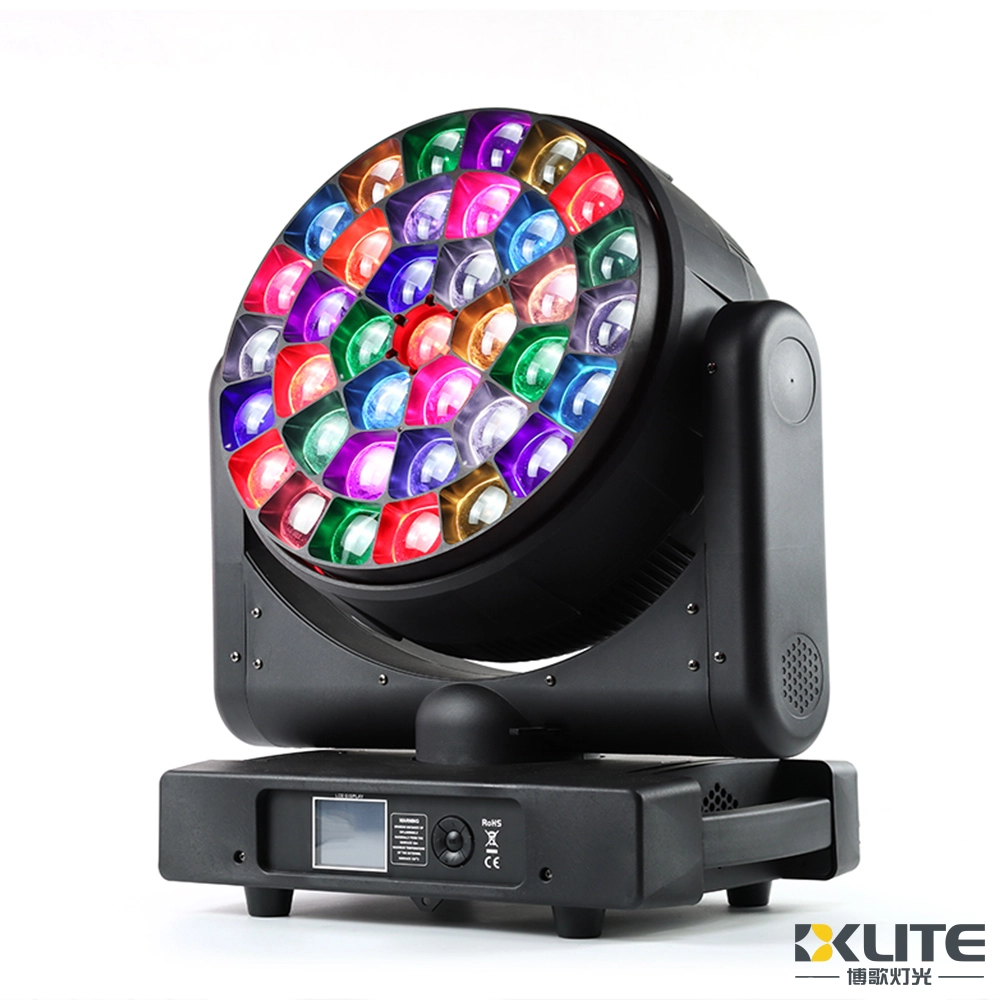
Bee Eye Zoom 37x40w RGBW 4in1 LED Beam Wash Moving Head Light
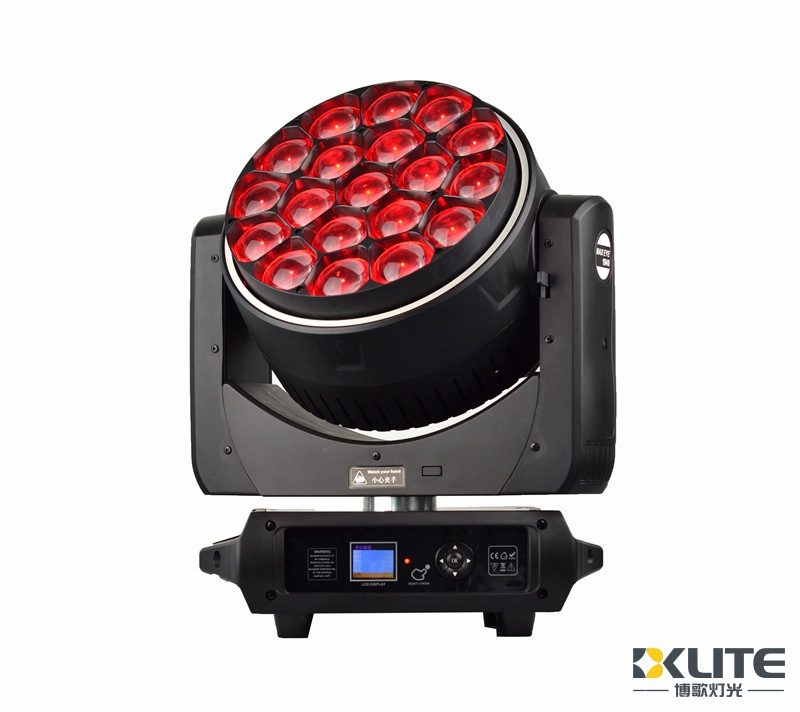
IP20 Bee Eye Zoom 19x40w RGBW 4IN1 LED Beam Wash Moving Head Light with LED Ring
As one of the leading stage lighting equipment suppliers with 14+ years of experience, BKlite launched a new Bee Eye K15 19x40 LED wash light BK-BY1940Z. .
Designed with a simple and sleek appearance, the WASH moving head light is compact, lightweight, and highly portable.
With multiple color effect macros and dynamic effect macros.
Our wash light can be used for versatile lighting options with amazing effect.
It is very good for your lighting projects.
Powerful and shoots very far distances.


Copyright © 2025 BKLITE All Rights Reserved.