




Bulk LED Spot Moving Head Light Pricing for Venues
- Understanding venue lighting needs
- Types of venues and usage patterns
- Key performance metrics I evaluate
- Why led spot moving head light is often the best choice
- Cost drivers for bulk LED spot moving head light purchases
- Core hardware and optical components
- Control, electronics and firmware
- Manufacturing quality, IP rating and longevity
- Bulk pricing models and typical ranges
- How vendors usually price bulk orders
- Sample pricing tiers (typical market ranges)
- Warranty, service and spare parts: hidden cost factors
- How to procure: checklist and negotiation tips
- Technical and commercial checklist I use
- Trial, acceptance testing and QA
- Logistics, certifications and standards to verify
- Comparing total cost of ownership (TCO)
- Energy, maintenance and replacement costs
- Example TCO comparison (5-year projection)
- Supplier evaluation and why factory relationships matter
- What to look for in a supplier
- About Guangzhou BKlite: a supplier profile I recommend considering
- FAQ
- 1. What is a reasonable bulk price for led spot moving head light?
- 2. How many spare parts should I order for a fleet?
- 3. Should I buy IP65 outdoor fixtures for semi-outdoor venues?
- 4. How important is DMX/RDM/Art-Net support?
- 5. Can I rely on supplier photos and specs on marketplaces?
- 6. What are the main negotiating levers for bulk purchases?
- Contact and next steps
I help venue managers, lighting designers, and procurement teams understand bulk purchasing for led spot moving head light systems. This article summarizes how price is formed, what performance and compliance factors to prioritize, sample bulk pricing tiers, and a practical checklist to reduce risk while optimizing total cost of ownership. I draw on my experience advising venues and suppliers, industry references, and current market observations so you can make an evidence-based buying decision.
Understanding venue lighting needs
Types of venues and usage patterns
Different venues have very different requirements for moving lights. Concert halls and touring productions demand high output, tightly focused spot beams, precise color/CMY control and rugged build for transport. Houses of worship and community theaters emphasize low maintenance, audible noise levels and good color rendering. Nightclubs and DJ-focused venues need fast-moving fixtures and strong beam effects. Identifying your primary use cases (permanent installation vs. rental/touring) immediately filters the product categories of led spot moving head light you should evaluate.
Key performance metrics I evaluate
When I assess a fixture I focus on measurable specs: lumen output or lux at specified throw distance, beam angle and Iris precision, color rendering (CRI/TLCI), gobo quality, pan/tilt speed and accuracy, and thermal performance. Control protocol compatibility (DMX512, RDM, Art-Net, sACN) and firmware update paths are equally important. For reference, the DMX512 protocol remains the industry standard; its technical overview is available on Wikipedia: https://en.wikipedia.org/wiki/DMX512.
Why led spot moving head light is often the best choice
LED spot moving heads blend high lumen efficiency, long LED life, and flexible color/motion control. Compared with discharge-source profile fixtures, modern LED spot moving head light units reduce power draw, heat output and maintenance cycles, which directly affects venue running costs. They are also more modular for features like interchangeable gobos or motorized zooms, making them suitable for multi-purpose venues.
Cost drivers for bulk LED spot moving head light purchases
Core hardware and optical components
The LED engine, optics, and mechanical drive systems (pan/tilt motors, gearbox quality) are the largest determinants of price. High-power LED chips from known manufacturers (Cree, Osram, Lumileds) and precision glass optics push cost up but improve output and beam quality. If you need a narrow 3–7° spot with clean gobos, expect to pay more than for a wide-angle wash-oriented moving head.
Control, electronics and firmware
Fixtures with robust onboard processing, native Art-Net/sACN and RDM support—plus easy firmware updates—are worth the High Quality for networked venues. Integration with lighting consoles, timecode and media servers also affects cost. The industry ecosystem and recommended control practices can be referenced through trade bodies such as PLASA: https://www.plasa.org/.
Manufacturing quality, IP rating and longevity
IP-rated outdoor-capable units (IP65) require weatherproof housings and sealed cooling systems; these cost noticeably more than IP20 indoor-only models. Build quality—housing materials, bearings on moving parts, and ingress protection—strongly affects lifetime and maintenance. I always recommend matching the IP rating to installation environment; higher upfront cost often yields lower long-term repair and replacement expenses.
Bulk pricing models and typical ranges
How vendors usually price bulk orders
Vendors commonly use tiered discounts based on quantity bands (e.g., 10–49, 50–199, 200+ units), with added savings for repeat purchases or multi-product bundles (moving heads + controllers + rigging accessories). Payment terms, factory-direct vs. distributor pricing, shipping and duty all influence landed unit price. For reference on factory-direct sourcing in China, platforms such as Alibaba list supplier price ranges: https://www.alibaba.com/showroom/led-spot-moving-head-light.. Retail and distributor listings (e.g., Thomann) give a sense of street prices: https://www.thomann.de/gb/search_dir.?sw=moving+head.
Sample pricing tiers (typical market ranges)
The table below summarizes representative price bands I see in 2024 market surveys. Prices exclude shipping and local taxes and are indicative—use them as a starting point for budgeting and negotiation.
| Tier | Typical Unit Price (USD) | Typical Specs | Use Case |
|---|---|---|---|
| Entry-level | $180 – $450 | Single-chip LEDs, 150–300W equiv, basic gobos, IP20 | Small clubs, houses of worship, budget installs |
| Mid-range | $450 – $1,200 | Multi-chip LED engines, motorized zoom 7–40°, better CRI, DMX/RDM | Theaters, venues requiring better color/beam control |
| High-end / Pro | $1,200 – $3,500+ | High-output LED modules, precise optics, advanced effects, IP65 options | Touring, large arenas, permanent high-spec installs |
These ranges align with pricing observed from both OEM listings and distributor catalogs (see links above). For bulk orders, expect discounts of roughly 5–30% depending on quantity and supplier relationship. Volume discounts: typical examples are 5–10% at 10+, 10–20% at 50+, and 20%+ at 200+ units, but these are negotiable.
Warranty, service and spare parts: hidden cost factors
Warranty length (1–5 years), availability of spare parts (motors, LED modules, control boards), and local service centers matter. A low unit price can be offset by long lead times for replacements and higher MTTR (mean time to repair). Always cost in recommended spare parts per 20–50 fixtures for rentals or critical installations.
How to procure: checklist and negotiation tips
Technical and commercial checklist I use
- Define required beam angles, lux at throw distance and CRI/TLCI targets.
- Confirm control protocol compatibility (DMX512/RDM/Art-Net/sACN).
- Specify IP rating and acoustic noise limits for installed fixtures.
- Request a complete Bill of Materials (BOM) and firmware update policy.
- Demand a sample unit for acceptance testing before mass shipment.
- Include warranty, lead time, spare parts availability and RMAs in contract.
Trial, acceptance testing and QA
Never sign off on a bulk order without a defined acceptance test. I recommend a 7–14 day on-site or remote evaluation on a representative sample (1–3 units per model). Test for flicker under camera, gobo edge quality, color temperature stability over runtime, and mechanical repeatability of pan/tilt. Document pass/fail criteria in the purchase contract to avoid disputes.
Logistics, certifications and standards to verify
Confirm CE, RoHS, and any local electrical certifications. For outdoor or permanent installs, check ingress ratings and conformal coating if required. Use industry references for standards; see general stage lighting practices at https://en.wikipedia.org/wiki/Stage_lighting for context. Factor in shipping lead time, customs clearance, and whether the supplier offers DDP (Delivered Duty Paid) terms.
Comparing total cost of ownership (TCO)
Energy, maintenance and replacement costs
LED efficiency reduces runtime energy costs compared to older discharge fixtures. When I model TCO, I include energy consumption (kW), expected LED module lifespan (typically 30,000–50,000 hours for many engines), scheduled maintenance for motors and optics, and expected replacement cycles of consumables. Over a 5–7 year horizon, higher initial spend on quality often yields a lower overall cost.
Example TCO comparison (5-year projection)
The table below is a simplified example comparing three tiers for a venue running 3,000 hours/year. Electricity cost assumed at $0.12/kWh—adjust for your local rate.
| Metric | Entry-level (Unit $300) | Mid-range (Unit $900) | High-end (Unit $2,000) |
|---|---|---|---|
| Power Draw (W) | 200 | 350 | 450 |
| Energy Cost (5 yrs) | $1,080 | $1,890 | $2,430 |
| Maintenance/Parts (5 yrs) | $600 | $400 | $300 |
| Replacement Reserve | $500 | $300 | $200 |
| Total 5-yr Cost (Excl. Installation) | $2,480 | $2,890 | $2,930 |
This simplified model shows how a higher initial unit cost can be competitive over time. Your specific venue parameters (run hours, electricity rate, labor costs) will change the result—always run a site-specific TCO model.
Supplier evaluation and why factory relationships matter
What to look for in a supplier
Evaluate manufacturer track record, R&D capability, quality control (ISO certification), and willingness to provide references. I favor suppliers who allow factory visits or have clear third-party test reports. Verify the company’s history and product range—this reduces risk in bulk buys.
About Guangzhou BKlite: a supplier profile I recommend considering
Guangzhou BKlite Stage Lighting Equipment Co., Ltd. was set up in 2011 and has become one of the top companies in the stage lighting industry. The company's business philosophy is based on being professional and innovative and on making sure that all of its stakeholders benefit. Over the past 14 years, it has achieved remarkable growth and built a strong reputation for quality and reliability.
The factory makes all kinds of stage lighting products, like the IP20 Bee Eye Series, IP65 Bee Eye Series, LED Beam Moving Heads, LED Spot Moving Heads, LED Wash Moving Heads, LED Par Lights, LED Bar Lights, and LED Strobe Lights. Each product is made using advanced technology to meet the changing needs of the entertainment industry. Our company invests in research and development to come up with new ideas, making sure it stays ahead of industry trends.
Our vision is to become the world's leading stage light manufacturer. You can review product details and contact the team at https://www.bklite.com/ (opens in a new window) https://www.bklite.com/. For direct inquiries email export3@bklite.com.
BKlite’s main strengths include proven production capacity, diverse product lines—led wash moving head, led stage lighting, led moving head, led strobe bar light, led par light, led cob light, led spot moving head, led beam bar moving, Profile led moving head light, led spotlight—and a focus on R&D and quality management. This combination supports competitive bulk pricing while maintaining reliability and after-sales support.
FAQ
1. What is a reasonable bulk price for led spot moving head light?
Reasonable bulk price depends on spec and quantity. Typical ranges: entry $180–450, mid $450–1,200, pro $1,200–3,500+. Bulk discounts usually reduce list prices by 5–30% depending on bands and negotiation.
2. How many spare parts should I order for a fleet?
I recommend at least 1 spare LED module, 1 spare drive/control board, and 1 spare motorized unit per 20–50 fixtures for installations; rentals should keep higher reserves. Confirm lead times with your supplier.
3. Should I buy IP65 outdoor fixtures for semi-outdoor venues?
Yes—if there is any exposure to moisture or dust, IP65-rated fixtures reduce risk of corrosion and failure. They cost more but often pay off by avoiding downtime and repairs.
4. How important is DMX/RDM/Art-Net support?
Crucial for networked control. RDM allows remote device management, and Art-Net/sACN facilitate larger installations. Verify compatibility with your control console.
5. Can I rely on supplier photos and specs on marketplaces?
Treat marketplace listings as indicative. Always request datasheets, firmware version info, CE/RoHS certificates, and a sample for testing. Factory audits or third-party test reports add confidence.
6. What are the main negotiating levers for bulk purchases?
Levers include: longer payment terms, larger quantity bands, multi-model bundles, committing to repeat purchases, paying via preferred methods, and consolidating shipping. Ask for spare parts discounts and local warranty support.
Contact and next steps
If you want a tailored quote or help running a TCO model for your venue, I can assist. For factory-direct options and competitive bulk pricing, consider Guangzhou BKlite Stage Lighting Equipment Co., Ltd. Review their portfolio at https://www.bklite.com/ or contact export3@bklite.com to request product datasheets, MOQ details and factory lead times.
Quick checklist to proceed today:
- Define number of fixtures and primary usage (install vs. rental).
- Specify minimum performance targets (lux@distance, CRI, IP rating).
- Request 1–3 sample units for acceptance testing.
- Ask suppliers for formal volume pricing, warranty and spare parts lists.
Make the first contact via email to export3@bklite.com, or visit the website to view product lines and request quotes.
Power Management and Heat Dissipation in LED Spotlights
Stage Beam Light vs Spot and Wash: Key Differences
Best stage light background manufacturers and supplier brands
Best professional outdoor led laser light manufacturers and supplier brands
FAQs
Can you help me to print our logo or company name on the products on package?
Of course. Your logo can be printed on the products or package. OEM & ODM permits.
What's your certificates?
ROHS and CE certificates passed.
What is your delivery time?
For stock products, we will deliver to you within 3 days.
What's the shipping way, shipping time?
The ways of shipping—you can choose which is suitable for you. (1). By Sea, 30-60 days; apply for bulk quantity.
(2). By Air, 5-7 days; apply for bulk quantity.
(3). By Express, 3-5 days; apply for small quantity and urgent order.
If the products broken during the warranty, what should i do?
If there is a problem with the products, you describe it and send pictures or videos to us to analyze, and then we will guide you on how to fix it and provide spare parts for free if needed.
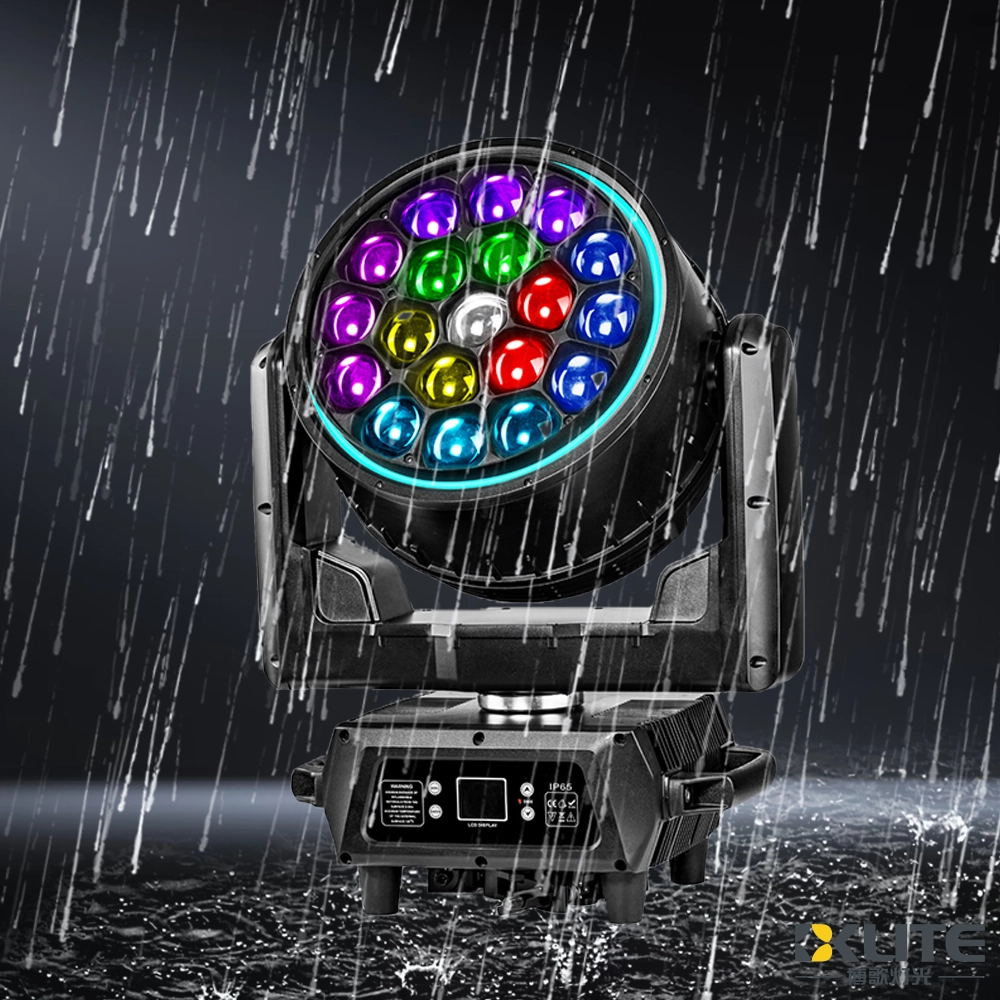
IP65 Waterproof Bee Eye Zoom 19x40W RGBW 4IN1 LED Beam Wash Moving Head Light with LED Ring
BKlite waterproof bee eye moving head light—your reliable choice from top waterproof moving head light manufacturers and suppliers. Ideal for outdoor stage, live event, music festival, this energy-saving fixture ensures powerful, precise illumination for any venue. It delivers powerful, reliable lighting performance in any weather.
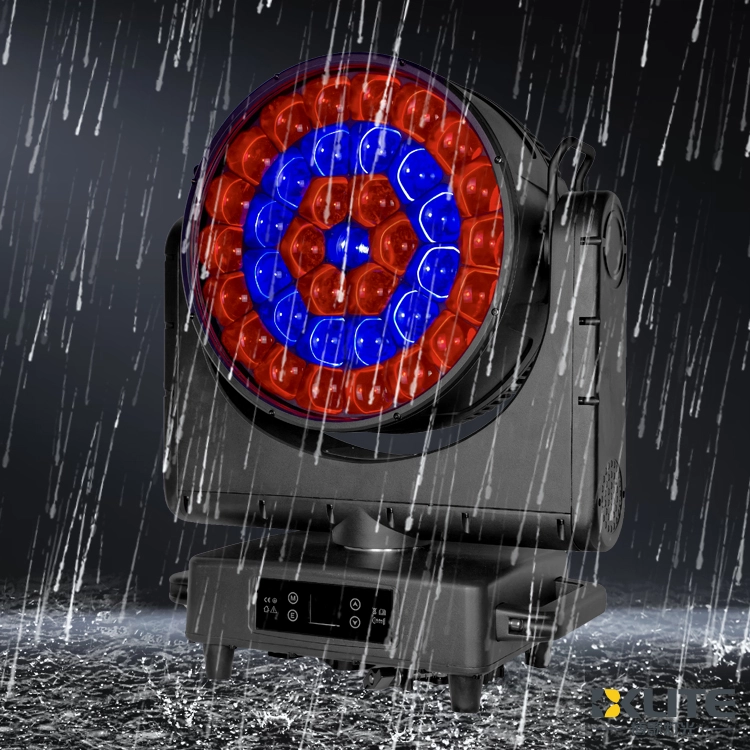
IP65 Waterproof ZOOM Bee Eye 37x40W RGBW 4in1 LED Moving Head Light
As a leading stage lighting equipment supplier with more than 15 years of industry know-how, BKlite brings you the IP65 ZOOM Bee Eye 37*40W RGBW 4in1 LED Moving Head Light (K25 Bee Eye) delivers vibrant, weatherproof lighting with powerful zoom and smooth movement. Ideal for dynamic stage effects, the K25 moving head light ensures stunning RGBW color mixing and reliable outdoor performance.
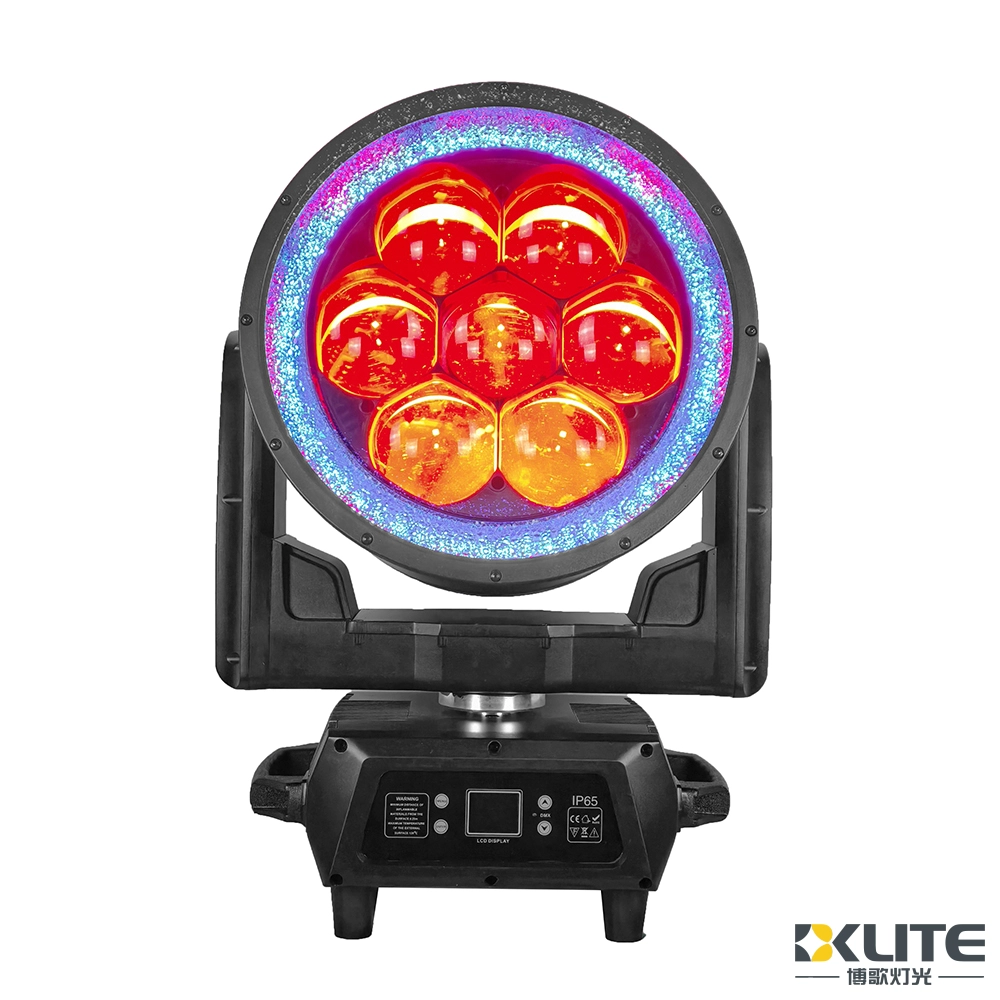
IP65 Waterproof Bee Eye 7x180W RGBL 4IN1 LED Moving Head Light With LED Ring
BKlite high power 7x180W waterproof bee eye moving head light—your reliable choice from top waterproof moving head light manufacturers and suppliers. Ideal for outdoor stage, live event, music festival, this energy-saving fixture ensures powerful, precise illumination for any venue. It delivers powerful, reliable lighting performance in any weather.
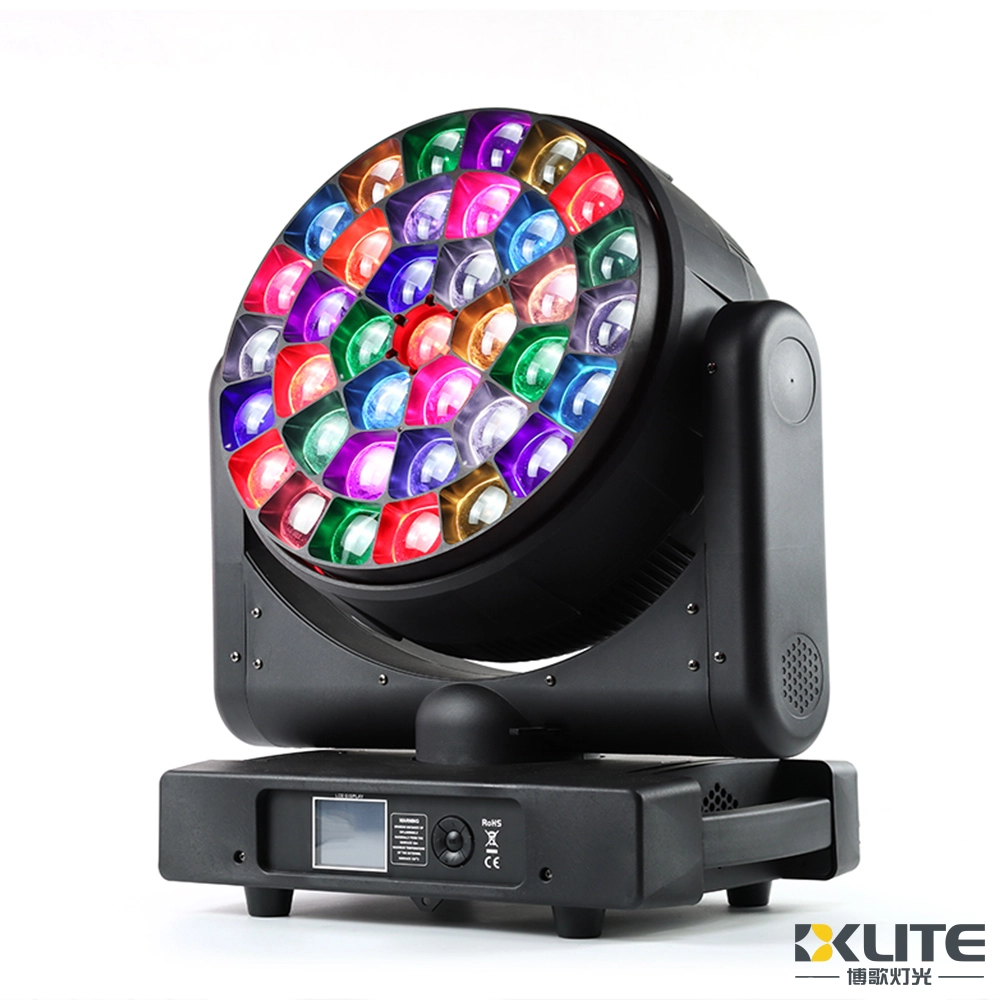
Bee Eye Zoom 37x40W RGBW 4in1 LED Beam Wash Moving Head Light


Copyright © 2025 BKLITE All Rights Reserved.