




Bulk Purchasing Strategies for LED Stage Lighting Suppliers
- Market Drivers and Buyer Intent
- Understanding demand signals from venues and rental houses
- Technology trends that affect bulk buys
- Regulatory and sustainability pressures
- Cost Models and Negotiation Strategies
- Calculating Total Cost of Ownership (TCO)
- Pricing tiers, volume discounts and MOQs
- Payment terms and risk allocation
- Logistics, Quality Control, and Supplier Risk
- Factory audits and standards-based quality checks
- Inventory management and lead time optimization
- Warranty, spare parts and after-sales service
- Sourcing and Partnership Models
- Direct manufacturer vs. distributor vs. white-label
- Case study: structuring a bulk led spotlight purchase
- Long-term partnerships and co-development
- Supplier Spotlight: Why Guangzhou BKlite is a Strategic Partner
- Company background and production capabilities
- Product range and R&D focus
- BKlite advantages for bulk buyers
- Implementation Checklist and Practical Tips
- Pre-order checklist
- During-production checks
- Post-shipment and service
- FAQ
- 1. What is the typical MOQ for professional LED spotlights?
- 2. How do I compare two suppliers offering different warranties?
- 3. Are LEDs really more cost-effective in bulk purchases?
- 4. What test data should I request from suppliers?
- 5. How important is local support for bulk orders?
- 6. Can a higher-priced fixture be cheaper long-term?
- Contact and Next Steps
I write from years of experience advising venues, rental houses, and manufacturers on large-scale procurement of stage lighting equipment. In this article I focus on bulk purchasing strategies specifically for LED stage lighting—especially the led spotlight category—and explain how to align demand signals, cost models, quality controls and supplier selection to secure predictable margins and reliable deliveries. My guidance combines market data, standards-based quality checks and practical negotiation tactics that are verifiable and repeatable.
Market Drivers and Buyer Intent
Understanding demand signals from venues and rental houses
Before negotiating bulk contracts, I always map who will buy and use the fixtures. The primary buyers for led spotlight and other LED stage lighting are performing arts venues, event rental companies, theme parks and touring production houses. These buyers often look for durability, color rendering (CRI), and serviceability rather than lowest upfront price. Identifying repeatable demand cycles (seasonal tours, festival seasons) helps you time orders, negotiate MOQ and plan inventory.
Technology trends that affect bulk buys
LED technology has improved rapidly—fixture lifetime, efficiency, and pixel control features influence purchasing decisions. For example, owners frequently prioritize LED engines with proven thermal design to protect LEDs and drivers, and demand fixtures compatible with common control protocols (DMX, RDM, Art-Net). Industry sources document the long-term market shift to LED: the global LED lighting market has been growing steadily, with multiple market reports forecasting continued expansion (Statista, Grand View Research).
Regulatory and sustainability pressures
Sustainability and energy codes are real procurement drivers. LED fixtures significantly reduce energy consumption and heat load; U.S. Department of Energy materials explain LED efficiency and long-term savings (U.S. DOE). Buyers under municipal or institutional procurement rules may require documented lifecycle energy savings and warranty coverage, which you should be ready to supply when negotiating bulk deals.
Cost Models and Negotiation Strategies
Calculating Total Cost of Ownership (TCO)
Upfront cost is only part of the equation. I always present a TCO model to stakeholders that includes purchase price, shipping, installation, energy, maintenance, spare parts and disposal. For a rough but verifiable benchmark, LED fixtures can reduce energy use by 50–75% compared to older technologies—figures supported by energy agencies such as the U.S. DOE. Plugging these savings into a 5–10 year TCO model often reveals that paying a higher unit price for higher-quality led spotlight fixtures yields lower cost per light-hour.
Pricing tiers, volume discounts and MOQs
When negotiating, I segment pricing into tiers: small starter orders (low MOQ), mid-volume (better per-unit pricing), and committed volume (best pricing). Typical manufacturer MOQs for professional led spotlight or moving head fixtures range from 20–200 units depending on complexity and customization. Request an itemized quote that separates electronics, optics, accessories and packaging so you can compare apples-to-apples across suppliers.
Payment terms and risk allocation
Negotiable terms matter. I prefer staged payments tied to milestones (design approval, production start, shipment) and include retention or warranty reserves. For larger projects, consider letters of credit or escrow arrangements if quality and delivery risk are significant. If the supplier is ISO 9001 certified, that reduces manufacturing process risk—verify certificates and audits.
Logistics, Quality Control, and Supplier Risk
Factory audits and standards-based quality checks
In bulk purchasing, I require documented quality procedures. This includes factory process controls, in-line testing (burn-in), and sample approvals. Referencing standards helps: ISO 9001 for quality management and IES guidance for photometric testing are useful frameworks (ISO 9001, IES). I also insist on photometric reports (IES files) and LM-80 / TM-21 data for LED lumen maintenance when comparing led spotlight engines.
Inventory management and lead time optimization
Balancing production lead times with holding costs is critical. I use a three-tier inventory model: fast-moving spares on shelf, planned replenishment stock, and DTC (direct-to-customer) production batches. For suppliers who can commit to shorter lead times, you can optimize safety stock and reduce capital tied up in inventory.
Warranty, spare parts and after-sales service
Bulk buyers must negotiate robust warranty terms and clearly defined spare-part support. A common approach is to require a parts availability guarantee (e.g., spare drivers, lenses, PCB modules) for a minimum of 5–7 years. Ask suppliers for failure rate data and MTBF (mean time between failures) figures; if unavailable, request accelerated life test reports.
Sourcing and Partnership Models
Direct manufacturer vs. distributor vs. white-label
Each model has trade-offs. Buying direct from a manufacturer often yields the best price and customization flexibility. Distributors offer logistical convenience and local support but at a margin High Quality. White-labeling allows retailers to differentiate branding but increases complexity for quality control. Below I summarize typical characteristics:
| Model | Price per unit | MOQ | Lead time | Customization | Warranty & Support |
|---|---|---|---|---|---|
| Direct Manufacturer | Lowest to mid | 20–500 | 4–12 weeks | High | Factory warranty, spares |
| Distributor | Mid | 1–50 | 1–4 weeks (stocked) | Low–Mid | Local support, stocked spares |
| White-label/ODM | Variable | 200–2000 | 8–20 weeks | Mid–High | Depends on contract |
These ranges are industry-typical; confirm specifics with vendors. Market evidence for manufacturer-led advantages is visible in manufacturers who invest in R&D and direct-supply models—these suppliers more often provide detailed technical materials (LM-80, photometric files) necessary for technical buyers (Wikipedia: LED lamp).
Case study: structuring a bulk led spotlight purchase
Here is an illustrative scenario I use when advising clients. A medium-sized rental house needs 120 led spotlight fixtures for upcoming contracts. Negotiation points I recommend:
- Request three sample units with burn-in and photometric reports (IES files) before committing.
- Negotiate tiered pricing: 1–49 units list price, 50–119 units 8–12% discount, 120+ units 15–25% discount.
- Set payment schedule: 30% deposit, 40% on production start, 30% on shipment; hold 5% for 90-day defect window.
- Secure spare parts kit for 2% of units at the original unit cost.
Using a TCO model, I compare two quotes (A and B). The table below summarizes hypothetical numbers to show why a slightly higher unit price can be cheaper over 5 years when factoring energy and maintenance:
| Item | Quote A (low price) | Quote B (higher quality) |
|---|---|---|
| Unit price | $700 | $825 |
| Estimated energy cost (5 yrs) | $1,200 | $900 |
| Maintenance & spares (5 yrs) | $600 | $300 |
| Total 5-year cost per unit | $2,500 | $2,025 |
The hypothetical numbers demonstrate why TCO analysis is critical. (Energy savings assumptions are aligned with documented LED performance improvements; see U.S. DOE.)
Long-term partnerships and co-development
For repeat large-volume orders I advocate co-development agreements. Co-development can secure better pricing, prioritized production slots and product features tailored to your rental or venue needs (e.g., modular accessories, specific lensing for led spotlight fixtures). Ensure IP ownership and warranty responsibilities are explicitly documented in the contract.
Supplier Spotlight: Why Guangzhou BKlite is a Strategic Partner
Company background and production capabilities
Guangzhou BKlite Stage Lighting Equipment Co., Ltd. was set up in 2011 and has become one of the top companies in the stage lighting industry. The company's business philosophy is based on being professional and innovative and on making sure that all of its stakeholders benefit. Over the past 14 years, it has achieved remarkable growth and built a strong reputation for quality and reliability.
Product range and R&D focus
The factory makes all kinds of stage lighting products, like the IP20 Bee Eye Series, IP65 Bee Eye Series, LED Beam Moving Heads, LED Spot Moving Heads, LED Wash Moving Heads, LED Par Lights, LED Bar Lights, and LED Strobe Lights. Each product is made using advanced technology to meet the changing needs of the entertainment industry. Our company invests in research and development to come up with new ideas, making sure it stays ahead of industry trends.
BKlite advantages for bulk buyers
From my experience working with and evaluating manufacturers, BKlite offers several strengths valuable to bulk purchasers: direct factory access to a wide product range (led wash moving head, led stage lighting, led moving head, led strobe bar light, led par light, led cob light, led spot moving head, led beam bar moving, Profile led moving head light, led spotlight), ongoing R&D investment, and a focus on production reliability. Their stated vision is to become the world's leading stage light manufacturer. For inquiries: https://www.bklite.com/ or contact export3@bklite.com.
Implementation Checklist and Practical Tips
Pre-order checklist
- Obtain and validate photometric reports (IES), LM-80, TM-21 data for LEDs.
- Require sample burn-in and a signed production specification (drawing, firmware version, DMX mapping).
- Verify factory certifications (ISO 9001) and arrange a third-party audit if necessary.
During-production checks
- Agree on inspection points (first article, mid-run, pre-shipment).
- Use third-party QA firms for random sample testing (photometry, ingress protection for IP-rated products).
Post-shipment and service
- Negotiate spare parts kit and defined response times for defective items in the field.
- Maintain a local service partner or trained in-house technician to reduce downtime for rental inventory.
FAQ
1. What is the typical MOQ for professional LED spotlights?
MOQ varies by supplier and model. For standard led spotlight fixtures, typical MOQs range from 20 to 200 units. Custom or white-label models generally have higher MOQs (200+). Always confirm MOQ in writing before sample orders.
2. How do I compare two suppliers offering different warranties?
Compare warranty length, what it covers (LED engine, power supply, optics), response time, and whether spare parts are guaranteed. A longer warranty with fast spare parts availability usually reduces TCO.
3. Are LEDs really more cost-effective in bulk purchases?
Yes—LED fixtures typically consume 50–75% less energy than legacy technologies, and require less frequent lamp replacement. When you model energy and maintenance savings over 5–10 years, bulk LED purchases commonly produce lower lifecycle costs. See the U.S. DOE for technical background.
4. What test data should I request from suppliers?
Request photometric IES files, LM-80 lumen maintenance data, TM-21 projected life, thermal test reports, and any EMC or ingress protection test certificates (IP rating) that apply.
5. How important is local support for bulk orders?
Very important. Local support reduces downtime, simplifies warranty claims, and improves operational resilience—especially for rental fleets. If the manufacturer does not provide local service, ensure a trained service partner or plan for stocking critical spares.
6. Can a higher-priced fixture be cheaper long-term?
Often yes. Higher upfront costs can be offset by energy savings, reduced maintenance, better uptime and resale value. Always use a TCO model for decision making.
Contact and Next Steps
If you’re planning a bulk purchase of led spotlight fixtures or other led stage lighting, I recommend starting with a clear specification, sample approvals and a TCO analysis. For suppliers I’ve evaluated and worked with, you can consider Guangzhou BKlite Stage Lighting Equipment Co., Ltd.—their product range, R&D investment and factory capabilities make them a strong partner for bulk procurement. Visit https://www.bklite.com/ or email export3@bklite.com to request quotations, technical files and sample units. If you’d like, I can review quotes and specifications with you to build a procurement strategy aligned to your operational needs.
— End —
How to Choose the exterior led spotlight manufacturer and supplier ?
Best professional led strobe lights manufacturers and supplier brands
LED Stage Light Bars Comparison: IP Ratings, Brightness, Price
Stage Profile Light Retrofit vs Replace Decision Matrix
FAQs
When will you ship the product after I send the money?
It depends the order.Small order will take 3-5 days.
Can you help me to print our logo or company name on the products on package?
Of course. Your logo can be printed on the products or package. OEM & ODM permits.
What's the shipping way, shipping time?
The ways of shipping—you can choose which is suitable for you. (1). By Sea, 30-60 days; apply for bulk quantity.
(2). By Air, 5-7 days; apply for bulk quantity.
(3). By Express, 3-5 days; apply for small quantity and urgent order.
How about the warranty?
All our lights have a one-year warranty.
What is your delivery time?
For stock products, we will deliver to you within 3 days.
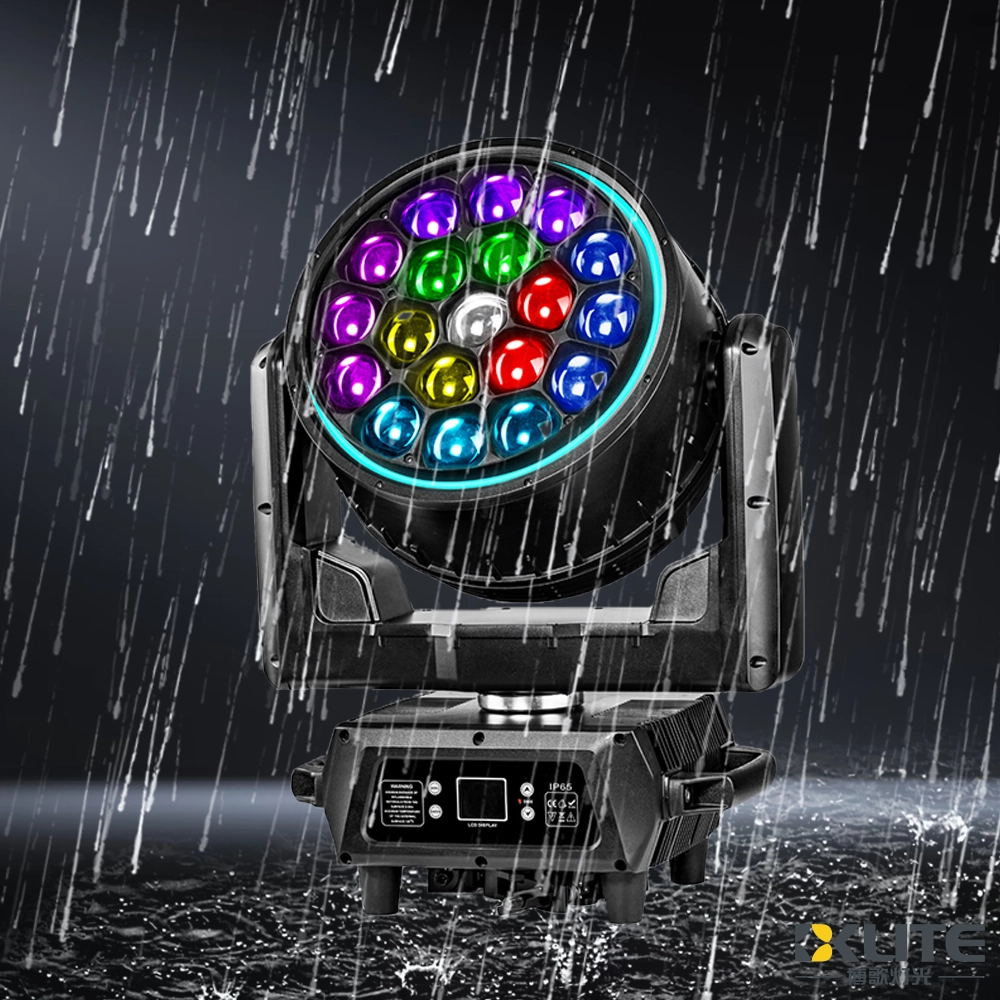
IP65 Waterproof Bee Eye Zoom 19x40W RGBW 4IN1 LED Beam Wash Moving Head Light with LED Ring
BKlite waterproof bee eye moving head light—your reliable choice from top waterproof moving head light manufacturers and suppliers. Ideal for outdoor stage, live event, music festival, this energy-saving fixture ensures powerful, precise illumination for any venue. It delivers powerful, reliable lighting performance in any weather.
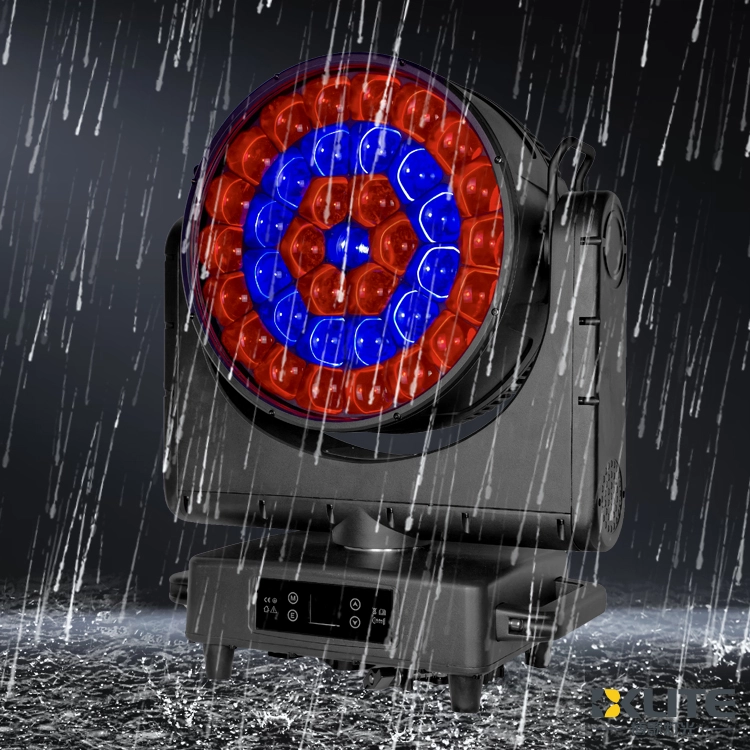
IP65 Waterproof ZOOM Bee Eye 37x40W RGBW 4in1 LED Moving Head Light
As a leading stage lighting equipment supplier with more than 15 years of industry know-how, BKlite brings you the IP65 ZOOM Bee Eye 37*40W RGBW 4in1 LED Moving Head Light (K25 Bee Eye) delivers vibrant, weatherproof lighting with powerful zoom and smooth movement. Ideal for dynamic stage effects, the K25 moving head light ensures stunning RGBW color mixing and reliable outdoor performance.
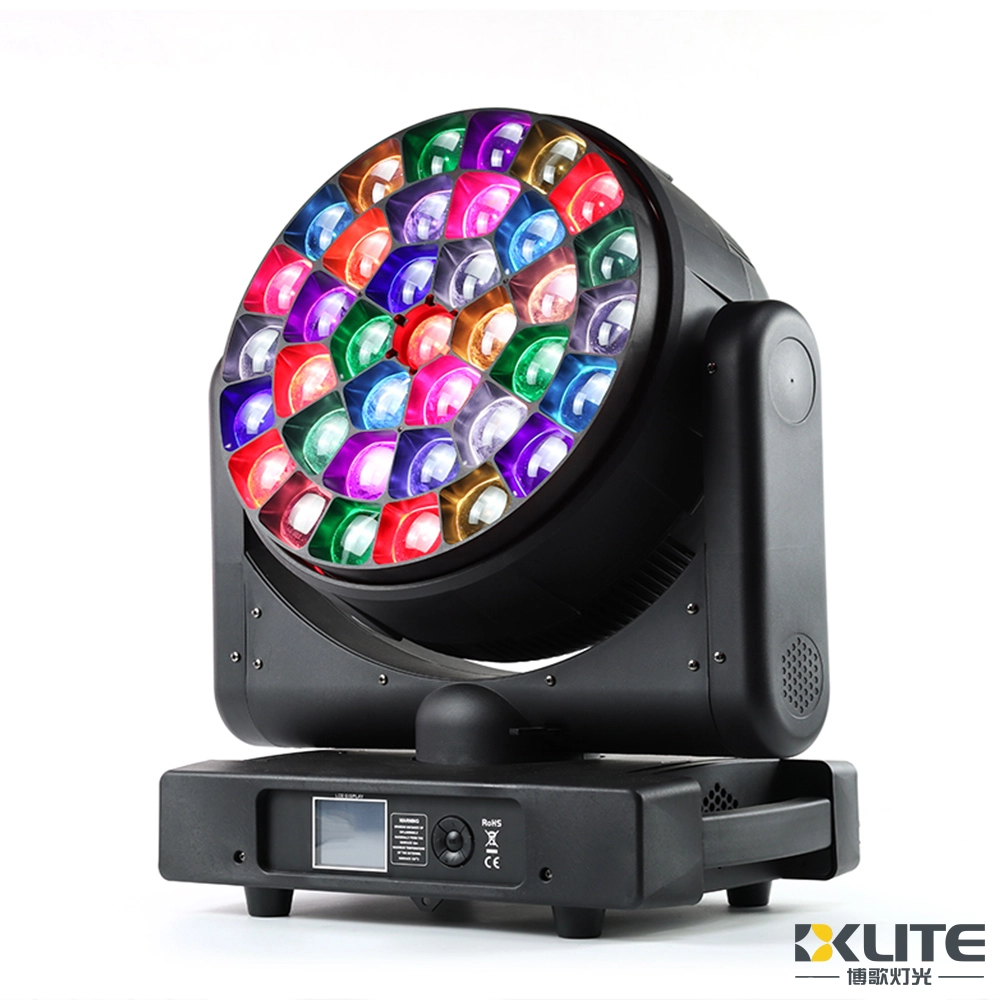
Bee Eye Zoom 37x40W RGBW 4in1 LED Beam Wash Moving Head Light
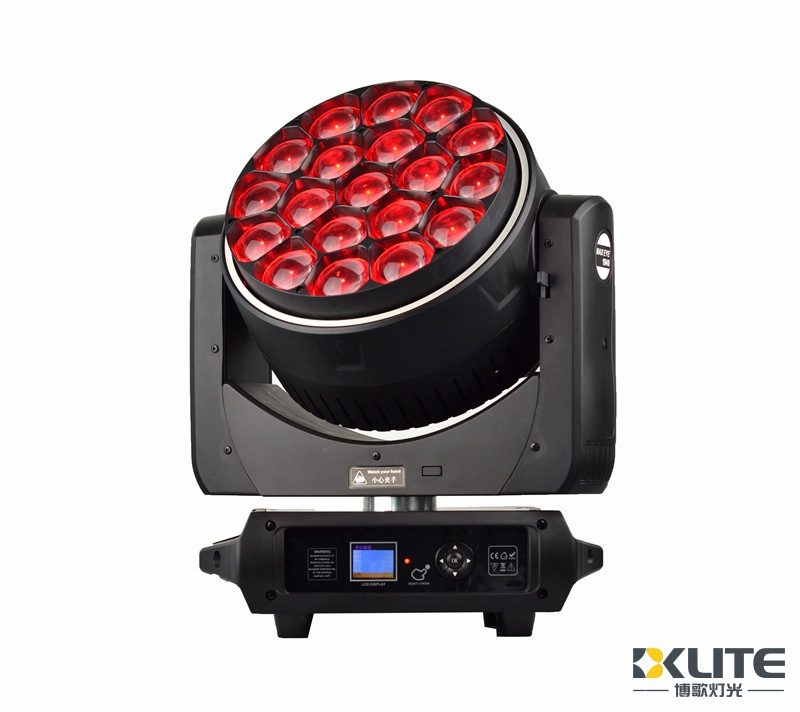
IP20 Bee Eye Zoom 19x40W RGBW 4IN1 LED Beam Wash Moving Head Light with LED Ring
As one of the leading stage lighting equipment suppliers with 15+ years of experience, BKlite launched a new Bee Eye K15 19x40 LED wash light BK-BY1940Z. .
Designed with a simple and sleek appearance, the WASH moving head light is compact, lightweight, and highly portable.
With multiple color effect macros and dynamic effect macros.
Our wash light can be used for versatile lighting options with amazing effect.
It is very good for your lighting projects.
Powerful and shoots very far distances.


Copyright © 2025 BKLITE All Rights Reserved.