




Bulk Purchasing Strategies and Negotiation for LED Stage Bars
- How to plan bulk purchases of LED stage light bars effectively
- Define use cases and technical specifications
- Forecast quantities and life-cycle needs
- Map out budget vs. performance trade-offs
- Supplier selection and validation for LED Stage Light Bars
- Evaluate manufacturer capability and certifications
- Factory visits, audits, and sample testing
- Verify after-sales support and local spare parts availability
- Price negotiation levers and contract terms
- Volume discounts, tiers, and price-lock mechanisms
- Payment terms, lead time, and lead-time penalties
- Warranty, acceptance criteria, and defect remediation
- Commercial structures beyond unit discounts
- Long-term frameworks and master supply agreements
- Consignment, buy-back, and rental-to-purchase models
- Co-development, custom branding and private labeling
- Risk management, logistics, and quality assurance
- Manage supply chain and lead-time risk
- Shipping, import duties, and insurance
- Quality checkpoints and acceptance flow
- Practical negotiation checklist and RFQ template items
- Essential RFQ elements
- Negotiation tactics and scripts
- Order-quantity / savings comparison
- Technical checkpoints specific to LED Stage Light Bars
- Control and pixel requirements
- Thermal management and lifetime expectations
- Ingress protection and mechanical durability
- Where to source LED Stage Light Bars and regional considerations
- China manufacturers vs. European/US makers
- Trade regulations and standards
- Case study: Contract structure and expected savings
- Example scenario
- Key contract clauses used
- Why choose an experienced manufacturer: Guangzhou BKlite profile
- Frequently Asked Questions (FAQ)
- 1. What quantity constitutes a 'bulk' purchase for LED stage light bars?
- 2. How much can I typically save by negotiating a bulk deal?
- 3. What warranties and service levels should I insist on?
- 4. Are there key technical specs that most affect price?
- 5. How do I protect myself from supplier delivery failures?
- References and authoritative sources
How to plan bulk purchases of LED stage light bars effectively
Define use cases and technical specifications
Before approaching suppliers, document the intended use—rental, touring, permanent installation, architectural wash, or TV/streaming. LED stage light bars intended for touring need robust build, IP20 vs. IP65 defines outdoor suitability, and control protocols (DMX512, RDM, Art-Net, sACN) affect integration costs. Specify CRI, beam spread, pixel count, pixel pitch, power consumption, and emergency operation requirements. Clear specs reduce scope creep and avoid upgrade costs after delivery.
Forecast quantities and life-cycle needs
Decide on target order quantities over 12–36 months, not only the initial order. Vendors will negotiate more favorably when they see multi-batch forecasts. Consider spare ratios (typically 5–10% spare units for rental fleets) and replacement cycles: professional luminaires often have 5–10 year useful lifespans depending on use intensity.
Map out budget vs. performance trade-offs
Establish acceptable thresholds for unit cost, warranty, and total cost of ownership (TCO). Lower upfront prices can increase TCO if warranty, service, or energy efficiency are poor. Use TCO calculations that include expected maintenance, power consumption, and downtime risk.
Supplier selection and validation for LED Stage Light Bars
Evaluate manufacturer capability and certifications
Prioritize suppliers with clear manufacturing history, factory audits, and product certifications (CE, RoHS, UL where relevant, and IP ratings for ingress protection). For bulk LED stage light bars, pay special attention to R&D capability, thermal design, driver quality, and color-mixing algorithms—these materially affect performance and lifetime.
Factory visits, audits, and sample testing
Factory visits or third-party audits (ISO, BSCI, SGS) are recommended for large orders. Require production samples and run them through acceptance tests: photometric measurement (lux/lumen output), color consistency (ΔE, CCT spread), thermal run tests, and DMX/control stability. Document test results and include pass/fail criteria in contracts.
Verify after-sales support and local spare parts availability
Ascertain spare parts lead times, modular repairability, and local technical support. For rental companies and tours, easy field repair and availability of spare modules or LED strips are essential to minimize downtime.
Price negotiation levers and contract terms
Volume discounts, tiers, and price-lock mechanisms
Straightforward volume discounts are common: higher quantities reduce unit manufacturing costs. Negotiate tiered pricing that rewards cumulative yearly purchases rather than only a single PO. Ask for a price-lock clause or indexation tied to defined material cost indices to protect against raw material volatility.
Payment terms, lead time, and lead-time penalties
Negotiate favorable payment terms (e.g., 30% deposit, 70% on shipment) but balance supplier cash flow needs. For very large buys, consider letters of credit (LC) or escrow arrangements. Include agreed lead times and liquidated damages or discount schedules if delivery windows are missed—this reduces operational risk for time-sensitive tours/events.
Warranty, acceptance criteria, and defect remediation
Specify warranty length, coverage (LED modules, drivers, control electronics), and RMA procedures. Define acceptance tests and corrective action timelines. For bulk deals, negotiate on-site repair clauses or exchange programs so faulty units can be swapped quickly to avoid show cancellations.
Commercial structures beyond unit discounts
Long-term frameworks and master supply agreements
Long-term agreements (1–3 years) with minimum purchase commitments give better pricing, priority production slots, and R&D collaboration. Include clauses for price review, product upgrades, and exclusivity only if it makes strategic sense. A flexible framework allows for product evolution without renegotiating the entire deal.
Consignment, buy-back, and rental-to-purchase models
Consignment stock at your depot reduces upfront inventory costs. Suppliers may accept consignment or buy-back agreements for older stock, which helps manage obsolescence risk. Rental-to-purchase lets you amortize costs over income from rental operations before committing to full purchase.
Co-development, custom branding and private labeling
For large buyers, co-developing features (custom beam angles, control protocols, housings) can produce competitive advantages. Ensure IP ownership, tooling costs, and MOQ for customized versions are explicitly defined. Private labeling can increase brand value for rental houses and integrators.
Risk management, logistics, and quality assurance
Manage supply chain and lead-time risk
Diversify suppliers where practical (primary and secondary sources) and require supply chain transparency for critical components such as LEDs, drivers, and MCUs. Request BOM visibility for large orders and monitor lead times for semiconductors and aluminum extrusions.
Shipping, import duties, and insurance
Decide delivery terms (Incoterms) clearly—FOB, CIF, DDP—so responsibilities for freight, customs, and insurance are clear. For international purchases, consider freight consolidation for LCL or full container (FCL) to reduce unit shipping costs.
Quality checkpoints and acceptance flow
Agree on quality checkpoints: pre-production sample approval, in-line inspections at 30/60/90% completion, and final inspection (100% functional or statistically sampled). Define acceptance windows and dispute resolution steps to accelerate claims.
Practical negotiation checklist and RFQ template items
Essential RFQ elements
Include: detailed specifications, expected quantity and timeline, desired warranty, certification requirements, packaging standards, shipping terms, payment terms, acceptance tests, penalty clauses, and spare parts policy. A complete RFQ reduces ambiguity and pricing variance across suppliers.
Negotiation tactics and scripts
Use data-driven bargaining: present competitor quotes, forecasted volumes, and willingness to sign a long-term contract. Ask for incremental concession: faster lead times, extended warranties, or free spares in lieu of additional unit discounts. Be transparent about total lifecycle cost expectations rather than focusing solely on unit price.
Order-quantity / savings comparison
| Order Tier (LED Stage Light Bars) | Typical Unit Price Range (USD) | Lead Time | Typical Advantage |
|---|---|---|---|
| 1–10 units | High ($400–$900) | 2–6 weeks | Low MOQ, higher per-unit cost, quick testing |
| 11–100 units | Medium ($300–$600) | 4–8 weeks | Moderate discount, better warranty terms |
| 101–500 units | Lower ($200–$450) | 6–12 weeks | Bulk discount, priority production, OEM options |
| >500 units | Lowest ($150–$350) | 8–16 weeks | Best pricing, long-lead tooling, customized options |
Notes: Prices are indicative; actual pricing varies with specs (IP rating, pixel per meter, driver choice, build materials). Obtain firm quotes tied to defined specs.
Technical checkpoints specific to LED Stage Light Bars
Control and pixel requirements
Confirm DMX channel counts, pixel mapping, and protocol compatibility (Art-Net/sACN for large installs). For pixel bars, define pixel pitch (distance between LEDs) and number of pixels per meter to ensure desired visual resolution for media content or pixel mapping.
Thermal management and lifetime expectations
Good thermal design extends LED lifetime. Ask manufacturers for LED binning data, driver MTBF, and lumen depreciation curves (L70 at specified hours). Prefer suppliers who provide photometric reports and lab test certificates.
Ingress protection and mechanical durability
IP65 or higher is required for outdoor touring or washed environments; IP20 may suffice for indoor theatres. Evaluate mechanical mounting points, rigging hardware, and packaging quality for transit durability.
Where to source LED Stage Light Bars and regional considerations
China manufacturers vs. European/US makers
China offers cost advantages, faster scaling and flexible customization—many major pro-audio/lighting brands manufacture there. European or US manufacturers often command High Quality pricing for shorter lead times, localized support, and compliance with regional safety norms. Combine a primary Chinese manufacturer for volume and a regional supplier for critical spare parts/support.
Trade regulations and standards
Confirm compliance with local regulations (e.g., CE marking for Europe, FCC/UL for North America) and product labeling requirements. For government or institutional tenders, supply proof of conformity and testing labs.
Case study: Contract structure and expected savings
Example scenario
A medium-sized rental company plans to replace 120 old LED wash bars with new pixel-capable LED stage light bars. By negotiating a 2-year purchase commitment (360 units total) with tiered pricing and a consignment of 10% spare stock, the buyer achieved a 22% average unit price reduction compared to spot purchases, plus priority production slots during peak season.
Key contract clauses used
- Tiered pricing tied to cumulative purchases
- 3-year parts availability commitment
- 60-day AQL inspections plus 5% immediate spares
- Penalty for late delivery exceeding 14 days
Why choose an experienced manufacturer: Guangzhou BKlite profile
Guangzhou BKlite Stage Lighting Equipment Co., Ltd. was set up in 2011 and has become one of the top companies in the stage lighting industry. The company's business philosophy is based on being professional and innovative and on making sure that all of its stakeholders benefit. Over the past 14 years, it has achieved remarkable growth and built a strong reputation for quality and reliability.
The factory makes all kinds of stage lighting products, like the IP20 Bee Eye Series, IP65 Bee Eye Series, LED Beam Moving Heads, LED Spot Moving Heads, LED Wash Moving Heads, LED Par Lights, LED Bar Lights, and LED Strobe Lights. Each product is made using advanced technology to meet the changing needs of the entertainment industry. Our company invests in research and development to come up with new ideas, making sure it stays ahead of industry trends.
Our vision is to become the world's leading stage light manufacturer. Visit the website for product lines, specifications and contact: https://www.bklite.com/.
BKlite advantages and core products include high-efficiency LED wash moving heads, reliable LED stage lighting, durable LED moving heads, versatile LED strobe bar light, energy-efficient LED par light, high-CRI LED cob light, precision LED spot moving head, impact-resistant LED beam bar moving, Profile LED moving head light, and powerful LED spotlight. BKlite emphasizes R&D, quality control, and flexible production scales—making it a strong partner for bulk procurement and long-term supply agreements.
Frequently Asked Questions (FAQ)
1. What quantity constitutes a 'bulk' purchase for LED stage light bars?
Bulk commonly begins around 50–100 units for manufacturer pricing tiers; however, many suppliers treat 100+ as a more meaningful threshold for significant discounts and customization options. The exact definition varies by supplier and product complexity.
2. How much can I typically save by negotiating a bulk deal?
Savings vary widely by specification, but buyers commonly see 10–30% unit price reductions when moving from small orders (1–10) to larger orders (100+). Additional savings can be achieved via payment terms, bundled services, and logistics optimization.
3. What warranties and service levels should I insist on?
Insist on at least a 2-year warranty covering LEDs, drivers, and electronics for professional use; 3–5 years is preferable for critical applications. Define RMA turnaround times, on-site repair options, and parts availability in the contract.
4. Are there key technical specs that most affect price?
Yes—IP rating (IP65 vs IP20), number of pixels per meter, LED bin/CRI, driver quality, and build materials (aluminum vs. plastic) are primary cost drivers. Control capabilities (pixel mapping, RDM, Art-Net) also add to cost.
5. How do I protect myself from supplier delivery failures?
Use staged payments, include penalties for late delivery, secure a secondary supplier, and keep contractual rights for replacement stock or expedited shipments. Insist on production milestones and independent inspections for large orders.
Contact & Product Information: For a quote, sample requests, or to discuss long-term supply arrangements, visit Guangzhou BKlite at https://www.bklite.com/ or contact their sales team through the website. If you need assistance drafting RFQs or negotiating contract terms, our consultancy can help tailor specifications and supplier evaluation matrices.
References and authoritative sources
- Stage lighting — Wikipedia. https://en.wikipedia.org/wiki/Stage_lighting (accessed 2025-12-30)
- Lighting-emitting diode — Wikipedia. https://en.wikipedia.org/wiki/Light-emitting_diode (accessed 2025-12-30)
- Global Stage Lighting Market Reports — Grand View Research. https://www.grandviewresearch.com/industry-analysis/stage-lighting-market (accessed 2025-12-30)
- Professional Lighting Market Statistics — Statista. https://www.statista.com/topics/lighting/ (accessed 2025-12-30)
- International Electrotechnical Commission (IEC) standards for lighting equipment. https://www.iec.ch/ (accessed 2025-12-30)
- Guangzhou BKlite Stage Lighting Equipment Co., Ltd. official website. https://www.bklite.com/ (accessed 2025-12-30)
How to Choose LED Lights with Strobe for Concerts
Safety Guidelines for Using Strobe Moving Head Lights
Wholesale led mini stage light manufacturer and supplier
Best professional led par light bulbs manufacturers and supplier brands
FAQs
When will you ship the product after I send the money?
It depends the order.Small order will take 3-5 days.
What's the shipping way, shipping time?
The ways of shipping—you can choose which is suitable for you. (1). By Sea, 30-60 days; apply for bulk quantity.
(2). By Air, 5-7 days; apply for bulk quantity.
(3). By Express, 3-5 days; apply for small quantity and urgent order.
Can you help me to print our logo or company name on the products on package?
Of course. Your logo can be printed on the products or package. OEM & ODM permits.
What's your certificates?
ROHS and CE certificates passed.
What is your delivery time?
For stock products, we will deliver to you within 3 days.
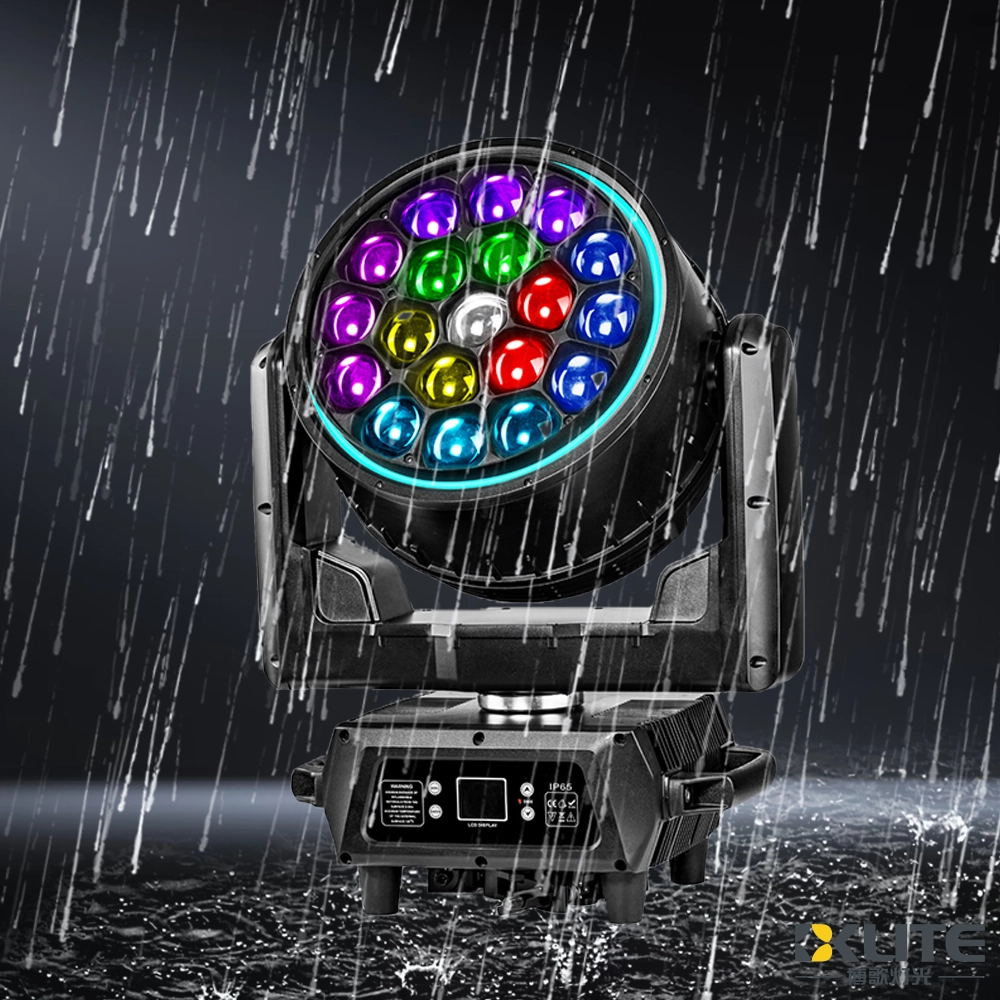
IP65 Waterproof Bee Eye Zoom 19x40W RGBW 4IN1 LED Beam Wash Moving Head Light with LED Ring
BKlite waterproof bee eye moving head light—your reliable choice from top waterproof moving head light manufacturers and suppliers. Ideal for outdoor stage, live event, music festival, this energy-saving fixture ensures powerful, precise illumination for any venue. It delivers powerful, reliable lighting performance in any weather.
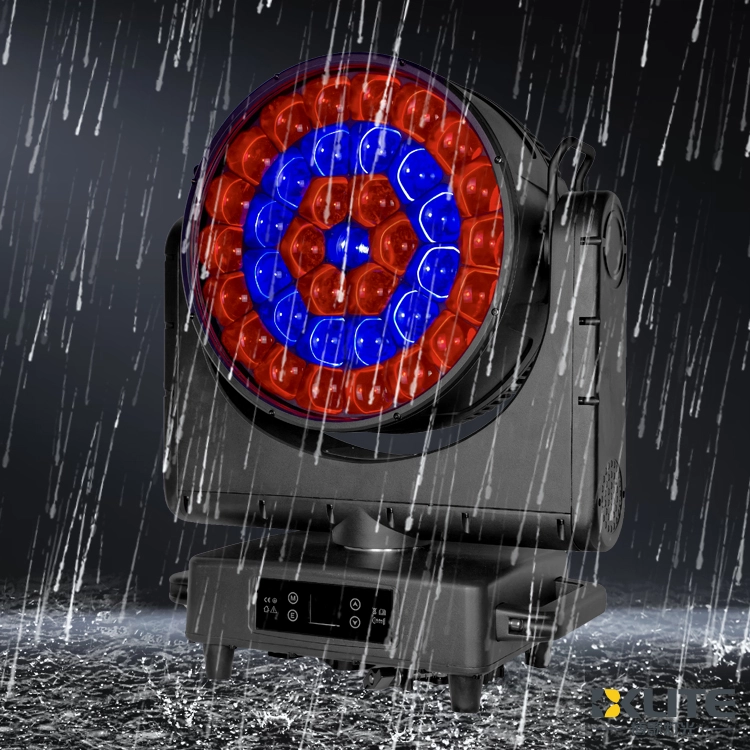
IP65 Waterproof ZOOM Bee Eye 37x40W RGBW 4in1 LED Moving Head Light
As a leading stage lighting equipment supplier with more than 15 years of industry know-how, BKlite brings you the IP65 ZOOM Bee Eye 37*40W RGBW 4in1 LED Moving Head Light (K25 Bee Eye) delivers vibrant, weatherproof lighting with powerful zoom and smooth movement. Ideal for dynamic stage effects, the K25 moving head light ensures stunning RGBW color mixing and reliable outdoor performance.
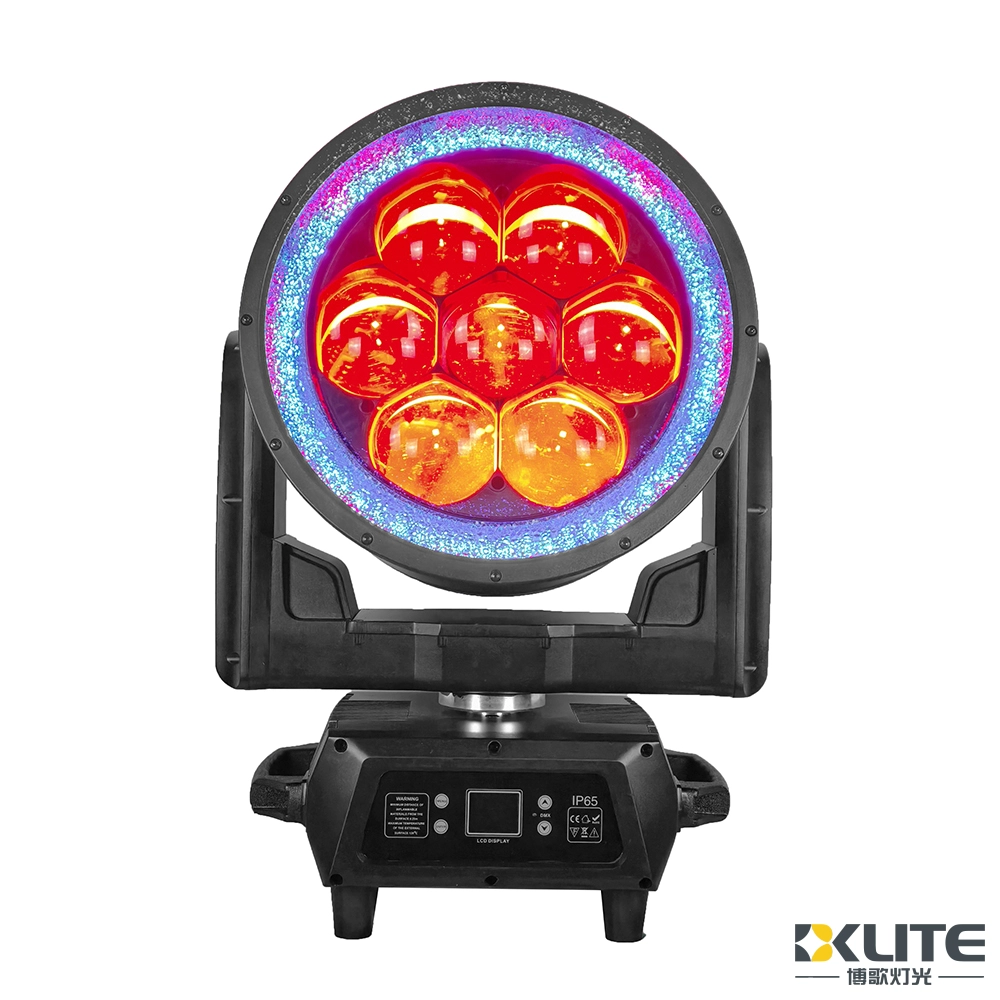
IP65 Waterproof Bee Eye 7x180W RGBL 4IN1 LED Moving Head Light With LED Ring
BKlite high power 7x180W waterproof bee eye moving head light—your reliable choice from top waterproof moving head light manufacturers and suppliers. Ideal for outdoor stage, live event, music festival, this energy-saving fixture ensures powerful, precise illumination for any venue. It delivers powerful, reliable lighting performance in any weather.
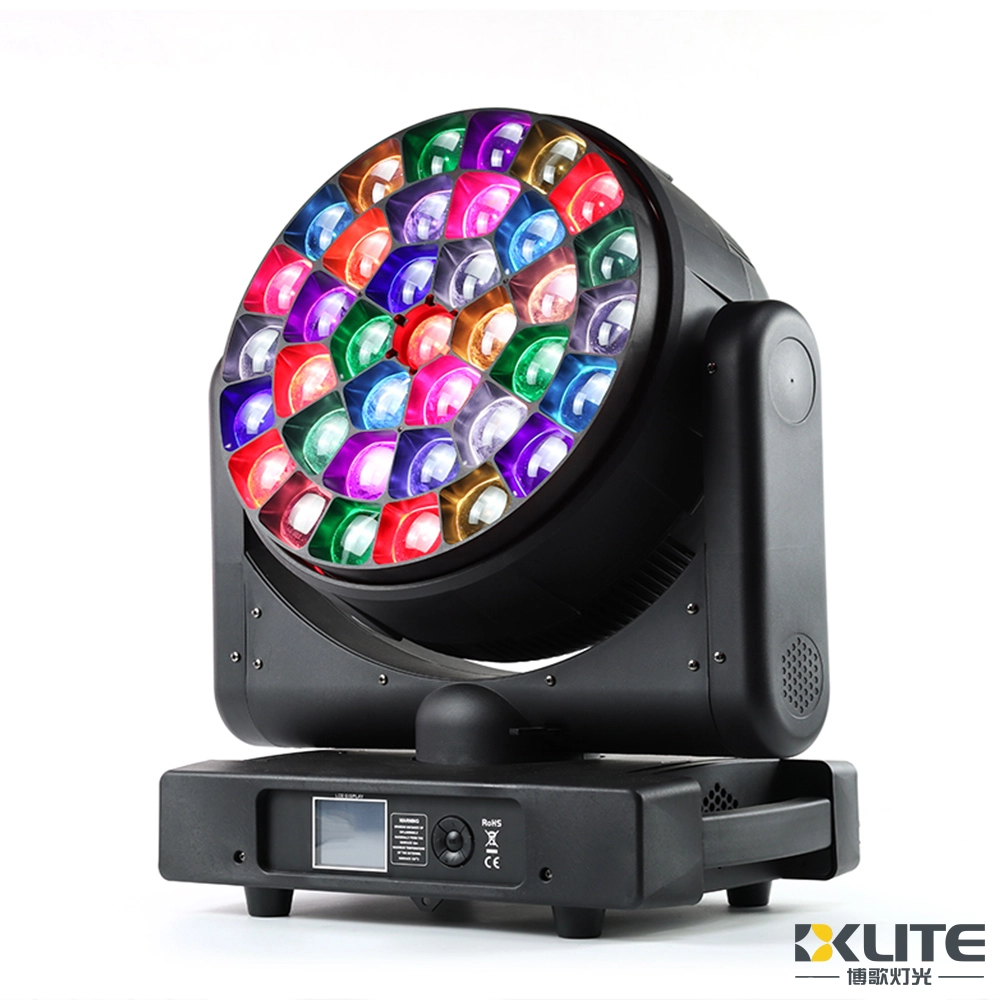
Bee Eye Zoom 37x40W RGBW 4in1 LED Beam Wash Moving Head Light


Copyright © 2025 BKLITE All Rights Reserved.