




Calibrating Color Temperature on LED Wash Fixtures
- Why Accurate Color Temperature Matters in Live Production
- Fundamentals: What CCT Means for LED Wash Light Fixtures
- Key metrics lighting pros track with LED wash lights
- Common Calibration Challenges with LED Wash Fixtures
- Tools and Instrumentation: Choosing Between Colorimeters and Spectroradiometers for LED Wash Light Calibration
- Step-by-step Calibration Workflow for LED Wash Light Fixtures
- Example target tolerances for common show types
- Practical Tips: In-situ Calibration for Tours and Fixed Installs Using LED Wash Lights
- Verification: Measuring Success and Documenting Profiles for LED Wash Light Fleets
- Maintenance Intervals and Expected CCT Drift for LED Wash Fixtures
- Integrating Calibration into Lighting Design and Control Systems
- Guangzhou BKlite: Product Capabilities and How They Support Precise CCT for LED Wash Uses
- Where BKlite fits in your calibration workflow
- FAQ — Common Questions on Calibrating LED Wash Lights
- 1. How precise does CCT need to be for a typical corporate event using led wash light?
- 2. Can I calibrate LED wash fixtures with only the lighting console and no measurement tools?
- 3. How often should I recheck calibration on my led wash light fleet?
- 4. Why do two fixtures with the same CCT still look different on stage?
- 5. What's the quickest way to get acceptable color matching when time is limited?
- 6. Do firmware updates affect color calibration of led wash light fixtures?
- Contact & Product Consultation
- References
Why Accurate Color Temperature Matters in Live Production
Color consistency is more than aesthetics—it's a functional requirement in live events, theatre, television, and corporate staging. When you're using led wash light fixtures to illuminate performers, set pieces, or architectural features, inconsistent color temperature across fixtures can cause visible banding, skin-tone shifts, and mismatches with video cameras. Calibrating the color temperature of LED wash fixtures reduces on-site troubleshooting time, improves director and designer confidence, and ensures reproducible results across venues and tours.
Fundamentals: What CCT Means for LED Wash Light Fixtures
Correlated Color Temperature (CCT) describes the perceived ‘‘warmth’’ or ‘‘coolness’’ of white light and is measured in Kelvin (K). For stage applications, common set points are 2700K (warm), 3200K (tungsten), 4000K (neutral), 5600K (daylight) and bespoke designer presets. An led wash light producing 3200K on one fixture and 3600K on another will appear noticeably different on stage. Understanding CCT as a perceptual metric—distinct from spectral power distribution (SPD)—is essential: two lights can have the same CCT but different spectra, affecting color rendering (CRI/TLCI/TM-30) and camera response.
Key metrics lighting pros track with LED wash lights
When calibrating an led wash light, don't only look at CCT. Track CRI (Ra), TM-30 (fidelity & gamut), and TLCI for broadcast. SPD traces from a spectroradiometer reveal phosphor or multi-emitter mixes that cause metamerism. Document these metrics for each fixture type to anticipate how colors will render under mix-and-match scenarios.
Common Calibration Challenges with LED Wash Fixtures
LED technology brings benefits—efficiency, controllability and long lifetimes—but also challenges when it comes to color stability. Typical issues include:
- Manufacturing variability: small binning differences in LEDs cause CCT spread across the same model.
- Thermal shifts: fixture temperature affects emitter spectral output and drives CCT drift during long shows.
- Aging and lumen depreciation: phosphor and LED degradation change SPD over time.
- Control system inconsistencies: different DMX/RDM implementations and firmware can introduce curve mismatches.
Addressing these requires measurement, software correction, and an understanding of expectation tolerances for your production.
Tools and Instrumentation: Choosing Between Colorimeters and Spectroradiometers for LED Wash Light Calibration
Selecting the right instrument is the first practical step when calibrating led wash light fixtures. Below is a comparison of common instruments used in the field.
| Instrument | Strengths | Limitations | Typical Field Tolerance |
|---|---|---|---|
| Spectroradiometer | Full SPD, accurate CCT/Tc/Tlci/TM-30, good for LED metamerism diagnosis | Higher cost, needs careful calibration and warm-up | ±20 K CCT, high spectral fidelity |
| Colorimeter | Portable, lower cost, quick CCT/xyz readings | Can be fooled by LED spectra; less accurate for phosphor/blue-pump LEDs | ±50–150 K CCT (depends on spectral mismatch) |
| Imaging Colorimeter / Camera | Spatial mapping across the beam, useful for uniformity checks | Requires calibration against a spectroradiometer for absolute accuracy | Variable |
For critical calibration of led wash light fixtures intended for broadcast or high-end theatre, a spectroradiometer is recommended. For routine on-tour checks, a calibrated colorimeter or imaging solution can be sufficient if properly referenced.
Step-by-step Calibration Workflow for LED Wash Light Fixtures
This workflow is practical for venue technicians and touring crews using led wash light fixtures. It assumes access to either a spectroradiometer or a calibrated colorimeter and a lighting console with fine control over white balance/CCT presets.
- Warm up and thermal stabilization: Run the fixtures at the operating intensity expected during the show for 20–30 minutes to reach thermal equilibrium. Thermal effects can shift CCT by tens of Kelvins.
- Set baseline firmware and control levels: Ensure all fixtures are on the same firmware and factory default DMX personality for consistency.
- Measure a representative sample: Choose 3–5 fixtures per batch—front-of-house, mid-stage, and back—especially when fixtures were purchased at different times or from different production batches.
- Record SPD and CCT: Use the spectroradiometer to capture SPD and compute CCT, CRI/TLCI and TM-30. Save these files with fixture IDs and serial numbers.
- Apply hardware/software corrections: Many led wash light fixtures provide color temperature menus, RGB/white mixing control, or calibration LUTs. Adjust the fixture’s white balance parameters (e.g., +/- green, +/- blue, white channel levels) to achieve the target CCT while monitoring CRI/TLCI. For fixtures supporting RDM or manufacturer software, push identical calibration settings to each unit.
- Cross-check visually and with camera: Verify appearance on-camera under expected camera white balance settings (e.g., 3200K or 5600K). Broadcast work requires TLCI>90 in most cases.
- Document and label: Save the final calibration profile, note the measurement date and fixture IDs. Apply a visible sticker or tag indicating the calibration date and target CCT.
- Lock profiles where possible: Use console presets or fixture locking to prevent accidental changes.
Example target tolerances for common show types
Set expectations depending on production: for film/TV, target CCT within ±50 K and TLCI > 90; for high-end theatre, CCT ±75 K and CRI > 90; for corporate/live events, ±100 K and CRI > 80 typically suffice.
Practical Tips: In-situ Calibration for Tours and Fixed Installs Using LED Wash Lights
On tour you don't always have time for full spectroradiometric calibration. Use these pragmatic approaches for led wash light rigs:
- Build vendor-specific presets: create per-model presets (2700K, 3200K, 4000K, 5600K) on the console and a short checklist for spot checks.
- Carry reference tiles: a white reference card and a calibrated LED source let you quickly verify CCT with a camera or colorimeter.
- Use RDM where available: Remote Device Management lets you read and write calibration values to many fixtures at once, saving time and ensuring consistency.
- Document venue-specific profiles: large venues benefit from stored LUTs per FOH position and stage mapping to speed recall.
Verification: Measuring Success and Documenting Profiles for LED Wash Light Fleets
Verification is both measurement and record-keeping. After calibration:
- Capture a final SPD and save it with the production file. SPD traces are the most diagnostic records if problems reappear later.
- Photograph fixtures with annotated console settings for quick troubleshooting on future calls.
- Schedule periodic rechecks: see the maintenance table below for recommended intervals.
Maintenance Intervals and Expected CCT Drift for LED Wash Fixtures
LEDs are stable relative to discharge lamps but still drift, especially with heavy use or high ambient temperatures. The table below gives practical guidance—actual performance depends on thermal management, driver design and usage.
| Fixture Type / Quality | Typical CCT Drift (first 2 years) | Recommended Recalibration Interval | Notes |
|---|---|---|---|
| High-end, well-cooled led wash light | ±20–60 K | Annually or 500–1000 operating hours | Good drivers and thermal design minimize drift |
| Mid-range LED wash fixtures | ±50–120 K | Every 6–12 months or 300–600 hours | Monitor for phosphor yellowing or firmware updates |
| Budget/entry-level models | ±100–250 K | Every 3–6 months or 200–400 hours | Higher bin variability; expect more frequent tuning |
Source note: these are conservative field guidelines derived from industry whitepapers and laboratory studies on LED aging and color stability (see references).
Integrating Calibration into Lighting Design and Control Systems
Calibrated led wash light fixtures work best when the control chain supports consistent color workflows. Recommendations:
- Use console color temperature presets (e.g., 2700–6500 K) and store fixture-specific offsets within show files.
- When using pixel-mapped or imaging wash fixtures, verify spatial uniformity with an imaging colorimeter and create per-fixture LUTs if supported.
- Leverage RDM and network control (sACN, Art-Net) to push calibration profiles and firmware updates en masse.
- Coordinate with video teams: agree on camera white balance settings and verify LED flicker/TLCI compatibility at the intended shutter speeds.
Guangzhou BKlite: Product Capabilities and How They Support Precise CCT for LED Wash Uses
Guangzhou BKlite Stage Lighting Equipment Co., Ltd., established in 2011, has grown into a reputed manufacturer in the stage lighting industry by focusing on professional manufacturing and innovation. The company produces a wide range of fixtures—including IP20 and IP65 Bee Eye Series, LED Beam Moving Heads, LED Spot Moving Heads, LED Wash Moving Heads, LED Par Lights, LED Bar Lights, and LED Strobe Lights—using advanced production technology and ongoing R&D.
BKlite's advantages for buyers looking to achieve consistent color temperature with led wash light fixtures include:
- Product breadth: offerings such as led wash moving head, led par light and led cob light let designers match source types across a rig.
- R&D investment: continuous development improves firmware, color-mixing algorithms and thermal management that directly reduce CCT drift.
- Quality and reliability: a decade-plus manufacturing experience with a reputation for robust stage products makes lifecycle support easier for tours and fixed installs.
- Control compatibility: modern BKlite fixtures generally support standard protocols (DMX/RDM) enabling mass configuration and deployment of calibration profiles.
Typical BKlite product strengths relevant to color calibration include consistent LED bin selection, configurable white channels, and software tools for batch parameter updates. Their product range (led wash moving head, led stage lighting, led moving head, led strobe bar light, led par light, led cob light, led spot moving head, led beam bar moving, Profile led moving head light, led spotlight) covers nearly all common stage uses, allowing the technical team to buy within a family for easier color matching and fewer surprises.
Where BKlite fits in your calibration workflow
If you’re standardizing a touring rig or a fixed venue, choosing a consistent family of led wash light fixtures and using a supplier like BKlite simplifies calibration: fewer SPDs to reconcile, consistent thermal behavior, and centralized technical support. For product details and support, visit https://www.bklite.com/.
FAQ — Common Questions on Calibrating LED Wash Lights
1. How precise does CCT need to be for a typical corporate event using led wash light?
For corporate events, visual uniformity matters but the tolerance can be relaxed: aim for ±75–100 K CCT and CRI > 80. If the event includes broadcast or close-up camera coverage, tighten targets to ±50 K and TLCI > 85.
2. Can I calibrate LED wash fixtures with only the lighting console and no measurement tools?
Not reliably. Consoles let you adjust white balance numerically, but without measurement instruments you can't verify true CCT or spectral differences. At minimum, use a calibrated camera white balance against a neutral reference card, but for critical work use a spectroradiometer or properly calibrated colorimeter.
3. How often should I recheck calibration on my led wash light fleet?
Recheck annually for high-end fixtures, every 6–12 months for mid-range fixtures, and every 3–6 months for entry-level units or rigs with heavy use. Also recheck after firmware updates or repairs.
4. Why do two fixtures with the same CCT still look different on stage?
Same CCT does not guarantee identical color rendering. Differences in spectral power distribution (phosphor blends, multi-emitter designs) cause metamerism—colors that look the same in one light may differ in another. Use TM-30 or TLCI to better predict real-world color rendering, and where possible, use fixtures from the same family and bin.
5. What's the quickest way to get acceptable color matching when time is limited?
Use vendor-provided presets, pick a short sample set of fixtures to measure, create console presets, and use RDM or vendor software to copy values across fixtures. Use a reference white card and camera to confirm at the lighting positions most visible to the audience and cameras.
6. Do firmware updates affect color calibration of led wash light fixtures?
Yes. Firmware can change color-mixing algorithms or output curves, so verify calibration after any update and keep a record of firmware versions associated with each calibration file.
Contact & Product Consultation
If you need professional support for calibrating led wash light fixtures or want to evaluate fixtures optimized for color stability, Guangzhou BKlite offers technical consultation and a wide product portfolio tailored for touring and fixed installations. Visit https://www.bklite.com/ to view product specifications or contact their sales and technical team for sample measurements and calibration best practices. For urgent technical questions, prepare serial numbers, firmware versions, and a short description of your rig to accelerate support.
References
1. ETC: Color Temperature and White Balance. ETC Knowledge Base. Retrieved 2025-11-30 from https://support.etcconnect.com/hc/en-us/articles/115001503506-Color-Temperature-and-White-Balance
2. Lighting Research Center (RPI): Color Stability of LEDs. Rensselaer Polytechnic Institute. Retrieved 2025-11-30 from https://www.lrc.rpi.edu/programs/solidstate/whitepapers/ColorStability.pdf
3. IES Standards overview: LM-79 (Electrical and Photometric Measurements of Solid-State Lighting Products). Illuminating Engineering Society. Retrieved 2025-11-30 from https://www.ies.org/standards/
4. CIE 1931 color space and fundamentals. CIE / colorimetry references. Retrieved 2025-11-30 from https://cie.co.at/
5. Understanding TLCI for Broadcast Lighting. Professional Lighting Articles and manufacturer application notes. Retrieved 2025-11-30 from https://www.iwascamera.com/articles/ (example resource on TLCI and camera compatibility)
6. Guangzhou BKlite official website and company profile. Retrieved 2025-11-30 from https://www.bklite.com/
How to Choose the led spotlights australia manufacturer and supplier ?
Best theatre stage light manufacturers and supplier brands
Best professional strobe light led manufacturers and supplier brands
Best professional affordable stage lighting manufacturers and supplier brands
FAQs
What's your certificates?
ROHS and CE certificates passed.
What kind of package do you have?
We can pack the lights in a carton case and a flight case.
What's the payment terms?
T/T, Western Union.
How about the warranty?
All our lights have a one-year warranty.
Can you help me to print our logo or company name on the products on package?
Of course. Your logo can be printed on the products or package. OEM & ODM permits.
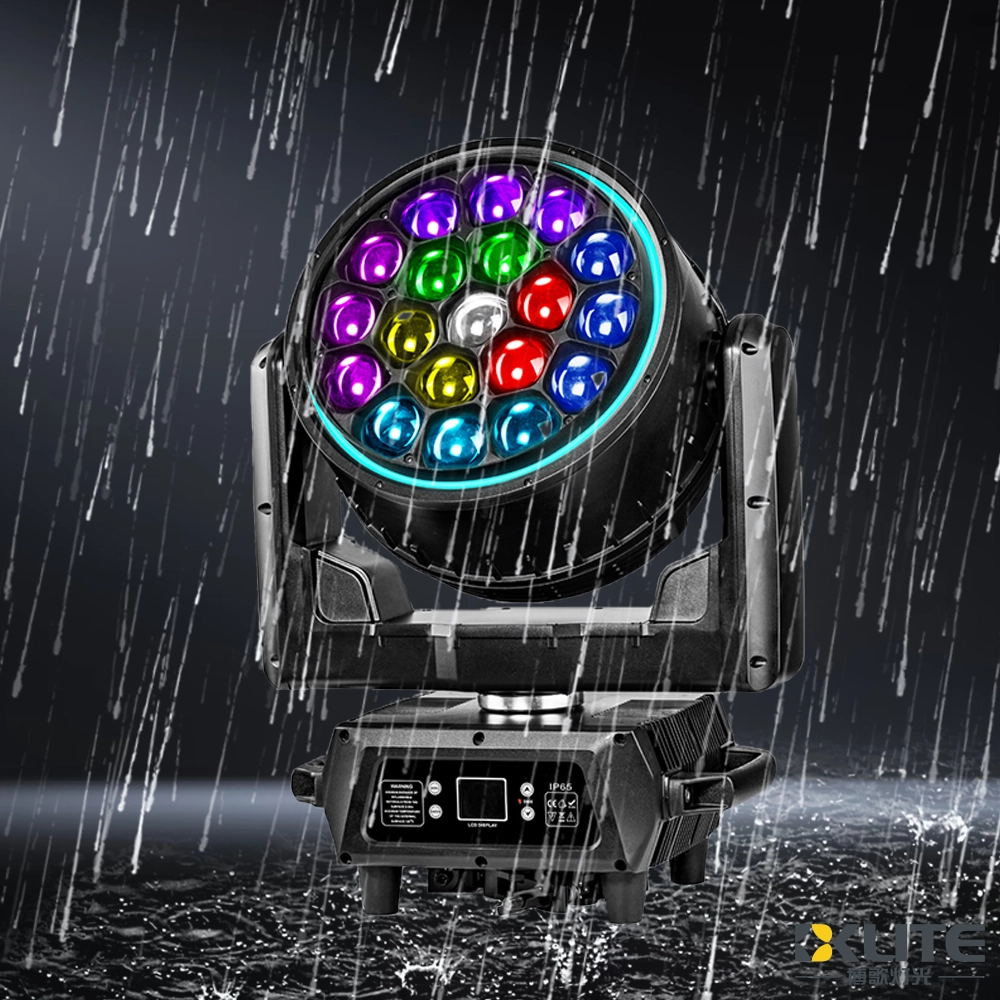
IP65 Waterproof Bee Eye Zoom 19x40W RGBW 4IN1 LED Beam Wash Moving Head Light with LED Ring
BKlite waterproof bee eye moving head light—your reliable choice from top waterproof moving head light manufacturers and suppliers. Ideal for outdoor stage, live event, music festival, this energy-saving fixture ensures powerful, precise illumination for any venue. It delivers powerful, reliable lighting performance in any weather.
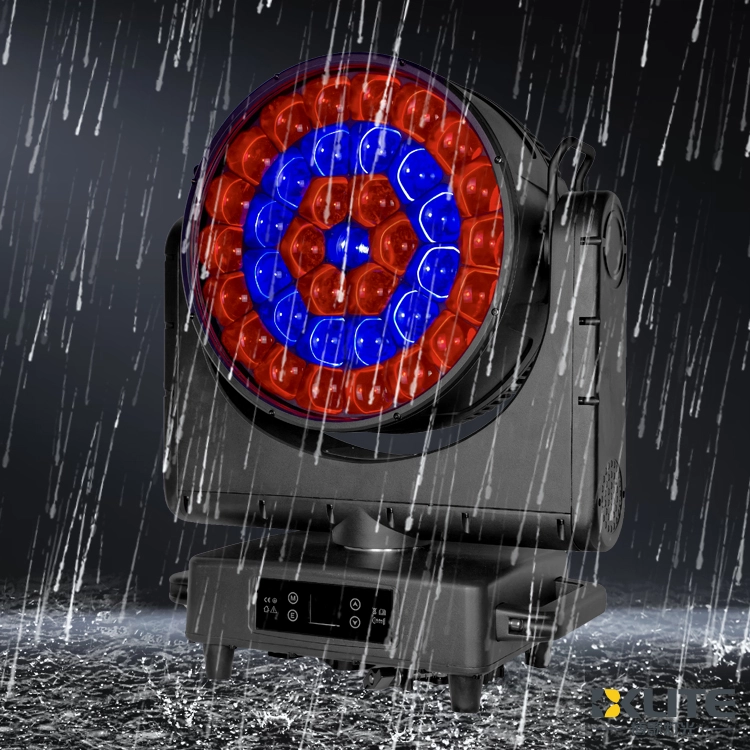
IP65 Waterproof ZOOM Bee Eye 37x40W RGBW 4in1 LED Moving Head Light
As a leading stage lighting equipment supplier with more than 15 years of industry know-how, BKlite brings you the IP65 ZOOM Bee Eye 37*40W RGBW 4in1 LED Moving Head Light (K25 Bee Eye) delivers vibrant, weatherproof lighting with powerful zoom and smooth movement. Ideal for dynamic stage effects, the K25 moving head light ensures stunning RGBW color mixing and reliable outdoor performance.
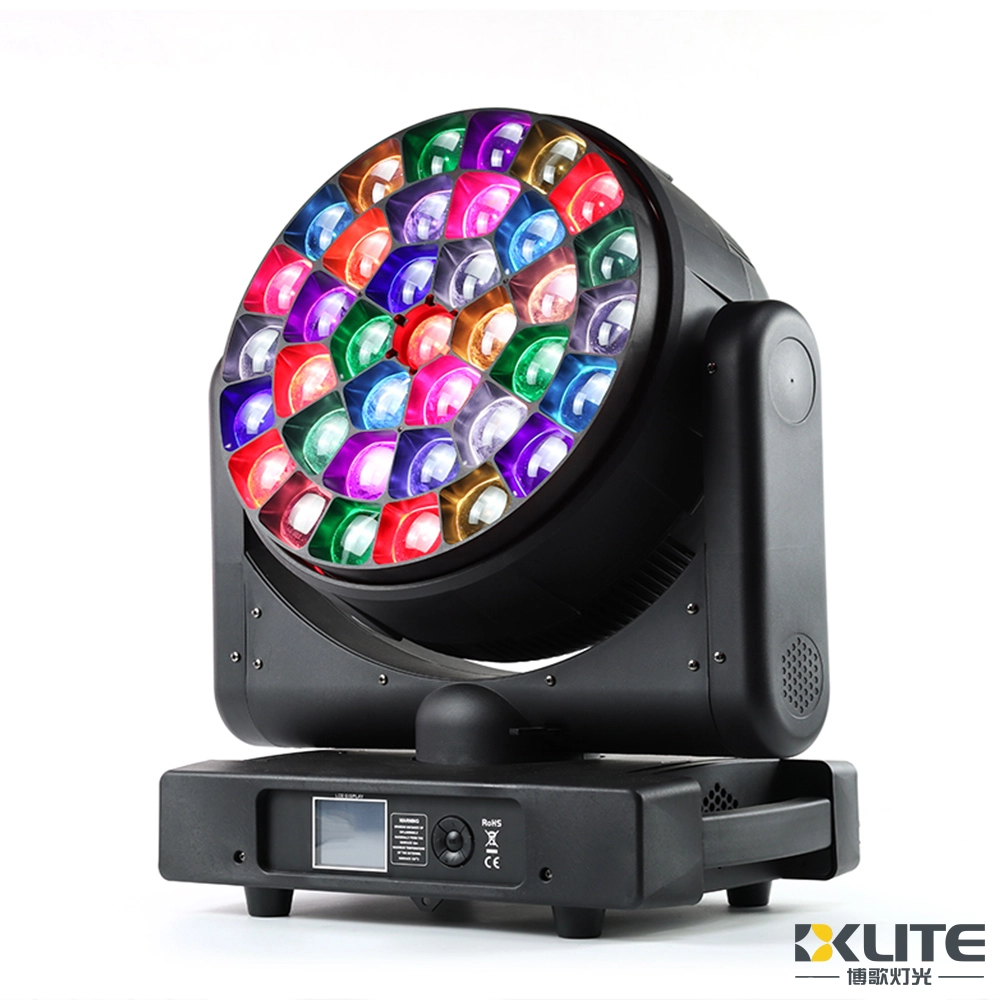
Bee Eye Zoom 37x40W RGBW 4in1 LED Beam Wash Moving Head Light
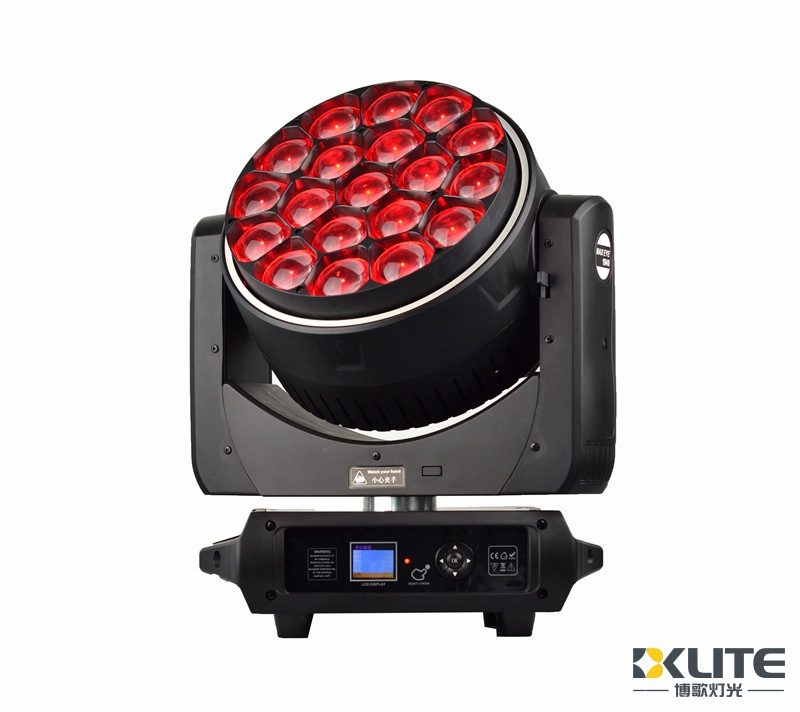
IP20 Bee Eye Zoom 19x40W RGBW 4IN1 LED Beam Wash Moving Head Light with LED Ring
As one of the leading stage lighting equipment suppliers with 15+ years of experience, BKlite launched a new Bee Eye K15 19x40 LED wash light BK-BY1940Z. .
Designed with a simple and sleek appearance, the WASH moving head light is compact, lightweight, and highly portable.
With multiple color effect macros and dynamic effect macros.
Our wash light can be used for versatile lighting options with amazing effect.
It is very good for your lighting projects.
Powerful and shoots very far distances.


Copyright © 2025 BKLITE All Rights Reserved.