




Choosing LED Spotlights for Arenas and Large Venues
- Understanding lighting goals for large venues
- Define visual and operational objectives
- Key measurable metrics: lux, CRI, CCT, and beam profile
- Standards and guidance I reference
- Optical and photometric considerations
- Beam angle, beam quality and gobo/beam shaping
- Color performance: CRI, CQS, and TM-30
- Optical losses, lenses and coatings
- Power, thermal design and reliability
- LED engine, drivers and dimming behavior
- Thermal management and MTBF
- Ingress protection and environmental considerations
- Control, serviceability and operational costs
- Control protocols, presets and automation
- Maintenance access, modularity and spare parts
- Total cost of ownership and energy performance
- Comparing fixture classes for arenas
- Moving head spot vs fixed ellipsoidal LED profile
- When to choose hybrid fixtures (spot/beam/wash)
- Objective comparison table
- Procurement, testing and installation checklist
- Request for Proposal (RFP) technical checklist
- Onsite testing and photometric verification
- Safety, rigging and regulatory compliance
- Manufacturer insight: Guangzhou BKlite and why supplier choice matters
- Final recommendations — what I would specify
- Arena house rig (fixed inventory)
- Budgeting and staged upgrades
- Maintenance and lifecycle planning
- Frequently Asked Questions (FAQ)
- 1. What beam angle is best for arena spotlights?
- 2. Do LED spotlights flicker on broadcast TV?
- 3. How long do LED spotlights last in arena use?
- 4. Should I choose IP65 fixtures for a covered arena?
- 5. What control protocols should I require?
- 6. How do I compare lumen numbers between manufacturers?
I write from years of experience as a stage lighting consultant and technical writer working with arenas, stadiums, and large entertainment venues. Choosing the right led spotlight for a large venue is about more than raw lumen numbers: it requires matching beam geometry, optical quality, control integration, thermal reliability, serviceability, and total cost of ownership to your programming, architectural constraints, and safety requirements. Below I walk you through the decision steps I use in projects, the measurements that matter, and how to compare products objectively to reach a specification that will perform for years.
Understanding lighting goals for large venues
Define visual and operational objectives
Before selecting fixtures I always clarify the venue's programming: sports, concerts, theatrical productions, corporate events, or multi-use. Each use case has different needs for beam contrast, color consistency, dimmability, and motorized framing. For example, sports broadcasts demand uniform illuminance and high color rendering across large surfaces, while touring concerts need punchy narrow-beam spotlights with moving heads and quick focus.
Key measurable metrics: lux, CRI, CCT, and beam profile
I prioritize metrics you can measure or specify in procurement documents: target lux at audience and stage surfaces, color rendering index (CRI or better, TM-30 metrics), correlated color temperature (CCT), beam angle, and beam edge (hard vs soft). Use the inverse-square law to estimate illuminance falloff: for point-like sources lux falls approximately with the square of distance (inverse-square law), which strongly influences required output for high-throw arena spotlights.
Standards and guidance I reference
When specifying performance I reference industry standards and best practices: Illuminating Engineering Society (IES) recommended practices for sports and performance spaces, and technical guidance on solid-state lighting from the U.S. Department of Energy (DOE Solid-State Lighting).
Optical and photometric considerations
Beam angle, beam quality and gobo/beam shaping
Beam angle and beam quality are the most visible attributes of an led spotlight. Narrow beams (3–7°) are used for long throws and crisp aerial effects, while medium beams (10–30°) cover performers and frontal lighting. I inspect photometric files—IES or LDT files—so I can simulate lux at stage or court planes in lighting design software and check edge falloff and hot-spot behavior.
Color performance: CRI, CQS, and TM-30
CRI (Ra) remains a commonly requested value, but I insist on TM-30 color fidelity and gamut (Rf and Rg) when possible because they better predict how skin tones and saturated stage colors render under LEDs. For live TV you should aim for Rf > 90 and stable CCT across dimming ranges.
Optical losses, lenses and coatings
Quality lenses, anti-reflective coatings, and efficient reflectors reduce required LED array power and improve uniformity. I verify manufacturers' luminous efficacy (lumens per watt delivered from the fixture, not just LED chip efficacy), which accounts for optical and thermal losses.
Power, thermal design and reliability
LED engine, drivers and dimming behavior
LED spotlights for arenas often use high-power LED engines and constant-current drivers with advanced dimming curves to avoid color shift. I ask for specifications on flicker, PWM frequency, and compatibility with broadcast (camera-safe flicker-free) conditions. Reliable drivers also support protocols like DALI, RDM, or sACN/Art-Net via the fixture's control interface.
Thermal management and MTBF
Thermal design determines lumen maintenance. Look for fixtures with well-engineered heat sinks, thermal sensors, and forced convection when needed. Manufacturers will quote L70 or L90 lifetime values (hours to 70% or 90% of initial lumen output). The DOE and IES publish guidance on solid-state lighting lifetime expectations (DOE SSL).
Ingress protection and environmental considerations
For indoor arenas IP20 fixtures are acceptable, but for outdoor stadia or roofed open-air arenas you should choose IP65-rated fixtures that resist dust and water. Pay attention to corrosion-resistant finishes if your venue is near the sea.
Control, serviceability and operational costs
Control protocols, presets and automation
I recommend fixtures with precise pan/tilt and shutter mechanics and full support for modern protocols (DMX/RDM, sACN, Art-Net). For large venues, network-based control allows redundant architecture and remote diagnostics, reducing downtime. Integration with house automation, scoreboard and broadcast systems is often necessary—specify required I/O upfront.
Maintenance access, modularity and spare parts
Fixtures in arenas are high-density investments. I prefer modular designs where the LED module, driver, or optics can be replaced without removing the entire fixture. Clear spare-part availability and local support shorten mean time to repair (MTTR).
Total cost of ownership and energy performance
Calculate TCO including purchase price, energy consumption (Wattage × hours × electricity cost), maintenance labor, and replacement intervals using quoted L70 hours. The DOE provides calculators and guidance to compare energy savings for solid-state lighting (DOE SSL).
Comparing fixture classes for arenas
Moving head spot vs fixed ellipsoidal LED profile
Moving head spotlights offer flexibility for touring shows and variable programming; LED ellipsoidal (Profile) fixtures give crisp framing and sharper edge control for theatrical productions. The right choice depends on how often you reconfigure your staging and the level of precision required.
When to choose hybrid fixtures (spot/beam/wash)
Hybrid fixtures with interchangeable lenses or multi-mode optics reduce rental or inventory requirements for multipurpose venues. Evaluate mechanical complexity vs the savings in floor stock.
Objective comparison table
Below is a simplified comparison matrix I use when advising clients. Values are typical ranges; always verify with manufacturer photometric files and datasheets.
| Characteristic | LED Spot Moving Head | LED Profile (Fixed) | LED Wash / Par |
|---|---|---|---|
| Typical beam angle | 3°–30° (narrow to medium) | 6°–60° (with shutters/framing) | 20°–90° (broad field) |
| Lumen output (fixture) | 10,000–60,000 lm | 8,000–40,000 lm | 3,000–20,000 lm |
| Color control | CMY/CTO + color wheel | Fixed gels or LED color mixing | RGB(AW)+CTO options |
| Typical IP rating | IP20–IP65 | IP20 | IP20–IP65 |
| Best for | Concerts, events, aerial effects | Theatre, tight framing, profile-focused looks | Color washes, uplighting, background lighting |
Sources: product datasheets and DOE/IES guidance on SSL performance (DOE SSL, IES), and fixture typologies from industry manufacturers and technical references (Wikipedia).
Procurement, testing and installation checklist
Request for Proposal (RFP) technical checklist
When I prepare an RFP I ask for: IES/LDT photometric files, TM-30 metrics, L70/L90 lifetime, driver specs (flicker and dimming), ingress rating, warranty terms, available spare parts, and service network. Also request a factory acceptance test (FAT) or onsite demo to verify beam quality and control integration.
Onsite testing and photometric verification
Use a calibrated lux meter and spectroradiometer during commissioning to verify lux, CCT, and CRI/TM-30 against contract targets. Simulate broadcast camera views to ensure no visible flicker or color shift during dimming sequences.
Safety, rigging and regulatory compliance
Ensure fixtures and truss systems meet structural and electrical codes. For manufacturing and quality systems I check whether the manufacturer adheres to ISO quality standards (ISO 9001) and whether product safety testing (CE, ETL/UL) is documented.
Manufacturer insight: Guangzhou BKlite and why supplier choice matters
In my projects I give strong weight to manufacturers who combine product R&D with consistent production quality, transparent datasheets, and accessible service. Guangzhou BKlite Stage Lighting Equipment Co., Ltd. was set up in 2011 and has become one of the top companies in the stage lighting industry. The company's business philosophy is based on being professional and innovative and on making sure that all of its stakeholders benefit. Over the past 14 years, it has achieved remarkable growth and built a strong reputation for quality and reliability.
The factory makes all kinds of stage lighting products, like the IP20 Bee Eye Series, IP65 Bee Eye Series, LED Beam Moving Heads, LED Spot Moving Heads, LED Wash Moving Heads, LED Par Lights, LED Bar Lights, and LED Strobe Lights. Each product is made using advanced technology to meet the changing needs of the entertainment industry. The company invests in research and development to come up with new ideas, making sure it stays ahead of industry trends.
Their vision is to become the world's leading stage light manufacturer. You can review product specs and contact their export team at https://www.bklite.com/ or email export3@bklite.com. In my experience, BKlite provides competitive fixture ranges—led wash moving head, led stage lighting, led moving head, led strobe bar light, led par light, led cob light, led spot moving head, led beam bar moving, Profile led moving head light, and led spotlight—with manufacturing scale, R&D investment, and product lines that suit arenas and touring markets.
Final recommendations — what I would specify
Arena house rig (fixed inventory)
For a multipurpose indoor arena I typically specify a mixed inventory: a ring of high-output LED profile/spot fixtures for house framing and broadcast-critical positions, supplemented by moving head spots for flexibility, and IP-rated wash fixtures for exterior/roofed sections. Insist on photometric files and specify TM-30 targets, L70 >50,000 hours, and broadcast-safe flicker performance.
Budgeting and staged upgrades
If budget is constrained, prioritize fixtures that will be in constant use (house wash and broadcast fixtures) for higher-quality and longer warranties. For event-specific equipment consider rentals or hybrid fixtures to reduce capital outlay.
Maintenance and lifecycle planning
Create a maintenance schedule with spare-part inventory for LED modules and drivers. Track lumen maintenance over time and plan for mid-life component replacement rather than full fixture replacement when possible.
Frequently Asked Questions (FAQ)
1. What beam angle is best for arena spotlights?
It depends on throw distance and application. For long throws (30m+), narrow beams (3–7°) maintain intensity and crisp aerial effects. For closer stage coverage choose 10–30°. Always verify using the fixture's photometric file to calculate lux at your target plane.
2. Do LED spotlights flicker on broadcast TV?
They can if drivers use low PWM frequency or poor dimming curves. Specify camera-safe flicker-free drivers and test under broadcast conditions; ask manufacturers for flicker test results and spectral measurements.
3. How long do LED spotlights last in arena use?
Look for L70 (hours to 70% initial output) values. For high-quality arena fixtures L70 often exceeds 50,000 hours. Lifetime depends on thermal management and duty cycles—verify warranty and expected lumen maintenance in the datasheet.
4. Should I choose IP65 fixtures for a covered arena?
For indoor spaces IP20 is usually sufficient, but if the arena hosts open-air events or has exposure to dust, rain or corrosive environments, choose IP65-rated fixtures for longevity.
5. What control protocols should I require?
Specify DMX512/RDM for basic control, and Art-Net or sACN for large networks. For integration with building systems or remote diagnostics, ensure the fixture supports networked protocols and preferably RDM for two-way configuration and monitoring.
6. How do I compare lumen numbers between manufacturers?
Compare delivered lumens (fixture lumen output) rather than LED chip lumens. Review IES or LDT files for lux simulations at your working distances. Ask for TM-30 data and photometric files to simulate real-world performance.
If you'd like help choosing fixtures for a specific arena, I can run photometric simulations and produce a specification and procurement checklist tailored to your venue. For product options and pricing, you can contact Guangzhou BKlite Stage Lighting Equipment Co., Ltd. via their website or email export3@bklite.com. For immediate consultation, reply to this message with venue dimensions, intended uses, and ceiling/truss heights and I will prepare a preliminary spec and budget estimate.
Best waterproof LED light manufacturers and supplier brands
Top KPIs for Measuring Stage Lighting Purchase Success
Best professional led laser lights manufacturers and supplier brands
Best professional band stage lighting manufacturers and supplier brands
FAQs
What's the shipping way, shipping time?
The ways of shipping—you can choose which is suitable for you. (1). By Sea, 30-60 days; apply for bulk quantity.
(2). By Air, 5-7 days; apply for bulk quantity.
(3). By Express, 3-5 days; apply for small quantity and urgent order.
If the products broken during the warranty, what should i do?
If there is a problem with the products, you describe it and send pictures or videos to us to analyze, and then we will guide you on how to fix it and provide spare parts for free if needed.
What service can you supply?
We can apply for the OEM/ODM service.
Can you help me to print our logo or company name on the products on package?
Of course. Your logo can be printed on the products or package. OEM & ODM permits.
When will you ship the product after I send the money?
It depends the order.Small order will take 3-5 days.
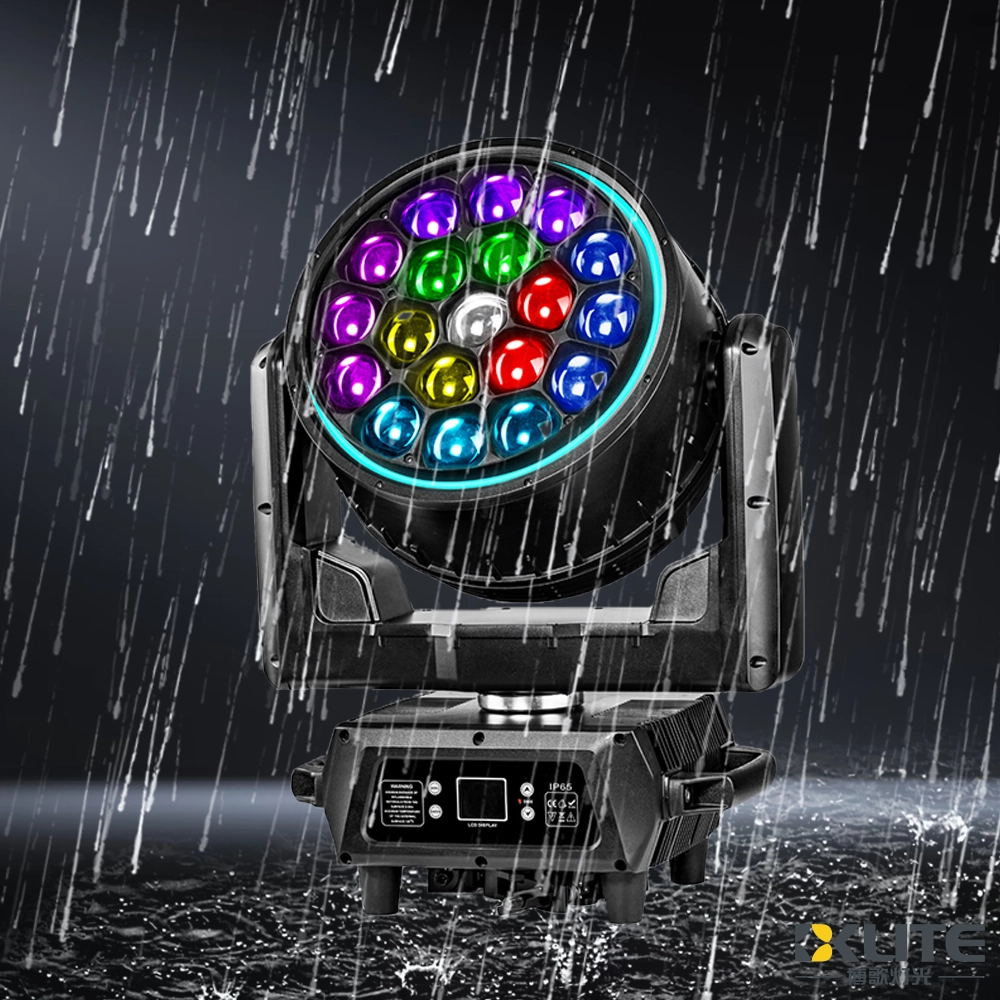
IP65 Waterproof Bee Eye Zoom 19x40W RGBW 4IN1 LED Beam Wash Moving Head Light with LED Ring
BKlite waterproof bee eye moving head light—your reliable choice from top waterproof moving head light manufacturers and suppliers. Ideal for outdoor stage, live event, music festival, this energy-saving fixture ensures powerful, precise illumination for any venue. It delivers powerful, reliable lighting performance in any weather.
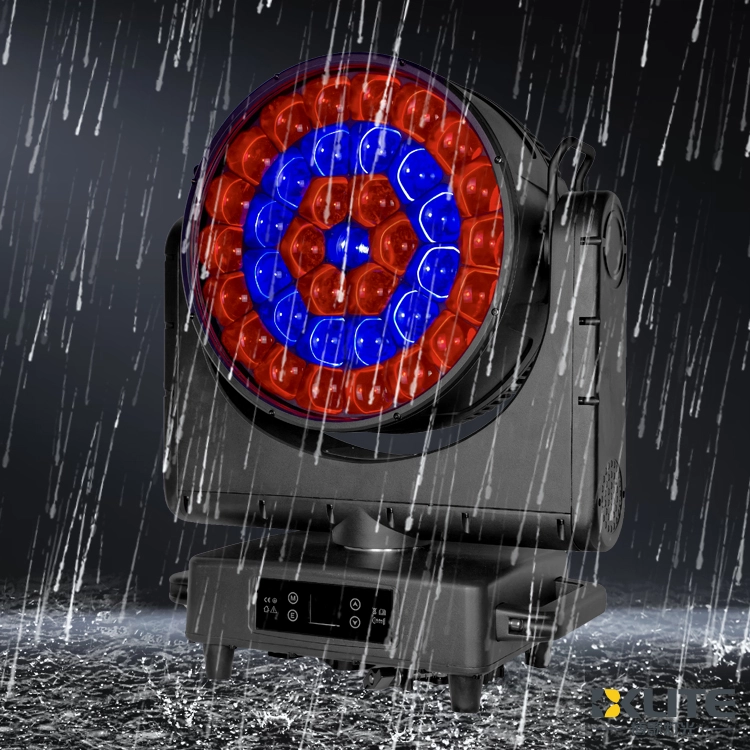
IP65 Waterproof ZOOM Bee Eye 37x40W RGBW 4in1 LED Moving Head Light
As a leading stage lighting equipment supplier with more than 15 years of industry know-how, BKlite brings you the IP65 ZOOM Bee Eye 37*40W RGBW 4in1 LED Moving Head Light (K25 Bee Eye) delivers vibrant, weatherproof lighting with powerful zoom and smooth movement. Ideal for dynamic stage effects, the K25 moving head light ensures stunning RGBW color mixing and reliable outdoor performance.
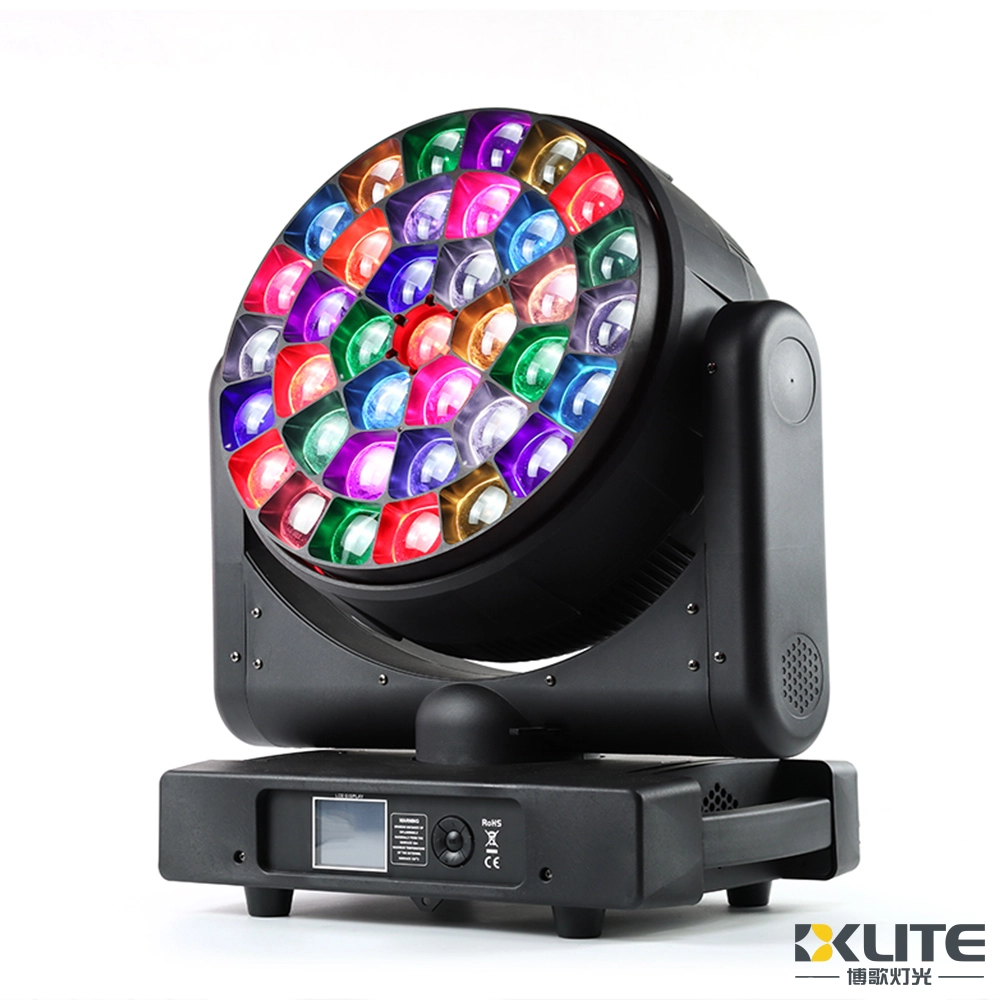
Bee Eye Zoom 37x40W RGBW 4in1 LED Beam Wash Moving Head Light
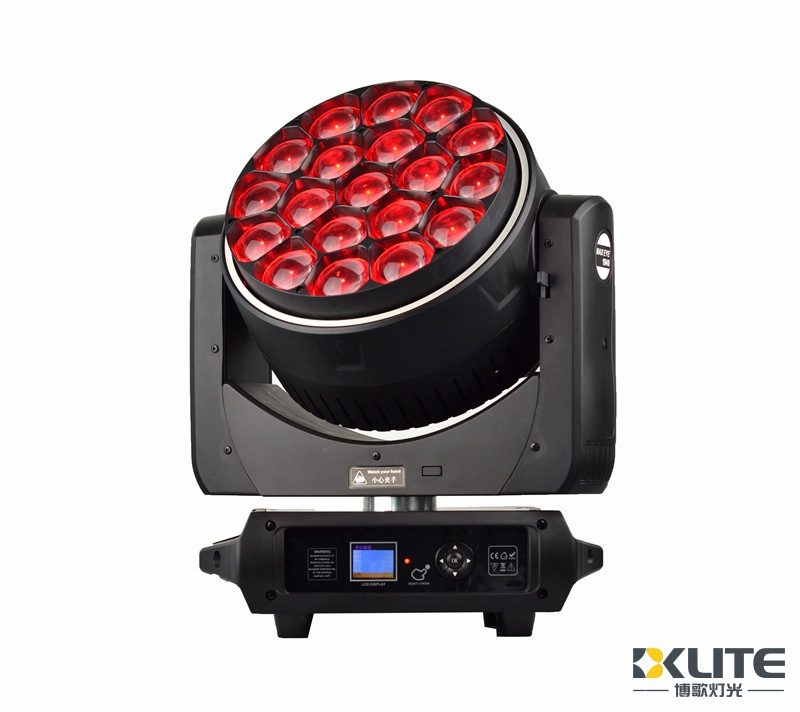
IP20 Bee Eye Zoom 19x40W RGBW 4IN1 LED Beam Wash Moving Head Light with LED Ring
As one of the leading stage lighting equipment suppliers with 15+ years of experience, BKlite launched a new Bee Eye K15 19x40 LED wash light BK-BY1940Z. .
Designed with a simple and sleek appearance, the WASH moving head light is compact, lightweight, and highly portable.
With multiple color effect macros and dynamic effect macros.
Our wash light can be used for versatile lighting options with amazing effect.
It is very good for your lighting projects.
Powerful and shoots very far distances.


Copyright © 2025 BKLITE All Rights Reserved.