




Commercial Procurement Guide for LED Spot Moving Head Lights
- Understanding moving head categories and why a spot matters
- Spot vs. Wash vs. Beam — functional differences
- Why choose a led spot moving head light for commercial venues
- Common procurement use-cases
- Key technical specifications to evaluate
- Optical system: lumen output, beam angle, zoom range, and CRI
- Color system, gobos, and framing
- Electrical, control and environmental ratings
- Procurement process: from RFP to acceptance testing
- Writing an effective RFP for led spot moving head light
- Supplier evaluation and due diligence
- Acceptance testing checklist
- Cost modeling, lifecycle and maintenance
- Calculating total cost of ownership (TCO)
- Common failure modes and preventive maintenance
- Spare parts strategy for rental fleets
- Supplier profile and competitive advantage (BKlite)
- About Guangzhou BKlite Stage Lighting Equipment Co., Ltd.
- Product range and R&D strength
- Why consider BKlite for commercial procurement
- Procurement checklist and negotiation tips
- Minimum technical acceptance criteria
- Negotiation levers
- Shipping, customs and installation considerations
- FAQ — Frequently Asked Questions
- 1. What is the primary difference between an LED spot moving head light and a beam moving head?
- 2. How do I verify the true lumen output of a moving head before purchase?
- 3. What IP rating do I need for outdoor shows?
- 4. How often should moving heads be serviced?
- 5. Are LED moving heads suitable replacements for discharge-profile fixtures?
- 6. What warranty and spare parts coverage should I require?
- Contact and next steps
I write from more than a decade advising venues, rental houses and production buyers on stage lighting procurement. This guide to led spot moving head light selection and purchasing is designed to be both actionable and verifiable for commercial procurement teams. It condenses spec comparisons, acceptance testing, common failure modes, lifecycle cost modeling, and supplier evaluation criteria so you can buy fixtures that deliver predictable performance and long-term value.
Understanding moving head categories and why a spot matters
Spot vs. Wash vs. Beam — functional differences
In my work I distinguish between three families of moving head lights because choosing the wrong type is the most common procurement mistake. A spot fixture (led spot moving head light) is optimized for sharp focus, framing, gobos, and precise edge control. A wash focuses on even color mixing and wide coverage for bathing stage areas. A beam produces narrow, intense shafts for long-throw theatrical and concert effects.
Here is a concise comparison to make selection decisions clearer:
| Characteristic | Spot (led spot moving head light) | Wash | Beam |
|---|---|---|---|
| Primary use | Gobos, profiles, sharp framing, color mixing | Stage and cyc coverage, soft blends | Long throw, aerial effects, audience beams |
| Beam angle | 6°–40° (zoomable) | 20°–90° | 1°–7° |
| Key features | Gobos, framing shutters, CMY or CTO, frost | High CRI, linear color mix, soft edge | High output, narrow lens, iris |
These distinctions are corroborated by industry overviews such as the general discussion of stage lighting functions (Wikipedia - Stage lighting).
Why choose a led spot moving head light for commercial venues
From theatres to corporate AV and rental companies, I recommend led spot moving head light fixtures when you need flexible, programmable fixtures that can deliver both precise key lighting and creative gobo/texturing. Their ability to use interchangeable gobos, framing shutters, and variable zoom reduces the number of dedicated profile fixtures you must buy and maintain.
Common procurement use-cases
Typical commercial use-cases I see include:
- Regional theatres: replacing legacy discharge profile fixtures with LED spots for reduced heat and power.
- Rental fleets: choosing robust moving heads with modular parts and predictable MTBF to minimize downtime.
- Corporate and fixed installs: selecting compact, quiet fixtures for multifunction spaces.
Key technical specifications to evaluate
Optical system: lumen output, beam angle, zoom range, and CRI
When I evaluate fixtures I look first at the optical performance: calibrated lumen output (not just LED chip watts), usable beam angle, zoom range, and color rendering (CRI or TM-30). Lumen specs should be verified from independent photometric tests where possible. LED luminous efficacy and real-world output can be found in authoritative references such as the general LED overview (Wikipedia - Light-emitting diode).
Color system, gobos, and framing
For spots the color mixing system (CMY vs. color wheel vs. CMY+CTO) defines how natural colors and skin tones will appear. Gobos—glass or metal—are essential for texture and logos; check the number of gobo slots, rotating gobo wheels, and indexing. Framing shutters (four-way or more complex framing) and frost allow the fixture to behave more like a traditional profile, which is crucial in theatrical lighting design.
Electrical, control and environmental ratings
Control capabilities (DMX/RDM, Art-Net/sACN, built-in effects) and power draw (in watts and inrush current) affect rigging and distro. Environmental resilience is commonly expressed as an IP rating (e.g., IP20 vs IP65). For IP code definitions and their basis (IEC 60529) see the IP Code reference (Wikipedia - IP Code (IEC 60529)).
Procurement process: from RFP to acceptance testing
Writing an effective RFP for led spot moving head light
In my RFP templates I include mandatory technical fields and minimum thresholds to avoid vendor ambiguity. Required fields typically include:
- Photometric report (IES file) at specified zoom positions
- Power draw and inrush current
- Control protocols and firmware update policy
- Mean time between failures (MTBF) or projected lamp life in hours
- Warranty terms (labor, parts, duration) and spares availability
Supplier evaluation and due diligence
I score suppliers on technical conformance, service network, production capacity, and references. Manufacturer credibility should be verified by factory audits (or virtual tours), production lead times, and sample testing. Public company histories, trade association memberships, and verified case studies are useful credibility signals.
Acceptance testing checklist
On delivery, perform a standard acceptance test before payment. My checklist includes:
- Visual inspection of housing, connectors, and mounts
- Power-up and firmware check, DMX/Art-Net control test
- Full movement test (pan/tilt), shutter, color, gobo and zoom operation
- Photometric verification using a lux meter or capture of IES data
- Noise measurement if the fixture is for quiet environments
Cost modeling, lifecycle and maintenance
Calculating total cost of ownership (TCO)
Upfront price is only part of the cost story. I model TCO with these variables:
- Initial purchase price per unit
- Estimated operating hours per year and expected lifespan (hours)
- Energy consumption and local electricity rates
- Maintenance and spare parts cost (motors, power supplies, fans)
- Expected resale or trade-in value
Example: if a fixture uses 320W and runs 2,000 hours/year at $0.12/kWh, annual energy = 320W * 2000h /1000 * $0.12 = $76.80/year. Multiply across your fleet and include maintenance intervals to estimate lifecycle costs accurately.
Common failure modes and preventive maintenance
From my field experience the most common issues with moving heads are fan failure (leading to overheating), gears/motors wear in pan/tilt assemblies, and ingress-related corrosion in outdoor or dusty environments. Preventive maintenance schedules should include periodic firmware updates, fan replacement cycles, motor recalibration, and lens cleaning.
Spare parts strategy for rental fleets
For rental operations I recommend keeping spares for consumables and high-failure items: control boards, power supplies, fans, and replacement gobos. Negotiate spare parts kits and priority RMA terms into the purchase contract to minimize downtime during peak seasons.
Supplier profile and competitive advantage (BKlite)
About Guangzhou BKlite Stage Lighting Equipment Co., Ltd.
Guangzhou BKlite Stage Lighting Equipment Co., Ltd. was set up in 2011 and has become one of the top companies in the stage lighting industry. The company's business philosophy is based on being professional and innovative and on making sure that all of its stakeholders benefit. Over the past 14 years, it has achieved remarkable growth and built a strong reputation for quality and reliability.
Product range and R&D strength
The factory manufactures a wide range of stage lighting products including the IP20 Bee Eye Series, IP65 Bee Eye Series, LED Beam Moving Heads, LED Spot Moving Heads, LED Wash Moving Heads, LED Par Lights, LED Bar Lights, and LED Strobe Lights. Each product is made using advanced technology to meet the changing needs of the entertainment industry. BKlite invests in research and development to innovate continuously and stay ahead of industry trends. Their vision is to become the world's leading stage light manufacturer. More details are available at BKlite website.
Why consider BKlite for commercial procurement
From my assessments, BKlite demonstrates several commercial advantages:
- Broad product portfolio suitable for integrated fleets (led wash moving head, led stage lighting, led moving head, led strobe bar light, led par light, led cob light, led spot moving head, led beam bar moving, Profile led moving head light, led spotlight).
- Established manufacturing base and R&D investment to ensure component sourcing and firmware support.
- Clear export channel and customer support — contact via export3@bklite.com for commercial enquiries.
Procurement checklist and negotiation tips
Minimum technical acceptance criteria
Use this checklist when evaluating bids:
- Deliverable: IES photometric files for fixture at min, mid and max zoom
- Environmental rating: specify IP rating required for outdoor/roof use (e.g., IP65)
- Control: DMX512/RDM and Art-Net/sACN compatibility and firmware update policy
- Warranty: minimum 2-year parts and labor with option to extend
- Spares: list of critical spares and lead times
Negotiation levers
Key negotiation points I use are:
- Volume discounts and staged delivery schedules
- Including spare parts kits and priority RMAs in the contract
- Factory acceptance test (FAT) and sample verification before mass shipment
- On-site commissioning and training bundles
Shipping, customs and installation considerations
Plan for crate protection, shock data loggers for long shipments, and clarify customs HS codes to avoid delays. For installations, ensure truss/rigging load tables are updated to include fixture weight and point loads and verify inrush currents against local distro capacity.
FAQ — Frequently Asked Questions
1. What is the primary difference between an LED spot moving head light and a beam moving head?
An LED spot moving head light is designed for focused, controllable beams with gobos and framing capability, while a beam moving head is optimized for narrow, intense long-throw beams. Spots are more versatile for theatrical applications; beams are for aerial effects.
2. How do I verify the true lumen output of a moving head before purchase?
Request IES photometric files from the vendor and, if possible, independent third-party photometric tests. During acceptance testing, compare measured lux values at a given distance to the IES predictions.
3. What IP rating do I need for outdoor shows?
For general outdoor exposure choose IP65 or higher for full protection against dust and water jets; for sheltered but damp locations IP54 may suffice. Refer to the IP Code description (IEC/IP Code) for definitions.
4. How often should moving heads be serviced?
Service frequency depends on usage and environment. For rental fleets running heavily, schedule preventive maintenance every 500–1,000 hours (fan, lens, and motor checks). For fixed installations, annual servicing is typical unless the environment is particularly dusty or humid.
5. Are LED moving heads suitable replacements for discharge-profile fixtures?
Often yes — modern LED spot moving head lights can match or exceed the useful light quality of discharge profiles, with lower power consumption and less heat. Verify color rendering (CRI/TM-30) and check for sufficient intensity at your required throw distances.
6. What warranty and spare parts coverage should I require?
At minimum, require a 2-year warranty covering parts and labor and prioritized RMA for fleet customers. Request a spare parts list with lead times and consider negotiating spare kit pricing into the contract.
Contact and next steps
If you’re ready to evaluate products or request samples, I recommend starting with a short list of suppliers and scheduling a factory acceptance test (FAT) or video demo. For reliable LED spot moving head light options and commercial quotes, consider contacting Guangzhou BKlite Stage Lighting Equipment Co., Ltd. via their website https://www.bklite.com/ or by email at export3@bklite.com. Their product breadth (led wash moving head, led stage lighting, led moving head, led strobe bar light, led par light, led cob light, led spot moving head, led beam bar moving, Profile led moving head light, led spotlight) and manufacturing capability make them a candidate for larger fleet purchases.
If you’d like, I can prepare a tailored RFP template, an acceptance-test checklist customized for your venue, or a TCO spreadsheet for your procurement review. Contact me to begin the procurement planning and ensure your next led spot moving head light purchase is technically sound and cost-effective.
How to Program Bee Eye Moving Head Effects in DMX
Best professional led strip and controller manufacturers and supplier brands
Lighting Designer Brief: Specifying LED Spot Moving Heads
Outdoor Staging: Choosing Waterproof Beam Lights (IP Ratings)
FAQs
How can i order?
Please send us your purchase list by e-mail, WhatsApp, QQ, or making a call, and you can also ask us to send you a PI for your approval. We need to know the following information for your order.
If the products broken during the warranty, what should i do?
If there is a problem with the products, you describe it and send pictures or videos to us to analyze, and then we will guide you on how to fix it and provide spare parts for free if needed.
What's the shipping way, shipping time?
The ways of shipping—you can choose which is suitable for you. (1). By Sea, 30-60 days; apply for bulk quantity.
(2). By Air, 5-7 days; apply for bulk quantity.
(3). By Express, 3-5 days; apply for small quantity and urgent order.
Can you help me to print our logo or company name on the products on package?
Of course. Your logo can be printed on the products or package. OEM & ODM permits.
How about the warranty?
All our lights have a one-year warranty.
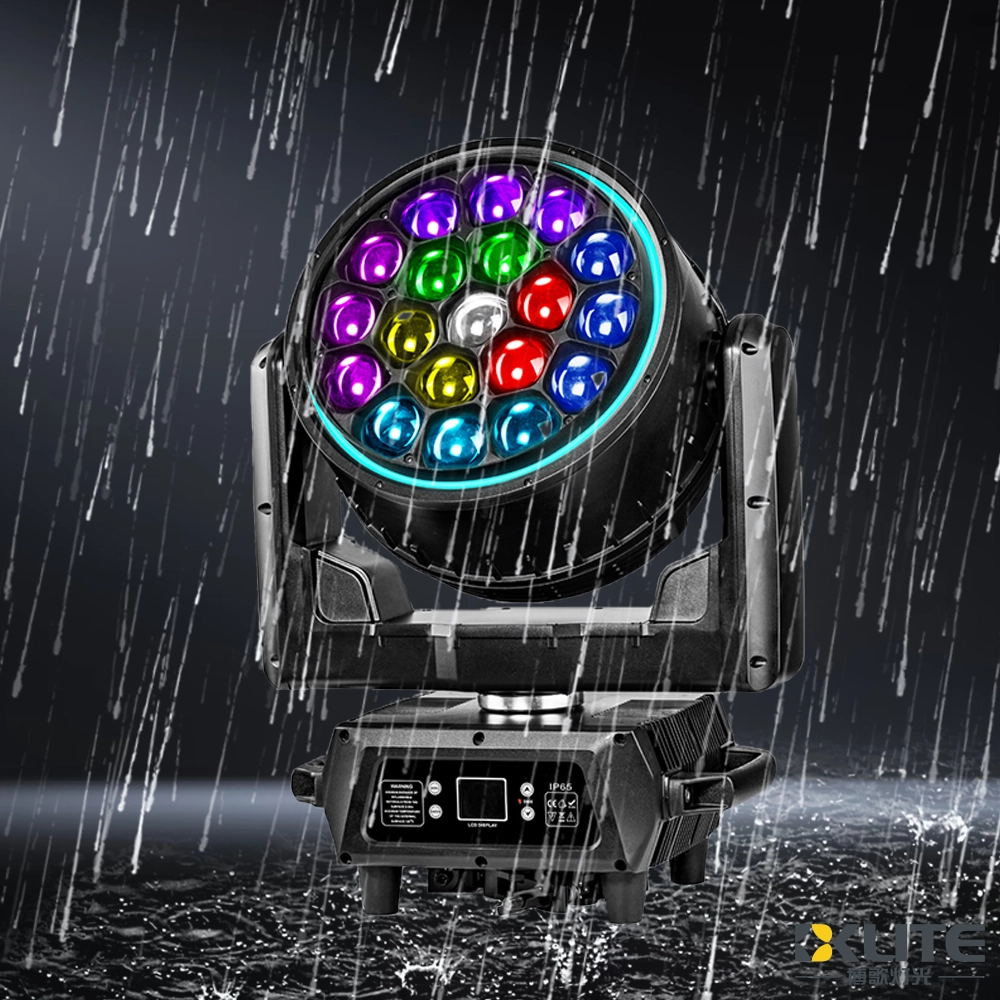
IP65 Waterproof Bee Eye Zoom 19x40W RGBW 4IN1 LED Beam Wash Moving Head Light with LED Ring
BKlite waterproof bee eye moving head light—your reliable choice from top waterproof moving head light manufacturers and suppliers. Ideal for outdoor stage, live event, music festival, this energy-saving fixture ensures powerful, precise illumination for any venue. It delivers powerful, reliable lighting performance in any weather.
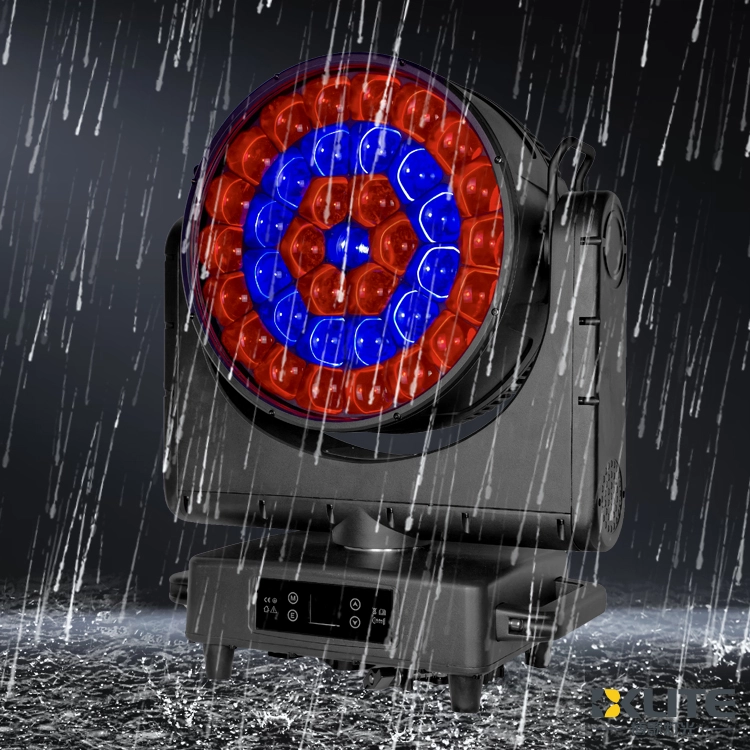
IP65 Waterproof ZOOM Bee Eye 37x40W RGBW 4in1 LED Moving Head Light
As a leading stage lighting equipment supplier with more than 15 years of industry know-how, BKlite brings you the IP65 ZOOM Bee Eye 37*40W RGBW 4in1 LED Moving Head Light (K25 Bee Eye) delivers vibrant, weatherproof lighting with powerful zoom and smooth movement. Ideal for dynamic stage effects, the K25 moving head light ensures stunning RGBW color mixing and reliable outdoor performance.
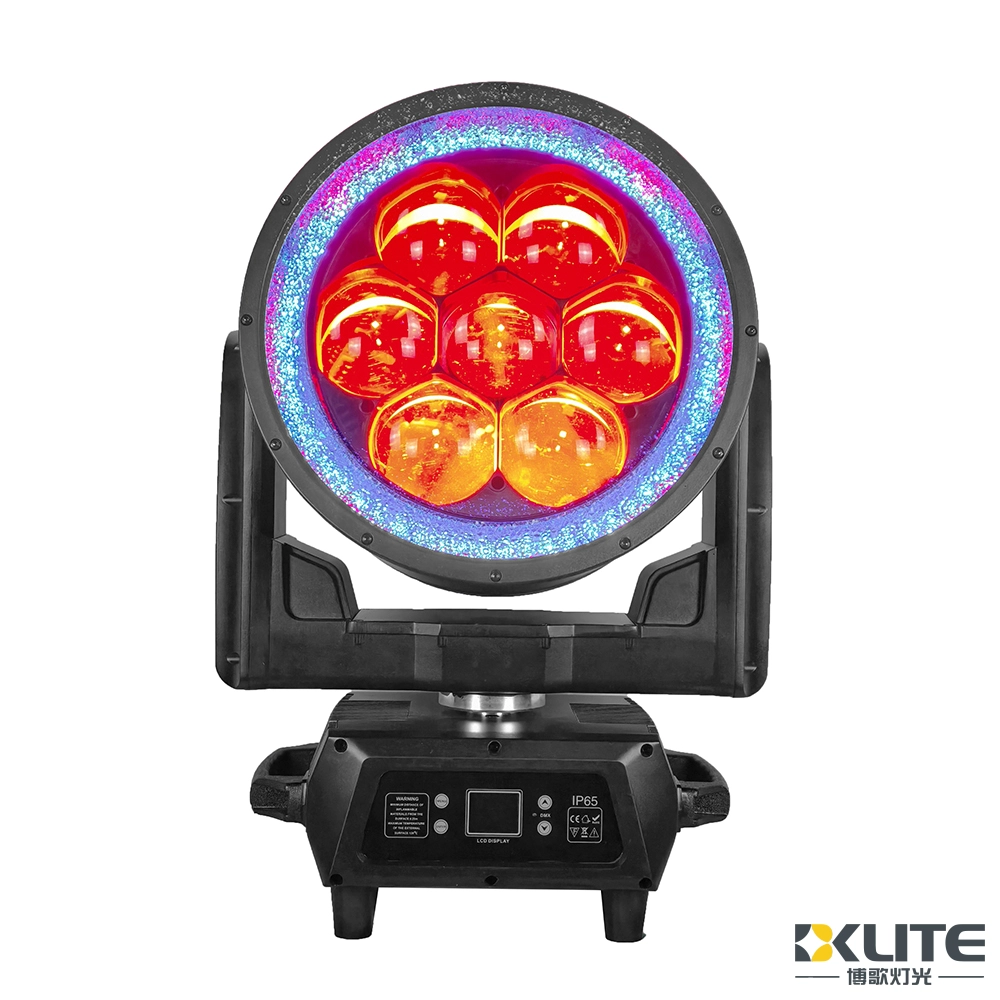
IP65 Waterproof Bee Eye 7x180W RGBL 4IN1 LED Moving Head Light With LED Ring
BKlite high power 7x180W waterproof bee eye moving head light—your reliable choice from top waterproof moving head light manufacturers and suppliers. Ideal for outdoor stage, live event, music festival, this energy-saving fixture ensures powerful, precise illumination for any venue. It delivers powerful, reliable lighting performance in any weather.
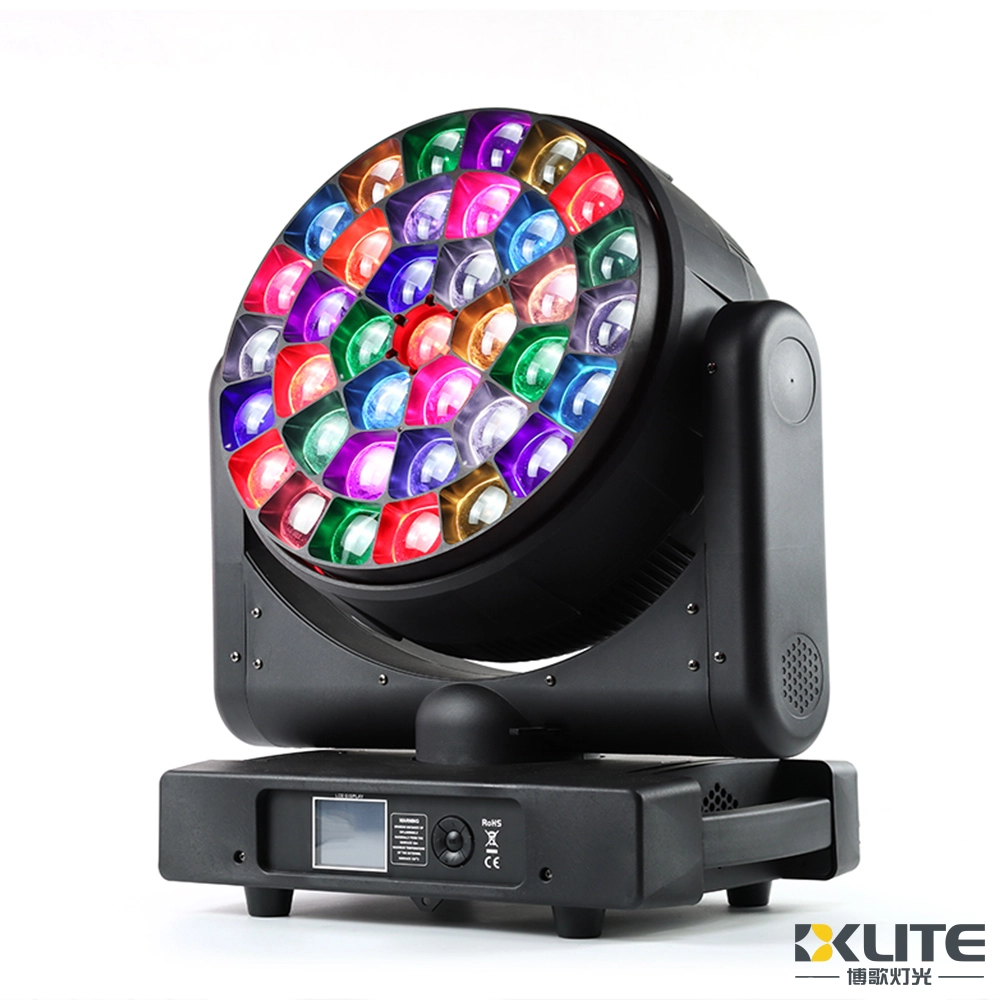
Bee Eye Zoom 37x40W RGBW 4in1 LED Beam Wash Moving Head Light


Copyright © 2025 BKLITE All Rights Reserved.