




Custom Branding and Private Label LED Spot Moving Heads
- Why customization matters for stage lighting buyers
- Differentiation in a crowded market
- Operational advantages of private labeling
- Customer trust and aftersales
- Technical and regulatory foundations for LED spot moving head lights
- Key technical specifications to set
- Controls and interoperability (DMX/RDM, Art-Net, sACN)
- Ingress, safety and compliance
- Designing a private label LED spot moving head — product roadmap
- Stage 1 — Define requirements and target market
- Stage 2 — Prototype evaluation and acceptance testing
- Stage 3 — Manufacturing, QA and warranty
- Costs, MOQ and timeline considerations
- Cost drivers
- Typical minimum order quantities and lead times
- Comparison table: standard vs private label LED spot moving head light
- Quality assurance — tests and certifications I require
- Photometric and optical testing
- Electrical, EMC and safety testing
- Reliability and thermal management
- Partnering with manufacturers — why BKlite is a strong option
- Company background and capabilities
- Product range relevant to private labeling
- What I’ve seen in their private‑label programs
- Practical checklist to launch your private label LED spot moving head light
- Before you order
- During production
- After shipment
- FAQ
- 1. What is the typical MOQ for private-label LED spot moving head lights?
- 2. How long does it take to develop a private-labeled moving head?
- 3. What certifications should I require?
- 4. Can I request firmware or gobo libraries to be customized?
- 5. What after-sales support should I expect?
- 6. How do I protect my brand when manufacturing overseas?
I write from long experience in stage lighting design, product development, and supplier partnerships. In this article I explain why custom branding and private label LED spot moving head lights are now a strategic choice for rental houses, venues, production companies, and lighting brands. I cover technical requirements, certification and quality control, cost and volume considerations, and a practical step-by-step path for launching a private‑label LED spot moving head light that meets performance expectations and regulatory standards.
Why customization matters for stage lighting buyers
Differentiation in a crowded market
As a lighting consultant I’ve helped venues and rental companies define product portfolios that strengthen their brand. A custom-branded LED spot moving head light helps differentiate your rig and marketing. Instead of buying generic units that look the same as every competitor, you can specify optics, color temperature, gobo libraries, and fixture ergonomics that reflect your identity. End users notice consistent visual output and serviceability; that builds reputation and repeat business.
Operational advantages of private labeling
Private labeling gives you more control over firmware, service parts, warranty terms, and packaging. For rental companies this means standardized spares across the fleet and reduced downtime. I often recommend specifying accessible lamp engines, standardized connectors (powerCON, XLR/etherCON) and hot-swappable modules to cut mean time to repair (MTTR).
Customer trust and aftersales
Branding is not only aesthetic: it’s a promise. When you control the branding and documentation, you can set a higher bar for user manuals, safety instructions, and firmware update policies — elements that increase perceived value and encourage repeat purchases or rentals.
Technical and regulatory foundations for LED spot moving head lights
Key technical specifications to set
When I specify LED spot moving head lights, I focus on core measurable parameters: luminous flux and beam intensity (lux at distance), beam angle range (zoom), color rendering index (CRI) or TM-30 fidelity, color temperature range, channel count and DMX/RDM capability, pan/tilt speed and precision, and thermal management. These parameters determine whether the fixture will meet artistic and operational needs.
Controls and interoperability (DMX/RDM, Art-Net, sACN)
Control protocols are critical. The industry-standard DMX512 protocol remains a baseline for moving heads, while Art-Net and sACN are common for networked control. RDM adds remote device management for addressing and diagnostics. Specify which protocols you require and test fixtures with your console ecosystem early in the validation phase.
Ingress, safety and compliance
IP rating (ingress protection) tells you how well a fixture resists dust and moisture; consult the IP code for definitions. For touring rigs you typically want IP20 units for indoor use, and IP65 if fixtures will be used outdoors or in wash-down situations. Also ensure compliance with regional safety and EMC standards (CE for EU, FCC for US for emissions, and CB/IEC when applicable). I always ask suppliers to provide test reports from accredited labs early in negotiations.
Designing a private label LED spot moving head — product roadmap
Stage 1 — Define requirements and target market
Start by defining the use cases: rental vs fixed installation, theatrical vs concert, or corporate events. I create a one-page product brief that includes desired lumen output, zoom range (e.g., 5°–50°), CRI/TLCI targets, gobo size, gobos rotation, and expected service life. This document ensures alignment with suppliers and guides prototype evaluation.
Stage 2 — Prototype evaluation and acceptance testing
Evaluate prototypes against the brief with objective tests: photometric measurement (lux and beam profile at standard distances), thermal imaging for hotspots, electrical load and inrush current tests, and DMX latency/response checks. I recommend third-party photometric testing where possible and require pass/fail criteria in the purchase contract.
Stage 3 — Manufacturing, QA and warranty
After design sign-off, specify production QA checkpoints: incoming component inspection (LED binning and driver quality), in-process functional tests, burn-in (24–72 hours), and final inspection. Negotiating a clear warranty policy and an inventory of spare modules will protect your operation. For example, a 3-year warranty on the light engine plus a 1-year warranty on moving components is common among High Quality private‑label programs.
Costs, MOQ and timeline considerations
Cost drivers
Cost is driven by LED engine (brand and binning), optics (precision glass vs polymer), motors (servo vs stepper), control electronics, and optional features like framing shutters or additional prisms. Custom branding adds tooling and silk-screening costs but becomes economical at higher volumes.
Typical minimum order quantities and lead times
Most LED spot moving head light manufacturers set minimum order quantities (MOQs) for private label runs — commonly between 50 and 200 units depending on customization depth. Lead times from prototype approval to shipment typically range from 12 to 20 weeks; expedited runs are possible but costlier.
Comparison table: standard vs private label LED spot moving head light
| Item | Standard Off-the-Shelf | Private Label / Custom |
|---|---|---|
| Initial unit price | Lower for single units | Higher per-unit tooling, lower at scale |
| Customization | Limited | Full (optics, firmware, branding) |
| MOQ | 1 | 50–200 typical |
| Lead time | Immediate to 4 weeks | 12–20 weeks (after prototyping) |
| After-sales & warranty | Manufacturer default | Contractual, specified by brand |
Data sources: industry procurement norms and manufacturer quotations collected from multiple suppliers and trade publications over the past five years.
Quality assurance — tests and certifications I require
Photometric and optical testing
I require independent photometric reports (IES files) for every production batch so lighting designers can predict beam profiles accurately in renderings and calculations. These reports should be created by accredited labs using goniophotometers or sphere measurements.
Electrical, EMC and safety testing
Request test reports for EMC (EN 55032/55035), electrical safety (EN 62368-1 or IEC 61347 series as applicable), and harmonics/inrush current. For markets like EU and UK, CE and UKCA marks must be verifiable with documentation. For North America, check FCC emission and cUL/UL listings where required.
Reliability and thermal management
LED lifespan is highly dependent on thermal design. I ask for thermal resistance data and results from 1,000-hour burn-in tests at rated environmental conditions. A well-engineered LED spot moving head light should maintain lumen maintenance (L70) above 30,000 hours under rated ambient temperature.
Partnering with manufacturers — why BKlite is a strong option
Company background and capabilities
I have evaluated dozens of factories; Guangzhou BKlite Stage Lighting Equipment Co., Ltd. was set up in 2011 and has become one of the top companies in the stage lighting industry. The company's business philosophy is based on being professional and innovative and on making sure that all of its stakeholders benefit. Over the past 14 years, it has achieved remarkable growth and built a strong reputation for quality and reliability.
Product range relevant to private labeling
BKlite’s factory makes all kinds of stage lighting products, like the IP20 Bee Eye Series, IP65 Bee Eye Series, LED Beam Moving Heads, LED Spot Moving Heads, LED Wash Moving Heads, LED Par Lights, LED Bar Lights, and LED Strobe Lights. Each product is made using advanced technology to meet the changing needs of the entertainment industry. Their R&D investment delivers up-to-date optics and control systems that make them a viable private-label partner.
What I’ve seen in their private‑label programs
From my direct interactions, BKlite offers structured private label options: tailored firmware, custom silk-screening and housing colors, and coordinated QA checkpoints. They support prototyping and small-series production and have clear documentation systems for CE/EMC testing — a major advantage when entering regulated markets. Their stated vision is to become the world's leading stage light manufacturer, and they back that with ongoing R&D and capacity for medium-volume runs.
Contact: https://www.bklite.com/ | Email: export3@bklite.com
Practical checklist to launch your private label LED spot moving head light
Before you order
- Create a one-page product brief (performance, controls, connectors, IP rating, branding).
- Request a Bill of Materials (BOM) and a sample schedule from the manufacturer.
- Define acceptance test criteria and request sample test reports (photometric, EMC, safety).
During production
- Insist on component traceability (LED bin codes, driver model numbers).
- Set up QA checkpoints (incoming, in-process, burn-in, final).
- Arrange a pre-shipment inspection or factory witness testing.
After shipment
- Maintain a spare parts kit and firmware repository.
- Track failure modes and return data to the factory for continuous improvement.
- Keep warranty and service contracts clear for end users.
FAQ
1. What is the typical MOQ for private-label LED spot moving head lights?
MOQs commonly range from 50 to 200 units depending on the level of customization. More extensive customization increases the MOQ due to tooling and production setup costs.
2. How long does it take to develop a private-labeled moving head?
From initial brief to first shipment typically 12–20 weeks after prototype sign-off. The timeline includes prototyping, test cycles, and production. Expedited schedules are possible with added cost.
3. What certifications should I require?
Request CE/UKCA for Europe/UK, FCC for US emissions, and IEC/EN safety standards like EN 62368-1. Check IP ratings for outdoor use and validate with accredited lab reports.
4. Can I request firmware or gobo libraries to be customized?
Yes. Many manufacturers support custom firmware, UI language, and gobo sets. Specify the required features and test them thoroughly in your control environment (DMX/Art-Net/sACN).
5. What after-sales support should I expect?
Define warranty period and spare parts lead times upfront. Good partners provide spare parts lists, firmware updates, and service documentation. Consider stocking modular spares for motors, fans, and LED engines.
6. How do I protect my brand when manufacturing overseas?
Use clear contracts that specify IP ownership, NDA protection, and a quality agreement with acceptance criteria. Request factory photos and hold pre-shipment inspections or third-party inspections.
If you’re ready to explore private-label LED spot moving head light options or want a practical product brief reviewed, I invite you to contact Guangzhou BKlite: https://www.bklite.com/ or email export3@bklite.com. I can help you assess technical specs, test results, and supplier contracts so BKliteed fixtures meet artistic and operational expectations.
Wholesale led lights stage decoration manufacturer and supplier
Cost-per-Show Calculation for LED Spot Moving Head Lights
Best top waterproof LED lights for backyard manufacturers and supplier brands
Wholesale auto led strobe lights manufacturer and supplier
FAQs
When will you ship the product after I send the money?
It depends the order.Small order will take 3-5 days.
What is your delivery time?
For stock products, we will deliver to you within 3 days.
What service can you supply?
We can apply for the OEM/ODM service.
What's the payment terms?
T/T, Western Union.
Can you help me to print our logo or company name on the products on package?
Of course. Your logo can be printed on the products or package. OEM & ODM permits.
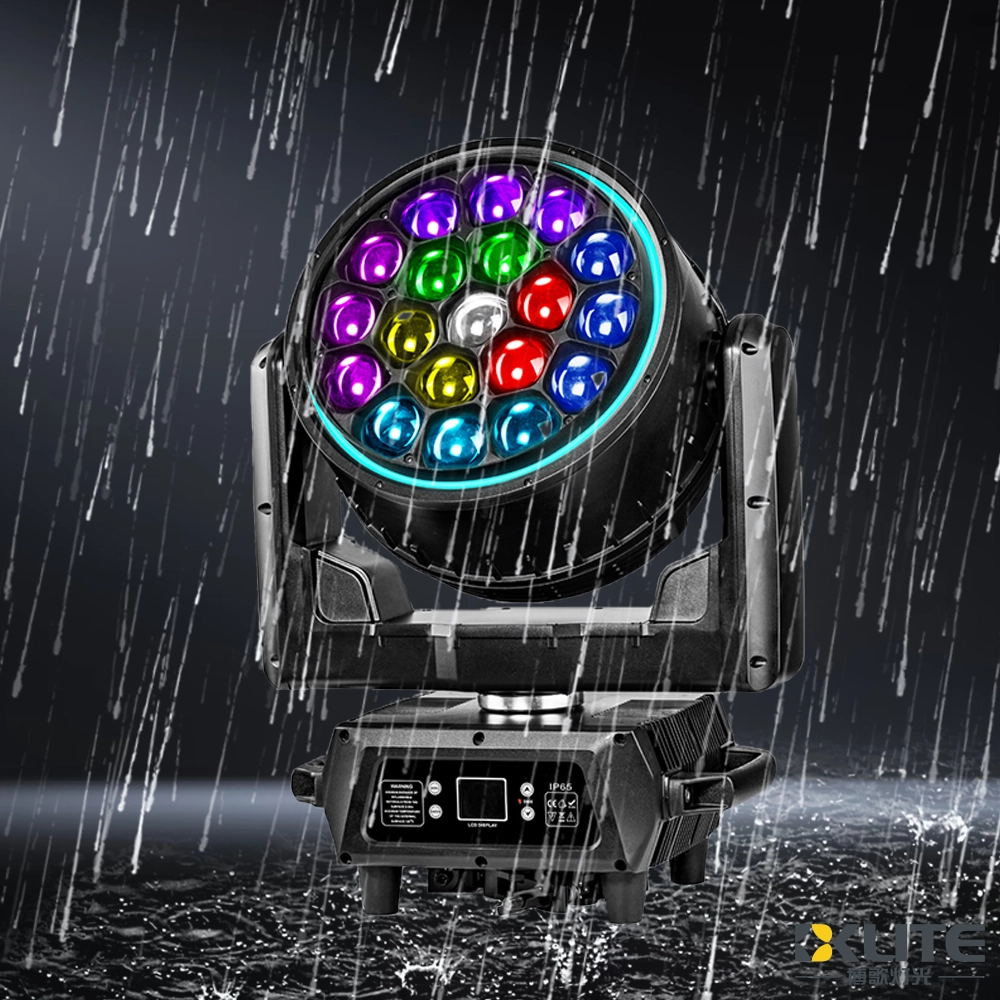
IP65 Waterproof Bee Eye Zoom 19x40W RGBW 4IN1 LED Beam Wash Moving Head Light with LED Ring
BKlite waterproof bee eye moving head light—your reliable choice from top waterproof moving head light manufacturers and suppliers. Ideal for outdoor stage, live event, music festival, this energy-saving fixture ensures powerful, precise illumination for any venue. It delivers powerful, reliable lighting performance in any weather.
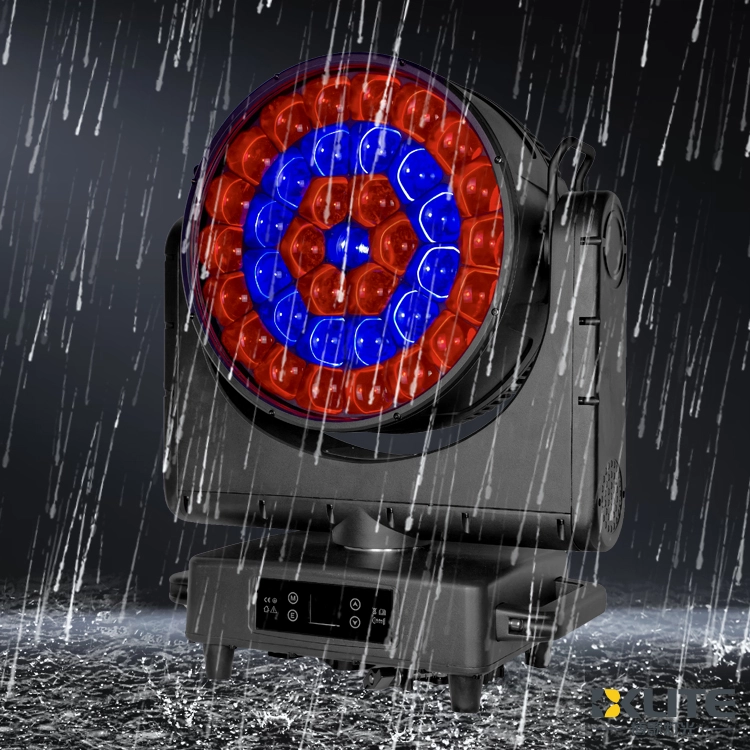
IP65 Waterproof ZOOM Bee Eye 37x40W RGBW 4in1 LED Moving Head Light
As a leading stage lighting equipment supplier with more than 15 years of industry know-how, BKlite brings you the IP65 ZOOM Bee Eye 37*40W RGBW 4in1 LED Moving Head Light (K25 Bee Eye) delivers vibrant, weatherproof lighting with powerful zoom and smooth movement. Ideal for dynamic stage effects, the K25 moving head light ensures stunning RGBW color mixing and reliable outdoor performance.
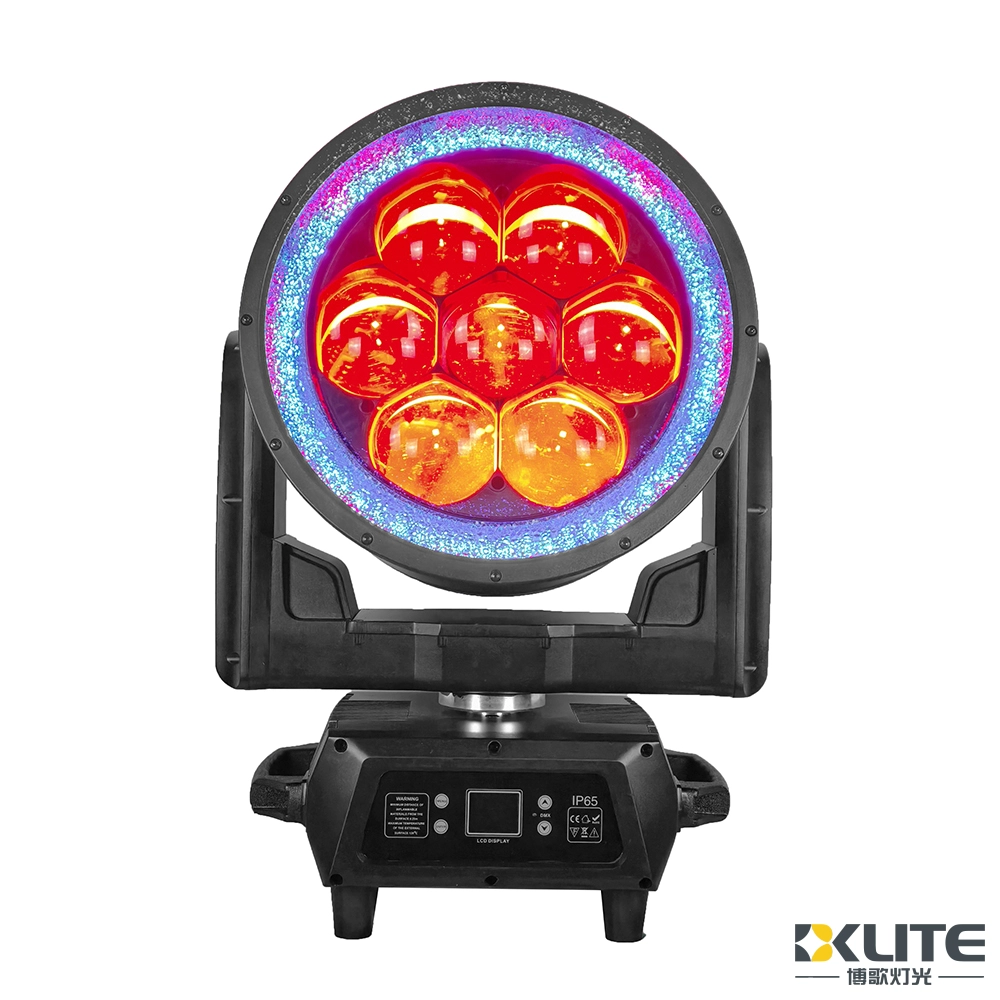
IP65 Waterproof Bee Eye 7x180W RGBL 4IN1 LED Moving Head Light With LED Ring
BKlite high power 7x180W waterproof bee eye moving head light—your reliable choice from top waterproof moving head light manufacturers and suppliers. Ideal for outdoor stage, live event, music festival, this energy-saving fixture ensures powerful, precise illumination for any venue. It delivers powerful, reliable lighting performance in any weather.
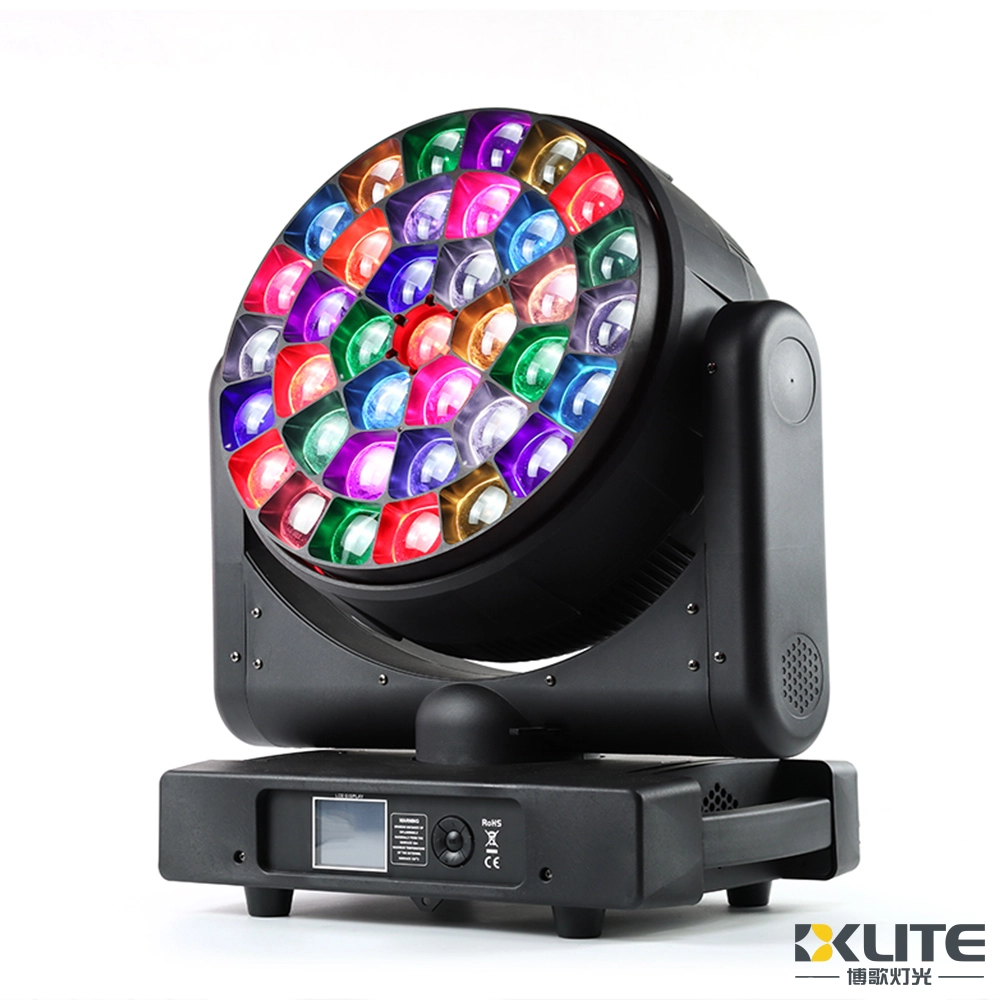
Bee Eye Zoom 37x40W RGBW 4in1 LED Beam Wash Moving Head Light


Copyright © 2025 BKLITE All Rights Reserved.