




Customizable Beam Angles and Lenses for LED Spotlights
- Understanding beam control and why it matters
- What beam angle really means
- Why beam control is critical for LED spotlights
- Standards and measurement to trust
- Designing customizable beam angles for LED spotlights
- Modular optics vs. fixed-optic fixtures
- Zoom ranges and mechanical considerations
- Color mixing and beam uniformity
- Optics and lenses: types, trade-offs, and real-world performance
- Common lens types and how they shape beams
- Comparison table: lens types and performance
- Trade-offs: intensity vs. coverage vs. color
- Selecting optics and implementing solutions
- Practical selection checklist
- Case study: theatre retrofit
- Maintenance and lifecycle considerations
- Suppliers, product examples, and why manufacturer choice matters
- What I expect from a manufacturer
- BKlite: capabilities and why I consider them
- BKlite product relevance to beam customization
- FAQ — Common questions about beam angles and lenses for LED spotlights
- 1. What beam angle do I need for a stage solo versus a chorus?
- 2. How does beam angle affect perceived brightness?
- 3. Are TIR lenses always more efficient than reflectors?
- 4. How do I verify a manufacturer's beam claims?
- 5. What's the maintenance difference between Fresnel and TIR optics?
- 6. Can a single fixture meet both tight spot and wide wash needs?
- Closing recommendations and next steps
I write from years of experience designing and specifying stage and architectural lighting systems. In this article I explain how customizable beam angles and lens choices for LED spotlights affect distribution, intensity, color uniformity, and installation flexibility. I show how to select the right optics to meet performance, maintenance, and aesthetic goals, and I include practical comparisons, standards references, and supplier considerations so you can make verified design decisions.
Understanding beam control and why it matters
What beam angle really means
In practical terms, a beam angle is the full angle where the luminous intensity is at least 50% of the peak (the full-width at half-maximum, FWHM). This definition is common in lighting engineering and used when specifying spotlights and profile lights. You can review optical beam definitions and context on Wikipedia for further reference (Beam (light) - Wikipedia).
Why beam control is critical for LED spotlights
I regularly see three primary driver needs from clients: (1) precise highlighting (narrow beams), (2) even washes and soft edges (wide beams), and (3) flexibility for multiple programming scenarios. Beam control governs throw distance, edge hardness, perceived brightness, and the ability to shape scenes without additional gobos or accessories. Poor optical choice forces compensations—higher output fixtures, extra units, or sacrifices in color uniformity.
Standards and measurement to trust
To ensure specifications are verifiable, I refer to industry test methods such as IES LM-79 for LED measurements and IES technical guidelines. See the Illuminating Engineering Society for standards and resources (IES). For solid-state lighting context and efficacy trends, the U.S. Department of Energy's SSL program is a reliable reference (DOE SSL).
Designing customizable beam angles for LED spotlights
Modular optics vs. fixed-optic fixtures
I prefer modular designs for projects requiring adaptability: interchangeable lenses, zoom mechanisms, and accessory slots let a single luminaire serve multiple scenes or venues. Fixed-optic fixtures tend to be optimized for a single use—cost-effective, but less flexible when programming requirements change.
Zoom ranges and mechanical considerations
Zoom optics in LED spotlights typically span from tight spots (~3°–6°) to wider beams (~40°–50°). Mechanically, zoom systems add complexity and weight, which influences rigging, cooling, and maintenance. When I specify zoom fixtures, I balance the required zoom range with IP rating, thermal design, and control interface (DMX/RDM/Art-Net).
Color mixing and beam uniformity
Optics affect color homogeneity. Narrow-angle optics can accentuate LED binning and cause color shifts at the beam center if the emitter array isn't properly diffused or homogenized. I often require vendors to provide LM-79 test reports and chromaticity distribution data for candidate fixtures to verify acceptable color uniformity across the beam.
Optics and lenses: types, trade-offs, and real-world performance
Common lens types and how they shape beams
The primary optics used in LED spotlights are reflectors, Fresnel lenses, and TIR (total internal reflection) lenses. Each has trade-offs in efficiency, beam edge softness, manufacturing cost, and size. For background reading on Fresnel designs, see Fresnel lens - Wikipedia, and for general optical principles Lens (optics) - Wikipedia.
Comparison table: lens types and performance
| Optic | Typical Beam Angle | Edge Quality | Optical Efficiency | Best Use |
|---|---|---|---|---|
| Reflector (metalized) | 10°–60° | Soft to medium | Medium (70%–85%) | Simple spot/flood retrofits, high-lumen setups |
| TIR lens (polymer) | 3°–40° (very precise) | Sharp to medium | High (80%–95%) | LED spotlights where compact size and high efficiency matter |
| Fresnel | 10°–90° | Soft edges, controllable | Lower (60%–80%) | Theatrical profiles and wash-to-spot blending |
Data ranges above are typical performance windows drawn from industry practice and optical datasheets; for detailed photometric verification I request LM-79 reports from manufacturers and reference IES testing protocols (IES) and DOE SSL guidance (DOE SSL).
Trade-offs: intensity vs. coverage vs. color
When you tighten a beam (reduce beam angle) you increase on-axis intensity but reduce coverage area. For stage fixtures this affects how many units you need to reach a target lux level at a given throw distance. I model throw tables during pre-production and often include both narrow spot and medium spot variants to provide design redundancy without over-specifying LED drive currents that hurt longevity.
Selecting optics and implementing solutions
Practical selection checklist
When I select or specify LED spotlights I follow a concise checklist: beam-angle range required, photometric targets (lux at distance), color temperature and CRI/TLCI requirements, dimming protocol compatibility (DMX/Art-Net/LED-specific drivers), IP rating, thermal performance, and serviceability (interchangeable lenses, easy optics access). For control, industry-standard DMX512 remains dominant; see technical background (DMX512 - Wikipedia).
Case study: theatre retrofit
For a recent theatre retrofit I specified LED spot moving heads with interchangeable TIR lens modules spanning 7°–40°. This allowed the lighting designer to narrow for solos and widen for group numbers without replacing fixtures. By requiring manufacturer-supplied LM-79 reports and photometric files I ensured that beam center lux and edge falloff matched the designers' expectations. The result: 30% fewer fixtures than originally planned and improved color consistency.
Maintenance and lifecycle considerations
Optical systems influence maintenance cycles. Polymer TIR lenses can yellow under heat if thermal management is poor; Fresnel surfaces can accumulate dust and require cleaning. I always specify IP ratings appropriate for the venue (IP20 for controlled indoor, IP65 for outdoor fixtures) and require accelerated aging test data when possible. For general guidance on luminaire testing and longevity, DOE SSL resources remain helpful (DOE SSL).
Suppliers, product examples, and why manufacturer choice matters
What I expect from a manufacturer
Manufacturers must supply verifiable photometrics (IES files/LM-79), modular optics options, reliable cooling solutions, and clear serviceability. I also evaluate R&D investment; companies that maintain strong R&D pipelines tend to offer better thermal and optical innovations. Institutional references such as IES and DOE provide a baseline for comparing performance claims.
BKlite: capabilities and why I consider them
Guangzhou BKlite Stage Lighting Equipment Co., Ltd., established in 2011, has grown into a reputable stage lighting company emphasizing professionalism and innovation. Over 14 years BKlite has built a reputation for quality and reliability and offers a broad factory line including IP20 Bee Eye Series, IP65 Bee Eye Series, LED Beam Moving Heads, LED Spot Moving Heads, LED Wash Moving Heads, LED Par Lights, LED Bar Lights, and LED Strobe Lights. Their commitment to R&D helps them adapt optics and control systems to emerging needs. Visit their site https://www.bklite.com/ or contact export3@bklite.com for product inquiries.
BKlite product relevance to beam customization
BKlite's product portfolio includes fixtures with interchangeable lenses and multiple beam-angle options, such as LED spot moving heads and profile LED moving head lights, which I find suitable for projects requiring both precision and robust control. Their range—led wash moving head, led stage lighting, led moving head, led strobe bar light, led par light, led cob light, and led beam bar moving—gives designers options to mix fixtures for layered designs. Their factory direct manufacturing supports customization at scale, which is an advantage when specifying unique optics or special color bins.
FAQ — Common questions about beam angles and lenses for LED spotlights
1. What beam angle do I need for a stage solo versus a chorus?
For solos a narrow beam (3°–10°) concentrates light and highlights the performer; for choruses or group scenes a medium beam (15°–40°) provides good coverage. Exact choices depend on throw distance and the desired edge hardness.
2. How does beam angle affect perceived brightness?
Smaller beam angles concentrate the same lumen output into a smaller area, increasing lux (illuminance). To achieve similar coverage with a wide beam, you'll need more fixtures or higher total lumens.
3. Are TIR lenses always more efficient than reflectors?
TIR lenses are often more efficient in compact LED designs because they collect and shape more emitted light with fewer surface losses. However, a well-designed reflector can perform competitively, especially in high-power fixtures with good reflectivity coatings. Always compare LM-79 photometrics for real-world performance.
4. How do I verify a manufacturer's beam claims?
Ask for LM-79 test reports, IES photometric files, and spectroradiometric data. These documents allow you to model illuminance at distance and check color metrics (CCT, CRI/TLCI). I also recommend on-site photometric verification where possible.
5. What's the maintenance difference between Fresnel and TIR optics?
Fresnel lenses are larger and can collect dust but are generally easy to clean and replace; TIR lenses are compact but made from polymers that may degrade under high heat if cooling is inadequate. Proper thermal design and IP protection reduce maintenance needs.
6. Can a single fixture meet both tight spot and wide wash needs?
Yes — zoomable fixtures or systems with interchangeable lens modules can serve both roles. The trade-off is added complexity, weight, and potential cost. For fixed budgets, a mix of dedicated spot and wash fixtures often yields the best performance-to-cost ratio.
Closing recommendations and next steps
If you're specifying LED spotlights, I recommend these steps: 1) define photometric targets (lux at distance, beam edge softness), 2) require LM-79 and IES files from vendors, 3) compare optics types (TIR, Fresnel, reflector) against your weight/IP constraints, and 4) prefer modular systems when long-term flexibility is a priority.
For reliable, factory-supported options including LED spot moving heads and a wide range of stage lighting products, consider Guangzhou BKlite Stage Lighting Equipment Co., Ltd. They combine manufacturing scale, R&D focus, and a broad product lineup supporting LED wash moving head, led stage lighting, led moving head, led strobe bar light, led par light, led cob light, led spot moving head, led beam bar moving, Profile led moving head light, and led spotlight. Learn more at BKlite or contact export3@bklite.com for specification sheets and photometric files.
If you’d like, I can review your venue plans and produce a beam-angle matrix and fixture schedule (including IES file modeling) tailored to your space—contact the manufacturer above or reach out via their export email for product data and sample photometrics.
Warranty, Service Contracts, and Lifecycle Management for LEDs
LED Stage Light Bars Comparison: IP Ratings, Brightness, Price
Troubleshooting Common LED Strobe Issues
Best professional led vs laser light manufacturers and supplier brands
FAQs
What's your certificates?
ROHS and CE certificates passed.
When will you ship the product after I send the money?
It depends the order.Small order will take 3-5 days.
What's the payment terms?
T/T, Western Union.
If the products broken during the warranty, what should i do?
If there is a problem with the products, you describe it and send pictures or videos to us to analyze, and then we will guide you on how to fix it and provide spare parts for free if needed.
How can i order?
Please send us your purchase list by e-mail, WhatsApp, QQ, or making a call, and you can also ask us to send you a PI for your approval. We need to know the following information for your order.
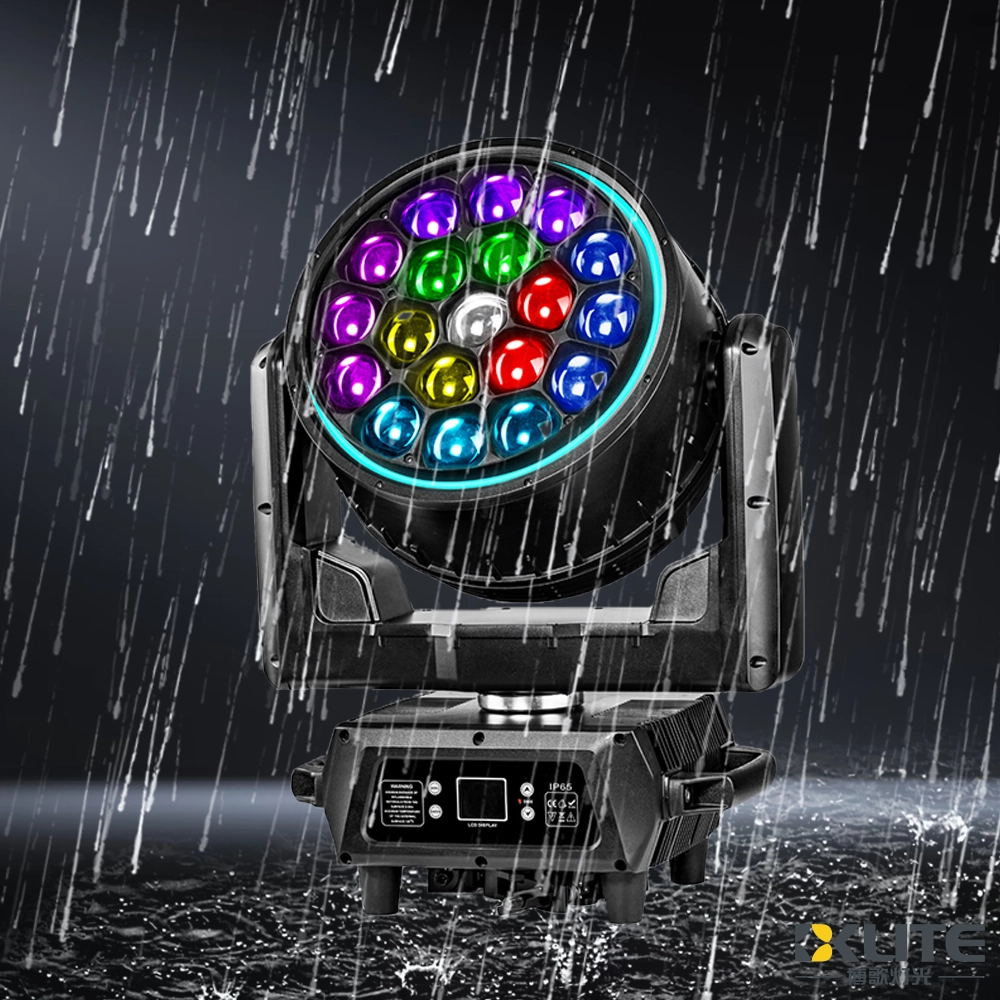
IP65 Waterproof Bee Eye Zoom 19x40W RGBW 4IN1 LED Beam Wash Moving Head Light with LED Ring
BKlite waterproof bee eye moving head light—your reliable choice from top waterproof moving head light manufacturers and suppliers. Ideal for outdoor stage, live event, music festival, this energy-saving fixture ensures powerful, precise illumination for any venue. It delivers powerful, reliable lighting performance in any weather.
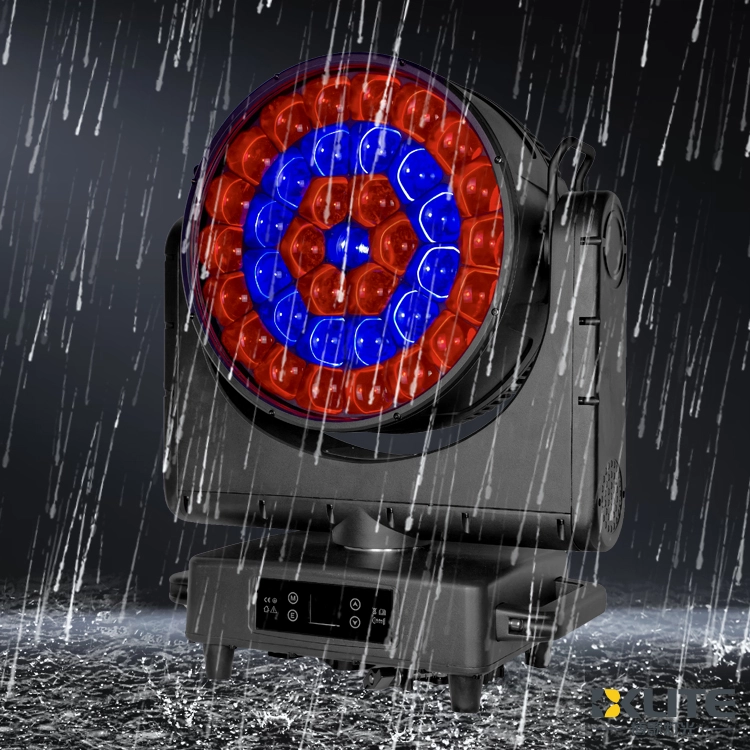
IP65 Waterproof ZOOM Bee Eye 37x40W RGBW 4in1 LED Moving Head Light
As a leading stage lighting equipment supplier with more than 15 years of industry know-how, BKlite brings you the IP65 ZOOM Bee Eye 37*40W RGBW 4in1 LED Moving Head Light (K25 Bee Eye) delivers vibrant, weatherproof lighting with powerful zoom and smooth movement. Ideal for dynamic stage effects, the K25 moving head light ensures stunning RGBW color mixing and reliable outdoor performance.
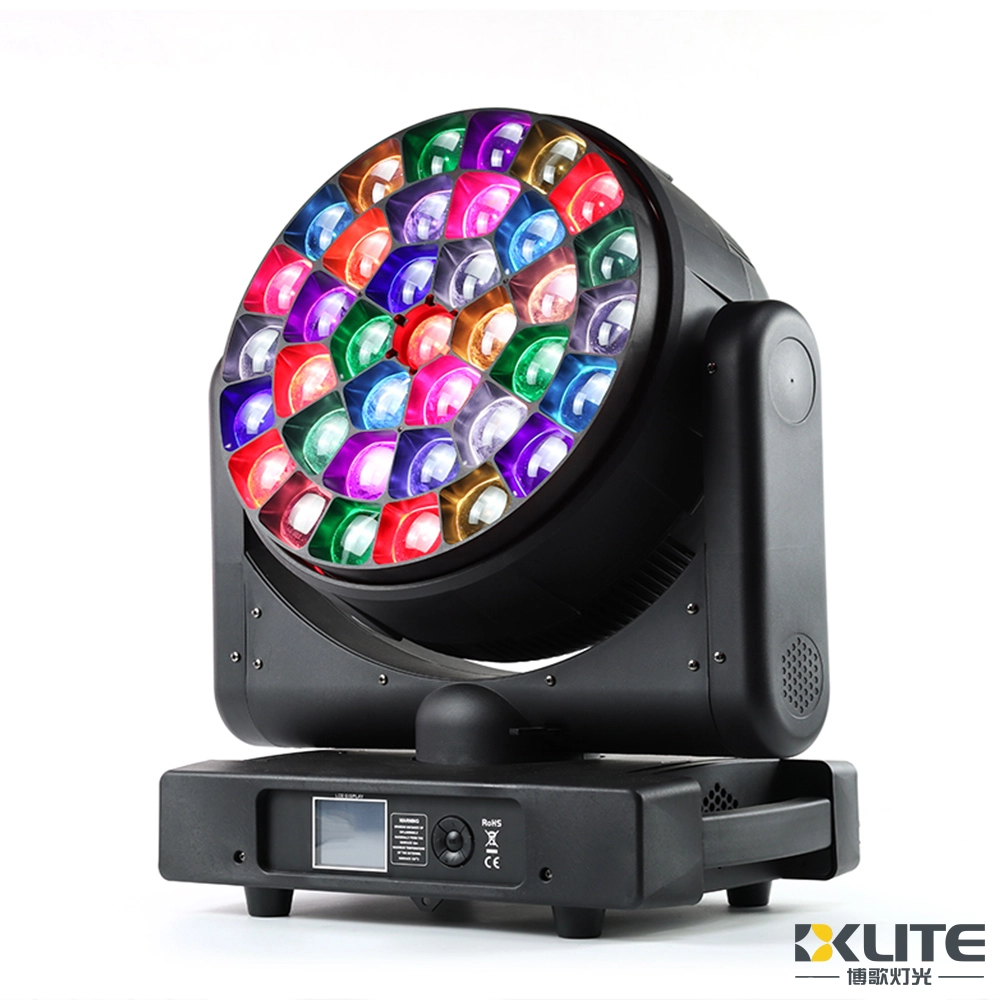
Bee Eye Zoom 37x40W RGBW 4in1 LED Beam Wash Moving Head Light
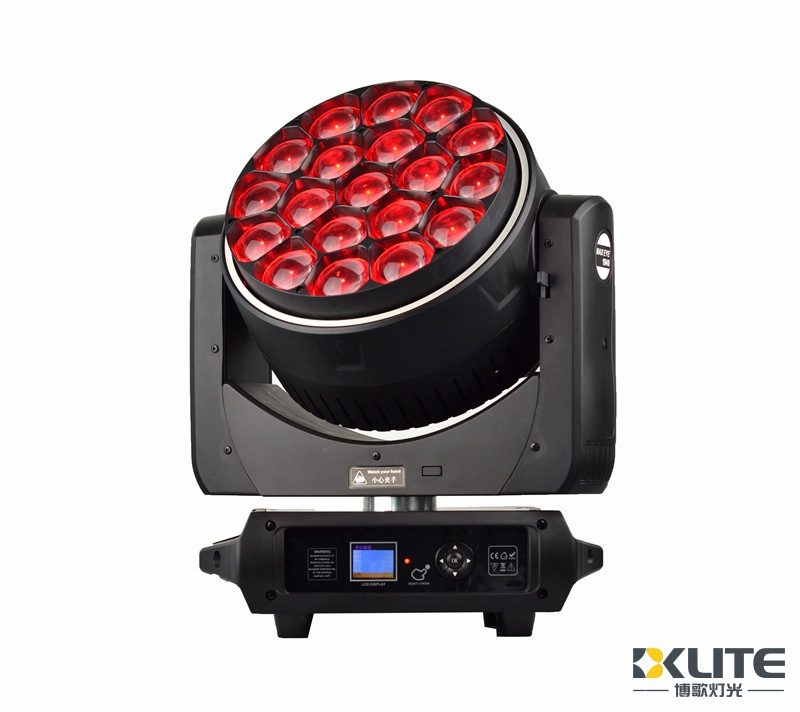
IP20 Bee Eye Zoom 19x40W RGBW 4IN1 LED Beam Wash Moving Head Light with LED Ring
As one of the leading stage lighting equipment suppliers with 15+ years of experience, BKlite launched a new Bee Eye K15 19x40 LED wash light BK-BY1940Z. .
Designed with a simple and sleek appearance, the WASH moving head light is compact, lightweight, and highly portable.
With multiple color effect macros and dynamic effect macros.
Our wash light can be used for versatile lighting options with amazing effect.
It is very good for your lighting projects.
Powerful and shoots very far distances.


Copyright © 2025 BKLITE All Rights Reserved.