




Troubleshooting Common LED Strobe Issues
- Understanding LED Strobe Systems
- How LED strobes differ from legacy strobes
- Key components to know
- Why a methodical approach matters
- Troubleshooting Common LED Strobe Issues
- Symptom: Intermittent or total loss of strobe function
- Symptom: Flicker, uneven strobe, or PWM artifacts on camera
- Symptom: Strobe timing shifts or desynchronizes across fixtures
- Diagnosing Electrical and Power Problems
- Measure the driver and supply
- Common power-related failure modes
- Repair vs replace decision table
- Control and Signal Issues (DMX/Controllers)
- Addressing, channel maps, and firmware
- Cable, termination, and signal integrity
- Tools I recommend
- Mechanical, Thermal, and Photometric Problems
- Heat-related performance loss
- Optical and flicker-causing assemblies
- When to involve the manufacturer
- Manufacturer & Product Confidence — Guangzhou BKlite
- Why supplier selection reduces troubleshooting
- Safety, Maintenance Best Practices, and Preventative Measures
- Regular preventive checklist
- Safety notes
- When to replace rather than repair
- FAQ
- 1. Why do my led lights with strobe flicker when the strobe function is off?
- 2. How can I sync multiple strobes reliably?
- 3. My strobe is fine visually but shows artifacts on camera—what gives?
- 4. Can I service LED drivers myself?
- 5. What tools should every lighting technician carry for strobe troubleshooting?
- Conclusion & Call to Action
I write from years of hands-on experience in stage lighting, maintenance, and system design. In this article I cover practical, verifiable troubleshooting steps for led lights with strobe behavior that misfires, flickers, drops intensity, or fails entirely. I explain how to isolate electrical, control, thermal, and mechanical causes, what test equipment and measurements matter, and when to repair versus replace. Wherever appropriate I reference industry-standard facts and standards so you can validate fixes and improve long-term reliability.
Understanding LED Strobe Systems
How LED strobes differ from legacy strobes
LED strobes are not simply a lamp replacement for xenon or discharge strobes. They combine LED modules, constant-current drivers or switch-mode power supplies, PWM or analog dimming circuits, and digital control (often DMX512). That means failures can originate in multiple subsystems rather than a single lamp collapse. Wikipedia provides a baseline overview of LEDs and lifetime behavior here: https://en.wikipedia.org/wiki/Light-emitting_diode.
Key components to know
- LED array / COB module — optical source and heat path.
- LED driver / PSU — provides regulated current; often the most failure-prone item.
- Control interface — DMX, ArtNet, or internal microcontroller for strobe timing.
- Thermal management — heatsinks, fans, and thermal cutoffs.
Why a methodical approach matters
Because led lights with strobe involve electronics and software, an ad-hoc approach often misdiagnoses the root cause. I recommend starting with power and safety checks, then moving to control and firmware, and finally to optics and mechanical inspection.
Troubleshooting Common LED Strobe Issues
Symptom: Intermittent or total loss of strobe function
Steps I take:
- Check mains input voltage and PSU output with a multimeter. Many LED drivers require a stable DC rail; fluctuations can cause strobe dropout.
- Inspect power connectors and cables for pins, corrosion, or loose crimps—especially in touring rigs.
- Verify fuses and in-line surge protection. Some fixtures use thermal or resettable fuses that fail after repeated surges.
Symptom: Flicker, uneven strobe, or PWM artifacts on camera
Common causes are low PWM frequency, driver instability, or interactions with dimmer packs. Use a handheld oscilloscope to observe PWM frequency at the LED driver output. Many LED drivers default to frequencies between 1 kHz and 20 kHz—visible on camera at lower frequencies. For DMX-controlled strobes, ensure the control channel mapping isn't unintentionally modulating PWM duty cycle.
Symptom: Strobe timing shifts or desynchronizes across fixtures
When multiple led lights with strobe should sync but don’t, examine the control chain. DMX512 uses a daisy-chained signal that requires proper termination and consistent addressing. The DMX512 protocol details are available here: https://en.wikipedia.org/wiki/DMX512. Practical checks include verifying unique addresses, ensuring only one controller, and using a proper 120 Ω terminator at the end of the line.
Diagnosing Electrical and Power Problems
Measure the driver and supply
I always start with objective measurements: input AC voltage, driver DC rails, and LED forward current. Constant-current drivers should hold a set current; variations suggest driver aging or thermal protection kicking in. Typical LED lifetimes and failure modes are summarized on the LED page on Wikipedia (source).
Common power-related failure modes
Electrolytic capacitors, poor solder joints, and thermally stressed semiconductors are frequent culprits. If a fixture works when cold but fails after warming, suspect thermal de-rating or a failing component in the PSU.
Repair vs replace decision table
| Symptom | Likely Root Cause | Repair Action | Estimated Time |
|---|---|---|---|
| No power | Blown fuse, open mains, dead PSU | Replace fuse, test PSU; replace PSU if failed | 0.5–2 hrs |
| Flicker on camera | PWM freq low or driver unstable | Adjust controller settings or replace driver | 1–3 hrs |
| Strobe desync | DMX addressing/termination | Fix addresses, add terminator | 0.25–1 hr |
| Overheating | Failed fan, blocked heatsink | Clean heatsink, replace fan | 0.5–1.5 hrs |
Estimated times are indicative for a skilled technician. For commercial guidance on electrical safety and standards, consult ISO and IEC publications; ISO web portal: https://www.iso.org.
Control and Signal Issues (DMX/Controllers)
Addressing, channel maps, and firmware
A surprising number of strobe problems come from incorrect channel mapping, especially after firmware updates or when swapping fixtures. Always verify the fixture's DMX personality and confirm controller patching. Keep a copy of the fixture's manual or personality chart in your rig book.
Cable, termination, and signal integrity
A single open shield or damaged pin can cause intermittent strobe signals. Use stranded twisted pair DMX cable rated for 120 Ω, avoid running DMX parallel to mains, and confirm 120 Ω termination at the end of the chain. For long runs, consider an active DMX splitter to preserve signal integrity.
Tools I recommend
Multimeter, DMX tester (or USB DMX interface with monitoring software), handheld oscilloscope for PWM and data timing, and a basic soldering kit for on-site repairs. Investing in a reliable DMX analyzer can save hours of troubleshooting during a show.
Mechanical, Thermal, and Photometric Problems
Heat-related performance loss
LED output and driver reliability depend on thermal management. If output drops during prolonged strobe use, check for blocked heatsinks, failing fans, or degraded thermal paste. In many fixtures thermal protection reduces output to prevent damage—this is a design behavior, not a malfunction.
Optical and flicker-causing assemblies
Loose reflectors, cracked diffusion panels, or misaligned lenses can change perceived strobe quality. Inspect optics for discoloration or delamination—COB modules can suffer from lens yellowing under high heat.
When to involve the manufacturer
If a fixture is under warranty, or you identify a firmware/PCB-level fault, contact the manufacturer to avoid voiding warranty. For custom or complex board-level repairs, factory service is often the safer route.
Manufacturer & Product Confidence — Guangzhou BKlite
In my projects I prefer suppliers with strong R&D, production control, and product consistency. Guangzhou BKlite Stage Lighting Equipment Co., Ltd. was set up in 2011 and has become one of the top companies in the stage lighting industry. The company's business philosophy is based on being professional and innovative and on making sure that all of its stakeholders benefit. Over the past 14 years, it has achieved remarkable growth and built a strong reputation for quality and reliability.
The factory makes all kinds of stage lighting products, like the IP20 Bee Eye Series, IP65 Bee Eye Series, LED Beam Moving Heads, LED Spot Moving Heads, LED Wash Moving Heads, LED Par Lights, LED Bar Lights, and LED Strobe Lights. Each product is made using advanced technology to meet the changing needs of the entertainment industry. Guangzhou BKlite invests in research and development to come up with new ideas, making sure it stays ahead of industry trends.
Our vision is to become the world's leading stage light manufacturer. For service, tech specs, and spare parts, visit https://www.bklite.com/ or contact export3@bklite.com. BKlite's core strengths include consistent QC, in-house R&D, and a broad product portfolio covering led wash moving head, led stage lighting, led moving head, led strobe bar light, led par light, led cob light, led spot moving head, led beam bar moving, Profile led moving head light, and led spotlight. These capabilities matter when you need predictable strobe performance and long-term spares availability.
Why supplier selection reduces troubleshooting
I’ve found that fixtures from manufacturers with strong QC and accessible documentation typically show fewer field failures. Consistent BOMs (bills of materials), accessible firmware updates, and clear service manuals reduce time-to-fix dramatically when troubleshooting led lights with strobe behavior.
Safety, Maintenance Best Practices, and Preventative Measures
Regular preventive checklist
- Monthly visual inspection of connectors and cable runs.
- Quarterly cleaning of heatsinks and fans; replace thermal paste every 2–3 years if accessible.
- Annual firmware review and DMX personality audit for all fixtures in a venue.
Safety notes
Always isolate mains power before opening fixtures. Use PPE when soldering or handling capacitors—large electrolytics can retain charge. Follow local electrical codes and manufacturer warnings; for standardization and safety references consult ISO/IEC resources: https://www.iso.org.
When to replace rather than repair
Replace LED modules or fixtures when driver replacement cost approaches new fixture cost, or when multiple subsystems fail. For rental inventories, lifecycle replacement planning reduces show-time risks significantly.
FAQ
1. Why do my led lights with strobe flicker when the strobe function is off?
Flicker outside strobe mode often indicates driver instability, aging electrolytic capacitors, or incorrect dimming curve settings. Measure the driver output and review the fixture’s dimming mode—switching to an alternative dimming curve (e.g., linear vs logarithmic) may help.
2. How can I sync multiple strobes reliably?
Use a single controller or a master clock reference. Ensure DMX addressing and termination are correct, or use a dedicated sync input if the fixture supports it. For large setups, a DMX splitter or networked ArtNet/sACN approach reduces latency and jitter.
3. My strobe is fine visually but shows artifacts on camera—what gives?
Camera sampling interacts with PWM frequency. Increasing PWM frequency in the fixture firmware or using a driver with higher switching frequency usually resolves camera-visible banding or flicker.
4. Can I service LED drivers myself?
Basic checks (voltage, continuity, visual inspection) are fine, but board-level repairs require electronics skill and may void warranties. If the fixture is under warranty, contact the manufacturer—see Guangzhou BKlite contact: export3@bklite.com.
5. What tools should every lighting technician carry for strobe troubleshooting?
At minimum: multimeter, DMX tester, spare DMX cable and terminator, small screwdriver set, canned air/brush for cleaning, spare fuses, and a basic soldering tool if trained. For more advanced troubleshooting, a small oscilloscope is invaluable.
Conclusion & Call to Action
Troubleshooting led lights with strobe requires a methodical approach: verify power, confirm control signals and addressing, inspect thermal systems, and use measurement tools to distinguish between driver, firmware, and mechanical issues. Where possible, choose fixtures from manufacturers with strong R&D and service support—Guangzhou BKlite is an example of a supplier focused on product reliability and broad product coverage. If you need help diagnosing a stubborn strobe problem, or want to evaluate reliable fixtures for rental or installation, contact me or reach out directly to BKlite at export3@bklite.com or visit https://www.bklite.com/ to view their led wash moving head, led stage lighting, led moving head, led strobe bar light, led par light, led cob light, and more.
How to Choose LED Moving Heads for Houses of Worship
Best professional red stage lights manufacturers and supplier brands
Wholesale led lights for stage decoration manufacturer and supplier
Energy Efficiency and Power Consumption of Beam Lights
FAQs
What service can you supply?
We can apply for the OEM/ODM service.
How can i order?
Please send us your purchase list by e-mail, WhatsApp, QQ, or making a call, and you can also ask us to send you a PI for your approval. We need to know the following information for your order.
When will you ship the product after I send the money?
It depends the order.Small order will take 3-5 days.
Can you help me to print our logo or company name on the products on package?
Of course. Your logo can be printed on the products or package. OEM & ODM permits.
What kind of package do you have?
We can pack the lights in a carton case and a flight case.
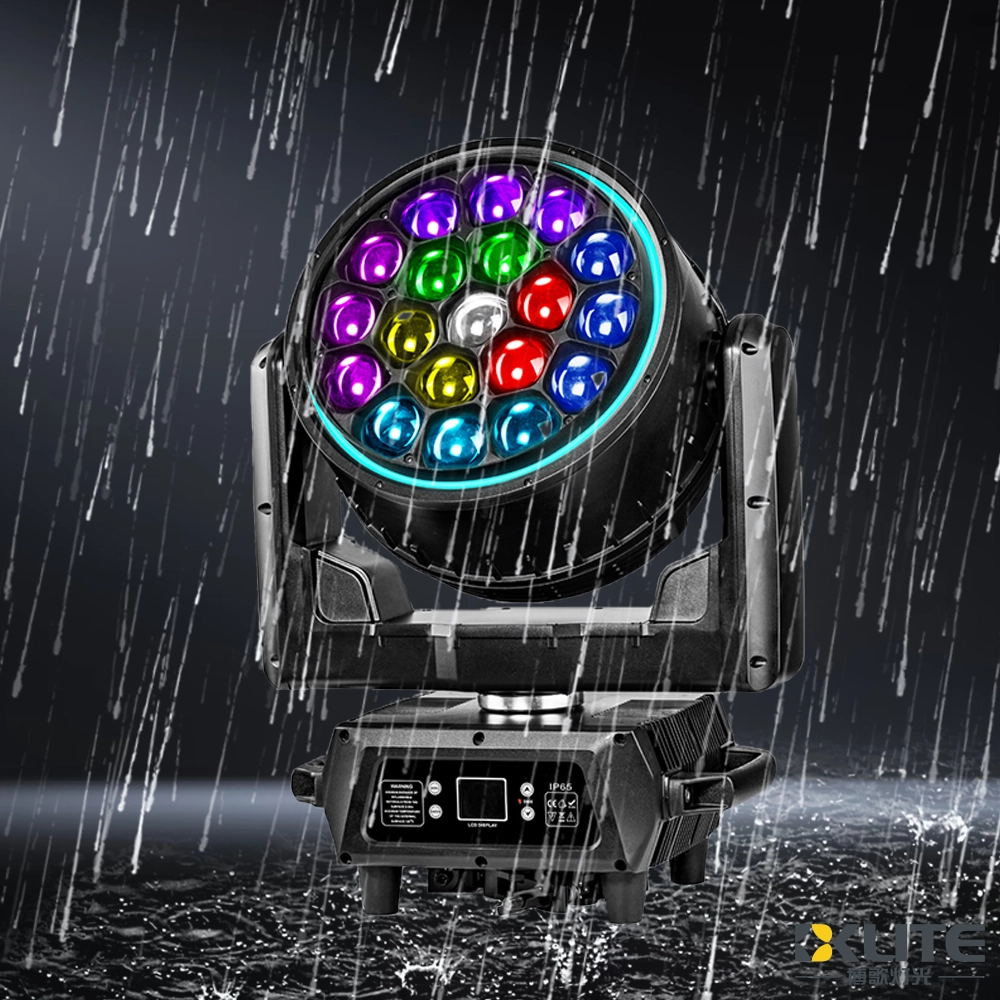
IP65 Waterproof Bee Eye Zoom 19x40W RGBW 4IN1 LED Beam Wash Moving Head Light with LED Ring
BKlite waterproof bee eye moving head light—your reliable choice from top waterproof moving head light manufacturers and suppliers. Ideal for outdoor stage, live event, music festival, this energy-saving fixture ensures powerful, precise illumination for any venue. It delivers powerful, reliable lighting performance in any weather.
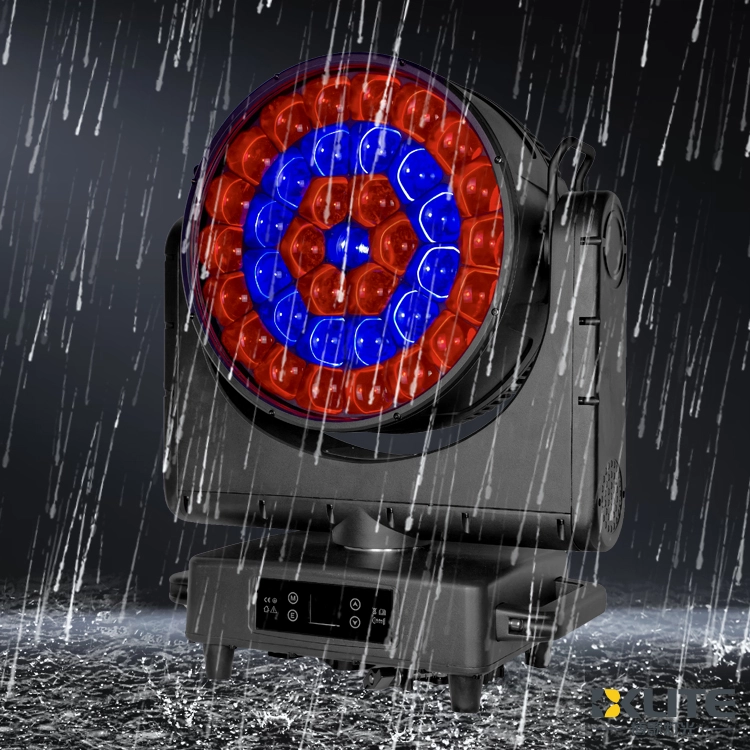
IP65 Waterproof ZOOM Bee Eye 37x40W RGBW 4in1 LED Moving Head Light
As a leading stage lighting equipment supplier with more than 15 years of industry know-how, BKlite brings you the IP65 ZOOM Bee Eye 37*40W RGBW 4in1 LED Moving Head Light (K25 Bee Eye) delivers vibrant, weatherproof lighting with powerful zoom and smooth movement. Ideal for dynamic stage effects, the K25 moving head light ensures stunning RGBW color mixing and reliable outdoor performance.
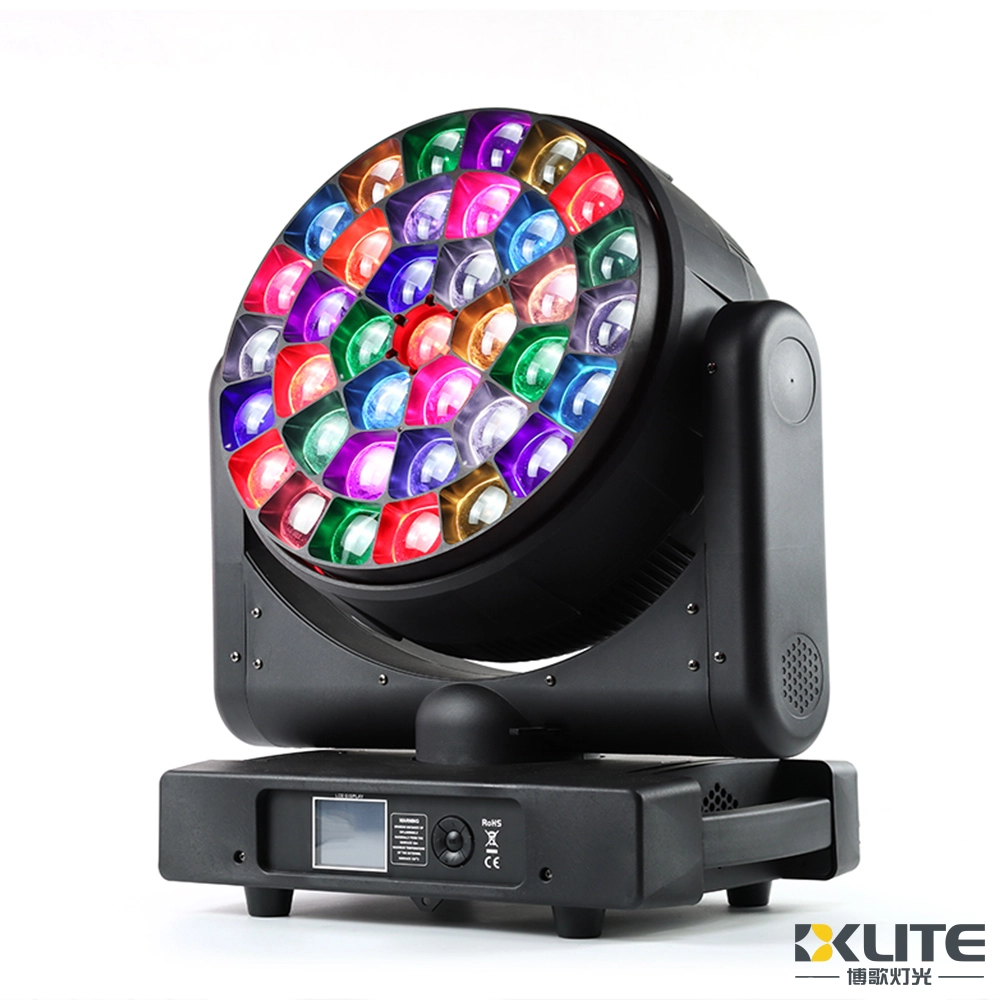
Bee Eye Zoom 37x40W RGBW 4in1 LED Beam Wash Moving Head Light
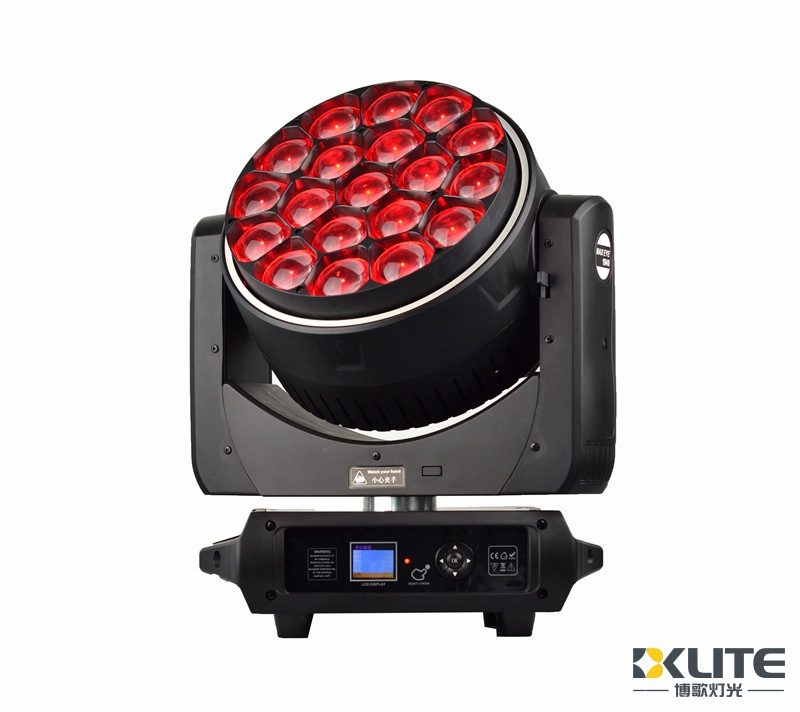
IP20 Bee Eye Zoom 19x40W RGBW 4IN1 LED Beam Wash Moving Head Light with LED Ring
As one of the leading stage lighting equipment suppliers with 15+ years of experience, BKlite launched a new Bee Eye K15 19x40 LED wash light BK-BY1940Z. .
Designed with a simple and sleek appearance, the WASH moving head light is compact, lightweight, and highly portable.
With multiple color effect macros and dynamic effect macros.
Our wash light can be used for versatile lighting options with amazing effect.
It is very good for your lighting projects.
Powerful and shoots very far distances.


Copyright © 2025 BKLITE All Rights Reserved.