DMX Control Setup for Stage Profile Lights in Venues
- Core Principles of DMX for Live Venues
- What DMX Is and Why It Matters for Profile Lights
- Key Concepts: Universes, Channels, and Addressing
- Why Proper Signal Topology and Cabling Matters
- Planning and Designing DMX Control for Stage Profile Light Installations
- Inventory and Channel-Count Planning
- Sample Channel Count Table for Common Profile Fixtures
- Control Surface and Network Considerations
- Installation Best Practices: Cabling, Grounding, and Patch Management
- Cabling, Connectors and Termination
- Power, Grounding and Isolation
- Patch, Labeling and Documentation
- Advanced Control: RDM, Networked DMX, and Troubleshooting
- Using RDM to Simplify Setup
- Art-Net and sACN: When to Use Network Transport
- Common Problems and Systematic Troubleshooting
- Practical Checklist: Pre-Show and Onsite Procedures
- Pre-show Configuration
- Onsite Setup and Soundcheck
- Documentation and Handover
- Commercial and Manufacturer Considerations: Choosing Fixtures and Suppliers
- Why Fixture Choice Affects DMX Strategy
- About Guangzhou BKlite and Industry Positioning
- BKlite Product Advantages and Application for Profile Lighting
- FAQ
- Q1: How many profile lights can I run on one DMX universe?
- Q3: Should I use 3-pin or 5-pin XLR for DMX?
- Q4: What is RDM and should I plan for it?
- Q5: How do I prevent DMX dropouts or flicker?
- Q6: Can I control profile lights over Ethernet?
- Contact & CTA
- References
Core Principles of DMX for Live Venues
What DMX Is and Why It Matters for Profile Lights
DMX512 (commonly called DMX) is the industry standard protocol for controlling lighting fixtures in entertainment applications. It carries 512 channels per universe and uses an RS-485 differential pair for reliable signal transmission. For stage profile lights (spot/profile fixtures) DMX maps parameters such as intensity, colour (for RGB/RGBW profiles), focus/zoom, iris, gobo wheel, shutter/strobe and movement (for profile moving heads), enabling precise control of beam shaping and stage illumination.
Key Concepts: Universes, Channels, and Addressing
Understanding universes and addressing is fundamental. A single DMX universe supports 512 channels. If a profile fixture requires 16 channels, a single universe can control up to 32 such fixtures (512/16 = 32). Plan your addressing and patching so that fixtures that need grouped control are contiguous in the patch. Use RDM-capable devices where possible to simplify discovery and addressing in larger deployments.
Why Proper Signal Topology and Cabling Matters
DMX is robust but sensitive to topology: use a daisy-chain (line) topology with 120-ohm balanced DMX cable and terminate the end of the run. Avoid star topologies or long unterminated stubs. Use industry-standard DMX cable (150-ohm characteristic impedance recommended) rather than instrument mic cable to prevent reflections and data errors.
Planning and Designing DMX Control for Stage Profile Light Installations
Inventory and Channel-Count Planning
Start with a complete inventory of fixtures and their channel mode options. Modern profile moving-head fixtures often offer multiple channel modes (e.g., 16-channel, 24-channel, RDM-capable). Make a spreadsheet cataloging fixture model, maximum channel mode used, and channel start address. This ensures you can estimate universe counts accurately and avoid channel collisions.
Sample Channel Count Table for Common Profile Fixtures
| Fixture Type | Typical Channel Modes | Channels (example) | Fixtures per DMX Universe (512 ch) |
|---|---|---|---|
| LED Profile Spot (basic) | 8 / 12 | 12 | 42 (512/12 ≈ 42) |
| Profile Moving Head | 16 / 24 / 32 | 24 | 21 (512/24 ≈ 21) |
| High-feature Profile (with framing) | 24 / 36 | 36 | 14 (512/36 ≈ 14) |
| LED Follow-Spot / Profile LED | 8 / 16 | 16 | 32 (512/16 = 32) |
Note: Always check each fixture's manual for exact channel mode and DMX personality. When in doubt, allow spare channels in your patch for future expansion or temporary extra parameters.
Control Surface and Network Considerations
Choose a lighting console or software that supports the expected number of universes and offers network output options (sACN, Art-Net) if your fixtures or nodes require it. For larger venues, use Ethernet-based transport (Art-Net or sACN) to distribute universes to nodes close to load centers; convert to DMX via robust nodes with proper isolation and termination.
Installation Best Practices: Cabling, Grounding, and Patch Management
Cabling, Connectors and Termination
Use dedicated DMX cable (150 Ω) with professional XLR connectors (commonly 5-pin for forward compatibility; 3-pin often used but not recommended per standard). Maintain a daisy-chain topology and terminate the last fixture or DMX node with a 120 Ω terminator. Keep DMX cables away from mains power runs to reduce EMI and noise; cross at 90° if paths must intersect.
Power, Grounding and Isolation
Profile lights can draw significant power. Plan circuits to avoid overloads and balance phase loads. Use grounded and appropriately rated power distribution. If you experience ground loops causing DMX errors, consider opto-isolated DMX nodes or isolation transformers for power where appropriate. Always follow local electrical codes and consult a qualified electrician for complex installs.
Patch, Labeling and Documentation
Label both ends of every DMX run and each fixture with its DMX start address and fixture ID. Maintain an up-to-date patch list both on paper at the dimmer rack/lighting rack and digitally. Version-control your show file and keep a copy of the last known-good configuration on the console and a backup USB drive.
Advanced Control: RDM, Networked DMX, and Troubleshooting
Using RDM to Simplify Setup
RDM (Remote Device Management) extends DMX to allow bi-directional communication with fixtures for discovery, addressing, and status queries. Deploy RDM-capable cables and consoles to automatically discover fixtures, set addresses, and query error states—particularly useful for large arrays of profile lights spread across flybars and catwalks.
Art-Net and sACN: When to Use Network Transport
For multiple universes or when deploying fixtures across long distances, use Art-Net or sACN over Ethernet to transport DMX data. Place reliable DMX-to-Ethernet nodes near fixture clusters and configure each node to output the required universes. Ensure network hardware is dedicated or VLAN segmented for lighting to avoid packet loss and latency from unrelated traffic.
Common Problems and Systematic Troubleshooting
Typical issues and steps:
- No response from fixtures: verify DMX source, cable continuity, terminator at run end, and correct addressing.
- Intermittent flicker or jitter: check cable quality and integrity, reduce cable runs or change routing to avoid interference, and confirm proper grounding.
- Random channel shifts: look for improper addressing, overlapping addresses, or console patch mismatches.
- Single fixture not responding: swap the cable with a known-good run or try direct connection to console/node to isolate the failure.
Practical Checklist: Pre-Show and Onsite Procedures
Pre-show Configuration
- Verify physical inventory of stage profile light fixtures and note serial numbers.- Confirm channel mode for each fixture and pre-assign addresses in spreadsheet.- Map universes and confirm required node locations for sACN/Art-Net.- Test fixtures individually and run a full patch test in the shop or a staging area if possible.
Onsite Setup and Soundcheck
- Bring labeled terminators, extra DMX cables (in various lengths), a multimeter, and a small network switch (managed preferred) for Art-Net/sACN setups.- Power up the DMX chain and confirm the console sees all fixtures (use RDM if available).- Run a smoke/visual test: intensity sweep, gobo rotate, colour changes, framing blades if present, and focus checks for each profile light.
Documentation and Handover
After setup, export a patch file, save a backup on USB, and hand over a simple one-page troubleshooting guide to the venue operations team (include cable labeling, universe mapping, and emergency contact for lead technician).
Commercial and Manufacturer Considerations: Choosing Fixtures and Suppliers
Why Fixture Choice Affects DMX Strategy
Fixtures with richer feature sets (framing shutters, motorized zoom, multiple gobo wheels, CMY colour mixing) require more DMX channels. Choosing fixtures with flexible channel modes or network control options reduces complexity. Consider LED profile moving heads with selectable personality modes to balance features and channel economy.
About Guangzhou BKlite and Industry Positioning
Guangzhou BKlite Stage Lighting Equipment Co., Ltd. was set up in 2011 and has become one of the top companies in the stage lighting industry. The company's business philosophy is based on being professional and innovative and on making sure that all of its stakeholders benefit. Over the past 14 years, it has achieved remarkable growth and built a strong reputation for quality and reliability.The factory makes all kinds of stage lighting products, like the IP20 Bee Eye Series, IP65 Bee Eye Series, LED Beam Moving Heads, LED Spot Moving Heads, LED Wash Moving Heads, LED Par Lights, LED Bar Lights, and LED Strobe Lights. Each product is made using advanced technology to meet the changing needs of the entertainment industry. Our company invests in research and development to come up with new ideas, making sure it stays ahead of industry trends.Our vision is to become the world's leading stage light manufacturer.Our website is https://www.bklite.com/.
BKlite Product Advantages and Application for Profile Lighting
BKlite offers a wide portfolio relevant to venue profile lighting: led wash moving head, led stage lighting, led moving head, led strobe bar light, led par light, led cob light, led spot moving head, led beam bar moving, Profile led moving head light, led spotlight. Advantages include competitive pricing, R&D-driven features, robust IP-rated series for outdoor use (IP65 Bee Eye), and a broad range of fixtures that allow venues to choose products with channel modes tailored to their DMX and network strategies. Choosing a manufacturer with consistent quality control and local support reduces unexpected downtime during shows.
FAQ
Q1: How many profile lights can I run on one DMX universe?
A: It depends on each fixture's DMX channel requirement. Divide 512 by the fixture's channel count (e.g., 512/24 ≈ 21 fixtures). Always leave headroom for extra channels and future expansion.
Q3: Should I use 3-pin or 5-pin XLR for DMX?
A: Use 5-pin XLR for new installations to follow the standard wiring practice and allow full compatibility with RDM and future devices. Many venues still use 3-pin; 3-pin is common but technically not the recommended standard for professional DMX installations.
Q4: What is RDM and should I plan for it?
A: RDM (Remote Device Management) is an extension of DMX that allows bi-directional communications for discovery, addressing, and monitoring. For medium to large installs, RDM greatly speeds setup and troubleshooting—plan for RDM-capable fixtures and consoles if possible.
Q5: How do I prevent DMX dropouts or flicker?
A: Use correct DMX topology (daisy-chain), quality 150 Ω DMX cable, proper termination, short stubs, separation from mains, and consider opto-isolated nodes or repeaters for long runs. Verify grounding and power stability for fixtures.
Q6: Can I control profile lights over Ethernet?
A: Yes—use Art-Net or sACN to transport multiple universes over Ethernet, then convert to DMX close to fixtures via nodes. This approach simplifies cable runs and supports large-scale systems.
Contact & CTA
If you need consulting for a venue installation, an equipment quote, or product samples for testing, contact our technical team or visit the BKlite product pages at https://www.bklite.com/ to view their led wash moving head, led profile moving head, led spotlight and other stage lighting solutions. For immediate assistance, request a site audit or demo from BKlite's sales engineers to ensure fixture selection and DMX planning match your venue’s needs.
References
- DMX512 — Wikipedia. https://en.wikipedia.org/wiki/DMX512 (accessed 2026-01-06)
- ESTA Technical Standards Program — DMX512. https://tsp.esta.org/tsp/standards.php?standard=dmx512 (accessed 2026-01-06)
- DMX512 Signal Overview — Electronic Theatre Controls (ETC). https://www.etcconnect.com/Support/Article/102000078/DMX512-Signal-Overview/ (accessed 2026-01-06)
- What is DMX512? — Belden Blog. https://www.belden.com/blog/digital-building/what-is-dmx512 (accessed 2026-01-06)
- RDM (Remote Device Management) — Wikipedia. https://en.wikipedia.org/wiki/Remote_Device_Management (accessed 2026-01-06)
- Guangzhou BKlite Stage Lighting Equipment Co., Ltd. — Official site. https://www.bklite.com/ (accessed 2026-01-06)
How to Specify Beam Angle and Lux Levels for Stage Lighting
Best professional strobe led lights manufacturers and supplier brands
Bulk Purchasing Strategies and Negotiation for LED Stage Bars
Bee Eye vs Beam Moving Head: Key Differences Explained
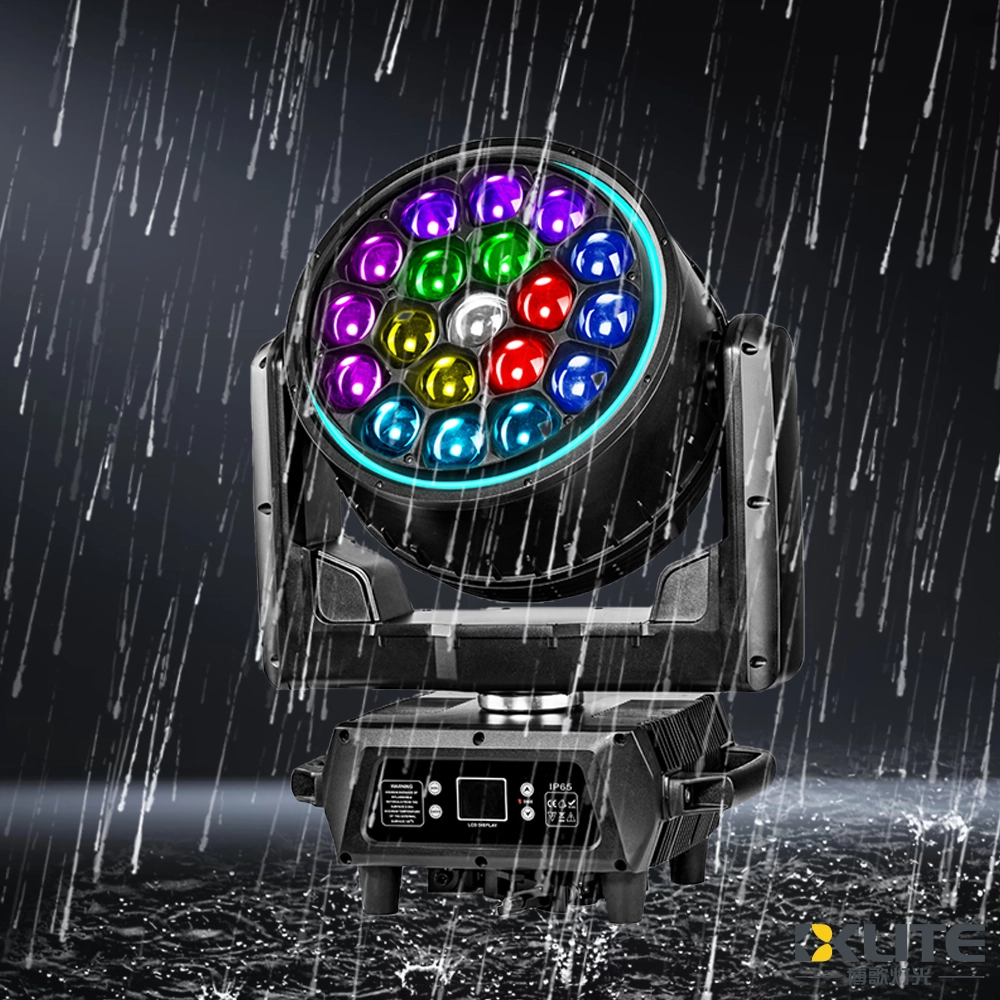
IP65 Waterproof Bee Eye Zoom 19x40W RGBW 4IN1 LED Beam Wash Moving Head Light with LED Ring
With more than 14 years of experience in professional stage lighting, BKLITE is a specialized waterproof stage lighting manufacturer in China.
The BKlite IP65 Waterproof 19x40w bee eye is a high-output RGBW moving head designed for outdoor stages, live event, music festival and touring productions.
Featuring 19 individually controllable 40W RGBW 4in1 LEDs, 7°‑42° motorized zoom and rotating honeycomb lens, it delivers stunning pixel beam & wash effects for professional stage applications.
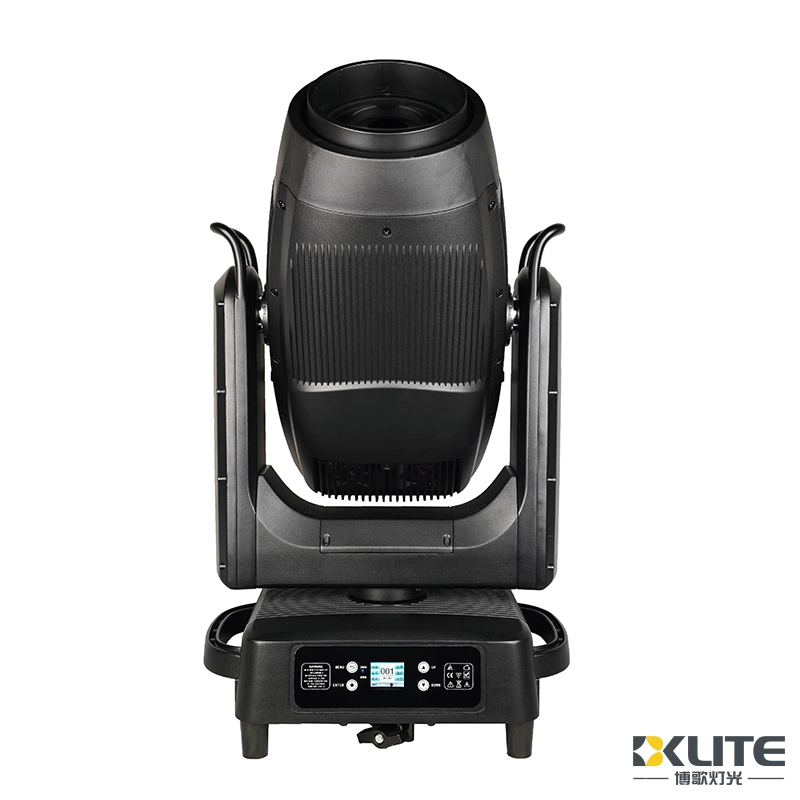
IP65 Waterproof Profile 1000W LED Beam Wash Spot 3in1 Moving Head Light With Framing
With more than 14 years of experience in professional stage lighting, BKLITE is a specialized LED stage lighting manufacturer in China. The BKLITE IP65 Waterproof Profile moving head is a high‑power 3‑in‑1 beam wash spot fixture with framing system designed for large‑scale outdoor concerts, theatre performances and outdoor touring events. Featuring 1000W high‑brightness LED source, 4.5°‑50° motorized zoom and precise motor‑driven framing shutters, it delivers accurate beam shaping, spot projection and soft wash lighting effects for professional stage applications.
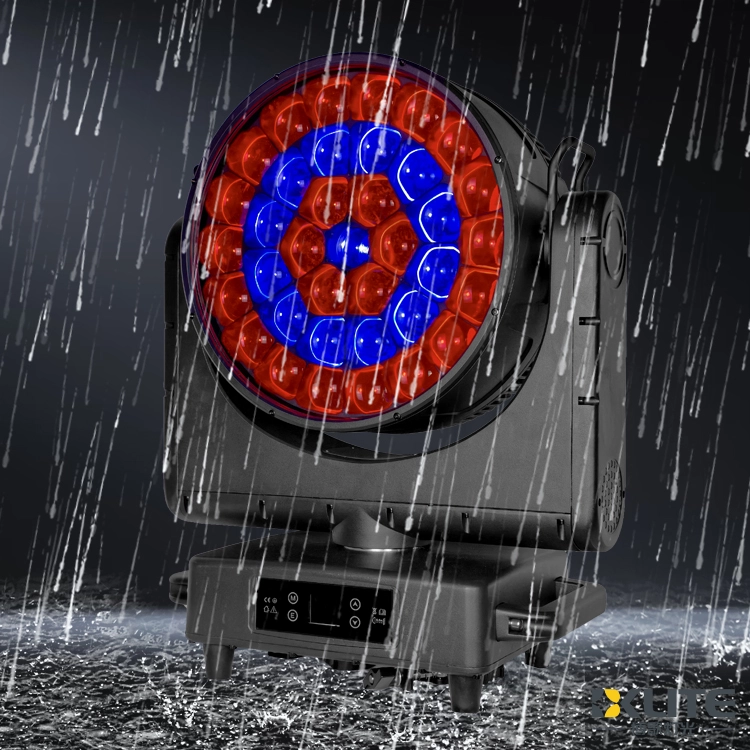
IP65 Waterproof ZOOM Bee Eye 37x40W RGBW 4in1 LED Moving Head Light
With more than 14 years of experience in professional stage lighting, BKLITE is a specialized waterproof stage lighting manufacturer in China. The BKLITE IP65 Waterproof Bee Eye 37x40W Moving Head Light is a high-output K25 bee-eye moving head designed for outdoor concerts, music festivals and touring productions. Featuring 37 individually controllable 40W RGBW 4in1 LEDs, 8°‑48° motorized zoom and rotatable honeycomb lens, it provides powerful beam, wash and kaleidoscope effect lighting for professional stage applications.

IP65 Waterproof Zoom Bee Eye 7x180W RGBL 4IN1 LED Moving Head Light With LED Ring
With more than 14 years of experience in professional stage lighting, BKLITE is a specialized waterproof stage lighting manufacturer in China.The BKlite 7×180W Bee Eye is a high-output RGBL moving head designed for large concerts, festivals, touring productions and outdoor events. Featuring seven 180W RGBL LED sources, an independent LED ring and motorized zoom, it combines powerful beam effects, wide washes and dynamic pixel-style effects for professional stage applications.
Contact us
Let's discuss how we can work together to achieve your business goals. Contact us today to get started.
 Address
No. 30, North Hongmian Avenue, Huadu District, GuangZhou, China.


Copyright © 2026 BKLITE. All Rights Reserved.